Fluimucil
Italy
Table of Contents
- Package leaflet: Information for the user
- FLUIMUCIL 300 mg/3 ml concentrate for solution for injection, nebuliser and endotracheobronchial instillation
- 1. What Fluimucil is and what it is used for
- 2. What you need to know before taking Fluimucil
- 3. How to take Fluimucil
- 4. Possible side effects
- 5. How to store Fluimucil
- 6. Package Contents and Other Information
- Package leaflet: Information for the user
- FLUIMUCIL 300 mg/3 ml nebulizer solution
- 1. What Fluimucil is and what it is used for
- 2. What you need to know before taking Fluimucil
- 3. How to take Fluimucil
- 4. Possible side effects
- 5. How to store Fluimucil
- 6. Package contents and other information
- Patient Information Leaflet: Information for the user
- FLUIMUCIL 300 mg/3 ml nebulizer solution
- 1. What Fluimucil is and what it is used for
- 2. What you need to know before taking Fluimucil
- 3. How to use Fluimucil
- 4. Possible side effects
- 5. How to store Fluimucil
- 6. Package contents and other information
- Patient information leaflet
- FLUIMUCIL 600 mg effervescent tablets
- 1. What Fluimucil is and what it is used for
- 2. What you need to know before taking Fluimucil
- 3. How to take Fluimucil
- 4. Possible side effects
- 5. How to store Fluimucil
- 6. Package contents and other information
- Package leaflet: information for the patient
- FLUIMUCIL 600 mg effervescent granules for oral solution
- 1. What Fluimucil is and what it is used for
- 2. What you need to know before taking Fluimucil
- 3. How to take Fluimucil
- 4. Possible side effects
- 5. How to store Fluimucil
- 6. Package contents and other information
Package leaflet: Information for the user
FLUIMUCIL 300 mg/3 ml concentrate for solution for injection, nebuliser and endotracheobronchial instillation
N-acetylcysteine
Please read all of this leaflet carefully before you start using this medicine because it contains important information for you.
- Keep this leaflet. You may need to read it again.
- If you have any questions, ask your doctor or pharmacist.
- This medicine has been prescribed for you only. Do not give it to other people, even if their symptoms are the same as yours, as it may be harmful.
- If you experience any side effect, including those not listed in this leaflet, tell your doctor or pharmacist. See section 4.
Contents of this leaflet:
- What Fluimucil is and what it is used for
- What you need to know before using Fluimucil
- How to use Fluimucil
- Possible side effects
- How to store Fluimucil
- Contents of the pack and other information
1. What Fluimucil is and what it is used for
Fluimucil contains the active substance N-acetylcysteine, which belongs to a group of medicines called mucolytics, used to facilitate the elimination of mucus from the respiratory tract, and to a group of medicines called antidotes used to counteract the toxic effects of certain substances.
Fluimucil is indicated for the treatment of respiratory tract diseases characterized by increased production of thick and viscous mucus (dense and viscous hypersecretion), such as:
- inflammation of the bronchi (acute bronchitis, chronic bronchitis and its exacerbations);
- lung alveolar disease (pulmonary emphysema);
- cystic fibrosis (mucoviscidosis);
- bronchiectasis.
Fluimucil is used as an antidote particularly in cases of:
- accidental or intentional poisoning with paracetamol, an anti-inflammatory medicine;
- urinary tract disease (uropathy) caused by chemotherapeutic medicines such as ifosfamide and cyclophosphamide.
2. What you need to know before taking Fluimucil
Do not take Fluimucil
- if you are allergic to N-acetylcysteine or to any of the other ingredients of this medicine (listed in section 6), except when used as an antidote;
- if the patient is a child under 2 years of age, except when used as an antidote.
Warnings and precautions
Talk to your doctor or pharmacist before taking Fluimucil.
Take this medicine with caution and always under medical supervision in the following cases:
- if you suffer from a bronchial inflammatory disease called bronchial asthma, stop taking Fluimucil immediately if you experience bronchial muscle contraction (bronchospasm);
- if you have previously suffered from atopy and asthma, as you may develop allergic reactions;
- if you are histamine intolerant, as you may develop allergic reactions;
- if you have or have had a stomach or intestinal disorder called peptic ulcer, especially if you are taking other medicines together with Fluimucil that may cause stomach problems (gastrotoxic drugs).
This medicine may increase the volume of bronchial mucus (bronchial secretions), particularly when administered by nebulization, especially at the beginning of treatment. Therefore, if this occurs and you are unable to clear bronchial secretions by coughing (expectoration), consult your doctor, who will advise you on a method to remove the mucus (postural drainage or bronchoaspiration).
Allergic reactions (hypersensitivity/anaphylactoid reactions) may occur with N-acetylcysteine. Monitoring for signs of an allergic reaction may be necessary.
This medicine must be administered with particular caution and strictly according to the instructions provided in section “How to take Fluimucil”.
Please note that:
- administration of Fluimucil to counteract the toxic effects of certain substances (antidotal treatment) has very rarely caused death;
- if Fluimucil is administered to counteract the toxic effects of certain substances (antidotal treatment) in individuals weighing less than 40 kg, excessive fluid administration may occur, leading to reduced sodium levels in the blood (hyponatremia), seizures, and death;
- if Fluimucil is administered intravenously too rapidly or in excessive amounts, the occurrence of adverse effects may increase.
This medicine may alter certain blood parameters (reduction in prothrombin index, increase in INR) when used as an antidote at the recommended dosage.
If you notice a sulfur-like odor when opening the vial, or if the solution turns pink in the opened vial or when transferring the solution to the nebulizer device, do not be concerned, as this does not indicate any deterioration of the medicine.
Laboratory tests: N-acetylcysteine may interfere with certain blood and urine analyses (colorimetric assay for salicylates and tests for ketones). Inform your doctor that you are taking this medicine before undergoing these tests.
Children
Fluimucil must not be administered to children under 2 years of age, as it may obstruct the bronchi and impair normal breathing.
The same warnings and precautions applicable to adults also apply to children and adolescents.
Other medicines and Fluimucil
Inform your doctor or pharmacist if you are taking, have recently taken, or might take any other medicines.
Do not take this medicine if you are taking cough suppressants (antitussives), as they may lead to mucus accumulation in the bronchi.
Use this medicine with caution and consult your doctor if you are taking any of the following medicines:
- nitroglycerin, used for certain heart conditions. Concurrent use of this medicine with Fluimucil may cause a drop in blood pressure (hypotension) and headache (cephalalgia);
- antibiotics, medicines used to treat infections. Do not mix these medicines with the solution containing Fluimucil.
Fluimucil may be used together with medicines for asthma treatment (see section “Warnings and precautions”) and bronchial or lung diseases (bronchodilators), or medicines to increase blood pressure (vasoconstrictors).
Pregnancy, breastfeeding, and fertility
If you are pregnant, suspect you may be pregnant, planning pregnancy, or breastfeeding, consult your doctor or pharmacist before taking this medicine.
Pregnancy
Take this medicine during pregnancy only if strictly necessary and under direct medical supervision.
Breastfeeding
The use of Fluimucil should be avoided during breastfeeding. Consult your doctor before discontinuing breastfeeding and/or starting or stopping treatment with Fluimucil.
Fertility
There are no data available on the effect of Fluimucil on fertility.
Driving and using machines
There is no information available regarding the influence of this medicine on the ability to drive or operate machinery.
Fluimucil contains sodium
This medicine contains 43 mg (1.9 mmol) of sodium (the main component of table salt) per vial.
This corresponds to 2.15% of the maximum recommended dietary intake for an adult.
3. How to take Fluimucil
Use this medicine exactly as instructed by your doctor or pharmacist. If you have any doubts, consult your doctor or pharmacist.
Open the Fluimucil vials immediately before use. Use opened vials only if stored in the refrigerator and for no longer than 24 hours. Do not use opened vials for intravenous administration.
If Fluimucil is mixed with medicines used to treat asthma and bronchial or lung diseases (bronchodilators) or other medicines, use the solution promptly and do not store it. The dose, duration of treatment, and method of administration will be determined by your doctor according to your condition.
This medicine will be administered by a doctor or nurse in the case of intravenous injection (intravenous administration).
Administration by intravenous injection:
Treatment of accidental or intentional paracetamol poisoning:
Fluimucil will be administered slowly into a vein via intravenous infusion. The medicine will be administered in a hospital setting by a doctor or nurse who will prepare the infusion. If you have any doubts, consult your doctor or nurse.
Administration by nebulization (aerosol):
The recommended dose is 1 vial to be nebulized, 1–2 times daily. The duration of treatment is 5–10 days.
The dose and frequency of administration may be adjusted by your doctor.
Use a nebulizer made of glass or plastic. For devices containing metal or rubber parts, it is necessary to wash the equipment with water immediately after use.
Administration into the bronchi:
The recommended dose is 1 vial at a time, 1–2 times daily, or according to need, administered via the chosen method (e.g., indwelling catheters, bronchoscope, etc.).
Administration or irrigation of the ear or other body cavities:
The recommended dose is half or 1 vial at a time.
How to open the vial:
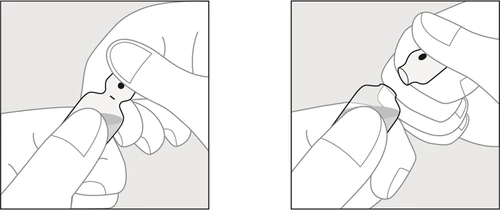
Figure 1 Figure 2
- Firmly hold the lower part of the vial with one hand and place the index finger of the other hand in the notch of the vial as shown in Figure 1;
- Apply pressure with the thumb placed above the notch as indicated in Figure 2.
If you take more Fluimucil than you should
Symptoms of overdose following intravenous injection of an excessive dose are similar to, but more severe than, the adverse effects listed in section “Possible side effects”.
However, no cases of overdose have been reported when this medicine is administered by aerosol or bronchial route. Nevertheless, after administration of an excessive dose of this medicine, mucus accumulation in the bronchi may occur, especially if the patient is unable to clear it by coughing (expectoration). Seek immediate medical advice; your doctor will recommend a method to remove the mucus (bronchoaspiration).
In case of ingestion/overdose of this medicine, contact your doctor immediately or go to the nearest hospital.
If you forget to take Fluimucil
Do not take a double dose to make up for a forgotten dose.
If you have any doubts about how to use this medicine, consult your doctor, pharmacist, or nurse.
4. Possible side effects
Like all medicines, this medicine can cause side effects, although not everyone gets them.
The following side effects may occur when Fluimucil is administered by nebulization (inhalation use) or by endotracheobronchial route:
Frequency not known (frequency cannot be estimated from available data)
- urticaria;
- skin rash;
- pruritus;
- bronchial muscle contraction (bronchospasm);
- vomiting;
- nausea;
- allergic reactions (hypersensitivity);
- runny nose (rhinorrhea);
- inflammation of the mouth (stomatitis);
- bronchial obstruction.
The following side effects may occur when Fluimucil is administered intravenously (parenteral use):
Frequency not known (frequency cannot be estimated from available data)
- severe allergic reactions (anaphylactic shock, anaphylactic/anaphylactoid reaction);
- allergic reactions (hypersensitivity);
- rapid heartbeat (tachycardia);
- bronchial muscle contraction (bronchospasm);
- breathing difficulty (dyspnea);
- vomiting;
- nausea;
- swelling due to fluid accumulation around the mouth and eyes (angioedema);
- urticaria;
- skin rash;
- pruritus;
- flushing;
- facial swelling (facial edema);
- decrease in blood pressure;
- prolonged blood clotting time (prothrombin time).
In very rare cases, severe skin reactions have been reported (Stevens-Johnson syndrome or Lyell syndrome). If you experience changes in mucous membranes or skin, stop taking the medicine and consult your doctor.
Additionally, a reduction in platelet aggregation (prolonged bleeding time) may occur.
Reporting of side effects
If you experience any side effect, including those not listed in this leaflet, talk to your doctor or pharmacist. You can also report side effects directly via the national reporting system at the following website:
https://www.aifa.gov.it/content/segnalazioni-reazioni-avverse .
By reporting side effects, you can help provide more information on the safety of this medicine.
5. How to store Fluimucil
Keep this medicine out of the sight and reach of children.
It is recommended to open the ampoules immediately before use. Opened ampoules may be used only if
stored in a refrigerator and for a maximum of 24 hours. Opened ampoules must not be used for injection.
Do not use this medicine after the expiry date which is stated on the packaging after "EXP.". The expiry
date refers to the last day of that month. The stated expiry date applies to the product when unopened and
correctly stored.
Do not dispose of any medicine via wastewater or household waste. Ask your pharmacist how to dispose of
medicines no longer in use. This will help protect the environment.
6. Package Contents and Other Information
What Fluimucil Contains
- The active substance is N-acetylcysteine: 1 vial of 3 ml contains 300 mg of N-acetylcysteine.
- The other components are: sodium hydroxide, disodium edetate, water for injections.
Description of the Appearance of Fluimucil and Contents of the Package
Pack: 5 or 10 vials of 3 ml.
Marketing Authorization Holder and Manufacturer
Marketing Authorization Holder
ZAMBON ITALIA s.r.l. - via Lillo del Duca 10 - 20091 Bresso (MI)
Manufacturer
ZAMBON S.p.A. - via della Chimica, 9 - Vicenza
Biologici Italia Laboratories S.r.l. – via Filippo Serpero, 2 – 20060 Masate (MI)
The following information is intended exclusively for healthcare professionals.
Treatment of Accidental or Intentional Paracetamol Poisoning:
For successful antidotal therapy in paracetamol poisoning, the time interval between paracetamol ingestion and the start of treatment is crucial.
Treatment should be initiated as soon as possible after paracetamol ingestion and within 8 hours. When acetylcysteine is administered more than 15 hours after paracetamol overdose, therapy is generally ineffective, although there is literature evidence of successful treatments initiated 16–24 hours after paracetamol ingestion.
Administration must be by intravenous infusion.
The infusion should be administered slowly to reduce the risk of adverse effects.
The following dosage regimen is recommended.
Patients with body weight above 40 kg
Initial dose: 150 mg/kg in 200 ml of solution over 60 minutes.
Second dose: 50 mg/kg in 500 ml over 4 hours.
Third dose: 100 mg/kg in 1000 ml over 16 hours.
Patients with body weight between 20 and 40 kg
Initial dose: 150 mg/kg in 100 ml of solution over 60 minutes.
Second dose: 50 mg/kg in 250 ml over 4 hours.
Third dose: 100 mg/kg in 500 ml over 16 hours.
Patients with body weight below 20 kg
Initial dose: 150 mg/kg in 3 ml/kg of solution over 60 minutes.
Second dose: 50 mg/kg in 7 ml/kg over 4 hours.
Third dose: 100 mg/kg in 14 ml/kg over 16 hours.
The solution must be compatible (5% dextrose solution, 0.45% sodium chloride, or water for injections).
Package leaflet: Information for the user
FLUIMUCIL 300 mg/3 ml nebulizer solution
Acetylcysteine
Please read this leaflet carefully before using this medicine because it contains important information for you.
Always take this medicine exactly as described in this leaflet or as your doctor or pharmacist has instructed you.
- Keep this leaflet. You may need to read it again.
- If you need more information or advice, consult your pharmacist.
- If you experience any side effects, including those not listed in this leaflet, contact your doctor or pharmacist. See section 4.
- Contact your doctor if you do not notice improvement or if your symptoms worsen after 10 days.
Contents of this leaflet:
- What Fluimucil is and what it is used for
- What you need to know before using Fluimucil
- How to take Fluimucil
- Possible side effects
- How to store Fluimucil
- Contents of the pack and other information
1. What Fluimucil is and what it is used for
Fluimucil contains the active substance N-acetylcysteine, which belongs to a group of medicines called mucolytics, used to help eliminate mucus from the respiratory tract.
Fluimucil is indicated for the treatment of respiratory diseases characterized by increased production of thick and viscous mucus (viscous hypersecretion), such as:
- inflammation of the bronchi (acute bronchitis, chronic bronchitis and its exacerbations);
- lung alveolar disease (pulmonary emphysema);
- cystic fibrosis (mucoviscidosis);
- bronchiectasis.
Consult your doctor if you do not feel better or if you feel worse after 10 days.
2. What you need to know before taking Fluimucil
Do not take Fluimucil
- if you are allergic to N-acetylcysteine or to any of the other ingredients of this medicine (listed in section 6);
- if the patient is a child under 2 years of age.
Warnings and precautions
Talk to your doctor or pharmacist before taking Fluimucil.
Take this medicine with caution and always under medical supervision in the following cases:
- if you suffer from a bronchial inflammatory disease called bronchial asthma. Immediately stop taking Fluimucil if you experience bronchial muscle contraction (bronchospasm).
- If you have previously suffered from atopy and asthma, as you may develop allergic reactions;
- If you are histamine intolerant, as you may develop allergic reactions;
- if you have or have had a stomach or intestinal disorder called peptic ulcer, especially if you are concurrently taking other medicines that cause stomach problems (gastrolesive drugs) together with Fluimucil;
This medicine may increase the volume of bronchial mucus (bronchial secretions), particularly at the beginning of treatment. Therefore, if this occurs and you are unable to clear bronchial secretions by coughing (expectoration), consult your doctor, who will advise you on a method to remove the mucus (postural drainage or bronchoaspiration).
Allergic reactions (hypersensitivity/anaphylactoid reactions) may occur with N-acetylcysteine. Monitoring for signs of an allergic reaction may be necessary.
If you notice a sulfur-like odor when opening the vial, or if the solution turns pink in the opened vial or when transferring the solution into the nebulizer device, do not be alarmed, as this does not indicate any deterioration of the medicine.
Laboratory tests: N-acetylcysteine may interfere with certain blood and urine analyses (colorimetric assay for salicylate determination and tests to detect ketones). Inform your doctor that you are taking this medicine before undergoing such tests.
Children
Fluimucil must not be administered to children under 2 years of age, as it may obstruct the bronchi and impair normal breathing.
The same warnings and precautions described for adults apply to children and adolescents.
Other medicines and Fluimucil
Inform your doctor or pharmacist if you are taking, have recently taken, or might take any other medicines.
Do not take this medicine if you are taking:
- cough suppressants (antitussives), as they may lead to mucus accumulation in the bronchi.
Avoid taking simultaneously:
- medicines that may reduce bronchial secretions (anticholinergics), as they may have an effect opposite to that of Fluimucil.
Take this medicine with caution and consult your doctor if you are taking any of the following medicines:
- nitroglycerin, used for certain heart conditions. Concurrent use of this medicine with Fluimucil may cause a drop in blood pressure (hypotension) and headache (cephalalgia);
- medicines used to treat infections (antibiotics). Do not mix these medicines with the solution containing Fluimucil. You may take Fluimucil together with medicines for asthma treatment (see section “Warnings and precautions”), bronchial and lung diseases (bronchodilators), or medicines to increase blood pressure (vasoconstrictors).
Pregnancy, breastfeeding, and fertility
If you are pregnant, think you may be pregnant, planning to become pregnant, or are breastfeeding, consult your doctor or pharmacist before taking this medicine.
Pregnancy
Take this medicine during pregnancy only if strictly necessary and under direct medical supervision.
Breastfeeding
The use of Fluimucil should be avoided during breastfeeding. Consult your doctor before deciding to discontinue breastfeeding and/or starting/stopping treatment with Fluimucil.
Fertility
There are no data available on the effect of Fluimucil on fertility.
Driving and using machines
There is no information available on the influence of this medicine on the ability to drive vehicles or operate machinery.
3. How to take Fluimucil
Take this medicine exactly as directed by your doctor or pharmacist. If you have
any doubts, consult your doctor or pharmacist.
The recommended dose for nebulization is 1 vial, 1-2 times daily. The duration of treatment is 5-10 days.
The dose and frequency of administration may be adjusted by your doctor. Use a glass or plastic nebulizer;
for devices containing metal or rubber parts, it is necessary to wash the equipment with water immediately after use.
Use opened vials only if stored in the refrigerator and within a maximum of 24 hours.
If Fluimucil is mixed with medicines used to treat asthma or diseases of the bronchi and lungs (bronchodilators) or other medicines, use the solution promptly and do not store it.
Instructions for opening the vial:
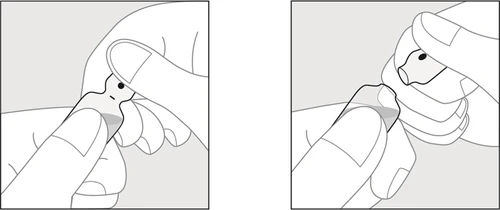
Figure 1 Figure 2
- Firmly hold the lower part of the vial with one hand and place the index finger of the other hand in the indentation of the vial as shown in Figure 1;
- Apply pressure with the thumb placed above the marked spot as indicated in Figure 2.
If you take more Fluimucil than you should
Cases of overdose have not been reported. However, following administration of an excessive dose of this medicine, mucus may accumulate in the bronchi, especially if the patient is unable to clear it by coughing (expectoration). Contact your doctor immediately; he/she will indicate a method to remove the mucus (bronchoaspiration).
In case of ingestion/overdose of this medicine, contact your doctor immediately or go to the nearest hospital.
If you forget to take Fluimucil
Do not take a double dose to make up for the missed dose.
If you have any doubts about the use of this medicine, consult your doctor or pharmacist.
4. Possible side effects
Like all medicines, this medicine can cause side effects, although not everybody gets them.
Frequency not known (frequency cannot be estimated from the available data)
- allergic reactions (hypersensitivity);
- bronchial muscle contraction (bronchospasm);
- runny nose (rhinorrhea);
- breathing difficulties (bronchial obstruction);
- inflammation of the mouth (stomatitis);
- vomiting;
- nausea;
- hives;
- skin rash;
- itching. In very rare cases, severe skin reactions have occurred (Stevens-Johnson syndrome or Lyell's syndrome). If you experience changes in the mucous membranes or skin, stop taking the medicine and consult your doctor. In addition, a reduction in platelet aggregation (prolonged bleeding time) may occur.
Reporting of side effects
If you experience any side effect, including those not listed in this leaflet, talk to your doctor or pharmacist.
You can also report side effects directly via the national reporting system at
https://www.aifa.gov.it/content/segnalazioni-reazioni-avverse .
By reporting side effects, you can help provide more information on the safety of this medicine.
5. How to store Fluimucil
Keep this medicine out of the sight and reach of children.
Opened vials can only be used if stored in the refrigerator and within 24 hours.
Do not use this medicine after the expiry date stated on the packaging after "EXP.". The expiry date refers to the last day of that month. The stated expiry date applies to the product in its original, undamaged packaging and correctly stored.
Do not dispose of any medicine via wastewater or household waste. Ask your pharmacist how to dispose of medicines you no longer use. This will help protect the environment.
6. Package contents and other information
What Fluimucil contains
- The active substance is N-acetylcysteine: 1 vial of 3 ml contains 300 mg of N-acetylcysteine.
- The other components are: sodium hydroxide, disodium edetate, water for injections.
Description of Fluimucil and package contents
One package contains 6, 10 or 20 vials of 3 ml.
Marketing Authorization Holder and Manufacturer
Marketing Authorization Holder
ZAMBON ITALIA s.r.l. - via Lillo del Duca 10 - 20091 Bresso (MI)
Manufacturer
ZAMBON S.p.A. - via della Chimica, 9 - Vicenza
Biologici Italia Laboratories S.r.l. – via Filippo Serpero, 2 – 20060 Masate (MI)
Patient Information Leaflet: Information for the user
FLUIMUCIL 300 mg/3 ml nebulizer solution
Acetylcysteine
Please read this leaflet carefully before using this medicine as it contains important information for you.
Always take this medicine exactly as described in this leaflet or as your doctor or pharmacist has instructed you.
- Keep this leaflet. You may need to read it again.
- If you need more information or advice, consult your doctor or pharmacist.
- If you experience any side effects, including those not listed in this leaflet, contact your doctor or pharmacist. See section 4.
- Consult your doctor if you do not notice any improvement or if your symptoms worsen after 10 days.
Contents of this leaflet:
- What Fluimucil is and what it is used for
- What you need to know before taking Fluimucil
- How to take Fluimucil
- Possible side effects
- How to store Fluimucil
- Contents of the pack and other information
1. What Fluimucil is and what it is used for
Fluimucil contains the active substance N-acetylcysteine, which belongs to a group of medicines called mucolytics, used to help clear mucus from the respiratory tract.
Fluimucil is indicated for the treatment of respiratory diseases characterized by increased production of thick and viscous mucus (dense and viscous hypersecretion), such as:
- inflammation of the bronchi (acute bronchitis, chronic bronchitis and its exacerbations);
- lung alveolar disease (pulmonary emphysema);
- cystic fibrosis (mucoviscidosis);
- bronchiectasis.
Consult your doctor if you do not feel better or feel worse after 10 days.
2. What you need to know before taking Fluimucil
Do not take Fluimucil
- if you are allergic to N-acetylcysteine or to any of the other ingredients of this medicine (listed in section 6);
- if the patient is a child under 2 years of age.
Warnings and precautions
Talk to your doctor or pharmacist before taking Fluimucil.
Take this medicine with caution and always under medical supervision in the following cases:
- if you suffer from a bronchial inflammatory disease called bronchial asthma. Immediately stop taking Fluimucil if you experience bronchial muscle contraction (bronchospasm);
- if you have previously suffered from atopy or asthma, as you may develop allergic reactions;
- if you are histamine intolerant, as you may develop allergic reactions;
- if you have or have had a stomach or intestinal problem called peptic ulcer, especially if you are taking other medicines that cause stomach problems (gastrolesive drugs) together with Fluimucil.
This medicine may increase the volume of bronchial mucus (bronchial secretions), especially at the beginning of treatment. Therefore, if this occurs and you are unable to clear the bronchial secretions by coughing (expectorating), consult your doctor, who will advise you on a method to remove the mucus (postural drainage or bronchoaspiration).
Allergic reactions (hypersensitivity/anaphylactoid reactions) may occur with N-acetylcysteine. Monitoring for signs of an allergic reaction may be necessary.
If you notice a sulfur-like odor when opening the vial, or if the solution turns pink in the opened vial or when transferring the solution to the nebulizer device, do not be concerned, as this does not indicate deterioration of the medicine.
Laboratory tests: N-acetylcysteine may interfere with certain blood and urine analyses (colorimetric assay for salicylate determination and tests to detect ketones). Inform your doctor that you are taking this medicine before undergoing these tests.
Children
Fluimucil must not be administered to children under 2 years of age, as it may obstruct the bronchi and impair normal breathing.
The same warnings and precautions listed for adults apply to children and adolescents.
Other medicines and Fluimucil
Inform your doctor or pharmacist if you are taking, have recently taken, or might take any other medicines.
Do not take this medicine if you are taking:
- cough suppressants (antitussives), as they may lead to mucus accumulation in the bronchi.
Avoid taking simultaneously:
- medicines that may reduce bronchial secretions (anticholinergics), as they may have an opposite effect to that of Fluimucil.
Take this medicine with caution and consult your doctor if you are taking any of the following medicines:
- nitroglycerin, used for certain heart conditions. Concurrent use of this medicine with Fluimucil may cause low blood pressure (hypotension) and headache (cephalalgia);
- medicines used to treat infections (antibiotics). Do not mix these medicines with the solution containing Fluimucil. You may take Fluimucil together with medicines for asthma (see section “Warnings and precautions”) and bronchial or lung diseases (bronchodilators), or medicines to increase blood pressure (vasoconstrictors).
Pregnancy, breastfeeding, and fertility
If you are pregnant, think you may be pregnant, planning to become pregnant, or breastfeeding, consult your doctor or pharmacist before taking this medicine.
Pregnancy
Take this medicine during pregnancy only if strictly necessary and under direct medical supervision.
Breastfeeding
The use of Fluimucil should be avoided during breastfeeding. Consult your doctor before discontinuing breastfeeding and/or starting or stopping treatment with Fluimucil.
Fertility
There are no data available on the effect of Fluimucil on fertility.
Driving and using machines
No information is available on the influence of this medicine on the ability to drive vehicles or use machinery.
3. How to use Fluimucil
Take this medicine exactly as directed by your doctor or pharmacist. If you have
any doubts, consult your doctor or pharmacist.
The recommended dose for nebulization is 1 vial, 1-2 times a day. The duration of treatment is 5-10 days.
Your doctor may adjust the dose and frequency of the medicine. Use a glass or plastic nebulizer; for devices containing metal or rubber parts, wash the equipment with water immediately after use.
Use opened vials only if they have been stored in the refrigerator and for no longer than 24 hours.
If Fluimucil is mixed with medicines used for asthma or diseases of the bronchi and lungs (bronchodilators) or other medicines, use the solution promptly and do not store it.
If you take more Fluimucil than you should
Cases of overdose have not been reported. However, following administration of an excessive dose of this medicine, mucus may accumulate in the bronchi, especially if the patient is unable to clear it by coughing (expectoration). Seek immediate medical advice; your doctor will recommend a method to remove the mucus (bronchoaspiration).
In case of accidental ingestion or overdose of this medicine, contact your doctor immediately or go to the nearest hospital.
If you forget to take Fluimucil
Do not take a double dose to make up for the missed dose.
If you have any doubts about how to use this medicine, consult your doctor or pharmacist.
4. Possible side effects
Like all medicines, this medicine can cause side effects, although not everybody gets them.
Frequency not known (frequency cannot be estimated from the available data)
- allergic reactions (hypersensitivity);
- contraction of bronchial muscles (bronchospasm);
- runny nose (rhinorrhea);
- breathing difficulties (bronchial obstruction);
- inflammation of the mouth (stomatitis);
- vomiting;
- nausea;
- hives;
- skin rash;
- itching.
In very rare cases, severe skin reactions have occurred (Stevens-Johnson syndrome or Lyell's syndrome). If you experience changes in mucous membranes or skin, stop taking the medicine and consult your doctor.
In addition, a reduction in platelet aggregation (prolongation of bleeding time) may occur.
Reporting of side effects
If you experience any side effect, including those not listed in this leaflet, talk to your doctor or pharmacist. You can also report side effects directly via the national reporting system at the following address:
https://www.aifa.gov.it/content/segnalazioni-reazioni-avverse
By reporting side effects, you can help provide more information on the safety of this medicine.
5. How to store Fluimucil
Keep this medicine out of the sight and reach of children.
After opening the inner aluminium pouch, the Fluimucil vials must be used within 7 days.
Opened vials may be used only if stored in the refrigerator and for a maximum of 24 hours.
Do not use this medicine after the expiry date stated on the packaging after “EXP.”. The expiry date refers to the last day of that month. The expiry date indicated applies to the product in its original, undamaged packaging and correctly stored.
Do not dispose of medicines via wastewater or household waste. Ask your pharmacist how to dispose of medicines no longer required. This will help protect the environment.
6. Package contents and other information
What Fluimucil contains
- The active substance is N-acetylcysteine: 1 vial of 3 ml contains 300 mg of N-acetylcysteine.
- The other components are: sodium hydroxide, disodium edetate, water for injections.
Description of the appearance of Fluimucil and package contents
Box containing 2 sachets. Each sachet contains 5 plastic vials of 3 ml.
Marketing Authorisation Holder and Manufacturer
Marketing Authorisation Holder
ZAMBON ITALIA s.r.l. - via Lillo del Duca 10 - 20091 Bresso (MI)
Manufacturer
Genetic S.p.A. - Contrada Canfora z.i. – Fisciano (SA)
Patient information leaflet
FLUIMUCIL 600 mg effervescent tablets
Acetylcysteine
Please read this leaflet carefully before taking this medicine as it contains important information for you.
- Keep this leaflet. You may need to read it again.
- If you have any questions, consult your doctor or pharmacist.
- This medicine has been prescribed for you only. Do not give it to others, even if their symptoms are the same as yours, as it could be harmful.
- If you experience any side effect, including those not listed in this leaflet, contact your doctor or pharmacist. See section 4.
Contents of this leaflet:
- What Fluimucil is and what it is used for
- What you need to know before taking Fluimucil
- How to take Fluimucil
- Possible side effects
- How to store Fluimucil
- Contents of the pack and other information
1. What Fluimucil is and what it is used for
Fluimucil contains the active substance N-acetylcysteine, which belongs to a group of medicines called mucolytics, used to facilitate the elimination of mucus from the respiratory tract, and to a group of medicines called antidotes, used to counteract the toxic effects of certain substances.
Fluimucil is indicated for the treatment of respiratory diseases characterized by increased production of thick and viscous mucus (dense and viscous hypersecretion), such as:
- inflammation of the bronchi (acute bronchitis, chronic bronchitis and its exacerbations);
- lung alveolar disease (pulmonary emphysema);
- cystic fibrosis (mucoviscidosis);
- bronchiectasis.
Fluimucil is used as an antidote particularly in cases of:
- accidental or intentional poisoning with paracetamol, an anti-inflammatory medicine;
- urinary tract disease (uropathy) caused by chemotherapeutic medicines such as ifosfamide and cyclophosphamide.
2. What you need to know before taking Fluimucil
Do not take Fluimucil
- if you are allergic to N-acetylcysteine or to any of the other ingredients of this medicine (listed in section 6);
- if you are pregnant or breastfeeding unless specifically advised by your doctor after careful evaluation (see section “Pregnancy and breastfeeding”).
Warnings and precautions
Talk to your doctor or pharmacist before taking Fluimucil.
Take this medicine with caution and always under medical supervision in the following cases:
- if you suffer from a bronchial inflammatory disease called bronchial asthma. Stop taking Fluimucil immediately if you experience bronchial muscle contraction (bronchospasm). Consult your doctor also if such symptoms have occurred in the past;
- if you are histamine intolerant, allergic reactions (hypersensitivity) may occur during treatment with Fluimucil;
- if you have or have had a stomach or intestinal disorder called peptic ulcer, especially if you are taking other medicines together with Fluimucil that may cause stomach problems (gastrotoxic drugs).
This medicine may increase the volume of bronchial mucus (bronchial secretions), especially at the beginning of treatment. Therefore, if this occurs and you are unable to clear bronchial secretions by coughing (expectorate), consult your doctor, who will advise you on an appropriate method to remove mucus (postural drainage or bronchoaspiration).
If you notice a sulphur-like odour, do not be concerned, as this does not indicate deterioration of the product but is due to N-acetylcysteine.
Laboratory tests: N-acetylcysteine may interfere with certain blood and urine analyses (colorimetric assay for salicylate determination and tests for ketones). Inform your doctor that you are taking this medicine before undergoing such tests.
Other medicines and Fluimucil
Inform your doctor or pharmacist if you are taking, have recently taken, or might take any other medicines.
Do not take this medicine if you are taking:
- cough suppressants (antitussives), as they may lead to mucus accumulation in the bronchi.
Take this medicine with caution and consult your doctor if you are taking any of the following medicines:
- activated charcoal, used to treat digestive disorders or intestinal gas (meteorism), as it may reduce the effectiveness of Fluimucil;
- oral antibiotics (except loracarbef) used to treat infections. Take these medicines at least two hours apart from Fluimucil;
- nitroglycerin, used for certain heart conditions. Concurrent use of this medicine with Fluimucil may cause low blood pressure (hypotension) and headache (cephalalgia). In such cases, your doctor will monitor you closely.
Pregnancy and breastfeeding
If you are pregnant, think you may be pregnant, planning to become pregnant, or are breastfeeding, consult your doctor or pharmacist before taking this medicine.
Take this medicine during pregnancy or breastfeeding only if strictly necessary and under direct medical supervision.
Driving and using machines
Fluimucil does not affect the ability to drive or operate machinery.
Fluimucil contains sodium
This medicine contains 156.9 mg of sodium (a component of common table salt) per tablet. This corresponds to 7.9% of the maximum recommended daily dietary intake of sodium for an adult.
Fluimucil contains aspartame
This medicine contains 20 mg of aspartame per dose. Aspartame is a source of phenylalanine. It may be harmful if you have phenylketonuria, a rare genetic disorder causing accumulation of phenylalanine due to the body's inability to metabolize it properly.
Fluimucil contains glucose
If your doctor has diagnosed you with an intolerance to certain sugars, contact him or her before taking this medicine.
3. How to take Fluimucil
Take this medicine exactly as directed by your doctor or pharmacist. If you have
any doubts, consult your doctor or pharmacist.
Treatment of respiratory tract diseases:
The recommended dose is 1 tablet (600 mg) per day, preferably in the evening. Your doctor may
advise you to adjust the frequency and dose of administration, but without exceeding the maximum
daily dose of 600 mg.
The duration of treatment in acute conditions is 5 to 10 days; in chronic conditions, your doctor will assess whether to continue treatment for several months.
Treatment of accidental or intentional paracetamol overdose:
The recommended initial dose is 140 mg of N-acetylcysteine per kg of body weight, to be administered as soon as possible, within 10 hours of paracetamol ingestion. Subsequently, the dose is 70 mg of N-acetylcysteine per kg of body weight every 4 hours for 1–3 days.
Treatment of urinary tract disorders (uropathy) caused by chemotherapeutic agents
such as ifosfamide and cyclophosphamide.
The recommended dose is 4 g of N-acetylcysteine per day, divided into 4 doses of 1 g each, in patients undergoing chemotherapy cycles with ifosfamide and cyclophosphamide for 5 days every 28 days.
Instructions for use of Fluimucil
Dissolve one tablet in a glass containing a small amount of water, stirring if necessary with a teaspoon.
Do not mix other medicines with the Fluimucil solution.
To facilitate removal of the tablet, it is recommended to open the blister pack by tearing at the side notches, as shown in the figure.

If you take more Fluimucil than you should
Cases of overdose have not been reported. Symptoms of overdose may include nausea, vomiting, and
diarrhea.
If you have taken or ingested too much of this medicine, contact your doctor immediately or go to the nearest hospital.
If you forget to take Fluimucil
Do not take a double dose to make up for the missed dose.
If you have any doubts about how to use this medicine, consult your doctor or pharmacist.
4. Possible side effects
Like all medicines, this medicine can cause side effects, although not everybody gets them.
The following side effects may occur:
Uncommon (may affect up to 1 in 100 people)
- allergic reactions (hypersensitivity);
- headache (cephalalgia);
- ringing in the ears (tinnitus);
- increased heart rate (tachycardia);
- vomiting;
- diarrhoea;
- inflammation of the mouth (stomatitis);
- abdominal pain;
- nausea;
- urticaria, skin rash;
- swelling of the face, lips, mouth, tongue or throat which may cause difficulty in swallowing or breathing (angioedema);
- itching (pruritus);
- fever (pyrexia);
- low blood pressure.
Rare (may affect up to 1 in 1,000 people)
- bronchial muscle contractions (bronchospasm);
- difficulty in breathing (dyspnoea);
- digestive difficulties (dyspepsia).
Very rare (may affect up to 1 in 10,000 people)
- severe allergic reactions (anaphylactic shock, anaphylactic/anaphylactoid reaction);
- bleeding (haemorrhage).
Not known (frequency cannot be estimated from the available data)
- facial swelling (oedema).
In very rare cases, severe skin reactions (Stevens-Johnson syndrome or Lyell's syndrome) have occurred. If you experience changes in the mucous membranes or skin, stop taking the medicine and consult your doctor.
You should also consult your doctor if you experience prolonged bleeding time (reduced platelet aggregation).
Reporting of side effects
If you experience any side effect, including those not listed in this leaflet, consult your doctor or pharmacist. You can also report side effects directly via the national reporting system at https://www.aifa.gov.it/content/segnalazioni-reazioni-avverse.
By reporting side effects, you can help provide more information on the safety of this medicine.
5. How to store Fluimucil
Keep this medicine out of the sight and reach of children.
Do not use this medicine after the expiry date stated on the packaging. The expiry date refers to the last day of that month.
Do not dispose of any medicine via wastewater or household waste. Ask your pharmacist how to dispose of medicines you no longer use. This will help protect the environment.
6. Package contents and other information
What Fluimucil contains
- The active substance is N-acetylcysteine: each effervescent tablet contains 600 mg of N-acetylcysteine.
- The other components are: sodium bicarbonate, anhydrous citric acid, lemon flavour (containing glucose), aspartame.
Description of the appearance of Fluimucil and contents of the pack
Fluimucil 600 mg effervescent tablets in aluminium-polyethylene blisters. Carton pack containing 30 or 60 tablets.
Marketing Authorization Holder and Manufacturer
Marketing Authorization Holder
ZAMBON ITALIA s.r.l. - Via Lillo del Duca 10 - 20091 Bresso (MI)
Manufacturer
ZAMBON S.p.A. - Via della Chimica, 9 - Vicenza
Package leaflet: information for the patient
FLUIMUCIL 600 mg effervescent granules for oral solution
Acetylcysteine
Please read this leaflet carefully before taking this medicine because it contains important information for you.
- Keep this leaflet. You may need to read it again.
- If you have any questions, ask your doctor or pharmacist.
- This medicine has been prescribed for you only. Do not give it to other people, even if their symptoms are the same as yours, as it could be harmful.
- If you experience any side effect, including those not listed in this leaflet, contact your doctor or pharmacist. See section 4.
Contents of this leaflet:
- What Fluimucil is and what it is used for
- What you need to know before taking Fluimucil
- How to take Fluimucil
- Possible side effects
- How to store Fluimucil
- Contents of the pack and other information
1. What Fluimucil is and what it is used for
Fluimucil contains the active substance N-acetylcysteine, which belongs to a group of medicines called mucolytics, used to facilitate the removal of mucus from the respiratory tract, and to a group of medicines called antidotes, used to counteract the toxic effects of certain substances.
Fluimucil is indicated for the treatment of respiratory diseases characterized by increased production of thick and viscous mucus (dense and viscous hypersecretion), such as:
- inflammation of the bronchi (acute bronchitis, chronic bronchitis and its exacerbations);
- lung alveolar disease (pulmonary emphysema);
- cystic fibrosis (mucoviscidosis);
- bronchiectasis.
Fluimucil is used as an antidote particularly in cases of:
- accidental or intentional poisoning with paracetamol, an anti-inflammatory medicine;
- urinary tract disorders (uropathy) caused by chemotherapeutic medicines such as ifosfamide and cyclophosphamide.
2. What you need to know before taking Fluimucil
Do not take Fluimucil
- if you are allergic to N-acetylcysteine or to any of the other ingredients of this medicine (listed in section 6);
- if you are pregnant or breastfeeding unless after careful evaluation by your doctor (see section “Pregnancy and breastfeeding”).
Warnings and precautions
Talk to your doctor or pharmacist before taking Fluimucil.
Take this medicine with caution and always under medical supervision in the following cases:
- if you suffer from a bronchial inflammatory disease called bronchial asthma. Immediately stop taking Fluimucil if you experience bronchial muscle contraction (bronchospasm). Consult your doctor also if such symptoms have occurred in the past;
- if you are histamine intolerant, allergic reactions (hypersensitivity) may occur during treatment with Fluimucil;
- if you have or have had a stomach or intestinal disorder called peptic ulcer, especially if you are taking other medicines together with Fluimucil that may cause stomach problems (gastrotoxic drugs).
This medicine may increase the volume of bronchial mucus (bronchial secretions), particularly at the beginning of treatment. Therefore, if this occurs and you are unable to expel the bronchial secretions by coughing (expectoration), consult your doctor, who will advise you on an appropriate method to remove the mucus (postural drainage or bronchoaspiration).
If you notice a sulphur-like odour, do not be alarmed, as this does not indicate deterioration of the product but is due to the presence of N-acetylcysteine.
Laboratory tests: N-acetylcysteine may interfere with certain blood and urine analyses (colorimetric assay for salicylates and tests for ketones). Inform your doctor that you are taking this medicine before undergoing such tests.
Other medicines and Fluimucil
Inform your doctor or pharmacist if you are taking, have recently taken, or might take any other medicines.
Do not take this medicine if you are taking:
- cough suppressants (antitussives), as they may lead to mucus accumulation in the bronchi.
Take this medicine with caution and consult your doctor if you are taking any of the following medicines:
- activated charcoal, used to treat digestive disorders or intestinal gas (meteorism), as it may reduce the effectiveness of Fluimucil;
- antibiotics taken orally (except loracarbef) used to treat infections. Take these medicines at least two hours apart from Fluimucil;
- nitroglycerin, used for certain heart conditions. Concurrent use of this medicine with Fluimucil may cause low blood pressure (hypotension) and headache (cephalalgia). In such cases, your doctor will monitor you closely.
Pregnancy and breastfeeding
If you are pregnant, suspect you may be pregnant, planning to become pregnant, or breastfeeding, consult your doctor or pharmacist before taking this medicine.
Take this medicine during pregnancy or while breastfeeding only if strictly necessary and under direct medical supervision.
Driving and using machines
Fluimucil does not affect the ability to drive vehicles or operate machinery.
Fluimucil contains sorbitol
Fluimucil contains 2025 mg of sorbitol per sachet. Sorbitol is a source of fructose. If your doctor has told you that you have an intolerance to certain sugars, or if you have been diagnosed with hereditary fructose intolerance, a rare genetic disorder in which patients cannot properly metabolize fructose, speak with your doctor before taking this medicine.
Fluimucil contains aspartame
This medicine contains 75 mg of aspartame per dose. Aspartame is a source of phenylalanine. It may be harmful if you have phenylketonuria, a rare genetic disorder causing phenylalanine accumulation due to the body's inability to properly eliminate it.
Fluimucil contains glucose and lactose
If your doctor has diagnosed you with an intolerance to certain sugars, contact your doctor before taking this medicine.
3. How to take Fluimucil
Take this medicine exactly as directed by your doctor or pharmacist. If you have
any doubts, consult your doctor or pharmacist.
Treatment of respiratory tract diseases:
The recommended dose is 1 sachet (600 mg) per day, preferably in the evening. Your doctor may advise you
to adjust the frequency or dose of administration, but without exceeding the maximum daily dosage of 600 mg.
The duration of treatment in acute conditions ranges from 5 to 10 days; for chronic conditions, your doctor will decide whether to continue treatment for several months.
Treatment of accidental or intentional paracetamol poisoning:
The recommended initial dose is 140 mg of N-acetylcysteine per kg of body weight, administered as soon as possible, within 10 hours of paracetamol ingestion. Subsequently, the dose is 70 mg of N-acetylcysteine per kg of body weight every 4 hours for 1–3 days.
Treatment of urinary tract disorders (uropathy) caused by chemotherapeutic drugs such as ifosfamide and cyclophosphamide.
The recommended dose is 4 g of N-acetylcysteine per day, divided into 4 doses of 1 g each, in patients undergoing a chemotherapy cycle with ifosfamide and cyclophosphamide for 5 days every 28 days.
Instructions for use of Fluimucil: Dissolve the contents of the sachet in a glass containing a small amount of water, stirring if necessary with a teaspoon.
Do not mix other medicines with the Fluimucil solution.
If you take more Fluimucil than you should
Cases of overdose have not been reported. Symptoms of overdose may include nausea, vomiting, and diarrhoea.
If you have taken or ingested too much of this medicine, contact your doctor immediately or go to the nearest hospital.
If you forget to take Fluimucil
Do not take a double dose to make up for the missed dose.
If you have any doubts about how to use this medicine, consult your doctor or pharmacist.
4. Possible side effects
Like all medicines, this medicine can cause side effects, although not everybody will experience them.
The following side effects may occur:
Uncommon (may affect up to 1 in 100 people)
- allergic reactions (hypersensitivity);
- headache (cephalalgia);
- ringing in the ears (tinnitus);
- increased heart rate (tachycardia);
- vomiting;
- diarrhoea;
- inflammation of the mouth (stomatitis);
- abdominal pain;
- nausea;
- urticaria, skin rash;
- swelling of the face, lips, mouth, tongue or throat which may cause difficulty swallowing or breathing (angioedema);
- itching (pruritus);
- fever (pyrexia);
- low blood pressure.
Rare (may affect up to 1 in 1,000 people)
- bronchial muscle contractions (bronchospasm);
- difficulty breathing (dyspnoea);
- digestive difficulties (dyspepsia).
Very rare (may affect up to 1 in 10,000 people)
- severe allergic reactions (anaphylactic shock, anaphylactic/anaphylactoid reaction);
- bleeding (haemorrhage).
Not known (frequency cannot be estimated from the available data)
- facial swelling (facial oedema).
In very rare cases, severe skin reactions (Stevens-Johnson syndrome or Lyell's syndrome) have occurred. If you experience changes in the mucous membranes or skin, stop taking the medicine and consult your doctor.
You should also consult your doctor if you experience prolonged bleeding time (reduced platelet aggregation).
Reporting of side effects
If you experience any side effect, including those not listed in this leaflet, consult your doctor or pharmacist. You can also report side effects directly via the national reporting system at the website
https://www.aifa.gov.it/content/segnalazioni-reazioni-avverse
By reporting side effects, you can help provide more information on the safety of this medicine.
5. How to store Fluimucil
Keep this medicine out of the sight and reach of children.
Do not use this medicine after the expiry date stated on the packaging. The expiry date refers to the last day of that month.
Store below 30°C.
Do not dispose of any medicine via wastewater or household waste. Ask your pharmacist how to dispose of medicines you no longer use. This will help protect the environment.
6. Package contents and other information
What Fluimucil contains
- The active substance is N-acetylcysteine: each sachet contains 600 mg of N-acetylcysteine.
- The other components are: aspartame, orange flavour (containing glucose and lactose), sorbitol.
Description of the appearance of Fluimucil and contents of the pack
Fluimucil 600 mg oral solution granules in aluminium-paper-polyethylene sachets.
Pack sizes: 20, 30 and 60 sachets.
Marketing Authorisation Holder and Manufacturer
Marketing Authorisation Holder
ZAMBON ITALIA s.r.l. - Via Lillo del Duca 10 - 20091 Bresso (MI)
Manufacturer
ZAMBON S.p.A. - Via della Chimica 9 - 36100 Vicenza