Flonorm
Italy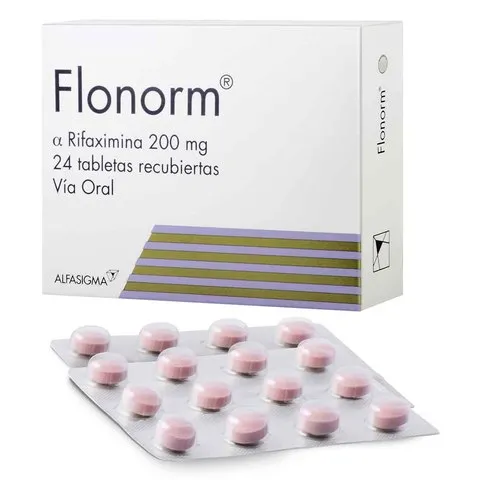
Table of Contents
- Package leaflet: Information for the patient
- Flonorm 200 mg film-coated tablets
- 1. What Flonorm is and what it is used for
- 2. What you should know before taking Flonorm
- 3. How to take Flonorm
- 4. Possible side effects
- 5. How to store Flonorm
- 6. Package contents and other information
- Patient information leaflet
- Flonorm 100mg/5 ml granules for oral suspension
- 1. What Flonorm is and what it is used for
- 2. What you need to know before taking Flonorm
- 3. How to take Flonorm
- 4. Possible side effects
- 5. How to store Flonorm
- 6. Package contents and other information
Package leaflet: Information for the patient
Flonorm 200 mg film-coated tablets
rifaximin
Please read this leaflet carefully before taking this medicine because it contains
important information for you.
- Keep this leaflet. You may need to read it again.
- If you have any questions, ask your doctor or pharmacist.
- This medicine has been prescribed for you only. Do not give it to others, even if they have the same symptoms as you, because it could be harmful.
- If you experience any adverse reaction, including those not listed in this leaflet, contact your doctor or pharmacist. See section 4.
Contents of this leaflet:
- What Flonorm is and what it is used for
- What you need to know before taking Flonorm
- How to take Flonorm
- Possible side effects
- How to store Flonorm
- Contents of the pack and other information
1. What Flonorm is and what it is used for
Flonorm contains the active substance rifaximin. Rifaximin is an intestinal antibiotic effective against a wide range of bacteria.
Flonorm is indicated in adults and adolescents (12–18 years of age) for:
- acute and chronic intestinal infections caused by gram-positive and gram-negative bacteria
- acute episodes of diarrhoea
- diarrhoea caused by an imbalance of intestinal bacteria, such as:
- summer diarrhoea
- traveller’s diarrhoea
- enterocolitis (disorders affecting the small intestine and colon)
- prevention of infections before and after gastrointestinal surgery
- adjunctive therapy of hyperammonaemia (a condition characterized by excessive levels of ammonia in the blood).
2. What you should know before taking Flonorm
Do not take Flonorm
- if you are allergic to rifaximin, to other active substances belonging to the group of medicines known as rifamycins, or to any of the other ingredients of this medicine (listed in section 6)
- if you have intestinal obstruction, even partial
- if you have severe intestinal ulcers
- if you have diarrhoea accompanied by fever or blood in the stools.
Warnings and precautions
Talk to your doctor or pharmacist before taking Flonorm:
- if you have developed a severe skin rash or skin peeling, or a skin rash with blisters and/or mouth ulcers after taking rifaximin.
Take particular care when taking Flonorm:
Severe skin reactions, including Stevens-Johnson syndrome and toxic epidermal necrolysis, have been reported during treatment with rifaximin.
Stop using rifaximin and contact your doctor immediately if you experience any of the symptoms related to these severe skin reactions described in section 4.
Discontinue treatment with Flonorm and contact your doctor:
- if your symptoms worsen or persist for more than 48 hours. This is because your condition might be due to invasive bacteria (which penetrate through the intestinal mucosa) that usually cause fever, blood in the stools, and severe diarrhoea with high frequency of bowel movements.
Contact your doctor immediately during treatment or even after stopping Flonorm:
- if you develop severe diarrhoea. This is because cases of diarrhoea due to excessive growth of the bacterium Clostridium difficile (pseudomembranous colitis) have been reported during antibiotic treatment, including with rifaximin.
Before taking Flonorm, inform your doctor:
- if you have severe impairment of liver function
- if you have impaired kidney function.
Rifaximin may cause a reddish discoloration of the urine.
Children
The safety and efficacy of rifaximin in children under 12 years of age have not been established.
No dosage recommendation can be made for patients under 12 years of age.
Other medicines and Flonorm
Inform your doctor or pharmacist if you are taking, have recently taken, or might take any other medicines.
Before taking Flonorm, inform your doctor if you are taking one or more of the following medicines:
- warfarin (anticoagulant)
- medicines for epilepsy (antiepileptics)
- medicines for heart rhythm disorders (antiarrhythmics)
- ciclosporin (a medicine used to prevent transplant rejection)
- oral contraceptives containing oestrogens
If you need to take activated charcoal, take Flonorm at least 2 hours after activated charcoal.
Flonorm with food
You may take Flonorm with or without food.
Pregnancy and breastfeeding
If you are pregnant, think you might be pregnant, are planning a pregnancy, or are breastfeeding, ask your doctor or pharmacist for advice before taking this medicine.
Pregnancy
As a precautionary measure, Flonorm should not be used during pregnancy.
Breastfeeding
It is not known whether rifaximin passes into breast milk. If you are breastfeeding, consult your doctor.
Driving and using machines
Rifaximin has a negligible influence on the ability to drive or use machines; however, dizziness and somnolence have been reported.
Do not drive or operate machinery if you experience dizziness or somnolence.
This medicine contains less than 1 mmol (23 mg) of sodium per tablet, i.e. it is essentially “sodium-free”.
3. How to take Flonorm
Take this medicine exactly as directed by your doctor. If you have any doubts, consult your doctor or pharmacist.
You may take Flonorm with or without food. Swallow the tablets with a glass of water.
Do not use Flonorm for more than 7 days unless otherwise prescribed by your doctor.
Use in adults and adolescents (12–18 years)
Treatment of intestinal infections and diarrhoea
The recommended dose is 1 tablet every 6 hours, unless otherwise prescribed by your doctor.
Treatment before and after surgical procedures
The recommended dose is 2 tablets every 12 hours, unless otherwise prescribed by your doctor.
Supplementary therapy of hyperammonaemia
The recommended dose is 2 tablets every 8 hours, unless otherwise prescribed by your doctor.
If you take more Flonorm than you should
If you or someone else has taken an excessive dose of Flonorm, contact your doctor immediately.
If you forget to take Flonorm
If you forget to take a dose, take the next dose at the usual time. Do not take a double dose to make up for the missed dose.
If you stop taking Flonorm
Continue taking Flonorm as directed by your doctor. You need to complete the full course of treatment with Flonorm to properly treat the intestinal infection. If you have any questions about how to use this medicine, consult your doctor or pharmacist.
4. Possible side effects
Like all medicines, this medicine can cause side effects, although not everybody gets them.
Stop treatment with rifaximin and contact your doctor immediately if you experience any of the
following symptoms:
- Flat, red spots on the trunk, target-shaped or circular, often with central blisters, skin peeling, mouth, throat, nose, genital, and eye ulcers. These severe skin reactions may be preceded by fever and flu-like symptoms (Stevens-Johnson syndrome, toxic epidermal necrolysis).
Many of the side effects listed below, particularly those affecting the stomach and intestine, may
be due to the intestinal infection rather than to treatment with Flonorm.
Common side effects (may affect up to 1 in 10 people)
- Headache, dizziness
- Abdominal pain, abdominal distension, flatulence (gas), diarrhoea, constipation, urgency to defecate, false urge to defecate
- Nausea, vomiting
- Fever
Uncommon side effects (may affect up to 1 in 100 people)
- Candida infections
- Inflammation or infections of the nose and throat
- Upper respiratory tract infections
- Herpes simplex infections
- Blood test abnormalities [increase in lymphocytes, increase in monocytes, decrease in neutrophils, increased liver enzyme values (AST)]
- Decreased appetite
- Reduction in body fluids (dehydration)
- Abnormal dreams, insomnia, somnolence
- Depression, nervousness
- Headache localized on the forehead or on one side of the head
- Tingling sensation, decreased tactile sensitivity
- Double vision
- Ear pain, dizziness
- Palpitations, hot flushes, increased blood pressure
- Difficulty breathing, nasal congestion, dry throat, cough, nasal discharge, sore throat
- Stomach pain, indigestion, intestinal motility disorders
- Dry lips
- Hard stools, blood in stools, mucus in stools
- Alterations in taste sensation
- Fluid accumulation in the abdomen (ascites)
- Skin irritations and eruptions, sunburn
- Muscle cramps, muscle weakness, muscle pain
- Neck pain, back pain
- Urine test abnormalities (blood in urine, sugar in urine, protein in urine)
- Increased frequency of urination, increased urine volume
- Menstrual cycles occurring closer together
- Feelings of fatigue, chills, cold sweats, excessive sweating
- Pains and discomforts of various kinds
- Influenza-like symptoms
- Swelling of the legs or arms
Side effects with unknown frequency (frequency cannot be estimated from the available data)
- Clostridium difficile infections
- Feeling faint
- Blood test abnormalities [reduced platelet count, abnormal liver function tests, abnormalities in blood coagulation tests (INR)]
- Hypersensitivity and allergic reactions, in some cases severe, up to shock
- Swelling of the face, lips, larynx
- Itching, urticaria, erythema, eczema
- Reddened skin (dermatitis), skin peeling (exfoliative dermatitis)
- Presence of small purple spots on the skin (purpura)
Reporting of side effects
If you experience any side effect, including those not listed in this leaflet, talk to your doctor or pharmacist.
You can also report side effects directly via
https://www.aifa.gov.it/content/segnalazioni-reazioni-avverse .
By reporting side effects, you can help provide more information on the safety of this medicine.
5. How to store Flonorm
Keep this medicine out of the sight and reach of children.
This medicine does not require any special storage conditions.
Do not use this medicine after the expiry date stated on the packaging after "Exp.".
The expiry date refers to the last day of that month.
Do not dispose of any medicine via wastewater or household waste. Ask your pharmacist how to
dispose of medicines you no longer use. This will help protect the environment.
6. Package contents and other information
What Flonorm contains
- The active substance is rifaximin. Each film-coated tablet contains 200 mg of rifaximin.
- The other components are sodium starch glycolate (type A), glyceryl distearate, anhydrous colloidal silica, talc, microcrystalline cellulose, hypromellose, titanium dioxide E171, disodium edetate, propylene glycol, iron oxide red E172.
Description of the appearance of Flonorm and contents of the pack
Each pack contains a blister with 12 tablets.
Marketing Authorisation Holder and Manufacturer
Marketing Authorisation Holder
Alfasigma S.p.A. - Via Ragazzi del ’99, n. 5 - 40133 Bologna (BO)
Manufacturer
Alfasigma S.p.A. – Via E. Fermi, n. 1 - 65020 Alanno (PE)
Patient information leaflet
Flonorm 100mg/5 ml granules for oral suspension
rifaximin
Please read this leaflet carefully before taking this medicine because it contains
important information for you.
- Keep this leaflet. You may need to read it again.
- If you have any questions, consult your doctor or pharmacist.
- This medicine has been prescribed for you only. Do not give it to other people, even if their symptoms are the same as yours, as it may be harmful.
- If you experience any adverse reactions, including those not listed in this leaflet, contact your doctor or pharmacist. See section 4.
Contents of this leaflet:
- What Flonorm is and what it is used for
- What you need to know before taking Flonorm
- How to take Flonorm
- Possible side effects
- How to store Flonorm
- Contents of the pack and other information
1. What Flonorm is and what it is used for
Flonorm contains the active substance rifaximin. Rifaximin is an intestinal antibiotic effective against a wide range of bacteria.
Flonorm is indicated in adults and adolescents (12–18 years of age) for:
- acute and chronic intestinal infections caused by gram-positive and gram-negative bacteria
- acute episodes of diarrhoea
- diarrhoea caused by an imbalance of intestinal bacteria, for example: summer diarrhoea, traveller’s diarrhoea, or enterocolitis (disorders affecting the small intestine and colon)
- prevention of infections before and after gastrointestinal surgery
- supplementary treatment of hyperammonaemia (a condition characterised by abnormally high levels of ammonia in the blood).
2. What you need to know before taking Flonorm
Do not take Flonorm
- if you are allergic to rifaximin, to other active substances belonging to the group of medicines known as rifamycins, or to any of the other ingredients of this medicine (listed in section 6)
- if you have intestinal obstruction, even partial
- if you have severe intestinal ulcers
- if you have diarrhoea accompanied by fever or blood in the stool.
Warnings and precautions
Talk to your doctor or pharmacist before taking Flonorm:
- if you have developed a severe skin rash or skin peeling, or a rash with blisters and/or mouth ulcers after taking rifaximin.
Pay particular attention when taking Flonorm:
Severe skin reactions have been reported in association with treatment with rifaximin, including
Stevens-Johnson syndrome and toxic epidermal necrolysis.
Stop using rifaximin and contact your doctor immediately if you experience any of the symptoms
related to these severe skin reactions described in section 4.
Stop treatment with Flonorm and contact your doctor:
- if your symptoms worsen or persist for more than 48 hours. This is because your condition might be due to invasive bacteria (which cross the intestinal mucosa) that usually cause fever, blood in the stool, and severe diarrhoea with high frequency of bowel movements.
Contact your doctor immediately if, during treatment or even after stopping
Flonorm:
- you develop severe diarrhoea. This is because during treatment with antibiotics such as rifaximin, cases of diarrhoea due to overgrowth of the bacterium Clostridium difficile (pseudomembranous colitis) have been reported.
Before taking Flonorm, inform your doctor:
- if you have severe liver function impairment
- if you have kidney function impairment.
Rifaximin may cause a reddish discoloration of the urine.
Children
The safety and efficacy of rifaximin in children under 12 years of age have not been
established. No dosage recommendation can be made for patients under 12 years of age.
Other medicines and Flonorm
Inform your doctor or pharmacist if you are taking, have recently taken, or might take any other medicines.
Before taking Flonorm, inform your doctor if you are taking one or more of the following medicines:
- warfarin (anticoagulant)
- medicines for epilepsy (antiepileptics)
- medicines for heart rhythm disorders (antiarrhythmics)
- cyclosporine (a medicine used to prevent transplant rejection)
- oral contraceptives containing oestrogens
If you need to use activated charcoal, take Flonorm at least 2 hours after activated charcoal.
Flonorm with food
You may take Flonorm with or without food.
Pregnancy and breastfeeding
If you are pregnant, think you may be pregnant, are planning to become pregnant, or are breastfeeding,
ask your doctor or pharmacist for advice before taking this
medicine.
Pregnancy
As a precautionary measure, Flonorm should not be used during pregnancy.
Breastfeeding
It is not known whether rifaximin passes into breast milk. If you are breastfeeding, consult your doctor.
Driving and using machines
Rifaximin has a negligible effect on the ability to drive or operate machinery; however, dizziness and somnolence have been reported.
Do not drive or operate machinery if you experience dizziness or somnolence.
This medicine contains sucrose, sodium benzoate and sodium
If your doctor has diagnosed you with an intolerance to certain sugars, contact him before taking
this medicine.
The medicine contains 2.88 g of sucrose (sugar) per 10 ml of reconstituted suspension. This should be taken into account in patients with diabetes mellitus.
The medicine contains 6 mg of sodium benzoate per 10 ml dose of reconstituted suspension,
equivalent to 60 mg/100 ml.
This medicine contains less than 1 mmol (23 mg) of sodium per 10 ml dose of reconstituted suspension, i.e. it is essentially “sodium-free”.
3. How to take Flonorm
Take this medicine exactly as prescribed by your doctor. If in doubt, consult your doctor or pharmacist.
You may take Flonorm with or without food.
Do not use Flonorm for more than 7 days unless otherwise directed by your doctor.
Use in adults and adolescents (12–18 years)
Treatment of intestinal infections and diarrhoea
The recommended dose is 10 ml of oral suspension (equivalent to 200 mg of active substance) every 6 hours, unless otherwise prescribed by your doctor.
Treatment before and after surgical procedures
The recommended dose is 20 ml of oral suspension (equivalent to 400 mg of active substance) every 12 hours, unless otherwise prescribed by your doctor.
Supplementary treatment of hyperammonaemia
The recommended dose is 20 ml of oral suspension (equivalent to 400 mg of active substance) every 8 hours, unless otherwise prescribed by your doctor.
How to prepare the suspension
A dosing spoon is included in the package. 5 ml of suspension contain 100 mg of active substance.
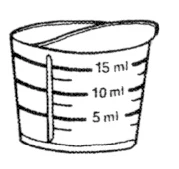
5 ml = 100 mg
- Add water to the granules up to the arrow indicated on the label of the bottle
- Shake the bottle well
- Add more water to bring the suspension level up to the level of the arrow
Shake the bottle vigorously before each administration.
The prepared suspension may be stored for 7 days at room temperature.
If you take more Flonorm than you should
If you have taken an excessive dose of Flonorm, inform your doctor immediately.
If you forget to take Flonorm
If you forget to take a dose, take the next dose at the usual time. Do not take a double dose to make up for the missed dose.
If you stop taking Flonorm
Continue taking Flonorm as directed by your doctor. You need to complete the course of Flonorm treatment to properly treat the intestinal infection. If you have any doubts about how to use this medicine, consult your doctor or pharmacist.
4. Possible side effects
Like all medicines, this medicine can cause side effects, although not everyone gets them.
Stop treatment with rifaximin and contact your doctor immediately if you notice any of the
following symptoms:
- Flat, red spots on the trunk, target-shaped or circular, often with central blisters, skin peeling, mouth, throat, nose, genital, and eye ulcers. These severe skin rashes may be preceded by fever and flu-like symptoms (Stevens-Johnson syndrome, toxic epidermal necrolysis).
Many of the side effects listed below, particularly those affecting the stomach and intestine, may
be due to the intestinal infection rather than to treatment with Flonorm.
Common side effects (may affect up to 1 in 10 people)
- Headache, dizziness
- Abdominal pain, abdominal distension, flatulence (gas), diarrhoea, constipation, urgency to defaecate, false urge to defaecate
- Nausea, vomiting
- Fever
Uncommon side effects (may affect up to 1 in 100 people)
- Candida infections
- Inflammation or infections of the nose and throat
- Upper respiratory tract infections
- Herpes simplex infections
- Blood test abnormalities [increased lymphocytes, increased monocytes, decreased neutrophils, increased liver enzyme values (AST)]
- Decreased appetite
- Reduction in body fluids (dehydration)
- Abnormal dreams, insomnia, somnolence
- Depression, nervousness
- Frontal or unilateral headache
- Tingling sensation, decreased tactile sensitivity
- Double vision
- Ear pain, dizziness
- Palpitations, hot flushes, increased blood pressure
- Difficulty breathing, nasal congestion, dry throat, cough, nasal discharge, sore throat
- Stomach pain, indigestion, intestinal motility disorders
- Dry lips
- Hard stools, blood in stools, mucus in stools
- Taste disturbances
- Fluid accumulation in the abdomen (ascites)
- Skin irritations and eruptions, sunburn
- Muscle cramps, muscle weakness, muscle pain
- Neck pain, back pain
- Urine test abnormalities (blood in urine, sugar in urine, protein in urine)
- Increased frequency of urination, increased urine volume
- Menstrual cycles occurring closer together
- Feelings of fatigue, chills, cold sweats, excessive sweating
- Various types of pain and discomfort
- Influenza-like symptoms
- Swelling of the legs or arms
Side effects with unknown frequency (frequency cannot be estimated from the available data)
- Clostridium difficile infections
- Feeling faint
- Blood test abnormalities [reduced platelet count, abnormal liver function tests, abnormalities in blood coagulation test (INR)]
- Hypersensitivity and allergic reactions, in some cases severe, up to shock
- Swelling of the face, lips, larynx
- Itching, urticaria, erythema, eczema
- Reddened skin (dermatitis), skin peeling (exfoliative dermatitis)
- Presence of small purplish spots on the skin (purpura)
Reporting of side effects
If you get any side effects, including ones not listed in this leaflet, talk to your doctor or pharmacist.
You can also report side effects directly via
https://www.aifa.gov.it/content/segnalazioni-reazioni-avverse.
By reporting side effects, you can help provide more information on the safety of this medicine.
5. How to store Flonorm
Keep this medicine out of the sight and reach of children.
This medicine does not require any special storage conditions.
The suspension prepared by adding water to the oral suspension granulate may be stored for 7 days at room temperature.
Do not use this medicine after the expiry date stated on the packaging after Exp.
The expiry date refers to the last day of that month.
Do not dispose of medicines via wastewater or household waste. Ask your pharmacist how to dispose of medicines you no longer use. This will help protect the environment.
6. Package contents and other information
What Flonorm contains
- The active substance is rifaximin. 100 ml of suspension contain 2 g of rifaximin.
- The other components are microcrystalline cellulose, sodium croscarmellose, pectin, kaolin, sodium saccharin, sodium benzoate, sucrose, black cherry flavouring.
Description of the appearance of Flonorm and package contents
Each package contains one 60 ml bottle of granules for oral suspension and a dosing spoon.
Marketing Authorization Holder and Manufacturer
Marketing Authorization Holder:
Alfasigma S.p.A. - Via Ragazzi del ’99, n. 5 - 40133 Bologna (BO)
Manufacturer:
Alfasigma S.p.A. – Via E. Fermi, n. 1 – 65020 Alanno (PE)