Flixabi
Italy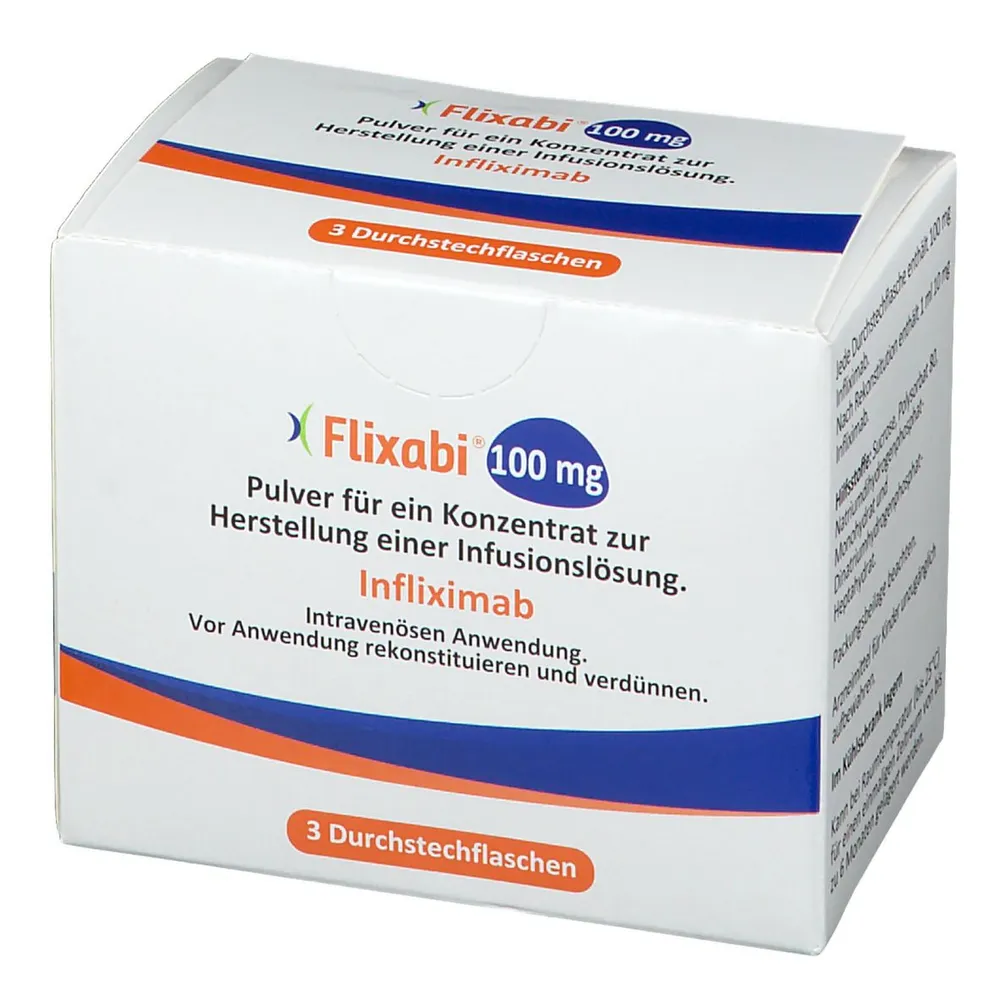
Table of Contents
- Package leaflet: Information for the user
- Flixabi 100 mg powder for concentrate for solution for infusion
- 1. What Flixabi is and what it is used for
- 2. What you should know before Flixabi is administered
- 3. How to use Flixabi
- 4. Possible side effects
- 5. How to store Flixabi
- 6. Package Contents and Other Information
Package leaflet: Information for the user
Flixabi 100 mg powder for concentrate for solution for infusion
infliximab
Please read all of this leaflet carefully before you start using this medicine because it contains important information for you.
- Keep this leaflet. You may need to read it again.
- Your doctor will also provide you with a patient reminder card containing important safety information you should be aware of before and during treatment with Flixabi.
- If you have any questions, ask your doctor.
- If you experience any side effects, including those not listed in this leaflet, tell your doctor. See section 4.
Contents of this leaflet
- What Flixabi is and what it is used for
- What you need to know before Flixabi is administered
- How Flixabi is administered
- Possible side effects
- How to store Flixabi
- Contents of the pack and other information
1. What Flixabi is and what it is used for
Flixabi contains the active substance infliximab. Infliximab is a monoclonal antibody – a type of protein that binds to a specific target in the body called tumour necrosis factor (TNF) alpha.
Flixabi belongs to a group of medicines called "TNF blockers". It is used in adults to treat the following inflammatory diseases:
- Rheumatoid arthritis
- Psoriatic arthritis
- Ankylosing spondylitis (Bechterew’s disease)
- Psoriasis
Flixabi is also used in adults and children aged 6 years and older for:
- Crohn’s disease
- Ulcerative colitis
Flixabi works by selectively binding to TNF alpha and blocking its action. TNF alpha is involved in inflammatory processes in the body; by blocking it, inflammation in the body can be reduced.
Rheumatoid arthritis
Rheumatoid arthritis is an inflammatory disease of the joints. If you suffer from rheumatoid arthritis, you will initially be treated with other medicines. If these medicines do not work adequately, you will be treated with Flixabi in combination with another medicine called methotrexate to:
- Reduce the signs and symptoms of the disease
- Slow the progression of joint damage
- Improve physical function
Psoriatic arthritis
Psoriatic arthritis is an inflammatory disease of the joints, usually accompanied by psoriasis. If you suffer from psoriatic arthritis, you will first be treated with other medicines. If these medicines do not work adequately, you will be treated with Flixabi to:
- Reduce the signs and symptoms of the disease
- Slow the progression of joint damage
- Improve physical function
Ankylosing spondylitis (Bechterew’s disease)
Ankylosing spondylitis is an inflammatory disease of the spine. If you suffer from ankylosing spondylitis, you will first be treated with other medicines. If these medicines do not work adequately, you will be treated with Flixabi to:
- Reduce the signs and symptoms of the disease
- Improve physical function
Psoriasis
Psoriasis is an inflammatory disease of the skin. If you suffer from moderate to severe plaque psoriasis, you will first be treated with other medicines or other treatments, such as phototherapy. If these medicines or treatments do not work adequately, you will be treated with Flixabi to reduce the signs and symptoms of the disease.
Ulcerative colitis
Ulcerative colitis is an inflammatory disease of the intestine. If you suffer from ulcerative colitis, you will first be treated with other medicines. If these medicines do not work adequately, you will be given Flixabi to treat the disease.
Crohn’s disease
Crohn’s disease is an inflammatory disease of the intestine. If you suffer from Crohn’s disease, you will first be treated with other medicines. If these medicines do not work adequately, you will be treated with Flixabi to:
- Treat active Crohn’s disease
- Reduce the number of abnormal openings (fistulas) between the intestine and the skin, when other medicines or surgery have been inadequate.
2. What you should know before Flixabi is administered
Do not receive Flixabi if:
- you are allergic to infliximab or to any of the other ingredients of this medicine (listed in section 6),
- you are allergic (hypersensitive) to mouse proteins,
- you have tuberculosis (TB) or another serious infection such as pneumonia or sepsis,
- you have moderate or severe heart failure.
Do not use Flixabi if any of the above conditions apply to you. If you are unsure, speak with your doctor before receiving Flixabi.
Warnings and precautions
Talk to your doctor before or during treatment with Flixabi if you:
Have previously received any medicine containing infliximab
- Inform your doctor if you have previously been treated with medicines containing infliximab and if you are restarting treatment with Flixabi.
- If you stopped treatment with infliximab for more than 16 weeks, there is an increased risk of allergic reactions when restarting treatment with Flixabi.
Infections
- Inform your doctor before receiving Flixabi if you have any infection, even if it is very mild.
- Inform your doctor before receiving Flixabi if you have lived in or traveled to areas where fungal infections such as histoplasmosis, coccidioidomycosis, or blastomycosis are common. These infections are caused by specific types of fungi that can affect the lungs or other parts of the body.
- You may be more susceptible to infections while being treated with Flixabi. The risk is higher if you are 65 years of age or older.
- These infections can be serious and include tuberculosis, infections caused by viruses, fungi, bacteria, or other environmental organisms, and sepsis, which can be life-threatening. Inform your doctor immediately if you develop symptoms of infection during treatment with Flixabi. Symptoms include fever, cough, flu-like symptoms, feeling unwell, skin redness or very warm skin, wounds, or dental problems. Your doctor may recommend temporarily stopping Flixabi.
Tuberculosis (TB)
- It is very important that you inform your doctor if you have ever had tuberculosis or if you have been in close contact with people who have or have had tuberculosis.
- Your doctor will perform tests to assess whether you have tuberculosis. Cases of tuberculosis have been reported in patients treated with Flixabi, including in patients who had previously been treated with medications for TB. Your doctor will record these tests on your patient reminder card.
- If your doctor believes you are at risk of tuberculosis, you may be treated with anti-tuberculosis medications before receiving Flixabi. Inform your doctor immediately if you notice signs of tuberculosis during treatment with Flixabi. Signs include persistent cough, weight loss, feeling tired, fever, and night sweats.
Hepatitis B virus
- Inform your doctor before receiving Flixabi if you are a carrier of hepatitis B or if you have previously had hepatitis B.
- Inform your doctor if you think you may be at risk of contracting hepatitis B.
- Your doctor must evaluate whether you have the hepatitis B virus.
- Treatment with TNF blockers such as Flixabi can cause reactivation of the hepatitis B virus in patients who are carriers of this virus, which in some cases can lead to death.
Heart problems
- Inform your doctor if you have any heart problems, such as mild heart failure.
- Your doctor will closely monitor your heart. Inform your doctor immediately if you notice new signs of heart failure or worsening of existing symptoms during treatment with Flixabi. Signs include shortness of breath or swelling of the feet.
Tumors and lymphoma
- Inform your doctor before receiving Flixabi if you have or have had lymphoma (a type of blood cancer) or other types of cancer.
- Patients with severe rheumatoid arthritis who have had the disease for a long time may have an increased risk of developing lymphoma.
- Children and adults taking Flixabi may have an increased risk of developing lymphoma or other types of cancer.
- Some patients treated with TNF blockers, including Flixabi, have developed a rare type of cancer called hepatosplenic T-cell lymphoma. Most of these patients were adolescents or young males, and most had Crohn’s disease or ulcerative colitis. This type of cancer is usually fatal. Almost
all patients had also been treated with medications containing azathioprine or
6-mercaptopurine in addition to TNF blockers.
- Some patients treated with infliximab have developed certain types of skin cancer. If you notice changes in your skin or skin growths during or after treatment, inform your doctor.
- Some women receiving infliximab for rheumatoid arthritis have developed cervical cancer. Your doctor may recommend regular cervical cancer screening for women taking infliximab, including women over 60 years of age.
Lung disease or heavy smokers
- Inform your doctor before receiving Flixabi if you have a lung disease called chronic obstructive pulmonary disease (COPD) or if you are a heavy smoker.
- Patients with COPD who are heavy smokers may have an increased risk of cancer when treated with Flixabi.
Nervous system disorders
- Inform your doctor if you have or have had any nervous system disorders before receiving Flixabi. This includes multiple sclerosis, Guillain-Barré syndrome, seizures, or a diagnosis of "optic neuritis." Inform your doctor immediately if you develop symptoms of a nervous system disorder during treatment with Flixabi. Signs include changes in vision, weakness in arms or legs, numbness or tingling in any part of the body.
Abnormal skin openings
- Inform your doctor if you have any abnormal openings in the skin (fistulas) before receiving Flixabi.
Vaccinations
- Inform your doctor if you have recently been vaccinated or if you plan to be vaccinated.
- You should receive all recommended vaccinations before starting treatment with Flixabi. You may receive some vaccines during treatment with Flixabi, but you must not receive live vaccines (vaccines containing a live, weakened infectious agent) while being treated with Flixabi, as they may cause infections.
- If you received Flixabi during pregnancy, your baby may have an increased risk of infection following administration of a live vaccine during the first year of life. It is important that you inform your pediatrician and other healthcare providers about your use of Flixabi so they can determine when your baby should receive any vaccines, including live vaccines such as the BCG vaccine (used to prevent tuberculosis).
- If you are breastfeeding, it is important that you inform your pediatrician and other healthcare providers about your use of Flixabi before your baby receives any vaccines. For further information, see the section on Pregnancy and breastfeeding.
Infectious therapeutic agents
- Talk to your doctor if you have recently taken or plan to take treatment with an infectious therapeutic agent (such as BCG instillation used to treat cancer).
Surgery or dental procedures
- Inform your doctor if you are scheduled for any surgical or dental procedures.
- Inform your surgeon or dentist that you are being treated with Flixabi, and show them your patient reminder card.
Liver problems
- Some patients treated with infliximab have developed serious liver problems. Inform your doctor immediately if you experience symptoms of liver problems during treatment with Flixabi. Signs include yellowing of the skin or eyes, dark brown urine, pain or swelling in the upper right part of the stomach, joint pain, skin rashes, or fever.
Reduction in blood cell count
- In some patients treated with infliximab, the body may not produce enough blood cells that help fight infections or stop bleeding. Inform your doctor immediately if you experience symptoms of reduced blood cell count during treatment with Flixabi. Signs include persistent fever, easy bleeding or bruising, small red or purple spots under the skin due to bleeding, or paleness.
Immune system disorders
- Some patients treated with infliximab have developed symptoms of an immune system disorder called lupus. Inform your doctor immediately if you develop symptoms of lupus during treatment with Flixabi. Signs include joint pain or a rash on the cheeks or arms that is sensitive to sunlight.
Children and adolescents
The information above also applies to children and adolescents. In addition:
- Some children and adolescents taking TNF blockers such as Flixabi have developed tumors, including unusual types, which have sometimes been fatal.
- More children taking Flixabi have developed infections compared to adults.
- Children should receive all recommended vaccinations before starting treatment with Flixabi. Children may receive some vaccines during treatment with Flixabi, but they must not receive live vaccines while being treated with Flixabi.
If you are unsure whether any of the conditions listed above apply to you, contact your doctor before receiving Flixabi.
Other medicines and Flixabi
Inform your doctor if you are using, have recently used, or might use any other medicines.
Patients with inflammatory diseases are often already taking medicines to treat their condition. These medicines can cause side effects. Your doctor will advise you which other medicines you should continue taking during treatment with Flixabi.
In particular, inform your doctor if you are using any of the following medicines:
- Medicines that affect the immune system.
- Kineret (containing anakinra). Flixabi and Kineret must not be given together.
- Orencia (containing abatacept). Flixabi and Orencia must not be given together.
During treatment with Flixabi, you must not be given live vaccines (e.g., BCG vaccine). If you used Flixabi during pregnancy or are receiving Flixabi while breastfeeding, inform your pediatrician and other healthcare providers about your use of Flixabi before your child receives any type of vaccine.
If you are unsure whether any of the conditions listed above apply to you, contact your doctor before receiving Flixabi.
Pregnancy, breastfeeding, and fertility
- If you are pregnant, think you may be pregnant, are planning a pregnancy, or are breastfeeding, consult your doctor before taking this medicine. Flixabi should be used during pregnancy or breastfeeding only if your doctor considers it necessary.
- You must avoid pregnancy while being treated with Flixabi and for at least 6 months after stopping treatment. Talk to your doctor about using an appropriate contraceptive method during this time.
- If you received Flixabi during pregnancy, your baby may have an increased risk of infection.
- It is important that you inform your pediatrician and other healthcare providers about your use of Flixabi before your baby receives any type of vaccine. If you received Flixabi during pregnancy, administering the BCG vaccine (used to prevent tuberculosis) to your baby within 12 months after birth may result in a serious infection with severe complications, including death. Live vaccines such as the BCG vaccine must not be given to your baby within 12 months after birth unless otherwise recommended by your pediatrician. For more information, see the section on Vaccinations.
- If you are breastfeeding, it is important that you inform your pediatrician and other healthcare providers about your use of Flixabi before your baby receives any type of vaccine. Live vaccines must not be given to your baby during breastfeeding unless otherwise recommended by your pediatrician.
- Severe decreases in white blood cell counts have been reported in infants born to women treated with Flixabi during pregnancy. If your baby has persistent fever or infections, contact your child’s doctor immediately.
Driving and using machines
Flixabi may slightly affect your ability to drive and use machines, for example due to dizziness or vertigo.
Flixabi contains sodium
This medicine contains less than 1 mmol (23 mg) of sodium per dose, i.e., essentially "sodium-free." However, before administration, Flixabi is mixed with a solution containing sodium. Consult your doctor if you are on a low-salt diet.
Flixabi contains polysorbate 80
This medicine contains 0.5 mg of polysorbate 80 per vial (20 mL vial), equivalent to 0.5 mg/10 mL when reconstituted with 10 mL of water for injections. Polysorbates may cause allergic reactions. Inform your doctor if you have known allergies.
3. How to use Flixabi
Rheumatoid arthritis
The usual dose is 3 mg per kg of body weight.
Psoriatic arthritis, ankylosing spondylitis (Bechterew's disease), psoriasis, ulcerative colitis and
Crohn's disease
The usual dose is 5 mg per kg of body weight.
How Flixabi is administered
- Flixabi will be administered to you by a doctor or nurse.
- The doctor or nurse will prepare the medicine for infusion.
- The medicine will be given by intravenous infusion (in a drip) (over a period of 2 hours) into a vein, usually in the arm. After the third treatment, your doctor may decide to administer your dose of Flixabi over a period of 1 hour.
- You will be monitored during administration of Flixabi and for 1–2 hours afterwards.
How much Flixabi is administered
- Your doctor will determine the dose and the interval between doses of Flixabi. This will depend on the disease, your body weight, and your response to treatment with Flixabi.
- The following table shows the dosing schedule for this medicine after the first dose.
| 2nd dose | 2 weeks after the 1st dose |
| 3rd dose | 6 weeks after the 1st dose |
| Additional doses | Every 6-8 weeks, depending on the disease |
Use in children and adolescents
Flixabi should be used in children and adolescents only for Crohn's disease or ulcerative colitis. These children must be at least 6 years of age.
If you are given more Flixabi than you should have
Since this medicine is administered to you by a doctor or nurse, it is unlikely that you will receive too much. Undesirable effects following an overdose of Flixabi are not known.
If you miss or skip an infusion of Flixabi
If you forget or miss an appointment for administration of Flixabi, make another appointment as soon as possible.
If you have any doubts about the use of this medicine, consult your doctor.
4. Possible side effects
Like all medicines, this medicine can cause side effects, although not everyone gets them. Most of these side effects are mild to moderate in severity. However, some patients may experience serious side effects and require medical treatment. Side effects may also occur after treatment with Flixabi has ended.
Tell your doctor immediately if you notice any of the following:
- Signs of an allergic reaction, such as swelling of the face, lips, mouth or throat, which may cause difficulty swallowing or breathing, rash, hives, swelling of the hands, feet or ankles. Some of these reactions may be severe and potentially life-threatening. An allergic reaction may occur within 2 hours of the infusion or later. Additional signs of allergic-type side effects that may appear up to 12 days after the infusion include muscle pain, fever, joint or jaw pain, sore throat or headache.
- Signs of a heart problem, such as chest discomfort or pain, arm pain, stomach pain, shortness of breath, anxiety, lightheadedness, dizziness, fainting, sweating, nausea, vomiting, palpitations or thumping in the chest, fast or slow heartbeat, and swelling of the feet.
- Signs of an infection (including tuberculosis), such as fever, feeling tired, persistent cough, shortness of breath, flu-like symptoms, weight loss, night sweats, diarrhoea, wounds, pus collection in the intestine or around the anus (abscess), dental problems or a burning sensation when urinating.
- Possible signs of cancer, including but not limited to swollen lymph nodes, weight loss, fever, unusual skin lumps, changes in moles or skin colour, or unusual vaginal bleeding.
- Signs of a lung problem, such as cough, difficulty breathing or chest tightness.
- Signs of neurological problems (including eye problems), such as signs of stroke (sudden numbness or weakness of the face, arm or leg, especially on one side of the body; sudden confusion, difficulty speaking or understanding; sudden vision problems in one or both eyes; difficulty walking, dizziness, loss of balance or coordination, or a severe headache), seizures, tingling/numbness in any part of the body, weakness in arms or legs, changes in vision such as double vision, or other eye problems.
- Signs of a liver problem, (including hepatitis B infection, if you have had hepatitis B in the past) such as yellowing of the skin or eyes, dark brown urine, pain or swelling in the upper right part of the stomach, joint pain, rash or fever.
- Signs of a disorder of the immune system, such as joint pain or a rash on the cheeks or arms that is sensitive to sunlight (lupus), or cough, shortness of breath, fever or rash (sarcoidosis).
- Signs of reduced number of blood cells, such as persistent fever, easy bleeding or bruising, small red or purple spots under the skin caused by bleeding, or paleness.
- Signs of serious skin problems, such as reddish spots or circular patches, often with central blisters on the trunk, large areas of peeling or shedding skin, mouth, throat, nose, genital or eye ulcers, or small pus-filled bumps that may spread over the body. These skin reactions may be accompanied by fever.
Tell your doctor immediately if you notice any of the symptoms described above.
The following side effects have been observed with infliximab:
Very common (may affect more than 1 in 10 people)
- Stomach pain, nausea
- Viral infections such as herpes or flu
- Upper respiratory tract infections such as sinusitis
- Headache
- Side effect related to the infusion
- Pain.
Common (may affect up to 1 in 10 people)
- Changes in liver function, increased liver enzymes (detected in blood tests)
- Infections of the lungs or chest, such as bronchitis or pneumonia
- Difficulty breathing or pain when breathing, chest pain
- Bleeding in the stomach or intestine, diarrhoea, indigestion, heartburn, constipation
- Hives-like rash, itchy rash or dry skin
- Balance problems or dizziness
- Fever, increased sweating
- Circulatory problems, such as low or high blood pressure
- Bruising, hot flushes or nosebleeds, feeling hot, redness of the skin (flushing)
- Feeling tired or weak
- Bacterial infections such as systemic infection, abscess or skin infection (cellulitis)
- Fungal skin infection
- Blood problems such as anaemia or low white blood cell count
- Swollen lymph nodes
- Depression, sleep disturbances
- Eye problems, including red eyes and infections
- Fast heartbeat (tachycardia) or palpitations
- Joint, muscle or back pain
- Urinary tract infection
- Psoriasis, skin problems such as eczema and hair loss
- Injection site reactions such as pain, swelling, redness or itching
- Chills, fluid accumulation under the skin causing swelling
- Numbness or tingling sensation.
Uncommon (may affect up to 1 in 100 people)
- Poor blood supply, swelling of a vein
- Collection of blood outside blood vessels (haematoma) or bruising
- Skin problems such as blistering, warts, abnormal skin or lip pigmentation, swollen lips, skin thickening, or red, scaly and cracked skin
- Severe allergic reactions (e.g., anaphylaxis), an immune system disorder called lupus, allergic reactions to foreign proteins
- Wounds that heal slowly
- Swelling of the liver (hepatitis) or gallbladder (gallbladder), liver damage
- Distractibility, irritability, confusion, nervousness
- Eye problems including blurred or reduced vision, swollen eyes or stye
- New or worsened heart failure, slow heart rate
- Fainting
- Seizures, nervous system disorders
- Intestinal perforation or intestinal blockage, stomach pain or cramps
- Swelling of the pancreas (pancreatitis)
- Fungal infections such as yeast infection or fungal nail infection
- Lung problems (such as oedema)
- Excess fluid around the lungs (pleural effusion)
- Narrowing of the airways in the lungs, causing difficulty breathing
- Inflammation of the membrane lining the lungs, causing sharp chest pain that worsens with breathing (pleuritis)
- Tuberculosis
- Kidney infections
- Low platelet count, excessive white blood cell count
- Vaginal infections
- Blood test results showing “antibodies” against your own body
- Changes in cholesterol and fat levels in the blood
- Weight gain (in most patients, weight gain was minimal).
Rare (may affect up to 1 in 1,000 people)
- A type of blood cancer (lymphoma)
- Poor oxygen supply to organs through the blood, circulatory problems such as narrowing of a blood vessel
- Inflammation of the membrane covering the brain (meningitis)
- Infections due to a weakened immune system
- Hepatitis B infection, if you have had hepatitis B in the past
- Liver inflammation caused by an immune system disorder (autoimmune hepatitis)
- Liver problem causing yellowing of the skin or eyes (jaundice)
- Swelling or growth of abnormal tissue
- Severe allergic reaction that may cause loss of consciousness and may be life-threatening (anaphylactic shock)
- Swelling of small blood vessels (vasculitis)
- Immune disorders that may affect the lungs, skin and lymph nodes (such as sarcoidosis)
- Collection of immune system cells as a result of an inflammatory response (granulomatous lesions)
- Lack of interest or emotion
- Serious skin problems such as toxic epidermal necrolysis, Stevens-Johnson syndrome and acute generalised exanthematous pustulosis
- Other skin problems such as erythema multiforme, lichenoid reactions (reddish-purple itchy rash and/or white-grey thread-like lines on mucous membranes), blisters and peeling skin or boils (furunculosis)
- Severe nervous system disorders, such as transverse myelitis, multiple sclerosis-like illness, optic neuritis and Guillain-Barré syndrome
- Eye inflammation that may cause vision changes, including blindness
- Fluid in the membrane lining the heart (pericardial effusion)
- Severe lung problems (such as interstitial pneumonia)
- Melanoma (a type of skin cancer)
- Cervical cancer
- Low number of blood cells, including a severe decrease in white blood cells
- Small red or purple spots caused by bleeding under the skin
- Abnormal levels of a blood protein called “complement factor” which is part of the immune system.
Not known (frequency cannot be estimated from the available data)
- Tumours in children and adults
- A rare blood cancer affecting mainly adolescent or young adult males (hepatosplenic T-cell lymphoma)
- Liver failure
- Merkel cell carcinoma (a type of skin cancer)
- Kaposi’s sarcoma, a rare cancer associated with human herpesvirus 8 infection. Kaposi’s sarcoma most commonly appears as purple lesions on the skin.
- Worsening of a condition called dermatomyositis (presents as a rash accompanied by muscle weakness)
- Heart attack
- Stroke
- Temporary loss of vision during or within 2 hours after the infusion
- Infection caused by a live vaccine due to a weakened immune system
- Problems following a medical procedure (including infectious and non-infectious complications).
Additional side effects in children and adolescents
Children and adolescents who have taken infliximab for Crohn’s disease have shown some differences in side effects compared to adults who have taken infliximab for Crohn’s disease. Side effects that occurred more frequently in children were: low red blood cell count (anaemia), blood in stools, low overall white blood cell count (leucopenia), redness or flushing, viral infections, low number of infection-fighting white blood cells (neutropenia), bone fracture, bacterial infection and allergic reactions of the respiratory tract.
Reporting of side effects
If you experience any side effect, including those not listed in this leaflet, talk to your doctor, pharmacist or nurse. You can also report side effects directly via the national reporting system listed in Annex V. By reporting side effects, you can help provide more information on the safety of this medicine.
5. How to store Flixabi
Flixabi will generally be stored by healthcare personnel in a hospital or clinic. If you need to store it, the storage instructions are as follows:
- Keep this medicine out of the sight and reach of children.
- Do not use this medicine after the expiry date stated on the label and the carton after “Exp.”/“EXP”. The expiry date refers to the last day of that month.
- Store in a refrigerator (2 °C - 8 °C).
- This medicine may also be stored in its original carton, outside the refrigerator, at a temperature up to 25 °C for a single period of up to six months, but not beyond the original expiry date. In this case, do not return it to refrigerated storage conditions. Record the new expiry date on the carton, indicating day/month/year. Discard the medicine if not used by the new expiry date or the printed expiry date on the carton, whichever comes first.
- When Flixabi is prepared for infusion, it is recommended to use it as soon as possible (within 3 hours). However, if the solution is prepared under conditions of complete asepsis, it may be stored in a refrigerator at a temperature between 2 °C and 8 °C for up to 34 days, and for an additional 24 hours at 25 °C after removal from the refrigerator.
- Do not use this medicine if it has changed colour or if particles are present.
6. Package Contents and Other Information
What Flixabi Contains
- The active substance is infliximab. Each vial contains 100 mg of infliximab. After reconstitution, each mL contains 10 mg of infliximab.
- The other components are sucrose, polysorbate 80 (E 433), monosodium phosphate monohydrate, and disodium phosphate heptahydrate.
Description of the Appearance of Flixabi and Contents of the Pack
Flixabi is supplied as a glass vial containing a lyophilized powder for concentrate for solution for infusion. The powder is white.
Flixabi is available in packs of 1, 2, 3, 4, or 5 vials. Not all pack sizes may be marketed.
Marketing Authorization Holder
Samsung Bioepis NL B.V.
Olof Palmestraat 10
2616 LR Delft
The Netherlands
Manufacturer
Biogen Netherlands B.V.
Prins Mauritslaan 13,
1171 LP, Badhoevedorp
The Netherlands
Samsung Bioepis NL B.V.
Olof Palmestraat 10
2616 LR Delft
The Netherlands
For further information about this medicinal product, please contact the local representative of the Marketing Authorization Holder:
België/Belgique/Belgien Lietuva
Biogen Belgium NV/S.A Biogen Lithuania UAB
Tél/Tel: + 32 2 2191218 Tel: +370 5 259 6176
България Luxembourg/Luxemburg
Ewopharma AG Representative Office Biogen Belgium NV/SA
Teл.: + 35929621200 Tél/Tel: +32 2 2191218
Česká republika Magyarország
Biogen (Czech Republic) s.r.o. Biogen Hungary Kft.
Tel: + 420 255 706 200 Tel.: + 36 1 899 9880
Danmark Malta
Biogen (Denmark) A/S Pharma.MT Ltd
Tlf.: + 45 77 41 57 57 Tel: + 35621337008
Deutschland Nederland
Biogen GmbH Biogen Netherlands B.V.
Tel: + 49 (0) 89 99 6170 Tel: + 31 20 542 2000
Eesti Norge
Biogen Estonia OÜ Biogen Norway AS
Tel: + 372 618 9551 Tlf: + 47 23 40 01 00
Ελλάδα Österreich
Genesis Pharma S.A. Biogen Austria GmbH
Τηλ: + 302108771500 Tel: + 43 1 484 46 13
España Polska
Biogen Spain, S.L. Biogen Poland Sp. z o.o.
Tel: + 34 91 310 7110 Tel.: + 48 22 351 51 00
France Portugal
Biogen France SAS Biogen Portugal Sociedade Farmacêutica,
Tél: + 33 (0)1 776 968 14 Unipessoal, Lda
Tel: + 351 21 318 8450
Hrvatska România
Ewopharma d.o.o Ewopharma Romania SRL
Tel: + 385 (0)1 6646 563 Tel: + 40212601344
Ireland Slovenija
Biogen Idec (Ireland) Ltd. Biogen Pharma d.o.o.
Tel: +353 (0)1 463 7799 Tel: + 386 1 511 02 90
Ísland Slovenská republika
Icepharma hf. Biogen Slovakia s.r.o.
Sími: + 354 540 8000 Tel: + 421 2 323 340 08
Italia Suomi/Finland
Biogen Italia s.r.l. Biogen Finland Oy
Tel: + 39 02 584 99 010 Puh/Tel: + 358 207 401 200
Κύπρος Sverige
Genesis Pharma (Cyprus) Ltd Biogen Sweden AB
Τηλ: + 357 22 76 57 15 Tel: +46 8 594 113 60
Latvija
Biogen Latvia SIA
Tel: + 371 68 688 158
Other Sources of Information
More detailed information on this medicinal product is available on the website of the European Medicines Agency: https://www.ema.europa.eu/ .
The following information is intended for healthcare professionals only:
Patients treated with Flixabi must be given the patient reminder card.
To improve traceability of biological medicinal products, the name and batch number of the administered product must be clearly recorded.
Instructions for Use and Handling – Storage Conditions
Store at 2 °C – 8 °C.
Flixabi may be stored at temperatures up to 25 °C for a single period not exceeding 6 months, without exceeding the original expiry date. The new expiry date must be recorded on the carton. Once removed from the refrigerator, Flixabi must not be returned to refrigerated storage conditions.
Instructions for Use and Handling – Reconstitution, Dilution, and Administration
To improve traceability of biological medicinal products, the brand name and batch number of the administered product must be clearly recorded.
- Calculate the required dose and number of Flixabi vials. Each Flixabi vial contains 100 mg of infliximab. Calculate the total volume required of the reconstituted Flixabi solution.
- Under aseptic conditions, reconstitute each vial of Flixabi with 10 mL of Water for Injections using a syringe fitted with a 21 gauge (0.8 mm) or smaller needle. Remove the aluminum cap and disinfect the rubber stopper with a cotton swab moistened with 70% alcohol. Insert the needle into the vial through the center of the rubber stopper and direct the stream of Water for Injections toward the glass wall of the vial. Gently rotate the vial to completely dissolve the lyophilized powder. Do not shake vigorously or for prolonged periods. DO NOT SHAKE. Foam may form during reconstitution. Allow the reconstituted solution to stand for 5 minutes. Check that the solution is colorless to slightly yellow and opalescent; the solution may contain small translucent particles, as infliximab is a protein. Do not use the solution if opaque particles, discoloration, or foreign matter are observed.
- Dilute the total volume of reconstituted Flixabi solution to 250 mL using 9 mg/mL (0.9%) sodium chloride solution for infusion. Do not dilute the reconstituted Flixabi solution with any other diluent. Dilution can be performed by withdrawing from the glass bottle or infusion bag containing 250 mL of 9 mg/mL (0.9%) sodium chloride solution for infusion a volume equal to that of the reconstituted Flixabi. Slowly add the total volume of reconstituted Flixabi solution to the bottle or 250 mL infusion bag. Mix gently. For volumes exceeding 250 mL, use a larger infusion bag (e.g., 500 mL, 1,000 mL) or multiple 250 mL infusion bags to ensure that the concentration of the infusion solution does not exceed 4 mg/mL. If stored refrigerated after reconstitution and dilution, the infusion solution must be brought to room temperature (25 °C) for 3 hours before proceeding as indicated in point 4 (infusion). Storage for more than 24 hours at 2 °C – 8 °C applies only to Flixabi prepared in an infusion bag.
- Administer the infusion solution over a period not shorter than the recommended infusion time. Use only an infusion set with an in-line sterile, non-pyrogenic filter with low protein-binding capacity (pore diameter 1.2 micrometers or less). Since no preservative is present, the intravenous infusion solution should be administered as soon as possible and within 3 hours of reconstitution and dilution. If not used immediately, storage times and conditions prior to use are the responsibility of the user and normally should not exceed 24 hours at 2 °C – 8 °C, unless reconstitution/dilution has been carried out under controlled and validated aseptic conditions. Unused solution must not be stored for later use.
- No physical and biochemical compatibility studies have been conducted to evaluate the co-administration of Flixabi with other agents. Do not administer Flixabi concomitantly with other medicinal products in the same intravenous line.
- Before administration, visually inspect Flixabi for the presence of particulate matter or discoloration. Do not use the solution if opaque particles, discoloration, or foreign particles are observed.
- Unused medicinal product and waste materials derived from its use must be disposed of in accordance with local regulations.