Flexiban
Italy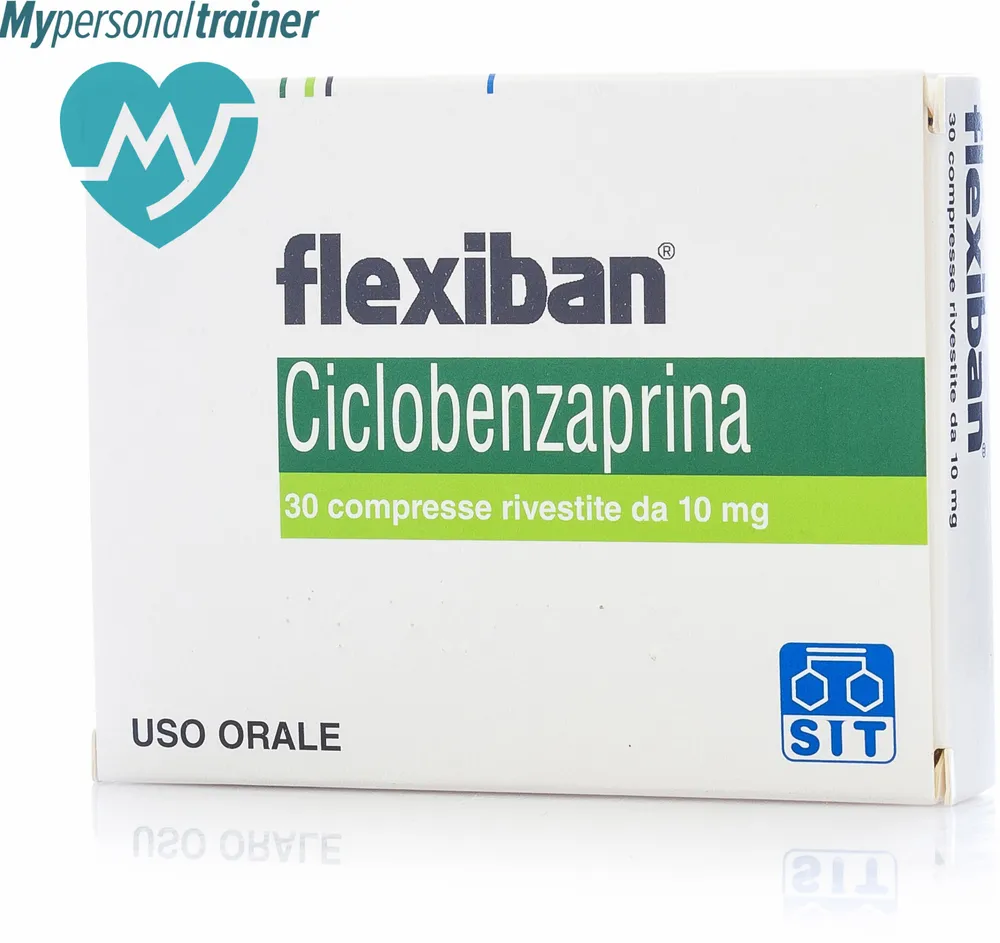
Table of Contents
Package leaflet: Information for the patient
Flexiban 10 mg coated tablets
Cyclobenzaprine hydrochloride
Please read all of this leaflet carefully before you take this medicine because it contains
important information for you.
- Keep this leaflet. You may need to read it again.
- If you have any questions, ask your doctor or pharmacist.
- This medicine has been prescribed for you only. Do not give it to other people, even if their symptoms are the same as yours, as it may be harmful.
- If you experience any side effects, including those not listed in this leaflet, contact your doctor or pharmacist. See section 4.
Contents of this leaflet:
- What Flexiban is and what it is used for
- What you need to know before taking Flexiban
- How to take Flexiban
- Possible side effects
- How to store Flexiban
- Contents of the pack and other information
1. What Flexiban is and what it is used for
Flexiban contains the active substance cyclobenzaprine hydrochloride.
It belongs to a class of medicines known as muscle relaxants (miorilaxants).
Flexiban is indicated to relieve excessive and painful muscle tension (muscle spasm).
This excessive muscle tension occurs when muscles are damaged due to:
- trauma;
- muscle strains;
- compression or irritation of a spinal nerve in the neck area (cervical radiculopathy) or lower back (lumbosacral radiculopathy);
- joint disease (osteoarthritis);
- disease of the fibrous tissue—so-called “fibrous” tissue—of muscles, tendons, and ligaments (fibromyalgia).
Improvement of symptoms is characterized by a reduction in muscle tension, associated pain, feelings of weakness, and limitation of movement, thus enabling the resumption of daily activities.
2. What you need to know before taking Flexiban
Do not take Flexiban
- if you are allergic to cyclobenzaprine or to any of the other ingredients of this medicine (listed in section 6);
- if you are taking medicines called "MAO inhibitors", used to treat depression, or if you have stopped taking them less than two weeks ago;
- if you have heart problems (myocardial infarction, arrhythmias, atrioventricular block, conduction disorders, or congestive heart failure);
- if you have a thyroid problem (hyperthyroidism).
Warnings and precautions
Talk to your doctor or pharmacist before taking Flexiban.
In particular, inform your doctor if:
- you have had or currently have heart or circulatory problems (arrhythmia, sinus tachycardia, prolonged conduction time, myocardial infarction);
- you have had a stroke;
- you have difficulty urinating (urinary retention);
- you suffer from eye problems (closed-angle glaucoma, increased eye pressure);
- you are taking medicines containing buprenorphine. Using Flexiban together with medicines containing buprenorphine may lead to serotonin syndrome, a condition that can be fatal (see "Other medicines and Flexiban").
Children and adolescents
The use of this medicine is not recommended in children and adolescents under 15 years of age, as its effects in this age group are unknown.
Other medicines and Flexiban
Inform your doctor or pharmacist if you are taking, have recently taken, or might take any other medicines.
In particular:
- if you are taking medicines called "MAO inhibitors", used to treat depression, or if you have stopped taking them less than two weeks ago;
- if you are taking barbiturates (medicines used for insomnia or epilepsy treatment) or other drugs acting on the nervous system, as this medicine may enhance their effects;
- if you are taking medicines containing buprenorphine. These medicines may interact with Flexiban and may cause symptoms such as involuntary, rhythmic muscle contractions, including muscles controlling eye movements, agitation, hallucinations, coma, excessive sweating, tremor, exaggerated reflexes, increased muscle contractions, and fever above 38°C. Contact your doctor if you experience such symptoms.
Flexiban with food, drinks and alcohol
Avoid consuming alcohol while taking this medicine, as it may increase its effects.
Pregnancy, breastfeeding and fertility
If you are pregnant, think you may be pregnant, plan to become pregnant, or are breastfeeding, consult your doctor or pharmacist before taking this medicine.
Do not use this medicine during pregnancy unless your doctor has prescribed it as necessary.
This medicine should be used with caution during breastfeeding; your doctor will advise you accordingly.
Driving and using machines
Driving and operating machinery requiring special attention are not recommended, as this medicine may impair attention and cause tiredness.
Flexiban contains lactose. If your doctor has diagnosed you with an intolerance to certain sugars, contact them before taking this medicine.
3. How to take Flexiban
Take this medicine exactly as directed by your doctor or pharmacist. If you have any doubts, consult your doctor or pharmacist.
Your doctor will determine the dose based on your condition. You may be prescribed doses ranging from a minimum of 20 mg per day to a maximum of 40 mg per day, to be taken in several administrations throughout the day.
The daily dose must not exceed 60 mg.
The most commonly recommended dose is 10 mg three times a day.
Duration of treatment: The duration of treatment will be determined by your doctor. Treatment beyond two weeks is not recommended, as muscle tension due to musculoskeletal problems is generally short-lived.
If you take more Flexiban than you should
If you take a dose of Flexiban higher than that prescribed, contact your doctor immediately or go to the nearest hospital. Bring this leaflet with you.
Some symptoms of overdose may include: temporary confusion, difficulty concentrating, visual hallucinations (which tend to disappear), agitation, increased involuntary tendon reflexes (hyperreflexia), muscle stiffness, vomiting, and high fever.
Furthermore, due to the way this medicine acts, an excessive amount may cause drowsiness, low body temperature, tachycardia, and other heart rhythm disturbances. Other symptoms may include dilated pupils, seizures, very low blood pressure, inability to move or speak (stupor), and coma.
If you forget to take Flexiban
Do not take a double dose to make up for the missed dose.
If you stop taking Flexiban
If you have any doubts about using this medicine, consult your doctor or pharmacist.
4. Possible side effects
Like all medicines, this medicine can cause side effects, although not everyone experiences them.
Flexiban is generally well tolerated.
- More common side effects are: drowsiness, dry mouth and dizziness.
- Less common side effects are:
- increased heart rate (tachycardia, palpitations), fainting, changes in heartbeat rhythm (arrhythmia), dilation of blood vessels, low blood pressure;
- problems with coordination of movement (ataxia), dizziness, speech disorders (dysarthria), tingling sensations (paraesthesia), tremors, increased muscle contraction (hypertonia), seizures, disorientation, insomnia, depressed mood, abnormal sensations, anxiety, agitation, abnormal thoughts and dreams, hallucinations, excitement, confusion, euphoria, nervousness;
- vomiting, loss or decrease of appetite (anorexia), diarrhoea, stomach or intestinal pain, inflammation of the stomach (gastritis), thirst, flatulence, nausea, indigestion, belching, stomach pain and bloating (dyspepsia), development of a white coating on the tongue (white coated tongue), constipation, abdominal pain, liver problems;
- increased need to urinate and/or difficulty urinating, urinary incontinence (reduced bladder tone);
- sweating;
- excessive muscle tension (muscle spasms), weakness in certain muscles;
- allergic reactions, including skin rashes, itchy skin swellings (urticaria), swelling of the face and tongue (facial and lingual oedema);
- loss of taste sensation (ageusia), unpleasant taste, ringing in the ears (tinnitus), blurred vision;
- general malaise, weakness, fatigue, headache (cephalalgia), feeling of lack of strength and energy (asthenia).
Following the instructions provided in this leaflet reduces the risk of side effects.
Reporting of side effects
If you experience any side effect, including those not listed in this leaflet, please inform your doctor or pharmacist.
You may also report side effects directly via the website: https://www.aifa.gov.it/content/segnalazioni-reazioni-
avverse . By reporting side effects, you can help provide more information on the safety of this medicine.
5. How to store Flexiban
Keep this medicine out of the sight and reach of children.
Do not use this medicine after the expiry date stated on the packaging after Exp.
The expiry date refers to the last day of that month.
Do not dispose of any medicine via wastewater or household waste. Ask your pharmacist
how to dispose of medicines you no longer use. This will help protect the environment.
6. Package contents and other information
What Flexiban contains
- The active substance is cyclobenzaprine hydrochloride.
- The other components are: monohydrate lactose, corn starch, pregelatinized starch, yellow iron oxide, magnesium stearate, hypromellose, hydroxypropylcellulose, titanium dioxide.
Description of the appearance of Flexiban and contents of the pack
Flexiban is presented in a box containing 30 film-coated tablets in blister packs.
Marketing Authorization Holder and Manufacturer
Laboratorio Farmaceutico SIT S.r.l. - Via Cavour, 70 - 27035 Mede (PV)