Fleiderina
Italy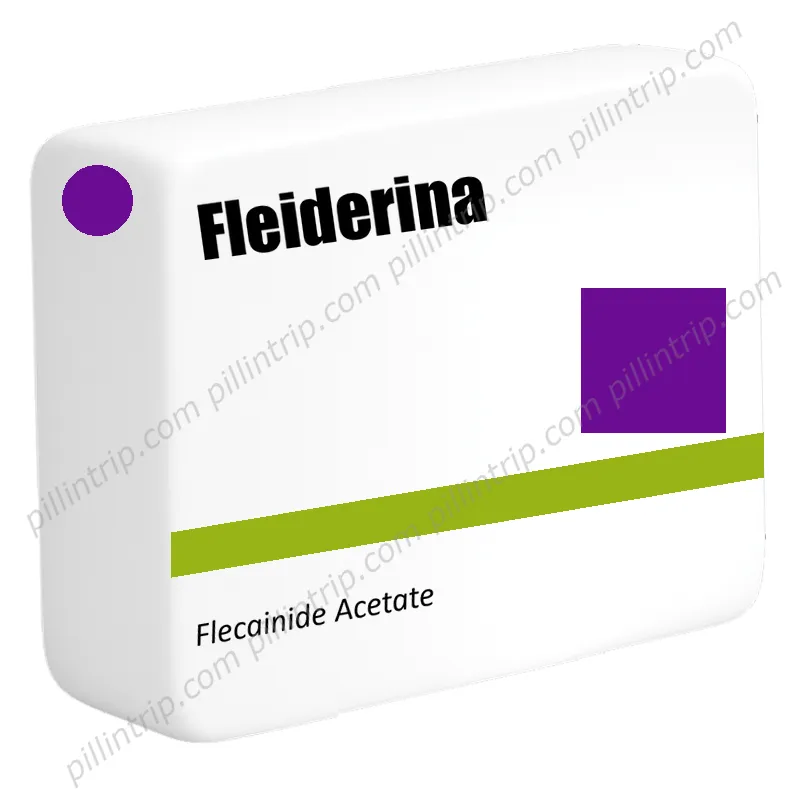
Table of Contents
- PACKAGE LEAFLET: INFORMATION FOR THE USER
- FLEIDERINA 50 mg prolonged-release hard capsules, 100 mg prolonged-release hard capsules, 150 mg prolonged-release hard capsules, 200 mg prolonged-release hard capsules
- 1. What FLEIDERINA is and what it is used for
- 2. What you should know before taking FLEIDERINA
- 3. How to take Fleiderina
- 4. Possible side effects
- 5. How to store Fleiderina
- 6. Package contents and other information
PACKAGE LEAFLET: INFORMATION FOR THE USER
FLEIDERINA 50 mg prolonged-release hard capsules, 100 mg prolonged-release hard capsules, 150 mg prolonged-release hard capsules, 200 mg prolonged-release hard capsules
Flecainide acetate
Please read this leaflet carefully before taking this medicine because it contains important information for you.
Keep this leaflet. You may need to read it again.
If you have any questions, ask your doctor or pharmacist.
This medicine has been prescribed for you only. Do not give it to other people, even if their symptoms are the same as yours, as it may be harmful.
If you experience any side effects, including those not listed in this leaflet, contact your doctor, pharmacist, or nurse. See section 4.
Contents of this leaflet:
- What FLEIDERINA is and what it is used for
- What you need to know before taking FLEIDERINA
- How to take FLEIDERINA
- Possible side effects
- How to store FLEIDERINA
- Contents of the pack and other information
1. What FLEIDERINA is and what it is used for
Fleiderina prolonged-release hard capsules belong to a group of medicines that act
against cardiac arrhythmia (known as antiarrhythmics). It inhibits the conduction of electrical impulses in the heart and
prolongs the period during which the heart is at rest, thereby restoring normal pumping function.
Fleiderina prolonged-release hard capsules are used:
- for certain severe cardiac arrhythmias, which often manifest with severe palpitations or tachycardia.
- for severe cardiac arrhythmias that have not responded well to treatment with other medicines, or when other treatments cannot be tolerated.
2. What you should know before taking FLEIDERINA
Do not take Fleiderina:
If you are allergic to flecainide or to any of the other ingredients of this medicine (listed in
paragraph 6)
If you suffer from other heart conditions different from the one for which you are taking this medicine. If you are
unsure or wish further information, contact your doctor or pharmacist
If you are currently taking certain other antiarrhythmics (sodium channel blockers)
If you have Brugada syndrome (a genetic heart disease).
Warnings and precautions
Talk to your doctor before taking Fleiderina:
- If you have impaired liver and/or kidney function, as the blood concentration of flecainide may increase. In this case, your doctor should regularly monitor the blood concentration of flecainide,
- If you are elderly, as the blood concentration of flecainide may increase,
- If you have a permanent pacemaker or temporary stimulating electrodes,
- If you have experienced cardiac arrhythmias after heart surgery,
- If you suffer from severe bradycardia or marked hypotension. These conditions must be corrected before using Fleiderina,
- If you have had episodes of heart attacks.
A decrease or increase in blood potassium levels may affect the action of
flecainide. Diuretics, medicines that stimulate intestinal motility (laxatives), and corticosteroid hormones (corticosteroids) may reduce blood potassium levels. In such cases, your doctor should monitor blood potassium levels.
Children under 12 years of age
Flecainide, the active substance in this medicinal product, is not approved for use in
children under 12 years of age. Nevertheless, signs of toxicity have been observed during
treatment with flecainide in children who reduced their intake of dairy products. If your doctor
has prescribed flecainide for your child, ensure that the child's consumption of dairy products (e.g. milk, formula milk, yogurt) remains stable during treatment. Consult your doctor before making any changes to your child’s dairy intake.
Other medicines and Fleiderina
If you take other medicines together with Fleiderina, they may influence each other's effects and/or side effects (i.e., drug interactions may occur).
Interactions may occur when this medicine is used with, for example:
- digoxin (a medicine that stimulates the heart); Fleiderina may increase digoxin blood levels,
- medicines that reduce cardiac pump function, such as beta-blockers (e.g. propranolol),
- certain antiepileptic medicines (e.g. phenytoin, phenobarbital, and carbamazepine): these substances may accelerate the metabolism of flecainide,
- cimetidine (an antacid); may enhance the effect of Fleiderina,
- amiodarone (for heart disorders); the dose of flecainide may need to be reduced in some patients,
- medicines for depression (paroxetine, fluoxetine, and some other antidepressants),
- clozapine (a medicine used to treat schizophrenia),
- mizolastine, astemizole, and terfenadine (medicines for allergies),
- quinine and halofantrine (medicines for malaria),
- verapamil (to lower blood pressure),
- quinidine,
- medicines for the treatment of HIV infections (ritonavir, lopinavir, and indinavir),
- thiazides and loop diuretics,
- disopyramide (an antiarrhythmic); do not use Fleiderina if you are also taking disopyramide,
- terbinafine (for the treatment of fungal infections),
- bupropion (a smoking cessation aid).
Inform your doctor or pharmacist if you are taking, have recently taken, or might take any other
medicines.
Fleiderina with food and drinks
Fleiderina should be taken on an empty stomach, or at least one hour before meals.
Dairy products (milk, formula milk, and probably also yogurt) may reduce the absorption of
flecainide in children and infants. The use of flecainide, the active ingredient in this medicinal
product, is not approved in children under 12 years of age. Nevertheless, signs of toxicity have been
observed during treatment with flecainide in children who reduced their intake of dairy products. If your doctor has prescribed flecainide for your child, ensure that the child's consumption of dairy products (e.g. milk, formula milk, yogurt) remains stable during treatment. Consult your doctor before making any changes to your child’s dairy intake.
Pregnancy and breastfeeding
Fleiderina should be used during pregnancy only if the benefits outweigh the risks, as it has been shown that flecainide crosses the placenta in patients taking it during pregnancy.
If Fleiderina is used during pregnancy, flecainide plasma levels in the mother should be monitored. Consult your doctor as soon as you suspect you are pregnant, or if you intend to become pregnant.
Flecainide is excreted in breast milk. Fleiderina should be used during breastfeeding only if the benefits outweigh the risks.
If you are pregnant or breastfeeding, if you think you may be pregnant, or if you are planning a pregnancy, ask your doctor or pharmacist for advice before taking this medicine.
Driving and using machines
If you experience side effects such as dizziness, double vision or blurred vision, or if you feel lightheaded, your reaction ability may be reduced. This could be dangerous in situations requiring concentration and attention, such as driving, operating dangerous machinery, or working at heights. If you have any doubts about whether Fleiderina negatively affects your ability to drive, consult your doctor.
3. How to take Fleiderina
Take this medicine exactly as directed by your doctor or pharmacist.
If you have any doubts, consult your doctor or pharmacist.
Take this medicine exactly as directed by your doctor or pharmacist. If
you have any doubts, consult your doctor or pharmacist.
Your doctor will prescribe a personalized dose appropriate for your condition. Treatment with
Fleiderina is normally started under medical supervision (if necessary, in hospital). Follow
your doctor's instructions carefully when taking Fleiderina. If you have any doubts, consult your doctor or
pharmacist.
When and how to take the capsules?
Take the capsules with a sufficient amount of liquid (e.g. water). The daily dose is normally divided
throughout the day and should be taken on an empty stomach, or at least one hour before meals.
The usual dose is only indicative and is as follows:
The normal starting dose ranges between 100 and 200 mg. Your doctor may increase the dose up to a
maximum of 400 mg per day.
Elderly patients
Your doctor may prescribe a lower dose. The dose for elderly patients must not exceed 300
mg per day.
Patients with impaired renal or hepatic function
Your doctor may prescribe a lower dose for you.
Patients with a permanent pacemaker
The daily dose must not exceed 200 mg per day.
Patients receiving concomitant treatment with cimetidine (a medicine for gastric disorders) or
amiodarone (a medicine for cardiac arrhythmia)
Your doctor will monitor you regularly, and for some patients a lower dose will be prescribed.
During treatment, your doctor will regularly determine the flecainide blood level and
perform what is known as an electrocardiogram (ECG) of the heart. A simple ECG should be
performed once a month, while a more detailed ECG should be performed once every three months.
At the beginning of treatment and when the dose is increased, an ECG should be performed every 2–4 days.
Patients treated with a lower dose than normally used should undergo ECG monitoring more
frequently. Your doctor may adjust the dose at intervals of 6–8 days. These patients should undergo
an ECG during the second and third weeks after starting treatment.
Use in children
These capsules must not be taken by children under 12 years of age.
If you take more Fleiderina than you should
If you suspect an overdose, inform a doctor immediately.
If you forget to take Fleiderina
Take the missed dose as soon as you remember, unless you remember only when it is almost time to take the next dose. In this case, do not take the missed dose in addition, but continue following the prescribed dosing schedule. It is important to remember to take the capsules according to the prescribed dosing schedule. If in doubt, consult your doctor.
Do not take a double dose to make up for a missed dose.
If you stop taking Fleiderina
If you suddenly stop taking Fleiderina, there is no risk of withdrawal symptoms.
However, cardiac arrhythmia will no longer be controlled as intended. Therefore, do not stop
treatment without informing your doctor.
If you have any doubts about how to use this medicine, consult your doctor or pharmacist.
4. Possible side effects
Like all medicines, this medicine can cause side effects, although not everybody will experience them.
Like other antiarrhythmics, flecainide may have the effect of inducing arrhythmia. An existing arrhythmia may worsen, or a new arrhythmia may occur. The risk of proarrhythmic effects is higher in patients with structural heart disease and/or significant impairment of cardiac function.
Regarding the heart, the most common side effects are increased or decreased heart rate (tachycardia, bradycardia), palpitations, cardiac arrest, heart failure, chest pain, heart attack, and reduced blood pressure (hypotension).
Other side effects that may occur include:
Very common (in more than 1 out of 10 patients):
dizziness, light-headedness, vision problems such as double vision, blurred vision, and difficulty focusing
Common (in more than 1 out of 100 but less than 1 out of 10 patients):
shortness of breath, weakness, fatigue (tiredness), fever, fluid accumulation in tissues (oedema), and malaise
Uncommon (in more than 1 out of 1000 but less than 1 out of 100 patients):
nausea, vomiting, constipation, abdominal pain, anorexia, diarrhoea, dyspepsia (upper abdominal pain, fullness), flatulence, reduction in red blood cells, white blood cells and platelets, allergic skin reactions such as rash or hair loss
Rare (in more than 1 out of 10,000 but less than 1 out of 1000 patients):
inflammation of the lungs (pneumonitis), skin tingling (“as if ants were crawling on the skin”), coordination problems, movement difficulties (tics), decreased sensation, increased sweating, temporary loss of consciousness, ringing in the ears, tremor, dizziness, hot flushes, somnolence, severe depression, anxiety, insomnia, headache, nerve disorders for example in arms or legs, seizures, confusion, seeing things that are not there (hallucinations), amnesia, urticaria, elevated liver enzymes with or without jaundice (yellowing of eyes and skin)
Very rare (in less than 1 out of 10,000 patients):
elevated levels of certain antibodies, corneal deposits, light sensitivity
Frequency not known (frequency cannot be estimated from the available data):
some changes in the electrocardiogram (increased PR and QRS intervals), increased stimulation threshold in patients with pacemakers or temporary pacing electrodes, impaired conduction between the atria and ventricles of the heart (second- and third-degree atrioventricular block), cessation of heartbeat, slower or faster heartbeat, loss of the heart's ability to pump enough blood to the body's tissues, chest pain, low blood pressure, heart attack, awareness of heartbeat, a pause in the normal heart rhythm (sinus arrest), irregular heartbeat that may be life-threatening (ventricular fibrillation), emergence of a certain pre-existing heart condition (Brugada syndrome) not previously observed before treatment with Fleiderina, lung scarring or lung diseases (pulmonary fibrosis and interstitial lung disease), liver dysfunction
Reporting of side effects
If you experience any side effect, including those not listed in this leaflet, talk to your doctor, pharmacist, or nurse. You can also report side effects directly via the national reporting system at the website "www.agenziafarmaco.gov.it/it/responsabili". By reporting side effects, you can help provide more information on the safety of this medicine.
5. How to store Fleiderina
Keep this medicine out of the sight and reach of children.
Do not store above 30°C.
Do not use this medicine after the expiry date stated on the packaging after “Do not use beyond” or “Exp.”. The expiry date refers to the last day of that month.
Do not dispose of any medicine via wastewater or household waste. Ask your pharmacist how to dispose of medicines you no longer use. These measures help protect the environment.
6. Package contents and other information
What Fleiderina contains
The active substance is flecainide acetate.
- Fleiderina 50 mg prolonged-release hard capsules: each capsule contains 50 mg flecainide acetate
- Fleiderina 100 mg prolonged-release hard capsules: each capsule contains 100 mg flecainide acetate
- Fleiderina 150 mg prolonged-release hard capsules: each capsule contains 150 mg flecainide acetate
- Fleiderina 200 mg prolonged-release hard capsules: each capsule contains 200 mg flecainide acetate
- The other components are: povidone, microcrystalline cellulose, crospovidone, colloidal silicon dioxide, magnesium stearate, methacrylic acid and methyl methacrylate copolymer (1:2), polyethylene glycol, talc.
- The outer coating of the various capsules contains the following components:
50 mg: gelatin, titanium dioxide.
100 mg: gelatin, titanium dioxide, iron oxide black.
150 mg: gelatin, titanium dioxide, iron oxide black.
200 mg: gelatin, titanium dioxide, iron oxide black and iron oxide red.
Description of the appearance of Fleiderina and contents of the pack
Flecainide 50 mg prolonged-release capsules are opaque gelatin capsules with a white body and a white cap, containing white or almost white round microtablets.
Flecainide 100 mg prolonged-release capsules are opaque gelatin capsules with a grey body and a white cap, containing white or almost white round microtablets.
Flecainide 150 mg prolonged-release capsules are opaque gelatin capsules with a grey body and a grey cap, containing white or almost white round microtablets.
Flecainide 200 mg prolonged-release capsules are opaque gelatin capsules with a grey body and a pink cap, containing white or almost white round microtablets.
Pack sizes:
Blister packs: 28 and 30 capsules.
Not all pack sizes may be marketed.
Marketing Authorization Holder
Bruno Farmaceutici S.p.A.
Via delle Ande, 15
00144 Rome, Italy
Manufacturer responsible for batch release
Laboratorios Liconsa, S.A.
Avda. Miralcampo, nº 7,
Polígono Industrial Miralcampo
19200 Azuqueca de Henares (Guadalajara), Spain
This medicinal product is authorized in the European Economic Area countries under the following names:
Netherlands
Lifleiderina 50 mg, capsules met verlengde afgifte, hard
Lifleiderina 100 mg, capsules met verlengde afgifte, hard
Lifleiderina 150 mg, capsules met verlengde afgifte, hard
Lifleiderina 200 mg, capsules met verlengde afgifte, hard
This Patient Information Leaflet was last revised on