Flarex
Italy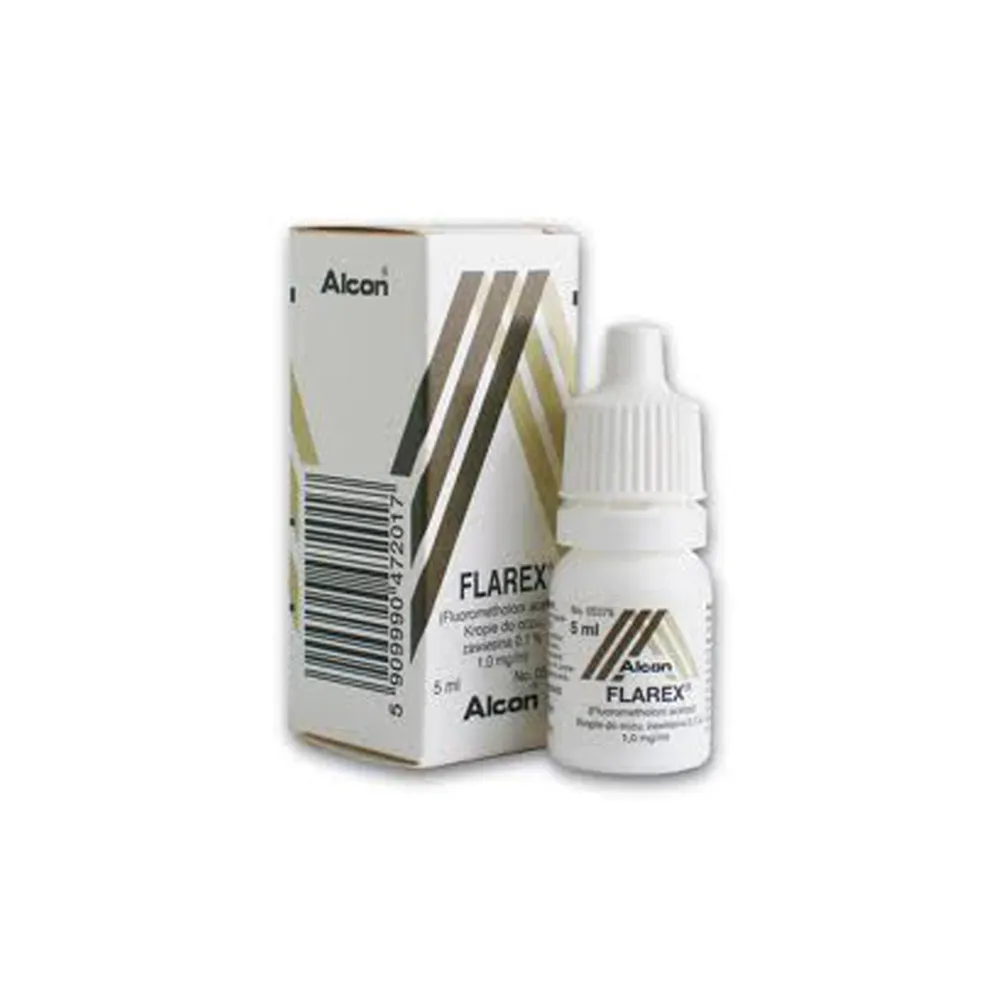
Table of Contents
Package leaflet: Information for the patient
FLAREX
0.1% Eye drops, suspension
fluorometholone acetate
Please read this leaflet carefully before using this medicine because it contains important information for you.
- Keep this leaflet. You may need to read it again.
- If you have any questions, ask your doctor or pharmacist.
- This medicine has been prescribed for you only. Do not give it to others, even if their symptoms are the same as yours, because it could be harmful.
- If you experience any side effects, including those not listed in this leaflet, talk to your doctor or pharmacist. See section 4.
Contents of this leaflet:
- What FLAREX is and what it is used for
- What you need to know before using FLAREX
- How to use FLAREX
- Possible side effects
- How to store FLAREX
- Contents of the pack and other information
1. What FLAREX is and what it is used for
FLAREX contains the active substance fluorometholone acetate, which acts against inflammation and belongs to a class of medicines called corticosteroids.
FLAREX is indicated for the treatment of inflammatory eye conditions that require the use of a corticosteroid.
2. What you need to know before using FLAREX
Do not use FLAREX
- If you are allergic (hypersensitive) to the active substance or to any of the other ingredients of this medicine (listed in section 6).
- If you have:
- untreated bacterial eye infections
- corneal infections (the transparent membrane covering the colored part of the eye) caused by Herpes simplex
- vaccinia, varicella, or other viral infections of the cornea and conjunctiva (the transparent membrane covering the white part of the eye and the inner eyelids)
- fungal eye infections (mycosis of the eye)
- high intraocular pressure
- mycobacterial eye infections (including ocular tuberculosis)
- styes (infections occurring on the eyelid).
Warnings and precautions
- Consult your doctor before using FLAREX.
- Use this medicine only for ocular application.
- Long-term use of corticosteroids in the eyes may lead to increased intraocular pressure, vision problems, and cataract formation (clouding of the lens inside the eye, known as the crystalline lens).
- If you use FLAREX for a prolonged period, you should have regular and frequent checks of your intraocular pressure. This is particularly important in pediatric patients, as the risk of corticosteroid-induced increase in intraocular pressure may be higher in children and may occur earlier than in adults. The use of FLAREX in children should be under strict medical supervision (see section “How to use FLAREX – Use in children”). The risk of
increased intraocular pressure caused by corticosteroids and/or cataract formation is
higher in predisposed patients (e.g., diabetic patients).
- While using this medicine, you may become more susceptible to eye infections: if your symptoms worsen or suddenly reappear, consult your doctor.
- If you have a corneal ulcer that does not heal, stop treatment and consult your doctor.
- Contact your doctor if blurred vision or other visual disturbances occur.
- Ocular corticosteroids may delay healing of eye injuries. It is also known that NSAIDs (Non-Steroidal Anti-Inflammatory Drugs) applied to the eyes may slow or delay healing. Concomitant use of NSAIDs and corticosteroids in the eyes may potentially increase problems with eye wound healing (see section “Other medicines and FLAREX”).
- Consult your doctor before using this medicine if you have conditions causing thinning of ocular tissues, as ocular corticosteroid administration may lead to perforation.
- Do not wear contact lenses during treatment of eye inflammation.
- Prolonged use of corticosteroids may cause adverse effects: do not use this medicine continuously for more than one month.
- If you do not notice improvement after two weeks of treatment, consult your doctor.
- This medicine must not be injected.
- After removing the cap, if the protective mobile ring becomes loose, discard it before using the product.
Other medicines and FLAREX
Inform your doctor if you are taking or have recently taken any other medicines, including those obtained
without a prescription.
Some medicines may increase the effects of Flarex, and your doctor may wish to monitor you closely if you are
taking these medicines (including certain HIV treatments: ritonavir, cobicistat).
Inform your doctor especially if you are using other eye medications containing drugs belonging to the class
of NSAIDs (Non-Steroidal Anti-Inflammatory Drugs). Concomitant use of NSAIDs and corticosteroids in the
eyes may potentially increase problems with corneal wound healing.
If you are using other eye drops or ophthalmic ointments, wait at least 5 minutes between instilling each
medication. The ophthalmic ointment should be used last.
Pregnancy, breastfeeding, and fertility
If you are pregnant, think you may be pregnant, planning to become pregnant, or breastfeeding, consult your
doctor or pharmacist before using this medicine.
Fertility
There are no data available on the effect of FLAREX on male or female fertility.
Pregnancy
Data on the use of FLAREX in pregnant women are lacking or limited.
Animal studies with corticosteroids have shown reproductive toxicity.
Breastfeeding
It is not known whether fluorometholone or its metabolites are excreted in breast milk following ocular
administration. Systemically administered corticosteroids (by mouth or injection) are excreted in breast milk.
A risk to breastfed infants cannot be ruled out.
In pregnant and breastfeeding women, this medicine should be used only if prescribed by a doctor and in cases
of clear medical necessity.
Driving and using machines
For a certain period after instillation of FLAREX, blurred vision or other visual disturbances may occur, which
could impair your ability to drive or operate machinery. If these effects occur, wait until your vision clears before
driving or operating machinery.
FLAREX contains benzalkonium chloride
This medicine contains 0.5 mg of benzalkonium chloride per 5 ml, equivalent to 0.1 mg/ml.
Benzalkonium chloride may be absorbed by soft contact lenses and may cause discoloration. Remove contact
lenses before using this medicine and wait 15 minutes before reinserting them.
Benzalkonium chloride may also cause eye irritation, especially if you have dry eye or corneal disorders (the
outermost transparent layer of the eye). If you experience unusual sensations in the eye, such as burning or
pain, after using this medicine, speak with your doctor.
FLAREX contains phosphate buffer
This medicine contains 3.5 mg of phosphate buffer per 5 ml, equivalent to 0.7 mg/ml.
If you have severe damage to the outermost transparent layer of the eye (the cornea), phosphates may very
rarely cause calcium deposits leading to opaque corneal spots during treatment.
3. How to use FLAREX
Apply FLAREX only to the eyes.
Always use this medicine exactly as your doctor has told you. If you are in doubt, consult your doctor or pharmacist.
Recommended dose
Instill 1 or 2 drops into the affected eye four times a day, following your doctor's instructions.
During the first 24–48 hours, your doctor may increase the dosage to 2 drops every two hours.
Use the medicine for the length of time prescribed by your doctor. Do not use this medicine continuously for more than one month. Contact your doctor if you do not feel better or if you feel worse after 2 weeks of treatment.
Use in children
In children, safety and efficacy have not been established; therefore, use should be reserved at the physician's discretion only for cases of absolute necessity.
How to apply FLAREX
1 2
- Wash your hands.
- Take the bottle and shake well before unscrewing the cap.
- If opening the bottle for the first time, remove the detached collar from the cap before using the product.
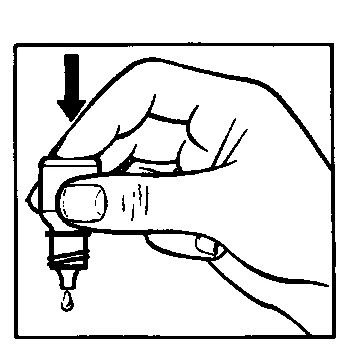
- Hold the bottle upside down between thumb and middle finger.
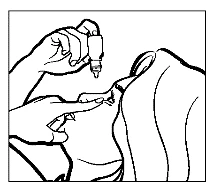
- Tilt your head backward. Gently pull down the lower eyelid with a clean finger to form a pouch between the eyelid and the eye. The drop should be instilled into this pouch (Figure 1).
- Bring the tip of the bottle close to the eye.
- Do not touch the eye, eyelid, surrounding areas, or any other surfaces with the dropper tip to avoid contaminating the remaining drops in the bottle.
- Gently press the base of the bottle to release one drop of FLAREX at a time.
- Do not squeeze the bottle: it is designed so that only gentle pressure on the bottom is needed (Figure 2).
- If instilling drops into both eyes, repeat the same procedure for the other eye.
- Immediately replace the cap after use, screwing it back on securely.
- If a drop misses the eye, try again.
If you use more FLAREX than you should
If you instill more medicine than intended, rinse the eye thoroughly with running water.
If you accidentally swallow FLAREX, contact your doctor immediately or go to the nearest hospital.
If you forget to use FLAREX
If you forget to use FLAREX, do not worry; use it as soon as you remember. However, if it is almost time for the next dose, skip the missed dose and return to your regular dosing schedule.
Do not use a double dose to make up for a forgotten dose.
If you have any doubts about how to use this medicine, consult your doctor or pharmacist.
4. Possible side effects
Like all medicines, FLAREX may cause side effects, although not everybody gets them.
The following side effects have been reported with the use of FLAREX. Their frequency cannot be determined
from the available data.
- Eye-related effects: increased pressure inside the eye, eye pain, eye irritation, eye discomfort, sensation of foreign body in the eye, blurred vision, eye redness, increased tear production.
- General side effects: bad taste in the mouth.
Reporting of side effects
If you experience any side effect, including those not listed in this leaflet, talk to your doctor or pharmacist.
You can also report side effects directly through the national reporting system at: https://www.aifa.gov.it/content/segnalazioni-reazioni-avverse.
By reporting side effects, you can help provide more information on the safety of this medicine.
5. How to store FLAREX
Keep this medicine out of the sight and reach of children.
Do not store above 25°C.
Do not use this medicine after the expiry date stated on the bottle and carton after “Exp.”.
The expiry date refers to the last day of that month. The expiry date applies to the medicine
in its original packaging, properly stored.
The medicine must not be used more than 30 days after first opening the container.
Do not dispose of any medicine via wastewater or household waste. Ask your pharmacist how to dispose of
medicines you no longer use. This will help protect the environment.
6. Package contents and other information
What FLAREX contains
- The active substance is fluorometholone acetate. 1 ml of eye drops contains 1 mg of fluorometholone acetate.
- The other components are: benzalkonium chloride, edetate disodium, monobasic monohydrate sodium phosphate, tyloxapol, sodium chloride, hydroxyethylcellulose, purified water.
Description of the appearance of FLAREX and contents of the pack
FLAREX eye drops is a white to off-white suspension, contained in a 5 ml plastic dropper bottle.
Marketing Authorization Holder
Immedica Pharma AB
SE-113 29 Stockholm
Sweden
Manufacturer
SA ALCON COUVREUR NV, B-2870 Puurs (Belgium).