Flantadin
Italy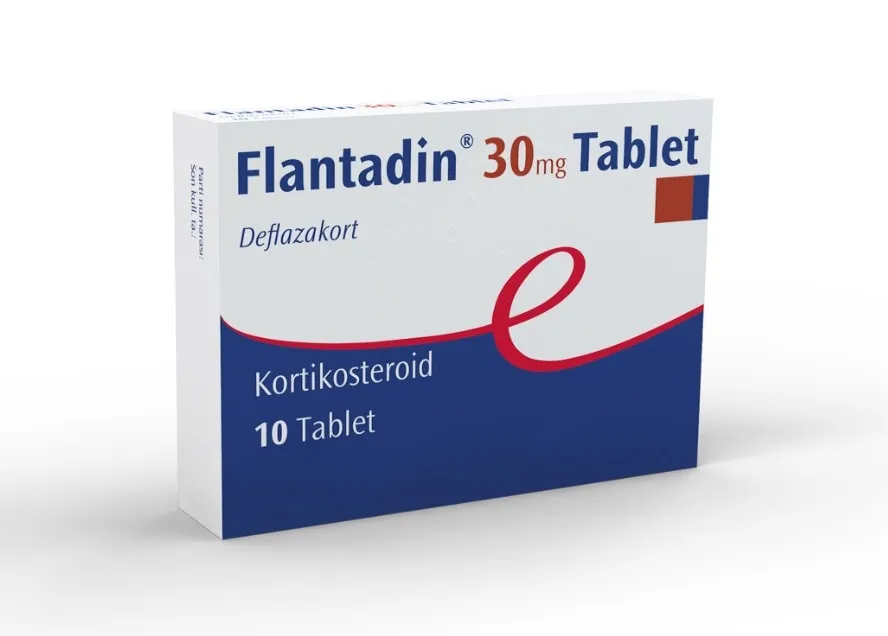
Table of Contents
- Patient Information Leaflet
- Flantadin 6 mg tablets, 30 mg tablets, 22.75 mg/ml oral drops, suspension
- 1. What Flantadin is and what it is used for
- 2. What you should know before taking Flantadin
- 3. How to take Flantadin
- 4. Possible side effects
- 5. How to store Flantadin
- 6. Package contents and other information
Patient Information Leaflet
Flantadin 6 mg tablets, 30 mg tablets, 22.75 mg/ml oral drops, suspension
deflazacort
Please read this leaflet carefully before taking this medicine because it contains important information for you.
- Keep this leaflet. You may need to read it again.
- If you have any questions, ask your doctor or pharmacist.
- This medicine has been prescribed for you only. Do not give it to others, even if their symptoms are the same as yours, as it could be harmful.
- If you experience any side effects, including those not listed in this leaflet, contact your doctor or pharmacist. See section 4.
Contents of this leaflet:
- What Flantadin is and what it is used for
- What you need to know before taking Flantadin
- How to take Flantadin
- Possible side effects
- How to store Flantadin
- Contents of the pack and other information
1. What Flantadin is and what it is used for
Flantadin contains the active substance deflazacort, which belongs to a group of medicines called corticosteroids (or glucocorticoids). Corticosteroids are naturally produced in our body and help regulate important processes involved in general health.
Flantadin is used to treat inflammation and to reduce the immune system’s response (the system that protects the body from viruses, bacteria, etc.) in certain diseases.
Flantadin is used to treat:
- disorders due to insufficient activity of the adrenal glands (primary and secondary adrenal insufficiency) (alone or in combination with other medicines called mineralocorticoids);
- rheumatic diseases (psoriatic arthropathy, rheumatoid arthritis, ankylosing spondylitis, acute gouty arthritis, post-traumatic osteoarthritis, acute and subacute bursitis, acute non-specific tenosynovitis, epicondylitis);
- systemic connective tissue diseases (tissue connecting other tissues within the body) [systemic lupus erythematosus (SLE), acute rheumatic carditis (rheumatic heart disease), systemic dermatomyositis (polymyositis)];
- skin diseases [pemphigus, bullous herpetiform dermatitis, severe polymorphic erythema (Stevens-Johnson syndrome), exfoliative dermatitis, mycosis fungoides (cutaneous lymphoma), severe psoriasis, severe seborrheic dermatitis];
- allergic conditions (seasonal or perennial allergic rhinitis, bronchial asthma, contact dermatitis, atopic dermatitis, serum sickness, drug hypersensitivity);
- respiratory diseases [symptomatic sarcoidosis, berylliosis, fulminant or disseminated pulmonary tuberculosis (in conjunction with appropriate chemotherapy), aspiration pneumonia];
- eye diseases due to severe acute and chronic inflammatory or allergic processes (marginal allergic corneal ulcers, ocular herpes zoster, anterior segment inflammation of the eyeball,
posterior diffuse choroiditis and uveitis, sympathetic ophthalmia, allergic conjunctivitis, keratitis, chorioretinitis,
optic neuritis, iritis, and iridocyclitis);
- blood disorders, including malignant forms (secondary thrombocytopenia in adults, autoimmune hemolytic anemia, erythroblastopenia, congenital hypoplastic anemia; Hodgkin’s disease, non-Hodgkin lymphomas, chronic lymphocytic leukemia, acute leukemia in childhood, etc.);
- conditions characterized by fluid accumulation (idiopathic nephrotic syndrome of unconfirmed or secondary origin due to systemic lupus erythematosus);
- gastrointestinal diseases (ulcerative colitis, regional enteritis).
2. What you should know before taking Flantadin
Do NOT take Flantadin
- if you are allergic to deflazacort or to any of the other ingredients of this medicine (listed in section 6);
- if you have tuberculosis;
- if you have peptic ulcer;
- if you have an eye infection caused by herpes simplex;
- if you have systemic fungal infections;
- if you suffer from mental illness (psychosis);
- if you are pregnant or breastfeeding, unless after careful evaluation by your doctor (see section “Pregnancy and breastfeeding”);
- if the patient is in early infancy, unless after careful evaluation by your doctor (see section “Children”);
- if you have been administered a vaccine containing live attenuated virus.
Warnings and precautions
Talk to your doctor or pharmacist before taking Flantadin.
Patients undergoing treatment for more than 3 weeks should carry the prescription for Flantadin treatment and show it to any healthcare professional involved in their care.
Do not stop taking Flantadin suddenly unless advised by your doctor.
Exercise particular caution with Flantadin and inform your doctor:
- if you have ever developed a severe skin rash, skin peeling, blisters, and/or mouth ulcers after taking Flantadin or other deflazacort-containing medicines. Serious skin reactions, including toxic epidermal necrolysis, have been reported in association with Flantadin treatment. Discontinue use of Flantadin and consult a doctor immediately if you notice any of the symptoms described in section 4.
- if you have or have had significant stress: your doctor will adjust the dose according to the type of stress. Even if you have discontinued treatment several months ago, your doctor will decide whether to continue, restart, or prescribe appropriate hormone therapy. The dose should always be reduced gradually to minimize impairment of adrenal gland function;
- if you have underactive thyroid (hypothyroidism);
- if you have liver disease (hepatic cirrhosis);
- if you have tuberculosis: you may use Flantadin in cases of fulminant or generalized disease, provided it is given together with appropriate anti-tuberculosis treatment. Your doctor will monitor you closely;
- if you have a form of intestinal inflammation with risk of bowel perforation (non-specific ulcerative colitis);
- if you have collections of pus (abscesses) or infections causing pus formation;
- if you have an inflammatory disease of part of the intestine (diverticulitis);
- if you have recently undergone intestinal surgery (intestinal anastomoses);
- if you have kidney disease (renal insufficiency);
- if you have high blood pressure;
- if you have diabetes;
- if you have reduced mineral content in bones (osteoporosis);
- if you suffer from a disease causing severe muscle weakness (myasthenia gravis);
- if you have an infection: corticosteroids may mask signs of infection, and additional infections may occur during treatment. In such cases, your doctor will assess whether to administer an antibiotic;
- if you need to be vaccinated: vaccination should not be performed during corticosteroid treatment;
- if you have or have had emotional instability or a tendency to develop mental illness, as these may worsen during treatment. Euphoria, difficulty sleeping (insomnia), mood or personality changes, severe depression, or symptoms of actual psychiatric disorders may also occur.
- if you come into contact with individuals affected by chickenpox or shingles, especially if you have not previously had chickenpox. Patients receiving Flantadin should take special care to avoid exposure to measles and should consult a doctor immediately if exposure occurs.
Prolonged use of Flantadin, as with other glucocorticoids, may cause clouding of the eye's natural lens called posterior subcapsular cataract, increased intraocular pressure (glaucoma) with possible damage to the optic nerves, and may increase the risk of fungal or viral eye infections.
Contact your doctor if you experience blurred vision or other visual disturbances.
If you are being treated concomitantly with other medicines such as diuretics and beta-agonists, your doctor may prescribe blood tests to monitor certain parameters (potassium and blood pH).
Children
In early infancy, this product should be used only when strictly necessary and under direct medical supervision.
Your doctor will carefully monitor the growth and development of children undergoing prolonged treatment.
Parents of a child receiving Flantadin who has not previously had chickenpox and who comes into contact with children or adults affected by chickenpox or shingles should consult a doctor immediately.
Other medicines and Flantadin
Inform your doctor or pharmacist if you are currently taking, or have recently taken, any other medicines, including those obtained without a prescription.
Although no interactions with other medicines or incompatibilities with Flantadin are known, your doctor may decide to increase the dose during concomitant treatment with:
- anticonvulsant medicines (phenobarbital, phenytoin, carbamazepine);
- certain antibiotics (rifampicin);
- medicines for asthma and bronchopulmonary diseases (ephedrine);
- medicines to prevent blood clotting (warfarin).
Your doctor may decide to reduce the dose during concomitant treatment with:
- other antibiotics (erythromycin, troleandomycin);
- medicines containing female hormones or hormone-containing preparations (estrogens);
- an antifungal medicine (ketoconazole).
Some medicines may enhance the effects of Flantadin, and your doctor may wish to monitor you closely if you are taking these medicines (including certain HIV treatments: ritonavir, cobicistat).
If you have low levels of prothrombin in the blood (if you have blood coagulation problems), your doctor will assess whether it is appropriate to combine acetylsalicylic acid with corticosteroids such as Flantadin.
Antacids taken simultaneously to aid digestion reduce intestinal absorption of glucocorticoids such as Flantadin, potentially worsening symptoms of the underlying condition for which Flantadin was prescribed.
The use of Flantadin may reduce the effectiveness of an antipsychotic sedative called quetiapine, reduce, like other corticosteroids, the effectiveness of antibiotics during an infectious disease by altering the body's natural responses, and counteract the effects of medicines used for diabetes mellitus (including insulin), certain medicines used to control arterial hypertension and diuretics; therefore, your doctor may decide whether or not to adjust the dose of Flantadin.
The use of corticosteroids such as Flantadin may enhance the anticoagulant effect of warfarin or similar anticoagulant medicines called coumarins, necessitating monitoring of prothrombin time or INR to prevent bleeding. Corticosteroids may also enhance the effect of certain muscle relaxants (non-depolarizing neuromuscular blockers) used during surgery, potentially leading to prolonged muscle relaxation and acute muscle weakness.
Furthermore, corticosteroids such as Flantadin may intensify the potassium-lowering effect in the blood when used concomitantly with medicines containing acetazolamide, certain other diuretics, certain anti-asthma medicines (beta-2-agonists and theophylline), and a stomach mucosa protector (carbenoxolone), all of which can independently cause reduced blood potassium levels.
Pregnancy and breastfeeding
If you are pregnant, suspect you may be pregnant, plan to become pregnant, or are breastfeeding, consult your doctor or pharmacist before taking this medicine.
If you are pregnant or breastfeeding, this medicine will be prescribed only when strictly necessary and under direct medical supervision.
Do not take this medicine if you are pregnant or breastfeeding unless after careful evaluation by your doctor.
Driving and using machines
Currently, no effects of glucocorticoids on the ability to drive or use machinery are known.
Flantadin 6 mg tablets contain lactose and sucrose
Flantadin 6 mg tablets contain lactose and sucrose. If your doctor has diagnosed you with an intolerance to certain sugars, contact him/her before taking this medicine.
Flantadin 30 mg tablets contain lactose
Flantadin 30 mg tablets contain lactose. If your doctor has diagnosed you with an intolerance to certain sugars, contact him/her before taking this medicine.
Flantadin 22.75 mg/ml oral drops, suspension contains sorbitol
Flantadin 22.75 mg/ml oral drops, suspension contains 396 mg of sorbitol per maximum daily dose (equivalent to 396 mg/3.96 ml).
If your doctor has diagnosed you with an intolerance to certain sugars, contact him/her before taking this medicine.
Sorbitol is a source of fructose. If your doctor has told you that you (or the child) are intolerant to certain sugars, or if you have been diagnosed with hereditary fructose intolerance, a rare genetic disorder in which patients cannot metabolize fructose, speak with your doctor before you (or the child) take this medicine.
Flantadin 22.75 mg/ml oral drops, suspension contains benzyl alcohol
Flantadin 22.75 mg/ml oral drops, suspension contains 0.039 ml of benzyl alcohol per maximum daily dose (equivalent to 0.039 ml/3.96 ml).
Benzyl alcohol may cause allergic reactions.
Benzyl alcohol has been associated with a risk of serious adverse effects, including respiratory problems (gasping syndrome), in young children.
Do not administer to neonates up to 4 weeks of age unless otherwise recommended by the doctor.
Do not use for more than one week in young children (under 3 years of age) unless otherwise recommended by the doctor or pharmacist.
Consult your doctor or pharmacist if you are pregnant or breastfeeding. This is because large amounts of benzyl alcohol may accumulate in the body and cause adverse effects (such as metabolic acidosis).
Consult your doctor or pharmacist if you have liver or kidney disease. This is because large amounts of benzyl alcohol may accumulate in the body and cause adverse effects (such as metabolic acidosis).
For those engaged in sports
Using this medicine without therapeutic need constitutes doping and may result in a positive anti-doping test.
3. How to take Flantadin
Take this medicine exactly as directed by your doctor or pharmacist. If you have
any doubts, consult your doctor or pharmacist.
The recommended initial dose in adults ranges from 6 to 90 mg (one or more tablets or several drops per
day), depending on the severity and progression of the disease being treated.
Your doctor will assess whether to maintain or adjust the initial dose in order to achieve a satisfactory response based on the disease and your reaction to treatment.
The maintenance dose should always be the lowest dose capable of controlling symptoms.
Dose reduction should always be carried out gradually.
Take the daily dose of Flantadin as a single dose in the morning, together with a small amount of food.
Oral drops, suspension
Shake the bottle well before use and dilute the suspension immediately before use in sugared water or non-carbonated beverages.
The dropper of the suspension delivers on average 1 mg of deflazacort per drop.
Use in children
In early infancy, this product should be used only when strictly necessary and under direct medical supervision.
Children undergoing prolonged corticosteroid treatment must be closely monitored with regard to growth and development.
If you take more Flantadin than you should
In case of accidental overdose, contact your doctor immediately or go to the nearest hospital.
If you forget to take Flantadin
Do not take a double dose to make up for the missed dose.
If you stop taking Flantadin
Do not stop treatment abruptly. Your doctor will advise you on how to gradually reduce the dose.
If you have any doubts about how to use this medicine, consult your doctor or pharmacist.
4. Possible side effects
Like all medicines, this medicine can cause side effects, although not everybody will experience them.
During treatment with corticosteroids such as Flantadin, especially with intensive and prolonged therapy, some of the following side effects may occur with unknown frequency:
Leukocytosis (increased white blood cells)
Heart failure (inability of the heart to supply adequate blood flow to meet the body's needs)
Interference with hypothalamic-pituitary-adrenal axis function, particularly during periods of stress; altered function of endocrine glands (altered hormone production), changes in facial appearance ("moon face"), disturbances in growth in children and adolescents. These side effects could be reduced by taking the tablets as a single morning dose, if the disease treatment allows.
Posterior subcapsular cataract (progressive loss of transparency of the lens) and increased intraocular pressure (within the eye), chorioretinopathy (retinal disease), thinning of the cornea or sclera, worsening of viral or fungal (mycotic) eye infections. Blurred vision with rare frequency (may affect up to 1 in 1,000 people).
Indigestion (dyspepsia), gastric or duodenal peptic ulcer (erosion of the inner lining of the stomach or intestine), bleeding, nausea, perforation of peptic ulcer, acute pancreatitis (especially in children), candidiasis (fungal infection).
Hypersensitivity (allergy), including anaphylaxis (a specific pathological reaction in a sensitized organism upon re-exposure to the same substance).
Increased susceptibility to infections and increased severity with suppression of symptoms and clinical signs, reactivation of latent tuberculosis. Candidiasis (fungal infection).
Negative nitrogen balance (decreased body nitrogen due to reduced muscle mass caused by excessive metabolism); electrolyte imbalances including hypokalemia (low potassium levels in the blood) and hypernatremia (high sodium levels in the blood)
Weight gain
Increased appetite
Reduced carbohydrate tolerance, possibly revealing latent diabetes mellitus or increasing the need for hypoglycemic agents in diabetics, as determined by the physician
Electrolyte imbalances, which rarely and particularly in predisposed patients may lead to arterial hypertension (high blood pressure) and cardiac pump failure
Osteoporosis (skeletal disease), bone fragility, myopathies (muscle diseases), vertebral and long bone fractures; avascular necrosis (bone tissue death due to interruption of blood supply), tendonitis, tendon rupture when administered concomitantly with quinolones (a type of antibiotic)
Dizziness, headache, and increased intracranial pressure (around the brain); worsening of epilepsy (a neurological condition characterized by recurrent, sudden episodes with sudden loss of consciousness and violent convulsive muscle movements).
Various psychiatric disorders: irritability, anxiety, suicidal thoughts, mania, delusions, hallucinations, worsening of schizophrenia, euphoria, insomnia, mood or personality changes, severe depression, cognitive disturbances including confusion and amnesia (memory loss).
Menstrual irregularities
- Skin and subcutaneous tissue disorders
Delayed wound healing, skin thinning and fragility; hirsutism, acne, striae, ecchymoses (blood infiltration under the skin), telangiectasias (dilation of small blood vessels, usually superficial), edema (swelling). Severe skin eruptions may be preceded by fever and flu-like symptoms (toxic epidermal necrolysis) (frequency not known) within 8 weeks of starting treatment.
- Vascular disorders
Thromboembolism (blood clot formation), particularly in patients with underlying conditions associated with increased tendency to thrombosis, arterial hypertension in predisposed individuals.
- Respiratory, thoracic and mediastinal disorders
Hiccups.
Reporting of side effects
If you experience any side effects, including those not listed in this leaflet, talk to your doctor or pharmacist. You can also report side effects directly via the national reporting system at https://www.aifa.gov.it/content/segnalazioni-reazioni-avverse.
By reporting side effects, you can help provide more information on the safety of this medicine.
5. How to store Flantadin
Keep this medicine out of the sight and reach of children.
Do not use this medicine after the expiry date stated on the packaging after Exp. The expiry date refers to the last day of that month.
Do not dispose of any medicine via wastewater or household waste. Ask your pharmacist how to dispose of medicines you no longer use. This will help protect the environment.
6. Package contents and other information
What Flantadin contains
Flantadin 6 mg tablets
- The active substance is deflazacort. Each tablet contains 6 mg of deflazacort.
- The other ingredients are lactose, magnesium stearate, maize starch, microcrystalline cellulose, sucrose.
Flantadin 30 mg tablets
- The active substance is deflazacort. Each tablet contains 30 mg of deflazacort.
- The other ingredients are lactose, magnesium stearate, maize starch, microcrystalline cellulose.
Flantadin 22.75 mg/ml oral drops, suspension
- The active substance is deflazacort. 1 ml of suspension contains 22.75 mg of deflazacort.
- The other ingredients are aluminium and magnesium silicate, sodium carboxymethylcellulose, benzyl alcohol, sorbitol, polysorbate 80, acetic acid, purified water.
Description of the appearance of Flantadin and contents of the pack
Flantadin 6 mg tablets
Box containing a blister pack of 10 tablets of 6 mg.
Flantadin 30 mg tablets
Box containing a blister pack of 10 tablets of 30 mg.
Flantadin 22.75 mg/ml oral drops, suspension
13 ml bottle of suspension with dropper.
Marketing Authorization Holder
TEOFARMA S.r.l.
Via F.lli Cervi, 8
27010 Valle Salimbene (PV)
Manufacturer
Teofarma S.r.l.
Viale Certosa, 8/A
27100 Pavia