Firdapse
Italy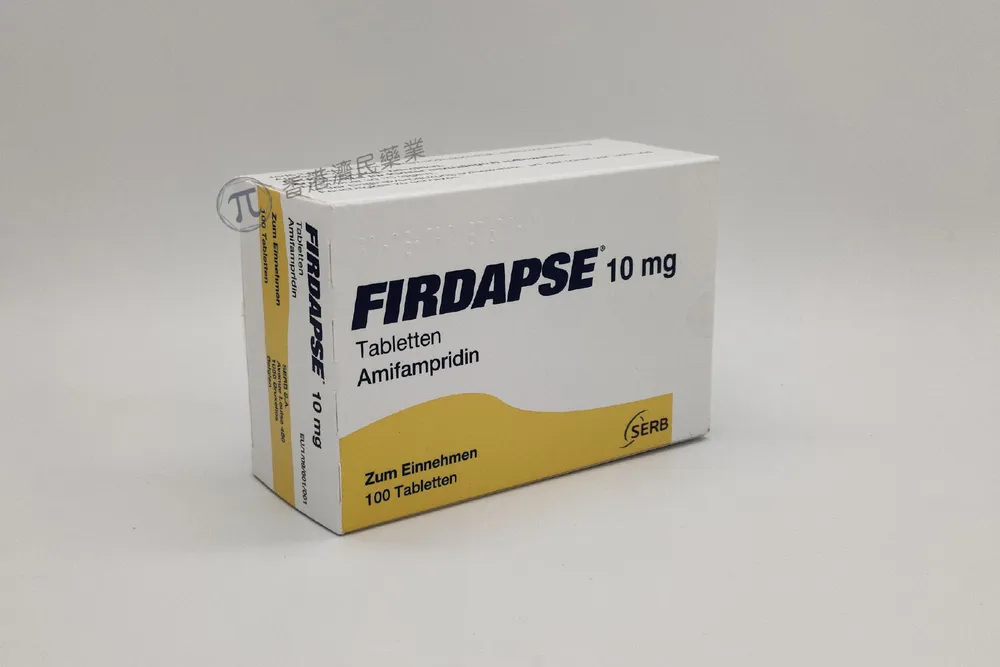
Table of Contents
B: PACKAGE LEAFLET
Package leaflet: Information for the user
FIRDAPSE 10 mg tablets
amifampridine
This medicinal product is subject to additional monitoring. This will allow for the rapid identification of new safety information. You can help by reporting any side effects you experience while taking this medicine. See the end of section 4 for information on how to report side effects.
Please read this leaflet carefully before taking this medicine as it contains important information for you.
Keep this leaflet. You may need to read it again.
If you have any questions, ask your doctor or pharmacist.
This medicine has been prescribed for you only. Do not give it to other people, even if their symptoms are the same as yours, as it may be harmful.
If you experience any side effect, including those not listed in this leaflet, tell your doctor or pharmacist. See section 4.
Contents of this leaflet:
- What FIRDAPSE is and what it is used for
- What you need to know before taking FIRDAPSE
- How to take FIRDAPSE
- Possible side effects
- How to store FIRDAPSE
- Contents of the pack and other information
1. What FIRDAPSE is and what it is used for
FIRDAPSE is used in adults to treat the symptoms of a neuromuscular disease called
Lambert-Eaton myasthenic syndrome (LEMS). This condition affects the transmission of nerve impulses
to the muscles, causing muscle weakness. It may be associated with certain types of tumour
(paraneoplastic form of LEMS) or occur in the absence of such tumours (non-paraneoplastic form of LEMS).
In patients with this disease, a chemical called acetylcholine, which transmits nerve impulses to the muscles,
is not released normally, and the muscle does not receive, either fully or partially, the nerve signals.
FIRDAPSE works by increasing the release of acetylcholine and thereby improving the transmission of nerve signals to the muscles.
2. What you need to know before taking FIRDAPSE
Do not take FIRDAPSE
If you are allergic to amifampridine or to any of the other ingredients of this medicine
(listed in section 6).
If you have uncontrolled asthma,
If you have epilepsy,
Together with medicines that may alter the electrical activity of the heart (QT interval prolongation – detectable on electrocardiogram), such as:
sultopride (a medicine prescribed for the treatment of certain behavioural disorders in adults),
antiarrhythmic medicines (e.g., disopyramide),
medicines for the treatment of gastrointestinal disorders (e.g., cisapride, domperidone),
medicines for the treatment of infections – antibiotics (e.g., rifampicin) and antifungals (e.g.,
ketoconazole).
Together with medicines that have a therapeutic dose close to the maximum safe dose,
If you have congenital heart problems (congenital long QT syndrome).
If in doubt, consult your doctor or pharmacist.
Warnings and precautions
Talk to your doctor or pharmacist before taking FIRDAPSE.
Inform your doctor if you have:
Asthma
A history of seizures
Kidney problems
Liver problems
Your doctor will carefully monitor the effects of FIRDAPSE on you and may adjust the dose of your
medicines. Your doctor will also ask you to undergo a cardiological evaluation at the beginning of
treatment and annually thereafter.
If you have LEMS but no tumour, your doctor will perform a thorough assessment of the potential tumour risks associated with FIRDAPSE before starting treatment.
Inform all doctors you consult that you are taking FIRDAPSE.
Stop treatment and contact your doctor immediately if you experience:
Seizures
Asthma
Other medicines and FIRDAPSE
Inform your doctor if you are taking, have recently taken, or might take any other medicines.
Some medicines may interact with FIRDAPSE when taken together. The following medicines must not be taken in combination with FIRDAPSE:
Medicines that may alter the electrical activity of the heart (QT interval prolongation, detectable on electrocardiogram), for example, sultopride, disopyramide, cisapride, domperidone, rifampicin, and ketoconazole (see “Do not take FIRDAPSE”).
It is particularly important to inform your doctor if you are taking any of the following medicines or are planning to start taking any of the following medicines:
Antimalarials (e.g., halofantrine and mefloquine)
Tramadol (a painkiller)
Antidepressants – tricyclic antidepressants (e.g., clomipramine, amoxapine), selective serotonin reuptake inhibitors (e.g., citalopram, dapoxetine), and atypical antidepressants (e.g., bupropion)
Medicines for mental disorders (e.g., haloperidol, carbamazepine, chlorpromazine, clozapine)
Anti-Parkinson medicines – anticholinergics (e.g., trihexyphenidyl, mesylate), MAO-B inhibitors (e.g., selegiline, deprenyl), COMT inhibitors (e.g., entacapone)
Medicine for the treatment of allergies – antihistamines (e.g., terfenadine, astemizole, cimetidine)
Medicines for muscle relaxation – (e.g., mivacurium, pipecuronium, succinylcholine)
Sedatives (e.g., barbiturates)
Pregnancy and breastfeeding
If you are pregnant, suspect you may be pregnant, planning to become pregnant, or are breastfeeding, consult your doctor or pharmacist before taking this medicine.
FIRDAPSE must not be used during pregnancy. You must use an effective contraceptive method during treatment. If you become pregnant while taking this medicine, you must inform your doctor immediately.
It is not known whether FIRDAPSE is excreted in human breast milk. You should discuss with your doctor the risks and benefits of continuing FIRDAPSE therapy while breastfeeding.
Driving and using machines
This medicine may cause drowsiness, dizziness, seizures, and blurred vision, and therefore may impair your ability to drive or operate machinery. Do not drive or operate machinery if you experience any of these side effects.
3. How to take FIRDAPSE
Take this medicine exactly as instructed by your doctor. If you have any doubts, consult your doctor or pharmacist.
The dose to be taken is determined by your doctor based on the severity of symptoms and certain genetic factors. This dose is intended specifically for you.
The recommended starting dose is 5 mg of amifampridine (half a tablet) three times daily (i.e., 15 mg per day). Your doctor may gradually increase this dose slowly at first, to 5 mg (half a tablet) four times daily (i.e., 20 mg per day). Subsequently, your doctor may continue increasing the total daily dose by adding 5 mg (half a tablet) per day, every 4 or 5 days.
The maximum recommended dose is 60 mg per day (i.e., a total of six tablets to be taken at intervals throughout the day). Total daily doses exceeding 20 mg must be divided into separate doses (from two to four). The single dose must never exceed 20 mg (two tablets).
The tablets have a score line which allows them to be divided into two equal parts. Swallow the tablets with some water and together with food.
Patients with renal or hepatic impairment:
Patients with renal or hepatic disorders should use FIRDAPSE with caution. For patients with moderate or severe renal or hepatic impairment, a starting daily dose of FIRDAPSE of 5 mg (half a tablet) is recommended. For patients with mild renal or hepatic impairment, a starting daily dose of FIRDAPSE of 10 mg (5 mg twice daily) is recommended. In these patients, the dose of FIRDAPSE should be increased more slowly than in patients without renal or hepatic disorders: increase the dose by 5 mg every 7 days. If adverse effects occur, consult your doctor, as it may be necessary to stop increasing the dose.
If you take more FIRDAPSE than you should
If you take more FIRDAPSE than prescribed, you may experience vomiting or stomach pain. If you notice any of these symptoms, consult your doctor or pharmacist immediately.
If you forget to take FIRDAPSE
If you forget to take FIRDAPSE, do not take a double dose to make up for the missed dose, but continue treatment as prescribed by your doctor.
If you stop taking FIRDAPSE
If you stop treatment, you may experience symptoms such as fatigue, slow reflexes, and constipation. Do not stop treatment without consulting your doctor.
If you have any questions about the use of this medicine, consult your doctor or pharmacist.
4. Possible side effects
Like all medicines, this medicine can cause side effects, although not everybody gets them.
Stop treatment and consult your doctor immediately if you experience:
Seizures
Asthma
Very common side effects (may affect more than 1 in 10 people):
Tingling and numbness around the mouth and extremities (hands and feet)
Reduced sense of touch or reduced sensitivity
Nausea
Dizziness
Increased sweating, cold sweat
Common side effects (may affect up to 1 in 10 people):
Stomach discomfort
Cold hands and feet
Other side effects:
The intensity and incidence of most side effects depend on the dose you are taking.
The following side effects have been reported (frequency cannot be determined from available data):
Raynaud's syndrome (a circulatory disorder affecting fingers of the hands and feet)
Diarrhea
Seizures
Cough, excessive or sticky mucus in the airways, asthma attacks in patients with asthma or in those who have had episodes of asthma in the past
Blurred vision
Heart rhythm disorders, fast or irregular heartbeat (palpitations)
Weakness, fatigue, headache
Anxiety, sleep disorders, drowsiness
Chorea (a motor disorder), myoclonus (muscle spasm or contraction)
Increased levels of certain liver enzymes (transaminases), detected by blood tests
Reporting of side effects
If you get any side effects, including ones not listed in this leaflet, talk to your doctor or pharmacist.
You can also report side effects directly via the national reporting system detailed in Annex V.
By reporting side effects, you can help provide more information on the safety of this medicine.
5. How to store FIRDAPSE
Keep this medicine out of the sight and reach of children.
Do not use this medicine after the expiry date stated on the pack after "Exp". The expiry date refers to the last day of the month.
Do not store above 30 °C. Store in the original packaging to protect the medicine from light and moisture.
Do not dispose of any medicine via wastewater or household waste. Ask your pharmacist how to dispose of medicines no longer required. This will help protect the environment.
6. Package contents and other information
What FIRDAPSE contains
The active substance is amifampridine. Each tablet contains amifampridine phosphate equivalent
to 10 mg of amifampridine.
The other components are microcrystalline cellulose, anhydrous colloidal silica, and calcium stearate.
Description of the appearance of FIRDAPSE and contents of the pack
White, round, flat tablet, with one side plain and a division line on the other side.
The tablet can be divided into two equal parts.
Single-dose perforated thermoformed blisters (with an aluminum-PVC/PVDC thermoformed cover)
containing 10 tablets.
One carton contains 100 tablets, divided into 10 strips of 10 tablets each.
Marketing Authorization Holder
SERB S.A.
Avenue Louise 480
1050 Brussels
Belgium
Manufacturers
EXCELLA GmbH & Co. KG
Nürnberger Strasse 12
90537 Feucht
Germany
SERB S.A.
Avenue Louise 480
1050 Brussels
Belgium
This medicinal product has been granted a marketing authorization under "exceptional circumstances". This means that, due to the rarity of the disease, it has not been possible to obtain complete information about this medicinal product.
The European Medicines Agency will review any new information on this medicinal product annually, and this package leaflet will be updated if necessary.
More detailed information on this medicinal product is available on the European Medicines Agency website: http://www.ema.europa.eu.