Finacea
Italy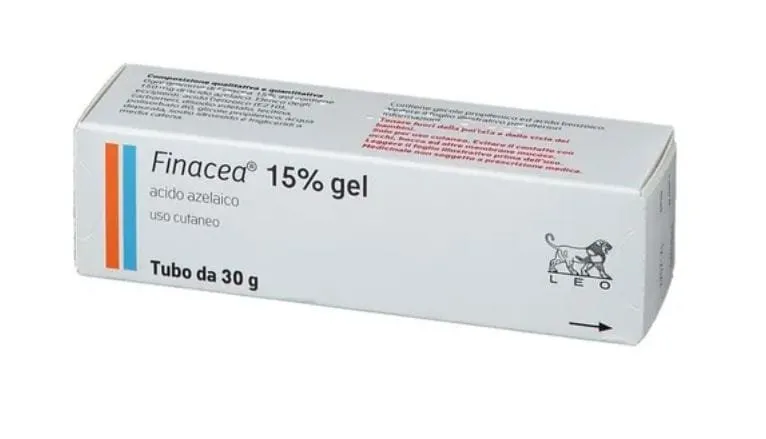
Table of Contents
Package leaflet: Information for the user
Finacea 15% Gel
Azelaic acid
Please read this leaflet carefully before using this medicine because it contains important information for you.
- Keep this leaflet. You may need to read it again.
- If you have any questions, ask your doctor or pharmacist.
- This medicine has been prescribed for you only. Do not give it to other people, even if they have the same symptoms as you, because it could be harmful.
- If you experience any side effects, including those not listed in this leaflet, consult your doctor or pharmacist. See section 4. Contents of this leaflet:
1. What Finacea Gel is and what it is used for
2. What you need to know before using Finacea Gel
3. How to use Finacea Gel
4. Possible side effects
5. How to store Finacea Gel
6. Contents of the pack and other information
1. What Finacea Gel is and what it is used for
Finacea Gel contains the active substance azelaic acid and belongs to the group of topical (cutaneous) anti-acne preparations. Finacea Gel is indicated for the treatment of mild to moderate papulopustular acne of the face and for the treatment of papulopustular rosacea. Both acne and papulopustular rosacea are conditions characterized by the presence of inflammatory papules and pustules.
2. What you need to know before using Finacea Gel
Do not use Finacea Gel
- If you are allergic to azelaic acid or to any of the excipients of this medicine (listed in section 6.).
Warnings and precautions
Talk to your doctor or pharmacist before using Finacea Gel.
Finacea Gel is for external (cutaneous) use only. Avoid contact with eyes, mouth, and other mucous membranes. In case of accidental contact, wash the eyes, mouth, and/or affected mucous membranes thoroughly with plenty of water. If eye irritation persists, consult a doctor or pharmacist.
Always wash your hands after each application of Finacea Gel.
It is advisable to avoid using alcohol-based cleansers, tonics, and astringent products, as well as abrasive or exfoliating products (peeling) while using Finacea Gel for the treatment of rosacea.
Rarely, worsening of asthma symptoms has been reported in some patients treated with azelaic acid.
Children and adolescents
The safety and efficacy in the treatment of acne have been studied in adolescents aged 12 to 18 years (see section 3. How to use Finacea Gel). Due to lack of data on safety and efficacy, the use of Finacea Gel is not recommended for the treatment of acne in children under 12 years of age.
Due to lack of data on safety and efficacy, the use of Finacea Gel is not recommended for the treatment of rosacea in children and adolescents under 18 years of age.
Other medicines and Finacea Gel
No studies have been conducted to establish any interaction between Finacea Gel and other medicines, or vice versa. Other medications or treatments should not be applied to the face concurrently with the use of Finacea Gel.
Inform your doctor or pharmacist if you are taking, have recently taken, or might take any other medicines.
Pregnancy and breastfeeding
Experience with the use of azelaic acid during pregnancy is limited. If you are pregnant or breastfeeding, your doctor will decide whether you may use Finacea Gel.
Newborns must not come into contact with skin or breasts treated with the product.
If you are pregnant, suspect you may be pregnant, planning a pregnancy, or are breastfeeding, consult your doctor or pharmacist before using this medicine.
Driving and using machines
Finacea Gel does not affect the ability to drive or operate machinery.
Finacea Gel contains benzoic acid and propylene glycol
Benzoic acid may cause slight irritation to the skin, eyes, and mucous membranes.
Propylene glycol may cause skin irritation.
3. How to use Finacea Gel
Always use this medicine exactly as directed by your doctor. If you have any doubts, you should
consult your doctor or pharmacist.
Finacea Gel is intended for external use only (cutaneous use).
Method of administration
Before applying Finacea Gel, thoroughly cleanse the skin with water and dry it.
You may use a mild skin cleanser.
Do not use non-breathable or waterproof (occlusive) clothing or dressings, and wash your hands after
applying the gel.
Dosage and frequency of administration
Apply a small amount of Finacea Gel to the affected skin area twice daily (in the morning and evening),
gently massaging it in. The amount sufficient for the entire face is approximately 2.5 cm, corresponding
to 0.5 g of gel.
To achieve optimal treatment effect, it is important to use Finacea Gel continuously throughout the
treatment period.
If skin irritation occurs (see section “4. Possible side effects”), reduce the amount of gel per application
or reduce the frequency of Finacea Gel use to once daily until the irritation resolves. If necessary,
discontinue treatment for a few days.
Use in children and adolescents
No dosage adjustment is required for the treatment of acne in adolescents aged between 12 and 18 years.
Duration of treatment
The duration of treatment with Finacea Gel may vary from person to person and also depends on the
severity of the skin condition.
Your doctor will determine how long you should use Finacea Gel.
Acne: Finacea Gel may be used for several months depending on treatment efficacy.
Noticeable improvement may be observed after 4 weeks.
If, after 1 month, you do not observe any improvement or if your acne worsens, you must discontinue
treatment with Finacea Gel and consult your doctor.
Rosacea: Finacea Gel may be used for several months depending on treatment response.
Noticeable improvement is observed after 4 weeks of treatment.
If, after 2 months, you do not observe any improvement or if your rosacea worsens, you must discontinue
treatment with Finacea Gel and consult your doctor.
If you use more Finacea Gel than you should
Even if you have accidentally used more Finacea Gel than recommended, it is unlikely that harmful
effects (intoxication) will occur.
Follow your doctor's instructions exactly and consult them if you have any doubts.
If you forget to use Finacea Gel
Do not use a double dose to make up for the missed application. Continue using the gel as prescribed
by your doctor.
If you stop using Finacea Gel
If you stop treatment with Finacea Gel, your skin condition may worsen. Before stopping treatment with
Finacea Gel, consult your doctor.
If you have any further questions about the use of Finacea Gel, consult your doctor or pharmacist.
4. Possible side effects
Like all medicines, Finacea Gel can cause side effects, although not everyone experiences them. Skin irritation (for example, burning and itching) may occur.
In most cases, the irritative symptoms are mild or moderate, and their frequency decreases during the course of treatment.
The most frequently observed side effects included itching, burning, and pain at the application site.
During treatment with Finacea Gel, the following side effects may occur, all of which are limited to the skin area where the product is applied:
Acne:
Very common (may affect more than 1 in 10 people): burning, pain, itching at the application site.
Common (may affect up to 1 in 10 people): skin rash, tingling or numbness sensation (paresthesia), dryness of the skin at the application site.
Uncommon (may affect up to 1 in 100 people): skin reaction to an external agent (contact dermatitis), abnormal redness of the skin (erythema), peeling, sensation of warmth, skin discoloration at the application site.
Rare (may affect up to 1 in 1000 people):
- Hypersensitivity, which may occur with one or more of the following adverse events: angioedema (rapid swelling beneath the skin), eye swelling, facial swelling, dyspnea (shortness of breath)
- Skin irritation
- Urticaria
- Worsening of asthma
Rosacea:
Very common (may affect more than 1 in 10 people): burning, pain, itching at the application site.
Common (may affect up to 1 in 10 people): tingling or numbness sensation (paresthesia), dry skin, skin rash, swelling (edema) at the application site.
Uncommon (may affect up to 1 in 100 people): acne, skin reaction to an external agent (contact dermatitis), abnormal redness of the skin (erythema), urticaria, discomfort at the application site.
Rare (may affect up to 1 in 1000 people):
- Hypersensitivity, which may occur with one or more of the following adverse events: angioedema (rapid swelling beneath the skin), eye swelling, facial swelling, dyspnea (shortness of breath)
- Skin irritation
- Urticaria
- Worsening of asthma
Children and adolescents
Treatment of acne vulgaris in adolescents aged 12–18 years:
In clinical studies including adolescents, the overall incidence of adverse events with Finacea Gel was similar to that observed in the entire patient population.
Reporting of side effects
If you experience any side effects, including those not listed in this leaflet, please inform your doctor or pharmacist. You can also report side effects directly via the national reporting system at: http://www.agenziafarmaco.gov.it/it/responsabili.
By reporting side effects, you can help provide more information on the safety of this medicine.
5. How to store Finacea Gel
Keep this medicine out of the sight and reach of children.
Do not use this medicine after the expiry date which is stated on the carton and tube after "EXP". The expiry date refers to the last day of that month.
Finacea Gel does not require any special storage conditions.
Do not dispose of any medicine via wastewater or household waste. Ask your pharmacist how to dispose of medicines you no longer use. This will help protect the environment.
6. Package contents and other information
What Finacea Gel contains
- The active substance is azelaic acid (each gram of Finacea Gel contains 150 mg of azelaic acid).
- The excipients are: benzoic acid (E 210), carbomers, disodium edetate, lecithin, polysorbate 80, propylene glycol, purified water, sodium hydroxide, and medium-chain triglycerides.
Description of the appearance of Finacea Gel and pack contents
Finacea Gel is an opaque gel, white to yellowish-white in colour.
Finacea Gel is available in packs containing 5, 30 or 50 g of gel.
Not all pack sizes may be marketed.
Marketing Authorization Holder:
LEO Pharma A/S, Industriparken 55, DK-2750 Ballerup, Denmark.
Manufacturer:
LEO Pharma Manufacturing Italy S.r.l.
Via E. Schering, 21
20090 Segrate (Milan), Italy.
Local representative in Italy:
LEO Pharma S.p.A., Via Elio Vittorini 129 - 00144 Rome.
This medicinal product is authorized in the European Economic Area countries under the
following names:
Finacea: Denmark, France, Iceland, Italy, Norway, Spain, Sweden, United Kingdom.
Skinoren: Austria, Finland, Germany, Greece, Ireland, Portugal.