Fexallegra nasal
Italy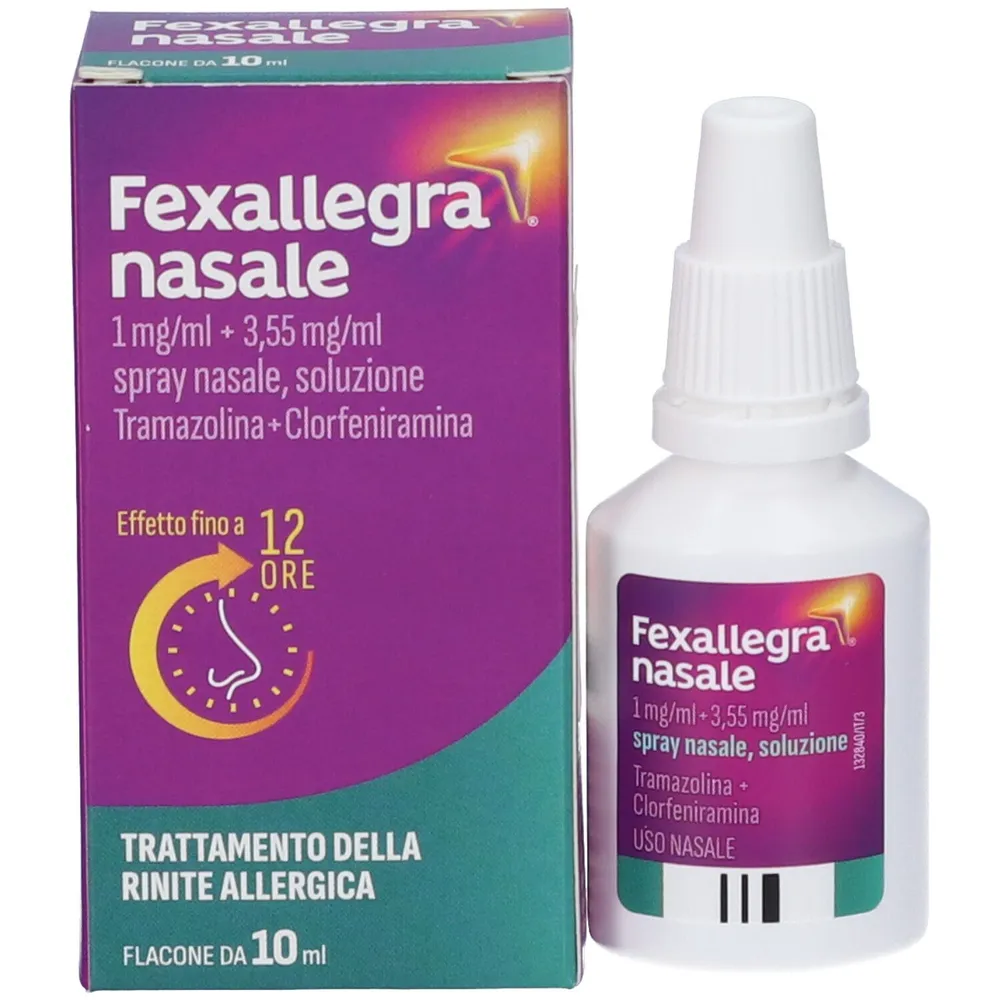
Table of Contents
- Package leaflet: Information for the user
- Fexallegra nasale 1 mg/ml + 3.55 mg/ml nasal spray, solution
- 1. What Fexallegra nasal is and what it is used for
- 2. What you need to know before using Fexallegra nasal
- 3. How to use Fexallegra nasal
- 4. Possible side effects
- 5. How to store Fexallegra nasal
- 6. Package contents and other information
Package leaflet: Information for the user
Fexallegra nasale 1 mg/ml + 3.55 mg/ml nasal spray, solution
Tramazoline + chlorpheniramine
Please read this leaflet carefully before using this medicine because it contains important information for you.
Always use this medicine exactly as described in this leaflet or as your doctor or pharmacist has instructed you.
- Keep this leaflet. You may need to read it again.
- If you need more information or advice, consult your pharmacist.
- If you experience any side effects, including those not listed in this leaflet, consult your doctor or pharmacist. See section 4.
- Consult your doctor if you do not notice any improvement or if your symptoms worsen after 4 days.
Contents of this leaflet:
- What Fexallegra nasale is and what it is used for
- What you need to know before using Fexallegra nasale
- How to use Fexallegra nasale
- Possible side effects
- How to store Fexallegra nasale
- Contents of the pack and other information
1. What Fexallegra nasal is and what it is used for
Fexallegra nasal is a nasal spray containing tramazoline and chlorpheniramine.
Fexallegra nasal is used in adults and adolescents aged 12 years and older for the treatment of
symptoms of allergic rhinitis (e.g. "hay fever").
Allergic rhinitis causes a runny nose, sneezing, and swelling of the nasal mucosa, resulting in a sensation of
nasal congestion. Fexallegra nasal reduces nasal swelling and irritation and relieves sneezing, itching, and symptoms of a blocked or runny nose.
Consult your doctor if you do not feel better or if you feel worse after 4 days.
2. What you need to know before using Fexallegra nasal
Do not use Fexallegra nasal
- if you are allergic to tramazoline, chlorpheniramine, benzalkonium chloride, or any of the other ingredients of this medicine (listed in section 6);
- if you suffer from nasal inflammation with little or no nasal secretion (atrophic rhinitis);
- if you suffer from heart disease or very high blood pressure (severe arterial hypertension);
- if you suffer from a condition characterized by increased fluid pressure inside the eye (acute angle-closure glaucoma);
- if you suffer from a disease involving excessive hormone production by the thyroid gland (hyperthyroidism);
- if you suffer from a condition characterized by an enlarged prostate (prostatic hypertrophy);
- if you have undergone head surgery performed via the nasal route;
- in children under 12 years of age;
- if you are pregnant or breastfeeding (see section “Fertility, pregnancy and breastfeeding”).
Warnings and precautions
Use Fexallegra nasal only after consulting your doctor:
- if you are elderly (you may have an increased risk of experiencing side effects, particularly dizziness, sedation, confusion, low blood pressure, and dry mouth; especially male patients may have an increased risk of urinary retention);
- if you suffer from diabetes mellitus;
- if you suffer from phaeochromocytoma (a tumour of the adrenal glands);
- if you suffer from porphyria (a disease affecting haemoglobin production, the substance enabling red blood cells to carry oxygen in the blood);
- if you suffer from mild to moderate high blood pressure (mild-to-moderate arterial hypertension). Consult your doctor also if you have previously experienced such conditions.
Prolonged use of locally administered products may cause irritation and inflammation of the nasal mucosa and paranasal sinuses.
Prolonged use may also lead to dependence on the medicine (rebound congestion).
When the effect of the medicine wears off, swelling of the nasal mucosa (nasal oedema) may occur.
Do not use Fexallegra nasal orally, as it may be toxic.
Avoid contact of the liquid with the eyes to prevent irritation.
Children
Do not give this medicine to children under 12 years of age.
Caution for athletes: The product contains substances prohibited in doping. Any use differing from the recommended dosage regimen or route of administration is prohibited.
Other medicines and Fexallegra nasal
Inform your doctor or pharmacist if you are taking, have recently taken, or might take any other medicines.
Fexallegra nasal must not be administered during treatment with antidepressant medicines (medicines for treating depression) or within two weeks after stopping such treatment.
Administration of Fexallegra nasal together with antidepressant medicines such as MAO inhibitors or tricyclic antidepressants, or together with vasoconstrictor medicines, may cause increased blood pressure and disturbances in heart rhythm (arrhythmias).
Inform your doctor if you are taking:
- sedatives, opioid analgesics (medicines for treating pain), hypnotics (medicines to induce sleep), as these may increase sedation;
- phenytoin, a medicine used to treat seizures, as the side effects of phenytoin may be increased;
- antihypertensive medicines, as they may cause various cardiovascular effects.
Fexallegra nasal and alcohol
Avoid consuming alcohol during treatment with Fexallegra nasal, as it may increase sedation.
Fertility, pregnancy and breastfeeding
Do not use Fexallegra nasal during pregnancy or breastfeeding.
Studies evaluating effects on human fertility have not been conducted.
Driving and using machines
During treatment with Fexallegra nasal, you may experience side effects such as hallucinations, drowsiness, sedation, dizziness, and fatigue. Furthermore, chlorpheniramine maleate may cause drowsiness that may persist into the following day. Concurrent intake of alcohol or other medicines that depress the central nervous system increases sedation and impairs motor performance. Therefore, exercise caution when driving or operating machinery.
If you experience the above-mentioned side effects, avoid activities where loss of attention could be dangerous, such as driving vehicles or operating machinery.
Fexallegra nasal contains benzalkonium chloride
Fexallegra nasal contains the preservative benzalkonium chloride, which may cause irritation of the nasal mucosa and, especially when used for prolonged periods, swelling of the nasal mucosa. If such a reaction is suspected (persistent nasal congestion), a nasal medicine without benzalkonium chloride should be used if possible. If nasal medicines without benzalkonium chloride are not available, an alternative pharmaceutical form should be considered: consult your doctor or pharmacist for advice.
3. How to use Fexallegra nasal
Use this medicine exactly as stated in this leaflet or as instructed by your
doctor or pharmacist. If you have any doubts, consult your doctor or pharmacist.
Adults and adolescents over 12 years
The recommended dose is: spray 1-2 times into each nostril every 8-12 hours.
Warning: do not exceed the recommended doses.
Do not use Fexallegra nasal for more than 4 days.
Consult your doctor if symptoms recur repeatedly or if you have noticed any recent changes
in their characteristics.
Hold the bottle in an upright position to achieve proper spray nebulization.
For correct use of the product, follow the instructions below:
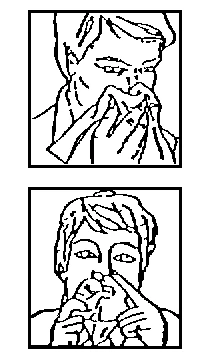
Remove the protective cap.
After blowing your nose, with your head in a normal position,
insert the nozzle of the bottle into one nostril and spray
by pressing the bottle evenly one or two times with quick,
energetic strokes.
After spraying, inhale deeply with your mouth closed,
gently pressing your index finger against the other nostril,
to ensure even distribution of the solution over the entire nasal mucosa.
Then repeat the application in the other nostril.
The empty space above the liquid is necessary for the proper functioning of the bottle as a nebulizer. After use, clean the nozzle and replace the protective cap.
If you use more Fexallegra nasal than you should
Symptoms of an overdose may include:
- increased or decreased blood pressure;
- increased heart rate (tachycardia);
- decreased blood pressure with severe reduction in heart function (shock);
- decreased heart rate, to compensate for increased blood pressure (reflex bradycardia);
- uncontrolled body movements (convulsions);
- profound unconsciousness (coma);
- decreased heart rate (bradycardia);
- reduced respiratory activity (respiratory depression);
- anxiety, agitation, hallucinations;
- lowering of body temperature (hypothermia);
- deep sleep state with reduced response to normal stimuli (lethargy), drowsiness;
- dilation or constriction of the pupil (mydriasis or miosis);
- sweating, fever, pallor;
- bluish discoloration of the lips (cyanosis of the lips);
- partial or complete reduction in heart activity (cardiovascular dysfunction, including cardiac arrest);
- partial or complete reduction in respiratory activity (respiratory dysfunction, including respiratory insufficiency and respiratory arrest);
- psychological disturbances;
- excitement;
- loss of muscular coordination (ataxia);
- involuntary movements of the arms, face, and tongue (athetosis);
- dilated and fixed pupils with flushed face;
- inability to completely empty the bladder (urinary retention);
- dry mouth;
- fever.
Treatment
In case of accidental ingestion/overdose of Fexallegra nasal, contact your doctor immediately or go to the nearest hospital.
In case of nasal overdose, immediately wash or clean the nasal mucosa thoroughly.
Medical treatment may be necessary.
If you forget to use Fexallegra nasal
Do not use a double dose to make up for the missed dose.
If you stop using Fexallegra nasal
If you have any doubts about using this medicine, consult your doctor or pharmacist.
4. Possible side effects
Like all medicines, this medicine can cause side effects, although not everybody gets them.
If during treatment irritation, inflammation and reduction in thickness of the nasal mucosa occur, stop treatment and consult your doctor to establish an appropriate therapy.
The following side effects may occur with the use of Fexallegra nasal: the frequency of these side effects is unknown.
Immune system disorders:
- allergy (swelling of the skin and mucous membranes).
Psychiatric disorders:
- perception of things not existing in reality (hallucinations);
- insomnia;
- restlessness.
Nervous system disorders:
- drowsiness;
- sedation;
- headache;
- dizziness;
- taste disturbance (dysgeusia).
Cardiac disorders:
- changes in heart rhythm (arrhythmias);
- increased heart rate (tachycardia);
- heightened awareness of heartbeat (palpitations).
Respiratory, thoracic and mediastinal disorders:
- nosebleeds (epistaxis);
- swelling of the nasal mucosa (nasal edema);
- nasal burning;
- dryness of the nasal mucosa;
- runny nose (rhinorrhea);
- sneezing.
Gastrointestinal disorders:
- nausea.
Skin and subcutaneous tissue disorders:
- skin rash;
- itching (pruritus).
Systemic disorders and administration site conditions:
- fatigue.
Investigation findings:
- increased blood pressure.
Reporting of side effects
If you experience any side effect, including those not listed in this leaflet, talk to your doctor or pharmacist. You can also report side effects directly via the national reporting system at: www.agenziafarmaco.gov.it/it/responsabili.
By reporting side effects, you can help provide more information on the safety of this medicine.
5. How to store Fexallegra nasal
This medicine does not require any special storage conditions.
Keep this medicine out of the sight and reach of children.
Do not use this medicine after the expiry date stated on the packaging after "Exp."
The expiry date refers to the last day of that month.
Do not dispose of any medicine via wastewater or household waste. Ask your pharmacist how to dispose of
medicines you no longer use. This will help protect the environment.
6. Package contents and other information
What Fexallegra nasal contains
- The active substances are: tramazoline hydrochloride 1.18 mg equivalent to tramazoline 1.01 mg and chlorpheniramine maleate 5.05 mg equivalent to chlorpheniramine 3.55 mg;
- Other components are: benzalkonium chloride (see section 2), sorbitol liquid, citric acid, disodium phosphate dihydrate, sodium chloride, purified water.
Description of the appearance of Fexallegra nasal and contents of the pack
Fexallegra nasal is a nasal spray solution.
The pack contains 10 ml.
Marketing Authorization Holder
Opella Healthcare Italy S.r.l.
Viale L. Bodio, 37/B
20158 Milano (Italy)
Manufacturer
Istituto De Angeli S.r.l. – Loc. Prulli n. 103/c – 50066 Reggello (FI).