Fevralt
Italy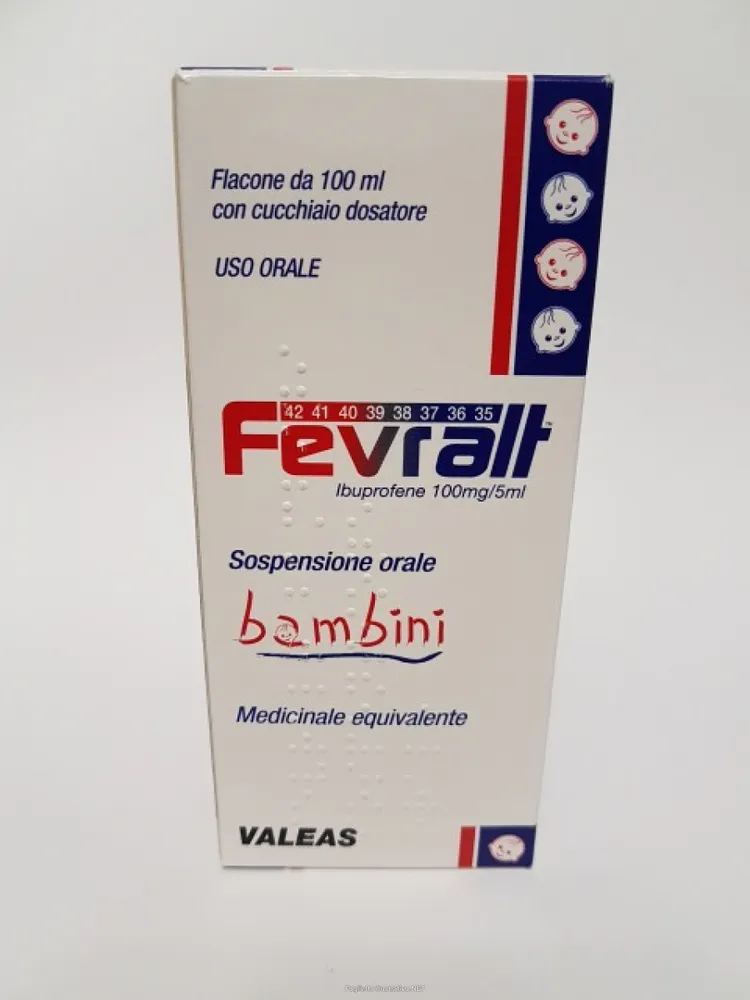
Table of Contents
Package leaflet: Information for the patient
FEVRALT Children 100 mg/5 ml oral suspension
Generic medicine
Ibuprofen
Please read this leaflet carefully before using this medicine because it contains important information for you.
Always use this medicine exactly as described in this leaflet or as your Doctor or Pharmacist has instructed you.
- Keep this leaflet. You may need to read it again.
- If you need further information or advice, consult your pharmacist.
- If you experience any side effects, including those not listed in this leaflet, contact your doctor or pharmacist. See section 4.
- Contact your doctor if you do not notice any improvement or if your symptoms worsen.
Contents of this leaflet:
- What Fevralt is and what it is used for
- What you need to know before taking Fevralt
- How to take Fevralt
- Possible side effects
- How to store Fevralt
- Contents of the pack and other information
1. What Fevralt is and what it is used for
Fevralt Children 100 mg/5 ml oral suspension contains 100 mg of the active substance Ibuprofen in 5 ml.
Ibuprofen belongs to a group of medicines known as non-\steroidal anti-inflammatory drugs (also known as NSAIDs), which relieve pain and reduce inflammation.
Fevralt is used in infants (weighing more than 5 kg) and children up to 12 years of age for:
- reducing fever (including fever after vaccination)
- relieving cold and flu symptoms
- relieving mild to moderate pain such as teething pain, sprain pain, sore throat, toothache, earache, headache.
- reducing symptoms of Juvenile Rheumatoid Arthritis (juvenile arthritis)
2. What you need to know before using Fevralt
Do not use Fevralt if the infant/child
- is less than 3 months old and weighs less than 5 kg (unless otherwise advised by the doctor)
- is allergic (hypersensitive) to ibuprofen or to any of the other ingredients of this medicine (listed in section 6). An allergic reaction may include skin redness, itching, difficulty breathing, or swelling of the face, lips, throat, or tongue.
- has had asthma attacks, urticaria, or rhinitis (inflammation of nasal mucous membranes) after taking aspirin or NSAIDs (other non-steroidal anti-inflammatory drugs)
- is currently taking other NSAIDs or a daily dose of aspirin exceeding 75 mg
- has or has had gastrointestinal ulcer, perforation (lesion), or bleeding of the stomach or intestine (blood loss from the stomach or intestine)
Warnings and precautions
Exercise special caution when using Fevralt.
Allergic reactions to this medicine, including respiratory problems, facial and neck swelling (angioedema), and chest pain, have been reported with ibuprofen. Immediately discontinue Fevralt and contact your doctor or emergency medical services if you notice any of these signs.
Skin reactions
Serious skin reactions have been reported in association with ibuprofen treatment, including exfoliative dermatitis, erythema multiforme, Stevens-Johnson syndrome, toxic epidermal necrolysis, drug reaction with eosinophilia and systemic symptoms (DRESS), and acute generalized exanthematous pustulosis (AGEP). Stop using Fevralt and contact your doctor immediately if you notice any symptoms related to these serious skin reactions described in section 4.
Consult your doctor or pharmacist before using Fevralt if the infant/child:
- has or has suffered from asthma
- has had allergies
- has systemic lupus erythematosus (a serious disease affecting joints, kidneys, and skin)
- is taking other NSAIDs or a low dose of aspirin (up to 75 mg per day)
- has blood clotting disorders
- is severely dehydrated due to fever, vomiting, or diarrhea
- has visual disturbances (blurred or reduced vision, altered color perception)
- has liver, intestinal, kidney, or heart problems
- has an infection – see section "Infections" below
Infections
Fevralt may mask symptoms of infections such as fever and pain. Therefore, Fevralt could delay appropriate treatment of the infection, potentially increasing the risk of complications. This has been observed in bacterial pneumonia and bacterial skin infections associated with chickenpox. If your infant/child takes this medicine while having an infection and infection symptoms persist or worsen, consult your doctor immediately.
In dehydrated children and adolescents, there is a risk of impaired kidney function.
Fevralt is indicated for infants, children, and adolescents. However, if this medicine is used by adults or elderly individuals, they must pay particular attention if they have any of the conditions listed in the sections “Do not use Fevralt if the infant/child” and “Consult your doctor or pharmacist before using Fevralt if the infant/child”.
Anti-inflammatory/pain-relief medicines such as ibuprofen may be associated with a small increased risk of heart attack (myocardial infarction) or stroke (acute brain damage), especially when administered at high doses.
Do not exceed the recommended dose or duration of treatment.
You should discuss treatment with your doctor or pharmacist before taking Fevralt if you have:
- heart problems including heart attack, angina (chest pain), history of heart attack, coronary bypass surgery, peripheral arterial disease (poor circulation in legs or feet due to narrowed or blocked arteries), or any type of stroke (including "mini-stroke" or "TIA" transient ischemic attack)
- high blood pressure, diabetes, high cholesterol, family history of heart disease or stroke, or if you are a smoker. If you are trying to become pregnant, you may need to stop taking Fevralt.
Other medicines and Fevralt
Inform your doctor or pharmacist if the infant/child is taking, has recently taken, or might take any other medicines. Fevralt may affect or be affected by other medicines.
For example:
- medicines with anticoagulant effects (i.e., substances that thin the blood and prevent clot formation, e.g., aspirin/acetylsalicylic acid, warfarin, ticlopidine)
- medicines that lower high blood pressure (ACE inhibitors such as captopril, beta-blockers such as atenolol, angiotensin II receptor antagonists such as losartan)
- diuretics
- quinolones (antibiotics)
- antidepressants
- sulfonylureas (for diabetes treatment)
- corticosteroids (medicines that reduce inflammation such as hydrocortisone)
- lithium (a treatment for mental illness)
- methotrexate (used for rheumatoid arthritis and cancer)
- ritonavir or zidovudine (antiviral treatments)
- cyclosporine, tacrolimus (treatments to prevent transplant rejection)
- aspirin
- cardiac glycosides
- probenecid (used to increase uric acid elimination)
Other medicines may also affect or be affected by Fevralt treatment. Therefore, always consult your doctor or pharmacist before using Fevralt with other medicines.
FEVRALT with food and drink and alcohol
Fevralt may be taken with food if it causes stomach upset.
Pregnancy, breastfeeding, and fertility
Fevralt must not be taken by women who are pregnant, may become pregnant, or are breastfeeding.
Driving and using machines
Fevralt has no effect or has a negligible effect on the ability to drive or operate machinery.
This medicine contains:
-
Maltitol liquid If your doctor has diagnosed your child with an intolerance to certain sugars, contact your doctor before giving this medicine to your child.
May have a mild laxative effect.
Calorific value of maltitol is 2.3 kcal/g. -
Sodium This medicine contains less than 1 mmol (23 mg) of sodium per 2.5 ml, 5 ml, 7.5 ml, 10 ml, and 15 ml oral suspension dose, i.e., essentially sodium-free.
-
Sodium benzoate (E211) This medicine contains 15 mg of sodium benzoate per 5 ml oral suspension dose, equivalent to 3 mg/ml. Sodium benzoate may increase jaundice (yellowing of the skin and eyes) in newborns up to four weeks of age.
-
Ethanol (ethyl alcohol) This medicine contains 0.05 mg of alcohol (ethanol) in each 5 ml oral suspension dose, equivalent to 0.01 mg/ml. The amount in 5 ml of oral suspension is equivalent to 0.001 ml of beer and 0.0005 ml of wine. The small amount of alcohol in this medicine will not produce significant effects.
3. How to use Fevralt
Dosage
Use this medicine exactly as stated in this leaflet or as directed by your doctor or pharmacist. If you have any doubts, consult your doctor or pharmacist.
Fevralt should be taken orally.
The lowest effective dose for the shortest necessary duration should be used to relieve symptoms. If your infant/child has an infection, contact your doctor immediately if symptoms (e.g. fever and pain) persist or worsen (see section 2).
Shake the bottle well before use.
For fever and mild to moderate pain
Fevralt may be given to infants older than 3 months of age and weighing more than 5 kg.
For infants aged >3 to <5 months and weighing more than 5 kg
In infants aged 3 to 5 months, consult a doctor if symptoms persist for more than 24 hours or if symptoms worsen.
For infants and children (aged >6 months to <12 years)
If the medicine is required for more than 3 days in infants and children over 6 months of age, or if symptoms worsen, consult a doctor.
The recommended daily dose is 20–30 mg/kg body weight, given in divided doses.
Using the provided 2.5 ml and 5 ml dosing spoon, the following dosage schedule applies:
| Age | Weight (kg) | Dose | Daily dosage regimen | |-----|-------------|------|------------------------| | 3–5 months | 5.6 – 7.7 | 2.5 ml | 3 times daily (150 mg) | | 6–12 months | 7.8 – 10 | 2.5 ml | 3–4 times daily (150–200 mg) | | >1–≤3 years | 11 – 15 | 5 ml | 3 times daily (300 mg) | | 4–6 years | 16 – 20 | 7.5 ml | 3 times daily (450 mg) | | 7–9 years | 21 – 28 | 10 ml | 3 times daily (600 mg) | | 10–12 years | 29 – 40 | 15 ml | 3 times daily (900 mg) |
The dose should normally be administered every 6–8 hours. This interval may be reduced to 4 hours if necessary, without exceeding the maximum daily dose of 30 mg/kg body weight.
For fever following vaccination
- Administer Fevralt to infants under 6 months of age only on medical advice.
- The usual dose is 2.5 ml.
- Only if necessary, administer an additional 2.5 ml 6 hours later.
- Do not administer more than 5 ml within 24 hours.
- If fever does not subside, do not administer a third dose and consult a doctor.
For symptomatic treatment of Juvenile Rheumatoid Arthritis
- The usual daily dose is 30 to 40 mg/kg, divided into 3–4 doses.
Instructions for use
The container must be shaken well before use to ensure proper administration of the medicine.
The bottle must be tightly closed after each use.
This medicine is for oral use only, using the provided dosing spoon.
After use, close the bottle by screwing on the cap and wash the dosing spoon with warm water. Allow the spoon to dry completely.
Keep the medicine out of sight and reach of children.
The dosing spoon should only be used for administering Fevralt oral suspension.
If you use more FEVRALT than you should
If you have taken more Fevralt than recommended, or if your child has accidentally ingested this medicine, contact a doctor or the nearest hospital immediately for advice on potential risks and necessary actions.
Symptoms may include nausea, stomach ache, vomiting (possibly with traces of blood), headache, ringing in the ears (tinnitus), confusion, uncontrolled eye movements (nystagmus). At high doses, drowsiness, chest pain, palpitations, loss of consciousness, seizures (especially in children), weakness and dizziness, severe kidney damage with blood in the urine, feeling cold, breathing difficulties, severe liver damage, and a state of deep sleep with reduced responsiveness (lethargy) may occur.
Symptoms of overdose may appear within 4–6 hours after taking ibuprofen.
Rarely, the following may occur: increased acid levels in the blood (metabolic acidosis), bleeding in the stomach and intestines, profound loss of consciousness (coma), temporary cessation of breathing (apnea), diarrhoea, reduced activity of the nervous system (central nervous system depression) and reduced respiratory activity (respiratory depression).
Additionally, disorientation, agitation, fainting, low blood pressure (hypotension), decreased or increased heart rate (bradycardia or tachycardia) may also occur.
If you have any doubts about the use of Fevralt, consult your doctor or pharmacist.
If you forget to use Fevralt
If you forget to give a dose of Fevralt to your infant/child, administer it as soon as possible and then resume the regular dosing schedule.
Do not take a double dose to make up for the missed dose.
If you stop using Fevralt
If you have any questions about the use of this medicine, consult your doctor or pharmacist.
4. Possible side effects
Like all medicines, Fevralt can cause side effects, although not everyone experiences them.
All medicines can cause allergic reactions, although serious allergic reactions are very rare.
Contact your doctor immediately if you experience sudden wheezing, difficulty breathing,
swelling of the eyelids, face or lips, skin rash or itching (especially if it spreads over the whole body).
Stop taking ibuprofen and contact your doctor immediately if you notice any of the following symptoms:
- Flat red spots, target-shaped or circular rashes on the trunk, often with central blisters, skin peeling, mouth ulcers, or ulcers in the throat, nose, genitals and eyes. These serious skin rashes may be preceded by fever and flu-like symptoms [exfoliative dermatitis, erythema multiforme, Stevens-Johnson syndrome, toxic epidermal necrolysis];
- Widespread rash, high body temperature and swollen lymph nodes (DRESS syndrome).
- Generalized red, scaly rash, with bumps under the skin and blisters, accompanied by fever. Symptoms usually occur at the beginning of treatment (acute generalized exanthematous pustulosis).
The following classification of frequency of side effects has been used to categorize them:
- Very common (more than 1 in 10)
- Common (less than 1 in 10, but more than 1 in 100)
- Uncommon (less than 1 in 100, but more than 1 in 1,000)
- Rare (less than 1 in 1,000, but more than 1 in 10,000)
- Very rare (less than 1 in 10,000)
- Not known (frequency cannot be estimated from the available data)
The following side effects have been reported:
Common
- Gastric ulcer (of the stomach), with or without bleeding and/or perforation (damage), which may be fatal in elderly patients.
- Nausea
- Vomiting or blood in vomit
- Diarrhea or blood in stools
- Flatulence (gas) or constipation
- Dyspepsia (digestive problems) or abdominal pain
- Stomatitis (inflammation of the mouth) or worsening of colitis
- Crohn’s disease (inflammation of the digestive tract)
- Headache
- Irritability
- Tinnitus (ringing in the ears)
- Dizziness
Uncommon
- Gastritis (inflammation of the stomach)
- Heartburn (stomach burning)
- Bronchospasm (asthma-like symptoms)
- Dyspnea (shortness of breath)
- Loss of appetite
- Edema (swelling)
- Fluid retention
- Hypertension (high blood pressure)
- Heart failure
Rare
Allergic reactions including urticaria, with or without angioedema (swelling), dyspnea (shortness of breath) due to throat obstruction or bronchospasm (lung spasms), shock, abdominal pain, fever and chills, nausea and vomiting.
Pancreatitis (inflammation of the pancreas), duodenitis (inflammation of part of the intestine), esophagitis (inflammation of the esophagus), dry mouth, hepatitis (liver inflammation), jaundice (yellowing of the skin and eyes), liver disorders, liver tissue death, hepatorenal syndrome (kidney failure in patients with liver disease), liver failure, depression, insomnia, difficulty concentrating, emotional lability, weakness, drowsiness, meningitis (inflammation of the brain membranes), seizures, dry eyes, apnea (breathing pauses), rhinitis (inflammation of nasal membranes), various skin disorders, itching, hair loss, skin peeling, and photosensitivity.
Blood abnormalities including reduced red blood cells, white blood cells and platelets, stroke, hypotension (low blood pressure), heart failure in at-risk patients, papillary/tubular necrosis (death of kidney cells), glomerulonephritis (kidney inflammation), changes in kidney function tests, polyuria (increased frequency of urination), cystitis (bladder infections), hematuria (blood in urine), and kidney failure in at-risk patients.
Very rare
Skin reactions such as exfoliative dermatitis, erythema multiforme, Stevens-Johnson syndrome and toxic epidermal necrolysis (severe skin peeling or blistering).
Not known
- Chest pain, which may be a sign of a potentially serious allergic reaction called Kounis syndrome;
- Skin reactions such as drug reaction with eosinophilia and systemic symptoms (DRESS syndrome) and acute generalized exanthematous pustulosis (AGEP).
Medicines such as Fevralt may cause a small increased risk of heart attack or acute cerebrovascular events.
Reporting of side effects
If you experience any side effect, including those not listed in this leaflet, talk to your doctor or pharmacist. You can also report side effects directly via the national reporting system: https://www.aifa.gov.it/content/segnalazioni-reazioni-avverse. By reporting side effects, you can help provide more information on the safety of this medicine.
5. How to store Fevralt
Do not refrigerate or freeze.
Keep Fevralt out of the sight and reach of children.
Do not use Fevralt after the expiry date stated on the carton and bottle. The expiry date refers to the last day of that month.
The product should be used within 6 weeks after first opening.
Do not dispose of any medicine via wastewater or household waste. Ask your pharmacist how to dispose of medicines you no longer use. This will help protect the environment.
6. Package contents and other information
What Fevralt contains
The active substance is ibuprofen: 5 ml of suspension contain 100 mg of ibuprofen.
The other components are: Purified water, Liquid maltitol, Glycerol, Xanthan gum, Sodium benzoate,
Sodium cyclamate, Citric acid, Orange flavour, Acesulfame potassium, Polysorbate 80 and Sodium edetate.
Description of the appearance of Fevralt and contents of the pack
Fevralt Bambini 100 mg/5 ml oral suspension is a dense, whitish suspension contained in a 100 ml amber glass bottle with a dosing spoon of 2.5 ml and 5 ml.
Marketing Authorisation Holder and Manufacturers
Marketing Authorisation Holder:
NEOPHARMED GENTILI S.p.A. – Via San Giuseppe Cottolengo 15 – 20143 Milano
Manufacturer:
TEMMLER ITALIA Srl
Via delle Industrie, 2
20061 Carugate (MI)
ITALY
This medicinal product is authorised in the European Economic Area Member States under the following
names:
Italy: Fevralt Bambini 100 mg/5 ml oral suspension
This leaflet was last updated on