Ferro Grad C
Italy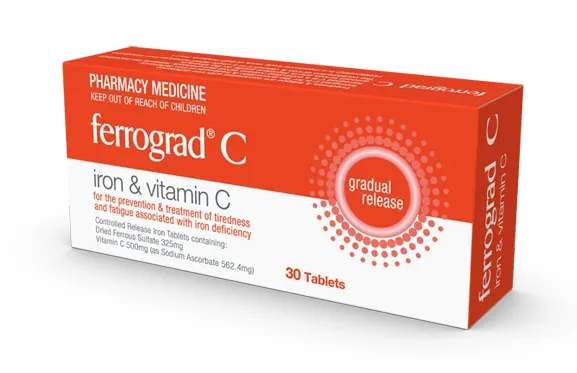
Table of Contents
Package leaflet: Information for the user
FERRO-GRAD C
105 mg + 500 mg prolonged-release tablets
Ferrous Sulphate / Sodium Ascorbate
Please read all of this leaflet carefully before you start taking this medicine, as it contains
important information for you.
- Keep this leaflet. You may need to read it again.
- If you have any questions, ask your doctor or pharmacist.
- This medicine has been prescribed for you only. Do not give it to other people, even if they have the same symptoms as yours, because it could be harmful.
- If you experience any adverse reaction, including those not listed in this leaflet, talk to your doctor or pharmacist. See section 4.
Contents of this leaflet:
- What FERRO-GRAD C is and what it is used for
- What you need to know before taking FERRO-GRAD C
- How to take FERRO-GRAD C
- Possible side effects
- How to store FERRO-GRAD C
- Contents of the pack and other information
1. What FERRO-GRAD C is and what it is used for
This medicine is an antianaemic (it acts against anaemia, which is a reduction in the number of red blood cells in the blood).
It is used to treat iron-deficiency anaemia caused by:
- acute or chronic blood loss
- inadequate intake or absorption of iron
- increased iron requirements (growth, pregnancy)
- infectious disease.
2. What you should know before taking FERRO-GRAD C
Do not take FERRO-GRAD C:
- if you are allergic to ferrous sulfate or to any of the other ingredients of this medicine (listed in section 6)
- if you have haemochromatosis or haemosiderosis (iron overload in the body)
- if you have haemolytic anaemia (excessive destruction of red blood cells)
- if you have intestinal diverticula (an abnormality of the colon) or intestinal obstruction
- if you are receiving repeated blood transfusions
- if you are already undergoing parenteral (injectable) iron therapy.
Warnings and precautions
Talk to your doctor or pharmacist before taking FERRO-GRAD C.
Be cautious if you need to undergo a test to detect blood in the stool (e.g. guaiac resin test), as the black discoloration of stools may interfere with this type of laboratory test, leading to false-positive results.
Due to the risk of mouth ulceration and tooth discoloration, the tablets must not be sucked, chewed, or held in the mouth, but should be swallowed whole with water. If you are unable to follow these instructions or have difficulty swallowing, contact your doctor.
If you accidentally choke on a tablet, contact your doctor as soon as possible. This is because if the tablet enters the respiratory tract, there is a risk of developing bronchial ulceration and narrowing. This may lead to persistent cough, haemoptysis (coughing up blood), and/or shortness of breath, even if the choking incident occurred days or months before the onset of symptoms. Therefore, your condition must be urgently evaluated to ensure that the tablet has not damaged the respiratory tract.
Children
Keep Ferro-Grad C out of the reach of children to prevent accidental iron poisoning.
Other medicines and FERRO-GRAD C
Inform your doctor or pharmacist if you are taking, have recently taken, or might take any other medicines, especially:
- tetracyclines (antibiotics): like all iron-containing preparations, Ferro-Grad C slows down the absorption of tetracyclines in the body, and tetracyclines slow down the absorption of iron. If both treatments must be taken, tetracyclines should be administered 2 hours before or 3 hours after taking Ferro-Grad C.
- penicillamine (a medicine used for rheumatism): iron may reduce the absorption of penicillamine in the body. If both treatments must be taken, penicillamine should be administered 2 hours before or 2 hours after taking the iron preparation.
- chloramphenicol (an antibiotic): it may delay the response to iron therapy.
- antacids (used for certain digestive disorders): concomitant administration of antacids and oral iron preparations may reduce iron absorption. Avoid taking oral iron preparations 1 hour before or 2 hours after taking antacids.
- quinolones (antibiotics): concomitant administration of oral iron preparations may interfere with the absorption of certain oral quinolone antibiotics such as ciprofloxacin, norfloxacin, and ofloxacin, as evidenced by reduced quinolone concentrations in serum and urine. Avoid taking oral iron preparations simultaneously or within 2 hours after taking quinolones.
- methyldopa (used for arterial hypertension): concomitant administration of oral iron preparations may reduce the absorption of methyldopa.
- thyroxine (a drug used to treat certain thyroid diseases): in patients with primary hypothyroidism, concomitant administration of oral iron preparations may reduce the absorption of thyroxine.
Ascorbic acid may increase iron absorption by the body.
Pregnancy and breastfeeding
If you are pregnant, suspect you may be pregnant, are planning a pregnancy, or are breastfeeding, consult your doctor or pharmacist before taking this medicine.
You may use this medicine during pregnancy and breastfeeding.
Driving and using machines
No effects on attention or the ability to drive vehicles or operate machinery have been reported.
FERRO-GRAD C contains E124
This medicine contains the azo dye E124, which may cause allergic reactions.
3. How to take FERRO-GRAD C
Dosage and method of administration
Adults and children over 10 years of age: 1 tablet daily, taken without chewing, on an empty stomach or before the main meal.
Swallow the tablet whole with water. Do not suck, chew, or hold the tablet in the mouth.
If you take more FERRO-GRAD C than you should
If you accidentally ingest an excessive amount of Ferro-Grad C, inform your doctor or go to the nearest hospital immediately.
Signs of severe toxicity may appear delayed, as iron is in a controlled-release formulation. In case of acute iron intoxication, the following symptoms may occur: increased capillary permeability (blood vessels), plasma hypovolemia (reduced circulating blood volume), increased cardiac output (volume of blood pumped by a ventricle), and sudden cardiovascular collapse (reduced blood supply to organs).
4. Possible side effects
Like all medicines, this medicine can cause side effects, although not everyone experiences them.
The likelihood of gastrointestinal intolerance is low. If it occurs, the tablet may be taken after a meal.
The following have been observed with low incidence:
- diarrhoea,
- constipation,
- nausea,
- vomiting,
- abdominal pain or other abdominal discomfort,
- black discolouration of stools.
In isolated cases the following have been observed:
- allergic reactions ranging from rash (skin eruption) to anaphylaxis (a severe and potentially life-threatening allergic reaction).
Ascorbic acid is generally well tolerated. Large doses of ascorbic acid have been reported to cause diarrhoea and other gastrointestinal disturbances, and have also been associated with the formation of kidney stones.
The following have been observed with unknown frequency (frequency cannot be estimated from the available data):
- mouth ulcers (in case of incorrect use, when tablets are chewed, sucked or held in the mouth). All patients, but particularly elderly patients and patients with swallowing difficulties, may also be at risk of ulcers in the throat or oesophagus (the tube connecting the mouth to the stomach). If the tablet enters the airways, there may be a risk of bronchial ulcers (in the main air passages to the lungs), leading to bronchial narrowing.
Reporting of side effects
If you experience any side effect, including any not listed in this leaflet, talk to your doctor, pharmacist or another healthcare professional (e.g. nurse).
You can also report side effects directly via the national reporting system at https://www.aifa.gov.it/content/segnalazioni-reazioni-avverse.
By reporting side effects, you can help provide more information on the safety of this medicine.
5. How to store FERRO-GRAD C
Store below 25°C.
Keep this medicine out of the sight and reach of children.
Do not use this medicine after the expiry date stated on the packaging. The expiry date refers to the product in its original, unopened packaging, correctly stored.
Do not dispose of any medicines via wastewater or household waste. Ask your pharmacist how to dispose of medicines you no longer use. This will help protect the environment.
6. Package contents and other information
What FERRO-GRAD C contains
The active substances are:
Dried ferrous sulfate …………………… 329.7 mg (corresponding to 105 mg of Fe)
Granulated ascorbic acid 90% ……… 555.56 mg (corresponding to 500 mg of ascorbic acid)
per tablet
The other components are:
Core: Methylacrylate-methylmethacrylate, Magnesium stearate, Povidone, Polyethylene glycol 8000,
Microcrystalline cellulose.
Coating: Ethylcellulose, Talc, Polyethylene glycol 400, Hydroxypropylmethylcellulose, E-124, Titanium
dioxide, Polyethylene glycol 8000.
Description of the appearance of FERRO-GRAD C and contents of the package
FERRO-GRAD C comes in a carton containing 30 tablets in blisters.
Marketing Authorization Holder
TEOFARMA S.r.l.
Via F.lli Cervi, 8
27010 Valle Salimbene (PV)
Manufacturer:
TEOFARMA S.r.l.
Viale Certosa, 8/A
27100 Pavia