Ferlixit
Italy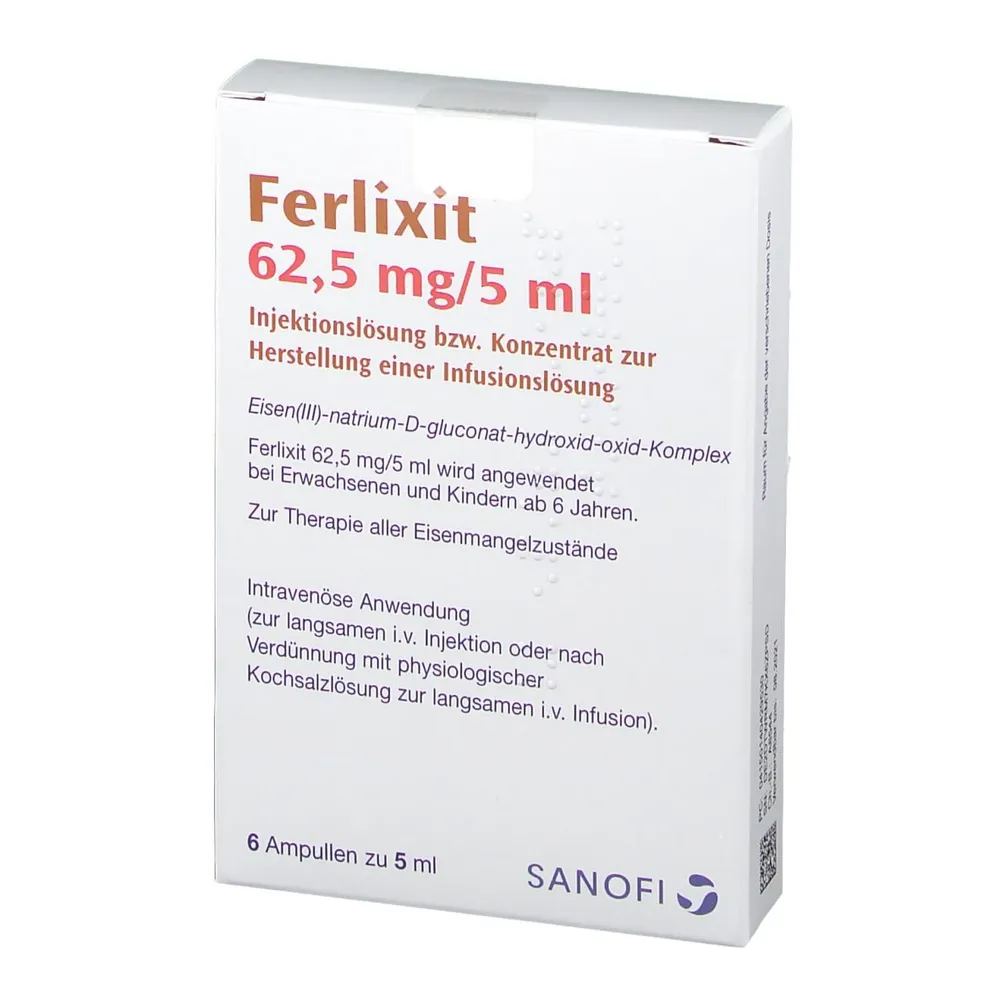
Instructions for Use
Patient Information Leaflet
Ferlixit 62.5 mg/5 ml oral and intravenous solution
ferric iron
Please read all of this leaflet carefully before taking this medicine because it contains important information for you.
- Keep this leaflet. You may need to read it again.
- If you have any questions, ask your doctor, pharmacist, or nurse.
- This medicine has been prescribed for you only. Do not give it to other people, even if they have the same symptoms as yours, because it may be harmful.
- If you experience any side effects, including those not listed in this leaflet, tell your doctor, pharmacist, or nurse. See section 4.
Contents of this leaflet:
- What Ferlixit is and what it is used for
- What you need to know before taking Ferlixit
- How to take Ferlixit
- Possible side effects
- How to store Ferlixit
- Contents of the pack and other information
1. What Ferlixit is and what it is used for
Ferlixit contains iron as the active ingredient, which is an important component of red blood cells in the
blood. Iron deficiency in red blood cells causes a disease known as iron deficiency anemia.
Ferlixit is indicated for the treatment of iron deficiency anemias.
The product administered by injection (parenteral route) is used only when oral treatment is not effective.
2. What you need to know before taking Ferlixit
Do not take Ferlixit
- if you are allergic (hypersensitive) to the active substance or to any of the other ingredients of this medicine (listed in section 6),
- if you have experienced severe allergic reactions (hypersensitivity) to other injectable iron preparations,
- if you have excessive iron accumulation (haemochromatosis, chronic haemolysis) or disorders of iron absorption and distribution in the body (siderotic anaemias, sideroblastic anaemia, lead poisoning anaemia, thalassaemia),
- if you have severe inflammation of the liver or kidneys.
Due to the presence of benzyl alcohol, this medicine must not be administered to neonates and children under three years of age.
Warnings and precautions
Talk to your doctor, pharmacist, or nurse before taking Ferlixit.
Iron-containing medicines, when administered by injection (parenteral route), may cause sudden, severe, and potentially fatal allergic reactions (anaphylactic/anaphylactoid reactions). Such allergic reactions may occur even if you have previously used injectable iron medicines without problems.
The risk increases if you have known drug allergies, suffer from severe asthma, skin diseases (eczema), or other allergic conditions (atopic), or have inflammatory or immune system disorders (e.g. systemic lupus erythematosus, rheumatoid arthritis, Crohn’s disease).
How Ferlixit is administered
Your doctor or nurse will administer Ferlixit to you intravenously; Ferlixit will be given in a setting where immediate and appropriate treatment can be provided in case of immunological or allergic events.
You will be monitored for at least 30 minutes by your doctor or nurse after each administration.
If you experience hypersensitivity reactions or signs of intolerance during administration, treatment will be stopped immediately.
The medicine will be injected very slowly and must not be mixed with other medicines. Ferlixit may only be diluted with saline solution (sodium chloride solution). Ferlixit must not be mixed with other medicines or with parenteral nutritional solutions.
If the injection is administered too rapidly, episodes of low blood pressure (hypotensive episodes) may occur. You may also experience allergic reactions, sometimes with joint pain (arthralgia), which are more common when the recommended dose has been exceeded.
Due to the high incidence of adverse effects associated with parenteral administration of iron-containing medicines, the use of Ferlixit by this route is limited to cases where it is strictly necessary.
To avoid iron overload (haemosiderosis), it is essential that your doctor calculates the required amount of iron before administering the medicine intravenously.
Accidental injection near the vein (paravenous) or into muscle (intramuscular) is painful due to the benzyl alcohol content and must therefore be avoided. In addition, accidental paravenous injection may cause brownish-red skin discoloration.
Children and adolescents
Ferlixit must not be administered to neonates or children under 3 years of age.
The use of Ferlixit is not recommended in children between 3 and 6 years of age due to insufficient safety data.
Other medicines and Ferlixit
Tell your doctor or pharmacist if you are taking, have recently taken, or might take any other medicines.
Be cautious when taking the following medicines with Ferlixit:
- certain antibiotics, tetracyclines taken by mouth and penicillamine, as their absorption may be reduced by Ferlixit. If you need to take penicillamine and Ferlixit, penicillamine should be administered at least 2 hours before or 2 hours after Ferlixit,
- an antibiotic, chloramphenicol, as it may delay the response to Ferlixit therapy,
- antacids, as they may reduce the absorption of Ferlixit,
- orally administered quinolone antibiotics (ciprofloxacin, norfloxacin, and ofloxacin), as concomitant administration of Ferlixit may interfere with the absorption of these antibiotics,
- a blood pressure-lowering medicine, methyldopa, as its absorption may be reduced by Ferlixit,
- a thyroid medicine, thyroxine, as its absorption may be reduced by Ferlixit,
- certain blood pressure-lowering medicines, ACE inhibitors, as the frequency and severity of possible severe and sudden allergic reactions (anaphylactic/anaphylactoid) during Ferlixit therapy may increase if Ferlixit is used concomitantly with ACE inhibitors.
The benzidine test used for diagnosing stomach diseases may yield false-positive results with the use of Ferlixit.
Pregnancy and breastfeeding
If you are pregnant, think you may be pregnant, are planning to become pregnant, or are breastfeeding, consult your doctor or pharmacist before taking this medicine.
Pregnancy
Intravenous use: use of this medicine during pregnancy is not recommended.
Ferlixit has not been evaluated in pregnant women.
If you become pregnant during treatment, consult your doctor.
Your doctor will decide whether or not you should continue taking this medicine.
Due to the potentially rare circulatory effects that an iron injection may cause (see “Possible side effects”), there is a potential risk of fetal nutritional disturbances due to insufficient blood supply to the placenta. Therefore, your doctor must pay particular attention to correct use (see “How to take Ferlixit”).
Following parenteral iron administration, fetal bradycardia (decrease in fetal heart rate) may occur. This is usually transient and a consequence of a hypersensitivity reaction in the pregnant woman.
Therefore, your doctor must carefully monitor the fetus during intravenous administration.
Oral use
Ferlixit should not be used during pregnancy unless clearly necessary and only under medical supervision.
Iron deficiency anaemia occurring in the first trimester of pregnancy can often be treated with oral iron.
During the second and third trimesters of pregnancy, careful medical evaluation is required before deciding on any potential therapy.
Breastfeeding
If you are breastfeeding, consult your doctor before taking Ferlixit.
Driving and using machines
No studies have been conducted on the influence of Ferlixit on the ability to drive or use machines.
Ferlixit contains benzyl alcohol
This medicine contains 45 mg of benzyl alcohol per vial, equivalent to 9 mg/ml.
Benzyl alcohol may cause allergic reactions.
This medicine must not be given to premature infants or neonates. Benzyl alcohol may cause toxic and allergic reactions in children up to 3 years of age. Benzyl alcohol has been associated with the risk of serious adverse effects, including respiratory problems (gasping syndrome), in young children.
Consult your doctor or pharmacist if you are pregnant or breastfeeding. This is because large amounts of benzyl alcohol may accumulate in the body and cause adverse effects (such as metabolic acidosis).
Consult your doctor or pharmacist if you have liver or kidney disease. This is because large amounts of benzyl alcohol may accumulate in the body and cause adverse effects (such as metabolic acidosis).
Ferlixit contains sucrose
If your doctor has diagnosed you with an intolerance to certain sugars, contact them before taking this medicine.
Ferlixit contains sodium
This medicine contains 13 mg of sodium (the main component of table salt) per vial.
This corresponds to 0.65% of the maximum daily recommended dietary intake for an adult.
3. How to take Ferlixit
Take this medicine exactly as your doctor or pharmacist has told you. If you are unsure, consult your doctor or pharmacist.
Oral use
Adults:
The recommended dose is 2 vials per day.
Children:
The recommended dose is 1 vial per day.
At the doctor’s discretion, the dose may be increased.
It is recommended to take Ferlixit during meals, either undiluted or diluted in a small amount of plain or sweetened water, or in any liquid beverage or food.
Empty the contents by shaking the vial and gently tapping the bottom.
Ferlixit must not be administered to neonates or children under 3 years of age.
Intravenous use:
1–2 vials per day, according to medical judgment.
Based on blood test results (hemoglobin levels), the doctor will calculate the iron deficit to be corrected using the following formula:
(Hb norm. g 16 - g... Hbpat) x 225
--------------------------------------------------------- = number of vials
mg Fe per vial
The intravenous injection will be administered very slowly while you are lying on your back (supine).
You will be closely monitored for signs and symptoms of allergic (hypersensitivity) reactions during and after each administration of Ferlixit.
Ferlixit must only be administered if trained personnel capable of recognizing and managing severe and rapid allergic reactions are immediately available, and if complete resuscitation equipment is accessible. You will be kept under observation for at least 30 minutes after each Ferlixit injection to monitor for possible adverse effects (see "Warnings and precautions").
The vial can be broken at the pre-scored break point without using a file, and does not produce shards.
If you take more Ferlixit than you should
In case of accidental ingestion/overdose of Ferlixit, contact your doctor immediately or go to the nearest hospital.
Overdose may lead to excessive iron levels in the blood (haemosiderosis) (see section 2 "What you need to know before taking Ferlixit"). Signs of Ferlixit overdose may include circulatory collapse, shock, pallor, difficulty breathing (dyspnea), restlessness, confusion, coma, fever, and seizures.
If you forget to take Ferlixit
Do not take a double dose to make up for the missed dose.
If you stop using Ferlixit
If you have any doubts about how to use this medicine, consult your doctor, pharmacist, or nurse.
4. Possible side effects
Like all medicines, this medicine can cause side effects, although not everyone experiences them.
Immediately inform your doctor if you experience any of the following signs and symptoms, which may indicate a severe allergic reaction:
- severe and sudden allergic reactions (anaphylactic, anaphylactoid reactions) with swelling (edema) in various parts of the body, including face, mouth, throat (pharynx, for example glottis edema), possibly causing breathing difficulties, malaise, sensation of warmth.
- chest pain, which may be a sign of a potentially serious allergic reaction known as Kounis syndrome.
The assessment of adverse reactions is based on the following frequency categories:
Rare (may affect up to 1 in 1,000 people)
- drop in blood pressure leading to collapse
- fluid in the lungs and swelling of the bronchial walls (pulmonary edema, bronchial mucosal edema) causing breathing difficulties (dyspnea)
- skin lesions with redness (exanthematous skin changes)
- severe and sudden allergic reactions (anaphylactic, anaphylactoid reactions) with swelling (edema) in various parts of the body, including face, mouth, throat (pharynx, for example glottis edema), possibly causing breathing difficulties, malaise, sensation of warmth.
Very rare (may affect up to 1 in 10,000 people)
- breakdown of red blood cells (hemolysis) and presence in urine of a protein (hemoglobin) contained in red blood cells (hemoglobinuria, transferrin system overload).
Frequency not known (frequency cannot be estimated from the available data):
- palpitations, faster heartbeat (tachycardia)
- increased or decreased potassium levels in the blood (hyperkalemia, hypokalemia)
- altered sensation in certain body parts (paresthesia), dizziness, taste disturbances, headache (cephalalgia), and, in case of intravenous administration, seizures
- diarrhea, stomach burning (pyrosis), nausea, vomiting, abdominal pain, constipation (with prolonged administration), dark discoloration of stools (without clinical significance)
- chest and back pain, muscle and joint pain (especially in patients with rheumatic disorders)
- skin redness (cutaneous rash)
- increased blood pressure, facial redness (facial erythema)
- an influenza-like illness may occur several hours to several days after injection and is generally characterized by symptoms such as high temperature and muscle and joint pain
- only in case of intravenous use: reactions that may cause fever and/or joint pain and/or nausea and/or vomiting (hypersensitivity-like reactions)
- injection site reactions: inflammation of the veins leading to blood clot formation; symptoms may include red, swollen or painful skin or skin hardening at the injection site
- in case of intravenous use: decreased fetal heart rate (fetal bradycardia) due to severe maternal hypotension or shock
- chest pain, which may be a sign of a potentially serious allergic reaction known as Kounis syndrome.
Additional side effects in children
The following events were observed in a clinical study in dialysis children:
Very common (may affect more than 1 in 10 people)
- palpitations
- increased or decreased blood pressure
- nausea, vomiting, abdominal pain
- headache
Common (may affect up to 1 in 10 people)
- infections, throat inflammation (pharyngitis), inflammation of the nasal cavities (sinusitis)
- formation of blood clots within blood vessels (thrombosis)
- muscle and joint pain, chest and back pain
- fever, facial swelling (facial edema)
Benzyl alcohol may cause allergic reactions (hypersensitivity).
Reporting of side effects
If you experience any side effect, including those not listed in this leaflet, talk to your doctor, pharmacist, or nurse. You may also report side effects directly via the national reporting system at www.aifa.gov.it/content/segnalazioni-reazioni-avverse.
By reporting side effects, you can help provide more information on the safety of this medicine.
5. How to store Ferlixit
Do not store above 25°C.
Keep this medicine out of the sight and reach of children.
Do not use this medicine after the expiry date stated on the packaging after the word
"Exp.". The expiry date refers to the last day of that month.
Do not dispose of medicines via wastewater or household waste. Ask your pharmacist how
to dispose of medicines you no longer use. This will help protect the environment.
6. Package contents and other information
What Ferlixit contains
- The active substance is sodium ferric gluconate complex. 1 vial of 5 ml contains 177.5 mg sodium ferric gluconate complex, equivalent to 62.5 mg trivalent iron.
- The other components are sucrose, benzyl alcohol 9 mg/ml and water for injections.
Description of the appearance of Ferlixit and package contents
Oral and intravenous solution
Packaging:
- Carton containing 5 vials of 5 ml (62.5 mg trivalent iron).
Marketing Authorization Holder and Manufacturer
Sanofi S.r.l. - Viale L. Bodio, 37/B – Milan
Manufacturer
Sanofi S.r.l.
Via Valcanello, 4
03012 Anagni (FR) - Italy
This page has been machine-translated and may contain inaccuracies. The original data is available in the manufacturing country's language.
Last data check: May 11, 2026 · Data source: Agenzia Italiana del Farmaco (AIFA)