Fentanyl Kalceks
Italy
Table of Contents
- Package leaflet: Information for the user
- Fentanil Kalceks 50 micrograms/ml injection solution
- 1. What Fentanil Kalceks is and what it is used for
- 2. What you need to know before you are given Fentanil Kalceks
- 3. How Fentanil Kalceks is administered
- 4. Possible side effects
- 5. How to store Fentanil Kalceks
- 6. Package contents and other information
- The following information is intended exclusively for healthcare professionals:
Package leaflet: Information for the user
Fentanil Kalceks 50 micrograms/ml injection solution
Generic Medicine
Fentanyl
Please read this leaflet carefully before using this medicine because it contains important information for you.
- Keep this leaflet. You may need to read it again.
- If you have any questions, consult your doctor or nurse.
- This medicine has been prescribed for you only. Do not give it to other people, even if their symptoms are the same as yours, because it could be harmful.
- If you experience any side effects, including those not listed in this leaflet, tell your doctor or nurse. See section 4.
Contents of this leaflet:
- What Fentanil Kalceks is and what it is used for
- What you need to know before you are given Fentanil Kalceks
- How Fentanil Kalceks is administered
- Possible side effects
- How to store Fentanil Kalceks
- Contents of the pack and other information
1. What Fentanil Kalceks is and what it is used for
Fentanil Kalceks 50 micrograms/ml injectable solution is a liquid that is administered by injection. Fentanyl is the active substance that provides the pain-relieving effect of this medicine. Fentanyl belongs to a group of strong narcotic analgesics, also known as opioid analgesics.
This medicine will be administered to you during surgery to ensure that you do not feel any pain.
2. What you need to know before you are given Fentanil Kalceks
Do not be given Fentanil Kalceks
- If you are allergic to fentanyl or to any of the other ingredients of this medicine (listed in section 6). Also, if you are hypersensitive to other strong opioid painkillers (narcotics), this medicine must not be administered to you.
- If your lungs do not function properly (without mechanical ventilation).
Warnings and precautions
After administration of this medicine, your breathing may slow down or become abnormally weak.
In such a case, it is important that you inform your doctor immediately. Since this may also occur some time after surgery, you will be monitored for a certain period of time after the operation.
Talk to your doctor or nurse before you are given Fentanil Kalceks:
- if your kidneys, liver, or thyroid do not function normally;
- if you have lung or airway diseases;
- if you consume alcohol or drugs;
- if you suffer from a specific muscle disorder (myasthenia gravis);
- if you are taking certain medicines for depression (see “Other medicines and Fentanil Kalceks”);
- in elderly or debilitated patients and in children (see section 3);
- if you or someone in your family has ever abused or been dependent on alcohol, prescription medicines, or illegal substances (“dependence”);
- if you are a smoker;
- if you have ever had problems with your mood (depression, anxiety, or a personality disorder) or have ever received treatment from a psychiatrist for another mental illness.
Inform your doctor if any of these warnings apply to you. After administration of this medicine, careful medical monitoring may be necessary. It may also be necessary to adjust the dose.
Repeated use of opioid painkillers may make the medicine less effective (you become tolerant to it). It may also lead to dependence and abuse, which can result in a life-threatening overdose.
If you are concerned about becoming dependent on Fentanil Kalceks, it is important to consult your doctor.
If treatment is stopped, withdrawal symptoms may occur. Inform your doctor or nurse if you think this is happening to you (see also section 4, “Possible side effects”).
Children
There is no experience with the use of this medicine in children under 2 years of age. Therefore, administration of this medicine is not recommended in children under 2 years of age.
Other medicines and Fentanil Kalceks
Inform your doctor or nurse if you are taking, have recently taken, or might take any other medicine. Do so even if they are medicines purchased without a prescription.
This is particularly important for the medicines listed below, as it may be necessary to adjust the dose of this medicine or the other medicines, or you may need closer monitoring.
Inform your doctor if you are taking or have recently taken:
- certain medicines for depression:
- selective serotonin reuptake inhibitors (SSRIs);
- serotonin-norepinephrine reuptake inhibitors (SNRIs);
- monoamine oxidase inhibitors (MAO inhibitors). When used together, changes in mood (e.g., agitation, hallucinations [perceiving things that are not actually present], coma), body temperature above 38°C, faster heartbeat, unstable blood pressure, overactive reflexes, muscle stiffness, lack of coordination, and/or gastrointestinal symptoms (e.g., nausea, vomiting, diarrhea) may occur. Your doctor will determine whether this medicine is suitable for you. If you are taking MAO inhibitors, your doctor will, whenever possible, stop treatment with these medicines at least 2 weeks before administering this medicine.
- strong painkillers for a prolonged period;
- certain painkillers for nerve pain (gabapentin and pregabalin);
- medicines for treating psychosis or Parkinson’s disease;
- sleeping pills;
- tranquillisers;
- antiepileptic medicines (e.g., carbamazepine, phenytoin);
- medicines to reduce anxiety;
- medicines for treating certain mental illnesses;
- medicines for treating fungal infections (e.g., fluconazole or voriconazole);
- ritonavir (a medicine for treating HIV infection). If you are to receive a single dose of fentanyl, your doctor will pay particular attention to you. In case of prolonged use, you may be prescribed a lower dose of this medicine.
Fentanil Kalceks and alcohol
Inform your doctor or nurse if you are taking or have recently taken alcohol or medicines.
Alcohol may increase the effects of this medicine. This medicine, in turn, affects the effect of alcohol. For these reasons, do not consume alcohol before receiving this medicine or on the day following its administration.
Pregnancy and breastfeeding
If you are pregnant, suspect you may be pregnant, are planning to become pregnant, or are breastfeeding, consult your doctor or pharmacist before using this medicine.
Pregnancy
There are insufficient data to determine whether the use of this medicine is harmful during pregnancy. Administration of this medicine during childbirth, e.g., during caesarean section, is not recommended because this medicine may cause breathing problems in the newborn.
Breastfeeding
The active substance of this medicine passes into breast milk. Breastfeeding is therefore not recommended during the first 24 hours after administration of this medicine. Do not use breast milk collected within 24 hours after administration of this medicine. Discuss this with your doctor.
Driving and using machines
Do not drive vehicles or operate machinery or tools for at least 24 hours after receiving this medicine, as it may negatively affect your level of alertness and your ability to drive. For this reason, your doctor will decide when you can resume driving or using dangerous machinery after taking this medicine.
Fentanil Kalceks contains sodium
This medicine contains less than 1 mmol (23 mg) of sodium per 2 ml vial, i.e., it is essentially “sodium-free”.
This medicine contains 35.41 mg of sodium (the main component of table salt) per 10 ml vial. This corresponds to 1.78% of the maximum daily recommended dietary intake for an adult.
3. How Fentanil Kalceks is administered
This medicine is administered by injection into a vein.
Dosage
It is important that you receive the correct amount of this medicine. The required amount varies from person to person depending on age, body weight, physical condition, underlying diseases, concomitant medications, and the type of surgical procedure and anaesthesia. Your doctor will determine the appropriate dose for you.
Adults
Generally, 4–12 ml of Fentanil Kalceks are administered just before surgery. If considered necessary by the doctor, an additional dose may be given at a later time.
Elderly and debilitated patients
The dose given to elderly (aged 65 years or older) and debilitated patients just before surgery is lower than that prescribed for other adults. If considered necessary by the doctor, an additional dose may be administered at a later time.
Children aged 2 years and older
The dose given to children before surgery depends on their body weight. If considered necessary by the doctor, an additional dose may be administered at a later time.
Adolescents between 12 and 17 years of age receive adult doses.
Children under 2 years of age
There is no experience with the use of this medicine in children under 2 years of age. Therefore, administration of this medicine is not recommended in this age group.
Patients with renal impairment
The doctor may decide to reduce the dose in patients with kidney problems.
Obese patients
The dose administered to obese patients just before surgery may be lower than that prescribed for other adults. If considered necessary by the doctor, an additional dose may be given at a later time.
If you have been given more Fentanil Kalceks than you should
Since this medicine will be administered by hospital staff, it is unlikely that you will receive an excessive dose. However, inform your doctor or nurse immediately if you experience shallow or slow breathing, or if your breathing stops temporarily.
Overdose may cause a brain disorder (known as toxic leukoencephalopathy).
4. Possible side effects
Like all medicines, this medicine can cause side effects, although not everybody will experience them.
Some of these side effects could be serious. If you experience any of the side effects listed below, your doctor must decide whether to immediately discontinue treatment:
Not known (frequency cannot be estimated from the available data):
- anaphylactic shock (a severe allergic reaction to certain substances, with sudden and severe dilation of blood vessels causing a sharp drop in blood pressure, pallor, restlessness, weak and rapid pulse, clammy skin, and reduced level of consciousness);
- serotonin syndrome (a condition characterised by restlessness, hallucinations, coma, palpitations, fluctuating blood pressure, increased body temperature, increased response to stimuli, poor coordination, rigidity, nausea, vomiting, and diarrhoea).
Other side effects. If they worsen, inform your doctor or nurse.
Very common (may affect more than 1 in 10 people):
- nausea, vomiting;
- muscle rigidity.
Common (may affect up to 1 in 10 people):
- involuntary movements, drowsiness, dizziness;
- visual disturbances;
- slower heartbeat, faster heartbeat, heart rhythm disorders;
- decreased blood pressure, increased blood pressure, vein pain;
- vocal cord spasms, breathing difficulty due to spasms of airway muscles, weak or interrupted breathing;
- allergic skin inflammation;
- confusion after surgery, nervous system problems due to anaesthesia.
Uncommon (may affect up to 1 in 100 people):
- agitation or euphoric mood;
- headache;
- superficial vein inflammation, blood pressure fluctuations;
- hyperventilation, hiccups;
- difficulty swallowing;
- chills, low body temperature;
- airway problems due to anaesthesia, postoperative agitation, complications resulting from surgery.
Not known (frequency cannot be estimated from the available data):
- hypersensitivity (including skin rash associated with severe itching and urticaria; a severe hypersensitivity to substances contained in this medicine could cause a serious reaction in which blood vessels suddenly become very large, causing a drop in blood pressure and a rapid but weak heartbeat, pallor, restlessness, and clammy skin);
- delirium (symptoms may include a combination of agitation, restlessness, disorientation, confusion, fear, seeing or hearing things that are not real, sleep disturbances, nightmares);
- convulsive crisis (seizure), loss of consciousness, sudden muscle contractions (myoclonus);
- cardiac arrest;
- reduced strength, depth, and frequency of breathing;
- itching;
- withdrawal syndrome symptoms (which may include the following side effects: nausea, vomiting, diarrhoea, anxiety, chills, tremor, and sweating).
Cases of serotonin syndrome have been reported when fentanyl was used together with certain medicines for depression (see section “Other medicines and Fentanil Kalceks”).
Reporting of side effects
If you experience any side effect, including those not listed in this leaflet, talk to your doctor or nurse. You can also report side effects directly via the national reporting system at the following website:
https://www.aifa.gov.it/content/segnalazioni-reazioni-avverse .
By reporting side effects, you can help provide more information on the safety of this medicine.
5. How to store Fentanil Kalceks
Keep this medicine out of the sight and reach of children.
Store in the original packaging to protect the medicine from light. Do not freeze.
Do not use this medicine after the expiry date stated on the outer carton or on the vial after “Exp”. The expiry date refers to the last day of that month.
Do not dispose of any medicine via wastewater or household waste. Ask your pharmacist how to dispose of medicines no longer required. This will help protect the environment.
6. Package contents and other information
What Fentanil Kalceks contains
- The active substance is fentanyl (as fentanyl citrate). Each ml of solution contains 50 micrograms of fentanyl (as fentanyl citrate). Each 2 ml vial contains 100 micrograms of fentanyl (as fentanyl citrate). Each 10 ml vial contains 500 micrograms of fentanyl (as fentanyl citrate).
- The other components are: sodium chloride, sodium hydroxide (for pH adjustment), water for injections. This medicine does not contain preservatives.
Description of the appearance of Fentanil Kalceks and package contents
Clear, colourless solution for injection, free from visible particles.
10 glass vials of 2 ml
10 glass vials of 10 ml
Not all pack sizes may be marketed.
Marketing Authorisation Holder and Manufacturer
AS KALCEKS
Krustpils iela 71E, Rīga, LV-1057, Latvia
Tel.: +371 67083320
E-mail: [email protected]
This medicinal product is authorised in the European Economic Area and in the United Kingdom (Northern Ireland) under the following names:
Netherlands Fentanyl Kalceks 0.05 mg/ml solution for injection
Austria Fentanyl Kalceks 50 microgramm/ml injection solution
Bulgaria Fentanyl Kalceks 50 микрограма/ml инжекционен разтвор
Croatia Fentanil Kalceks
Denmark Fentanyl Kalceks
Estonia Fentanyl Kalceks
Finland Fentanyl Kalceks
Germany Fentanyl Kalceks 50 Mikrogramm/ml Injektionslösung
Greece FENTANYL/KALCEKS
Hungary Fentanyl Kalceks 50 mikrogramm/ml oldatos injekció
Ireland Fentanyl 50 micrograms/ml solution for injection
Italy Fentanil Kalceks
Norway Fentanyl Kalceks
Romania Fentanil Kalceks 50 micrograme/ml soluţie injectabilă
Slovakia Fentanyl Kalceks 50 mikrogramov/ml injekčný roztok
Slovenia Fentanil Kalceks 50 mikrogramov/ml raztopina za injiciranje
Spain Fentanilo Kalceks 50 microgramos/ml solución inyectable EFG
Sweden Fentanyl Kalceks
United Kingdom (Northern Ireland) Fentanyl 50 micrograms/ml solution for injection
The following information is intended exclusively for healthcare professionals:
For a complete description and additional information, refer to the Summary of Product Characteristics (SmPC).
Therapeutic indications
Fentanil Kalceks 50 micrograms/ml is an anesthetic analgesic:
- to be used as an opioid analgesic supplement in general or local anesthesia;
- to be administered with a neuroleptic.
Posology and method of administration
Fentanil Kalceks 50 micrograms/ml must be administered only in a setting that allows airway monitoring and with personnel trained to do so (see section 4.4 of the SmPC).
The dosage of Fentanil Kalceks 50 micrograms/ml must be individually determined based on age, body weight, physical condition, underlying pathology, concomitant medications, and type of surgical procedure and anesthesia.
Adults
At induction, a dose of 200 to 600 micrograms (2.8 to 8.5 micrograms/kg), corresponding to 4–12 ml, is generally administered intravenously. Doses exceeding 200 micrograms must be administered only with ventilation support. For maintenance of analgesia, supplemental intravenous doses of 50 to 200 micrograms (0.7–2.8 micrograms/kg), corresponding to 1–4 ml, may be administered every 30–45 minutes.
Paediatric population
Adolescents aged 12 to 17 years
Follow adult dosing recommendations.
Children aged 2 to 11 years
For induction, a dose of 1.25–2.5 micrograms/kg or 0.25–0.5 ml per 10 kg body weight is generally recommended. For maintenance of analgesia, supplemental intravenous doses of 0.25 ml per 10 kg may be administered every 30–45 minutes.
Children under 2 years of age
There is no experience with the use of fentanyl in children under 2 years of age.
Use in children
In children with spontaneous respiration, analgesic techniques may be used only within the context of anesthesia or sedation/analgesia performed by experienced personnel, in a setting equipped to manage sudden episodes of muscle rigidity (requiring intubation) or apnea (requiring ventilation) (see section 4.4 of the SmPC).
Use in the elderly
As with other opioids, the loading dose in elderly (>65 years) and debilitated patients should be reduced. Supplemental doses should take into account the effect of the initial dosing.
Use in patients with renal impairment
In patients with renal impairment, a reduction in the dose of Fentanil Kalceks 50 micrograms/ml should be considered, and patients must be closely monitored for signs of fentanyl toxicity (see section 5.2 of the SmPC).
Use in obese patients
In obese patients, there is a risk of overdose if the dose is calculated based on total body weight. The dose for obese patients (BMI > 30 kg/m²) should be based on estimated lean body mass rather than total body weight. Further dose titrations should be performed cautiously, based on clinical response (see section 5.2 of the SmPC).
Method of administration
Administer slowly—over 1–2 minutes—by intravenous route.
Contraindications
- Hypersensitivity to the active substance or to any of the excipients listed in section 6, or to other opioids.
- Impaired pulmonary function without mechanical ventilation. This is due to the respiratory depressant effect specific to morphine-like agents.
Special warnings and precautions for use
- Fentanyl must be administered only in a setting that allows airway monitoring and by personnel trained in airway management.
- Like all potent opioids, fentanyl may cause dose-dependent respiratory depression. Administering doses exceeding 200 micrograms of fentanyl (4 ml) will result in significant respiratory depression. This effect can be reversed with naloxone, a specific opioid antagonist. Repeated administration of the antagonist may be necessary, as the duration of respiratory depression may exceed the duration of action of the antagonist. Profound analgesia is accompanied by evident respiratory depression, which may persist or recur in the postoperative period. Therefore, it is essential that patients remain under adequate observation. Resuscitation equipment and opioid antagonists must be immediately available. Hyperventilation during anesthesia may alter the patient’s response to CO₂ and may thus affect respiration even after surgery.
- Muscle rigidity may occur, which may also lead to respiratory depression. The incidence can be reduced by slow intravenous injection (this measure is usually sufficient for low doses). The reaction can be managed with artificial ventilation, premedication with benzodiazepines, and, if necessary, administration of a muscle relaxant.
- Anaphylactic reactions should be considered when administering fentanyl.
- Non-epileptic myoclonic reactions may occur.
- Bradycardia and cardiac arrest may occur if insufficient anticholinergic agent is administered or if Fentanil Kalceks 50 micrograms/ml is combined with non-vagolytic muscle relaxants. Bradycardia can be treated with atropine.
- Opioids may cause hypotension, especially in hypovolemic patients. Appropriate measures should be taken to maintain stable blood pressure.
- Rapid bolus injection of opioids should be avoided. In patients with impaired cerebral compliance, a temporary reduction in mean arterial pressure may sometimes be associated with a short-term reduction in perfusion pressure.
- Patients on chronic opioid therapy or opioid-dependent patients may require higher doses.
- Dose reduction is recommended in elderly and debilitated patients. Opioids should be carefully titrated in patients with one or more of the following underlying conditions: uncontrolled hypothyroidism, pulmonary disease, impaired pulmonary function, or alcoholism. Caution is required in patients with hepatic dysfunction due to possible impairment of metabolism. Patients with renal impairment should be closely monitored for signs of fentanyl toxicity. Dialysis may alter the volume of distribution of fentanyl, thereby affecting serum concentrations. These patients should be monitored for a longer period in the postoperative phase.
- When Fentanil Kalceks 50 micrograms/ml is administered with neuroleptics, the practitioner must be familiar with the specific properties of both agents, particularly differences in duration of action. The risk of hypotension is higher with this combination. Neuroleptics may cause extrapyramidal symptoms, which can be counteracted with antiparkinsonian agents. Concomitant use of antiparkinsonian agents may increase the risk of tardive dyskinesia.
- As with other opioids, due to anticholinergic effects, fentanyl administration may lead to increased pressure in the biliary ducts and, occasionally, spasms of the sphincter of Oddi may be observed.
- In patients with myasthenia gravis, the use of certain anticholinergic agents and neuromuscular blockers before and during administration of an anesthetic regimen including intravenous fentanyl should be carefully evaluated.
- Caution is advised when Fentanil Kalceks 50 micrograms/ml is administered concomitantly with medicinal products affecting serotonergic neurotransmitter systems. Concomitant use of serotonergic agents, such as selective serotonin reuptake inhibitors (SSRIs) and serotonin-norepinephrine reuptake inhibitors (SNRIs), and agents that inhibit serotonin degradation (including monoamine oxidase inhibitors [MAO inhibitors]) may lead to a potentially fatal serotonin syndrome. This may occur even at recommended doses. Serotonin syndrome may include psychological disturbances (e.g., agitation, hallucinations, coma), autonomic instability (e.g., tachycardia, labile blood pressure, hyperthermia), neuromuscular abnormalities (e.g., hyperreflexia, poor coordination, rigidity), and/or gastrointestinal symptoms (e.g., nausea, vomiting, diarrhea). If serotonin syndrome is suspected, rapid discontinuation of Fentanil Kalceks 50 micrograms/ml should be considered.
Tolerance and Opioid Use Disorder (abuse and dependence)
Repeated administration of opioids may lead to tolerance, physical dependence, and psychological dependence.
Repeated use of opioids may lead to Opioid Use Disorder (OUD). Intentional abuse or misuse of opioids may result in overdose and/or death. The risk of developing OUD is increased in patients with a personal or family history (parents or siblings) of substance use disorders (including alcohol use disorder), tobacco users, or patients with a personal history of other mental health disorders (e.g., major depression, anxiety, and personality disorders).
Withdrawal syndrome
Repeated administration at short intervals over prolonged periods may lead to the development of withdrawal syndrome after discontinuation, manifesting as the following adverse effects: nausea, vomiting, diarrhea, anxiety, chills, tremor, and sweating.
Paediatric population
In children with spontaneous respiration, analgesic techniques may be used only within the context of anesthesia or sedation/analgesia performed by experienced personnel, in a setting equipped to manage sudden episodes of muscle rigidity (requiring intubation) or apnea (requiring ventilation).
Excipients
This medicinal product contains:
7.08 mg of sodium per 2 ml vial, i.e., essentially "sodium-free".
35.41 mg of sodium per 10 ml vial, equivalent to 1.78% of the maximum daily intake recommended by the WHO, which corresponds to 2 g of sodium for an adult.
Interactions with other medicinal products and other forms of interaction
Effect of other agents on fentanyl
MAO inhibitors and other serotonergic medicinal products
Concomitant administration of fentanyl and MAO inhibitors may cause paroxysmal stimulation of the CNS and hypertension. Concomitant use should be avoided, and if possible, treatment with MAO inhibitors should be discontinued at least 2 weeks before starting treatment with Fentanil Kalceks 50 micrograms/ml.
Concomitant administration of fentanyl with a serotonergic agent, such as an SSRI or SNRI, or an MAO inhibitor, may increase the risk of serotonin syndrome, a potentially life-threatening condition.
If concomitant use of Fentanil Kalceks 50 micrograms/ml with SSRIs, SNRIs, or MAO inhibitors is unavoidable, the patient should be monitored for symptoms of serotonin syndrome during concomitant use.
Agents such as barbiturates, benzodiazepines, neuroleptics, halogenated gases, gabapentinoids (gabapentin and pregabalin), or other agents exerting non-selective central nervous system depression (including alcohol) may exacerbate opioid-induced respiratory depression.
In patients who have received these agents, the required dose of fentanyl may be lower than usual.
Fentanyl, a high-clearance agent, is rapidly and extensively metabolized by CYP3A4. Oral administration of 200 mg itraconazole (a potent CYP3A4 inhibitor) daily for 4 days did not significantly affect the pharmacokinetics of intravenously administered fentanyl. Oral administration of ritonavir (one of the most potent CYP3A4 inhibitors) reduced the clearance of intravenous fentanyl by two-thirds; however, a single intravenous dose of fentanyl did not affect maximum plasma concentrations.
Concomitant administration of fluconazole or voriconazole and fentanyl may increase fentanyl exposure by approximately 25–40%. During concomitant use of fluconazole or voriconazole and fentanyl, patients should be closely monitored, and the fentanyl dose adjusted as necessary.
When fentanyl is administered as a single dose, special attention and monitoring are required when potent CYP3A4 inhibitors such as ritonavir are used. With continuous administration, a reduction in the fentanyl dose may be necessary to prevent accumulation, which could increase the risk of prolonged or delayed respiratory depression.
Cytochrome P450 3A4 (CYP3A4) inducers
Administration of fentanyl injection together with strong CYP3A4 inducers (e.g., carbamazepine, phenytoin) may reduce fentanyl plasma concentrations, thereby decreasing its efficacy. If fentanyl is used concomitantly with a strong CYP3A4 inducer, patients should be closely monitored for evidence of reduced analgesic effects. If necessary, an increase in the fentanyl dose should also be considered.
Effects of fentanyl on other agents
Concomitant use of other medicinal products with central nervous system depressant effects, including opioids, sedatives, hypnotics, general anesthetics, phenothiazines, tranquilizers, muscle relaxants, sedating antihistamines, and alcoholic beverages, may have additive depressant effects; hypoventilation, hypotension, and profound sedation or coma may occur. Therefore, concomitant use of fentanyl with any of the above agents requires special attention and monitoring of patients.
Plasma concentrations of etomidate increase considerably (by a factor of 2–3) during concomitant use with fentanyl. During concomitant use, total plasma clearance and volume of distribution of etomidate are reduced by a factor of 2–3 without changes in half-life.
Concomitant intravenous administration of fentanyl and midazolam results in an increased terminal plasma half-life and reduced plasma clearance of midazolam. Midazolam exposure is increased by approximately 50%. The mechanism of interaction is competitive inhibition of CYP3A4 (see section 5.2 of the SmPC). When midazolam is administered concomitantly with fentanyl, a reduction in the midazolam dose may be necessary.
Incompatibilities
This medicinal product must not be mixed with other medicinal products.
Special precautions for disposal and handling
For single use only. If only partially used, discard the remaining solution.
Wear hand protection when handling the vial.
After first opening: the medicinal product must be used immediately.
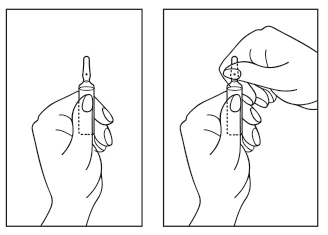
Instructions for opening the vial:
- Place the vial with the coloured mark facing upwards. If solution is present in the upper part of the vial, gently tap with the finger to allow all solution to settle in the lower part.
- Use both hands to open; hold the lower part of the vial with one hand and break off the upper part in the direction opposite to the coloured mark (see images below).
Any unused medicinal product and waste materials derived from it must be disposed of in accordance with local regulations.