Fentanest
Italy
Table of Contents
- Package leaflet: Information for the patient
- FENTANEST 0.1 mg/2 ml injectable solution
- 1. What Fentanest is and what it is used for
- 2. What you should know before Fentanest is administered
- 3. How to use Fentanest
- 4. Possible side effects
- 5. How to store Fentanest
- 6. Package contents and other information
- The following information is intended exclusively for physicians or healthcare professionals
Package leaflet: Information for the patient
FENTANEST 0.1 mg/2 ml injectable solution
Fentanyl
Please read this leaflet carefully before taking this medicine because it contains important information for you.
- Keep this leaflet. You may need to read it again.
- If you have any questions, consult your doctor or the doctor treating your child.
- If you experience any side effect, including those not listed in this leaflet, consult your doctor or the doctor treating your child. See section 4.
Contents of this leaflet:
- What Fentanest is and what it is used for
- What you need to know before Fentanest is administered
- How to administer Fentanest
- Possible side effects
- How to store Fentanest
- Contents of the pack and other information
1. What Fentanest is and what it is used for
Fentanest contains the active substance fentanyl, which belongs to a group of medicines called opioid general anaesthetics.
Fentanest is used to control pain (analgesic) before, during and after surgery. Fentanest may be administered together with other medicines to improve pain control and to avoid depressing the natural respiratory rate. Fentanest may also be used together with other medicines in general anaesthesia.
2. What you should know before Fentanest is administered
Fentanest must not be administered to you or your child if:
- You or your child are allergic to fentanyl, to other medicines belonging to the group of opioid general anaesthetics (medicines similar to morphine), or to any of the other ingredients of this medicine (listed in section 6).
- You are pregnant or breastfeeding, or think you may be pregnant.
- Your child is under 2 years of age.
Warnings and precautions
This medicine may only be used in suitable healthcare facilities (hospitals, clinics, and nursing homes) and only by a specialist doctor (surgeon or anaesthetist) under conditions ensuring adequate monitoring of the respiratory tract by healthcare personnel trained in such monitoring. This medicine may reduce the natural breathing rate.
.
If treatment is discontinued, withdrawal symptoms may occur. Inform your doctor or nurse if you believe this is happening to you (also see section 4. Possible side effects).
Inform your doctor or nurse if you have taken opioid medicines for a prolonged period during pregnancy, as there is a risk of neonatal withdrawal syndrome.
Contact your doctor or the doctor treating your child before Fentanest is administered, if you think any of the following conditions apply to you or your child:
- An abnormal heart rhythm (arrhythmia) causing slow heartbeats (bradycardia);
- Depression and/or anxiety, and you are taking medicines for depression and/or anxiety;
- A disease characterized by muscle weakness and fatigue (myasthenia gravis);
- You are elderly;
- You feel debilitated;
- Your thyroid gland is underactive;
- Lung diseases (e.g. chronic bronchitis, asthma, pulmonary emphysema, etc.) and/or you have shortness of breath and/or difficulty breathing;
- You frequently and/or heavily consume alcoholic beverages;
- Your liver is not functioning properly;
- Your kidneys are not functioning properly;
- Head or brain injuries, increased pressure inside the skull (intracranial hypertension), brain tumours, or any condition impairing brain function;
- You are undergoing long-term (chronic) therapy with other opioid medicines, or have previously misused/abused this type of medicine.
- If you or someone in your family has ever abused or been dependent on alcohol, prescription medicines, or illegal substances (“dependence”).
- If you are a smoker.
- If you have ever had mood problems (depression, anxiety, or a personality disorder) or have ever received treatment from a psychiatrist for another mental illness. Repeated use of opioid painkillers may reduce the medicine’s effectiveness (you become tolerant to it). It may also lead to dependence and abuse, which can result in a life-threatening overdose. If you are concerned about becoming dependent on Fentanest, it is important to consult your doctor. In particular, inform your doctor or pharmacist if you are taking:
- Certain nerve pain medicines (gabapentin and pregabalin).
Contact your doctor or the doctor treating your child, as the following conditions may occur after administration of Fentanest (see section 4):
- Low blood pressure, especially if this medicine is administered together with droperidol (a tranquilizer that may be used for anaesthesia or to control nausea after surgery).
- Brief, sudden, and involuntary muscle contractions (myoclonus), or rhythmic jerking of the head and limbs (clonus). To control these movements, your doctor may decide to administer specific medicines.
- Slowed heart rate (bradycardia) or cessation of heartbeat (cardiac arrest).
- Agitation, hallucinations, coma, increased heart rate (tachycardia), fluctuating blood pressure (high and low blood pressure), increased body temperature (hyperthermia), exaggerated tendon reflexes (hyperreflexia), lack of coordination, muscle rigidity, nausea, vomiting, diarrhoea. This situation may occur if you are taking certain antidepressant medicines at the same time as Fentanest. This condition (serotonin syndrome) can be life-threatening. See section Other medicines and Fentanest.
- Sudden, episodic abdominal pain.
- Dependence on this medicine. Fentanest is an opioid medicine and can cause dependence, similar to morphine.
- Pain not relieved by the medicine, increased perception of pain despite regular intake of prescribed doses, increased sensitivity to pain (hyperalgesia), or perception of pain not directly linked to a specific stimulus (allodynia).
Children
Fentanest must not be administered to children under 2 years of age.
Other medicines and Fentanest
Inform your doctor or the doctor treating your child if you are taking, have recently taken, or might take any other medicines.
This includes medicines purchased without a prescription or herbal remedies.
Concomitant use of Fentanest and sedative medicines such as benzodiazepines or related medicines increases the risk of drowsiness, breathing difficulties (respiratory depression), coma, and may be life-threatening. For this reason, concomitant use should only be considered when no other treatment options are available.
However, if your doctor prescribes Fentanest together with sedative medicines, the dose and duration of concomitant treatment must be limited by the doctor.
Inform your doctor about all sedative medicines you are taking and follow your doctor’s dose recommendations carefully. It may be helpful to inform friends or family members to watch for the signs and symptoms listed above.
Contact your doctor if you experience any of these symptoms.
Inform your doctor if you are taking any of the following medicines, as concomitant use with Fentanest must be avoided:
- Medicines known as monoamine oxidase inhibitors or MAO inhibitors (used to treat depression). Concomitant use of these medicines and Fentanest may excessively reduce the natural breathing rate. MAO inhibitor therapy must be discontinued at least 2 weeks before any surgical procedure or anaesthesia. Concomitant use of these medicines and Fentanest may also cause a potentially life-threatening condition known as serotonin syndrome (see also SSRIs and SNRIs). Inform your doctor if you are taking any of the following medicines, as dose adjustment or monitoring of these medicines and/or Fentanest may be necessary:
- Medicines used to treat depression known as “selective serotonin reuptake inhibitors (SSRIs)” or “serotonin-noradrenaline reuptake inhibitors (SNRIs)”. Concomitant use of Fentanest with these medicines and with MAO inhibitors may be potentially life-threatening, causing a condition known as serotonin syndrome.
- Diazepam (used to treat anxiety, insomnia, seizures). Concomitant use of diazepam and Fentanest may excessively reduce heart and blood vessel function.
- Medicines called benzodiazepines (similar to diazepam), barbiturates, psychotropic medicines used to treat schizophrenia, bipolar disorders, delirium, or hallucinations, or medicines used to induce general anaesthesia. Concomitant use of any of these medicines with Fentanest may cause excessive reduction in natural breathing rate, reduced or complete loss of consciousness, leading to coma and death.
- Medicines for fungal infections, such as itraconazole, fluconazole, or voriconazole. Concomitant use of any of these medicines with Fentanest may enhance the effects of Fentanest.
- Ritonavir, used to treat HIV infection. Concomitant use of ritonavir and Fentanest requires special care and close monitoring.
- Psychotropic medicines. Concomitant use of other psychotropic medicines and Fentanest may cause unexpected adverse effects. Particular caution and vigilance may be required from the doctor.
Other medicines:
- Droperidol, a tranquilizer that may be used for anaesthesia or to control nausea after surgery. Concomitant use of droperidol and Fentanest may cause a drop in blood pressure in the lungs.
- Etomidate (a medicine used for anaesthesia). When etomidate is administered together with Fentanest, the dose of etomidate should be reduced.
- Midazolam (a medicine commonly used in anaesthesia). When midazolam is administered together with Fentanest, the dose of midazolam must be reduced.
Fentanest and alcohol
If you frequently and/or heavily consume alcoholic beverages, concomitant use of Fentanest may cause excessive reduction in the natural breathing rate.
Pregnancy, breastfeeding, and fertility
If you are pregnant, suspect you may be pregnant, planning a pregnancy, or breastfeeding, inform your doctor before this medicine is administered.
Pregnancy
Fentanest must not be used during pregnancy.
Fentanest must not be administered during childbirth (including caesarean section). Fentanest crosses the placenta and may block the newborn’s spontaneous breathing at birth. Therefore, if administration is necessary, immediate access to ventilation equipment for both mother and baby is recommended. An antidote to counteract the effects of Fentanest must always be available for the baby.
Opioid medicines, if taken chronically by the mother during pregnancy, may cause withdrawal symptoms in the newborn (see section “Warnings and Precautions”).
Breastfeeding
Fentanest must not be used during breastfeeding.
Fentanest passes into breast milk. Therefore, breastfeeding is not recommended for at least 24 hours after administration of the medicine, or use milk expressed within 24 hours after administration of this medicine.
Fertility
Currently, there are no clinical data on the effects of Fentanest on fertility.
Driving and using machines
Do not drive or operate tools or machinery for at least 24 hours after administration, as the medicine reduces attention and concentration for a significant period after administration. Ask your doctor when you can resume these activities.
For athletes: Using this medicine without a therapeutic need constitutes doping and may result in a positive anti-doping test.
Fentanest contains Sodium
This medicine contains less than 1 mmol (23 mg) of sodium per dose, i.e., it is essentially “sodium-free”.
3. How to use Fentanest
Your doctor or the doctor treating your child will decide whether Fentanest can be administered by injection
into a vein in the arm (intravenous route) or into a muscle, usually a buttock (intramuscular route).
Furthermore, your doctor or the doctor treating your child will determine the amount of medicine to use based on age, body weight, physical condition, the disease being treated, any other medicines you or your child are taking, and the type of surgical procedure and anaesthesia.
If you receive more Fentanest than you should
If you are concerned that you may have been given too much Fentanest, inform your doctor or another healthcare professional immediately.
An overdose may also cause a brain disorder (known as toxic leukoencephalopathy).
If a dose of Fentanest has been missed
Since this medicine will be administered under close medical supervision, it is unlikely that a dose will be missed. However, inform your doctor if you think a dose has been missed.
4. Possible side effects
Like all medicines, this medicine can cause side effects, although not everyone will experience them.
Contact your doctor immediately if any of the following side effects occur after administration of Fentanest, some of which may be serious:
Very common (may affect more than 1 in 10 people):
- muscle rigidity, including of the muscles involved in breathing;
- nausea;
- vomiting.
Common (may affect up to 1 in 10 people):
- absence of breathing (apnea);
- change in the normal heart rhythm (arrhythmia);
- vein pain;
- increased heart rate;
- slowed heart rate;
- low blood pressure;
- sensation of suffocation (laryngospasm, bronchospasm);
- blurred vision (visual disturbances);
- alteration in the ability to perform natural movements (dyskinesia);
- mental and muscular relaxation or excessive tiredness (sedation);
- dizziness;
- allergic skin reaction (allergic dermatitis);
- confusion after surgery.
Uncommon side effects (may affect up to 1 in 100 people):
- euphoria;
- headache (cephalalgia);
- inflammation of a vein (phlebitis);
- breathing faster than normal (hyperventilation);
- hiccups;
- chills;
- abnormally low body temperature (hypothermia);
- respiratory complications during anaesthesia;
- agitation after surgery.
Frequency not known (frequency cannot be estimated from the available data):
- respiratory depression. In the period following surgery, reduced breathing capacity (e.g. decreased respiratory rate and depth of breathing) may occur. You or your child will be closely monitored and, if necessary, appropriate treatment will be provided;
- seizures;
- loss of consciousness;
- cessation of heartbeat (cardiac arrest);
- brief, sudden, and involuntary muscle contractions (myoclonus);
- hypersensitivity (such as severe allergic reaction, anaphylactic shock, urticaria);
- itching;
- delirium (symptoms may include a combination of agitation, restlessness, disorientation, confusion, fear, seeing or hearing things that are not real, sleep disturbances, nightmares);
- withdrawal symptoms (may manifest as the onset of the following side effects: nausea, vomiting, diarrhoea, anxiety, chills, tremor, and sweating).
The following have also been observed after administration of Fentanest:
- dizziness;
- sweating.
When Fentanest is administered together with droperidol (another medicine used during anaesthesia or to control nausea and vomiting after surgery), the following side effects may occur up to 24 hours after surgery:
- chills;
- tremors;
- restlessness;
- hallucinations;
- transient periods of mental depression;
- tendency to assume unnatural body positions and maintain them for prolonged periods, or to change them very slowly (dystonia);
- feeling of inability to remain still (e.g. inability to sit still), with a constant urge to move, accompanied by feelings of anxiety and agitation (akathisia);
- uncontrolled urge to roll the eyes upwards, but also sideways or downwards (oculogyric crisis);
- drowsiness;
- increased blood pressure.
If you or your child suffer from depression and/or anxiety and are taking certain types of antidepressant and/or anti-anxiety medications, the concomitant administration of Fentanest may lead to a potentially life-threatening condition called serotonin syndrome. See Warnings and precautions and Other medicines and Fentanest.
In isolated cases, after administration of Fentanest, a transient condition affecting the pancreas may occur, characterised by sudden and/or episodic abdominal pain, particularly localised in the upper abdomen, on the right side.
Reporting of side effects
If you or your child experience any side effect, including those not listed in this leaflet, talk to your doctor, your child’s doctor, or nurse. You can also report side effects directly via the national reporting system at https://www.aifa.gov.it/content/segnalazioni-reazioni-avverse.
By reporting side effects, you can help provide more information on the safety of this medicine.
5. How to store Fentanest
Keep this medicine out of the sight and reach of children.
Do not use this medicine after the expiry date stated on the carton after “Expiry”. The expiry date refers to the last day of that month.
This medicine does not require any special storage conditions.
Keep the vials in the cardboard carton.
6. Package contents and other information
What Fentanest contains
The active substance is fentanyl (as citrate).
1 vial of 2 ml contains: 0.157 mg of fentanyl citrate, equivalent to 0.100 mg of fentanyl.
The other components are: sodium chloride, water for injections.
Description of the appearance of Fentanest and package contents
Colourless type I glass vial containing 0.1 mg of fentanyl in 2 ml of solution. Pack size: 5 vials.
Marketing Authorisation Holder and Manufacturer
Marketing Authorisation Holder
Piramal Critical Care Italia S.p.A.,
Via XXIV Maggio, 62/a
37057 San Giovanni Lupatoto
Verona
Italy
Manufacturer
Piramal Critical Care BV
Rouboslaan 32
2252 TR Voorschoten
The Netherlands
The following information is intended exclusively for physicians or healthcare professionals
Fentanest can be administered by intramuscular or intravenous route. The intramuscular route is preferred
for premedication, postoperative analgesia, and pain therapy; the intravenous route (either direct or by infusion)
is used during surgery.
Dosage
Adults
Intramuscular route: average dose of 0.1–0.2 mg (2–4 ml) of Fentanest pro-dose.
Intravenous route: to achieve neuroleptanalgesic anesthesia, total doses of Fentanest range between 0.4–0.8 mg.
During maintenance of anesthesia performed with conventional techniques, the dosage should be adjusted according to
the desired analgesic depth, type of surgical procedure, individual sensitivity, and amount of other drugs administered,
bearing in mind that potentiation exists between Fentanest and concomitant agents (barbiturates, ether, halothane, etc.).
Neuroleptanalgesia: for this type of anesthesia, Fentanest may be combined with the neuroleptic droperidol in proportions
deemed appropriate by the anesthesiologist.
Neuroleptanalgesia is practically implemented as follows:
Preanesthesia: 0.1 mg Fentanest and 5 mg droperidol administered intramuscularly, 30–60 minutes before surgery.
Concomitant administration of atropine 0.25 mg is optional. The same dosage regimen applies for treatment of
postoperative pain.
Induction: rapid intravenous infusion (1000 drops/minute, equivalent to 50 ml of solution/minute) of 50–100 ml of a solution
prepared by diluting the contents of 10 vials (equivalent to 1 mg) of Fentanest and 2 vials (equivalent to 50 mg) of droperidol
in 500 ml of 5% glucose solution.
Simultaneously, a mixture of N2O/O2 in a 3:1 ratio is administered via a semi-closed circuit.
Following intravenous injection of 25–50 mg of succinylcholine (and manual hyperventilation), tracheal intubation is performed,
while the infusion rate is reduced to approximately 50 drops/minute, and administration of the N2O/O2 mixture
is continued at a reduced 2:1 ratio, at a flow rate of 12–15 liters/minute.
Maintenance: the average infusion rate ranges between 15–30 drops/minute and should be adjusted according to
surgical duration and individual sensitivity—increased if the patient moves, arterial pressure, heart rate, or respiratory rate rise,
or if sweating occurs; decreased if the patient remains calm, with stable arterial pressure, pulse and respiratory rates, and dry skin.
If surgical requirements demand, muscle relaxation is maintained with fractional doses of 25 mg succinylcholine.
Administration of N2O/O2 in a 2:1 ratio is continued.
End of surgery and recovery: approximately 15 minutes before the end of surgery, the infusion should be further slowed
(10 drops/minute), while administration of N2O is simultaneously reduced. At the time of skin suture completion,
the infusion is discontinued; the patient is manually hyperventilated with air for 2–3 minutes, then extubated.
Typically, the patient is in condition to be transferred directly to the ward.
Instead of continuous infusion, Fentanest and droperidol may be administered by direct intravenous injection at the following doses:
Induction: Fentanest 0.4 mg (8 ml); droperidol 20 mg (8 ml).
Start of incision and maintenance: as needed (based on the clinical signs mentioned above), Fentanest 0.025 mg.
Further administrations, if necessary, in even smaller doses, by appropriately diluting Fentanest. For prolonged procedures,
additional injections of 10–15 mg droperidol may be given.
The administration methods for nitrous oxide and neuromuscular blocking agents remain identical to those used in the continuous infusion technique.
Children
Children aged 12 to 17 years: follow adult dosage.
Children aged 2 to 11 years: the usual pediatric dose should be as follows:
| Age | Initial dose | Supplemental dose | |
| Spontaneous respiration | 2-11 years | 0.001-0.003 mg/kg (1-3 mcg/kg) | 0.001-0.00125 mg/kg (1-1.25 mcg/kg) |
| Assisted respiration | 2-11 years | 0.001-0.003 mg/kg (1-3 mcg/kg) | 0.001-0.00125 mg/kg (1-1.25 mcg/kg) |
Elderly and high-risk patients
In elderly patients (over 65 years of age) and other high-risk patients, the initial dose of Fentanest must be
reduced; subsequent doses should be based on the effect produced by the initial dose.
Obese patients:
In obese patients, there may be a risk of overdose if the dose is calculated based on total body weight. Obese patients should receive a dose calculated according to lean body mass rather than total body weight.
Patients with renal impairment:
In patients with impaired renal function, a reduced dose of Fentanest should be considered. Patients must be closely monitored for signs of fentanyl toxicity.
Incompatibilities
Fentanest must not be mixed with alkaline or buffered solutions.
Instructions for opening the vial
Wear gloves before opening the vial.
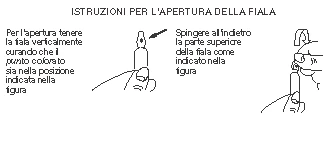
In case of accidental skin exposure, immediately wash the affected area with water. Avoid using soap, alcohol, or other detergents, as they may cause chemical or physical abrasion of the skin.