Faralzin
Italy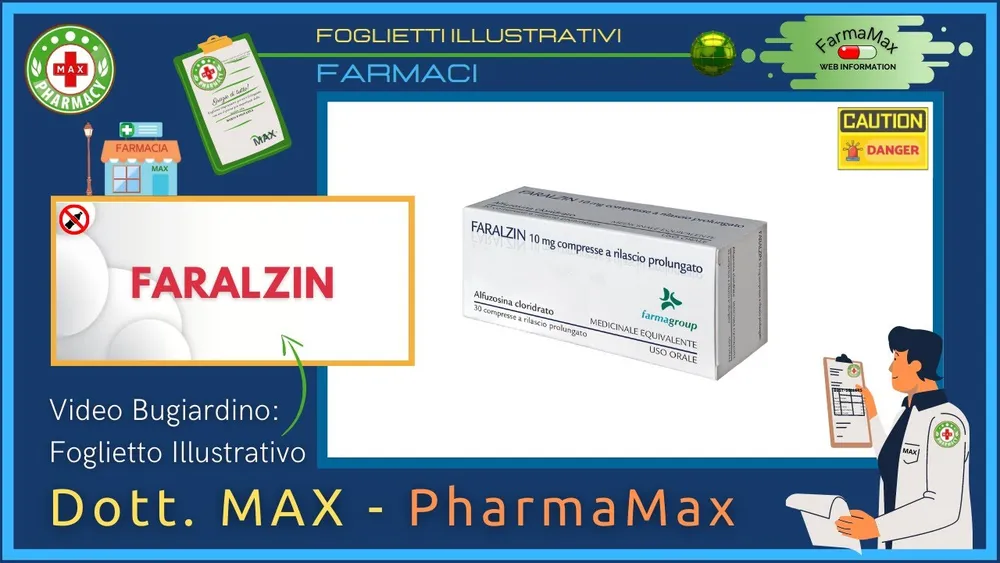
Table of Contents
Package leaflet: Information for the user
FARALZIN 10 mg prolonged-release tablets
Alfuzosin hydrochloride
Equivalent medicine
Please read all of this leaflet carefully before you start using this medicine because it contains important information for you.
- Keep this leaflet. You may need to read it again.
- If you have any questions, ask your doctor or pharmacist.
- This medicine has been prescribed for you only. Do not give it to other people, even if they have the same symptoms as yours, because it could be harmful.
- If you experience any side effects, including those not listed in this leaflet, talk to your doctor or pharmacist. See section 4.
Contents of this leaflet:
- What FARALZIN is and what it is used for
- What you need to know before you take FARALZIN
- How to take FARALZIN
- Possible side effects
- How to store FARALZIN
- Contents of the pack and other information
1. WHAT FARALZIN IS AND WHAT IT IS USED FOR
FARALZIN contains the active substance alfuzosin, which belongs to a group of medicines called alpha-adrenergic receptor antagonists or "alpha-blockers".
Alfuzosin is used to treat the symptoms of a condition called "Benign Prostatic Hyperplasia" (BPH). "Benign Prostatic Hyperplasia" means that the prostate gland has increased in size (hypertrophy), but this growth is not cancerous (it is benign). Symptoms include: frequent need to go to the bathroom to urinate (especially at night), difficulty urinating, and the feeling of not having completely emptied the bladder.
Alfuzosin works by relaxing the muscles of the prostate and bladder, making urination easier.
2. WHAT YOU SHOULD KNOW BEFORE USING FARALZIN
Do not use FARALZIN
- if you are allergic to alfuzosin, to other "alpha-blockers" (e.g. terazosin, doxazosin), or to any of the other ingredients of this medicine (listed in section 6)
- if you have fainted or felt dizzy when sitting or standing up suddenly
- if you have liver problems
- if you are taking any other medicine called an "alpha-blocker" (e.g. terazosin, doxazosin)
Warnings and precautions
Talk to your doctor before taking FARALZIN.
Speak with your doctor if any of the following apply to you:
-
if you have severe liver problems.
-
if you are taking medicines for high blood pressure. Your doctor should monitor your blood pressure regularly, especially at the beginning of treatment.
-
if you experience a sudden drop in blood pressure upon standing. This may cause dizziness, weakness, or sweating within a few hours after taking FARALZIN. In such cases, you should lie down until symptoms completely disappear. These effects are usually temporary and occur at the beginning of treatment.
-
if you have previously been treated with an alpha-blocker that caused a significant decrease in blood pressure. Your doctor will start treatment with alfuzosin at a low dose and gradually increase it, depending on how you feel.
-
if you have acute heart failure.
-
if you have congenital QTc prolongation, a known history of acquired QTc prolongation, or are taking medicines known to increase the QTc interval. Your doctor should evaluate you both before and during treatment with alfuzosin.
-
if you have coronary artery disease, you should continue specific treatment for coronary insufficiency. If angina pectoris recurs or worsens, alfuzosin should be discontinued.
-
if you experience chest pain (angina) and are being treated with a "nitrate". Taking alfuzosin may increase the risk of low blood pressure.
-
before undergoing cataract surgery (clouding of the lens), inform your ophthalmologist that you are currently or have previously been treated with FARALZIN. This is because FARALZIN may cause complications during surgery, which can be managed if the specialist is informed in advance.
-
if you are over 65 years of age, due to the risk of developing a hypotensive event and related clinical manifestations. The tablet must be swallowed whole. It must not be crushed, chewed, broken, or reduced to powder. Doing so may result in inappropriate release and absorption of the medicine, increasing the risk of early adverse effects.
Other medicines and FARALZIN
Tell your doctor or pharmacist if you are taking, have recently taken, or might take any other medicines.
It is particularly important to inform your doctor if you are taking any of the following medicines, as they may interact with your medicine:
- ketoconazole and itraconazole (medicines used to treat fungal infections)
- ritonavir (a medicine used to treat HIV)
- medicines to lower blood pressure.
- medicines (nitrates) used to treat symptoms of chest pain (angina). Concomitant use of FARALZIN with medicines used to treat hypertension or chest pain may cause a drop in blood pressure.
FARALZIN must not be taken together with other "alpha-1 blockers", such as terazosin or doxazosin, as they may cause a further decrease in your blood pressure.
If you have scheduled surgery requiring administration of anaesthetics, inform your doctor that you are taking FARALZIN.
FARALZIN with food and drink
FARALZIN should be taken after meals.
Driving and using machines
At the beginning of treatment with FARALZIN, you may experience a sensation of light-headedness, dizziness, or fainting. If you feel this way, do not drive, operate machinery, or perform hazardous activities until symptoms have passed.
FARALZIN contains lactose
This medicine contains a small amount of lactose. If your doctor has diagnosed you with an intolerance to certain sugars, contact him before taking this medicine.
3. HOW TO USE FARALZIN
Use this medicine exactly as directed by your doctor. If you have any doubts, consult your doctor or pharmacist.
How many tablets should you take?
The usual recommended dose is one tablet daily, taken after eating.
On the first day, take the tablet in the evening before going to sleep. Afterwards, take the tablet at the same time each day, after eating.
The tablet must be swallowed whole with a glass of water.
The tablets must not be crushed, chewed or divided, to avoid rapid absorption of too high a dose of the active substance, alfuzosin; this could increase the risk of side effects.
Elderly patients (over 65 years) and patients with mild to moderate renal impairment
Your doctor will prescribe starting treatment with a lower dose of alfuzosin. If you tolerate the medicine well and require a higher dose, your doctor will prescribe one tablet of FARALZIN daily.
Use in children
The efficacy of alfuzosin in children aged between 2 and 16 years has not been demonstrated. Therefore, the use of alfuzosin is not recommended in the paediatric population.
If you take more FARALZIN than you should
If you take excessive doses of FARALZIN, your blood pressure may drop suddenly and you may feel dizzy or even faint. If you start to feel dizzy, sit or lie down until you feel better. If symptoms do not resolve, contact your doctor, as you may require hospital treatment.
If you forget to take FARALZIN
If you forget to take a dose, take the next tablet at your usual time. Do not take a double dose to make up for the missed tablet, as this could cause a sudden drop in blood pressure, especially if you are being treated with medicines that lower blood pressure.
If you stop using FARALZIN
Do not stop treatment without first consulting your doctor. If you wish to discontinue treatment or if you have any questions about the medicine you are taking, speak to your doctor or pharmacist.
4. POSSIBLE ADVERSE EFFECTS
Like all medicines, this medicine can cause adverse effects, although not everyone experiences them.
All medicines can cause allergic reactions, although severe allergic reactions are very rare. If your face or
throat swells after taking these tablets, consult your doctor immediately.
A common side effect when starting treatment is dizziness,
especially when standing up from a chair or bed (postural hypotension). If you begin to feel lightheaded or dizzy, sit or lie down until you feel better.
The following adverse effects have been reported. If any of these effects worsen, consult your doctor.
Common adverse effects (more than 1 in 100 and less than 1 in 10 patients):
- fatigue - abdominal pain - dry mouth
- headache - indigestion - malaise
- dizziness - nausea
Uncommon adverse effects (more than 1 in 1,000 and less than 1 in 100 patients):
- rapid heartbeat - runny nose - skin rash
- facial flushing - chest pain - itching (flushing) - diarrhea - incontinence
- marked drop in blood pressure - blood edema (hypotension - postural dizziness) - vomiting
- syncope (loss of consciousness)
Very rare adverse effects (less than 1 in 10,000):
- worsening or recurrence of chest pain (angina pectoris) - generalized swelling of the body (angioedema) - urticaria
Frequency not known (frequency cannot be estimated from the available data):
- iris floppiness syndrome (IFIS) - liver damage - persistent and painful erection (priapism)
- changes in heart rhythm (atrial fibrillation) - decrease in white blood cells (neutropenia) - pronounced drop in blood pressure (circulatory collapse) in at-risk patients - decrease in platelet count (thrombocytopenia)
Reporting of adverse effects
If you experience any adverse effect, including those not listed in this leaflet, contact your doctor or pharmacist. You can also report adverse effects directly via the national reporting system at https://www.aifa.gov.it/content/segnalazioni-reazioni-avverse. By reporting adverse effects, you can help provide more information on the safety of this medicine.
5. HOW TO STORE FARALZIN
Keep this medicine out of the sight and reach of children.
This medicinal product does not require any special storage conditions.
Do not use this medicine after the expiry date stated on the carton and packaging. The expiry date refers to the last day of that month.
Do not dispose of medicines via wastewater or household waste. Ask your pharmacist how to dispose of medicines you no longer use. This will help protect the environment.
6. PACKAGING CONTENTS AND OTHER INFORMATION
What FARALZIN contains
- The active substance is alfuzosin hydrochloride. One prolonged-release tablet contains 10 mg of alfuzosin hydrochloride.
- The other components are: The tablet core also contains lactose monohydrate, hypromellose, microcrystalline cellulose, povidone K25, anhydrous colloidal silica, magnesium stearate. The tablet coating contains poly(vinyl alcohol), titanium dioxide (E171), macrogol 4000, talc (E553b), ethylcellulose (20 cP), medium-chain triglycerides, oleic acid.
Description of the appearance of FARALZIN and packaging contents
FARALZIN prolonged-release tablets are white, round, film-coated tablets.
Pack sizes in PVC/PVDC/aluminium blisters containing 30 tablets are available.
Marketing Authorization Holder and Manufacturer
Marketing Authorization Holder
Farma Group S.r.l., Via Strampelli, 18 - 63074 San Benedetto del Tronto (AP)
Batch release responsible manufacturer
Kern Pharma, S.L., Venus 72, Polígono Ind. Colón II, 08228 Terrassa, Barcelona, Spain
MIPHARM S.p.A, via B. Quaranta, 12 – 20141 Milan
This medicinal product is authorized in the European Economic Area countries under the following names:
Greece: Ofuxal 10 mg, prolonged-release tablets
Italy: FARALZIN 10 mg prolonged-release tablets