Famotidine Doc Generici
Italy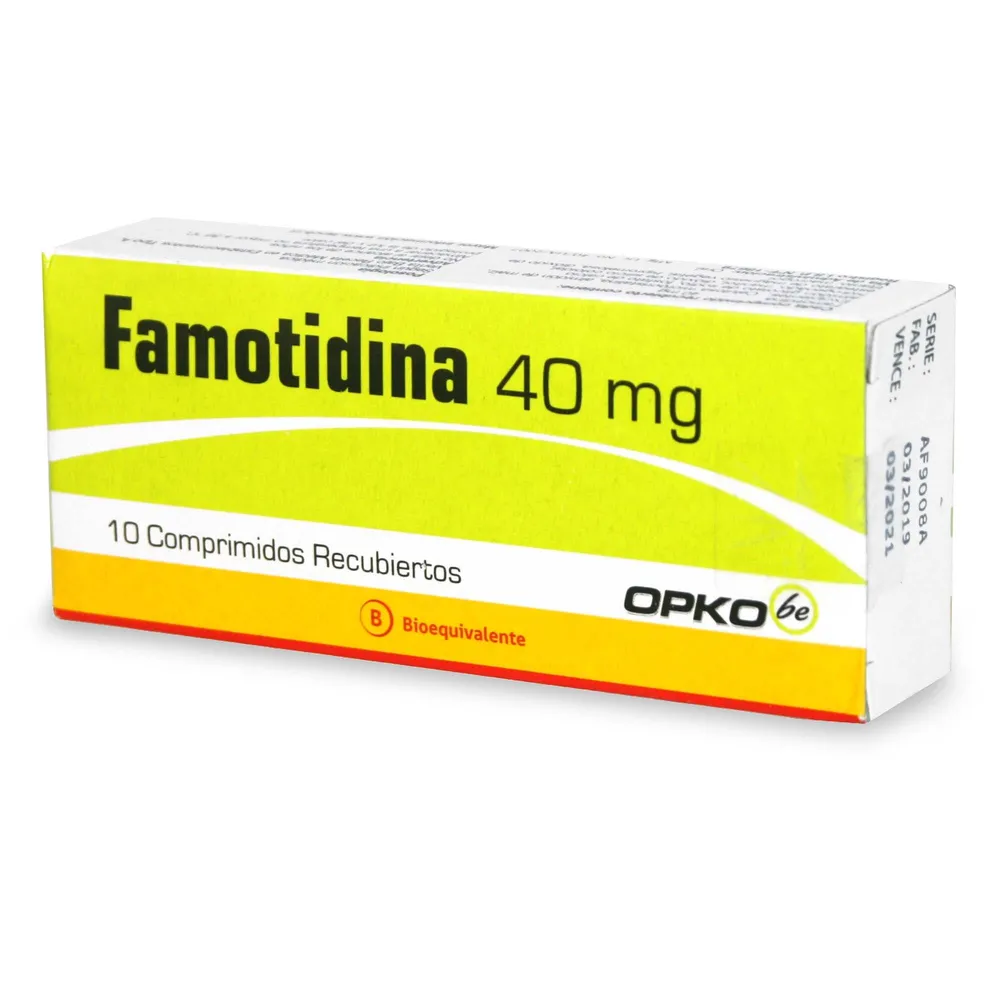
Table of Contents
- Package leaflet: Information for the user
- FAMOTIDINA DOC 20 mg film-coated tablets, 40 mg film-coated tablets
- 1. What FAMOTIDINE DOC is and what it is used for
- 2. What you need to know before taking FAMOTIDINE DOC
- 3. How to take FAMOTIDINE DOC
- 4. Possible side effects
- 5. How to store FAMOTIDINA DOC
- 6. Package contents and other information
Package leaflet: Information for the user
FAMOTIDINA DOC 20 mg film-coated tablets, 40 mg film-coated tablets
Generic medicine
Please read this leaflet carefully before taking this medicine because it contains important information for you.
- Keep this leaflet. You may need to read it again.
- If you have any questions, ask your doctor or pharmacist.
- This medicine has been prescribed for you only. Do not give it to other people, even if their symptoms are the same as yours, as it may be harmful.
- If you experience any side effects, including those not listed in this leaflet, tell your doctor or pharmacist. See section 4.
Contents of this leaflet:
- What FAMOTIDINA DOC is and what it is used for
- What you need to know before taking FAMOTIDINA DOC
- How to take FAMOTIDINA DOC
- Possible side effects
- How to store FAMOTIDINA DOC
- Contents of the pack and other information
1. What FAMOTIDINE DOC is and what it is used for
FAMOTIDINE DOC works by reducing the amount of acid produced by the stomach. It is used to
treat certain conditions caused by excess stomach acid production. It is a medicine that acts on the
gastrointestinal tract and belongs to a group of medicines known as histamine H2-receptor antagonists.
FAMOTIDINE DOC 20 mg film-coated tablets are indicated in adults for:
- the prevention of duodenal ulcer recurrence
- the treatment of duodenal ulcer
- the treatment of benign gastric ulcer
- the treatment of Zollinger-Ellison syndrome (a condition caused by abnormal production of the hormone gastrin, leading to excessive gastric acid secretion)
- the symptomatic treatment of mild reflux esophagitis (inflammation of the esophagus), such as heartburn
FAMOTIDINE DOC 40 mg film-coated tablets are indicated in adults for:
- the treatment of duodenal ulcer
- the treatment of benign gastric ulcer
- the treatment of Zollinger-Ellison syndrome (a condition caused by abnormal production of the hormone gastrin, leading to excessive gastric acid secretion)
- the symptomatic treatment of mild to moderate reflux esophagitis (inflammation of the esophagus)
2. What you need to know before taking FAMOTIDINE DOC
Do not take FAMOTIDINE DOC
- if you are allergic to famotidine or to any of the other ingredients of this medicine (listed in section 6). If symptoms of hypersensitivity occur, treatment with FAMOTIDINE DOC must be discontinued.
- Children must not be treated with FAMOTIDINE DOC.
Warnings and precautions
Talk to your doctor or pharmacist before taking FAMOTIDINE DOC:
- if any of the following symptoms occur, inform your doctor immediately:
- unintentional weight loss;
- repeated vomiting;
- difficulty swallowing;
- blood in vomit;
- pale appearance and feeling weak (anaemia);
- blood in stools. Your doctor may consider it necessary to have you undergo certain examinations to rule out a possible malignant condition: famotidine may relieve symptoms of cancer and could therefore delay diagnosis. If symptoms persist despite treatment, further investigations should be considered.
- If you are currently taking atazanavir for the treatment of HIV infection (see "Other medicines and FAMOTIDINE DOC" below).
- If you suffer from duodenal ulcer or benign gastric ulcer, your doctor may suspect that these are caused by a bacterial infection with H. pylori. In this case, you will need specific treatment under medical supervision to eradicate these bacteria.
- If your kidney (renal) function is impaired. Your doctor may prescribe a lower dose of FAMOTIDINE DOC (see section 3 “How to take FAMOTIDINE DOC”).
- Do not use FAMOTIDINE DOC if you have mild gastrointestinal disorders. Consult your doctor.
- For long-term treatment with high doses, monitoring of blood cell counts and liver function is recommended.
- In case of long-standing ulcer disease, abrupt discontinuation of treatment after symptom relief should be avoided.
Other medicines and FAMOTIDINE DOC
Inform your doctor or pharmacist if you are taking, have recently taken, or might take any other medicines.
If you are taking any of the following medicines, consult your doctor immediately:
Do not take FAMOTIDINE DOC:
- if you are concurrently taking probenecid (a medicine used to treat gout), because probenecid may delay the elimination of famotidine;
- concurrently with atazanavir, ritonavir, and tenofovir (medicines used to treat HIV infection).
The effect of FAMOTIDINE DOC is reduced by:
- medicines that neutralize gastric acidity (antacids). Because of the reduced effect of FAMOTIDINE DOC, it should be taken at least 1–2 hours before the antacid;
- sucralfate (a medicine used to treat ulcers). Normally, sucralfate should not be taken until at least 2 hours after taking FAMOTIDINE DOC.
FAMOTIDINE DOC may reduce the effect of:
- ketoconazole or itraconazole (medicines used to treat fungal infections). Take ketoconazole 2 hours before taking FAMOTIDINE DOC;
- atazanavir taken together with ritonavir (medicines used to treat HIV infection). Consult your doctor;
- calcium carbonate, when used as a medicine for high phosphate levels in the blood (hyperphosphataemia) in patients undergoing dialysis;
- oral posaconazole suspension (a drinkable medicine used to prevent and treat certain fungal infections);
- dasatinib, erlotinib, gefitinib, and pazopanib (medicines used to treat cancer).
FAMOTIDINE DOC with food and drink
FAMOTIDINE DOC can be taken with or without food.
Pregnancy and breastfeeding
If you are pregnant, think you may be pregnant, planning a pregnancy, or breastfeeding, consult your doctor or pharmacist before taking this medicine.
FAMOTIDINE DOC is not recommended during pregnancy and should only be prescribed if strictly necessary. Before starting treatment with FAMOTIDINE DOC during pregnancy, your doctor must weigh the potential benefits of the medicine against the possible risks involved.
Famotidine is detectable in human milk. Breastfeeding mothers must either discontinue the medicine or stop breastfeeding.
Driving and using machines
It is not known whether FAMOTIDINE DOC may affect your ability to drive or operate machinery. Do not drive or operate machinery until you are certain that your abilities are not impaired.
3. How to take FAMOTIDINE DOC
Take this medicine exactly as directed by your doctor. If you have any doubts, consult your doctor or pharmacist.
Method of administration
FAMOTIDINE DOC tablets should be swallowed with liquid.
FAMOTIDINE DOC 40 mg tablets are divisible. The tablet can be divided into equal parts.
It is not necessary to take the tablets with food.
The recommended dose depends on the severity of the disease and the dosage previously administered. Your doctor will decide how much medicine you should take.
The following are the recommended doses:
Treatment of symptoms of reflux disease (e.g., heartburn)
20 mg of famotidine twice daily.
Treatment should continue for 6 weeks or, if necessary, for 12 weeks. However, this period may be shortened if healing of the lesion is confirmed.
Treatment of mild to moderate esophagitis
40 mg of famotidine twice daily.
Treatment should continue for 6 weeks or, if necessary, for 12 weeks. However, this period may be shortened if healing of the lesion is confirmed.
Duodenal ulcers
40 mg of famotidine at bedtime.
Treatment should continue for 4–8 weeks. However, this period may be shortened if the doctor considers the ulcer to be healed (e.g., by endoscopic examination). If the examination shows that the ulcer has not healed, treatment should be extended for another 4 weeks.
Benign gastric ulcers
40 mg of famotidine at bedtime.
Treatment should continue for 6–8 weeks. However, this period may be shortened if the doctor considers the ulcer to be healed (e.g., by endoscopic examination).
Prevention of recurrent duodenal ulcers
20 mg of famotidine at bedtime.
The recommended maintenance dose of 20 mg has been administered continuously and effectively in clinical studies lasting up to 6 months.
Zollinger-Ellison syndrome
In the absence of prior therapy, treatment starts with 20 mg of famotidine administered every 6 hours.
Depending on acid secretion and your clinical response, your doctor may increase the dose, and treatment should continue until desired acid levels are achieved. If administration of a daily dose up to 800 mg per day does not produce results, your doctor may consider alternative therapy to control acid secretion.
If you have previously been treated with similar medicines (e.g., other H2-receptor antagonists), treatment with FAMOTIDINE DOC may be initiated at a higher than normally recommended dose.
Ask your doctor what dose is right for you.
Treatment should continue for as long as necessary.
Doses up to 800 mg per day have been administered for up to 1 year without development of significant adverse effects.
Patients with impaired renal function
If your kidney function is reduced, your doctor may halve your daily dose. This also applies to dialysis patients. FAMOTIDINE DOC should be administered at the end of dialysis or afterwards, since part of the active substance is removed during dialysis.
If you take more FAMOTIDINE DOC than you should
Seek immediate medical advice or go to the nearest emergency department. The doctor will try to reduce absorption and relieve symptoms. To date, no cases of overdose with the active substance famotidine have been reported.
If you forget to take FAMOTIDINE DOC
If you miss a dose, take the tablet as soon as you remember. Then continue treatment as usual. Do not take a double dose to make up for the missed dose. If you are unsure whether you missed a dose, consult your doctor.
If you stop taking FAMOTIDINE DOC
If you wish to stop taking FAMOTIDINE DOC, consult your doctor.
In cases of long-standing ulcer disease, abrupt discontinuation of treatment after symptom relief should be avoided.
If you have any questions about the use of this medicine, consult your doctor or pharmacist.
4. Possible side effects
Like all medicines, this medicine can cause side effects, although not everyone experiences them.
If you experience any of the following effects, stop taking the medicine and contact your doctor immediately or go to the nearest hospital emergency department:
Common side effects (may affect up to 1 in 10 people):
- headache;
- dizziness;
- constipation;
- diarrhoea.
Uncommon side effects (may affect up to 1 in 100 people):
- altered taste;
- dry mouth;
- nausea, vomiting;
- gastrointestinal disorders;
- excessive intestinal gas (flatulence);
- loss of appetite;
- skin rash, itching (pruritus);
- tiredness (fatigue).
Rare side effects (may affect up to 1 in 1,000 people):
- severe allergic/hypersensitivity reactions causing breathing difficulties or dizziness (anaphylaxis), swelling of the face or throat (angioedema), breathing difficulties or wheezing (bronchospasm);
- yellowing of the skin or whites of the eyes due to blockage of bile flow (cholestatic jaundice);
- urticaria;
- joint pain (arthralgia);
- increased laboratory values (transaminases, gamma GT, alkaline phosphatase, bilirubin).
Very rare side effects (may affect up to 1 in 10,000 people):
- blood disorders: reduction in the number of all types of blood cells (pancytopenia), or reduction in white blood cells (leucopenia, agranulocytosis, neutropenia) or platelets (thrombocytopenia), which may result, for example, in weakness, fatigue, sudden fever, sore throat, bruising or nosebleeds;
- reversible psychological disorders (e.g. hallucinations, disorientation, confusion, anxiety, agitation, depression);
- tingling or numbness in hands or feet (paraesthesia);
- drowsiness;
- insomnia;
- epileptic seizures (grand mal);
- hair loss;
- muscle cramps;
- impotence, reduced libido;
- tightness in the chest;
- AV block (a heart rhythm disorder) with intravenous H2-receptor antagonists;
- QT interval prolongation (in patients with impaired renal function);
- interstitial pneumonia, sometimes fatal.
Not known (frequency cannot be estimated from the available data):
- inflammation of the liver (hepatitis);
- severe skin rash with blisters (Stevens-Johnson syndrome/toxic epidermal necrolysis), sometimes fatal.
Reporting of side effects
If you experience any side effect, including those not listed in this leaflet, please inform your doctor or pharmacist. You may also report side effects directly via the national reporting system at https://www.aifa.gov.it/content/segnalazioni-reazioni-avverse.
By reporting side effects, you can help provide more information on the safety of this medicine.
5. How to store FAMOTIDINA DOC
FAMOTIDINA DOC 20 mg: No special storage conditions required.
FAMOTIDINA DOC 40 mg: Store below 25°C.
Keep this medicine out of the sight and reach of children.
Do not use this medicine after the expiry date stated on the blister and on the outer packaging. The expiry date refers to the last day of that month.
Do not dispose of medicines via wastewater or household waste. Ask your pharmacist how to dispose of medicines no longer required. This will help protect the environment.
6. Package contents and other information
What FAMOTIDINA DOC contains
Tablets of 20 mg
- The active substance is famotidine. Each tablet contains 20 mg of famotidine.
- The other components are microcrystalline cellulose, pregelatinized maize starch, talc, magnesium stearate, red iron oxide (E172), Opadry OY Brown.
Tablets of 40 mg
- The active substance is famotidine. Each tablet contains 40 mg of famotidine.
- The other components are microcrystalline cellulose, pregelatinized maize starch, talc, magnesium stearate, red iron oxide (E172), Opadry Pink.
Description of the appearance of FAMOTIDINA DOC and contents of the pack
FAMOTIDINA DOC 20 mg tablets are hexagonal, biconvex, brown in colour, with an edge-to-edge diameter of 6.2–6.5 mm and a point-to-point diameter of 7.0–7.2 mm. They are available in PVC/aluminium blisters containing 20 film-coated tablets.
FAMOTIDINA DOC 40 mg tablets are round, biconvex, pink to pinkish in colour, with a diameter of 8.0–8.2 mm and a score line on one side. They are available in PVC/aluminium blisters containing 10 or 20 film-coated tablets.
Marketing Authorisation Holder and Manufacturer
Marketing Authorisation Holder
DOC Generici S.r.l., Via Turati 40, 20121 Milano, Italy.
Manufacturer
Special Product’s Line S.p.A. - Via Fratta Rotonda Vado Largo 1 - 03012 Anagni (FR) - Italy