Falev
Italy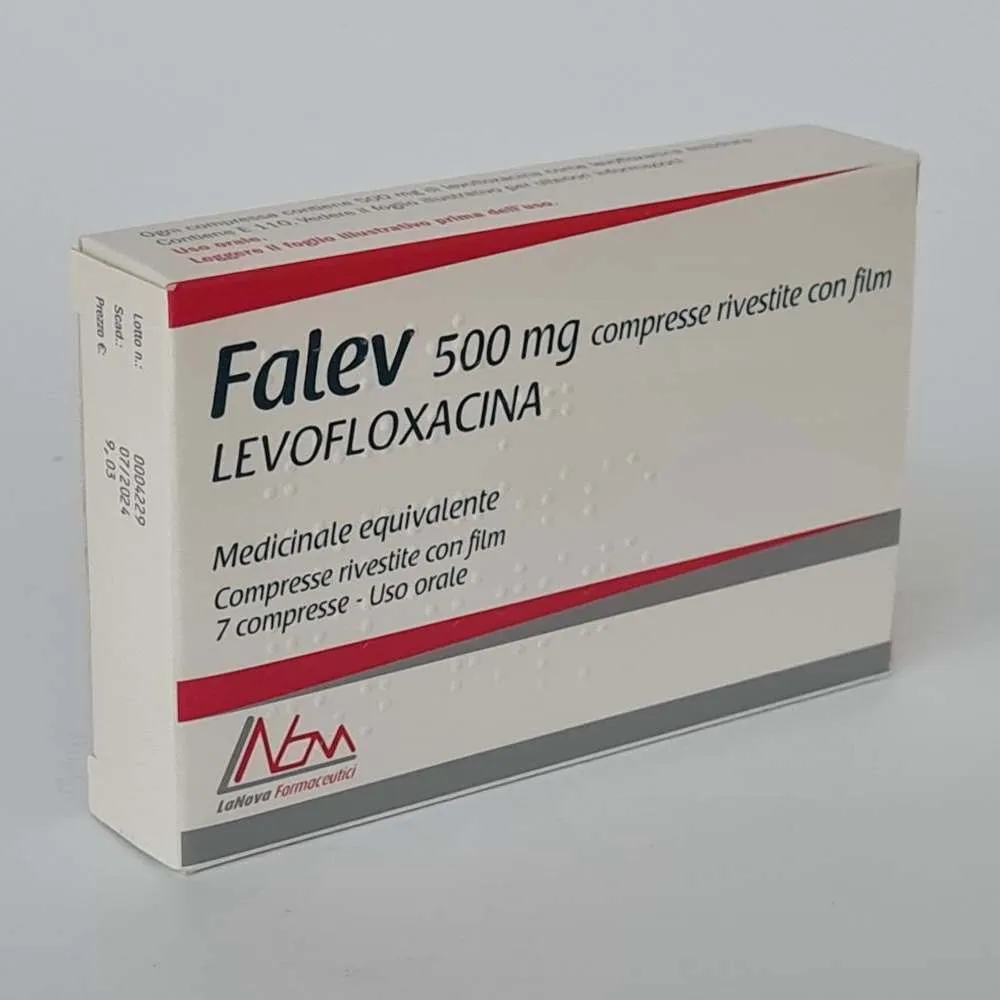
Table of Contents
- PACKAGE LEAFLET: INFORMATION FOR THE USER
- FALEV 250 mg film-coated tablets, 500 mg film-coated tablets
- 1. WHAT FALEV TABLETS ARE AND WHAT THEY ARE USED FOR
- 2. WHAT YOU SHOULD KNOW BEFORE TAKING FALEV
- 3. HOW TO TAKE FALEV TABLETS
- 4. POSSIBLE ADVERSE EFFECTS
- 5. HOW TO STORE FALEV TABLETS
- 6. PACK CONTENTS AND OTHER INFORMATION
PACKAGE LEAFLET: INFORMATION FOR THE USER
FALEV 250 mg film-coated tablets, 500 mg film-coated tablets
Levofloxacin
Equivalent medicine
Please read this leaflet carefully before taking this medicine because it contains
important information for you.
- Keep this leaflet. You may need to read it again.
- If you have any questions, ask your doctor or pharmacist.
- This medicine has been prescribed for you only. Do not give it to other people, even if their symptoms are the same as yours, as it may be harmful.
- If you experience any side effect, including those not listed in this leaflet, contact your doctor or pharmacist. See section 4.
Contents of this package leaflet
- What FALEV is and what it is used for
- What you need to know before taking FALEV tablets
- How to take FALEV tablets
- Possible side effects
- How to store FALEV tablets
- Contents of the pack and other information
1. WHAT FALEV TABLETS ARE AND WHAT THEY ARE USED FOR
FALEV tablets contain the active substance called levofloxacin. This medicine belongs to a group of medicines known as antibiotics. Levofloxacin is a "quinolone" antibiotic.
This medicine works by killing bacteria responsible for infections in the body.
FALEV is indicated for the treatment of infections of:
- Paranasal sinuses
- Lungs, in patients with long-term respiratory problems or with pneumonia
- Urinary tract, including kidneys and bladder
- Prostate gland in cases of chronic infections
- Skin and underlying layers, including muscles. These are also referred to as soft tissues.
In certain special situations, FALEV tablets may be used to reduce the likelihood of developing a lung disease called anthrax or to prevent worsening of the disease after exposure to the bacterium that causes anthrax.
2. WHAT YOU SHOULD KNOW BEFORE TAKING FALEV
Do not take this medicine and inform your doctor if:
- you are allergic (hypersensitive) to levofloxacin, to any other quinolone antibiotic such as moxifloxacin, ciprofloxacin or ofloxacin, or to any of the other ingredients of this medicine (listed in section 6). Signs of an allergic reaction include: skin rash, difficulty swallowing or breathing, swelling of the lips, face, throat or tongue.
- you suffer from epilepsy (a condition causing loss of consciousness and violent involuntary muscle contractions).
- you have had tendon problems (e.g. tendonitis) related to treatment with a "quinolone antibiotic". Tendons are fibrous structures connecting muscles to bones.
FALEV must not be administered to children or adolescents during their growth period.
FALEV must not be used during pregnancy or while breastfeeding (see "Pregnancy and breastfeeding").
Do not take this medicine if any of the above applies to you. If you have any doubts, consult your doctor or pharmacist before taking FALEV.
Warnings and precautions
Talk to your doctor or pharmacist before taking FALEV if:
- you are elderly;
- you are taking corticosteroids, medicines used to treat inflammation (see "FALEV and other medicines");
- you have had an organ transplant;
- you have had seizures (sudden, uncontrolled, involuntary muscle movements);
- you have kidney problems;
- you lack an enzyme called glucose-6-phosphate dehydrogenase (an inherited genetic disorder that may cause destruction of red blood cells following recent illness or use of certain medicines);
- you have or have previously had mental health problems;
- you have heart problems (if you were born with or have a family history of long QT syndrome, or irregular heartbeat);
- you have an electrolyte imbalance (especially low levels of potassium or magnesium in the blood);
- you suffer from bradycardia (slow heart rate);
- you suffer from heart failure (inability of the heart to supply adequate blood flow to the body, causing shortness of breath and swelling of the ankles);
- you have had a heart attack (death of heart cells due to prolonged lack of oxygen supply);
- you have diabetes (a disease characterized by high blood glucose levels due to reduced insulin production by the pancreas);
- you have liver problems;
- you suffer from myasthenia gravis (a muscle disease causing weakness and fatigue);
- you suffer from peripheral neuropathy (a nerve disorder causing pain, numbness, tingling, and weakness);
- you have been diagnosed with an aortic aneurysm or peripheral aneurysm of a large blood vessel (an enlargement or bulging of a major blood vessel);
- you have previously experienced aortic dissection, a serious condition involving a tear in the wall of the body's largest artery (the aorta);
- you have been diagnosed with insufficiency of one of the heart valves;
- you have a family history of aortic aneurysm or dissection, congenital heart valve disease, or other risk factors or predisposing conditions, e.g. Marfan syndrome, Ehlers-Danlos syndrome, Turner syndrome, Sjögren's syndrome (autoimmune inflammatory diseases), or vascular disorders such as Takayasu arteritis, giant cell arteritis, Behçet's disease, known high blood pressure, atherosclerosis (build-up of fat in and on artery walls), rheumatoid arthritis (an autoimmune disease), or endocarditis (inflammation of the heart);
- you have developed a severe skin reaction, skin peeling, blisters, and/or mouth ulcers after taking levofloxacin.
Severe skin reactions
Serious skin reactions have been reported with the use of levofloxacin, including Stevens-Johnson syndrome (SJS), toxic epidermal necrolysis (TEN), and drug reaction with eosinophilia and systemic symptoms (DRESS).
SJS and TEN may initially appear on the body as reddish spots or circular patches, often with central blisters. Mouth, throat, nose, genital, and eye ulcers may also occur, and eyes may become red and swollen. These severe skin eruptions are often preceded by fever and/or flu-like symptoms. The rashes may progress to widespread skin peeling and life-threatening or fatal complications.
DRESS initially presents with flu-like symptoms and a skin rash on the face, followed by widespread skin rash with fever, elevated liver enzymes in blood tests, eosinophilia, and swollen lymph nodes.
If you develop a severe skin rash or any of these skin symptoms, stop taking levofloxacin and contact your doctor or seek immediate medical help.
You must not take quinolone/fluoroquinolone antibacterial medicines, including FALEV, if you have previously experienced any serious adverse reaction during treatment with a quinolone or fluoroquinolone. In such cases, inform your doctor as soon as possible.
While taking FALEV:
- If you have any doubts whether any of the above may apply to you, consult your doctor or pharmacist before taking FALEV.
- If you experience sudden, severe pain in the abdomen, chest, or back—which may be symptoms of aortic aneurysm or dissection—go immediately to the emergency room. The risk may be higher if you are taking corticosteroids (medicines used to treat inflammation).
- Inform your doctor immediately if you notice sudden shortness of breath, especially when lying down, or swelling of the ankles, feet, or abdomen, or new episodes of palpitations (sensation of rapid or irregular heartbeat).
- If sudden involuntary muscle spasms, twitching, or contractions occur, consult a doctor immediately, as these may be signs of myoclonus. Your doctor may need to stop treatment with levofloxacin and start appropriate therapy.
- If you experience fatigue, paleness, bruising, uncontrolled bleeding, fever, sore throat, severe worsening of your general condition, or a feeling that your resistance to infections may be reduced, consult a doctor immediately, as these may be signs of blood disorders. Your doctor will need to monitor your blood with laboratory tests. If abnormalities occur, your doctor may need to stop treatment. Rarely, joint pain and swelling, tendon inflammation, or tendon rupture may occur. The risk is higher if you are elderly, have had an organ transplant, have kidney problems, or are taking corticosteroids (medicines used to treat inflammation). Tendon inflammation and rupture may occur within the first 48 hours of treatment and up to several months after stopping FALEV. At the first sign of tendon pain or inflammation (e.g. in the ankle, wrist, elbow, shoulder, or knee), stop taking FALEV, consult your doctor, and rest the affected area. Avoid unnecessary movements, as the risk of tendon rupture may increase.
- Rarely, symptoms of nerve damage such as pain, burning, tingling, numbness, and/or weakness, particularly in the feet and legs or hands and arms, may occur. In such cases, stop taking FALEV and inform your doctor immediately to avoid the development of potentially irreversible neuropathy.
Serious, prolonged, disabling, and potentially irreversible side effects
Fluoroquinolone/quinolone antibacterial medicines, including FALEV, have been associated with very rare but serious side effects, some of which may be prolonged (lasting months or years), disabling, or potentially irreversible. These include tendon, muscle, and joint pain in arms and legs, difficulty walking, paresthesia (abnormal sensations such as prickling, tingling, itching, numbness, or burning), sensory organ disorders such as changes in vision, taste, smell, or hearing, depression, memory impairment, severe fatigue, and serious sleep disturbances.
If you experience any of these side effects after taking FALEV, consult your doctor immediately before continuing treatment. Your doctor will decide together with you whether to continue treatment and may consider using an antibiotic from another class.
If you suspect that any of the conditions listed above apply to you, talk to your doctor or pharmacist before taking FALEV.
Other medicines and FALEV
Inform your doctor or pharmacist if you are taking, have recently taken, or might take any other medicine. This is because FALEV may affect the action of other medicines, and some medicines may affect the action of FALEV.
In particular, inform your doctor if you are taking any of the following medicines. This is because
concomitant administration with FALEV may increase the risk of side effects:
- Corticosteroids, used for inflammation. The risk of developing tendon inflammation and/or rupture is higher.
- Warfarin, used to delay blood clotting. The risk of bleeding is higher. Your doctor may order regular blood tests to monitor blood clotting.
- Theophylline, used for respiratory problems. The risk of seizures (sudden, uncontrolled, involuntary muscle movements) is higher if you take theophylline together with FALEV.
- Non-steroidal anti-inflammatory drugs (NSAIDs), used for pain and inflammation, such as aspirin, ibuprofen, fenbufen, ketoprofen, and indomethacin. The risk of seizures is higher when taken together with FALEV.
- Cyclosporine, used after organ transplants. The risk of experiencing typical cyclosporine side effects is higher.
- Medicines known for their effects on heart rhythm. These include medicines used to treat abnormal heart rhythms (antiarrhythmics such as quinidine, hydroquinidine, disopyramide, sotalol, dofetilide, ibutilide, and amiodarone), antidepressants (tricyclic antidepressants such as amitriptyline and imipramine), antipsychotics (for mental disorders), and macrolide antibiotics such as erythromycin, azithromycin, and clarithromycin used for bacterial infections.
- Probenecid, used for gout (a disease causing joint pain, swelling, and redness). If you have kidney problems, your doctor may prescribe a lower dose.
- Cimetidine, used for ulcers and heartburn. If you have kidney problems, your doctor may prescribe a lower dose.
Do not take FALEV tablets concomitantly with the following medicines. This is because the
mechanism of action of FALEV tablets may be affected:
- Iron salts in tablets (for anemia), zinc supplements, antacids containing magnesium or aluminium (for acidity or heartburn), didanosine, or sucralfate (for stomach ulcers). See section 3 “If you are taking iron salts in tablets, zinc supplements, antacids, didanosine, or sucralfate”.
Urine testing for opiates
In patients taking FALEV, urine tests may yield "false-positive" results for strong painkillers called "opiates". If your doctor considers it necessary to perform a urine test, inform them that you are taking FALEV.
Tuberculosis testing
This medicine may cause "false-negative" results in certain laboratory tests used to detect the bacterium causing tuberculosis.
Pregnancy and breastfeeding
If you are pregnant, think you may be pregnant, are planning a pregnancy, or are breastfeeding, consult your doctor or pharmacist before taking this medicine.
This medicine is contraindicated during pregnancy and breastfeeding (see "What you should know before taking FALEV").
Driving and using machines
FALEV may slightly or moderately impair the ability to drive and use machines.
Some side effects may occur after taking this medicine, including drowsiness, dizziness (sensation of movement, spinning, and loss of balance), or visual disturbances.
Some of these side effects may affect concentration and reaction speed. Do not drive or perform activities requiring high attention levels.
Important information about some excipients in FALEV tablets
This medicine contains the colouring agent sunset yellow (E110), which may cause allergic reactions.
3. HOW TO TAKE FALEV TABLETS
Always take this medicine exactly as instructed by your doctor.
If you have any doubts, consult your doctor or pharmacist.
How to take this medicine
- Take this medicine by mouth
- Swallow the tablets whole with a glass of water
- The tablets may be taken during meals or at any time between meals
If you are already taking medicines containing iron, zinc, antacids, didanosine, or sucralfate
Do not take these medicines at the same time as FALEV tablets. Take the dose of these medicines at least 2 hours before or after taking FALEV tablets.
Dosage
- Your doctor will decide how many FALEV tablets you should take
- The dose will depend on the type and location of your infection
- The duration of treatment depends on the severity of the infection
- If you feel that the effect of the medicine is too weak or too strong, do not change the dose on your own initiative, but consult your doctor.
Adults and elderly patients:
Paranasal sinus infections
- Two FALEV 250 mg tablets in two divided doses per day
- Or one FALEV 500 mg tablet daily
Lung infections in patients with chronic respiratory disorders
- Two FALEV 250 mg tablets once daily
- Or one FALEV 500 mg tablet once daily
Pneumonia
- Two FALEV 250 mg tablets once or twice daily
- Or one FALEV 500 mg tablet once daily
Urinary tract infections including kidneys or bladder
- One or two FALEV 250 mg tablets once daily
- Or half or one FALEV 500 mg tablet once daily
Prostate infections
- Two FALEV 250 mg tablets once daily
- Or one FALEV 500 mg tablet once daily
Skin and subcutaneous tissue infections including muscles
- Two FALEV 250 mg tablets once or twice daily
- Or one FALEV 500 mg tablet once or twice daily
Adults and elderly patients with kidney problems:
Your doctor may decide to prescribe you a reduced dose.
Children and adolescents:
This medicine must not be administered to children or adolescents during periods of growth.
Protect your skin from sunlight
Do not expose yourself directly to sunlight during treatment with this medicine and for two days after treatment ends. This is because your skin becomes more sensitive to sunlight and may develop sunburn, itching, or severe blisters if you do not take the following precautions:
- Be sure to use sunscreen creams with a high protection factor
- Always wear a hat and clothing covering arms and legs
- Avoid sunbeds (tanning beds).
If you take more FALEV tablets than you should
If you have accidentally taken more tablets than prescribed, contact your doctor immediately or seek medical help. Bring the medicine packaging with you. This will allow the doctor to know what you have taken. The following side effects may occur: seizures (sudden, involuntary, uncontrolled muscle movements), confusion, dizziness (sensation of movement, spinning, and loss of balance), feeling faint, tremor, and heart problems – which may lead to irregular heartbeat and feelings of discomfort (nausea) or stomach burning.
If you forget to take FALEV tablets
If you forget to take a dose, take it as soon as you remember, unless it is almost time for your next dose. Then continue as before. Never take a double dose to make up for a forgotten one.
If you stop taking FALEV tablets
Do not stop taking FALEV just because you feel better. It is important that you complete the full course of tablets prescribed by your doctor. If you stop taking the tablets too early, the infection may return, your condition may worsen, or bacteria may develop resistance to the medicine.
If you have any doubts about how to use this medicine, ask your doctor or pharmacist for advice.
4. POSSIBLE ADVERSE EFFECTS
Like all medicines, this medicine can cause adverse effects, although not everyone experiences them.
Stop taking FALEV and go to a doctor immediately if you notice any of the following adverse effects – you may need urgent medical treatment:
Rare (may affect up to 1 in 1,000 patients)
- You have an allergic reaction. Signs may include: rash, difficulty swallowing or breathing, swelling of the lips, face, throat or tongue
- Watery diarrhoea, possibly with blood, sometimes accompanied by stomach cramps and high fever. This may be a sign of a serious intestinal problem
- Pain and inflammation of tendons or ligaments, which in some cases may rupture. The Achilles tendon is most commonly affected.
- Seizures (sudden, uncontrollable, involuntary movements of the muscles)
- Hallucinations and paranoia (seeing or hearing things that are not there)
- Feeling depressed, mental disturbances, agitation (feeling restless), abnormal dreams or nightmares
- Widespread skin rash, fever, elevated liver enzymes (which may indicate liver damage), eosinophilia (blood abnormalities), swollen lymph nodes and involvement of other body organs (drug reaction with eosinophilia and systemic symptoms, also known as DRESS or drug hypersensitivity syndrome, see section 2).
- SIADH (Syndrome of Inappropriate Antidiuretic Hormone Secretion, associated with inadequate water excretion and low sodium levels)
- Hypoglycaemia (decreased blood sugar levels) or hypoglycaemic coma (decreased blood sugar levels leading to deep unconsciousness). This is important for people with diabetes. Very rare (may affect up to 1 in 10,000 patients)
- Burning, tingling, pain or numbness. These signs may indicate a condition called “neuropathy” Not known (frequency cannot be estimated from available data)
- Severe skin rashes, which may include skin lesions or peeling, such as Stevens-Johnson syndrome and toxic epidermal necrolysis. These may appear on the body as reddish spots or circular patches, often with central blisters, skin peeling, mouth, throat, nose, genital or eye ulcers, and may be preceded by fever and flu-like symptoms, see section 2.
- Loss of appetite, yellowing of the skin and eyes, dark-coloured urine, itching or painful abdomen.
- These may be signs of liver problems, which may include fatal liver failure. Psychotic reactions (loss of contact with reality) with risk of suicidal thoughts or suicidal actions.
- Nausea, general feeling of unwellness, stomach discomfort or pain, or vomiting. These may be signs of acute pancreatitis (inflammation of the pancreas), see section 2. If your vision becomes blurred or if you experience any eye discomfort while taking FALEV, consult an ophthalmologist immediately. Very rare cases of prolonged (lasting months or years) or permanent adverse drug reactions, such as tendon inflammation, tendon rupture, joint pain, limb pain, difficulty walking, abnormal sensations such as pricking, tingling, tickling, burning, numbness or pain (neuropathy symptoms), depression, fatigue, sleep disturbances, memory impairment, and changes in hearing, vision, taste or smell, have been associated with the use of quinolone and fluoroquinolone antibiotics, in some cases regardless of pre-existing risk factors. Cases of aneurysms and dissections (dilatation and weakening of the aortic wall or aortic wall tear) with possible rupture that may lead to death, as well as cases of heart valve incompetence (blood regurgitation through the valves), have been reported in patients treated with fluoroquinolones, see also section 2.
Tell your doctor if any of the following adverse effects worsen or last longer than a few days:
Common: (may affect up to 1 in 10 patients)
- Insomnia (sleep problems that may make it difficult to fall asleep or stay asleep),
- Headache,
- Dizziness (sensation of movement, spinning and loss of balance),
- Feeling unwell (nausea, vomiting),
- Diarrhoea,
- Increased liver enzymes in the blood, which may indicate liver damage (ALT/AST, alkaline phosphatase, GGT). Uncommon (may affect up to 1 in 100 patients)
- Fungal infection, including Candida, which may require treatment,
- Resistant pathogens (bacteria able to survive and even multiply in the presence of an antibiotic),
- Leucopenia and eosinophilia (changes in white blood cell count as shown in blood test results),
- Anxiety (feeling of stress),
- Feeling confused,
- Feeling nervous,
- Drowsiness,
- Tremor,
- Vertigo (sensation of movement, spinning and loss of balance),
- Dyspnoea (difficulty breathing),
- Dysgeusia (altered taste),
- Abdominal pain,
- Indigestion (difficulty digesting),
- Flatulence (gas),
- Constipation,
- Itching and skin rash,
- Urticaria (severe itching or skin rash),
- Hyperhidrosis (excessive sweating),
- Joint pain or muscle pain,
- Increased bilirubin and creatinine (due to liver or kidney problems, respectively),
- Generalised weakness. Rare (may affect up to 1 in 1,000 patients)
- Thrombocytopenia (reduced number of platelets in the blood, which may cause bruising and easy bleeding)
- Neutropenia (low number of white blood cells)
- Hypersensitivity (exaggerated immune response)
- Paraesthesia (tingling sensation in hands and feet)
- Tinnitus (perception of sound with no external source, so others cannot hear it),
- Blurred vision,
- Tachycardia (unusually fast heartbeat),
- Palpitations (awareness of heartbeat),
- Hypotension (low blood pressure),
- Muscle weakness. This is important for patients with myasthenia gravis (see section “Warnings and precautions”),
- Memory impairment,
- Impaired kidney function and occasional kidney failure, which may be caused by an allergic reaction affecting the kidneys called interstitial nephritis,
- Fever. Not known (frequency cannot be estimated from available data)
- Bone marrow failure (which may cause fatigue, reduced ability to fight infections and uncontrolled bleeding),
- Aplastic anaemia (this may cause paleness or yellowish skin due to damage to red blood cells),
- Pancytopenia (reduction in the number of all types of blood cells),
- Agranulocytosis (reduction in the number of white blood cells causing fever, sore throat and a general feeling of unwellness that does not go away),
- Haemolytic anaemia (reduction in red blood cells due to their destruction),
- Anaphylactic shock (a severe allergic reaction causing sudden drop in blood pressure, breathing difficulty due to airway constriction),
- Hyperglycaemia (increased blood sugar levels, this is important for people with diabetes),
- Parosmia (altered perception of smell),
- Anosmia and ageusia (reduced or loss of smell and taste)
- Mania (feeling very excited, euphoric, agitated or enthusiastic),
- Dyskinesia (involuntary muscle movements),
- Extrapyramidal disorders (difficulty moving and walking),
- Syncope (sudden, temporary loss of consciousness),
- Temporary loss of vision,
- Uveitis (a form of eye inflammation that may cause pain, redness and blurred vision),
- Worsening or loss of hearing,
- QT interval prolongation (abnormal and fast heart rhythm, which may develop into a life-threatening irregular heartbeat with cardiac arrest),
- Bronchospasm (difficulty breathing or wheezing due to airway constriction),
- Allergic reactions affecting the lungs,
- Pancreatitis (inflammation of the pancreas),
- Hepatitis (inflammation of the liver),
- Photosensitivity (increased sensitivity of the skin to sunlight or ultraviolet rays),
- Vasculitis (inflammation of blood vessels throughout the body due to an allergic reaction),
- Stomatitis (inflammation of the internal tissues of the mouth),
- Rhabdomyolysis (muscle breakdown and destruction),
- Arthritis (redness and swelling of the joints),
- Pain, including back, chest and extremity pain,
- Myoclonus (muscle contractions, muscle spasms or sudden, involuntary muscle jerks),
- Attacks of porphyria (painful attacks lasting days or weeks in people who already have porphyria, a very rare metabolic disorder affecting the nervous system and/or skin),
- Benign intracranial hypertension (persistent headache with or without blurred vision).
Reporting of adverse effects
If you experience any adverse effect, including those not listed in this leaflet, please speak to your doctor or pharmacist. You can also report adverse effects directly via the national reporting system at: https://www.aifa.gov.it/content/segnalazioni-reazioni-avverse
By reporting adverse effects, you can help provide more information on the safety of this medicine.
5. HOW TO STORE FALEV TABLETS
Keep this medicine out of the sight and reach of children.
Do not use this medicine after the expiry date stated on the packaging. The expiry date refers to the last day of the month.
Keep the blister in the box to protect from light.
Do not dispose of any medicine via wastewater or household waste. Ask your pharmacist how to dispose of medicines you no longer use. This will help protect the environment.
6. PACK CONTENTS AND OTHER INFORMATION
What FALEV tablets contain
FALEV tablets are available in two strengths: 250 mg and 500 mg. The active substance is levofloxacin.
Each FALEV 250 mg tablet contains levofloxacin hemihydrate equivalent to 250 mg of levofloxacin.
Each FALEV 500 mg tablet contains levofloxacin hemihydrate equivalent to 500 mg of levofloxacin.
The excipients are:
Tablet core
Microcrystalline cellulose, hydroxypropylcellulose, crospovidone, magnesium stearate.
Film coating
Hypromellose, FD&C Blue No. 2 indigo carmine - aluminium lake (E132), FD&C Yellow No. 6 sunset yellow - aluminium lake (E110), iron oxide red (E172), macrogol 4000, titanium dioxide (E171).
Additionally, the 500 mg tablets contain yellow iron oxide.
What FALEV tablets look like and pack sizes
FALEV 250 mg tablets are pink, oblong, biconvex tablets with a break line. The tablets can be divided into two equal parts.
FALEV 500 mg tablets are orange, oblong, biconvex tablets with a break line. The tablets can be divided into two equal parts.
FALEV 250 mg film-coated tablets are packaged in blisters and available in packs containing 1, 5 or 10 tablets.
FALEV 500 mg film-coated tablets are packaged in blisters and available in packs containing 1, 5, 7 or 10 tablets.
Not all pack sizes may be marketed.
Marketing Authorization Holder:
LANOVA FARMACEUTICI S.r.l.
Via Conca D’Oro, 212
00141 Rome, Italy
Manufacturer:
Pharmathen S.A.
6 Dervenekion str.,
153 51 Pallini, Attiki
Greece