Eydenzelt
Italy
Table of Contents
- Package leaflet: Information for the patient
- Eydenzelt 40 mg/mL solution for injection in pre-filled syringe
- 1. What Eydenzelt is and what it is used for
- 2. What you need to know before using Eydenzelt
- 3. How to use Eydenzelt
- 4. Possible side effects
- 5. How to store Eydenzelt
- 6. Package contents and other information
- The following information is intended exclusively for healthcare professionals:
- Instructions for use of the pre-filled syringe:
- 1. Gather the materials.
- 2. Open the box.
- 3. Remove the pre-filled syringe.
- 4. Inspect the pre-filled syringe and the product.
- 5. Remove the syringe cap by twisting.
- 6. Attach the needle to the pre-filled syringe.
- 7. Check for air bubbles.
- 8. Remove air bubbles and set the dose.
- 9. Remove the needle cover.
- 10. When ready, perform the intravitreal injection.
- 11. The pre-filled syringe is for single use only.
- 12. After injection, monitor the patient.
- Patient Information Leaflet
- Eydenzelt 40 mg/mL solution for injection in vial
- 1. What Eydenzelt is and what it is used for
- 2. What you need to know before using Eydenzelt
- 3. How to use Eydenzelt
- 4. Possible side effects
- 5. How to store Eydenzelt
- 6. Package contents and other information
- The following information is intended exclusively for healthcare professionals:
- Instructions for use of the vial:
- 1. Gather the materials.
- 2. Inspect Eydenzelt.
- 3. Remove the protective plastic cap from the vial
- 4. Disinfect the outer part of the rubber stopper of the
- 5. Attach the filter needle to the syringe.
- 6. Insert the filter needle into the vial
- 7. Remove the filter needle.
- 8. Attach the injection needle to the syringe (immediately after
- 9. Check for the absence of air bubbles.
- 10. Remove air bubbles and confirm the correct dose.
- 11. When ready to administer Eydenzelt, remove the
- 12. When ready, perform the intravitreal injection.
- 13. The vial is for single use only.
- 14. After injection, monitor the patient.
Package leaflet: Information for the patient
Eydenzelt 40 mg/mL solution for injection in pre-filled syringe
aflibercept
This medicinal product is subject to additional monitoring. This will allow rapid identification of new safety information. You can help by reporting any side effects you experience while taking this medicine. See the end of section 4 for information on how to report side effects.
Please read all of this leaflet carefully before you start using this medicine because it contains important information for you.
- Keep this leaflet. You may need to read it again.
- If you have any questions, ask your doctor.
- If you experience any side effect, including those not listed in this leaflet, tell your doctor. See section 4.
Contents of this leaflet
- What Eydenzelt is and what it is used for
- What you need to know before using Eydenzelt
- How to use Eydenzelt
- Possible side effects
- How to store Eydenzelt
- Contents of the pack and other information
1. What Eydenzelt is and what it is used for
Eydenzelt is a solution injected into the eye to treat eye diseases in adults called
- neovascular age-related macular degeneration (wet AMD),
- vision impairment due to macular oedema secondary to retinal vein occlusion (branch retinal vein occlusion (BRVO) or central retinal vein occlusion (CRVO)),
- vision impairment due to diabetic macular oedema (DMO),
- vision impairment due to myopic choroidal neovascularisation (myopic CNV).
Aflibercept, the active substance in Eydenzelt, blocks the activity of a group of factors known as VEGF-A (vascular endothelial growth factor A) and PlGF (placental growth factor).
In patients with wet AMD and myopic CNV, these factors, when present in excess, are involved in the abnormal formation of new blood vessels in the eye. The new blood vessels may leak blood components into the eye and potentially damage ocular tissues responsible for vision.
In patients with CRVO, a blockage forms in the main blood vessel that drains blood away from the retina. VEGF levels increase in response to this event, causing fluid leakage into the retina and thus resulting in swelling of the macula (the part of the retina responsible for sharp vision), known as macular oedema. When the macula swells with fluid, central vision becomes blurred.
In patients with BRVO, one or more branches of the main blood vessel draining blood from the retina are blocked. As a consequence, VEGF levels rise and cause fluid leakage into the retina, leading to macular oedema.
Diabetic macular oedema is a swelling of the retina occurring in diabetic patients due to leakage of fluid from blood vessels in the macula. The macula is the part of the retina responsible for clear vision. When the macula fills with fluid, central vision becomes blurred.
Aflibercept has been shown to block the growth of abnormal new blood vessels in the eye, which often leak fluid or blood. Eydenzelt can help stabilize, and in many cases improve, vision loss associated with wet AMD, CRVO, BRVO, DMO, and myopic CNV.
2. What you need to know before using Eydenzelt
Do not take Eydenzelt
- if you are allergic to aflibercept or to any of the other ingredients of this medicine (listed in section 6).
- if you currently have or suspect an infection inside or around the eye (ocular or periocular infection).
- if you have severe inflammation of the eye (indicated by pain or redness).
Warnings and precautions
Talk to your doctor before taking Eydenzelt
- if you have glaucoma.
- if you have ever experienced flashes of light or floaters, or if the number and size of floaters has suddenly increased.
- if you have had or are scheduled to have eye surgery within the past or next four weeks.
- if you have a severe form of CRVO or BRVO (ischemic CRVO or BRVO), treatment with Eydenzelt is not recommended.
It is also important for you to know that
- the safety and efficacy of Eydenzelt when administered to both eyes simultaneously have not been studied, and administering it in this way may increase the risk of experiencing adverse effects.
- injections of Eydenzelt may cause, in some patients, a temporary increase in intraocular pressure (eye pressure) within 60 minutes after the injection. Your doctor will monitor for this effect after each injection.
- if you develop an infection or inflammation inside the eye (endophthalmitis) or other complications, you may experience eye pain or worsening discomfort, worsening eye redness, blurred or reduced vision, and increased sensitivity to light. It is important that any symptoms are diagnosed and treated as soon as possible.
- your doctor will check whether you have other risk factors that could increase the likelihood of retinal tear or detachment, or detachment or tear of the retinal pigment epithelium, in the back of the eye. In such cases, Eydenzelt will be administered with caution.
- Eydenzelt must not be used during pregnancy unless the potential benefit outweighs the potential risk to the unborn child.
- women of childbearing potential must use effective contraception during treatment and for at least three additional months after the last injection of Eydenzelt.
Systemic use of VEGF inhibitors—substances similar to those contained in Eydenzelt—has been potentially associated with the risk of blood clots blocking blood vessels (arterial thromboembolic events), leading to heart attack or stroke. There is a theoretical risk that such events may occur following injection of Eydenzelt into the eye. Limited data are available on the safety of treating patients with CRVO, BRVO, DME, and myopic CNV who have experienced a stroke or mini-stroke (transient ischemic attack) or heart attack within the previous 6 months. If any of these conditions apply to you, Eydenzelt will be administered with caution.
Experience with treatment is limited in
- patients with DME due to type I diabetes.
- diabetic patients with high average blood glucose levels (HbA1c greater than 12%).
- diabetic patients with a diabetes-related eye disease called proliferative diabetic retinopathy.
There is no experience with treatment in
- patients with acute infections.
- patients with other eye diseases such as retinal detachment or macular hole.
- diabetic patients with uncontrolled high blood pressure.
- non-Asian patients with myopic CNV.
- patients previously treated for myopic CNV.
- patients with lesions located outside the central part of the macula (extrafoveal lesions) in myopic CNV.
If any of the above conditions apply to you, your doctor will take into account the lack of information when treating you with Eydenzelt.
Children and adolescents
The use of Eydenzelt in children and adolescents under 18 years of age has not been studied.
Other medicines and Eydenzelt
Tell your doctor if you are taking, have recently taken, or might take any other medicines.
Pregnancy and breastfeeding
- Women of childbearing potential must use effective contraception during treatment and for at least three months after the last injection of Eydenzelt.
- There is no experience with the use of Eydenzelt in pregnant women. Eydenzelt must not be used during pregnancy unless the potential benefit outweighs the potential risk to the unborn child. If you are pregnant or planning to become pregnant, discuss this with your doctor before treatment with Eydenzelt.
- Small amounts of Eydenzelt may pass into breast milk. The effects on breastfed infants/infants are unknown. Eydenzelt is not recommended during breastfeeding. If you are breastfeeding, discuss this with your doctor before treatment with Eydenzelt.
Driving and using machines
After receiving an injection of Eydenzelt, you may experience temporary visual disturbances. Do not drive or operate machinery until these disturbances have resolved.
Important information about some ingredients of Eydenzelt
This medicine contains less than 1 mmol (23 mg) of sodium per single dose, i.e., essentially ‘sodium-free’.
This medicine contains 0.015 mg of polysorbate 20 per 0.05 mL dose, equivalent to 0.3 mg/mL. Polysorbates may cause allergic reactions. Inform your doctor if you have known allergies.
3. How to use Eydenzelt
A doctor experienced in eye injections will administer Eydenzelt into your eye under aseptic conditions (clean and sterile).
The recommended dose is 2 mg of aflibercept (0.05 mL).
Eydenzelt is given as an injection into the eye (intravitreal injection).
Before the injection, the doctor will use a disinfectant eye wash to thoroughly clean your eye and prevent infections. The doctor will also give you a local anaesthetic to reduce or block pain caused by the injection.
Exudative AMD
Patients with exudative AMD will be treated with one injection per month for three consecutive doses, followed by another injection after a further 2 months.
Your doctor will then decide whether the treatment interval between injections can be maintained every two months or whether it should be gradually extended by 2- or 4-week intervals if your condition is stable.
If your condition worsens, the interval between injections may be shortened.
Unless you experience problems or your doctor advises otherwise, there is no need for medical visits during the period between injections.
Macular oedema secondary to RVO (branch RVO and central RVO)
Your doctor will determine the most appropriate treatment frequency for you. Treatment will begin with a series of monthly injections of Eydenzelt.
The interval between two injections must not be less than one month.
If you do not benefit after continued treatment, your doctor may decide to discontinue treatment with Eydenzelt.
Treatment will continue with monthly injections until your condition stabilises. Three or more monthly injections may be necessary.
Your doctor will monitor your response to treatment and may continue treatment with gradually increasing intervals between injections to maintain a stable condition. If your condition begins to worsen when the interval between treatments is extended, your doctor will shorten the intervals accordingly.
Based on your individual response to treatment, your doctor will decide when follow-up examinations and treatments should be scheduled.
Diabetic macular oedema (DME)
Patients with DME will be treated with one injection per month for the first five consecutive doses, followed by an injection every 2 months.
The interval between treatments may be maintained every 2 months or adjusted according to your condition, based on examinations performed by your doctor. Your doctor will decide the frequency of follow-up examinations.
Your doctor may decide to discontinue treatment with Eydenzelt if it is determined that you are not benefiting from continuing the treatment.
Myopic CNV
Patients with myopic CNV will be treated with a single injection. You will receive further injections only if examinations performed by your doctor indicate that the disease has not improved.
The interval between two injections must not be less than one month.
If the disease resolves and then recurs, your doctor may resume treatment.
Your doctor will establish the schedule for follow-up examinations.
Detailed instructions for use are included at the end of this leaflet in the section “How to prepare and administer Eydenzelt”.
If you forget to use Eydenzelt
Make a new appointment to have your examination and injection.
If you stop using Eydenzelt
Consult your doctor before stopping treatment.
If you have any doubts about how to use this medicine, ask your doctor.
4. Possible side effects
Like all medicines, this medicine can cause side effects, although not everyone gets them.
Allergic reactions (hypersensitivity) may potentially occur, which can be serious and may require immediate medical attention.
Administration of Eydenzelt may lead to certain eye-related side effects, which are related to the injection procedure. Some of these may be serious and include blindness, a severe infection or inflammation inside the eye (endophthalmitis), detachment, tear, or bleeding of the light-sensitive layer at the back of the eye (retinal detachment or tear), clouding of the lens (cataract), bleeding inside the eye (vitreous haemorrhage), separation of the gel-like substance inside the eye from the retina (vitreous detachment), and increased pressure inside the eye—see section 2. These serious eye-related side effects occurred in fewer than 1 in 1,900 injections in clinical studies.
If you experience a sudden decrease in vision, or increased eye pain and redness after the injection, contact your doctor immediately.
List of reported side effects
Below is a list of side effects reported as potentially related to the injection procedure or the medicine. Do not be alarmed—you may not experience any of these. Always speak to your doctor about any suspected side effects.
Very common side effects (may affect more than 1 in 10 people):
- Worsening of vision
- Bleeding at the back of the eye (retinal haemorrhage)
- Bloodshot eye due to bleeding from small blood vessels in the outer layers of the eye
- Eye pain
Common side effects (may affect up to 1 in 10 people):
- Detachment or tear of one of the layers at the back of the eye, causing flashes of light with floaters and sometimes leading to vision loss (retinal pigment epithelial tear, retinal detachment/tear)
*Conditions known to be associated with neovascular age-related macular degeneration (AMD), observed only in patients with neovascular AMD. - Degeneration of the retina causing disturbed vision
- Bleeding in the eye (vitreous haemorrhage)
- Certain forms of clouding of the lens (cataract)
- Damage to the outermost layer of the eyeball (the cornea)
- Increased intraocular pressure
- Seeing moving spots (floaters)
- Separation of the eye’s internal gel-like substance from the retina (vitreous detachment, causing flashes of light with floaters)
- Sensation of having something in the eye
- Increased tear production
- Eyelid swelling
- Bleeding at the injection site
- Eye redness
Uncommon side effects (may affect up to 1 in 100 people):
- Allergic reactions (hypersensitivity)**
**Allergic reactions reported include skin rash, itching, hives, and some cases of severe allergic reaction (anaphylactic/anaphylactoid). - Severe inflammation or infection inside the eye (endophthalmitis)
- Inflammation of the iris or other parts of the eye (iritis, uveitis, iridocyclitis, flare in the anterior chamber)
- Unusual sensation in the eye
- Eyelid irritation
- Swelling of the outermost layer of the eyeball (cornea)
Rare side effects (may affect up to 1 in 1,000 people):
- Blindness
- Clouding of the lens following injury (traumatic cataract)
- Inflammation of the gel-like substance inside the eye
- Pus in the eye
An increased incidence of bleeding from small blood vessels in the outer layer of the eye (conjunctival haemorrhage) has been observed in clinical studies in patients with neovascular age-related macular degeneration (AMD) who were treated with blood-thinning medications. This increased incidence was comparable between patients treated with ranibizumab and those treated with aflibercept.
Systemic use of vascular endothelial growth factor (VEGF) inhibitors—substances similar to those contained in Eydenzelt—is potentially associated with a risk of blood clots blocking blood vessels (arterial thromboembolic events), which may lead to heart attack or stroke. There is a potential risk that such events may occur following injection of Eydenzelt into the eye.
As with all therapeutic proteins, use of Eydenzelt may trigger an immune response (antibody formation).
Reporting of side effects
If you experience any side effect, including those not listed in this leaflet, please inform your doctor. You may also report side effects directly through the National Reporting System listed in Annex V. By reporting side effects, you can help provide more information on the safety of this medicine.
5. How to store Eydenzelt
- Keep this medicine out of the sight and reach of children.
- Do not use this medicine after the expiry date which is stated on the carton and label after “Scad.” / “EXP”. The expiry date refers to the last day of that month.
- Store in a refrigerator (2 °C - 8 °C). Do not freeze.
- The closed blister can be stored outside the refrigerator at a temperature below 25 °C for a maximum of 24 hours.
- Keep in the original packaging to protect the medicine from light.
- Do not dispose of any medicine via wastewater or household waste. Ask your pharmacist how to dispose of medicines you no longer use. This will help protect the environment.
6. Package contents and other information
What Eydenzelt contains
- The active substance is aflibercept. One pre-filled syringe contains a deliverable volume of at least 0.09 mL, equivalent to at least 3.6 mg of aflibercept. One pre-filled syringe provides a dose of 2 mg of aflibercept in 0.05 mL.
- The other components are: polysorbate 20 (E432), histidine (for pH adjustment), monohydrate histidine hydrochloride (for pH adjustment), sodium chloride, trehalose, water for injections.
Description of the appearance of Eydenzelt and contents of the pack
Eydenzelt is an injectable solution (concentrate for injection) in a pre-filled syringe. The solution is from clear to slightly opalescent and from colourless to very pale yellow-brown.
Pack: 1 pre-filled syringe.
Marketing Authorisation Holder
Celltrion Healthcare Hungary Kft.
1062 Budapest
Váci út 1-3. WestEnd Office Building B tower
Hungary
Manufacturer
Nuvisan France SARL
2400, Route des Colles,
06410, Biot,
France
Midas Pharma GmbH
Rheinstr. 49,
55218 Ingelheim,
Germany
KYMOS S.L.
Ronda Can Fatjó, 7B.
08290 Cerdanyola del Vallès,
Barcelona,
Spain
For further information on this medicinal product, please contact the local representative of the Marketing Authorisation Holder:
België/Belgique/Belgien Lietuva
Celltrion Healthcare Belgium BVBA Celltrion Healthcare Hungary Kft.
Tél/Tel: + 32 1528 7418 Tel.: +36 1 231 0493
[email protected]
България Luxembourg/Luxemburg
Celltrion Healthcare Hungary Kft. Celltrion Healthcare Belgium BVBA
Teл.: +36 1 231 0493 Tél/Tel: + 32 1528 7418
[email protected]
Česká republika Magyarország
Celltrion Healthcare Hungary Kft. Celltrion Healthcare Hungary Kft.
Tel: +36 1 231 0493 Tel.: +36 1 231 0493
Danmark Malta
Celltrion Healthcare Hungary Kft. Mint Health Ltd
Tlf.: +36 1 231 0493 Tel: +356 2093 9800
[email protected]
Deutschland Nederland
Celltrion Healthcare Deutschland GmbH Celltrion Healthcare Netherlands B.V.
Tel: +49 30 346494150 Tel: + 31 20 888 7300
[email protected] [email protected]
Eesti Norge
Celltrion Healthcare Hungary Kft. Celltrion Healthcare Hungary Kft.
Tel: +36 1 231 0493 Tlf: +36 1 231 0493
[email protected] [email protected]
España Österreich
CELLTRION FARMACEUTICA (ESPAÑA) S.L. Astro-Pharma GmbH
Tel: +34 919 94 23 90 Tel: +43 1 97 99 860
[email protected]
Ελλάδα Polska
ΒΙΑΝΕΞ Α.Ε. Celltrion Healthcare Hungary Kft.
Τηλ: +30 210 8009111 - 120 Tel.: +36 1 231 0493
France Portugal
Celltrion Healthcare France SAS CELLTRION PORTUGAL, UNIPESSOAL LDA
Tél.: +33 (0)1 71 25 27 00 Tel: +351 21 936 8542
[email protected]
Hrvatska România
Oktal Pharma d.o.o. Celltrion Healthcare Hungary Kft.
Tel: +385 1 6595 777 Tel: +36 1 231 0493
Ireland Slovenija
Celltrion Healthcare Ireland Limited OPH Oktal Pharma d.o.o.
Tel: +353 1 223 4026 Tel.: +386 1 519 29 22
[email protected]
Ísland Slovenská republika
Celltrion Healthcare Hungary Kft. Celltrion Healthcare Hungary Kft.
Sími: +36 1 231 0493 Tel: +36 1 231 0493
[email protected]
Italia Suomi/Finland
Celltrion Healthcare Italy S.R.L. Celltrion Healthcare Finland Oy.
Tel: +39 0247927040 Puh/Tel: +358 29 170 7755
[email protected] [email protected]
Κύπρος Sverige
C.A. Papaellinas Ltd Celltrion Sweden AB
Τηλ: +357 22741741 [email protected]
Latvija
Celltrion Healthcare Hungary Kft.
Tālr.: +36 1 231 0493
More detailed information on this medicinal product is available on the website of the European Medicines Agency: https://www.ema.europa.eu .
The following information is intended exclusively for healthcare professionals:
How to prepare and administer Eydenzelt
The pre-filled syringe must be used only for the treatment of one single eye. Do not open
the sterile blister of the pre-filled syringe outside a cleanroom environment.
The pre-filled syringe contains more than the recommended dose of 2 mg aflibercept (equivalent to 0.05 mL).
The excess volume must be discarded prior to administration.
Before administration, visually inspect the injectable solution for the presence of
extraneous particulate matter and/or discoloration or any change in appearance. If any of these occur, the product
must be discarded.
The closed blister may be stored outside the refrigerator at a temperature below 25 °C for
up to 24 hours. Once the blister is opened, proceed under aseptic conditions. For intravitreal injection,
a 30 G x ½ inch injection needle must be used.
Instructions for use of the pre-filled syringe:
To prepare the pre-filled syringe for administration, follow all the steps indicated below.
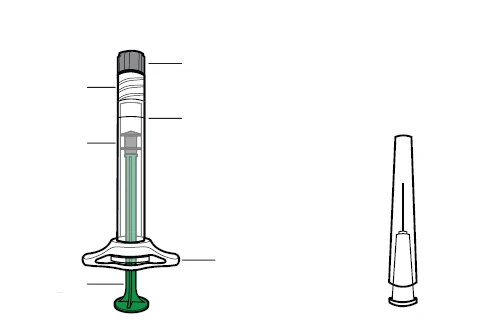
Figure A
Supplied materials: 1 pre-filled syringe
Materials not included:
- 30 G x ½ inch injection needle
1. Gather the materials.
Using an aseptic technique, gather the materials and place them on a flat surface.
2. Open the box.
When ready to administer Eydenzelt, open the box and remove the sterilized blister pack.
Carefully open the sterilized blister pack, ensuring the sterility of its contents.
- Do not remove the pre-filled syringe from the sterile blister pack until ready to attach the injection needle.
- Do not use if the expiry date has already passed.
- Do not open the sterile pre-filled syringe blister pack outside the clean administration room.
3. Remove the pre-filled syringe.
Using an aseptic technique, remove the syringe from the sterile blister pack.
4. Inspect the pre-filled syringe and the product.
4a. Examine the pre-filled syringe and ensure it is undamaged and that the syringe cap is attached to the Luer-lock.
Do not use if any part of the pre-filled syringe is damaged or if the syringe cap is detached from the Luer-lock.
4b. Examine the medicine to ensure that the solution is clear to slightly opalescent, colourless to very pale yellow-brown, and free from particles.
- Do not use if particles, cloudiness, or changes in colour are visible.
5. Remove the syringe cap by twisting.
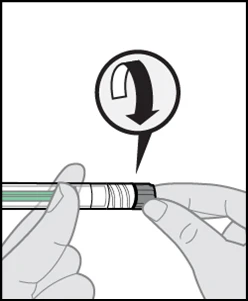
Twist the syringe cap while holding the pre-filled syringe with one hand and grasping the syringe cap with the thumb and index finger of the other hand (see Figure B).
- Do not remove the syringe cap by pulling it straight off.
- To avoid compromising the product's sterility, do not pull back the plunger.
Figure B
6. Attach the needle to the pre-filled syringe.
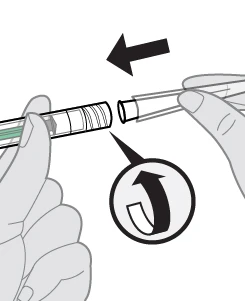
Using an aseptic technique, firmly attach the 30 G × ½ inch injection needle to the tip of the syringe by twisting it
(see Figure C)
Figure C
7. Check for air bubbles.
Hold the prefilled syringe with the needle pointing upwards and check for the absence of air bubbles
(see Figure D). If there are air bubbles, gently tap the prefilled syringe with your finger to make them
rise to the surface (see Figure E).
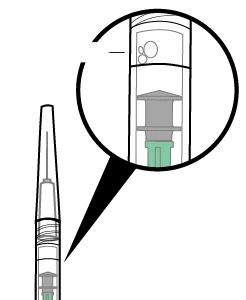
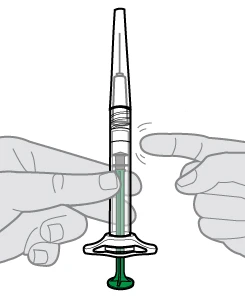
Figure D Figure E
8. Remove air bubbles and set the dose.
- To remove all air bubbles and expel excess medication, press SLOWLY on the plunger rod to align the rounded end of the plunger (see Figure F) with the dose indicator mark on the pre-filled syringe barrel (equivalent to 0.05 mL, i.e. 2 mg of aflibercept) (see Figure G). Note: accurate positioning of the plunger is very important, as incorrect positioning may result in administration of a volume greater or smaller than the recommended dose.
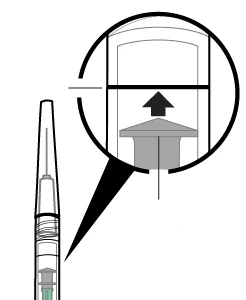
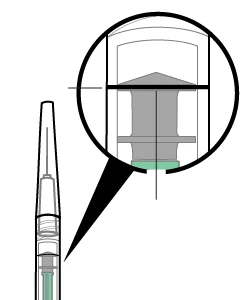
Figure F Figure G
9. Remove the needle cover.
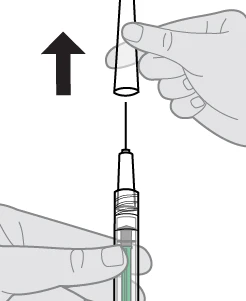
When you are ready to administer Eydenzelt, remove the
plastic cover from the needle (see Figure H).
Figure H
10. When ready, perform the intravitreal injection.
The intravitreal injection procedure must be performed under controlled aseptic conditions,
including surgical hand disinfection and the use of sterile gloves, a sterile drape, and a sterile eyelid speculum (or equivalent instrument). Prior to injection, adequate anaesthesia and a broad-spectrum topical microbicide must be administered.
Each sterile pre-filled syringe must be used exclusively for the treatment of a single eye. If the fellow eye requires treatment, a new sterile pre-filled syringe must be used, and prior to administering Eydenzelt in the other eye, the sterile field, syringe, gloves, drapes, eyelid speculum, filter, and injection needles must be replaced.
Inject by carefully and steadily depressing the plunger rod.
- Do not apply additional pressure once the plunger rod has reached the end of the syringe. After the full dose has been injected, a small residual volume may remain inside the syringe. This is normal.
- Do not administer the residual solution remaining in the syringe.
11. The pre-filled syringe is for single use only.
Withdrawing multiple doses from a pre-filled syringe may increase the risk of contamination and
subsequent infection. Unused medicine and waste material derived from this medicine must be
disposed of in accordance with local regulations.
12. After injection, monitor the patient.
Immediately after intravitreal injection, patients must be monitored for potential increase in intraocular pressure. Adequate monitoring may consist of assessment of optic nerve head perfusion or tonometry. A sterile needle for paracentesis should be available if needed.
After intravitreal injection, patients and/or caregivers must be instructed to immediately report any signs and/or symptoms suggesting endophthalmitis or retinal detachment (e.g. eye pain, eye redness, photophobia, blurred vision).
Patient Information Leaflet
Eydenzelt 40 mg/mL solution for injection in vial
aflibercept
This medicinal product is subject to additional monitoring. This will allow for the rapid identification of new safety information. You can help by reporting any adverse reactions you experience while taking this medicine. See the end of section 4 for information on how to report adverse reactions.
Please read this leaflet carefully before using this medicine because it contains important information for you.
- Keep this leaflet. You may need to read it again.
- If you have any questions, consult your doctor.
- If you experience any adverse reaction, including those not listed in this leaflet, consult your doctor. See section 4.
Contents of this leaflet
- What Eydenzelt is and what it is used for
- What you need to know before using Eydenzelt
- How to use Eydenzelt
- Possible side effects
- How to store Eydenzelt
- Contents of the pack and other information
1. What Eydenzelt is and what it is used for
Eydenzelt is a solution injected into the eye to treat eye diseases in adults called
- neovascular age-related macular degeneration (wet AMD),
- vision impairment due to macular oedema secondary to retinal vein occlusion (branch retinal vein occlusion (BRVO) or central retinal vein occlusion (CRVO)),
- vision impairment due to diabetic macular oedema (DMO),
- vision impairment due to myopic choroidal neovascularisation (myopic CNV).
Aflibercept, the active substance in Eydenzelt, blocks the activity of a group of factors known as VEGF-A (vascular endothelial growth factor A) and PlGF (placental growth factor).
In patients with wet AMD and myopic CNV, these factors, when present in excess, are involved in the abnormal formation of new blood vessels in the eye. The new blood vessels may leak blood components into the eye and potentially damage ocular tissues responsible for vision.
In patients with CRVO, a blockage forms in the main blood vessel that drains blood away from the retina. VEGF levels increase in response to this event, causing fluid leakage into the retina and thus resulting in swelling of the macula (the part of the retina responsible for sharp vision), known as macular oedema. When the macula swells with fluid, central vision becomes blurred.
In patients with BRVO, one or more branches of the main blood vessel draining blood from the retina are blocked. VEGF levels consequently rise, leading to fluid leakage into the retina and causing macular oedema.
Diabetic macular oedema is a swelling of the retina occurring in diabetic patients due to leakage of fluid from blood vessels in the macula. The macula is the part of the retina responsible for clear vision. When the macula fills with fluid, central vision becomes blurred.
Aflibercept has been shown to block the growth of abnormal new blood vessels in the eye, which often leak fluid or blood. Eydenzelt can help stabilise and, in many cases, improve vision loss associated with wet AMD, CRVO, BRVO, DMO, and myopic CNV.
2. What you need to know before using Eydenzelt
Do not take Eydenzelt
- if you are allergic to aflibercept or to any of the other ingredients of this medicine (listed in section 6).
- if you currently have or suspect an infection inside or around the eye (ocular or periocular infection).
- if you have severe inflammation of the eye (indicated by pain or redness).
Warnings and precautions
Talk to your doctor before taking Eydenzelt:
- if you have glaucoma,
- if you have ever experienced flashes of light or floaters, or if the number and size of floaters has suddenly increased.
- if you have had or are scheduled to have eye surgery within the past or next four weeks.
- if you have a severe form of CRVO or BRVO (ischemic CRVO or BRVO), treatment with Eydenzelt is not recommended.
It is also important for you to know that:
- the safety and efficacy of Eydenzelt when administered in both eyes simultaneously have not been studied, and administering it in this way may increase the risk of experiencing adverse effects.
- injections of Eydenzelt may cause an increase in intraocular pressure in some patients within 60 minutes after injection. Your doctor will monitor for this effect after each injection.
- if you develop an infection or inflammation inside the eye (endophthalmitis) or other complications, you may experience eye pain or discomfort, worsening eye redness, blurred or reduced vision, and increased sensitivity to light. It is important that any symptoms are diagnosed and treated as soon as possible.
- your doctor will check whether you have other risk factors that may increase the likelihood of detachment or tear in the back of the eye (retinal detachment or tear, or detachment or tear of the retinal pigment epithelium); in such cases, Eydenzelt will be administered with caution.
- Eydenzelt must not be used during pregnancy unless the potential benefit outweighs the potential risk to the unborn child.
- women of childbearing potential must use effective contraception during treatment and for at least three additional months after the last injection of Eydenzelt.
Systemic use of VEGF inhibitors—substances similar to those contained in Eydenzelt—has potentially been associated with the risk of blood clots blocking blood vessels (arterial thromboembolic events), leading to heart attack or stroke. There is a theoretical risk that such events may occur following injection of Eydenzelt into the eye. Data on the safety of treating patients with CRVO, BRVO, DME, and myopic CNV who have experienced a stroke or mini-stroke (transient ischemic attack) or heart attack within the past 6 months are limited. If any of these conditions apply to you, Eydenzelt will be administered with caution.
Experience is limited in treating
- patients with DME due to type I diabetes.
- diabetic patients with high average blood glucose levels (HbA1c greater than 12%).
- diabetic patients with a diabetes-related eye disease called proliferative diabetic retinopathy.
There is no experience with treating
- patients with acute infections.
- patients with other eye diseases such as retinal detachment or macular hole.
- diabetic patients with uncontrolled high blood pressure.
- non-Asian patients with myopic CNV.
- patients previously treated for myopic CNV.
- patients with lesions located outside the central part of the macula (extrafoveal lesions) in myopic CNV.
If any of the above conditions apply to you, your doctor will take into account this lack of information when treating you with Eydenzelt.
Children and adolescents
The use of Eydenzelt in children or adolescents under 18 years of age has not been studied, as wet AMD, CRVO, BRVO, DME, and myopic CNV occur primarily in adults. Therefore, its use in this age group is not relevant.
Other medicines and Eydenzelt
Tell your doctor if you are taking, have recently taken, or might take any other medicines.
Pregnancy and breastfeeding
- Women of childbearing potential must use effective contraception during treatment and for at least three months after the last injection of Eydenzelt.
- There is no experience with the use of Eydenzelt in pregnant women. Eydenzelt must not be used during pregnancy unless the potential benefit outweighs the potential risk to the unborn child. If you are pregnant or planning to become pregnant, discuss this with your doctor before starting treatment with Eydenzelt.
- Small amounts of Eydenzelt may pass into breast milk. The effects on breastfed infants are unknown. Eydenzelt is not recommended during breastfeeding. If you are breastfeeding, discuss this with your doctor before starting treatment with Eydenzelt.
Driving and using machines
After receiving an injection of Eydenzelt, you may experience temporary visual disturbances. Do not drive or operate machinery until these disturbances have resolved.
Important information about some excipients in Eydenzelt
This medicine contains less than 1 mmol (23 mg) of sodium per single dose, i.e., essentially 'sodium-free'.
This medicine contains 0.015 mg of polysorbate 20 per 0.05 mL dose, equivalent to 0.3 mg/mL. Polysorbates may cause allergic reactions. Inform your doctor if you have known allergies.
3. How to use Eydenzelt
A doctor experienced in eye injections will inject Eydenzelt into your eye under aseptic conditions (clean and
sterile).
The recommended dose is 2 mg of aflibercept (0.05 mL).
Eydenzelt is administered as an injection into the eye (intravitreal injection).
Before the injection, the doctor will use a disinfectant eye wash to thoroughly clean the eye and prevent
infections. The doctor will also give you a local anaesthetic to reduce or block pain caused by the
injection.
Exudative AMD
Patients with exudative AMD will be treated with one injection per month for three consecutive doses, followed
by another injection after a further 2 months.
Your doctor will then decide whether the treatment interval between injections can be maintained every two
months or whether it should be gradually extended by intervals of 2 or 4 weeks if your condition is stable.
If your condition worsens, the interval between injections may be shortened.
Unless you experience problems or are otherwise advised by your doctor, there is no need to see your doctor
between injections.
Macular oedema secondary to RVO (branch RVO and central RVO)
Your doctor will determine the most appropriate treatment frequency for you. Treatment will begin with a
series of monthly Eydenzelt injections.
The interval between two injections must not be less than one month.
If you have not benefited after continuous treatment, your doctor may decide to discontinue treatment with
Eydenzelt.
Treatment will continue with monthly injections until your condition stabilizes. Three or more monthly
injections may be necessary.
Your doctor will monitor your response to treatment and may continue treatment with gradually increasing
intervals between injections to maintain a stable condition. If your condition begins to worsen when the
interval between treatments is extended, your doctor will shorten the intervals between treatments
accordingly.
Based on your individual response to treatment, your doctor will decide when to schedule follow-up
examinations and treatments.
Diabetic macular oedema (DME)
Patients with DME will be treated with one injection per month for the first five consecutive doses, followed by
an injection every 2 months.
The interval between treatments may be maintained every 2 months or adjusted according to your condition,
based on examinations performed by your doctor. Your doctor will decide the frequency of follow-up
examinations.
Your doctor may decide to discontinue treatment with Eydenzelt if it is determined that you are not benefiting
from continuing the treatment.
Myopic CNV
Patients with myopic CNV will be treated with a single injection. You will receive further injections only if
examinations performed by your doctor indicate that the disease has not improved.
The interval between two injections must not be less than one month.
If the disease disappears and then reappears, your doctor may restart treatment.
Your doctor will establish the schedule for follow-up examinations.
If you forget to use Eydenzelt
Make a new appointment to have the examinations and injection performed.
If you stop treatment with Eydenzelt
Consult your doctor before stopping treatment.
If you have any doubts about using this medicine, consult your doctor.
4. Possible side effects
Like all medicines, this medicine can cause side effects, although not everyone gets them.
Allergic reactions (hypersensitivity) may potentially occur, which can be severe and require immediate medical attention.
When Eydenzelt is administered, certain eye-related side effects may occur, which are related to the injection procedure. Some of these may be serious and include blindness, a severe infection or inflammation inside the eye (endophthalmitis), detachment, tear or bleeding of the light-sensitive layer at the back of the eye (retinal detachment or tear), clouding of the lens (cataract), bleeding inside the eye (vitreous haemorrhage), separation of the gel-like substance inside the eye from the retina (vitreous detachment), and increased pressure inside the eye – see section 2. These serious eye-related side effects occurred in fewer than 1 in 1,900 injections in clinical studies.
If you experience a sudden decrease in vision, or increased eye pain and redness after the injection, contact your doctor immediately.
List of reported side effects
Below is a list of side effects reported as potentially related to the injection procedure or the medicine. Do not be alarmed – you may not experience any of these. Always speak to your doctor about any suspected side effects.
Very common side effects (may affect more than 1 in 10 people):
- Worsening of vision
- Bleeding at the back of the eye (retinal haemorrhage)
- Bloodshot eye due to bleeding from small blood vessels in the outer layers of the eye
- Eye pain
Common side effects (may affect up to 1 in 10 people):
- Detachment or tear in one of the layers at the back of the eye, causing flashes of light with floaters and sometimes leading to vision loss (retinal pigment epithelial tear/detachment, retinal detachment/tear)
- Degeneration of the retina (causing disturbed vision)
- Bleeding inside the eye (vitreous haemorrhage)
- Certain forms of lens clouding (cataract)
- Damage to the outermost layer of the eyeball (cornea)
- Increased eye pressure
- Seeing moving spots (floaters)
- Separation of the gel-like substance inside the eye from the retina (vitreous detachment, causing flashes of light with floaters)
- Sensation of having something in the eye
- Increased tear production
- Eyelid swelling
- Bleeding at the injection site
- Eye redness
* Conditions known to be associated with neovascular age-related macular degeneration (AMD), observed only in patients with neovascular AMD.
Uncommon side effects (may affect up to 1 in 100 people):
- Allergic reactions (hypersensitivity)**
- Severe inflammation or infection inside the eye (endophthalmitis)
- Inflammation of the iris or other parts of the eye (iritis, uveitis, iridocyclitis, flare in the anterior chamber)
- Unusual sensation in the eye
- Eyelid irritation, swelling of the outermost layer of the eyeball (cornea)
** Allergic reactions reported include skin rashes, itching, hives, and some cases of severe allergic reaction (anaphylactic/anaphylactoid).
Rare side effects (may affect up to 1 in 1,000 people):
- Blindness
- Clouding of the lens following injury (traumatic cataract)
- Inflammation of the gel-like substance inside the eye
- Pus in the eye
In clinical studies, an increased incidence of bleeding from small blood vessels in the outer layer of the eye (conjunctival haemorrhage) was observed in patients with neovascular age-related macular degeneration (AMD) who were treated with blood-thinning medicines. This increased incidence was similar between patients treated with ranibizumab and those treated with aflibercept.
Systemic use of vascular endothelial growth factor (VEGF) inhibitors – substances similar to those contained in Eydenzelt – is potentially associated with the risk of blood clots blocking blood vessels (arterial thromboembolic events), which may lead to heart attack or stroke. There is a potential risk that such events could occur following injection of Eydenzelt into the eye.
As with all therapeutic proteins, Eydenzelt may trigger an immune response (antibody formation).
Reporting of side effects
If you experience any side effects, including those not listed in this leaflet, talk to your doctor. You can also report side effects directly via the National Reporting System listed in Annex V. Reporting side effects can help provide more information on the safety of this medicine.
5. How to store Eydenzelt
- Keep this medicine out of the sight and reach of children.
- Do not use this medicine after the expiry date stated on the carton and label after “Exp.” / “EXP”. The expiry date refers to the last day of that month.
- Store in a refrigerator (2 °C - 8 °C). Do not freeze.
- The unopened vial may be stored outside the refrigerator at a temperature below 25 °C for up to 24 hours.
- Keep in the original packaging to protect the medicine from light.
- Do not dispose of any medicine via wastewater or household waste. Ask your pharmacist how to dispose of medicines no longer required. This will help protect the environment.
6. Package contents and other information
What Eydenzelt contains
- The active substance is aflibercept. One vial contains a volume of at least 0.1 mL, corresponding to at least 4 mg of aflibercept. One vial provides a dose of 2 mg of aflibercept in 0.05 mL.
- The other components are: polysorbate 20 (E432), histidine (for pH adjustment), monohydrate histidine hydrochloride (for pH adjustment), sodium chloride, trehalose, water for injections.
Description of the appearance of Eydenzelt and contents of the pack
Eydenzelt is an injectable solution (preparation for injection) in a vial. The solution is from clear to slightly opalescent and from colourless to very pale yellow-brown.
Pack: 1 vial + 1 filter needle.
Marketing Authorisation Holder
Celltrion Healthcare Hungary Kft.
1062 Budapest
Váci út 1-3. WestEnd Office Building B tower
Hungary
Manufacturer
Nuvisan France SARL
2400, Route des Colles,
06410, Biot,
France
Midas Pharma GmbH
Rheinstr. 49,
55218 Ingelheim,
Germany
KYMOS S.L.
Ronda Can Fatjó, 7B.
08290 Cerdanyola del Vallès,
Barcelona,
Spain
For further information about this medicinal product, please contact the local representative of the Marketing Authorisation Holder:
België/Belgique/Belgien Lietuva
Celltrion Healthcare Belgium BVBA Celltrion Healthcare Hungary Kft.
Tél/Tel: + 32 1528 7418 Tel.: +36 1 231 0493
[email protected]
България Luxembourg/Luxemburg
Celltrion Healthcare Hungary Kft. Celltrion Healthcare Belgium BVBA
Teл.: +36 1 231 0493 Tél/Tel: + 32 1528 7418
[email protected]
Česká republika Magyarország
Celltrion Healthcare Hungary Kft. Celltrion Healthcare Hungary Kft.
Tel: +36 1 231 0493 Tel.: +36 1 231 0493
Danmark Malta
Celltrion Healthcare Hungary Kft. Mint Health Ltd
Tlf.: +36 1 231 0493 Tel: +356 2093 9800
[email protected]
Deutschland Nederland
Celltrion Healthcare Deutschland GmbH Celltrion Healthcare Netherlands B.V.
Tel: +49 30 346494150 Tel: + 31 20 888 7300
[email protected] [email protected]
Eesti Norge
Celltrion Healthcare Hungary Kft. Celltrion Healthcare Hungary Kft.
Tel: +36 1 231 0493 Tlf: +36 1 231 0493
[email protected] [email protected]
España Österreich
CELLTRION FARMACEUTICA (ESPAÑA) S.L. Astro-Pharma GmbH
Tel: +34 919 94 23 90 Tel: +43 1 97 99 860
[email protected]
Ελλάδα Polska
ΒΙΑΝΕΞ Α.Ε. Celltrion Healthcare Hungary Kft.
Τηλ: +30 210 8009111 - 120 Tel.: +36 1 231 0493
France Portugal
Celltrion Healthcare France SAS CELLTRION PORTUGAL, UNIPESSOAL LDA
Tél.: +33 (0)1 71 25 27 00 Tel: +351 21 936 8542
[email protected]
Hrvatska România
Oktal Pharma d.o.o. Celltrion Healthcare Hungary Kft.
Tel: +385 1 6595 777 Tel: +36 1 231 0493
Ireland Slovenija
Celltrion Healthcare Ireland Limited OPH Oktal Pharma d.o.o.
Tel: +353 1 223 4026 Tel.: +386 1 519 29 22
[email protected]
Ísland Slovenská republika
Celltrion Healthcare Hungary Kft. Celltrion Healthcare Hungary Kft.
Sími: +36 1 231 0493 Tel: +36 1 231 0493
[email protected]
Italia Suomi/Finland
Celltrion Healthcare Italy S.R.L. Celltrion Healthcare Finland Oy.
Tel: +39 0247927040 Puh/Tel: +358 29 170 7755
[email protected] [email protected]
Κύπρος Sverige
C.A. Papaellinas Ltd Celltrion Sweden AB
Τηλ: +357 22741741 [email protected]
Latvija
Celltrion Healthcare Hungary Kft.
Tālr.: +36 1 231 0493
More detailed information on this medicinal product is available on the website of the European Medicines Agency: https://www.ema.europa.eu/ .
The following information is intended exclusively for healthcare professionals:
The vial must be used for the treatment of one single eye only.
The vial contains more than the recommended dose of 2 mg aflibercept (equivalent to 0.05 mL). The excess
volume must be discarded prior to administration.
Before administration, visually inspect the injectable solution for the presence of foreign particles and/or
discoloration or any change in appearance. If any of these are observed, the product must be discarded.
The unopened vial may be stored outside the refrigerator at a temperature below 25 °C for up to 24 hours.
Once the vial is opened, proceed under aseptic conditions. The contents of the vial must be injected into a
patient immediately after withdrawal with a syringe.
For intravitreal injection, a 30 G x ½ inch injection needle must be used.
Instructions for use of the vial:
Supplied materials:
The Eydenzelt vial kit contains the following single-use materials (see Figure A).
- Sterile 18 G x 1 ½ inch, 5 micron filter needle
- Vial
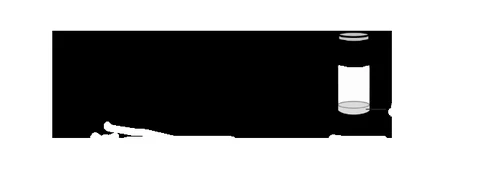
Figure A
Materials not included in the kit:
- 30 G x ½ inch injection needle
- 1 mL syringe with Luer-lock
1. Gather the materials.
Using an aseptic technique, gather the materials and place them on a clean, flat surface.
2. Inspect Eydenzelt.
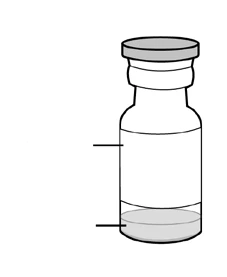
Examine the vial and make sure you have the correct medicine
(Eydenzelt) and dosage.
Check the expiration date shown on the label (see Figure B) and ensure it has not already passed.
- Do not use Eydenzelt if visible particles, cloudiness, or discoloration are present.
- Do not use if the expiration date has already passed.
3. Remove the protective plastic cap from the vial
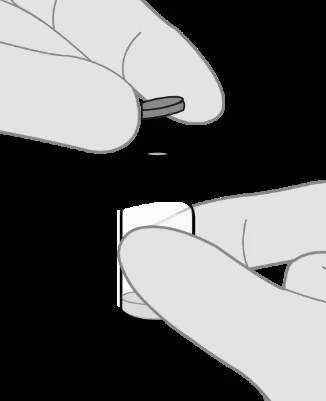
(see Figure C).
Figure C
4. Disinfect the outer part of the rubber stopper of the
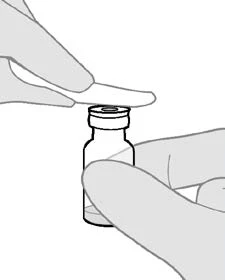
vial with an alcohol wipe (see
Figure D).
Figure D
5. Attach the filter needle to the syringe.
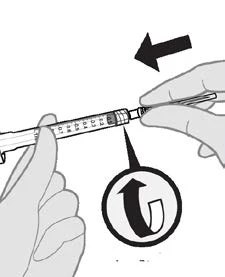
Remove from their packaging the 18 G × 1½-inch, 5 micron filter needle provided in the box and a 1 mL syringe, not included in the box.
Attach the filter needle to the syringe by twisting it onto the Luer-lock tip of the syringe (see Figure E).
Figure E
6. Insert the filter needle into the vial
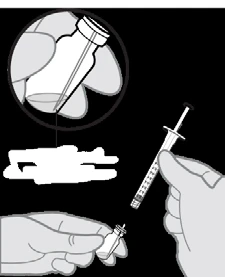
6a. Using an aseptic technique, push the filter needle through
the center of the vial stopper until the needle is fully inserted
and the tip touches the bottom or lower end of the vial.
6b. Tilt the vial during aspiration, keeping the bevelled end of
the filter needle submerged in the liquid (see Figure F) to
prevent air from entering.
6c. Draw the entire content of the Eydenzelt vial into the syringe.
Note: ensure that the plunger rod is pulled sufficiently
backward when emptying the vial, so as to fully empty the
filter needle.
7. Remove the filter needle.
Remove the filter needle from the syringe.
Dispose of the filter needle properly.
- Do not use the filter needle for intravitreal injection.
- Do not reinsert the cap onto the filter needle to avoid accidental needle stick before injection.
8. Attach the injection needle to the syringe (immediately after
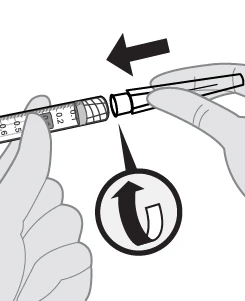
aspirating the contents of the vial).
Remove the 30 G × ½ inch injection needle from its packaging,
which is not included in the pack.
Using an aseptic technique, attach the injection needle to the
syringe by firmly twisting it onto the Luer-lock tip of the syringe
(see Figure G).
Figure G
9. Check for the absence of air bubbles.
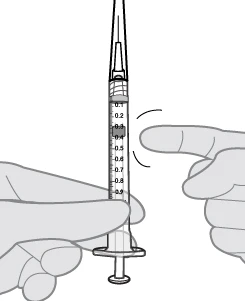
Hold the prefilled syringe with the needle pointing upwards and
check for the absence of air bubbles.
If there are air bubbles, gently tap the syringe with your finger
to allow them to rise to the surface (see Figure H).
Figure H
10. Remove air bubbles and confirm the correct dose.
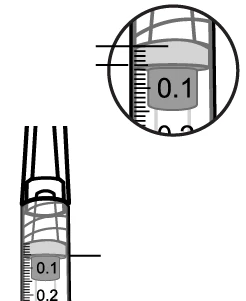
To remove all air bubbles and expel excess medicine,
press the plunger SLOWLY to align the tip of the plunger
with the line indicating 0.05 mL on the syringe (see
Figure I).
Figure I
11. When ready to administer Eydenzelt, remove the
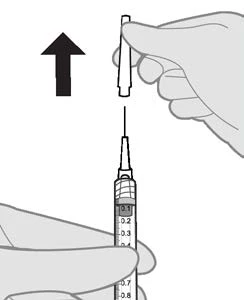
plastic cap from the needle (see Figure J).
Figure J
12. When ready, perform the intravitreal injection.
The intravitreal injection procedure must be carried out under controlled aseptic conditions,
including surgical hand disinfection and the use of sterile gloves, a sterile drape, and a sterile eyelid speculum (or equivalent device). Prior to injection, appropriate anesthesia and a broad-spectrum topical microbicide must be administered.
Each vial must be used exclusively for the treatment of a single eye. If the fellow eye requires treatment, a new vial must be used, and prior to administering Eydenzelt in the other eye, the sterile field, syringe, gloves, drapes, eyelid speculum, filter, and injection needles must be replaced.
13. The vial is for single use only.
Any unused medicine and waste derived from this medicine must be disposed of in accordance with
local applicable regulations. Extracting multiple doses from a single vial may increase the
risk of contamination and subsequent infection.
14. After injection, monitor the patient.
Immediately after intravitreal injection, patients must be monitored for possible
elevation of intraocular pressure. Adequate monitoring may consist of assessing
optic nerve head perfusion or tonometry. A sterile needle for paracentesis should be available if needed.
After intravitreal injection, patients and/or caregivers should be instructed to immediately report any signs and/or symptoms suggesting endophthalmitis or retinal detachment (e.g., eye pain, eye redness, photophobia, blurred vision).