Exblifep
Italy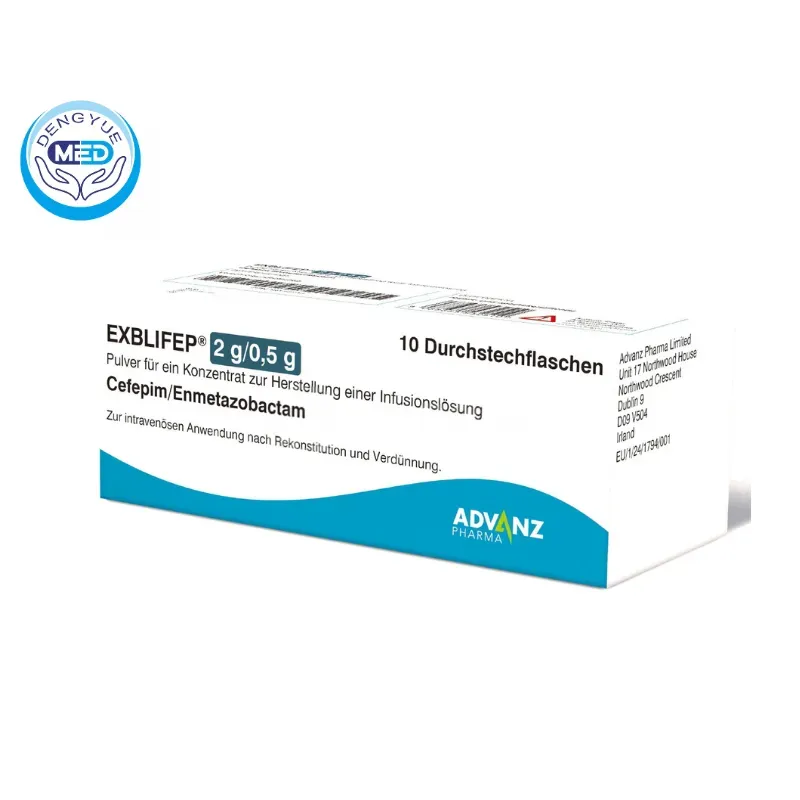
Table of Contents
- Package leaflet: Information for the patient
- EXBLIFEP 2 g/0.5 g powder for concentrate for solution for infusion
- 1. What EXBLIFEP is and what it is used for
- 2. What you need to know before using EXBLIFEP
- 3. How to use EXBLIFEP
- 4. Possible side effects
- 5. How to store EXBLIFEP
- 6. Package contents and other information
- The following information is intended exclusively for healthcare professionals:
Package leaflet: Information for the patient
EXBLIFEP 2 g/0.5 g powder for concentrate for solution for infusion
cefepime/enmetazobactam
This medicinal product is subject to additional monitoring. This will allow for rapid identification of new safety information. You can help by reporting any side effects you experience while taking this medicine. See the end of section 4 for information on how to report side effects.
Please read all of this leaflet carefully before taking this medicine because it contains important information for you.
- Keep this leaflet. You may need to read it again.
- If you have any questions, ask your doctor or nurse.
- If you get any side effects, including those not listed in this leaflet, contact your doctor or nurse. See section 4.
Contents of this leaflet
- What EXBLIFEP is and what it is used for
- What you need to know before using EXBLIFEP
- How to use EXBLIFEP
- Possible side effects
- How to store EXBLIFEP
- Contents of the pack and other information
1. What EXBLIFEP is and what it is used for
EXBLIFEP is an antibiotic. It contains two active substances:
- cefepime, which belongs to a group of antibiotics known as fourth-generation cephalosporins and which is capable of killing certain bacteria;
- enmetazobactam, which inhibits enzymes called beta-lactamases. These enzymes make bacteria resistant to cefepime by breaking down the antibiotic before it can act. By inhibiting beta-lactamases, enmetazobactam makes cefepime more effective at killing bacteria.
EXBLIFEP is used in adults for the treatment of:
- complicated (severe) urinary tract infections (bladder and kidneys)
- certain types of pneumonia (lung infection) occurring during hospitalization
EXBLIFEP is also used to treat bacteraemia (presence of bacteria in the blood) due to,
or likely due to, one of the infections listed above.
2. What you need to know before using EXBLIFEP
Do not use EXBLIFEP
- if you are allergic to cefepime, enmetazobactam, or to any of the other ingredients of this medicine (listed in section 6).
- if you are allergic to cephalosporins, which are antibiotics used to treat a wide range of infections.
- if you have ever had a severe allergic reaction (e.g., severe skin peeling; swelling of the face, hands, feet, lips, tongue, or throat; or difficulty swallowing or breathing) to beta-lactam antibiotics (such as penicillins, carbapenems, or monobactams).
Warnings and precautions
Talk to your doctor or pharmacist before using EXBLIFEP if:
- you are allergic to cephalosporins, penicillins, or other antibiotics (see "Do not use EXBLIFEP").
- you have or have had asthma or are prone to allergic reactions. Your doctor will monitor for signs of allergy the first time this medicine is administered to you (see section 4).
- you have kidney problems. Your doctor may need to adjust the dose of this medicine.
- you are scheduled for blood or urine tests. This medicine may affect the results of certain tests (see section 4).
Talk to your doctor or pharmacist while using EXBLIFEP if:
- you develop severe and persistent diarrhoea during or shortly after treatment. This may be a sign of inflammation of the large intestine and may require urgent medical attention.
- you suspect you have developed a new infection during prolonged use of EXBLIFEP. This could be caused by microorganisms not sensitive to cefepime, and discontinuation of EXBLIFEP treatment may be necessary.
Children and adolescents
This medicine must not be given to children under 18 years of age, as there is insufficient information on its use in this age group.
Other medicines and EXBLIFEP
Inform your doctor or pharmacist if you are currently using, have recently used, or might use any other medicines.
In particular, inform your doctor if you are taking any of the following medicines:
- other antibiotics, especially aminoglycosides (such as gentamicin), or diuretics (e.g., furosemide). If you are taking these medicines, your kidney function should be monitored.
- medicines used to prevent blood clotting (vitamin K antagonists, such as warfarin). Their effect may be increased while you are taking EXBLIFEP.
- certain types of antibiotics (bacteriostatic antibiotics). These may interfere with the proper action of EXBLIFEP.
Pregnancy and breastfeeding
If you are pregnant, think you might be pregnant, are planning to become pregnant, or are breastfeeding, consult your doctor before using this medicine.
Your doctor will decide whether you should receive EXBLIFEP during pregnancy.
EXBLIFEP may pass into breast milk. If you are breastfeeding, your doctor will decide whether you should discontinue breastfeeding or avoid treatment with EXBLIFEP, taking into account the benefits of breastfeeding for the child and the benefits of therapy for you.
Driving and using machines
This medicine may cause dizziness, which could impair your ability to drive or operate machinery. Do not drive or use machines until the dizziness has resolved.
3. How to use EXBLIFEP
Your doctor or another healthcare professional will administer this medicine as an intravenous infusion (intravenous drip) into a vein (directly into the bloodstream). Depending on the type of infection you have and your kidney function, the infusion will be given over a period of two or four hours.
The recommended dose is one vial (2 g of cefepime and 0.5 g of enmetazobactam) every 8 hours.
Treatment usually lasts between 7 and 14 days, depending on the severity and location of the infection and how your body responds to treatment.
If you have kidney problems, your doctor may need to reduce the dose or change the frequency of administration of EXBLIFEP (see section 2: Warnings and precautions).
If you use more EXBLIFEP than you should
Since this medicine is administered by a doctor or another healthcare professional, it is unlikely that you will receive an excessive dose of EXBLIFEP. However, if you are concerned, inform your doctor or nurse immediately.
If you forget to use EXBLIFEP
If you think a dose of EXBLIFEP has not been administered, inform your doctor or healthcare professional immediately.
If you have any questions about the use of this medicine, ask your doctor or pharmacist.
4. Possible side effects
Like all medicines, this medicine can cause side effects, although not everybody gets them.
Immediately inform your doctor if you experience any of the following side effects, as you may
require urgent medical treatment:
Rare: may affect up to 1 in 1,000 people
- Anaphylactic (allergic) reaction and angioedema. This can potentially be fatal. Signs and symptoms may include sudden swelling of the lips, face, throat, or tongue; severe rash; and difficulty swallowing or breathing.
Not known: frequency cannot be determined from the available data
- Stevens-Johnson syndrome and toxic epidermal necrolysis. Severe and serious skin reactions. The adverse skin reaction may appear as a rash with or without blisters. Skin irritation, ulcers, or swelling in the mouth, throat, eyes, nose, and around the genitals may occur, along with fever and flu-like symptoms. Skin rashes may progress to severe and widespread skin damage (peeling of the epidermis and superficial mucous membranes), potentially leading to fatal outcomes.
Other side effects
Other side effects that may occur after treatment with EXBLIFEB include those listed below.
Very common: may affect more than 1 in 10 people
Side effects observed in blood tests:
- Positive Coombs test (a blood test that checks for antibodies attacking red blood cells).
Common: may affect up to 1 in 10 people - Phlebitis at the infusion site (inflammation at the infusion site causing pain, swelling, and redness along a vein)
- Reaction, pain, and inflammation at the infusion site
- Diarrhea
- Erythema of the skin
- Headache
Side effects observed in blood tests:
- Increased levels of liver enzymes in the blood
- Increased levels of bilirubin (a substance produced by the liver) in the blood
- Increased levels of amylase (an enzyme that helps the body digest carbohydrates) in the blood
- Increased levels of lipase (an enzyme that helps the body digest fats) in the blood
- Increased levels of lactate dehydrogenase (a marker indicating cellular or organ damage in the body) in the blood
- Changes in white blood cell count (eosinophilia)
- Low levels of red blood cells (anemia)
- Delayed blood clotting (prolonged time required for blood to clot)
Uncommon: may affect up to 1 in 100 people
- Clostridioides difficile-associated diarrhea (CDAD), painful, severe diarrhea caused by a bacterium called Clostridioides difficile
- Fungal infection in the mouth
- Vaginal fungal infection
- Inflammation of the large intestine, causing diarrhea, usually with blood and mucus
- Dizziness, nausea, vomiting
- Skin redness, urticaria, itching
- Fever
- Inflammation at the infusion site
Side effects observed in blood tests:
- Low levels of certain blood cells (leukopenia, neutropenia, thrombocytopenia)
- Increased levels of urea and creatinine (measures indicating reduced kidney function) in the blood
Rare: may affect up to 1 in 1,000 people
- Shortness of breath
- Stomach pain, constipation
- Fungal infection
- Seizures (fits)
- Altered sense of taste
- Tingling or numbness sensation on the skin, paresthesia
- Vaginal and surrounding area itching
- Allergic dermatitis
- Chills
- Swelling of blood vessels in the body
Not known: frequency cannot be determined from the available data
- Coma
- Reduced level of consciousness
- Encephalopathy (a brain disorder caused by a harmful substance or infection)
- Altered state of consciousness
- Muscle jerks
- Confusion, hallucinations
- False positive urine glucose test
- Kidney problems (kidney failure or any other structural change or dysfunction)
- Bleeding
- Erythema multiforme, a skin rash that may present with blister-like lesions resembling small targets (a dark spot in the center surrounded by a clear area, with a dark ring around the edge)
Side effects observed in blood tests:
- Very low levels of granulocytes, a type of white blood cell (granulocytopenia)
- Red blood cells destroyed too quickly (hemolytic anemia)
- Low levels of red blood cells due to the bone marrow's inability to produce enough new cells (aplastic anemia)
Reporting of side effects
If you get any side effects, including those not listed in this leaflet, talk to your doctor or nurse. You can also report side effects directly via the national reporting system listed in Annex V. Reporting side effects can help provide more information on the safety of this medicine.
5. How to store EXBLIFEP
Keep this medicine out of the sight and reach of children.
Do not use this medicine after the expiry date which is stated on the carton and vial after
Exp. The expiry date refers to the last day of that month.
Unopened vials: store in a refrigerator (2 ºC – 8 ºC). Keep the vial in the outer packaging to protect the medicine from light.
After reconstitution and dilution: store in a refrigerator (2 ºC – 8 ºC) for no more than 6 hours before use.
From a microbiological standpoint, the medicine should be used immediately after reconstitution.
Do not dispose of any medicine via wastewater or household waste. Ask your pharmacist how to dispose of medicines you no longer use. This will help protect the environment.
6. Package contents and other information
What EXBLIFEP contains
- The active substances are cefepime and enmetazobactam.
- Each vial contains cefepime dihydrochloride monohydrate equivalent to 2 g of cefepime and 0.5 g of enmetazobactam.
- The other component is L-arginine.
Description of the appearance of EXBLIFEP and contents of the pack
EXBLIFEP is a white to yellowish powder for concentrate for solution for infusion (powder for concentrate) supplied in a 20 mL glass vial with a bromobutyl rubber stopper and a tamper-evident seal.
Pack size: 10 vials.
Marketing Authorisation Holder
Advanz Pharma Limited
Unit 17 Northwood House
Northwood Crescent
Dublin 9
D09 V504, Ireland
+44 (0)208 588 9131
[email protected]
Manufacturer
Infosaúde - Instituto De Formação E Inovação Em Saúde S.A.
Rua Das Ferrarias Del Rei,
nº6 - Urbanização da Fábrica da Pólvora,
Barcarena,
2730-269,
Portugal
Other sources of information
More detailed information on this medicinal product is available on the website of the European Medicines Agency: http://www.ema.europa.eu
The following information is intended exclusively for healthcare professionals:
Preparation of the solution
This medicinal product is for intravenous infusion and each vial is for single use only.
Aseptic techniques must be followed during the preparation of the infusion solution.
Dose preparation
Cefepime-enmetazobactam is compatible with sodium chloride 9 mg/mL (0.9%) injection solution,
5% glucose injection solution, and a combination of glucose injection solution and sodium chloride
injection solution (containing 2.5% glucose and 0.45% sodium chloride).
EXBLIFEP is supplied as a lyophilized powder in a single-dose vial which must be reconstituted and
further diluted as described below prior to intravenous infusion.
To prepare the required dose for intravenous infusion, reconstitute the vial as described in
Table 1 below:
- Withdraw 10 mL from a 250 mL infusion bag (compatible injection solution) and use it to reconstitute the cefepime-enmetazobactam vial.
- Gently mix to dissolve. The reconstituted cefepime-enmetazobactam solution will have a concentration of approximately 0.20 g/mL of cefepime and approximately 0.05 g/mL of enmetazobactam. The final volume will be approximately 10 mL.
WARNING: THE RECONSTITUTED SOLUTION MUST NOT BE INJECTED DIRECTLY.
The reconstituted solution must be further diluted immediately in a 250 mL infusion bag (compatible injection solution) prior to intravenous infusion. To dilute the reconstituted solution, withdraw the entire or a portion of the reconstituted content from the vial and add it back into the infusion bag according to Table 1 below.
- The intravenous infusion of the diluted solution must be completed within 8 hours, if stored under refrigerated conditions (i.e., at 2°C–8°C; refrigerated for less than 6 hours before being left at room temperature to equilibrate and then administered at room temperature over a period of 2 or 4 hours).
Table 1: Preparation of cefepime-enmetazobactam doses
| Cefepime/enmetazobactam dose | Number of vials to reconstitute | Volume to withdraw from each reconstituted vial for further dilution | Final infusion bag volume |
| 2.5 g (2 g / 0.5 g) | 1 | Entire contents (approximately 10 mL) | 250 mL |
| 1.25 g (1 g / 0.25 g) | 1 | 5.0 mL (discard unused portion) | 245 mL |
| 0.625 g (0.5 g / 0.125 g) | 1 | 2.5 mL (discard unused portion) | 242.5 mL |
Inspect the vial before use. Use only if the solution is free from particles.
Use only clear solutions.
Like other cephalosporins, solutions of cefepime-enmetazobactam may develop a color ranging from
yellow to amber, depending on storage conditions. However, this does not negatively affect
the product's efficacy.
The prepared solution must be administered by intravenous infusion.
Any unused medicinal product and waste materials derived from this medicinal product must be disposed of in accordance with local regulations.