Evotaz
Italy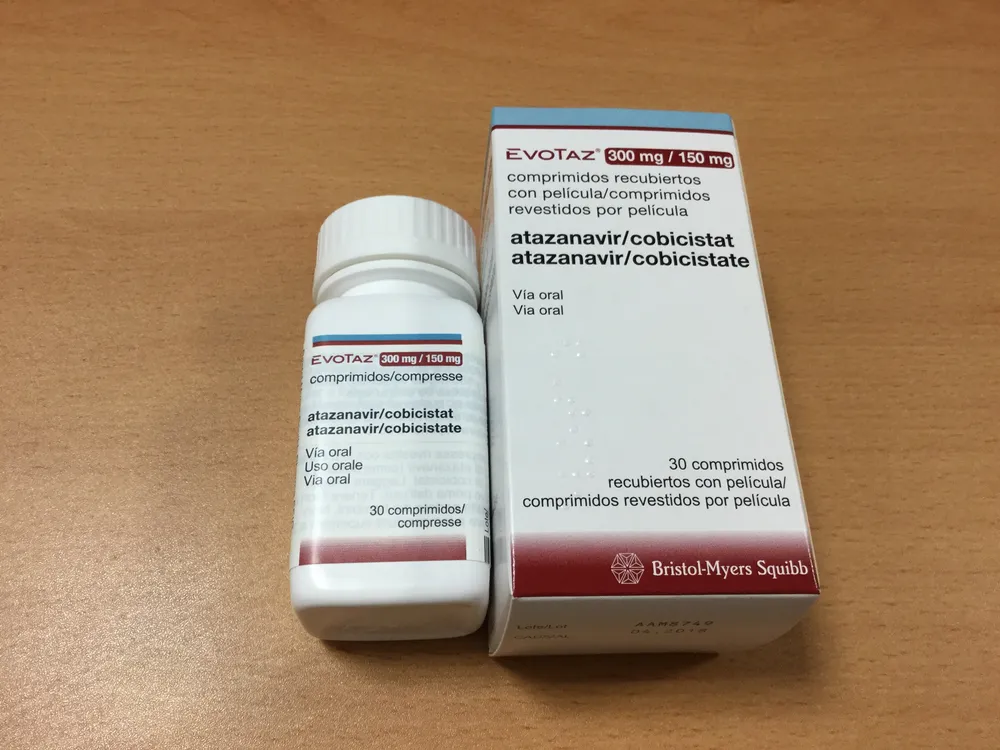
Table of Contents
Package leaflet: Information for the user
EVOTAZ 300 mg/150 mg film-coated tablets
atazanavir/cobicistat
Please read this leaflet carefully before taking this medicine because it contains important information for you.
- Keep this leaflet. You may need to read it again.
- If you have any questions, ask your doctor or pharmacist.
- This medicine has been prescribed for you only. Do not give it to other people, even if their symptoms are the same as yours, as it may be harmful.
- If you experience any adverse reactions, including those not listed in this leaflet, contact your doctor or pharmacist. See section 4.
Contents of this leaflet
- What EVOTAZ is and what it is used for
- What you need to know before taking EVOTAZ
- How to take EVOTAZ
- Possible side effects
- How to store EVOTAZ
- Contents of the pack and other information
1. What EVOTAZ is and what it is used for
EVOTAZ contains two active substances:
- Atazanavir, an antiviral (or antiretroviral) medicine. It belongs to a group called protease inhibitors. These medicines control Human Immunodeficiency Virus (HIV) infection by blocking the production of a protein that HIV needs to replicate. They work by reducing the amount of HIV virus in the body, thereby strengthening the immune system. In this way, atazanavir reduces the risk of developing diseases associated with HIV infection.
- Cobicistat, a booster (pharmacokinetic enhancer) that helps to improve the effects of atazanavir. Cobicistat does not treat HIV directly, but increases the levels of atazanavir in the blood. It achieves this effect by slowing down the breakdown of atazanavir, allowing it to remain in the body for a longer period.
EVOTAZ can be used in adults and adolescents (aged 12 years and older who weigh at least 35 kg) infected with HIV, the virus that causes acquired immunodeficiency syndrome (AIDS). It is used in combination with other anti-HIV medicines that help control your HIV infection. Your doctor will discuss with you which combination of these medicines with EVOTAZ is best.
2. What you should know before taking EVOTAZ
Do not take EVOTAZ
-
if you are allergic to atazanavir, cobicistat, or any of the other ingredients of this medicine (listed in section 6)
-
if you have moderate to severe liver problems
-
if you are taking any of the following medicines: see also Other medicines and EVOTAZ
rifampicin (an antibiotic used to treat tuberculosis) -
carbamazepine, phenobarbital, and phenytoin (used to prevent seizures)
-
apalutamide, encorafenib, ivosidenib (used to treat cancer)
-
astemizole or terfenadine (commonly used to treat allergy symptoms; these medicines may be available without a prescription); cisapride (used to treat gastric reflux, sometimes called heartburn); pimozide (used to treat schizophrenia); amiodarone, dronedarone, quinidine, lidocaine (injectable), or bepridil (used to correct heart rhythm); ergotamine, dihydroergotamine, ergonovine, ergometrine, and methylergonovine (used to treat headaches); and alfuzosin (used to treat benign prostatic hyperplasia)
-
quetiapine (used to treat schizophrenia, bipolar disorder, and major depressive disorder); lurasidone (used to treat schizophrenia)
-
medicines containing St John’s wort (Hypericum perforatum, a herbal preparation)
-
triazolam and oral midazolam (to be taken by mouth) (used to help you sleep and/or reduce anxiety)
-
simvastatin, lovastatin, and lomitapide (used to lower blood cholesterol levels)
-
avanafil (used to treat erectile dysfunction)
-
colchicine (used to treat gout), if you have kidney and/or liver problems
-
dabigatran and ticagrelor (used to prevent and reduce blood clot formation)
-
medicines containing grazoprevir, including the fixed-dose combination of elbasvir/grazoprevir and the fixed-dose combination of glecaprevir/pibrentasvir (used to treat chronic hepatitis C infection)
Do not take sildenafil with EVOTAZ when sildenafil is used to treat pulmonary arterial hypertension. Sildenafil is also used to treat erectile dysfunction. Inform your doctor if you are taking sildenafil for erectile dysfunction.
Contact your doctor immediately if you are in any of these conditions.
Warnings and precautions
Some people may require special attention before or during treatment with EVOTAZ.
Talk to your doctor or pharmacist before taking EVOTAZ.
EVOTAZ is not a cure for HIV infection. You may continue to develop infections or other diseases associated with HIV infection.
Make sure your doctor knows:
- if you have liver problems
- if you develop signs or symptoms of gallstones (pain on the right side). Gallstones have been reported in patients taking atazanavir, one of the components of EVOTAZ
- if you have haemophilia A or B. You may notice an increase in bleeding
- if you have kidney problems or require haemodialysis. Kidney stones have been reported in patients taking atazanavir, a component of EVOTAZ. If you develop signs or symptoms of kidney stones (flank pain, blood in urine, pain when urinating), inform your doctor immediately
- if you are taking oral contraceptives ("the pill") to prevent pregnancy. If you are taking oral contraceptives or using a contraceptive patch to prevent pregnancy, you must use an additional or different type of contraception (e.g. a condom)
In some patients with advanced HIV infection (AIDS) and a history of opportunistic infections, inflammatory signs and symptoms of previous infections may occur shortly after starting anti-HIV treatment. These symptoms are believed to result from an improved immune response, enabling the body to fight infections that may have been present without clear symptoms. If you notice any signs of infection, inform your doctor immediately. In addition to opportunistic infections, autoimmune disorders (a condition in which the immune system attacks healthy body tissue) may also occur after starting treatment for HIV infection. Autoimmune disorders may occur many months after starting treatment. If you notice any signs of infection or other symptoms such as muscle weakness, initial weakness in hands and feet progressing toward the trunk, palpitations, tremor, or hyperactivity, contact your doctor immediately for necessary treatment.
Some patients taking combination antiretroviral therapy may develop a bone disease called osteonecrosis (death of bone tissue due to reduced blood supply to the bone). Duration of combination antiretroviral therapy, corticosteroid use, alcohol consumption, severe immunosuppression, higher body mass index, among others, may be some of the many risk factors for developing this condition. Signs of osteonecrosis include joint stiffness, discomfort, and pain (especially in hips, knees, and shoulders) and difficulty moving. Consult your doctor if you notice any of these symptoms.
Hyperbilirubinaemia (an increase in blood bilirubin levels) has occurred in patients taking EVOTAZ. Signs may include mild yellowing of the skin or eyes. Consult your doctor if you notice any of these symptoms.
Severe skin rash, including Stevens-Johnson syndrome, may occur in patients treated with EVOTAZ. If you develop a skin rash, inform your doctor immediately.
EVOTAZ may affect kidney function.
Contact your doctor if you notice a change in your heartbeat (changes in heart rhythm).
Children
Do not give this medicine to children under 12 years of age or weighing less than 35 kg, as the use of EVOTAZ has not been studied in this population.
Other medicines and EVOTAZ
You must not take EVOTAZ with certain medicines. These medicines are listed in the section Do not take EVOTAZ at the beginning of section 2.
There are other medicines that you must not take together with EVOTAZ or that may require adjustment in dosing when taken with EVOTAZ. Inform your doctor or pharmacist if you are taking, have recently taken, or might take any other medicines. In particular, mention the following:
- medicines containing ritonavir or cobicistat (boosters)
- other medicines for the treatment of HIV infection (e.g. indinavir, didanosine, tenofovir disoproxil, tenofovir alafenamide, efavirenz, etravirine, nevirapine, and maraviroc)
- sofosbuvir/velpatasvir/voxilaprevir (used to treat hepatitis C)
- sildenafil, vardenafil, and tadalafil (used by men to treat impotence [erectile dysfunction])
- if you are taking oral contraceptives ("the pill"). You must also use an additional or different contraceptive method (e.g. a condom)
- any medicine used to treat acid-related disorders ("heartburn") (e.g. antacids, H2-receptor antagonists such as famotidine, and proton pump inhibitors such as omeprazole)
- disopyramide, flecainide, mexiletine, propafenone, digoxin, bosentan, amlodipine, felodipine, nicardipina, nifedipine, verapamil, diltiazem, metoprolol, and timolol (medicines to lower blood pressure, reduce heart rate, or correct heart rhythm)
- atorvastatin, pravastatin, fluvastatin, pitavastatin, and rosuvastatin (used to lower blood cholesterol levels)
- salmeterol (used to treat asthma)
- cyclosporine, tacrolimus, and sirolimus (medicines to reduce immune system activity)
- certain antibiotics (rifabutin, clarithromycin)
- ketoconazole, itraconazole, voriconazole, and fluconazole (antifungals)
- metformin (used to treat type 2 diabetes)
- warfarin, apixaban, edoxaban, clopidogrel, and rivaroxaban (used to reduce blood clot formation)
- irinotecan, dasatinib, nilotinib, vinblastine, and vincristine (used in cancer treatment)
- trazodone (used to treat depression)
- perfenazine, risperidone, thioridazine, midazolam (given by injection), buspirone, clorazepate, diazepam, estazolam, flurazepam, and zolpidem (used to treat nervous system disorders)
- buprenorphine (used to treat opioid dependence and pain)
- elagolix (used to treat endometriosis-related pain)
- fostamatinib (used to treat adults with low platelet count)
It is important that you inform your doctor if you are taking corticosteroids, including dexamethasone, betamethasone, budesonide, fluticasone, mometasone, prednisone, triamcinolone. These medicines are used to treat allergies, asthma, inflammatory bowel diseases, ocular, joint, and muscular inflammatory conditions, and other types of inflammatory disorders. If alternative treatments are not possible, these medicines may be taken only after evaluation by your doctor and under close medical monitoring to detect any adverse effects related to corticosteroids.
Pregnancy and breastfeeding
EVOTAZ should not be used during pregnancy because drug levels in the blood may decrease during pregnancy and may no longer be high enough to control HIV. Your doctor may prescribe different medicines if you become pregnant while taking EVOTAZ.
Atazanavir, one of the components of EVOTAZ, is excreted in breast milk. It is not known whether cobicistat, the other component of EVOTAZ, is excreted in human breast milk, but it has been shown in animals to be excreted in milk. Patients should not breastfeed while taking EVOTAZ.
Breastfeeding is not recommended for HIV-positive women because HIV infection can be transmitted to the infant through breast milk.
If you are breastfeeding or considering breastfeeding, you must discuss this with your doctor as soon as possible.
Driving and using machines
Some patients have reported dizziness during treatment with atazanavir or cobicistat, the active substances in EVOTAZ. If you feel dizzy or lightheaded, do not drive or operate machinery and contact your doctor immediately.
3. How to take EVOTAZ
Take this medicine exactly as your doctor has told you. If you are unsure, consult your doctor.
By doing so, you ensure that the medicine will be fully effective and reduce the risk of the HIV virus developing resistance to treatment.
The recommended dose of EVOTAZ in adults and adolescents (aged 12 years and older weighing at least 35 kg) is one tablet daily taken by mouth with food, in combination with other anti-HIV medicines. The tablets have an unpleasant taste, so swallow the tablet whole; do not crush or chew the tablets. This will help ensure the full dose is taken.
If you take more EVOTAZ than you should
If you accidentally take more EVOTAZ tablets than prescribed by your doctor, contact your doctor or the nearest hospital immediately for advice.
If you forget to take EVOTAZ
If you forget to take a dose of EVOTAZ within 12 hours or less of your usual dosing time, take the tablet immediately with food, then take the next dose at your usual time. If you forget a dose and more than 12 hours have passed since the time you should have taken EVOTAZ, do not take the missed dose. Wait and take the next dose at your usual time. Do not double the dose. It is important that you do not miss any doses of EVOTAZ or of any other anti-HIV medicines.
If you stop taking EVOTAZ
Do not stop treatment with EVOTAZ before discussing it with your doctor.
If you have any questions about how to use this medicine, ask your doctor.
4. Possible side effects
Like all medicines, this medicine can cause side effects, although not everybody gets them. Inform your doctor if you notice any unusual changes in your health status.
The following side effects may occur during treatment with EVOTAZ:
Very common (may affect more than 1 in 10 people)
- yellowing of the skin or the white part of the eyes
- nausea
Common (may affect up to 1 in 10 people)
- increased levels of bilirubin in the blood
- vomiting, diarrhoea, stomach pain or discomfort, indigestion, bloating or swelling of the abdomen, intestinal gas (flatulence)
- headache, dizziness
- extreme tiredness
- increased appetite, altered taste, dry mouth
- difficulty sleeping, abnormal dreams, drowsiness
- skin rash
Uncommon (may affect up to 1 in 100 people)
- potentially life-threatening irregular heartbeat (torsades de pointes)
- allergic reaction (hypersensitivity)
- inflammation of the liver
- inflammation of the pancreas, inflammation of the stomach
- allergic reactions including skin rash, high temperature, increased levels of liver enzymes in blood tests, increase in a type of white blood cells [eosinophilia], and/or swollen lymph nodes (see section 2)
- severe swelling of the skin and other tissues, most frequently lips or eyes
- fainting, high blood pressure
- chest pain, general feeling of illness, fever
- shortness of breath
- formation of kidney stones, inflammation of the kidney, blood in the urine, excess protein in the urine, increased frequency of urination, chronic kidney disease (impaired kidney function)
- gallstones
- reduction in muscle mass, joint pain, muscle pain
- breast enlargement in men
- depression, anxiety, sleep disorders
- unusual tiredness or weakness
- loss of appetite, weight loss, weight gain
- disorientation, memory loss
- numbness, weakness, tingling or pain in the arms and legs
- mouth ulcers and cold sores
- itchy rash, unusual hair loss or thinning, itching
Rare (may affect up to 1 in 1,000 people)
- allergic reactions including severe skin rash, high temperature and swollen lymph nodes (Stevens-Johnson syndrome) (see section 2)
- fast or irregular heartbeat (QTc prolongation)
- enlargement of the liver and spleen
- inflammation of the gallbladder
- kidney pain
- swelling
- visible accumulation of fluid under the skin, skin rash, dilation of blood vessels
- abnormal gait
- muscle pain, tenderness or muscle weakness not caused by physical exercise
During HIV therapy, an increase in weight and in blood lipid and glucose levels may occur. This is partly related to the recovery of health status and lifestyle, and, in the case of blood lipids, sometimes to the HIV medicines themselves. Your doctor will monitor these changes.
Reporting of side effects
If you experience any side effect, including those not listed in this leaflet, talk to your doctor or pharmacist. You can also report side effects directly via the national reporting system mentioned in Annex V. By reporting side effects, you can help provide more information on the safety of this medicine.
5. How to store EVOTAZ
Keep this medicine out of the sight and reach of children.
Do not use this medicine after the expiry date which is stated on the label and the carton after
Exp. The expiry date refers to the last day of that month.
Do not store above 30°C.
Do not dispose of any medicine via wastewater or household waste. Ask your pharmacist how to
dispose of medicines no longer required. This will help protect the environment.
6. Package contents and other information
What EVOTAZ contains
- The active substances are atazanavir and cobicistat. Each film-coated tablet contains 300 mg of atazanavir (as sulfate) and 150 mg of cobicistat.
- The other components are: Tablet core – microcrystalline cellulose (E460(i)), sodium croscarmellose (E468), sodium starch glycolate, crospovidone (E1202), stearic acid (E570), magnesium stearate (E470b), hydroxypropylcellulose (E463), silica (E551)
Coating – hypromellose (hydroxypropylmethylcellulose, E464), titanium dioxide (E171), talc (E553b), triacetin (E1518), iron oxide red (E172)
Description of the appearance of EVOTAZ and contents of the pack
EVOTAZ tablets are film-coated, pink, oval, biconvex tablets, approximately 19 mm x 10.4 mm in size, printed with "3641" on one side and smooth on the other.
EVOTAZ film-coated tablets are supplied in bottles containing 30 tablets. The following pack sizes are available: cartons containing 1 bottle of 30 film-coated tablets and cartons containing 90 film-coated tablets (3 bottles of 30 tablets).
Not all pack sizes may be marketed in your country.
Marketing Authorisation Holder
Manufacturer
CATALENT ANAGNI S.R.L.
Bristol-Myers Squibb Pharma EEIG
Loc. Fontana del Ceraso snc
Plaza 254
Strada Provinciale 12 Casilina, 41
Blanchardstown Corporate Park 2
03012 Anagni (FR)
Dublin 15, D15 T867
Italy
Ireland
Swords Laboratories Unlimited Company T/A
Bristol-Myers Squibb Pharmaceutical Operations,
External Manufacturing
Plaza 254
Blanchardstown Corporate Park 2
Dublin 15, D15 T867
Ireland
Other sources of information
More detailed information on this medicinal product is available on the website of the European Medicines Agency: https://www.ema.europa.eu