Estring
Italy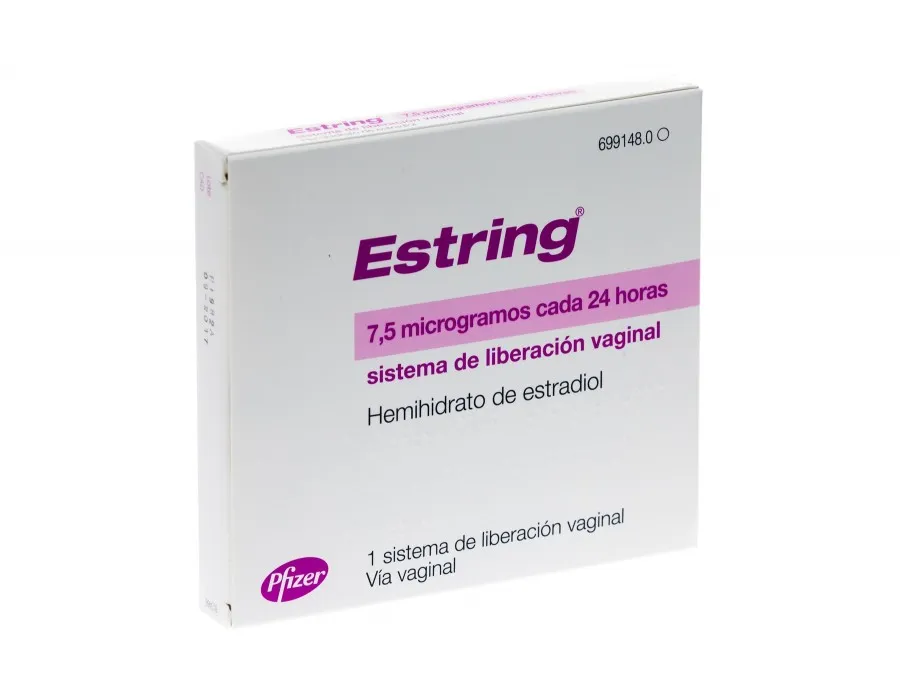
Table of Contents
- PATIENT INFORMATION LEAFLET: INFORMATION FOR THE USER
- Estring 7.5 micrograms/24 hours, vaginal ring
- 1. What Estring is and what it is used for
- 2. What you should know before using Estring
- 3. How to use Estring
- 4. Possible side effects
- 5. How to store Estring
- 6. Package contents and other information
PATIENT INFORMATION LEAFLET: INFORMATION FOR THE USER
Estring 7.5 micrograms/24 hours, vaginal ring
estradiol hemihydrate
Please read all of this leaflet carefully before you start using this medicine, because it contains important information for you.
- Keep this leaflet. You may need to read it again.
- If you have any questions, ask your doctor or pharmacist.
- This medicine has been prescribed for you only. Do not give it to others, even if they have the same symptoms as yours, because it may be harmful.
- If you experience any side effects, including those not listed in this leaflet, contact your doctor or pharmacist. See section 4.
Contents of this leaflet:
- What Estring is and what it is used for
- What you need to know before using Estring
- How to use Estring
- Possible side effects
- How to store Estring
- Contents of the pack and other information
1. What Estring is and what it is used for
The Estring vaginal device is a vaginal ring containing the active substance estradiol hemihydrate, a natural form of estrogen, the main female sex hormone.
As women approach the menopausal period, their ovaries produce decreasing amounts of estrogens (also referred to as "the change"). Low estrogen levels can cause symptoms such as vaginal dryness, inflammation or itching, which in turn may lead to ulcers or painful sensations during sexual intercourse, as well as increased susceptibility to vaginal or urinary infections.
The Estring vaginal device is part of hormone replacement therapy (HRT) and acts locally in the vagina to maintain adequate estrogen levels to relieve these symptoms in postmenopausal women. It does not treat other menopausal symptoms such as hot flushes and sweating. Please inform your doctor if you also have these problems.
2. What you should know before using Estring
Medical check-ups
Estring may not be suitable for all women. Before starting Estring, your doctor should ask you some questions about your personal and family medical history. Your doctor may decide to examine your breasts and/or abdomen and perform a gynecological examination, but only if these examinations are necessary for you or if you have specific concerns.
After starting HRT (hormone replacement therapy), it is important that you visit your doctor regularly for check-ups (at least once a year). During these check-ups, your doctor will evaluate with you the benefits and risks associated with continuing HRT.
Pay attention to:
- Regularly undergoing breast screening exams and cervical smear tests (Pap test).
- Regularly checking your breasts for any changes such as skin dimpling, nipple changes, or any visible or palpable lumps.
Do not use Estring if any of the following apply:
- You are allergic to estradiol or to similar medicines used in hormone replacement therapy, or to any of the other ingredients of this medicine (listed in section 6).
- Hereditary blood disorders (porphyria).
- Estrogen-sensitive malignant tumors, such as cancer of the endometrium (uterus), or if you are suspected of having such a condition.
- Current or past occurrence of a 'blood clot' (blood clots moving through the bloodstream and blocking blood vessels in the leg or elsewhere, a condition also known as deep vein thrombosis (DVT)).
- Breast cancer, either current or previous, or if you are suspected of having it.
- Vaginal bleeding that your doctor is unaware of.
- Current or past liver disease, especially if liver function tests are still abnormal.
- Excessive growth of the tissue lining the uterus (untreated endometrial hyperplasia).
- Current or past arterial blockage that could lead to cardiovascular diseases such as angina or heart attack.
- Blood clotting disorder (thrombophilia disorder such as protein C deficiency, protein S deficiency, or antithrombin deficiency).
If any of the above conditions occur while you are first using Estring, stop using it immediately and consult your doctor without delay.
Warnings and precautions
Talk to your doctor or pharmacist before using Estring.
Before prescribing Estring, your doctor will assess your health status and carefully discuss with you the risks and benefits of hormone replacement therapy. Inform your doctor if you currently have or have previously had any of the following conditions, so they can determine whether Estring treatment is suitable for you:
- Prolapse (weakening of the structures supporting internal organs) or if you have previously undergone surgery for prolapse.
- You are on long-term steroid therapy or have adrenal gland problems, such as a condition called Cushing's disease (which may cause thinning or reddening of the skin).
- Vaginal disorders, vaginal bleeding or pain, including irritation or discharge that could be caused by ulcers or infection.
- You have a short and narrow vagina due to previous surgery or as a result of a condition called vaginal atrophy.
- Fluid retention due to heart or kidney problems.
- High levels of triglycerides (a type of fat) in the blood.
- Liver diseases (including malignant liver tumors).
- Diabetes.
- Family history of cancer (especially breast cancer).
- Risk factors for developing blood clots in the veins (venous thromboembolism or deep vein thrombosis); see section 2 below for risks associated with taking Estring.
- High blood pressure.
- Migraine or severe headaches.
- Uterine fibroids (growth of the uterine walls).
- Seizures (epilepsy).
- Gallstones.
- Autoimmune disease, systemic lupus erythematosus (SLE).
- Diagnosis of endometrial hyperplasia (increased number of cells lining the inside of the uterus).
- Endometriosis (presence of uterine lining tissue in locations outside the uterus).
- Hearing problems caused by ear scarring (otosclerosis).
- Asthma.
- Estrogen-containing products may induce or worsen symptoms of angioedema, particularly in women with hereditary angioedema. Consult your doctor immediately if you experience symptoms such as swelling in certain parts of the body (including the genitals), most commonly around the face, mouth, tongue, and neck.
If any of the above conditions worsen or reappear during use of Estring, remove the Estring vaginal ring and see your doctor immediately.
Stop using Estring and consult a doctor immediately
If you experience any of the following symptoms while using HRT, remove the Estring vaginal ring and consult your doctor immediately. If you have difficulty or feel pain when trying to remove the vaginal ring, do not continue and consult your doctor:
- if you develop any of the conditions listed in the section “DO NOT use Estring”;
- if you develop yellowing of the skin or whites of the eyes (jaundice). These could be signs of liver disease;
- if you develop a significant increase in blood pressure (symptoms may include headache, fatigue, dizziness);
- if you experience migraine-like headaches for the first time;
- if you become pregnant;
- if you notice signs of a blood clot, such as:
- swollen, red, and painful legs;
- sudden chest pain;
- difficulty breathing; For further information, see “Blood clots in a vein (thrombosis)” Note: Estring is not a contraceptive. If less than 12 months have passed since your last menstrual period or if you are under 50 years of age, you may still need to use an additional contraceptive method to prevent pregnancy. Please consult your doctor.
HRT and cancer
Excessive thickening of the uterine lining (endometrial hyperplasia) and cancer of the uterine lining (endometrial cancer)
Long-term use of oral estrogen-only HRT may increase the risk of developing cancer of the uterine lining (endometrium).
It is unclear whether a similar risk exists with Estring, which is used for repeated or long-term treatment (more than one year). However, Estring has demonstrated very low systemic absorption into the bloodstream, so adding a progestogen is not necessary.
If you experience bleeding or spotting between cycles, it is usually not a cause for concern, but you should schedule an appointment with your doctor. It could be a sign that the endometrium has thickened.
The following risks are associated with systemic HRT medicines that circulate in the bloodstream. However, Estring is intended for local vaginal treatment and has very low systemic absorption. It is less likely that the following conditions will worsen or reappear during Estring treatment, but you should see your doctor if you have any concerns.
Breast cancer
Evidence suggests that taking combined estrogen-progestogen HRT, and possibly estrogen-only H0RT, increases the risk of breast cancer. The additional risk depends on the duration of HRT use. The increased risk becomes apparent within a few years but returns to normal within several years (up to 5 years) after stopping treatment.
Check your breasts regularly. Consult your doctor if you notice any changes such as:
- skin dimpling;
- nipple changes;
- any visible or palpable lumps.
In addition, it is advisable to participate in mammographic screening programs when offered.
Ovarian cancer
Ovarian cancer is rare, much rarer than breast cancer. The use of estrogen-only HRT has been associated with a slight increase in the risk of ovarian cancer.
The risk of ovarian cancer varies with age. For example, among women aged 50 to 54 who do not use HRT, about 2 out of 2000 will be diagnosed with ovarian cancer within 5 years. Among women who have used HRT for 5 years, about 3 cases per 2000 users will be detected (i.e., about 1 additional case).
Effects of HRT on the heart and circulation
Blood clots in a vein (thrombosis)
The risk of blood clots in veins is 1.3 to 3 times higher in women taking HRT compared to those who do not, especially during the first year of use.
Blood clots can be serious, and if one travels to the lungs, it can cause chest pain, shortness of breath, collapse, or even death. This condition is known as pulmonary embolism (PE).
DVT and PE are examples of a condition called venous thromboembolism (VTE).
You are more likely to develop a blood clot in a vein if you are older and if any of the following apply. Inform your doctor if any of these situations apply to you:
- if you have cancer;
- if you are severely overweight;
- if you have had a blood clot;
- if a close relative has had blood clots;
- if you have had one or more miscarriages;
- if you have a blood clotting disorder requiring treatment with a medicine such as warfarin;
- if you cannot walk for a prolonged period due to major surgery, injury, or illness;
- if you have a rare condition called SLE (systemic lupus erythematosus).
If any of these points apply to you, talk to your doctor to determine whether you can take HRT.
Among women in their fifties who do not take HRT, on average, 4–7 out of 1000 are expected to develop a blood clot over 5 years.
For women in their fifties who take estrogen-only HRT for more than 5 years, the expected number rises to 5–8 out of 1000 (i.e., 1 additional case).
If you have:
- a swollen and painful leg;
- sudden chest pain;
- difficulty breathing.
See your doctor as soon as possible and do not take any further HRT until your doctor advises otherwise. These could be signs of a blood clot.
If you are about to undergo surgery, ensure your doctor is informed. You may need to stop taking HRT approximately 4–6 weeks before the operation to reduce the risk of developing a blood clot. Your doctor will advise you when you can resume treatment.
Heart diseases
In women taking estrogen-only therapy, there is no increased risk of developing heart disease.
Stroke
The risk of stroke is about 1.5 times higher in women taking HRT compared to those who do not. The number of additional stroke cases due to HRT use increases with age. Other factors that may increase the risk of stroke include:
- aging;
- high blood pressure;
- smoking;
- excessive alcohol consumption;
- irregular heartbeat.
If you are concerned about any of these points or have had a stroke in the past, talk to your doctor to determine whether you can take HRT.
Among women in their fifties who do not take HRT, on average, 8 out of 1000 are expected to have a stroke over 5 years.
For women in their fifties who take HRT, the expected number over 5 years rises to 11 out of 1000 (i.e., 3 additional cases).
If you have:
- unexplained migraine-like headaches, with or without visual disturbances, see your doctor as soon as possible and do not take any further HRT until your doctor advises otherwise. These headaches may be an early sign of stroke.
Other information
HRT will not prevent memory loss. In a study of women who started using combined or estrogen-only HRT after age 65, a slight increase in the risk of dementia was observed.
Women who already have high levels of triglycerides in the blood may experience further significant increases, which could lead to inflammation of the pancreas (pancreatitis). Symptoms of pancreatitis include abdominal pain, bloated abdomen, fever, and nausea or vomiting.
Blood tests
If you are about to have blood tests (for example, to check for high triglyceride levels, a type of fat in the blood), you must inform your doctor that you are using Estring, as use of the vaginal ring may affect test results.
Other medicines and Estring
Inform your doctor or pharmacist if you are taking or have recently taken any other medicines, including those without a prescription.
In particular, inform your doctor if you are taking:
- anticonvulsants used to treat epilepsy, such as phenobarbital, phenytoin, or carbamazepine;
- antibiotics such as rifampicin or rifabutin;
- medicines used to treat HIV, such as ritonavir, nelfinavir, nevirapine, or efavirenz;
- herbal remedies containing St. John's wort (Hypericum perforatum). It is recommended to remove the ring in case of constipation or during use of vaginal preparations.
Pregnancy and breastfeeding
Estring must not be used during pregnancy. If you become pregnant while using Estring, stop using it immediately and inform your doctor that you are pregnant. Estring must not be used during breastfeeding. Before taking any medicine while breastfeeding, consult your doctor or pharmacist.
Driving and using machines
There are no special precautions. If you feel well, you may drive or operate machinery.
3. How to use Estring
Use this medicine exactly as your doctor has instructed you. If you are unsure, consult your doctor or pharmacist. Follow the instructions below carefully. Before inserting the Estring vaginal device, wash your hands thoroughly.
To insert Estring vaginally
- Relax and find a comfortable position, for example standing with one foot resting on a stool, or lying on your back with your knees bent upwards.
- With one hand, separate the skin folds around the vagina.
- With the other hand, compress the ring to make it oval-shaped.
- Push the ring as far as possible into the vagina, upwards and backwards, towards the lower back.
- Finally, wash your hands. If the ring comes out, rinse it with lukewarm (not hot) water and reinsert it.
During use of Estring
You may initially feel the presence of the ring, but this sensation should not last. It may take several weeks for the ring to reach its full effectiveness. Once the ring starts working, you may notice an increase in vaginal lubrication (moisture), which is normal and represents a return to the pre-menopausal condition. Most women and their partners find the presence of the ring in the vagina acceptable during sexual intercourse. If the ring is uncomfortable for you or your partner, or if you cannot get used to it, you may remove it. During straining to pass a bowel movement, the ring may move down the vagina and become noticeable. If this happens, you can simply reposition it with a finger. If you know you suffer from constipation or will need to strain during a bowel movement, remove the ring beforehand.
To remove Estring from the vagina
- Relax and find a comfortable position, for example standing with one foot resting on a stool, or lying on your back with your knees bent upwards.
- With one hand, separate the skin folds around the vagina.
- With the other hand, hook the ring with your finger.
- Gently remove the ring by pulling it downward and forward.
- Finally, wash your hands.
How long the ring can be used
Each ring may be worn continuously for up to 3 months, after which it should be replaced with a new one, if necessary. The maximum recommended duration for continuous therapy is two years. Your doctor will aim to prescribe the lowest effective dose, and treatment with HRT should continue only as long as the benefits in relieving significant symptoms outweigh the risks.
Routine checks during use of Estring
You should regularly participate in national screening programmes for breast cancer and cervical cancer. Your doctor will provide further details. In addition, you must report any changes in your breasts to your doctor as soon as possible.
If you stop treatment with the ring
Symptoms may return about 3 weeks after stopping.
Use in children
The use of Estring vaginal device is not recommended in children.
If you have any doubts about how to use this medicine, consult your doctor or pharmacist.
4. Possible side effects
Like all medicines, this medicine can cause side effects, although not everybody gets them.
The following diseases are reported more frequently in women taking systemic hormone therapy (HT) compared to women not taking HT. These risks are reduced with vaginal treatments such as Estring:
- breast cancer;
- ovarian cancer;
- blood clots in the legs or lungs (venous thromboembolism);
- stroke;
- possible memory loss if HT is started after the age of 65.
For more information on these side effects, see section 2.
If you develop any of the conditions listed under “Do not use Estring if” or those listed under “Stop using Estring and contact your doctor immediately”, or if you experience any of the side effects listed below, remove the Estring vaginal ring and contact your doctor immediately. If you have difficulty or pain when trying to remove the vaginal ring, do not continue and contact your doctor.
- symptoms of an allergic reaction, including skin rash, hives, itching. These occur with uncommon frequency (may affect up to 1 in 100 people using Estring);
- persistent or severe vaginal discomfort, ulceration, or swelling after insertion of the ring. These occur rarely (may affect up to 1 in 1000 people using Estring).
There have been rare reports of the vaginal ring adhering to the vaginal wall, making removal difficult. Some women have required a surgical procedure to remove the vaginal ring.
Common side effects may affect up to 1 in 10 people using Estring:
- urinary tract infection;
- infection and itching inside and around the vagina;
- discomfort/pain in the upper abdomen;
- persistent sensation of the ring in the vagina or pressure on the bladder and/or rectum;
- pain when urinating;
- generalized itching;
- increased sweating.
The above symptoms occur more frequently in untreated postmenopausal women.
Other side effects reported during treatment of patients with other forms of estrogen therapy include:
Common side effects may affect up to 1 in 10 people:
- depression;
- hair loss;
- joint pain;
- leg cramps;
- unusual and unexpected bleeding or spotting between periods;
- vaginal discharge;
- breast pain, breast tenderness, breast swelling, nipple discharge;
- changes in weight (increase or decrease);
- changes in triglyceride levels (fatty substances in the blood).
Uncommon side effects may affect up to 1 in 100 people:
- blood clot in the legs or lungs. See “Stop using Estring and contact your doctor immediately”;
- vaginal inflammation;
- candida infection;
- changes in sexual desire (increased or decreased libido);
- mood changes;
- anxiety;
- headache or migraine;
- dizziness;
- difficulty wearing contact lenses;
- feeling unwell, bloating sensation, abdominal pain;
- gallbladder disease;
- skin discoloration, particularly on the face or neck, known as “pregnancy mask” (chloasma);
- increased hair growth;
- itching;
- skin rash;
- changes in menstrual flow;
- changes in vaginal discharge;
- visible swelling of the face or ankles.
The following side effects have been reported with other HT treatments:
Not known (frequency cannot be estimated from the available data):
- memory loss (dementia);
- painful red nodules on the skin (erythema nodosum);
- skin rash with redness or target-shaped sores (erythema multiforme).
Reporting of side effects
If you experience any side effect, including those not listed in this leaflet, talk to your doctor or pharmacist. You can also report side effects directly via the national reporting system at http://www.aifa.gov.it/content/segnalazioni-reazioni-avverse.
By reporting side effects, you can help provide more information on the safety of this medicine.
5. How to store Estring
Do not store above 25 °C.
Keep this medicine out of the sight and reach of children.
Do not use the medicine after the expiry date stated on the carton and also on the sachet after "Exp.". The expiry date refers to the last day of that month.
Do not use the Estring vaginal ring if it appears discoloured, deformed, or if the surface is not smooth.
Used rings still contain some of the active hormonal ingredient. The used ring should be placed back into the original sachet or into a plastic bag which will then be sealed and disposed of safely, out of the sight and reach of children.
Do not dispose of medicines via wastewater or household waste. Ask your pharmacist how to dispose of medicines no longer required. This will help protect the environment.
6. Package contents and other information
What Estring contains
- The active substance in Estring is estradiol hemihydrate 2 mg, equivalent to 1.94 mg of estradiol.
- The other ingredients are liquid silicone, barium sulfate, silicone elastomer Q7-4735A, silicone elastomer Q7-4735B.
Description of the appearance of Estring and contents of the pack
Estring vaginal ring is a slightly opaque ring made of silicone elastomer, containing a whitish core
which holds the reservoir of the active substance, estradiol hemihydrate.
Estring is individually packaged in a rectangular heat-sealed pouch composed of (from outside to inside): polyester/aluminum/low-density polyethylene. Each pouch has a tear-notch on one side and is enclosed in a cardboard box.
Marketing Authorization Holder and Manufacturer
Marketing Authorization Holder
Pfizer Italia Srl, Via Isonzo 71, 04100 Latina, Italy
Manufacturer
QPharma AB, Agneslundsvägen 27, SE-201 25, Malmö, Sweden
This medicinal product is authorized in the European Economic Area (EEA) Member States under the following names:
| Spain, France, Italy, Luxembourg, Slovenia, Belgium, United Kingdom | Estring |