Estreva
Italy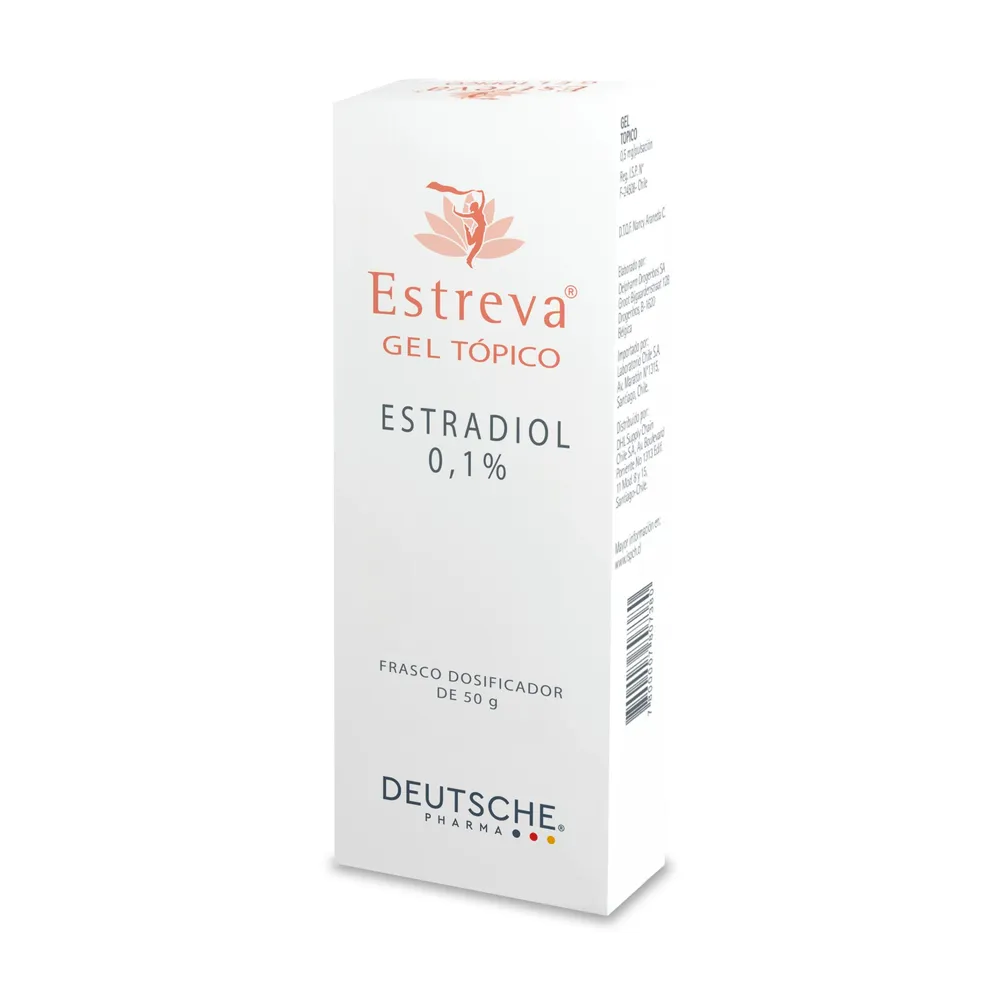
Table of Contents
PACKAGE LEAFLET: INFORMATION FOR THE USER
ESTREVA 0.1% gel
Estradiol
Please read all of this leaflet carefully before you start using this medicine.
- Keep this leaflet. You may need to read it again.
- If you have any questions, ask your doctor or pharmacist.
- This medicine has been prescribed for you. Never give it to other people, even if their symptoms seem identical to yours, as it could be harmful.
- If any of the side effects worsens, or if you notice any side effect not listed in this leaflet, inform your doctor or pharmacist.
Contents of this leaflet:
- What Estreva 0.1% gel is and what it is used for
- Before you use Estreva 0.1% gel
- How to use Estreva 0.1% gel
- Possible side effects
- How to store Estreva 0.1% gel
- Further information
1. WHAT ESTREVA 0.1% GEL IS AND WHAT IT IS USED FOR
Estreva 0.1% gel contains estrogen, a natural sex hormone present in the human body and belonging to the group of drugs used for Hormone Replacement Therapy (HRT). It compensates for the loss of estrogen, thereby reducing symptoms.
Estreva 0.1% gel is indicated for the treatment of menopausal symptoms (such as hot flashes) caused by estrogen deficiency in postmenopausal women.
Experience with treatment in women over the age of 65 is limited.
2. BEFORE USING ESTREVA 0.1% GEL
Medical checks
Your doctor will advise whether or not you should use hormone replacement therapy (HRT). The use of HRT involves certain risks that must be considered when deciding whether to start or continue treatment.
Before starting to use Estreva 0.1% gel, your doctor will ask about your personal and family medical history. Your doctor should perform a breast and abdominal examination and may carry out a gynaecological examination.
Your doctor should inform you about which breast changes should be reported and may recommend that you undergo a mammogram.
Once you have started treatment with Estreva 0.1% gel, regular medical check-ups should still be performed (at least once a year). During these check-ups, the risks and benefits should be reassessed to determine whether treatment should continue.
Do not use Estreva 0.1% gel
- if you are allergic (hypersensitive) to the active substance (estradiol) or to any of the excipients of Estreva 0.1% gel (listed in section 6, Other information);
- if you have or have ever had a blood clot in a leg vein (deep vein thrombosis) or in the lungs (pulmonary embolism);
- if you have a blood clotting disorder (e.g. Protein C deficiency, Protein S deficiency, or antithrombin deficiency);
- if you have or have ever had a blood clot in an artery of the heart (angina pectoris, myocardial infarction) or brain (stroke) or in another organ;
- if you have or have had, or your doctor suspects you may have breast cancer;
- if you have or suspect you may have an oestrogen-sensitive tumour, such as cancer of the uterine lining (endometrium), or if your doctor suspects you may have such a tumour;
- if the lining of the uterus shows excessive growth (endometrial hyperplasia);
- if you have genital bleeding of unknown cause;
- if you have or have had liver disease. You must not use Estreva 0.1% gel until liver function returns to normal;
- if you have a rare inherited blood disorder called "porphyria".
Take special care with Estreva 0.1% gel
Estreva 0.1% gel contains propylene glycol, which may cause skin irritation.
Inform your doctor before starting to use Estreva 0.1% gel if you have or have previously had any of the following conditions, or if these conditions worsened during pregnancy or previous hormone therapy. These conditions may recur or worsen during treatment with Estreva 0.1% gel. If so, your doctor may recommend more frequent check-ups:
- if you have high blood pressure (arterial hypertension);
- if you are at increased risk of developing blood clots in veins or lungs;
- if you have high blood sugar levels (diabetes), with or without vascular complications;
- if you have a condition characterised by the presence of uterine lining tissue outside the uterus, causing pain and bleeding (endometriosis);
- if you have a benign tumour of the uterus (uterine fibroid);
- if the lining of the uterus shows excessive growth (endometrial hyperplasia);
- if you are at increased risk of developing an oestrogen-sensitive tumour, for example if a close relative (mother, sister, or daughter) has had breast cancer;
- if you have liver disease, for example a benign tumour (hepatic adenoma);
- if you have gallstones;
- if you have epilepsy (see also the section "Use with other medicines");
- if you have severe headaches or migraines;
- if you have heart or kidney dysfunction;
- if you suffer from asthma;
- if you have a serious skin disease (systemic lupus erythematosus);
- if you have a disease causing hearing loss (otosclerosis).
If you are already using Estreva 0.1% gel and any of these conditions worsen, you must inform your doctor.
Stop using Estreva 0.1% gel immediately
If you have experienced any of the conditions listed in the section "Do not use Estreva 0.1% gel", or if any of the following situations occur:
- if you develop yellowing of the skin or the whites of the eyes (jaundice), or if your liver function worsens;
- if your blood pressure suddenly becomes very high (symptoms may include headache, fatigue, and dizziness);
- if you experience migraine-like headaches for the first time;
- if you become pregnant.
You must also inform your doctor:
- if you are due to undergo surgery;
- if you will be immobilised for a prolonged period;
- if you develop another illness.
What risks are associated with the use of Estreva 0.1% gel?
HRT AND EFFECTS ON THE HEART OR BLOOD CIRCULATION
Blood clots (thrombosis)
Inform your doctor immediately if you experience swelling accompanied by pain in one leg, sudden chest pain, or difficulty breathing while using Estreva 0.1% gel.
These may be symptoms of venous thrombosis or pulmonary embolism, in which case you must stop using Estreva 0.1% gel immediately.
Blood clots are not always dangerous, but there is a risk that a clot may travel to the lungs, causing chest pain, breathlessness, collapse, or even death.
The risk of venous thrombosis is 1.3 to 3 times higher in women taking HRT compared to those not taking HRT, especially during the first year of treatment.
Comparison
Among women in their fifties who do not take HRT, on average, 4 to 7 out of 1,000 are expected to develop a blood clot over a 5-year period.
Among women in their fifties taking HRT, there will be 5 additional cases of thrombosis per 1,000 women over 5 years.
For women in their fifties who have had a hysterectomy and have taken oestrogen-only HRT for over 5 years, there will be 1 additional case of thrombosis per 1,000 women.
The risk of venous thrombosis is higher:
- if you are taking medicines containing oestrogens (such as HRT);
- if you are of advanced age;
- if you have a tumour;
- during pregnancy and the postpartum period;
- if a first-degree relative has previously had venous thrombosis;
- if you are severely overweight;
- if you have systemic lupus erythematosus ( an autoimmune disease );
- if you are immobilised for a long time (e.g. bedridden), if you have a trauma, or have undergone major surgery. In these circumstances, it may be necessary to temporarily discontinue treatment with Estreva 0.1% gel. You may need to stop using it at least 4–6 weeks before planned surgery. It is unclear whether varicose veins increase the risk of venous thrombosis.
Inform your doctor if any of these conditions apply to you. If you are taking an anticoagulant, the risks and benefits of using HRT should be carefully evaluated.
Coronary artery disorders
Stop taking the medicine and contact your doctor immediately if you experience chest pain that spreads to the arm or neck. This pain may be a symptom of heart disease.
There is no evidence that HRT helps prevent heart disease. Women over 60 years of age who take combined oestrogen/progestin HRT have a slightly higher probability of developing heart disease compared to women not taking HRT. Since the risk of developing coronary heart disease increases significantly with age, the number of additional cases due to combined oestrogen and progestin use is very low in healthy perimenopausal women but increases with advancing age. Randomised controlled studies have not shown an increased risk of coronary heart disease in women who have undergone hysterectomy and are taking oestrogen-only HRT.
Risk of stroke
Stop taking the medicine and contact your doctor immediately if you experience unexplained migraine-like headaches, with or without vision disturbances. Such headaches may be an early sign of stroke.
The risk of stroke is approximately 1.5 times higher in women taking HRT compared to those not taking it. This relative risk does not vary with age or time since menopause. However, since the risk of stroke increases strongly with age, the overall risk of stroke in women taking HRT increases with age.
Comparison
Among women in their fifties not taking HRT, on average, 8 out of 1,000 are expected to have a stroke over a 5-year period.
Among women in their fifties taking HRT for over 5 years, there will be 3 additional cases of stroke per 1,000 women.
HRT AND RISKS OF DEVELOPING CANCER
Excessive growth of the uterine lining (endometrial hyperplasia) and cancer of the uterine lining (endometrium):
Long-term use of oestrogen increases the risk of excessive growth of the uterine lining (endometrial hyperplasia) and endometrial cancer in women with an intact uterus. Taking a progestogen in addition to oestrogen for at least 12 days of each 28-day cycle protects against this additional risk. For this reason, your doctor may prescribe a progestogen separately if you still have an intact uterus. If you have undergone surgical removal of the uterus (hysterectomy), your doctor will explain whether you can safely take this medicine without a progestogen.
Irregular bleeding may occur during the first months of treatment. Contact your doctor if:
- such bleeding continues after the first few months of treatment;
- bleeding occurs after you have been using Estreva 0.1% gel for some time;
- bleeding persists after stopping treatment with Estreva 0.1% gel.
Your doctor will investigate the cause, which may include performing an endometrial biopsy to determine whether you have endometrial cancer.
Comparison
Among women with an intact uterus who do not take HRT, on average, 5 out of 1,000 will be diagnosed with endometrial cancer between the ages of 50 and 65.
For women taking oestrogen-only HRT, there will be between 5 and 55 additional cases of endometrial cancer per 1,000 women between the ages of 50 and 65, depending on the dose and duration of therapy.
Taking a progestogen in addition to oestrogen for at least 12 days of each 28-day cycle protects against this additional risk.
Breast cancer
Evidence suggests that taking combined oestrogen/progestin therapy, and potentially oestrogen-only HRT, increases the risk of breast cancer. This risk depends on the duration of HRT and becomes apparent after about 3 years. However, this additional risk returns to normal levels within a few years (at most five) after stopping treatment.
For women who have had a hysterectomy and take oestrogen-only HRT for 5 years, the increase in breast cancer risk has been shown to be slight or none.
Contact your doctor if you notice any breast changes such as dimpling of the skin, changes in the nipple skin, or lumps that can be seen or felt.
Your doctor may recommend a medical examination including mammography.
Comparison
According to one study, among women aged 50 to 65 who do not take HRT, on average, 9–12 out of 1,000 will be diagnosed with breast cancer over a 5-year period. Among women aged 50 to 65 taking combined oestrogen-progestin HRT over 5 years, there will be 6 additional cases of breast cancer per 1,000 women.
According to another study, among women aged 50 to 79 who do not take HRT, on average, 17 out of 1,000 will be diagnosed with breast cancer over a 5-year period. Among women aged 50 to 79 taking combined oestrogen-progestin HRT over 5 years, there will be 4 additional cases of breast cancer per 1,000 women.
In addition, we recommend that you participate in mammographic screening programmes when available. For mammographic screening, it is important to inform the nurse/healthcare professional performing the X-ray that you are using hormone replacement therapy (HRT), as this therapy may increase breast density and thus affect the mammographic image. In cases of increased breast density, mammography may not be able to detect all lumps.
Ovarian cancer:
Ovarian cancer is rare – much rarer than breast cancer. The use of oestrogen-only or combined oestrogen-progestin therapy has been associated with a slight increase in the risk of ovarian cancer.
The risk of ovarian cancer varies with age. For example, among women aged 50 to 54 who do not take HRT, about 2 in 2,000 will be diagnosed with ovarian cancer over 5 years. For women taking HRT for 5 years, there will be about 3 cases per 2,000 women treated (i.e. about 1 additional case).
HRT AND OTHER DISORDERS
- If you suffer from heart or kidney dysfunction, you should be monitored during treatment with Estreva 0.1% gel.
- If you have very high levels of triglycerides in the blood (hypertriglyceridaemia), you should be monitored during treatment with Estreva 0.1% gel.
HRT does not prevent memory loss. The risk of memory loss may be slightly higher in women who start HRT after age 65. Consult your doctor for information on this topic.
Consult your doctor if you have any of the above conditions or have had them in the past.
Possible transfer of estradiol
Estradiol may be transferred to another person through close skin contact if the treated area is not covered.
For this reason, the following precautions are recommended:
- wash your hands thoroughly with soap and water after applying the gel,
- cover the application site with clothing once the gel has dried,
- take a shower before intimate contact.
If you think estradiol has been transferred to another person (an adult or a child), wash the affected skin area with soap and water.
Use of Estreva 0.1% gel with other medicines
Some medicines reduce the effectiveness of Estreva 0.1% gel, particularly if you are taking:
- medicines for epilepsy (e.g. carbamazepine, phenobarbital, phenytoin, primidone);
- medicines for tuberculosis (rifampicin), or other infectious diseases (e.g. rifabutin);
- medicines for AIDS (ritonavir, nelfinavir, nevirapine, efavirenz);
- herbal preparations containing St John’s wort ( Hypericum perforatum ).
Inform your doctor or pharmacist if you are taking or have recently taken any other medicines, including those without a prescription.
Pregnancy and breastfeeding
Pregnancy: do not use Estreva 0.1% gel during pregnancy.
If you become pregnant while using Estreva 0.1% gel, stop treatment immediately.
Breastfeeding: do not use Estreva 0.1% gel while breastfeeding.
Ask your doctor or pharmacist for advice before taking any medicine.
Driving and using machines
No special effects are expected.
Important information about some excipients in Estreva 0.1% gel
Estreva 0.1% gel contains propylene glycol (see also the section "Take special care with Estreva 0.1% gel").
3. HOW TO USE ESTREVA 0.1% GEL
Dosage
Always use Estreva 0.1% gel exactly as prescribed by your doctor. If you have any doubts, consult your doctor or pharmacist.
The individual dose may range from 0.5 to 3 g of gel per day.
The usual dose is 1.5 g of gel per day (3 pump actuations) for 24 to 28 days per month, followed by 2 to 7 days without treatment. Each pump actuation delivers a dose of 0.5 g of gel.
During the treatment-free interval, you may experience bleeding similar to menstruation. This bleeding is normal and limited in nature.
Your doctor will prescribe Estreva 0.1% gel according to your individual needs. He or she may adjust the dose and duration based on your response to treatment. Your doctor will prescribe the lowest effective dose for the shortest possible duration needed to treat your symptoms. Contact your doctor if you feel the dosage is too high or too low.
Your doctor may also prescribe Estreva 0.1% gel for continuous use without interruption.
For women with an intact uterus, the addition of a progestogenic hormone for at least 12 days per cycle is mandatory to prevent the risk of excessive growth of the inner layer of the uterus (estrogen-induced endometrial hyperplasia).
If you feel that the effect of Estreva 0.1% gel is too strong or too weak, inform your doctor.
Route of administration
This medicinal product is for topical application to the skin.
How to apply Estreva 0.1% gel
- Remove the cap.
- Hold the bottle in one hand and place the other hand under the dispenser to collect the gel. Press the metering pump to obtain the required dose. You may need to press the pump several times the first time you use it, in order to prime the device. The first dose may not be accurate and should be discarded.
- Between each actuation, allow the dispenser to return to its initial position.
- The gel should be applied to clean, dry, and intact skin (on the abdomen, thighs, arms, or shoulders). The gel should be applied over an area approximately twice the size of a hand.
- The gel must not be applied to the breasts or to mucous membranes (inside the mouth, nose, ears, or genital organs).
- Avoid contact with the eyes.
- Massage is not necessary, but it is recommended to allow the gel to dry for 2 minutes before dressing. The gel is non-greasy.
- It is advisable to wash your hands after applying the gel.
Frequency of use
The gel should preferably be applied once daily, in the morning or evening, after washing.
Duration of treatment
Follow your doctor’s prescription. Your doctor will determine the duration of treatment and may need to modify it.
If you wish to discontinue treatment earlier than planned, discuss this with your doctor.
On average, a 50 g bottle is sufficient for one month of treatment.
If you use more Estreva 0.1% gel than you should
Overdose may cause nausea, vomiting, and vaginal bleeding. No specific treatment is required. If symptoms persist, inform your doctor.
If you forget to use Estreva 0.1% gel
Do not use a double dose to make up for a missed dose.
If you have forgotten to apply the gel on the scheduled day, apply it as soon as possible and then continue with your prescribed dosing schedule.
If you have not applied the gel for several days, irregular bleeding may occur.
If you have any doubts, consult your doctor.
If you stop using Estreva 0.1% gel
After stopping treatment, menopausal symptoms related to estrogen deficiency may reappear.
If you have any questions about the use of Estreva 0.1% gel, consult your doctor or pharmacist.
4. POSSIBLE ADVERSE REACTIONS
Like all medicines, Estreva 0.1% gel may cause adverse reactions, although not everyone experiences them.
Common (may affect from 1 to 10 patients in 100):
- irregular or abnormal vaginal or uterine bleeding (dysmenorrhea, breakthrough bleeding, or spotting)
- headache
- abdominal pain
- nausea
- skin rash
- pruritus (itching)
- weight changes (increase or decrease)
Uncommon (may affect from 1 to 10 patients in 1,000):
- allergy (hypersensitivity reactions)
- depressed mood and mood disorders
- dizziness
- visual disturbances
- palpitations
- stomach pain (dyspepsia)
- skin inflammation causing red, painful nodules (erythema nodosum)
- skin pigmentation disorders (chloasma/melasma)
- urticaria (hives)
- swelling (edema)
- breast pain
- breast tenderness
Rare (may affect from 1 to 10 patients in 10,000):
- excessive facial and body hair growth (hirsutism)
- breast enlargement
- swelling
- intolerance to contact lenses
- migraine
- anxiety
- changes in libido (increase or decrease)
- vomiting
- acne
- muscle cramps
- fatigue
- premenstrual syndrome (e.g., fatigue, abdominal pain, headache, breast tenderness, irritability)
- vaginal discharge (leucorrhea)
Other known adverse reactions that may occur with hormone replacement therapy include:
- benign and malignant tumors influenced by estrogenic hormones; for example, endometrial cancer, breast cancer (see section 2),
- heart attack (myocardial infarction) and stroke,
- gallbladder disorders,
- skin disorders or subcutaneous tissue disorders such as:
- chloasma (yellow-brown pigmented patches, also referred to as pregnancy mask)
- erythema multiforme (a type of skin rash with papules, blisters, or fluid accumulation)
- erythema nodosum (a type of skin rash with painful blue-red nodules)
- vasculitic purpura (pinpoint bleeding skin spots)
- venous thrombosis and pulmonary embolism, which occur more frequently than in women not receiving hormone replacement therapy,
- possible dementia.
If any of the adverse reactions worsens, or if you notice any adverse reaction not listed in this leaflet, inform your doctor or pharmacist.
Reporting of adverse reactions
If you experience any adverse reaction, including those not listed in this leaflet, consult your doctor or pharmacist. You may also report adverse reactions directly via the national reporting system at: www.agenziafarmaco.gov.it/it/responsabili.
By reporting adverse reactions, you can help provide more information on the safety of this medicine.
5. HOW TO STORE ESTREVA 0.1% GEL
Keep Estreva 0.1% gel out of the reach and sight of children.
Do not use Estreva 0.1% gel after the expiry date stated on the label and on the bottle.
The expiry date refers to the last day of the month.
No special storage conditions are required.
Do not use Estreva 0.1% gel if you notice any visible signs of deterioration of the medicine.
Medicines must not be disposed of via wastewater or household waste. Ask your
pharmacist how to dispose of medicines you no longer use. This will help protect the environment.
6. OTHER INFORMATION
What Estreva 0.1% gel contains
The active substance is: Estradiol (1 mg per 1 g of gel).
The excipients are: Ethanol 96%, purified water, propylene glycol, diethylene glycol monoethyl ether (TRANSCUTOL), carbomer (CARBOPOL 1382), trolamine, disodium edetate.
Description of the appearance of Estreva 0.1% gel and contents of the pack
This medicine is a translucent, odourless gel.
Pack sizes: one or three 50 g bottles.
It is possible that not all pack sizes are marketed.
Marketing Authorisation Holder and Manufacturer
Marketing Authorisation Holder:
THERAMEX IRELAND LIMITED,
3RD FLOOR, KILMORE HOUSE, PARK LANE, SPENCER DOCK, DUBLIN 1, D01 YE64,
IRELAND.
Responsible manufacturer for batch release:
BESINS MANUFACTURING BELGIUM SA
Groot Bijgaardenstraat 128
Drogenbos, B-1620
Belgium
This medicinal product is authorised in the European Economic Area countries under the
following names:
Belgium, Denmark, Germany, France, Luxembourg, Portugal: Estreva 0.1% gel
Finland: Estrena 0.1% gel
This leaflet was last approved on: