Erlotinib Sandoz
Italy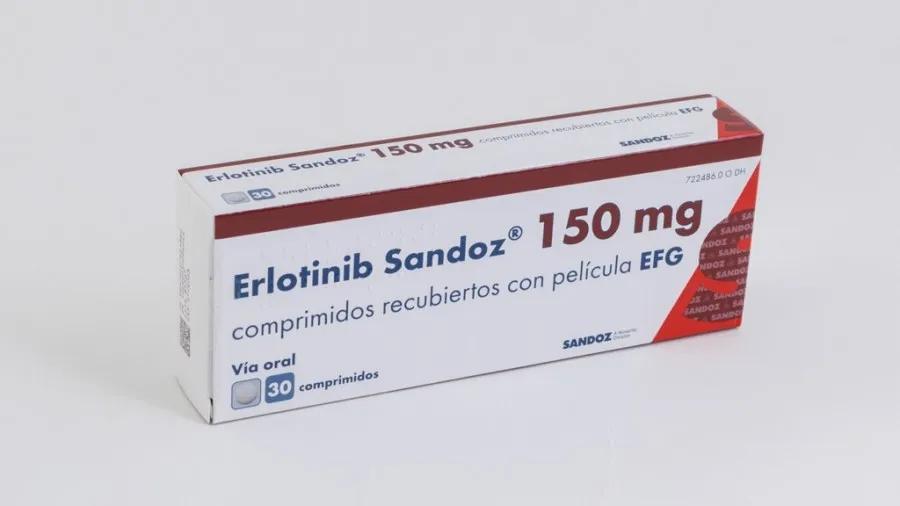
Table of Contents
- Patient Information Leaflet
- Erlotinib Sandoz 100 mg film-coated tablets, 150 mg film-coated tablets
- 1. What Erlotinib Sandoz is and what it is used for
- 2. What you should know before taking Erlotinib Sandoz
- 3. How to take Erlotinib Sandoz
- 4. Possible side effects
- 5. How to store Erlotinib Sandoz
- 6. Package contents and other information
Patient Information Leaflet
Erlotinib Sandoz 100 mg film-coated tablets, 150 mg film-coated tablets
Equivalent medicinal product
Please read this leaflet carefully before taking this medicine because it contains important information for you.
- Keep this leaflet. You may need to read it again.
- If you have any questions, ask your doctor or pharmacist.
- This medicine has been prescribed for you only. Do not give it to other people, even if they have the same symptoms as yours, because it may be harmful.
- If you experience any side effects, including those not listed in this leaflet, contact your doctor or pharmacist. See section 4.
Contents of this leaflet:
- What Erlotinib Sandoz is and what it is used for
- What you need to know before taking Erlotinib Sandoz
- How to take Erlotinib Sandoz
- Possible side effects
- How to store Erlotinib Sandoz
- Contents of the pack and other information
1. What Erlotinib Sandoz is and what it is used for
Erlotinib Sandoz contains the active substance erlotinib. Erlotinib Sandoz is a medicine used to treat cancer and works by inhibiting the activity of a protein called epidermal growth factor receptor (EGFR). This protein is known to be involved in the growth and spread of cancer cells.
Erlotinib Sandoz is indicated for adults. This medicine may be prescribed to you if you have advanced non-small cell lung cancer. It may be prescribed as initial therapy or as a subsequent therapy if the disease has remained largely unchanged after initial chemotherapy, provided that the cancer cells show specific EGFR mutations. It may also be prescribed if previous chemotherapy has failed to stop the disease.
This medicine may also be prescribed in combination with another treatment called gemcitabine if you have metastatic pancreatic cancer.
2. What you should know before taking Erlotinib Sandoz
Do not take Erlotinib Sandoz
- if you are allergic to erlotinib or to any of the other ingredients of this medicine (listed in section 6).
Warnings and precautions
-
if you are taking other medicines that may increase or decrease the amount of erlotinib in your blood or affect its efficacy (for example antifungal agents such as ketoconazole, protease inhibitors, erythromycin, clarithromycin, phenytoin, carbamazepine, barbiturates, rifampicin, ciprofloxacin, omeprazole, ranitidine, St John's wort, or proteasome inhibitors), consult your doctor. In some cases, these medicines may reduce the efficacy or increase the side effects of Erlotinib Sandoz, and your doctor may need to adjust your treatment. Your doctor may decide that you should not take these medicines during therapy with Erlotinib Sandoz.
-
if you are taking anticoagulants (medicines that help prevent thrombosis or blood clotting, e.g. warfarin), Erlotinib Sandoz may increase your tendency to bleed. Consult your doctor, who will monitor you and periodically prescribe blood tests.
-
if you are taking statins (medicines to lower blood cholesterol), Erlotinib Sandoz may increase the risk of statin-related muscle problems, which in rare cases may lead to severe muscle breakdown (rhabdomyolysis) and subsequent kidney damage. Consult your doctor.
-
if you wear contact lenses and/or have previously had eye problems such as severe dry eyes, inflammation of the front part of the eye (cornea), or ulcers affecting the front part of the eye, consult your doctor. See also section "Other medicines and Erlotinib Sandoz" below.
You must inform your doctor:
-
if you experience sudden difficulty breathing associated with cough or fever, as your doctor may need to prescribe other medicines and interrupt treatment with Erlotinib Sandoz;
-
if you have diarrhoea, as your doctor may need to prescribe anti-diarrhoeal medicines (e.g. loperamide);
-
immediately if you have severe or persistent diarrhoea, nausea, loss of appetite, or vomiting, as your doctor may need to interrupt treatment with Erlotinib Sandoz and hospital treatment may be required;
-
if you have severe abdominal pain or serious skin reactions such as blistering or peeling of the skin. Your doctor may consider it necessary to interrupt or discontinue treatment;
-
if you develop sudden eye redness or worsening of redness accompanied by pain, increased tearing, blurred vision, and/or sensitivity to light, talk to your doctor or nurse immediately, as urgent treatment may be needed (see section "Possible side effects" below);
-
if you are also taking a statin and experience unexplained muscle pain, tenderness, weakness, or cramps. Your doctor may consider it necessary to interrupt or discontinue treatment.
See also section 4 "Possible side effects".
Liver and kidney diseases
It is not known whether the effects of Erlotinib Sandoz change if the liver or kidneys are not functioning normally. If you have severe liver or kidney disease, treatment with this medicine is not recommended.
Glucuronidation disorders such as Gilbert's syndrome
If you have a glucuronidation disorder such as Gilbert's syndrome, your doctor should treat you with caution.
Smoking
If you are taking Erlotinib Sandoz, you should stop smoking, as smoking may reduce the amount of medicine in your blood.
Children and adolescents
Erlotinib Sandoz has not been studied in patients under 18 years of age. Treatment with this medicine is not recommended in children and adolescents.
Other medicines and Erlotinib Sandoz
Inform your doctor or pharmacist if you are taking, have recently taken, or might take any other medicines.
Erlotinib Sandoz with food and drink
Do not take Erlotinib Sandoz with food. See also section 3 "How to take Erlotinib Sandoz".
Pregnancy and breastfeeding
Avoid becoming pregnant during treatment with Erlotinib Sandoz. If you think pregnancy may occur, use an adequate contraceptive method during treatment and for at least 2 weeks after taking the last tablet.
If you become pregnant during treatment with Erlotinib Sandoz, inform your doctor immediately. Your doctor will decide whether continuing treatment is appropriate.
Do not breastfeed during treatment with Erlotinib Sandoz.
If you are pregnant, suspect you may be pregnant, plan to become pregnant, or are breastfeeding, ask your doctor or pharmacist for advice before taking this medicine.
Driving and using machines
No studies have been conducted on the possible effects of Erlotinib Sandoz on the ability to drive and use machines, but it is very unlikely that the treatment affects this ability.
Erlotinib Sandoz contains a sugar called lactose monohydrate.
If your doctor has diagnosed you with an intolerance to certain sugars, contact him before taking this medicine.
3. How to take Erlotinib Sandoz
Take this medicine exactly as your doctor has told you. If you are unsure, consult your doctor or pharmacist.
The tablet should be taken at least one hour before or two hours after eating.
The recommended dose is one tablet of Erlotinib Sandoz 150 mg daily if you have non-small cell lung cancer.
The recommended dose is one tablet of Erlotinib Sandoz 100 mg daily if you have metastatic pancreatic cancer. Erlotinib Sandoz is administered in combination with gemcitabine.
Your doctor may adjust the dose in increments of 50 mg.
Erlotinib Sandoz is not available in 25 mg or 50 mg strengths. For these doses, you must take other medicines available on the market. Ask your doctor or pharmacist.
For oral use.
If you take more Erlotinib Sandoz than you should
Contact your doctor or pharmacist immediately.
Side effects may worsen and your doctor may instruct you to stop treatment.
If you forget to take Erlotinib Sandoz
If you miss one or more doses of Erlotinib Sandoz, contact your doctor or pharmacist as soon as possible.
Do not take a double dose to make up for the missed dose.
If you stop taking Erlotinib Sandoz
It is important to continue taking Erlotinib Sandoz every day for the full duration prescribed by your doctor.
If you have any doubts about how to use this medicine, consult your doctor or pharmacist.
4. Possible side effects
Like all medicines, this medicine can cause side effects, although not everyone gets them.
If you experience any of the side effects listed below, contact your doctor as soon as possible. In some cases, your doctor may need to reduce the dose of Erlotinib Sandoz or stop treatment.
- Diarrhoea and vomiting (very common: may affect more than 1 in 10 patients). Persistent and severe diarrhoea may lead to low potassium levels in the blood and kidney failure, especially if you are also being treated with other chemotherapy agents. If you develop severe or persistent diarrhoea, contact your doctor immediately, as treatment in hospital may be required.
- Eye irritation due to conjunctivitis/keratoconjunctivitis (very common: may affect more than 1 in 10 patients) and keratitis (common: may affect up to 1 in 10 patients).
- A form of lung inflammation called interstitial lung disease (uncommon in European patients, common in Japanese patients: may affect up to 1 in 100 patients in Europe and up to 1 in 10 in Japan). This condition may also be related to the natural progression of your underlying medical condition and, in some cases, may be fatal. If you experience symptoms such as sudden shortness of breath associated with cough or fever, seek immediate medical attention, as you may have this condition. Your doctor may decide to permanently discontinue treatment with Erlotinib Sandoz.
- Cases of gastrointestinal perforation have been observed (uncommon: may affect up to 1 in 100 patients). Inform your doctor if you experience severe abdominal pain. Also inform your doctor if you have previously had peptic ulcer or diverticular disease, as this may increase the risk of perforation.
- In rare cases, liver failure has been observed (rare: may affect up to 1 in 1,000 patients). If blood tests show severe abnormalities in liver function, your doctor may decide to stop treatment.
Very common side effects (may affect more than 1 in 10 patients):
- Skin rash, which may appear or worsen in sun-exposed areas. If you go out in the sun, protective clothing and/or sunscreens (e.g. based on mineral ingredients) may be advisable
- Infection
- Loss of appetite, weight loss
- Depression
- Headache, skin sensitivity changes or numbness in the extremities
- Difficulty breathing, cough
- Nausea
- Mouth irritation
- Stomach pain, indigestion and flatulence
- Abnormal liver function tests
- Itching, dry skin and hair loss
- Fatigue, fever, chills
Common side effects (may affect up to 1 in 10 patients):
- Nosebleeds
- Bleeding from the stomach or intestine
- Inflammatory reactions around the nails
- Hair follicle infection
- Acne
- Cracked skin (skin fissures)
- Reduced kidney function (when administered outside approved indications in combination with chemotherapy)
Uncommon side effects (may affect up to 1 in 100 patients):
- Changes in eyelashes
- Excessive facial and body hair growth with a male pattern distribution
- Changes in eyebrows
- Brittle nails and nail loss
Rare side effects (may affect up to 1 in 1,000 patients):
- Redness or pain on the palms of the hands or soles of the feet (palmar-plantar erythrodysesthesia syndrome)
Very rare side effects (may affect up to 1 in 10,000 patients):
- Cases of corneal perforation or ulceration
- Severe skin reactions such as blistering or peeling (indicative of Stevens-Johnson syndrome)
- Inflammation of the coloured part of the eye
Reporting of side effects
If you experience any side effect, including those not listed in this leaflet, talk to your doctor or pharmacist. You can also report side effects directly via the national reporting system at www.agenziafarmaco.gov.it/content/come-segnalare-una-sospetta-reazione-avversa. By reporting side effects, you can help provide more information on the safety of this medicine.
5. How to store Erlotinib Sandoz
Keep this medicine out of the sight and reach of children.
Do not use this medicine after the expiry date stated on the carton and blister after Exp. The expiry date refers to the last day of that month.
This medicine requires no special storage conditions.
Do not dispose of medicines via wastewater or household waste. Ask your pharmacist how to dispose of medicines you no longer use. This will help protect the environment.
6. Package contents and other information
What Erlotinib Sandoz contains
- The active substance is erlotinib.
Erlotinib Sandoz 100 mg film-coated tablets
Each film-coated tablet contains 100 mg of erlotinib (as erlotinib hydrochloride).
Erlotinib Sandoz 150 mg film-coated tablets
Each film-coated tablet contains 150 mg of erlotinib (as erlotinib hydrochloride).
- The other ingredients are:
Tablet core: lactose monohydrate, microcrystalline cellulose (E460), sodium carboxymethyl starch
(type A), magnesium stearate (E470b).
Tablet coating: polyvinyl alcohol (E1203), titanium dioxide (E171), macrogol 3350 (E1521),
talc (E553b), methacrylic acid-ethyl acrylate copolymer (1:1) Type A, sodium bicarbonate.
Description of the appearance of Erlotinib Sandoz and pack contents
Erlotinib Sandoz 100 mg film-coated tablets
Yellowish-white, round, biconvex film-coated tablet, with the inscription “100” engraved on one side.
The tablet diameter is 8.9 mm ± 5%.
Erlotinib Sandoz 150 mg film-coated tablets
Yellowish-white, round, biconvex film-coated tablet, with the inscription “150” engraved on one side.
The tablet diameter is 10.5 mm ± 5%.
The tablets are available in Alu-OPA/Alu/PVC blisters containing 30 tablets, packed in cartons.
Not all pack sizes may be marketed.
Marketing Authorization Holder
Sandoz S.p.A.
L.go U. Boccioni 1
21040 Origgio (VA)
Italy
Manufacturer
Remedica Ltd
Aharnon Street, Limassol Industrial Estate
3056 Limassol
Cyprus
LEK Pharmaceuticals d.d.
Verovskova ulica 57
1526 Ljubljana
Slovenia
This medicinal product is authorized in the European Economic Area countries under the following names:
Belgium Erlotinib Sandoz 25 mg Filmomhulde tabletten
Erlotinib Sandoz 100 mg filmomhulde tabletten
Erlotinib Sandoz 150 mg filmomhulde tabletten
Cyprus Erlotinib Sandoz 150 mg
Denmark Erlotinib Sandoz 25 mg, 100 mg, 150 mg filmovertrukne tabletter
France Erlotinib Sandoz 25 mg, comprimé pelliculé
Erlotinib Sandoz 100 mg, comprimé pelliculé
Erlotinib Sandoz 150 mg, comprimé pelliculé
Italy Erlotinib Sandoz
Netherlands Erlotinib Sandoz 25 mg, filmomhulde tabletten
Erlotinib Sandoz 100 mg, filmomhulde tabletten
Erlotinib Sandoz 150 mg, filmomhulde tabletten
Poland Erlotinib Sandoz
Portugal Erlotinib Sandoz
United Kingdom Erlotinib Sandoz 25 mg Film coated tablets
Erlotinib Sandoz 100 mg Film coated tablets
Erlotinib Sandoz 150 mg Film coated tablets
Czech Republic Erlotinib Sandoz
Slovakia Erlotinib Sandoz 25 mg
Erlotinib Sandoz 100 mg
Erlotinib Sandoz 150 mg
Slovenia Erlotinib Sandoz 25 mg filmsko obložene tablete
Erlotinib Sandoz 100 mg filmsko obložene tablete
Erlotinib Sandoz 150 mg filmsko obložene tablete
Spain Erlotinib Sandoz 25 mg comprimidos recubiertos con película EFG
Erlotinib Sandoz 100 mg comprimidos recubiertos con película EFG
Erlotinib Sandoz 150 mg comprimidos recubiertos con película EFG
Sweden Erlotinib Sandoz 25 mg, 100 mg, 150 mg
Hungary Erlotinib Sandoz 25 mg, 100 mg, 150 mg filmtabletta