Erbitux
Italy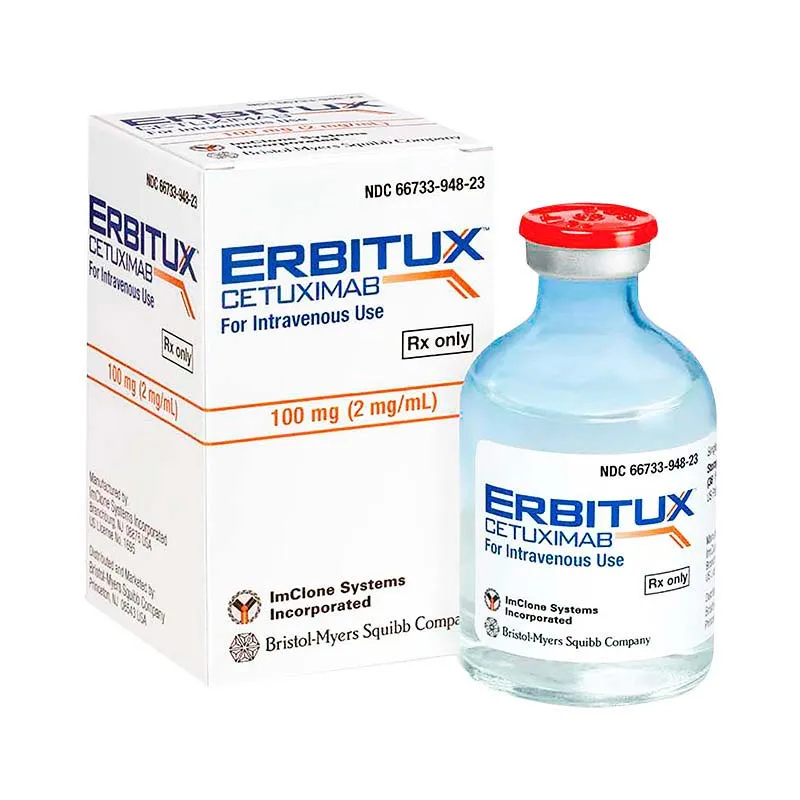
Table of Contents
Package leaflet: Information for the user
Erbitux 5 mg/mL solution for infusion
cetuximab
Please read this leaflet carefully before using this medicine because it contains important information for you.
Keep this leaflet. You may need to read it again.
If you have any questions, ask your doctor.
If you experience any side effects, including those not listed in this leaflet, tell your doctor. See section 4.
Contents of this leaflet
- What Erbitux is and what it is used for
- What you need to know before using Erbitux
- How to use Erbitux
- Possible side effects
- How to store Erbitux
- Contents of the pack and other information
1. What Erbitux is and what it is used for
What Erbitux is
Erbitux contains cetuximab, a monoclonal antibody. Monoclonal antibodies are proteins that specifically recognize and bind to certain other proteins called antigens.
Cetuximab binds to the epidermal growth factor receptor (EGFR), an antigen present on the surface of certain tumour cells. EGFR activates proteins known as RAS, which play an important role in the complex signalling cascade leading to cancer development and progression (malignant tumour). As a result of this binding, tumour cells can no longer receive the signals required for growth, progression and metastasis formation.
What Erbitux is used for
Erbitux is used to treat two different types of cancer:
- metastatic colorectal carcinoma. In these patients, Erbitux is used alone or in combination with other anticancer medicines.
- a type of head and neck carcinoma (squamous cell carcinoma). In these patients, Erbitux is used in combination with radiotherapy or with other anticancer medicines.
2. What you should know before using Erbitux
Do not use Erbitux
Do not use Erbitux if you have previously had a severe hypersensitivity (allergic) reaction to cetuximab.
Before starting treatment for metastatic colorectal cancer, your doctor will check whether
your tumor cells carry the normal (non-mutated) or mutated form of RAS. You must not
receive Erbitux in combination with another anticancer therapy containing oxaliplatin if your
tumor cells carry the mutated form of RAS.
Warnings and precautions
Talk to your doctor before using Erbitux if any of the following information is unclear to you.
Erbitux can cause infusion-related reactions. These reactions may be allergic in nature.
For more details, read “Infusion-related reactions” in section 4, as these reactions may have serious consequences, including life-threatening conditions. These adverse effects usually occur during the infusion, within 1 hour of administration, or sometimes even later. To detect early signs of such reactions, your condition will be monitored regularly during each Erbitux infusion and for at least one hour afterwards.
The risk of severe allergic reactions is higher if you are allergic to red meat or tick bites, or if you have tested positive for certain antibodies (detected by a test). Your doctor will discuss appropriate measures with you.
Erbitux can cause skin-related adverse effects. Your doctor will decide together with you whether you may need certain preventive measures or early treatment. For more details, also read “Skin-related adverse effects” in section 4, as some skin reactions may have serious consequences, including life-threatening conditions.
If you have heart problems, your doctor will decide together with you whether you can receive Erbitux in combination with other anticancer medicines, especially if you are 65 years of age or older.
Erbitux can cause adverse effects affecting the eyes. Talk to your doctor if you experience acute eye problems or worsening symptoms such as blurred vision, eye pain, red and/or very dry eyes, if you have had such problems in the past, or if you wear contact lenses. Your doctor will decide together with you whether consultation with a specialist is necessary.
If you receive Erbitux in combination with anticancer medicines, including platinum-based agents, it is more likely that the number of white blood cells in your blood may decrease. Therefore, your doctor will monitor your blood and general condition for any signs of infection (see also “Adverse effects associated with other anticancer therapies” in section 4).
If you receive Erbitux in combination with other anticancer medicines, including fluoropyrimidines, the risk of heart-related problems, which may be life-threatening, may increase. Your doctor will discuss with you whether you may require special monitoring (see also “Adverse effects associated with other anticancer therapies” in section 4).
Children and adolescents
There is no indication for the specific use of Erbitux in children and adolescents.
Other medicines and Erbitux
Inform your doctor if you are taking, have recently taken, or might take any other medicines, including those without a prescription.
Pregnancy
Inform your doctor if you are pregnant or not using reliable contraceptive methods (ask your doctor if you are unsure). Your doctor will discuss with you the potential risks and benefits of using Erbitux in these situations.
Breast-feeding
Do not breast-feed during treatment with Erbitux and for two months after the last dose.
Driving and using machines
Do not drive or operate tools or machinery if you experience treatment-related symptoms that affect your ability to concentrate or react.
3. How to use Erbitux
A doctor experienced in the use of anticancer medicines will supervise your treatment with Erbitux. During each infusion and for at least one hour afterwards, your condition will be regularly monitored to detect early signs of any infusion-related reactions.
Pre-treatment
Before the first dose, you will receive an antiallergic medicine to reduce the risk of allergic reactions. Your doctor will decide whether this pre-treatment is necessary for subsequent doses.
Dosage and method of administration
Erbitux is usually administered by intravenous infusion (given as a drip). Your doctor will calculate the correct dose of Erbitux for you. The dose of Erbitux depends on your body surface area and whether you receive Erbitux once weekly or once every two weeks.
Weekly infusion for the treatment of squamous cell carcinoma of the head and neck and metastatic colorectal carcinoma:
The first dose (400 mg/m² body surface area) is infused over approximately 2 hours. Each subsequent dose (250 mg/m² body surface area) is infused over approximately 1 hour.
Infusion every two weeks for the treatment of squamous cell carcinoma of the head and neck, when used in combination with other anticancer medicines, and metastatic colorectal carcinoma:
The dose of Erbitux (500 mg/m² body surface area) is infused over approximately 2 hours.
Detailed instructions for the doctor or nurse on how to prepare the Erbitux infusion are provided at the end of this package leaflet (see “Instructions for use”).
Duration of treatment
Erbitux is usually infused once a week. The duration of treatment may vary depending on the disease you have and from person to person; therefore, your doctor will discuss with you the appropriate duration of Erbitux therapy.
Combination with other cancer therapies
If you receive Erbitux in combination with other anticancer medicines, these medicines should be administered at least one hour after completion of the Erbitux infusion.
If you receive Erbitux in combination with radiotherapy, treatment with Erbitux normally starts one week before radiotherapy begins.
If you have any questions about how to use this medicine, ask your doctor.
4. Possible side effects
Like all medicines, this medicine can cause side effects, although not everyone experiences them.
The main side effects of Erbitux are infusion-related side effects and skin-related side effects:
Infusion-related side effects
In more than 10 out of 100 patients, infusion-related side effects are likely to occur; in more than 1 out of 100 patients, these reactions may be severe. These reactions may be of an allergic nature. These side effects usually occur during the infusion, within 1 hour after administration, or sometimes even later.
Mild or moderate infusion-related side effects include:
fever
chills
dizziness
breathing difficulties
If you experience these symptoms, inform your doctor as soon as possible. To manage these symptoms, your doctor may decide to reduce the infusion rate of Erbitux.
Severe infusion-related side effects include:
severe breathing difficulties occurring rapidly
hives (urticaria)
fainting
chest pain (a sign of side effects affecting the heart)
If you experience these symptoms, seek immediate medical attention. These side effects may have serious consequences, including, in rare cases, life-threatening conditions, and require immediate treatment. Therefore, treatment with Erbitux must be stopped.
Skin-related side effects
Skin-related side effects may occur in more than 80 out of 100 patients. In approximately 15 out of 100 patients, these skin reactions are likely to be severe. Most of these effects occur during the first three weeks of treatment. They usually resolve over time after completion of Erbitux therapy.
The main skin-related side effects include:
skin changes resembling acne
itching
dry skin
peeling (desquamation)
excessive hair growth
nail changes, for example inflammation of the nail bed.
In very rare cases (may affect up to 1 in 10,000 people), patients may develop blisters or skin peeling, which could indicate a serious skin reaction called "Stevens-Johnson syndrome". If you experience these symptoms, seek immediate medical advice, as these signs may have serious consequences, including potentially life-threatening conditions.
If you notice the appearance of other extensive skin changes, inform your doctor as soon as possible, as it may be necessary to adjust the dose of Erbitux or the interval between infusions. If skin-related side effects recur after the dose has been reduced several times, your doctor will decide whether to discontinue treatment.
If you notice worsening of already affected skin areas, seek immediate medical advice, particularly if you also have general signs of infection such as fever and fatigue. These signs may indicate a skin infection that could have serious consequences, including potentially life-threatening conditions.
Lung-related side effects
In uncommon cases (may affect up to 1 in 100 people), patients may develop inflammation of the lungs (called interstitial lung disease), which may have serious consequences, including potentially life-threatening conditions.
If you notice symptoms such as new or worsening breathing difficulties, consult your doctor immediately, especially if you also have cough or fever. Your doctor will decide whether to discontinue treatment.
Other side effects
Very common side effects (may affect more than 1 in 10 people)
inflammation of the inner lining of the intestine, mouth, and nose (in some cases severe), which in some patients may lead to nosebleeds
reduced levels of magnesium in the blood
increased levels of certain liver enzymes
Common side effects (may affect up to 1 in 10 people)
headache
fatigue
eye irritation and redness
diarrhea
dehydration, which may result from diarrhea or reduced fluid intake
nausea
vomiting
loss of appetite with weight loss
reduced levels of calcium in the blood
Uncommon side effects (may affect up to 1 in 100 people)
blood clots in the veins of the legs
blood clots in the lungs
inflammation of the eyelid or front part of the eye
Side effects with unknown frequency (frequency cannot be estimated from the available data)
inflammation of the membranes covering the brain (aseptic meningitis)
Side effects in combination with other cancer therapies
If you are receiving Erbitux in combination with other cancer medicines, some of the side effects you may experience could also be related to the combination or to the other medicines. Therefore, make sure to also read the package leaflet of the other medicines.
If you are receiving Erbitux in combination with cancer medicines, including platinum-based agents, it is more likely that the number of white blood cells in your blood may decrease. This may lead to infectious complications, including life-threatening conditions, especially if you also have skin reactions, inflammation of the inner lining of the intestine and mouth, or diarrhea. Therefore, if you notice general signs of infection such as fever and fatigue, seek immediate medical advice.
If you are receiving Erbitux in combination with a fluoropyrimidine-containing cancer medicine, the following side effects related to the other medicine are more likely to occur:
chest pain
heart attack
heart failure
redness and swelling of the palms of the hands and soles of the feet, which may lead to skin cracking (hand-foot syndrome)
If you are receiving Erbitux in combination with radiotherapy, some of the side effects you may experience could also be related to this combination, such as:
inflammation of the inner lining of the intestine and mouth
skin reactions typical of radiotherapy
difficulty swallowing
reduced number of white blood cells.
Reporting of side effects
If you experience any side effect, including those not listed in this leaflet, talk to your doctor. You can also report side effects directly via the national reporting system listed in Annex V. By reporting side effects, you can help provide more information on the safety of this medicine.
5. How to store Erbitux
Keep this medicine out of the sight and reach of children.
Do not use this medicine after the expiry date stated on the label and carton after
Exp. The expiry date refers to the last day of that month.
Store in a refrigerator (2°C - 8°C).
Once opened, Erbitux should be used immediately.
6. Package contents and other information
What Erbitux contains
The active substance is cetuximab.
Each mL of infusion solution contains 5 mg of cetuximab.
Each 20 mL vial contains 100 mg of cetuximab.
Each 100 mL vial contains 500 mg of cetuximab.
The other components are: sodium chloride, glycine, polysorbate 80, monohydrate citric acid, sodium hydroxide, water for injections.
Description of the appearance of Erbitux and contents of the pack
Erbitux 5 mg/mL infusion solution is supplied in vials containing 20 mL or 100 mL.
Each pack contains one vial.
Not all pack sizes may be marketed.
Marketing Authorisation Holder
Merck Europe B.V.
Gustav Mahlerplein 102
1082 MA Amsterdam
The Netherlands
Manufacturer
Merck Healthcare KGaA
Frankfurter Straße 250
64293 Darmstadt
Germany
Other sources of information
More detailed information on this medicinal product is available on the website of the European Medicines Agency: https://www.ema.europa.eu/ .
The following information is intended for healthcare professionals only:
Instructions for use
Erbitux may be administered via drip infusion, infusion pump, or syringe pump.
Since Erbitux is compatible only with sterile sodium chloride 9 mg/mL (0.9%) injection solution, it must not be mixed with other medicinal products administered intravenously. A separate infusion line must be used for the infusion, and at the end of the infusion, the line must be flushed with sterile 9 mg/mL (0.9%) sodium chloride injection solution.
Erbitux 5 mg/mL is compatible
with polyethylene (PE), ethylene vinyl acetate (EVA), or polyvinyl chloride (PVC) bags,
with infusion sets made of polyethylene (PE), polyurethane (PUR), ethylene vinyl acetate (EVA), thermoplastic polyolefin (TP), or polyvinyl chloride (PVC),
with polypropylene (PP) syringes for syringe pumps.
Erbitux 5 mg/mL is chemically and physically stable for 48 hours at 25°C, provided the solution is prepared as described below. However, since it contains no antimicrobial preservatives or bacteriostatic agents, Erbitux should be used immediately. Aseptic handling must be ensured during preparation of the infusion. Erbitux 5 mg/mL must be prepared as follows:
For administration via infusion pump or drip infusion (diluted with sterile sodium chloride 9 mg/mL (0.9%) solution):
Take an infusion bag containing an appropriate volume of sterile sodium chloride 9 mg/mL (0.9%) solution. Calculate the required volume of Erbitux. Using a sterile syringe and suitable needle, withdraw an appropriate volume of sodium chloride solution from the infusion bag. Take a suitable sterile syringe and insert a suitable needle. Aspirate the required volume of Erbitux from a vial. Transfer the Erbitux into the previously prepared infusion bag. Repeat the procedure until the calculated volume is reached. Connect the infusion line and prime the line with diluted Erbitux before starting the infusion. Administer via drip infusion or infusion pump.
Weekly infusion for the treatment of squamous cell carcinoma of the head and neck and metastatic colorectal carcinoma:
The first dose (400 mg/m² body surface area) is infused over approximately 2 hours.
Each subsequent dose (250 mg/m² body surface area) is infused over approximately 1 hour at an infusion rate not exceeding 10 mg/min.
Biweekly infusion for the treatment of squamous cell carcinoma of the head and neck when used in combination with other anticancer medicinal products, and metastatic colorectal carcinoma:
The initial and all subsequent doses (500 mg/m² body surface area) are infused over approximately 2 hours at an infusion rate not exceeding 10 mg/min.
For administration via infusion pump or drip infusion (undiluted):
Calculate the required volume of Erbitux. Take a suitable sterile syringe (minimum 50 mL) and insert a suitable needle. Aspirate the required volume of Erbitux from a vial. Transfer the Erbitux into a sterile empty container or bag. Repeat the procedure until the calculated volume is reached. Connect the infusion line and prime the line with undiluted Erbitux before starting the infusion.
Weekly infusion for the treatment of squamous cell carcinoma of the head and neck and metastatic colorectal carcinoma:
The first dose (400 mg/m² body surface area) is infused over approximately 2 hours.
Each subsequent dose (250 mg/m² body surface area) is infused over approximately 1 hour at an infusion rate not exceeding 10 mg/min.
Biweekly infusion for the treatment of squamous cell carcinoma of the head and neck when used in combination with other anticancer medicinal products, and metastatic colorectal carcinoma:
The initial and all subsequent doses (500 mg/m² body surface area) are infused over approximately 2 hours at an infusion rate not exceeding 10 mg/min.
For administration via syringe pump:
Calculate the required volume of Erbitux. Take a suitable sterile syringe and insert a suitable needle. Aspirate the required volume of Erbitux from a vial. Remove the needle and place the syringe into the syringe pump. Connect the infusion line to the syringe after priming the line with Erbitux or with sterile sodium chloride 9 mg/mL (0.9%) solution. Repeat this procedure until the calculated volume has been infused.
Weekly infusion for the treatment of squamous cell carcinoma of the head and neck and metastatic colorectal carcinoma:
The first dose (400 mg/m² body surface area) is infused over approximately 2 hours.
Each subsequent dose (250 mg/m² body surface area) is infused over approximately 1 hour at an infusion rate not exceeding 10 mg/min.
Biweekly infusion for the treatment of squamous cell carcinoma of the head and neck when used in combination with other anticancer medicinal products, and metastatic colorectal carcinoma:
The initial and all subsequent doses (500 mg/m² body surface area) are infused over approximately 2 hours at an infusion rate not exceeding 10 mg/min.