Equiton
Italy
Table of Contents
Patient Information Leaflet: Information for the User
EQUITON 5mg/ml + 10mg/ml eye drops, solution
Timolol + Pilocarpine
Please read this leaflet carefully before using this medicine because it contains important information for you.
- Keep this leaflet. You may need to read it again.
- If you have any questions, ask your doctor or pharmacist.
- This medicine has been prescribed for you only. Do not give it to other people, even if their symptoms are the same as yours, because it could be harmful.
- If you experience any side effects, including those not listed in this leaflet, talk to your doctor or pharmacist. See section 4.
Contents of this leaflet:
- What EQUITON is and what it is used for
- What you need to know before using EQUITON
- How to use EQUITON
- Possible side effects
- How to store EQUITON
- Contents of the pack and other information
1. What EQUITON is and what it is used for
EQUITON is an eye drop that contains the active substances timolol and pilocarpine. Timolol works by reducing the pressure inside the eye, while pilocarpine works by promoting the natural outflow of fluid from within the eye into the bloodstream.
This medicine is used to treat eye diseases that cause increased eye pressure, which over time could damage vision (ocular hypertension, narrow iridocorneal angle, or spontaneous or iatrogenic iridocorneal angle block, chronic open-angle glaucoma).
2. What you should know before using EQUITON
Do not use EQUITON
- if you are allergic to timolol or similar substances, pilocarpine, or any of the other ingredients of this medicine (listed in section 6);
- if you have or have previously had respiratory disorders (asthma) or severe COPD—chronic obstructive pulmonary disease (a condition that may cause shortness of breath, breathing difficulties, and persistent cough);
- if you have or have previously had heart problems causing a slow heart rate (sinus bradycardia) or disturbances in heart rhythm (sick sinus syndrome, sinoatrial block, second- or third-degree atrioventricular block not controlled by a pacemaker);
- if you suffer from poor heart function (heart failure and/or cardiogenic shock);
- if you have or have previously had eye inflammation (iritis or iridocyclitis);
- during breastfeeding.
Warnings and precautions
Talk to your doctor or pharmacist before using EQUITON.
If you need to use this medicine for long periods, have regular eye examinations.
Use this medicine with caution and inform your doctor if you have or have had any of the following:
- serious heart conditions, such as coronary heart disease (symptoms may include chest pain or tightness, shortness of breath, or suffocation), heart failure, or first-degree heart block;
- disorders of heart rate, such as slow heartbeat;
- low blood pressure;
- circulation problems in hands and feet causing finger pain and tingling (Raynaud's syndrome);
- respiratory disorders such as asthma or chronic obstructive lung disease;
- diabetes, as timolol maleate may mask the signs and symptoms of hypoglycemia;
- thyroid problems (hyperthyroidism), as timolol maleate may mask their signs and symptoms;
- corneal problems (corneal diseases), because this medicine may cause dry eye;
- if you are scheduled for surgery; in this case, inform the anesthesiologist that you are using this medicine;
- if you wear contact lenses (see section "EQUITON contains benzalkonium chloride").
Choroidal detachment has been reported following administration of aqueous humor-suppressing therapy (e.g., timolol, acetazolamide) after filtration procedures.
Timolol, like other beta-blockers, may be absorbed and pass into the bloodstream, potentially causing systemic side effects such as cardiovascular and circulatory problems (cardiovascular disorders) and lung-related issues (respiratory problems). However, these reactions are very rare when such medicines are administered as eye drops compared to other formulations such as tablets.
For athletes: Using this medicine without therapeutic need constitutes doping and may lead to a positive anti-doping test.
Children and adolescents
The safety of this medicine in children and adolescents has not been established.
Use of this product is not intended in pediatric patients, except in cases of absolute necessity at the physician's discretion.
Other medicines and EQUITON
Inform your doctor or pharmacist if you are currently using, have recently used, or might use any other medicines, including those obtained without a prescription.
EQUITON may affect or be affected by other medicines you are using, including other eye drops for glaucoma treatment.
Use EQUITON with caution and inform your doctor if you are taking any of the following medicines:
- medicines used for heart conditions (oral beta-blockers, antiarrhythmics including amiodarone, digitalis glycosides, parasympathomimetics, guanethidine);
- medicines used to treat high blood pressure (oral calcium channel blockers and carbonic anhydrase inhibitor diuretics);
- other medicines used to control intraocular pressure, such as miotics or topical epinephrine;
- reserpine, a medicine used to treat high blood pressure (antihypertensive) and as an antipsychotic;
- medicines used to control mood (fluoxetine, paroxetine);
- quinidine, used to treat heart conditions and certain types of malaria;
- medicines used to treat diabetes.
Ophthalmic beta-blockers may block the effects of systemic beta-agonists, such as adrenaline. Inform your doctor that you are using EQUITON before undergoing surgery, as timolol maleate may alter the effects of certain drugs used during anesthesia.
Pregnancy and breastfeeding
If you are pregnant, think you may be pregnant, planning to become pregnant, or breastfeeding, consult your doctor or pharmacist before using this medicine.
Do not use this medicine during pregnancy unless absolutely necessary and only under strict medical supervision. Inform your doctor if you use EQUITON up to delivery, as the newborn must be closely monitored during the first days of life.
Do not use EQUITON if you are breastfeeding, as timolol maleate may be excreted in breast milk.
Driving and using machines
This medicine may cause temporary blurred vision. If this occurs, avoid driving or operating machinery until your vision clears.
EQUITON contains benzalkonium chloride
This medicine contains benzalkonium chloride, which may cause eye irritation. Avoid contact with soft contact lenses. Remove contact lenses before applying the drops and wait at least 15 minutes before reinserting them. Benzalkonium chloride is known to cause discoloration of soft contact lenses.
EQUITON contains phosphate buffer
If you have severe damage to the outermost transparent layer of the eye (the cornea), phosphates may, in very rare cases, cause calcium deposits on the cornea leading to opaque spots during treatment.
3. How to use EQUITON
Use this medicine exactly as instructed by your doctor or pharmacist. If you have any doubts, consult your doctor or pharmacist.
Your doctor will adjust the dosage according to your individual needs.
The recommended dose is 1-2 drops of eye drops every 12 hours in the eye to be treated. The effect begins approximately 20 minutes after instillation and reaches its maximum within 1-2 hours, remaining almost unchanged for about 12 hours. If the response to treatment is insufficient, the dosage may be increased at the doctor's discretion.
Duration of treatment: Depending on the severity of the condition. If prolonged treatment over long periods is necessary, it is advisable to consult your physician.
Instructions for use:
- open the bottle by pressing and simultaneously unscrewing the cap (Fig. 1);
- gently pull down the lower eyelid of the eye to be treated with one finger;
- bring the tip of the bottle close to the eye, without touching it;
- gently squeeze the bottle to release 1-2 drops into the eye, then release the lower eyelid;
- press with one finger at the inner corner of the eye, near the nose. Keep pressing for 2 minutes while keeping the eye closed; this prevents systemic absorption of the medicine (Fig. 2);
- repeat the procedure for the other eye if necessary;
- close the bottle by pressing and fully screwing the cap back on, then store (Fig. 3).
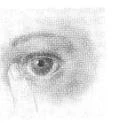
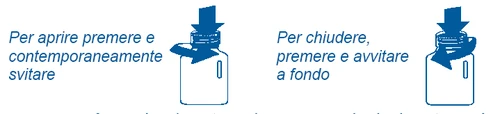
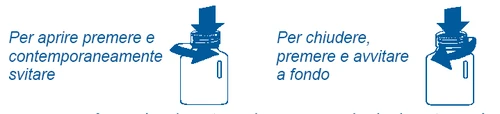
Fig. 1 Fig. 2 Fig.3
If you use more EQUITON than you should
In case of accidental ingestion or excessive application of this medicine, inform your doctor immediately or go to the nearest hospital.
If EQUITON is used for long periods and at high doses, toxic effects may occur. Therefore, excessive doses should be avoided, and you should press a finger at the inner corner of the eye after each application to reduce potential systemic absorption.
During prolonged therapy, intraocular pressure and visual function parameters should be monitored.
If you forget to use EQUITON
If you have forgotten to use EQUITON eye drops, continue using the usual dose at the regular time. Do not use a double dose to make up for the missed dose.
If you have any doubts about how to use this medicine, consult your doctor or pharmacist.
4. Possible side effects
Like all medicines, EQUITON eye drops can cause side effects, although not everyone experiences them.
As with other medicines applied to the eyes, timolol maleate is absorbed into the bloodstream. This may
cause side effects similar to those observed with intravenous or oral administration of similar medicines
(beta-blockers), although with lower incidence.
The following side effects may occur:
Eye and vision disorders:
- eye irritation (burning, stinging, itching, tearing, redness, conjunctivitis);
- inflammation of the eyelid (blepharitis);
- inflammation of the cornea (keratitis);
- blurred vision and detachment of the layer beneath the retina containing blood vessels following filtering surgery, which may cause visual disturbances, reduced corneal sensitivity, dry eyes, corneal erosion (damage to the front layer of the eyeball), drooping of the upper eyelid (resulting in the eye being closed or half-closed), double vision.
Immune system disorders:
- systemic allergic reactions including generalized swelling under the skin (which may occur in areas such as the face and limbs), swelling of the tongue, larynx, and throat that may cause breathing and swallowing difficulties (angioedema);
- life-threatening anaphylactic shock due to sudden allergic reaction;
- skin allergic reactions including localized and generalized rashes, urticaria, itching, rash.
Nervous system disorders:
- sleep disturbances (insomnia), depression, nightmares, memory loss;
- fainting; heart attack; reduced blood supply to the brain;
- worsening of signs and symptoms of myasthenia gravis, a muscle disorder;
- dizziness, headache (cephalalgia);
- altered sensation in limbs (paraesthesiae).
Cardiac and circulatory disorders:
- reduced heart rate (bradycardia);
- chest pain, palpitations;
- fluid accumulation (edema);
- irregular heartbeats (arrhythmias);
- congestive heart failure (a heart condition causing shortness of breath and swelling of feet and legs due to fluid accumulation), cardiac rhythm disorders, heart attack, heart failure;
- excessive reduction in blood pressure (hypotension);
- circulation problems in hands and feet (Raynaud's syndrome), cold hands and feet.
Respiratory disorders:
- narrowing of the airways (mainly in patients with pre-existing respiratory disease), breathing difficulties, cough.
Gastrointestinal disorders:
- reduced sense of taste (dysgeusia);
- nausea, vomiting, abdominal pain, and diarrhea;
- digestive difficulties (dyspepsia), dry mouth.
Skin and muscular disorders:
- hair loss (alopecia);
- skin rashes with silvery appearance (psoriasiform rash) or worsening of psoriasis, skin rash;
- lupus erythematosus, an immune-mediated skin disease causing facial lesions and pain;
- muscle pain and inflammation (myalgia).
Sexual disorders:
- sexual dysfunction, impotence;
- decreased libido.
Alterations in diagnostic tests:
- positive results for certain autoantibodies (antinuclear antibodies).
Metabolism and nutrition disorders:
- reduced blood sugar levels (hypoglycaemia).
Systemic disorders and administration site conditions:
- muscle weakness and fatigue.
Psychiatric disorders:
- hallucinations.
Other side effects reported with eye drops containing phosphates
If you have severe damage to the outermost transparent layer of the eye (the cornea), phosphates may very rarely cause opaque spots on the cornea due to calcium accumulation during treatment.
Reporting of side effects
If you experience any side effect, including those not listed in this leaflet, talk to your doctor or pharmacist. You can also report side effects directly via the national reporting system at www.agenziafarmaco.gov.it/it/responsabili. By reporting side effects, you can help provide more information on the safety of this medicine.
5. How to store EQUITON
Keep this medicine out of the sight and reach of children.
Do not use this medicine after the expiry date stated on the packaging after "Exp".
The expiry date refers to the last day of that month.
Store in the original packaging to protect the medicine from light and at a temperature not exceeding 25°C.
The eye drops must be used within 30 days of first opening the bottle. Any unused medicine should be discarded.
Do not dispose of any medicine via wastewater or household waste. Ask your pharmacist how to dispose of medicines you no longer use. This will help protect the environment.
6. Package contents and other information
What EQUITON contains
- The active substances are timolol maleate and pilocarpine hydrochloride. 100 ml of eye drops contain 0.5 g of timolol maleate and 1 g of pilocarpine hydrochloride.
- The other components are monobasic sodium phosphate dihydrate, dibasic sodium phosphate dihydrate, benzalkonium chloride and purified water.
Description of the appearance of EQUITON and contents of the package
Pack containing one 5 ml bottle of eye drops
Marketing Authorization Holder and Manufacturer
BRUSCHETTINI S.r.l.
Via Isonzo 6
16147 Genoa
Italy