Epyqsel
Italy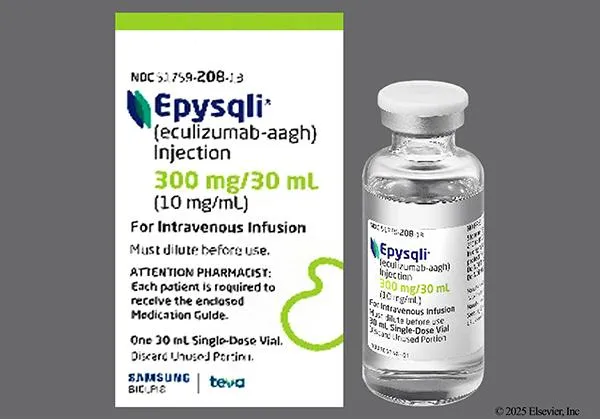
Table of Contents
- Package leaflet: Information for the user
- Epysqli 300 mg concentrate for solution for infusion
- 1. What Epysqli is and what it is used for
- 2. What you need to know before using Epysqli
- 3. How to use Epysqli
- 4. Possible side effects
- 5. How to store Epysqli
- 6. Package contents and other information
- Instructions for Use for Healthcare Professionals
Package leaflet: Information for the user
Epysqli 300 mg concentrate for solution for infusion
eculizumab
This medicinal product is subject to additional monitoring. This will allow rapid identification of new safety information. You can help by reporting any side effects you experience while taking this medicine. See the end of section 4 for information on how to report side effects.
Please read all of this leaflet carefully before using this medicine because it contains important information for you.
- Keep this leaflet. You may need to read it again.
- If you have any questions, ask your doctor, pharmacist or nurse.
- This medicine has been prescribed for you only. Do not give it to others, even if their symptoms are the same as yours, as it may be harmful.
- If you experience any side effect, including those not listed in this leaflet, talk to your doctor, pharmacist or nurse. See section 4.
Contents of this leaflet
- What Epysqli is and what it is used for
- What you need to know before using Epysqli
- How to use Epysqli
- Possible side effects
- How to store Epysqli
- Contents of the pack and other information
1. What Epysqli is and what it is used for
What Epysqli is
Epysqli contains the active substance eculizumab and belongs to a class of medicines known as monoclonal antibodies. Eculizumab binds to a specific protein in the body that causes inflammation, and by inhibiting its action, prevents certain body systems from attacking and destroying vulnerable blood cells, kidneys, muscles, or optic nerves and spinal cord.
What Epysqli is used for
Paroxysmal nocturnal haemoglobinuria (PNH)
Epysqli is used to treat adult and paediatric patients with a blood disorder called paroxysmal nocturnal haemoglobinuria (PNH). In patients with PNH, red blood cells can be destroyed, leading to a reduced number of red blood cells (anaemia), fatigue, functional impairment, pain, dark-coloured urine, dyspnoea (difficulty breathing), and blood clots. Eculizumab can block the body's inflammatory response and its ability to attack and destroy vulnerable PNH red blood cells.
Atypical haemolytic uremic syndrome (aHUS)
Epysqli is also used to treat adult and paediatric patients with a blood and renal disorder called atypical haemolytic uremic syndrome (aHUS). In patients with aHUS, the kidneys, red blood cells, and platelets may become inflamed, resulting in low platelet and red blood cell counts (thrombocytopenia and anaemia), reduced or loss of kidney function, blood clots, fatigue, and functional impairment. Eculizumab is able to block the body's inflammatory response and its ability to attack and destroy vulnerable blood and kidney cells.
2. What you need to know before using Epysqli
Do not use Epysqli
- if you are allergic to eculizumab, to mouse-derived proteins, to other monoclonal antibodies, or to any of the other ingredients of this medicine (listed in section 6);
- if you have not been vaccinated against meningococcal infection (or if you are not taking antibiotics to reduce the risk of infection for two weeks after vaccination);
- if you currently have a meningococcal infection.
Warnings and precautions
Alert regarding meningococcal infection and other infections caused by Neisseria
Treatment with Epysqli may reduce your body's natural resistance to infections, especially those caused by certain microorganisms leading to meningococcal infection (a serious infection of the lining of the brain and sepsis) and other Neisseria infections, including disseminated gonorrhea.
Before starting Epysqli, speak with your doctor to ensure you are vaccinated against Neisseria meningitidis, the organism causing meningococcal infection, at least 2 weeks before starting treatment or that you take antibiotics to reduce the risk of infection for two weeks after vaccination. Make sure your meningococcal vaccination is up to date. However, you should be aware that vaccination may not prevent this type of infection. According to national recommendations, your doctor may consider additional preventive measures necessary.
If you are at risk of gonorrhea, consult your doctor or pharmacist before taking this medicine.
Symptoms of meningococcal infection
Because it is important to rapidly identify and treat certain types of infections in patients treated with Epysqli, you will be given a card to carry with you listing specific symptoms to watch for. This card is called: “Patient Safety Card”.
If you experience any of the following symptoms, you must immediately contact your doctor:
- headache with nausea or vomiting;
- headache with neck or back stiffness;
- fever;
- skin rash;
- confusion;
- severe muscle pain with flu-like symptoms;
- sensitivity to light.
Treatment of meningococcal infection while travelling
If you plan to travel to a remote country where you may not be able to contact a doctor or where medical treatment may not be readily available, your doctor may prescribe, as a preventive measure, an antibiotic active against Neisseria meningitidis for you to carry with you. If you develop any of the symptoms listed above, you must take the antibiotics as prescribed.
Remember to consult a doctor as soon as possible, even if you feel better after taking the antibiotics.
Infections
Before starting treatment with Epysqli, inform your doctor if you currently have any infections.
Allergic reactions
Epysqli contains a protein, and proteins may cause allergic reactions in some people.
Children and adolescents
Patients under 18 years of age should be vaccinated against Haemophilus influenzae and pneumococcal infections.
Elderly
No special precautions are required for patients over 65 years of age.
Other medicines and Epysqli
Inform your doctor or pharmacist if you are taking, have recently taken, or might take any other medicines.
Pregnancy, breastfeeding and fertility
If you are pregnant, suspect you may be pregnant, planning to become pregnant, or are breastfeeding, consult your doctor or pharmacist before taking this medicine.
Women of childbearing potential
The use of effective contraceptive methods during treatment and for up to 5 months after treatment ends should be considered in women of childbearing potential.
Pregnancy/breastfeeding
If you are pregnant, suspect you may be pregnant, planning to become pregnant, or are breastfeeding, consult your doctor or pharmacist before using this medicine.
Driving and using machines
Epysqli does not affect or has negligible effect on the ability to drive and use machines.
Epysqli contains sodium
When diluted with 9 mg/mL (0.9%) sodium chloride injection solution, this medicine contains 0.47 g of sodium (the main component of table salt) per 240 mL at the maximum dose. This corresponds to 23.4% of the maximum recommended daily dietary intake for an adult. You should take this into account if you are on a low-sodium diet.
When diluted with 4.5 mg/mL (0.45%) sodium chloride injection solution, this medicine contains 0.26 g of sodium (the main component of table salt) per 240 mL at the maximum dose. This corresponds to 12.8% of the maximum recommended daily dietary intake for an adult. You should take this into account if you are on a low-sodium diet.
3. How to use Epysqli
At least two weeks before starting treatment with Epysqli, your doctor will administer a vaccine against meningococcal infection, if the vaccine has not already been given previously or if your vaccination has expired. If your child is not yet of an age eligible for vaccination or if you have not been vaccinated at least two weeks prior to starting treatment with Epysqli, your doctor will prescribe antibiotics to reduce the risk of infection for up to two weeks after vaccination.
Your doctor will administer a vaccine against Haemophilus influenzae and pneumococcal infections to your child under 18 years of age, according to national vaccination recommendations for each age group.
Instructions for correct administration
This medicine will be administered by your doctor or another healthcare professional as an intravenous infusion of a diluted solution from a vial of Epysqli. The treatment is recommended to begin with an initial phase lasting four weeks, followed by a maintenance phase:
If you are using this medicine for the treatment of PNH:
For adults:
- Initial phase: For the first four weeks, your doctor will administer a weekly intravenous infusion of a diluted solution of Epysqli. Each infusion will consist of a dose of 600 mg (two vials of 30 mL) and will last 25–45 minutes (35 minutes ± 10 minutes).
- Maintenance phase:
- In the fifth week, your doctor will administer an intravenous infusion of a diluted solution of Epysqli at a dose of 900 mg (three vials of 30 mL) over 25–45 minutes (35 minutes ± 10 minutes).
- From the sixth week onwards, your doctor will administer 900 mg of diluted Epysqli solution every two weeks as long-term therapy.
If you are using this medicine for the treatment of aHUS:
For adults:
- Initial phase: For the first four weeks, your doctor will administer a weekly intravenous infusion of a diluted solution of Epysqli. Each infusion will consist of a dose of 900 mg (three vials of 30 mL) and will last 25–45 minutes (35 minutes ± 10 minutes).
- Maintenance phase:
- In the fifth week, your doctor will administer an intravenous infusion of a diluted solution of Epysqli at a dose of 1,200 mg (four vials of 30 mL) over 25–45 minutes (35 minutes ± 10 minutes).
- From the sixth week onwards, your doctor will administer 1,200 mg of diluted Epysqli solution every two weeks as long-term therapy.
For children and adolescents:
Children and adolescents with PNH or aHUS who weigh equal to or more than 40 kg will receive the same dosage as adults.
Children and adolescents with PNH or aHUS who weigh less than 40 kg require a lower dose based on body weight. Your doctor will calculate the appropriate dose.
For children and adolescents under 18 years of age affected by PNH or aHUS:
| Body weight | Initial phase | Maintenance phase |
| from 30 to < 40 kg | 600 mg weekly for the first 2 weeks | 900 mg weekly in week 3; then 900 mg every 2 weeks |
| from 20 to < 30 kg | 600 mg weekly for the first 2 weeks | 600 mg weekly in week 3; then 600 mg every 2 weeks |
| from 10 to < 20 kg | 600 mg as a single dose in week 1 | 300 mg weekly in week 2; then 300 mg every 2 weeks |
| from 5 to < 10 kg | 300 mg as a single dose in week 1 | 300 mg weekly in week 2; then 300 mg every 3 weeks |
After each infusion, you will remain under observation for about one hour. You must carefully follow the doctor's instructions.
If you receive more Epysqli than you should
If you suspect that you have received a dose of Epysqli higher than prescribed, consult your doctor for advice.
If you forget to attend an appointment for Epysqli administration
If you miss an appointment, contact your doctor immediately and refer to the next section "If you interrupt treatment with Epysqli".
If you interrupt treatment with Epysqli for aHUS
Stopping or interrupting therapy with Epysqli may rapidly lead to a recurrence of aHUS symptoms in a more severe form. Your doctor will discuss with you the possible adverse effects and explain the risks. Your doctor will closely monitor you for at least 8 weeks.
The risks of stopping Epysqli include increased destruction of red blood cells, which may cause:
- a significant reduction in the number of red blood cells (anaemia);
- confusion or altered level of consciousness;
- chest pain or angina pectoris;
- increased levels of creatinine in the blood (kidney problems);
- thrombosis (blood clots). If you experience any of these symptoms, contact your doctor.
If you interrupt treatment with Epysqli for STEAP
Stopping or interrupting therapy with Epysqli may cause a recurrence of STEAP symptoms. Your doctor will discuss with you the possible side effects and explain the risks. Your doctor will closely monitor you.
The risks of stopping Epysqli include increased platelet inflammation, which may cause:
- a significant reduction in the number of platelets (thrombocytopenia);
- a significant increase in red blood cell destruction;
- decreased urine output (kidney problems);
- increased levels of creatinine in the blood (kidney problems);
- confusion or altered level of consciousness;
- chest pain or angina pectoris;
- shortness of breath;
- thrombosis (blood clots). If you experience any of these symptoms, contact your doctor.
4. Possible side effects
Like all medicines, this medicine can cause side effects, although not everyone gets them. Before starting treatment, your doctor will discuss with you the possible side effects and explain the risks and benefits of Epysqli.
The most serious side effect reported has been meningococcal sepsis (frequency not known (cannot be estimated based on available data)).
If you experience any of the symptoms of meningococcal infection (see section 2 “Alert on meningococcal infection and other Neisseria infections”), you must inform your doctor immediately.
If you are unsure about the side effects listed below, please ask your doctor for clarification.
Very common (may affect more than 1 in 10 people):
- headache.
Common (may affect up to 1 in 10 people):
- lung infection (pneumonia), common cold (rhinopharyngitis), urinary tract infections (urinary tract infection),
- low white blood cell count (leucopenia), reduced red blood cells which may cause pale skin, weakness or shortness of breath,
- inability to sleep,
- dizziness, high blood pressure,
- upper respiratory tract infections, cough, sore throat (oropharyngeal pain), bronchitis, cold sores (herpes simplex),
- diarrhoea, vomiting, nausea, abdominal pain, rash, hair loss (alopecia), itching,
- joint pain (arms and legs), limb pain (arms and legs),
- fever (pyrexia), feeling tired (fatigue), flu-like illness,
- infusion reaction.
Uncommon (may affect up to 1 in 100 people):
- severe infection (meningococcal infection), sepsis, septic shock, viral infection, lower respiratory tract infection, gastroenteritis (gastrointestinal infection), cystitis,
- infection, fungal infection, collection of pus (abscess), a type of skin infection (cellulitis), influenza, sinusitis, dental infection (abscess), gingival infection,
- relatively low platelet count in the blood (thrombocytopenia), low lymphocyte levels, low levels of a specific type of white blood cell (lymphopenia), awareness of heartbeat,
- severe allergic reaction causing breathing difficulties or dizziness (anaphylactic reaction), hypersensitivity,
- loss of appetite,
- depression, anxiety, mood swings, sleep disorder,
- tingling in part of the body (paraesthesia), tremor, taste disturbance (dysgeusia), fainting,
- blurred vision,
- ringing in the ears, dizziness,
- sudden and rapid onset of extremely high blood pressure, low blood pressure, hot flushes, venous disorder,
- dyspnoea (difficulty breathing), nosebleed, stuffy nose (nasal congestion), throat irritation, runny nose (rhinorrhoea),
- inflammation of the peritoneum (the tissue lining most of the abdominal organs), constipation, stomach discomfort after meals (dyspepsia), abdominal distension,
- urticaria, skin redness, dry skin, red or purple spots under the skin, increased sweating, skin inflammation,
- muscle cramps, muscle pain, back and neck pain, bone pain,
- kidney disease, difficulty or pain when urinating (dysuria), blood in the urine,
- spontaneous penile erection,
- swelling (oedema), chest discomfort, feeling of weakness (asthenia), chest pain, infusion site pain, chills,
- increased liver enzymes, decreased proportion of blood volume occupied by red blood cells, decreased levels of the protein in red blood cells that carries oxygen.
Rare (may affect up to 1 in 1,000 people):
- fungal infection (Aspergillus infection), joint infection (bacterial arthritis), Haemophilus influenzae infection, impetigo, sexually transmitted bacterial disease (gonorrhoea),
- skin tumour (melanoma), bone marrow disease,
- destruction of red blood cells (haemolysis), cell aggregation, abnormal blood clotting factor, abnormal blood coagulation,
- overactivity of the thyroid gland (Graves' disease),
- abnormal dreams,
- eye irritation,
- bruising,
- unusual regurgitation of food from the stomach, gum pain,
- yellowing of the skin and/or eyes (jaundice),
- change in skin colour,
- muscle spasm in the mouth, joint swelling,
- menstrual disorders,
- abnormal leakage of infused medicine outside the vein, abnormal sensation at the infusion site, feeling of warmth.
Reporting of side effects
If you experience any side effect, including those not listed in this leaflet, talk to your doctor, pharmacist, or nurse. You can also report side effects directly via the national reporting system detailed in Annex V. By reporting side effects, you can help provide more information on the safety of this medicine.
5. How to store Epysqli
Keep this medicine out of the sight and reach of children.
Do not use this medicine after the expiry date stated on the carton and on the label of the
vial after “Exp.”. The expiry date refers to the last day of that month.
Store in a refrigerator (2 °C – 8 °C).
Do not freeze.
Epysqli vials in the original packaging may be removed from the refrigerator only once for up to 2 months
at room temperature (up to 30 °C), without exceeding the original expiry date. At the end of this period, the product may be returned to the refrigerator.
Keep in the original packaging to protect the medicine from light.
After dilution, use the medicine within 24 hours when stored at 2 °C – 8 °C or at room temperature (up to 30 °C). However, if the solution is prepared under aseptic conditions, it may be stored in the refrigerator at 2 °C – 8 °C for up to 3 months and for an additional 72 hours at room temperature (up to 30 °C) when diluted with an injectable solution of sodium chloride 9 mg/mL (0.9%) or an injectable solution of sodium chloride 4.5 mg/mL (0.45%).
Do not dispose of any medicine via wastewater. Ask your pharmacist how to dispose of medicines no longer required. This will help protect the environment.
6. Package contents and other information
What Epysqli contains
- The active substance is eculizumab (300 mg/30 mL in vial, corresponding to 10 mg/mL).
- The other components are:
- monosodium phosphate monohydrate (see section 2 “Epysqli contains sodium”)
- disodium phosphate heptahydrate (see section 2 “Epysqli contains sodium”)
- trehalose dihydrate
- polysorbate 80
Solvent: water for injections
Description of the appearance of Epysqli and contents of the pack
Epysqli is a concentrate for solution for infusion (30 mL in vial – pack of 1 vial).
Epysqli is a clear, colourless solution.
Marketing Authorisation Holder and Manufacturer
Samsung Bioepis NL B.V.
Olof Palmestraat 10
2616 LR Delft
The Netherlands
Other sources of information
More detailed information on this medicinal product is available on the website of the European Medicines Agency, http://www.ema.europa.eu/. In addition, links to other websites on rare diseases and related therapeutic treatments are provided.
Instructions for Use for Healthcare Professionals
Handling of Epysqli
The following information is intended exclusively for healthcare professionals:
1- How is Epysqli supplied?
Each vial of Epysqli contains 300 mg of active substance in 30 mL of solution.
2- Prior to administration
Reconstitution and dilution must be performed in accordance with good manufacturing practices, particularly maintaining aseptic conditions.
Epysqli must be prepared for administration by a qualified healthcare professional using aseptic technique.
- Visually inspect the Epysqli solution to ensure there are no particles or discoloration.
- Withdraw the required amount of Epysqli from the vial(s) using a sterile syringe.
- Transfer the recommended dose into an infusion bag.
- Dilute Epysqli to a final concentration of 5 mg/mL (half the initial concentration) by adding the correct amount of diluent to the infusion bag. For 300 mg doses, use 30 mL of Epysqli (10 mg/mL) and add 30 mL of diluent. For 600 mg doses, use 60 mL of Epysqli and add 60 mL of diluent. For 900 mg doses, use 90 mL of Epysqli and add 90 mL of diluent. For 1,200 mg doses, use 120 mL of Epysqli and add 120 mL of diluent. The final volume of the diluted Epysqli solution at 5 mg/mL is 60 mL for 300 mg doses, 120 mL for 600 mg doses, 180 mL for 900 mg doses, and 240 mL for 1,200 mg doses. Suitable diluents are sodium chloride 9 mg/mL (0.9%) injection solution, sodium chloride 4.5 mg/mL (0.45%) injection solution, or glucose in water (5%).
- Gently agitate the infusion bag containing the diluted Epysqli solution to ensure thorough mixing of the medicinal product and diluent.
- Allow the diluted solution to warm to room temperature (up to 30 °C) before administration by leaving it at ambient temperature.
- The diluted solution must not be heated in a microwave or by any other heat source apart from ambient temperature.
- Discard any unused portion remaining in the vial.
- Diluted solutions of Epysqli may be stored at 2 °C – 8 °C or at room temperature (up to 30 °C) for 24 hours after removal from the refrigerator. However, if the solution is prepared under aseptic conditions, it may be stored refrigerated at 2 °C – 8 °C for up to 3 months and for an additional 72 hours at room temperature (up to 30 °C) when diluted with sodium chloride 9 mg/mL (0.9%) injection solution or sodium chloride 4.5 mg/mL (0.45%) injection solution.
3- Administration
- Do not administer Epysqli as rapid intravenous injections or bolus infusions.
- Epysqli must be administered only by intravenous infusion.
- The diluted Epysqli solution should be administered via intravenous infusion over 25–45 minutes (35 minutes ± 10 minutes) in adult patients, and over 1–4 hours in pediatric patients under 18 years of age, using an intravenous drip set, syringe pump, or infusion pump. The diluted Epysqli solution does not need to be protected from light during administration. The patient should be monitored for one hour after the infusion. If an adverse event occurs during administration of Epysqli, the infusion may be slowed or stopped at the physician’s discretion. If the infusion rate is reduced, the total infusion time should not exceed two hours in adults or four hours in pediatric patients under 18 years of age.
4- Special Precautions for Handling and Storage
Store in a refrigerator (2 °C – 8 °C). Do not freeze. Keep in the original packaging to protect the medicinal product from light.
Epysqli vials in their original packaging may be removed from the refrigerator for a single period of up to 2 months at room temperature (up to 30 °C), without exceeding the original expiration date. At the end of this period, the product may be returned to refrigerated storage.
Do not use this medicinal product after the expiration date stated on the packaging and on the vial label after the word “Exp.”. The expiration date refers to the last day of that month.