Epirubicin Teva
Italy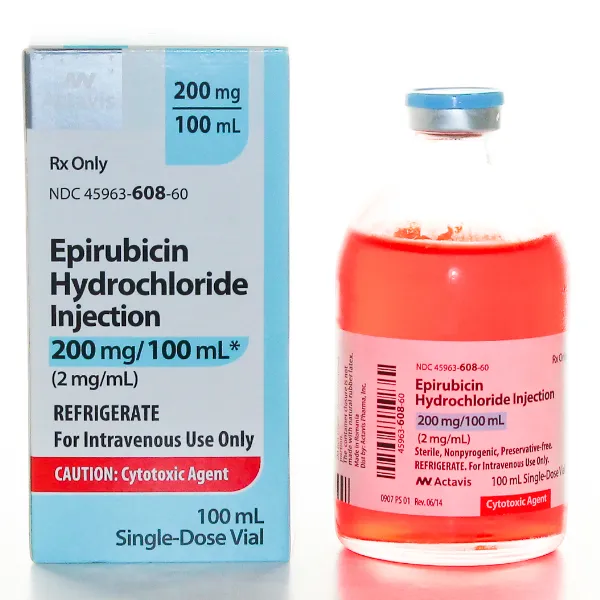
Table of Contents
- Package leaflet: Information for the user
- Epirubicin Teva 2 mg/ml injection solution or solution for infusion
- 1. What Epirubicin Teva is and what it is used for
- 2. What you should know before using Epirubicin Teva
- 3. How to use Epirubicin Teva
- 4. Possible side effects
- 5. How to store Epirubicin Teva
- 6. Package contents and other information
- 1. COMPOSITION
- 2. SPECIAL STORAGE INSTRUCTIONS
- 3. NATURE AND CONTENTS OF THE CONTAINER
- 4. INCOMPATIBILITIES
- 5. RECOMMENDATIONS FOR SAFE HANDLING
- 6. PREPARATION OF THE SOLUTION
- 7. DISPOSAL
Package leaflet: Information for the user
Epirubicin Teva 2 mg/ml injection solution or solution for infusion
Epirubicin hydrochloride
Generic medicine
Read all of this leaflet carefully before you start using this medicine because it contains important information for you.
- Keep this leaflet. You may need to read it again.
- If you have any questions, ask your doctor, pharmacist, or nurse.
- If you experience any side effects, including those not listed in this leaflet, tell your doctor, pharmacist, or nurse. See section 4.
Contents of this leaflet:
- What Epirubicin Teva is and what it is used for
- What you need to know before you use Epirubicin Teva
- How to use Epirubicin Teva
- Possible side effects
- How to store Epirubicin Teva
- Contents of the pack and other information
1. What Epirubicin Teva is and what it is used for
Epirubicin belongs to the group of cytostatic agents (medicines used to fight cancer).
Epirubicin prevents cancer cells from growing further, eventually causing their death.
Epirubicin is used to treat:
- breast cancer;
- stomach cancer;
- epirubicin hydrochloride is also used intravesically (directly into the bladder) for the treatment of early-stage (superficial) bladder cancer and to prevent recurrence of bladder cancer after surgical intervention. Epirubicin is often used together with other anticancer medicines (in so-called combination chemotherapy regimens).
2. What you should know before using Epirubicin Teva
Do not use Epirubicin Teva
- if you are allergic to epirubicin, to similar medicines (called anthracyclines or anthracenediones, see below), or to any of the other ingredients of this medicine (listed in section 6);
- if you are breastfeeding.
Depending on the route of administration, do not use Epirubicin Teva if you are in the following
situations:
Intravenous administration (into a vein):
-
if you have previously been treated with high doses of other anticancer medicines, including doxorubicin and daunorubicin, which belong to the same group of medicines as epirubicin hydrochloride 2 mg/ml (called anthracyclines ). These agents cause similar adverse effects (including those affecting the heart);
-
if you have or have had heart problems;
-
if you have a low blood cell count;
-
if you have severe liver function impairment;
-
if you have a severe acute infection.
Intravesical administration (directly into the bladder):
- if the cancer has invaded the bladder wall;
- if there is a urinary tract infection;
- if there is bladder pain or inflammation;
- if the doctor has difficulty inserting a catheter (tube) into the bladder;
- if a significant volume of urine remains in the bladder after an attempt to empty it;
- if your urine contains blood;
- if you have a contracted bladder.
Warnings and precautions
Talk to your doctor or pharmacist before using Epirubicin Teva:
- if you are elderly or a child, due to an increased risk of severe cardiac adverse effects. Your heart function will be monitored before and after treatment with epirubicin.
- if you have had heart problems in the past or currently have them. You must inform your doctor. The dose of epirubicin may need to be adjusted. Your doctor will regularly monitor your heart function.
- if you have previously been treated with anticancer agents (anthracyclines (such as doxorubicin or daunorubicin), anthracenediones, or trastuzumab) or have undergone radiotherapy to the chest area, as the risk of severe cardiac adverse effects is higher. Inform your doctor, as this information will be considered when determining the total dose of epirubicin to be administered.
- if you have a liver or kidney disorder. This may increase the risk of adverse effects. Liver and kidney function will be monitored periodically, and the dose may be adjusted if necessary.
- if you wish to have children. Both men and women must use effective contraception during treatment and for 6.5 months (women) or 3.5 months (men) after treatment. Genetic counseling is recommended for both men and women (see section “Pregnancy, breastfeeding and fertility”).
- if you have infections or bleeding. Epirubicin can affect the bone marrow. The number of white blood cells in your blood may decrease, making you more susceptible to infections (leukopenia). Bleeding may occur more easily (thrombocytopenia). These adverse effects are usually temporary. The decrease in white blood cells is most pronounced 10–14 days after administration, and normal levels are usually restored 21 days after administration. Your doctor will regularly monitor your blood counts.
- if you have recently received or plan to receive any type of vaccination.
Take special care during treatment with Epirubicin Teva:
- monitoring blood uric acid levels. Your doctor should perform checks for this.
- if blood clots form in your blood vessels (thromboembolism), which may lead to vein inflammation (thrombophlebitis) or blockage of the pulmonary artery (pulmonary embolism).
- if you have severe inflammation or ulcers in the mouth.
- if you experience a burning sensation at the site of administration. This may indicate that epirubicin is leaking from the blood vessel. Inform your doctor immediately if this occurs.
Children and adolescents
The safety and efficacy of epirubicin in children have not been established.
Other medicines and Epirubicin Teva
Inform your doctor or pharmacist if you are taking, have recently taken, or might take any other medicines.
The term “interaction” means that products (medicines) used concurrently may affect each other’s effects and/or adverse effects. An interaction may occur when this solution is used together with:
- prior or concomitant use of other products related to epirubicin (so-called anthracyclines; for example, the anticancer agents mitomycin-C, dacarbazine, dactinomycin, and cyclophosphamide), other drugs that may affect the heart (e.g., the anticancer agents 5-fluorouracil, cyclophosphamide, cisplatin, taxanes, trastuzumab) or calcium channel blockers (used to treat high blood pressure or certain heart conditions); the risk to the heart may increase. Therefore, particularly close monitoring of heart function is required.
- epirubicin may enhance the effects of radiation and may cause severe adverse effects in the irradiated area, even after some time has passed since radiation exposure.
- paclitaxel and docetaxel (used for certain types of cancer); when paclitaxel is administered before epirubicin or docetaxel is administered immediately after epirubicin, the amount of epirubicin in the blood increases, which may lead to an increase in adverse effects.
- dexverapamil (used to treat certain heart conditions); when used together with epirubicin, it may have a negative effect on the bone marrow.
- interferon α-2b (a product used for certain tumors and lymphomas, and for certain forms of hepatitis).
- quinine (a product used to treat malaria and leg cramps); quinine may accelerate the distribution of epirubicin in the body, which may have a negative effect on red blood cells.
- dexrazoxane (sometimes used with doxorubicin to reduce the risk of heart problems); the time epirubicin remains in the body may be reduced, which could lead to a decrease in the effectiveness of epirubicin.
- cimetidine (used to reduce stomach acidity); the amount of epirubicin in the blood may increase, potentially increasing the risk of adverse effects.
- prior or concomitant therapy with other products that affect the bone marrow (e.g., other anticancer agents, sulfonamides, and chloramphenicol (antibiotics), phenytoin (antiepileptic), amidopyrine derivatives (analgesics), products against certain viruses); blood cell formation may be impaired.
- products that cause heart failure.
- products that affect liver function; the metabolism of epirubicin via the liver may be affected, potentially reducing the effectiveness of epirubicin or increasing adverse effects.
- live or live attenuated vaccines; there is a risk of fatal disease; therefore, such combination is not recommended.
Epirubicin Teva with food and drink
When epirubicin is administered into the bladder, do not drink fluids during the 12 hours before administration.
Pregnancy, breastfeeding and fertility
If you are pregnant, suspect you may be pregnant, are planning a pregnancy, or are breastfeeding, consult your doctor or pharmacist before receiving this medicine.
Pregnancy and fertility
Using epirubicin during pregnancy may harm the unborn baby. Animal studies have shown that epirubicin is harmful to the fetus and may cause birth defects.
It is very important to inform your doctor if you are pregnant or become pregnant during treatment. Epirubicin Teva must not be used during pregnancy unless your doctor considers immediate treatment with epirubicin absolutely necessary.
If you become pregnant during epirubicin therapy, genetic counseling is recommended. Some reports in pregnant women indicate that epirubicin has been associated with heart problems in newborns and fetuses, including fetal death.
Women of childbearing potential must use effective contraception during treatment and for at least 6.5 months after the last dose. Men undergoing treatment with epirubicin must use effective contraception during treatment and for at least 3.5 months after the last dose.
Epirubicin treatment may cause infertility. Before starting treatment, both men and women should seek advice on fertility preservation. Epirubicin may cause absence of menstruation or early menopause in premenopausal women.
Breastfeeding
It is not known whether epirubicin is excreted in breast milk. Breastfeeding should be discontinued during treatment with Epirubicin Teva and for at least 7 days after the last dose.
Driving and using machines
Since many patients experience severe nausea or vomiting during treatment, driving and operating machinery are not recommended.
Epirubicin Teva contains sodium
This medicine contains 18 mg of sodium (a main component of table salt) per 5 ml vial. This corresponds to 0.9% of the maximum daily dietary intake recommended for an adult.
This medicine contains 35 mg of sodium (a main component of table salt) per 10 ml vial. This corresponds to 1.8% of the maximum daily dietary intake recommended for an adult.
This medicine contains 89 mg of sodium (a main component of table salt) per 25 ml vial. This corresponds to 4.4% of the maximum daily dietary intake recommended for an adult.
This medicine contains 266 mg of sodium (a main component of table salt) per 75 ml vial. This corresponds to 13.3% of the maximum daily dietary intake recommended for an adult.
This medicine contains 354 mg of sodium (a main component of table salt) per 100 ml vial. This corresponds to 17.7% of the maximum daily dietary intake recommended for an adult.
3. How to use Epirubicin Teva
Epirubicin Teva will be administered to you only under the supervision of a physician experienced in this type of therapy. If you have any doubts, consult your doctor or pharmacist.
During treatment with epirubicin, your doctor will perform blood tests to assess the medicine's effects. Your doctor will also carry out tests to monitor heart function. Both blood tests and cardiac function tests are performed before and during treatment with epirubicin.
The dose you receive depends on the type of cancer, your general health, your age, liver function, and other medications you are taking.
Administration into a vein (intravenous administration)
The dosage schedule will be determined based on your general health condition and any previous treatments, also taking into account your height and weight. The amounts indicated in the dosage schedule are expressed as milligrams per square meter of body surface area.
This medicine will be administered either as an intravenous injection over 3–5 minutes or as an intravenous infusion lasting up to 30 minutes.
If epirubicin hydrochloride is administered alone, without other antitumor agents, the recommended dose is 60–90 mg/m² of body surface area. This dose may be given as a single dose or divided over 2–3 consecutive days. Administration should be repeated every 21 days. When used in combination with other antitumor agents, the dose should be reduced.
Administration is performed via a catheter or a second continuous infusion line containing physiological saline or glucose solution (a sugar-containing solution).
Higher doses may be administered for the treatment of breast carcinoma (100–120 mg/m² of body surface area).
Administration into the bladder (intravesical administration)
The product may be administered directly into the bladder (for treatment of bladder cancer) via a catheter. If this method is used, you should avoid drinking any fluids for 12 hours before treatment to prevent urine from excessively diluting the medicine. After administration, the dissolved medicine should remain in the bladder for at least 1–2 hours. Occasionally, you may need to change position to ensure the medicine reaches all areas of the bladder.
When emptying the bladder after administration, ensure that the urine does not come into contact with the skin. If contact occurs, wash the area thoroughly with water and soap, without rubbing.
If you use more Epirubicin Teva than you should
Since this medicine is administered by medical personnel, the risk of overdose is unlikely. However, an overdose may affect the heart, reduce the number of blood cells, and cause toxic gastrointestinal effects (mainly mucositis). You may notice mouth ulcers. If you suspect that you have been given an excessive amount of Epirubicin Teva, contact your doctor immediately.
If you forget to use Epirubicin Teva
Since this medicine is administered by medical personnel, it is unlikely that a dose will be missed.
If you have any doubts, consult your doctor.
If you stop treatment with Epirubicin Teva
Consult your doctor.
If you have any questions about the use of this medicine, consult your doctor or pharmacist.
4. Possible side effects
Like all medicines, this medicine can cause side effects, although not everyone will experience them.
It is expected that more than 10% of treated patients will experience side effects. The most common side effects are a decrease in blood cells (myelosuppression), gastrointestinal side effects, loss of appetite (anorexia), hair loss (alopecia), and infection.
In addition, the following side effects may occur:
Very common: may affect more than 1 in 10 people
- infection
- eye inflammation (conjunctivitis or keratitis)
- decreased production of blood cells (bone marrow suppression; causing a deficiency in white blood cells, red blood cells, platelets), leading to increased susceptibility to infections and fever, anaemia, bruising and bleeding when injured
- hot flushes, redness of veins (phlebitis)
- nausea and vomiting (often appearing within the first 24 hours (in nearly all patients)), inflammation of the mucous membranes of the mouth (stomatitis), inflammation of mucous membranes (mucositis; may appear 5 to 10 days after starting treatment), diarrhoea leading to dehydration
- hair loss (alopecia, in 60–90% of treated cases. In men, this may result in poor beard growth. Alopecia is dose-dependent and reversible in most cases)
- skin lesions
- red discoloration of urine for 1–2 days after administration
- absence of menstrual periods (amenorrhoea)
- general feeling of malaise, fever
- changes in levels of certain enzymes (transaminases)
- bladder inflammation (cystitis), sometimes with bleeding, following intravesical administration
Common: may affect up to 1 in 10 people
- loss of appetite (anorexia), dehydration
- reduced heart function resulting in blood congestion (congestive heart failure), heart failure (dyspnoea, fluid accumulation throughout the body (oedema), liver enlargement, fluid accumulation in the abdominal cavity (ascites), fluid accumulation in the lungs (pulmonary oedema), pleural effusion, abnormal heart rhythm (gallop rhythm)), increased heart rate originating in the lower chambers of the heart (ventricular tachycardia), decreased heart rate (bradycardia), interruption of cardiac impulse transmission (atrioventricular block, bundle branch block)
- decreased fraction of blood pumped by a ventricle with each heartbeat (reduced ejection fraction)
- bleeding (haemorrhage), skin redness (flushing)
- inflammation of the oesophageal mucosa (oesophagitis), abdominal pain, erosion and ulcers in the gastrointestinal tract
- skin rash, severe itching, skin changes
- darkening of the skin and nails (hyperpigmentation)
- redness at the infusion site, chills
- local reactions such as burning sensation and frequent urgency to urinate have been observed after administration into the bladder
Uncommon: may affect up to 1 in 100 people
- blood infection (sepsis), lung infection (pneumonia)
- certain types of blood cancer (acute lymphocytic leukaemia [ALL], secondary acute myeloid leukaemia [AML])
- vascular inflammation with blood clot formation, often felt as a painful, rather hard cord with redness of the overlying skin (thrombophlebitis)
- formation of blood clots (embolism, arterial embolism), including formation of blood clots in the lungs (pulmonary embolism, in isolated cases with fatal outcome)
- bleeding in the gastrointestinal tract
- skin rash with small swellings (urticaria), skin redness (erythema)
- feeling of weakness (asthenia)
Rare: may affect up to 1 in 1,000 people
- severe and immediate allergic reaction (anaphylactic/anaphylactoid reaction) with or without shock, including skin rash and itching; fever and chills
- increased levels of uric acid in the blood (hyperuricaemia)
- dizziness
- cardiotoxicity (e.g. ECG changes, arrhythmias, heart muscle disease (cardiomyopathy))
- absence of sperm in semen (azoospermia)
- fever (very high)
Not known: frequency cannot be estimated from the available data
- blood infection and shock (septic shock) as a consequence of decreased blood cell production (myelosuppression)
- bleeding, tissue hypoxia
- certain nerve disorders (peripheral neuropathy), headache
- shock
- abdominal discomfort, erosion of the oral mucous membrane, mouth ulceration, oral cavity pain, burning sensation of the mucous membrane, mouth bleeding (oral haemorrhage), discoloration of the oral cavity (buccal pigmentation)
- sensitivity to light (photosensitivity) or allergic reactions upon radiation exposure (radiation recall reactions)
- increased levels of protein in the urine (proteinuria) in patients treated with high doses
- local pain, severe inflammation of the connective tissue (cellulitis), tissue death (tissue necrosis), thickening or hardening of the venous walls (phlebosclerosis) following accidental injection outside the vein
Intravesical administration (into the bladder): Serious side effects affecting the whole body and allergic reactions are rare with intravesical administration of Epirubicin Teva 2 mg/ml.
Reporting of side effects
If you experience any side effect, including those not listed in this leaflet, talk to your doctor or pharmacist. You can also report side effects directly via the national reporting system at www.aifa.gov.it/content/segnalazioni-reazioni-avverse. By reporting side effects, you can help provide more information on the safety of this medicine.
5. How to store Epirubicin Teva
Keep out of the sight and reach of children.
Do not use Epirubicin Teva after the expiry date stated on the packaging after EXP. The expiry date refers to the last day of that month.
Store in a refrigerator (2-8°C).
Store and transport in a refrigerator.
Do not freeze.
After first opening, the product should be used immediately.
The chemical and physical in-use stability is as follows:
| Viaflo bag (non-PVC) | Refrigerator 2-8°C | Room temperature 15-25°C, ambient light |
| Sodium chloride 0.9% for injection | 28 days | 14 days |
| 5% glucose for injection | 28 days | 28 days |
| Polypylene syringe | Refrigerator 2-8°C | Room temperature 15-25°C, ambient light |
| Sodium chloride 0.9% for injection | 28 days | 14 days |
| 5% glucose for injection | 28 days | 7 days |
| Undiluted | 28 days | 14 days |
From a microbiological point of view, the product should be used immediately. If not used
immediately, the in-use storage times and conditions prior to use are the responsibility of the
user and, normally, should not exceed 24 hours at 2–8°C.
Refrigeration of the injectable solution may cause the product to gel. This gelled product returns to a slightly viscous state and thus to a normal state after 2–4 hours of equilibration at controlled room temperature (15–25°C).
Do not dispose of any medicine via wastewater or household waste. Ask your pharmacist how to dispose of medicines you no longer use. This will help protect the environment.
6. Package contents and other information
What Epirubicin Teva contains
- The active substance is epirubicin hydrochloride; 1 ml contains 2 mg of epirubicin hydrochloride.
- The other ingredients are sodium chloride, hydrochloric acid and water for injections.
Description of the appearance of Epirubicin Teva and package contents
Epirubicin Teva 2 mg/ml is a medicine presented as a clear, red solution for injection or infusion.
It is available in glass vials for injection containing 5 ml (10 mg), 10 ml (20 mg), 25 ml (50 mg), 75 ml (150 mg) or 100 ml (200 mg) of solution for injection or infusion.
Not all pack sizes may be marketed.
Marketing Authorization Holder and Manufacturer
Marketing Authorization Holder
Teva Italia S.r.l. - Piazzale Luigi Cadorna, 4 - 20123 Milan, Italy
Manufacturer
Pharmachemie B.V. - Swensweg 5 - PO Box 552 - 2003 RN Haarlem, The Netherlands
This medicinal product is authorized in the European Economic Area and in the United Kingdom (Northern Ireland) under the following names:
Belgium EPIRUBICINE TEVA 2 mg/ml
Denmark Epirubicin Teva solution for injection or infusion
France EPIRUBICINE TEVA CLASSICS 2 mg/ml, solution injectable ou pour perfusion
Germany Epi Teva 2 mg/ml Injektionslösung oder Infusionslösung
Greece Epirubicin HCl / PCH, ενέσιμο διάλυμα ή διάλυμα για έγχυση 2 mg/ml
Hungary Epirubicin-Teva 2mg/ml oldatos injekció vagy infúzió
Italy Epirubicina Teva 2 mg/ml soluzione iniettabile o per infusione
Luxembourg EPIRUBICINE TEVA 2 mg/ml
Netherlands Epirubicine HCl Pharmachemie 2 mg/ml oplossing voor injectie of intraveneuze infusie
Norway Epirubicin Teva 2 mg/ml injeksjons/infusjonsvæske, oppløsning
Portugal Epirrubicina Teva Solução injectável ou para perfusão
Slovenia Epirubicin Teva 2 mg/ml, raztopina za injiciranje ali infundiranje
Spain Epirubicina Teva 2mg/ml solución para inyección ó perfusión EFG
Sweden Epirubicin Teva 2 mg/ml injektions/infusionsvätska, lösning
United Kingdom (Northern Ireland) Epirubicin 2mg/ml solution for injection or infusion
The following information is intended for healthcare professionals only:
GUIDE FOR THE PREPARATION AND USE OF EPIRUBICIN TEVA 2 MG/ML
INJECTABLE OR INFUSION SOLUTION
It is important to read the entire content of this procedure before preparing Epirubicin Teva 2 mg/ml injectable or infusion solution.
1. COMPOSITION
Epirubicin hydrochloride 2 mg per ml of injectable solution or for infusion.
Excipients:
sodium chloride
hydrochloric acid for pH adjustment
water for injections
2. SPECIAL STORAGE INSTRUCTIONS
Store in a refrigerator (2°C-8°C).
Store and transport in a refrigerator.
Do not freeze.
The chemical and physical stability during use is as follows:
| Viaflo bag (non-PVC) | Refrigerator 2-8°C | Room temperature 15-25°C, ambient light |
| Sodium chloride 0.9% for injection | 28 days | 14 days |
| 5% glucose for injection | 28 days | 28 days |
| Polypylene syringe | Refrigerator 2-8°C | Room temperature 15-25°C, ambient light |
| Sodium chloride 0.9% for injection | 28 days | 14 days |
| 5% glucose for injection | 28 days | 7 days |
| Undiluted | 28 days | 14 days |
From a microbiological point of view, the product should be used immediately. If not used immediately, the in-use storage times and conditions prior to use are the responsibility of the user and, normally, should not exceed 24 hours at 2-8°C.
Refrigerated storage of the injectable solution may result in gelation of the product. This gelled product returns to a slightly viscous state and then to a normal state after 2-4 hours of equilibration at controlled room temperature (15-25°C).
3. NATURE AND CONTENTS OF THE CONTAINER
Epirubicin Teva 2 mg/ml is available in colorless type I glass vials with bromobutyl rubber stoppers, aluminum seals, and flip-off caps, containing 5 ml, 10 ml, 25 ml, 75 ml, and 100 ml of injectable or infusion solution, respectively.
Each pack contains a single vial.
Not all pack sizes may be marketed.
4. INCOMPATIBILITIES
Prolonged contact with alkaline solutions must be avoided, as it may cause hydrolysis. Epirubicin Teva 2 mg/ml must not be mixed with heparin, due to the risk of precipitation.
This medicinal product must not be mixed with other medicinal products except with 0.9% sodium chloride solution, 5% glucose solution, or sterile water.
5. RECOMMENDATIONS FOR SAFE HANDLING
If it is necessary to prepare an infusion solution, this task must be carried out by trained personnel under controlled aseptic conditions.
The preparation of an infusion solution must be performed in a dedicated aseptic area.
Personnel working with Epirubicin Teva must wear protective gloves, safety goggles, and a face mask.
Epirubicin Teva does not contain preservatives and should therefore be considered a single-use product.
After use, any unused medicinal product and waste materials derived from this medicinal product must be disposed of in accordance with regulations applicable to cytotoxic agents. See also the section "Disposal".
Spilled or leaked medicinal product may be inactivated by using 1% sodium hypochlorite solution or alternatively with a phosphate pad (pH >8) until the solution is decolorized. All materials used for cleaning must be disposed of as described in the section "Disposal".
Pregnant women should avoid contact with cytotoxic agents.
Excreta and vomit should be handled and cleaned with caution.
A damaged vial must be handled with the same precautions and considered contaminated waste. Contaminated waste must be stored in specially designated containers that are properly labeled. See the section "Disposal".
6. PREPARATION OF THE SOLUTION
Epirubicin is intended for intravenous or intravesical use only.
6.1 Preparation for intravenous administration
Epirubicin Teva 2 mg/ml may be diluted with 0.9% sodium chloride solution or 5% glucose solution and administered intravenously. The solution must be prepared immediately before use.
The red solution, which must be clear and transparent, should preferably be injected via the catheter of a continuous intravenous infusion of physiological saline or 5% glucose solution over a maximum of 30 minutes (depending on the dose and volume of the infusion). The needle must be properly inserted into the vein. This method reduces the risk of thrombosis and extravasation, which could lead to severe cellulitis and necrosis. In case of extravasation, administration must be stopped immediately. Injection into small veins and repeated injections into the same vein may cause venous sclerosis.
For high-dose treatment, epirubicin may be administered as an intravenous bolus over 3–5 minutes or as an infusion lasting up to 30 minutes.
6.2 Preparation for intravesical administration
For intravesical administration, Epirubicin Teva 2 mg/ml must be diluted with 0.9% sodium chloride solution or sterile water. The concentration of the diluted solution should be 0.6–1.6 mg/ml.
Dilution table for solutions to be instilled into the bladder
| Dose of epirubicin hydrochloride required | Volume of injectable epirubicin hydrochloride 2 mg/ml | Volume of diluent, sterile water for injectable preparations or sterile 0.9% saline solution | Total instillation volume in the bladder |
| 30 mg | 15 ml | 35 ml | 50 ml |
| 50 mg | 25 ml | 25 ml | 50 ml |
| 80 mg | 40 ml | 10 ml | 50 ml |
7. DISPOSAL
Unused medicine, as well as all materials used in the preparation and administration or that have come into contact with epirubicin hydrochloride in any way, must be disposed of in accordance with local applicable regulations.