Enalapril and hydrochlorothiazide Ratiopharm
Italy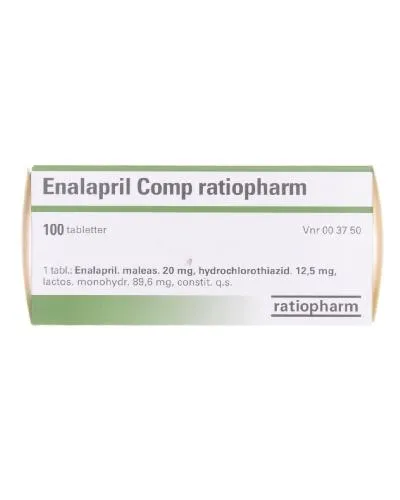
Table of Contents
- Package leaflet: Information for the user
- Enalapril Hydrochlorothiazide ratiopharm 20 mg/12.5 mg tablets
- 1. What Enalapril Hydrochlorothiazide ratiopharm is and what it is used for
- 2. What you should know before using enalapril/hydrochlorothiazide ratiopharm
- 3. How to use Enalapril Idroclorotiazide ratiopharm
- 4. Possible side effects
- 5. How to store Enalapril Hydrochlorothiazide ratiopharm
- 6. Package contents and other information
Package leaflet: Information for the user
Enalapril Hydrochlorothiazide ratiopharm 20 mg/12.5 mg tablets
enalapril/hydrochlorothiazide
Generic medicine
Please read all of this leaflet carefully before you start taking this medicine because it contains
important information for you.
- Keep this leaflet. You may need to read it again.
- If you have any questions, ask your doctor or pharmacist.
- This medicine has been prescribed for you only. Do not give it to other people, even if they have the same symptoms as yours, because it could be harmful.
- If you experience any side effect, including those not listed in this leaflet, tell your doctor or pharmacist. See section 4.
Contents of this leaflet:
- What Enalapril Hydrochlorothiazide ratiopharm is and what it is used for
- What you need to know before taking Enalapril Hydrochlorothiazide ratiopharm
- How to take Enalapril Hydrochlorothiazide ratiopharm
- Possible side effects
- How to store Enalapril Hydrochlorothiazide ratiopharm
- Contents of the pack and other information
1. What Enalapril Hydrochlorothiazide ratiopharm is and what it is used for
This medicinal product is an antihypertensive that combines a diuretic: hydrochlorothiazide, and an angiotensin-converting enzyme inhibitor: enalapril.
It is indicated for the treatment of hypertension when blood pressure is not sufficiently controlled with monotherapy (an angiotensin-converting enzyme inhibitor alone).
2. What you should know before using enalapril/hydrochlorothiazide ratiopharm
Do not use Enalapril Hydrochlorothiazide ratiopharm
- if you are allergic to enalapril, hydrochlorothiazide, or any of the other ingredients of this medicine (listed in section 6)
- if you suffer from an allergy to sulfonamides or their derivatives (ask your doctor for clarification about the term sulfonamides if you have any doubts)
- if you have a history of allergic reactions with swelling of the face, lips, tongue, and/or throat, accompanied by difficulty swallowing or breathing, whether related to treatment with a medicine belonging to the same group as enalapril (angiotensin-converting enzyme [ACE] inhibitors), or if this type of reaction is hereditary or of unknown cause
- if you have taken or are currently taking sacubitril/valsartan, a medicine used to treat chronic heart failure in adults, as this increases the risk of angioedema (rapid swelling under the skin, for example in the throat)
- if you suffer from severe renal failure
- if you are not passing urine
- if you are more than three months pregnant. (It is actually preferable to avoid taking Enalapril Hydrochlorothiazide ratiopharm even in the early stages of pregnancy; see the section on pregnancy)
- if you suffer from severe hepatic insufficiency/hepatic encephalopathy (a neurological disorder occurring during severe liver disease)
- if you have diabetes or impaired kidney function and are being treated with a blood pressure-lowering medicine containing aliskiren.
Unless otherwise indicated by your doctor, this medicine is NOT GENERALLY
RECOMMENDED in the following cases:
- in combination with lithium, other antihypertensive medicines (e.g. prazosin, trimazosin, urapidil, nitrates), potassium-sparing diuretics, potassium salts,
- renal artery stenosis (narrowing of the artery to the kidney),
- hyperkalemia (high potassium levels in the blood).
If you have any doubts, consult your doctor or pharmacist.
Warnings and precautions
- If you develop a dry cough during treatment, consult your doctor, who will decide whether treatment should continue or be discontinued.
- Risk of allergic reactions and facial edema or adverse skin and mucous membrane reactions. ACE inhibitors cause a higher incidence of angioedema in black patients compared to white patients.
- Risk of particularly low levels of certain white blood cells in immunocompromised patients.
- This medicine may increase the risk of allergic reactions in patients undergoing hemodialysis. Inform your doctor if you require hemodialysis treatment.
- Possibility of neurological disturbances in patients with liver disease.
Consult your doctor before taking Enalapril Hydrochlorothiazide ratiopharm if you have:
- renal insufficiency or heart failure, atherosclerosis, renal artery stenosis, kidney transplant, liver disease,
- hypotension or a strict salt-free diet,
- disturbances in fluid and electrolyte levels (concerning water and mineral salts in the body),
- aortic or mitral valve stenosis, cardiomyopathy,
- LDL apheresis (blood collection and separation of certain components),
- desensitization to bites from certain insects,
- hemodialysis,
- diabetes,
- elevated serum potassium levels and/or abnormalities in blood tests (electrolytes) and/or high uric acid levels in the blood,
- if you are scheduled for surgery, inform the anesthetist that you are taking this medicine. You should also inform your doctor if you are taking any of the following medicines used to treat high blood pressure:
- an "angiotensin II receptor antagonist" (AIIRA), also known as sartans (e.g. valsartan, telmisartan, irbesartan), especially if you have kidney problems related to diabetes;
- aliskiren. Your doctor may monitor your kidney function, blood pressure, and electrolyte levels (e.g. potassium) at regular intervals. See also the section "Do not use Enalapril Hydrochlorothiazide ratiopharm". If you are taking any of the following medicines, the risk of angioedema (rapid subcutaneous swelling, e.g. in the throat) may be increased: medicines used to prevent organ transplant rejection and to treat cancer (e.g. sirolimus, everolimus, temsirolimus) and other medicines belonging to the mTOR inhibitor class; racecadotril, a medicine used to treat diarrhea; vildagliptin, a medicine used to treat diabetes. If you have previously had skin cancer or develop unexpected skin lesions during treatment. Treatment with hydrochlorothiazide, particularly long-term use at high doses, may increase the risk of certain types of non-melanoma skin and lip cancer. Protect your skin from exposure to sunlight and UV radiation during treatment with Enalapril Hydrochlorothiazide ratiopharm.
If you experience vision changes or eye pain, these may be symptoms of fluid accumulation in the vascular layer of the eye (choroidal effusion) or increased intraocular pressure, which may occur from a few hours to several weeks after taking Enalapril Hydrochlorothiazide ratiopharm. If left untreated, this condition may lead to permanent vision loss. If you have previously had allergic reactions to penicillin or sulfonamides, you may be at higher risk of developing this condition.
Children and adolescents
Use in children is not recommended.
Athletes
WARNING: this medicine contains the active substance hydrochlorothiazide, which may lead, in some patients, to a positive result in anti-doping tests.
Other medicines and Enalapril Hydrochlorothiazide ratiopharm
Inform your doctor or pharmacist if you are taking, have recently taken, or might take any other medicines.
It is particularly important that you inform your doctor if you are taking any of the following medicines:
potassium-sparing diuretics ("water tablets"), such as spironolactone, triamterene, or amiloride; potassium supplements (including salt substitutes); and other medicines that may increase potassium levels in the blood (e.g. trimethoprim and co-trimoxazole for bacterial infections; cyclosporine, an immunosuppressive medicine used to prevent organ transplant rejection; and heparin, a medicine used to thin the blood and prevent clotting); or calcium supplements, calcium-containing dietary supplements, or mineral salts. Combining these preparations may lead to dangerously high levels of potassium or calcium in the blood.
other antihypertensive agents or high-dose diuretics ("water tablets"). This combination may cause a dangerous drop in blood pressure.
angiotensin II receptor antagonists (AIIRAs) or aliskiren (antihypertensive agents): your doctor may need to adjust your dose and/or take additional precautions if you are taking angiotensin II receptor antagonists (AIIRAs) or aliskiren (see also "Do not use Enalapril Hydrochlorothiazide ratiopharm" and "Warnings and precautions").
cytostatic agents (medicines for cancer)
lithium (a medicine used to treat mental health disorders). This combination may cause excessive accumulation of lithium in the body, increasing the risk of adverse effects
antipsychotics, certain antidepressants (tricyclic antidepressants), or medicines that stimulate the central nervous system
certain anesthetics, barbiturates, or strong painkillers. This combination may cause dizziness upon standing
non-steroidal anti-inflammatory drugs (NSAIDs)
carbenoxolone (used to relieve ulcer symptoms), corticotropin (ACTH, used to treat epilepsy), or stimulant laxatives. This combination may cause abnormal levels of fluids and minerals in the body, particularly potassium deficiency
cardiac glycosides (such as digitoxin) or tubocurarine (a muscle relaxant). The effects of these medicines may be enhanced
insulin or oral antidiabetic medicines such as vildagliptin
cholestyramine or colestipol (cholesterol-binding medicines)
medicines acting on the autonomic nervous system (sympathomimetic drugs), e.g. ephedrine, pseudoephedrine, salbutamol
injectable gold-containing medicines, e.g. sodium aurothiomalate
medicines used to treat irregular heartbeat (antiarrhythmics, e.g. quinidine, procainamide, amiodarone, sotalol)
vasopressor amines, e.g. noradrenaline, epinephrine
medicines commonly used to prevent organ transplant rejection and to treat cancer (sirolimus, everolimus, temsirolimus, and other mTOR inhibitors). See section "Warnings and precautions"
racecadotril (a medicine used to treat diarrhea). See section "Warnings and precautions"
do not take Enalapril Hydrochlorothiazide ratiopharm with sacubitril/valsartan, a medicine used to treat chronic heart failure in adults. See section 2 "Do not take Enalapril Hydrochlorothiazide ratiopharm".
Enalapril Hydrochlorothiazide ratiopharm with food, drinks, and alcohol
Enalapril Hydrochlorothiazide ratiopharm can be taken with fluids, either on an empty stomach or with food.
Always remember that alcohol consumption may enhance the effect of this medicine.
Pregnancy and breastfeeding
If you are pregnant, suspect you may be pregnant, planning to become pregnant, or breastfeeding, consult your doctor or pharmacist before taking this medicine.
Pregnancy
Your doctor will generally advise you to stop taking Enalapril Hydrochlorothiazide ratiopharm before becoming pregnant or as soon as pregnancy is confirmed, and will recommend an alternative medicine.
Taking Enalapril Hydrochlorothiazide ratiopharm is not recommended during pregnancy and must be avoided after the first trimester, as it may cause serious harm to the unborn child if used beyond this period.
Breastfeeding
Enalapril Hydrochlorothiazide ratiopharm is not recommended for breastfeeding mothers, particularly if the baby was born prematurely and is less than one week old.
Driving and using machines
Particular caution is required for drivers and machine operators due to the risk of dizziness and fatigue.
Enalapril Hydrochlorothiazide ratiopharm contains lactose and sodium
This medicine contains lactose. If your doctor has diagnosed you with an intolerance to certain sugars, contact him or her before taking this medicine.
This medicine contains less than 1 mmol (23 mg) of sodium per tablet, i.e. essentially "sodium-free".
For athletes: using this medicine without therapeutic need constitutes doping and may lead to a positive anti-doping test.
3. How to use Enalapril Idroclorotiazide ratiopharm
Use Enalapril Idroclorotiazide ratiopharm exactly as directed by your doctor or pharmacist. If you have any doubts, consult your doctor or pharmacist.
The usual dose is one tablet taken once daily. Swallow the tablet with a glass of water.
The tablet may be divided into equal doses.
If you feel that the effect of Enalapril Idroclorotiazide ratiopharm is too strong or too weak, speak to your doctor or pharmacist.
It is particularly important that you continue treatment for the full duration prescribed by your doctor. Remember that, in order to be effective, this medicine must be taken regularly and for the entire prescribed period, as it establishes a new balance in your body that can only be maintained through continued treatment.
If you take more Enalapril Idroclorotiazide ratiopharm than you should
The most likely event in case of overdose is hypotension. Severe hypotension can be managed by lying down in a supine position with legs elevated. If this discomfort persists, contact your doctor immediately.
If you accidentally take more tablets than prescribed, inform your doctor.
If you forget to take Enalapril Idroclorotiazide ratiopharm
Do not take a double dose to make up for the missed tablet/dose.
Take the next dose at your usual scheduled time. If you have missed several doses, seek advice from your doctor.
If you have any questions about the use of this medicine, consult your doctor or pharmacist.
4. Possible side effects
Like all medicines, this medicine can cause side effects, although not everyone experiences them.
Stop taking this medicine and consult your doctor immediately if you develop symptoms of angioedema during treatment, such as:
allergic reaction accompanied by swelling of the hands, feet, ankles, or face, lips, tongue and/or throat, leading to difficulty swallowing or breathing.
The following side effects have been reported:
Very common (may affect more than 1 in 10 people)
Blurred vision;
Dizziness;
Cough;
Nausea;
Loss of strength (asthenia).
Common (may affect up to 1 in 10 people)
Reduction in blood potassium levels (hypokalaemia) or increase in potassium levels (hyperkalaemia), cholesterol, triglycerides, uric acid (hyperuricaemia), and creatinine in blood;
Headache (cephalalgia), depression, temporary loss of consciousness (syncope), altered taste;
Reduction in blood pressure (hypotension), decrease in blood pressure upon sudden change from sitting or lying down to standing (orthostatic hypotension), heart rhythm disturbances, chest pain accompanied by a feeling of tightness and pressure in the chest (angina pectoris), rapid heartbeat (tachycardia);
Difficulty breathing (dyspnoea);
Diarrhoea, abdominal pain;
Skin rash (exanthema);
Involuntary muscle contractions (muscle cramps);
Chest pain, fatigue.
Uncommon (may affect up to 1 in 100 people)
Decrease in red blood cell count (anaemia, including aplastic and haemolytic anaemia);
Low blood sugar (hypoglycaemia), low blood magnesium levels (hypomagnesaemia), joint pain and swelling (gout);
Confusion, drowsiness, insomnia, nervousness, tingling sensation in legs, arms or other body parts (paraesthesia), sensation of dizziness (vertigo);
Reduced sexual desire, impotence;
Unpleasant sensation of ringing or buzzing in the ears (tinnitus);
Flushing and sensation of warmth, mainly in the face, awareness of irregular or forceful heartbeat (palpitations), heart attack (myocardial infarction) or stroke (cerebrovascular accident), possibly secondary to a sharp drop in blood pressure in high-risk patients (see section “Warnings and precautions”);
Runny nose (rhinorrhoea), sore throat and hoarseness, chest tightness causing difficult and noisy breathing (bronchospasm/asthma);
Reduced intestinal movement (ileus), inflammation of the pancreas (pancreatitis), vomiting, difficulty digesting (dyspepsia), constipation, loss of appetite (anorexia), stomach irritation, dry mouth, stomach lesions (peptic ulcer), increased production of intestinal gas (flatulence);
Increased sweating (diaphoresis), itching, urticaria, hair loss (alopecia);
Joint pain (arthralgia);
Impaired kidney function, kidney failure, presence of protein in urine (proteinuria);
Malaise, fever;
Increased blood urea levels (uraemia), low sodium concentration in blood (hyponatraemia).
Rare (may affect up to 1 in 1,000 people)
Decrease in certain white blood cells (neutropenia, leucopenia and agranulocytosis), haemoglobin, total volume of red blood cells (low haematocrit), blood platelets (thrombocytopenia), or all types of blood cells (pancytopenia), bone marrow suppression (when bone marrow fails to produce sufficient blood cells), swelling of glands called lymph nodes (lymphadenopathy), disorders of the immune system (autoimmune diseases);
Increased blood sugar levels;
Abnormal dreams, sleep disturbances, partial reduction in mobility (paresis due to hypokalaemia);
Reduced blood flow to fingers of hands and feet causing redness and pain (Raynaud's phenomenon);
Lung problems including pulmonary infiltrates, severe respiratory failure (respiratory distress syndrome), inflammation (pneumonitis) and fluid accumulation in the lungs (pulmonary oedema), allergic reaction (hypersensitivity) in the lungs (allergic alveolitis), eosinophilic pneumonia (lung disease);
Irritation or inflammation of the nose (rhinitis);
Inflammation of the mucous membrane of the mouth (stomatitis) with ulceration or aphthae, inflammation of the tongue (glossitis);
Liver problems, for example liver failure, liver damage (hepatic necrosis, potentially fatal), inflammation of the liver or bile ducts (hepatocellular or cholestatic hepatitis), yellowing of the skin and whites of the eyes (jaundice), inflammation of the gallbladder (cholecystitis, particularly in patients with pre-existing gallstones);
Severe skin diseases with blistering, redness and peeling, including erythema multiforme, Stevens-Johnson syndrome, exfoliative dermatitis, toxic epidermal necrolysis, purpura, cutaneous lupus erythematosus (an autoimmune disease causing skin inflammation), pemphigus and erythrodermia (redness of the skin);
Reduced urine output (oliguria), kidney disease (interstitial nephritis);
Breast enlargement in men (gynaecomastia);
Increased liver enzymes, increased blood bilirubin levels (bilirubinaemia).
Very rare (may affect up to 1 in 10,000 people)
Increased calcium levels in blood (hypercalcaemia);
Swelling of the intestinal mucosa (intestinal angioedema).
Not known (frequency cannot be estimated from the available data)
Skin and lip cancer (non-melanoma skin cancer);
- Syndrome of inappropriate antidiuretic hormone secretion (SIADH);
- Decreased vision or eye pain due to increased pressure (possible signs of fluid accumulation in the vascular layer of the eye (choroidal effusion) or acute angle-closure glaucoma).
Other side effects
A complex disorder has been reported, with unknown frequency, which may include one or more of the following symptoms: fever, serositis (inflammation of the membranes lining body cavities such as chest and abdomen), vasculitis (inflammation of blood vessels), muscle pain or muscle inflammation (myalgia/myositis), joint pain or joint inflammation (arthralgia/arthritis), positive test for antinuclear antibodies, increased erythrocyte sedimentation rate (ESR), increased white blood cell count (eosinophilia, leucocytosis), skin rash, skin sensitivity to light (photosensitivity), and other skin problems.
Reporting of side effects
If you experience any side effect, including those not listed in this leaflet, talk to your doctor or pharmacist. You can also report side effects directly via the national reporting system at www.aifa.gov.it/content/segnalazioni-reazioni-avverse.
By reporting side effects, you can help provide more information on the safety of this medicine.
5. How to store Enalapril Hydrochlorothiazide ratiopharm
Keep this medicine out of the sight and reach of children.
Do not use this medicine after the expiry date which is stated on the blister and outer packaging after "Exp.". The expiry date refers to the last day of that month.
This medicine requires no special storage conditions.
Do not dispose of medicines via wastewater or household waste. Ask your pharmacist how to dispose of medicines you no longer use. This will help protect the environment.
6. Package contents and other information
What Enalapril Hydrochlorothiazide ratiopharm contains
The active substances are enalapril maleate and hydrochlorothiazide.
Each tablet contains 20 mg of enalapril (as maleate) and 12.5 mg of hydrochlorothiazide.
The other components are:
Monohydrate lactose, maize starch, sodium bicarbonate, pregelatinized starch, talc, magnesium stearate.
Description of the appearance of Enalapril Hydrochlorothiazide ratiopharm and contents of the pack
This medicinal product is available as tablets. The tablets are round, white, flat, with a break line on one side and bevelled edges.
Pack sizes of 14, 28, 30, 84, and 90 tablets.
Marketing Authorization Holder and Manufacturer
ratiopharm GmbH, Graf-Arco Strasse 3 - 89079 Ulm (Germany)
Manufacturer
Merckle GmbH, Ludwig-Merckle-Straße 3 - 89143 Blaubeuren (Germany)