Enalapril and hydrochlorothiazide Pensa
Italy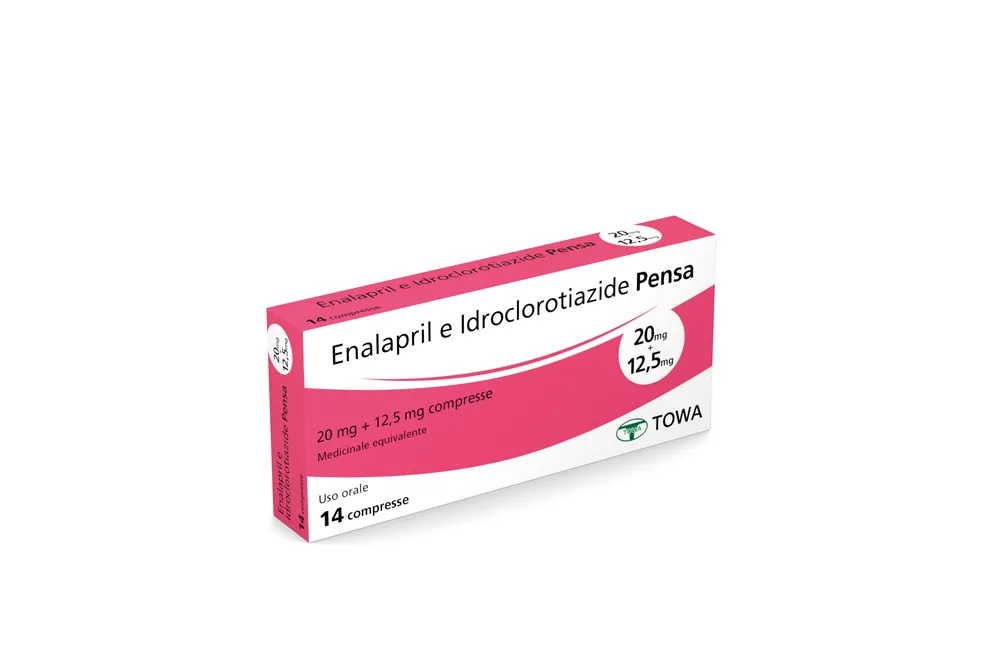
Table of Contents
- Package leaflet: Information for the patient
- ENALAPRIL AND HYDROCHLOROTHIAZIDE PENSA 20 mg + 12.5 mg tablets
- 1. What ENALAPRIL AND HYDROCHLOROTHIAZIDE PENSA is and what it is used for
- 2. What you need to know before taking ENALAPRIL AND HYDROCHLOROTHIAZIDE PENSA
- 3. How to take ENALAPRIL E IDROCLOROTIAZIDE PENSA
- 4. Possible side effects
- 5. How to store ENALAPRIL AND HYDROCHLOROTHIAZIDE PENSA
- 6. Package contents and other information
Package leaflet: Information for the patient
ENALAPRIL AND HYDROCHLOROTHIAZIDE PENSA 20 mg + 12.5 mg tablets
Enalapril maleate and hydrochlorothiazide
Equivalent medicine
Please read this leaflet carefully before taking this medicine because it contains important information for you.
- Keep this leaflet. You may need to read it again.
- If you have any questions, ask your doctor or pharmacist.
- This medicine has been prescribed for you only. Do not give it to other people, even if they have the same symptoms as you, because it may be harmful.
- If you experience any side effects, including those not listed in this leaflet, tell your doctor or pharmacist. See section 4.
Contents of this leaflet:
- What ENALAPRIL AND HYDROCHLOROTHIAZIDE PENSA is and what it is used for
- What you need to know before taking ENALAPRIL AND HYDROCHLOROTHIAZIDE PENSA
- How to take ENALAPRIL AND HYDROCHLOROTHIAZIDE PENSA
- Possible side effects
- How to store ENALAPRIL AND HYDROCHLOROTHIAZIDE PENSA
- Contents of the pack and other information
1. What ENALAPRIL AND HYDROCHLOROTHIAZIDE PENSA is and what it is used for
ENALAPRIL AND HYDROCHLOROTHIAZIDE PENSA contains two active substances: enalapril and hydrochlorothiazide.
Enalapril belongs to a group of medicines known as angiotensin-converting enzyme inhibitors (ACE inhibitors). ACE inhibitors work by causing blood vessels to relax, thereby making it easier for blood to flow through them. ACE inhibitors are used to treat high blood pressure (hypertension).
Hydrochlorothiazide belongs to a group of medicines called thiazide diuretics. It works by stimulating the kidneys to produce more urine (diuretic effect), resulting in a reduction of blood pressure (antihypertensive effect).
ENALAPRIL AND HYDROCHLOROTHIAZIDE PENSA is indicated for the treatment of high blood pressure (hypertension) and is prescribed for patients whose blood pressure is not adequately controlled with enalapril maleate or hydrochlorothiazide given alone.
2. What you need to know before taking ENALAPRIL AND HYDROCHLOROTHIAZIDE PENSA
Do not take ENALAPRIL AND HYDROCHLOROTHIAZIDE PENSA
- if you are allergic to the active substances (enalapril maleate and hydrochlorothiazide) or to other medicines derived from sulfonamides (a substance related to hydrochlorothiazide), or to any of the other ingredients of this medicine (listed in section 6);
- if you suffer from severe kidney problems (severe renal failure);
- if you suffer from severe liver problems (severe hepatic failure);
- if you are unable to urinate (anuria);
- if you have had an allergic reaction causing swelling of the hands, feet, ankles, or even face, lips, tongue and/or throat, resulting in difficulty swallowing or breathing (angioedema) after taking ACE inhibitors;
- if you have hereditary angioedema (due to a familial predisposition);
- if you have idiopathic angioedema, i.e. angioedema of unknown cause;
- if you are in the second or third trimester of pregnancy (see section “Pregnancy and breastfeeding”);
- if you have diabetes or impaired kidney function and are being treated with a blood pressure-lowering medicine containing aliskiren (see section “Other medicines and ENALAPRIL AND HYDROCHLOROTHIAZIDE PENSA”).
Warnings and precautions
Talk to your doctor or pharmacist before taking ENALAPRIL AND HYDROCHLOROTHIAZIDE PENSA.
In particular, talk to your doctor or pharmacist before taking ENALAPRIL AND HYDROCHLOROTHIAZIDE PENSA:
-
if you are taking medicines that increase urine production (diuretics), are on a low-salt (low-sodium) diet, or have recently experienced diarrhoea or vomiting. In these cases, you are at risk of excessive drop in blood pressure (hypotension), which may manifest as weakness or dizziness. Your doctor will prescribe regular monitoring of electrolyte levels in your blood.
-
if you have disorders affecting blood flow to the heart (ischaemic heart disease) or brain (ischaemic cerebrovascular disease), or other heart problems, with or without kidney problems. In such cases, excessive lowering of blood pressure may be particularly dangerous.
-
if you experience symptoms of hypotension during treatment with ENALAPRIL AND HYDROCHLOROTHIAZIDE PENSA, lie down and contact your doctor immediately;
-
if you are taking any of the following medicines used to treat high blood pressure:
-
an “angiotensin II receptor antagonist” (AIIRA) (also known as sartans—e.g. valsartan, telmisartan, irbesartan), particularly if you have kidney problems related to diabetes;
-
aliskiren. Your doctor may monitor your kidney function, blood pressure, and blood electrolyte levels (e.g. potassium) at regular intervals. See also section “Do not take ENALAPRIL AND HYDROCHLOROTHIAZIDE PENSA”;
-
if you are at risk of increased potassium levels in the blood (hyperkalaemia) due to:
-
kidney failure, worsening kidney function, age over 70 years, diabetes, dehydration, acute heart failure (where the heart does not adequately pump blood throughout the body), increased blood acidity (metabolic acidosis);
-
concomitant use of medicines that promote urine elimination while preserving potassium (potassium-sparing diuretics, e.g. spironolactone, eplerenone, triamterene or amiloride), potassium supplements or potassium-containing salt substitutes, or if you are taking other medicines that may affect blood potassium levels (e.g. heparin [a medicine used to prevent blood clots], products containing trimethoprim such as co-trimoxazole [medicines used to treat infections]) (see section “Other medicines and ENALAPRIL AND HYDROCHLOROTHIAZIDE PENSA”). In such cases, your doctor will frequently monitor your blood potassium levels;
-
if you suffer from narrowing (stenosis) of the aortic valve or have thickening of the heart walls (hypertrophic cardiomyopathy);
-
if you suffer from severe heart problems (severe heart failure);
-
if you have kidney problems, such as narrowing (stenosis) of one or both renal arteries, as there is an increased risk of hypotension and kidney failure. In such cases, your doctor will closely monitor your kidney function;
-
if you have recently undergone a kidney transplant. In this case, use of this medicine is not recommended;
-
if you are undergoing dialysis (blood purification therapy) due to kidney failure. In this case, your doctor will consider an alternative treatment (see section “Do not take ENALAPRIL AND HYDROCHLOROTHIAZIDE PENSA”);
-
if you have liver problems or suffer from a disease that could lead to destruction of liver cells (progressive hepatopathy) (see sections “Do not take ENALAPRIL AND HYDROCHLOROTHIAZIDE PENSA” and “Stop taking ENALAPRIL AND HYDROCHLOROTHIAZIDE PENSA and inform your doctor if”);
-
if you have chronic and degenerative liver disease (hepatic cirrhosis), marked urine production, inadequate oral intake of electrolytes, or are being treated with corticosteroids or adrenocorticotropic hormone (hormonal medicines). In such cases, the risk of low blood potassium levels (hypokalaemia) is highest;
-
if you suffer from a connective tissue disease affecting blood vessels, are taking medicines that suppress the immune system (immunosuppressants), have gout or are taking allopurinol (used to treat gout) or procainamide (used to treat heart rhythm abnormalities), or have a combination of these risk factors, especially if you also have kidney problems. In such cases, severe infections may occur that may not respond to antibiotic therapy. If you need to take ENALAPRIL AND HYDROCHLOROTHIAZIDE PENSA under these conditions, your doctor will prescribe specific blood tests. Inform your doctor of any signs or symptoms of infection;
-
if you have diabetes and are taking oral antidiabetic medicines or insulin. In this case, your doctor will advise regular blood tests to monitor glucose levels, especially during the first month of treatment with ENALAPRIL AND HYDROCHLOROTHIAZIDE PENSA, and may adjust the dose of your antidiabetic medicines;
-
if you are taking lithium (a medicine used to treat mood disorders) (see section “Other medicines and ENALAPRIL AND HYDROCHLOROTHIAZIDE PENSA”);
-
if you are of Black race. ENALAPRIL AND HYDROCHLOROTHIAZIDE PENSA may be less effective in lowering blood pressure in Black patients compared to non-Black patients. In addition, you may have a higher risk of developing angioedema;
-
if you have developed a persistent dry cough for a prolonged period after starting treatment with an ACE inhibitor;
-
if you have a history of allergies or bronchial asthma, as hypersensitivity reactions may occur with use of ENALAPRIL AND HYDROCHLOROTHIAZIDE PENSA;
-
if you suffer from a condition called systemic lupus erythematosus (an autoimmune disease), which may develop or worsen with use of ENALAPRIL AND HYDROCHLOROTHIAZIDE PENSA;
-
if you have previously had skin cancer or are developing an unexpected skin lesion during treatment. Treatment with hydrochlorothiazide, particularly long-term use at high doses, may increase the risk of certain types of non-melanoma skin and lip cancer. Protect your skin from sun and UV exposure while taking ENALAPRIL AND HYDROCHLOROTHIAZIDE PENSA;
-
if you experience vision loss or eye pain. These could be symptoms of fluid accumulation in the vascular layer of the eye (choroidal effusion) or increased intraocular pressure, which may occur within hours or weeks after taking ENALAPRIL AND HYDROCHLOROTHIAZIDE PENSA;
-
if you have had respiratory or lung problems (including inflammation or fluid in the lungs) after taking hydrochlorothiazide in the past. If you develop shortness of breath or severe breathing difficulty after taking ENALAPRIL AND HYDROCHLOROTHIAZIDE PENSA, consult a doctor immediately.
Stop taking ENALAPRIL AND HYDROCHLOROTHIAZIDE PENSA and inform your doctor immediately if you experience:
- swelling of the hands, feet, ankles, or face, lips, tongue and/or throat, causing difficulty breathing or swallowing (angioedema);
- yellowing of the skin or whites of the eyes (jaundice), indicating liver problems or increased levels of transaminases (liver enzymes) in the blood;
- increased levels of nitrogen and creatinine in the blood, which may suggest possible renal artery stenosis;
- increased calcium levels in the blood (hypercalcaemia).
If you are about to undergo any of the following procedures, inform your doctor that you are taking ENALAPRIL AND HYDROCHLOROTHIAZIDE PENSA:
- any surgical procedure or anaesthesia;
- a treatment called LDL (low-density lipoprotein) apheresis using dextran sulfate to remove cholesterol from the blood via machines. Your doctor may temporarily stop treatment with ENALAPRIL AND HYDROCHLOROTHIAZIDE PENSA to prevent a possible allergic reaction;
- a treatment to reduce the effects of an allergy, such as after an insect sting (desensitisation therapy). If you take ENALAPRIL AND HYDROCHLOROTHIAZIDE PENSA during this treatment, you may develop a severe allergic reaction; therefore, temporary interruption of therapy is advisable;
- tests to assess parathyroid gland function (parathyroid function). Consult your doctor, who will advise you to stop taking ENALAPRIL AND HYDROCHLOROTHIAZIDE PENSA before undergoing this test.
During treatment with ENALAPRIL AND HYDROCHLOROTHIAZIDE PENSA, electrolyte imbalance may occur, manifesting with signs and symptoms such as:
- dry mouth, thirst, weakness, pathological state of deep sleep (lethargy), drowsiness, restlessness, muscle pain or cramps, muscle fatigue, low blood pressure, reduced urine output, increased heart rate (tachycardia), and gastrointestinal disturbances such as nausea and vomiting. In such cases, inform your doctor promptly. This medicine must be used under regular medical supervision. Therefore, strictly follow all laboratory tests and check-ups as prescribed by your doctor.
Children and adolescents
The use of ENALAPRIL AND HYDROCHLOROTHIAZIDE PENSA is not recommended in children due to lack of safety and efficacy data.
Other medicines and ENALAPRIL AND HYDROCHLOROTHIAZIDE PENSA
Inform your doctor or pharmacist if you are taking, have recently taken, or might take any other medicine.
In particular, consult your doctor or pharmacist if you are taking:
- an angiotensin II receptor antagonist (AIIRA) or aliskiren (see also sections “Do not take ENALAPRIL AND HYDROCHLOROTHIAZIDE PENSA” and “Warnings and precautions”). Your doctor may need to adjust the dose and/or take other precautions;
- other medicines that lower blood pressure (antihypertensives), including vasodilators, nitroglycerin and other nitrates, as they may cause excessive reduction in blood pressure;
- lithium, used to treat certain mood disorders, as it may lead to excessive increase in blood lithium concentration and lithium toxicity;
- medicines that promote diuresis (diuretics), such as thiazides or loop diuretics, as they may cause a reduction in blood pressure;
- medicines that promote urine elimination while preserving potassium (potassium-sparing diuretics, e.g. spironolactone, triamterene or amiloride), potassium supplements or potassium-containing salt substitutes, or medicines that may increase blood potassium levels (e.g. heparin [a medicine used to prevent blood clots], products containing trimethoprim such as co-trimoxazole [medicines used to treat infections]) (see section “Warnings and precautions”);
- anaesthetics, antipsychotics and tricyclic antidepressants (used to treat certain mental disorders), as they may cause further reduction in blood pressure;
- medicines acting on the autonomic nervous system (sympathomimetics), such as ephedrine, pseudoephedrine, salbutamol, found in some nasal decongestants, cough and cold remedies, asthma treatments, treatments for low blood pressure, and cardiac conditions. These medicines may reduce the antihypertensive effects of ENALAPRIL AND HYDROCHLOROTHIAZIDE PENSA;
- insulin or other oral antidiabetic medicines. Blood glucose levels should be carefully monitored, especially during the first weeks of treatment with ENALAPRIL AND HYDROCHLOROTHIAZIDE PENSA and in patients with kidney problems;
- medicines used to treat stiffness and inflammation associated with painful conditions, particularly those affecting muscles, bones and joints, including:
- gold-containing medicines administered by injection, e.g. sodium aurothiomalate, as they may cause facial flushing, nausea, vomiting and low blood pressure;
- non-steroidal anti-inflammatory drugs (NSAIDs), including selective COX-2 inhibitors, as they may reduce the effectiveness of ENALAPRIL AND HYDROCHLOROTHIAZIDE PENSA, increase blood potassium levels and worsen kidney function;
- tubocurarine, used to relax muscles during surgery (muscle relaxant), as ENALAPRIL AND HYDROCHLOROTHIAZIDE PENSA may enhance its effects;
- carbenoxolone (a medicine used to treat stomach problems such as ulcers), kaliuretic diuretics (e.g. furosemide), or excessive use of laxatives. Use of ENALAPRIL AND HYDROCHLOROTHIAZIDE PENSA with these medicines may further reduce blood potassium and/or magnesium levels;
- barbiturates, which have a sedative effect on the central nervous system, used, for example, to treat epilepsy, or opioid analgesics used to relieve pain. These medicines may worsen dizziness upon standing due to low blood pressure (orthostatic hypotension);
- medicines used to reduce blood fat levels, such as cholestyramine or colestipol resins, as they may reduce the absorption of ENALAPRIL AND HYDROCHLOROTHIAZIDE PENSA;
- medicines used to treat irregular heartbeat (antiarrhythmics such as quinidine, procainamide, amiodarone, sotalol), as they may cause heart rhythm problems (torsades de pointes);
- medicines used to treat heart failure (digitalis);
- corticosteroids (which modulate anti-inflammatory responses) and adrenocorticotropic hormone (ACTH) (used to assess adrenal gland function), as they may reduce blood salt levels, particularly potassium (hypokalaemia);
- pressor amines (e.g. noradrenaline), as ENALAPRIL AND HYDROCHLOROTHIAZIDE PENSA may reduce their effects;
- cancer treatments such as cyclophosphamide and methotrexate, as ENALAPRIL AND HYDROCHLOROTHIAZIDE PENSA may increase their toxicity;
- medicines used to treat gout, such as allopurinol (see section “Warnings and precautions”);
- immunosuppressive medicines;
- mTOR inhibitors (e.g. temsirolimus, sirolimus, everolimus), as concomitant administration may increase the risk of an allergic reaction called angioedema (see section “Stop taking ENALAPRIL AND HYDROCHLOROTHIAZIDE PENSA and inform your doctor if”).
ENALAPRIL AND HYDROCHLOROTHIAZIDE PENSA and alcohol
ENALAPRIL AND HYDROCHLOROTHIAZIDE PENSA should not be taken with alcohol, as it may cause excessive lowering of blood pressure.
Pregnancy and breastfeeding
If you are pregnant, suspect you may be pregnant, planning a pregnancy, or breastfeeding, consult your doctor or pharmacist before taking this medicine.
Pregnancy
ENALAPRIL AND HYDROCHLOROTHIAZIDE PENSA is not recommended during pregnancy and must not be taken if you are more than three months pregnant, as it may cause serious harm to the unborn child if taken after the third month of pregnancy (see section “Do not take ENALAPRIL AND HYDROCHLOROTHIAZIDE PENSA”).
Inform your doctor if you think you may be pregnant (or are planning a pregnancy). Your doctor will advise you to stop treatment immediately and, if appropriate, recommend an alternative medicine.
Breastfeeding
Inform your doctor if you are breastfeeding or planning to breastfeed. ENALAPRIL AND HYDROCHLOROTHIAZIDE PENSA is not recommended for women who are breastfeeding, particularly if your baby was born prematurely or during the first few weeks after delivery.
Driving and using machines
ENALAPRIL AND HYDROCHLOROTHIAZIDE PENSA may occasionally cause adverse effects that could affect your ability to drive or operate machinery, such as dizziness and fatigue. Therefore, exercise caution when driving or using machinery.
ENALAPRIL AND HYDROCHLOROTHIAZIDE PENSA contains lactose monohydrate
If your doctor has diagnosed you with an intolerance to certain sugars, contact him before taking this medicine.
This medicine contains less than 1 mmol (23 mg) of sodium per tablet, i.e. it is essentially ‘sodium-free’.
For those engaged in sports
Using this medicine without therapeutic need constitutes doping and may lead to a positive anti-doping test.
3. How to take ENALAPRIL E IDROCLOROTIAZIDE PENSA
Take this medicine exactly as directed by your doctor or pharmacist. If you have any doubts, consult your doctor or pharmacist.
The recommended starting dose is half a tablet daily.
The recommended dose for the treatment of high blood pressure is 1 tablet once daily. If your doctor considers it necessary, the dose may be increased to 2 tablets once daily.
This fixed-dose combination is generally not suitable for initiating therapy.
Prior diuretic therapy
If you are already taking another medicine that promotes diuresis, the use of enalapril contained in ENALAPRIL E IDROCLOROTIAZIDE PENSA may lead to an excessive reduction in blood pressure. In such cases, if your doctor still considers it necessary to use ENALAPRIL E IDROCLOROTIAZIDE PENSA, they will instruct you to discontinue the diuretic for a few days before starting ENALAPRIL E IDROCLOROTIAZIDE PENSA. If this is not possible, your doctor will decide to start treatment with lower doses of enalapril, i.e. with separate tablets containing the same active substances as ENALAPRIL E IDROCLOROTIAZIDE PENSA (enalapril and hydrochlorothiazide). ENALAPRIL E IDROCLOROTIAZIDE PENSA may be used later, once your doctor has determined that you need to take the dose of enalapril and hydrochlorothiazide contained in one tablet of ENALAPRIL E IDROCLOROTIAZIDE PENSA.
Patients with kidney problems (renal impairment)
Do not use ENALAPRIL E IDROCLOROTIAZIDE PENSA if you have severe kidney problems (see section "Do not take ENALAPRIL E IDROCLOROTIAZIDE PENSA").
If you have kidney problems, your doctor will monitor your kidney function and determine the appropriate dose of ENALAPRIL E IDROCLOROTIAZIDE PENSA.
Use in children and adolescents
The use of ENALAPRIL E IDROCLOROTIAZIDE PENSA is not recommended in children.
Use in the elderly
Dosage adjustment is not required in elderly patients.
If you take more ENALAPRIL E IDROCLOROTIAZIDE PENSA than you should
If you ingest or take an excessive amount of this medicine, contact your doctor or the nearest hospital immediately.
Symptoms of overdose may include:
a sensation of emptiness in the head or dizziness due to excessive lowering of blood pressure, severe circulatory problems (circulatory shock), renal failure, hyperventilation, increased heart rate (tachycardia), palpitations, decreased heart rate (bradycardia), anxiety, cough, electrolyte disturbances such as low levels of potassium (hypokalaemia), chloride (hypochloraemia), and sodium (hyponatraemia) in the blood, dehydration due to excessive diuresis.
If you forget to take ENALAPRIL E IDROCLOROTIAZIDE PENSA
Do not take a double dose to make up for the missed dose. If you have any doubts about how to use this medicine, consult your doctor or pharmacist.
If you stop taking ENALAPRIL E IDROCLOROTIAZIDE PENSA
Do not stop treatment with ENALAPRIL E IDROCLOROTIAZIDE PENSA unless instructed by your doctor.
If you have any doubts about how to use this medicine, consult your doctor.
4. Possible side effects
Like all medicines, this medicine can cause side effects, although not everyone gets them.
Stop taking ENALAPRIL E IDROCLOROTIAZIDE PENSA and contact your doctor immediately if you develop symptoms of angioedema during treatment, such as:
- allergic reaction associated with swelling of the hands, feet, ankles, or face, lips, tongue and/or throat, leading to difficulty swallowing or breathing (angioedema).
The side effects observed with ENALAPRIL E IDROCLOROTIAZIDE PENSA are:
Very common (may affect more than 1 in 10 people)
- blurred vision;
- dizziness;
- loss of strength (asthenia);
- cough;
- nausea.
Common (may affect up to 1 in 10 people)
- headache (cephalalgia), depression, temporary loss of consciousness (syncope), altered taste;
- low blood pressure (hypotension), decrease in blood pressure upon sudden change from sitting or lying down to standing (orthostatic hypotension), heart rhythm disturbances, chest pain with a feeling of tightness and pressure (angina pectoris), increased heart rate (tachycardia);
- breathing difficulty (dyspnea);
- diarrhoea, abdominal pain;
- skin rash (exanthema);
- involuntary muscle contractions (muscle cramps);
- chest pain, fatigue;
- low potassium levels in the blood (hypokalaemia) or high potassium levels in the blood (hyperkalaemia), increased cholesterol and triglyceride levels, increased uric acid levels (hyperuricaemia), increased creatinine levels in the blood.
Uncommon (may affect up to 1 in 100 people)
- decreased number of red blood cells (anaemia, including aplastic and haemolytic anaemia);
- low blood sugar levels (hypoglycaemia), low magnesium levels in the blood (hypomagnesaemia), joint pain and swelling (gout);
- confusion, drowsiness, insomnia, nervousness, tingling sensation in limbs or other body parts (paraesthesia), sensation of dizziness (vertigo), unpleasant perception of ringing or buzzing in the ears (tinnitus);
- facial redness or sensation of warmth (flushing), awareness of irregular or forceful heartbeat (palpitations), heart attack (myocardial infarction) or stroke (cerebrovascular accident), possibly secondary to a sharp drop in blood pressure in high-risk patients (see section “Warnings and precautions”);
- runny nose (rhinorrhoea), throat burning (laryngodynia) and hoarseness, sensation of chest tightness causing difficult and noisy breathing (bronchospasm/asthma);
- reduced intestinal movement (ileus), inflammation of the pancreas (pancreatitis), vomiting, difficulty in digestion (dyspepsia), constipation (stipsis), loss of appetite (anorexia), stomach irritation, dry mouth, stomach lesions (peptic ulcer), increased intestinal gas production (flatulence);
- increased sweating (diaphoresis), itching, urticaria, hair loss (alopecia);
- joint pain (arthralgia);
- impaired kidney function, kidney failure, presence of protein in urine (proteinuria);
- reduced sexual desire, impotence;
- malaise, fever;
- increased blood urea levels (uraemia), low sodium concentration in blood (hyponatraemia).
Rare (may affect up to 1 in 1,000 people)
- decreased number of certain white blood cells (neutropenia, leucopenia and agranulocytosis), decreased haemoglobin levels, reduced total volume of red blood cells (low haematocrit), decreased platelets (thrombocytopenia), or reduced levels of all types of blood cells (pancytopenia), bone marrow depression (when bone marrow fails to produce sufficient blood cells), swollen lymph nodes (lymphadenopathy), immune system disorders (autoimmune diseases);
- abnormal dreams, sleep disturbances, partial reduction in mobility (paresis due to hypokalaemia);
- reduced blood flow to fingers of hands and feet causing redness and pain (Raynaud's phenomenon);
- lung problems including pulmonary infiltrates, severe respiratory failure (respiratory distress syndrome), lung inflammation (pneumonitis) and fluid accumulation in the lungs (pulmonary oedema), allergic (hypersensitivity) reaction in the lungs (allergic alveolitis), lung disease (eosinophilic pneumonia);
- irritation or inflammation of the nose (rhinitis);
- inflammation of the mouth lining (stomatitis) with ulceration or aphthae, inflammation of the tongue (glossitis);
- liver problems such as liver failure, liver damage (hepatic necrosis, potentially fatal), inflammation of the liver or bile ducts (hepatitis, hepatocellular or cholestatic), yellowing of the skin and whites of the eyes (jaundice), inflammation of the gallbladder (cholecystitis, particularly in patients with pre-existing gallstones);
- severe skin diseases with blistering, redness and peeling, including erythema multiforme, Stevens-Johnson syndrome, exfoliative dermatitis, toxic epidermal necrolysis, purpura, cutaneous lupus erythematosus (an autoimmune disease causing skin inflammation), pemphigus and erythroderma (skin redness).
- reduced urine output (oliguria), kidney disease (interstitial nephritis);
- breast enlargement in men (gynaecomastia);
- increased liver enzymes, increased bilirubin levels in blood (bilirubinaemia).
Very rare (may affect up to 1 in 10,000 people)
- swelling of the intestinal mucosa (intestinal angioedema);
- increased calcium levels in the blood (hypercalcaemia);
- acute respiratory distress (signs include severe shortness of breath, fever, weakness and confusion).
Not known (frequency cannot be estimated from the available data)
- syndrome of inappropriate antidiuretic hormone secretion (SIADH);
- sudden onset of nearsightedness (acute myopia), decreased vision or eye pain due to increased pressure (possible signs of fluid accumulation in the vascular layer of the eye (choroidal effusion) or acute angle-closure glaucoma);
- skin and lip cancer (non-melanoma skin cancer).
Other side effects
A complex disorder, with unknown frequency, including one or more of the following symptoms, has been reported:
- fever, serositis (inflammation of the membranes lining body cavities such as chest and abdomen), vasculitis (inflammation of blood vessels), muscle pain or muscle inflammation (myalgia/myositis), joint pain or joint inflammation (arthralgia/arthritis), positive test for antinuclear antibodies, increased erythrocyte sedimentation rate (ESR), increased number of white blood cells (eosinophilia, leucocytosis), skin rash, skin sensitivity to light (photosensitivity), and other skin problems.
Reporting of side effects
If you experience any side effect, including those not listed in this leaflet, talk to your doctor or pharmacist. You can also report side effects directly via the national reporting system at https://www.aifa.gov.it/content/segnalazioni-reazioni-avverse.
By reporting side effects, you can help provide more information on the safety of this medicine.
5. How to store ENALAPRIL AND HYDROCHLOROTHIAZIDE PENSA
Keep this medicine out of the sight and reach of children.
Do not use this medicine after the expiry date stated on the label after “Exp.”. The expiry date refers to the last day of that month.
This medicine does not require any special storage conditions.
Do not dispose of medicines via wastewater or household waste. Ask your pharmacist how to dispose of medicines you no longer use. This will help protect the environment.
6. Package contents and other information
What ENALAPRIL AND HYDROCHLOROTHIAZIDE PENSA contains
- The active substances are: enalapril maleate and hydrochlorothiazide. Each tablet contains 20 mg of enalapril maleate and 12.5 mg of hydrochlorothiazide.
- The other components are: sodium bicarbonate, monohydrate lactose, yellow iron oxide, maize starch, pregelatinized starch, magnesium stearate.
Description of the appearance of ENALAPRIL AND HYDROCHLOROTHIAZIDE PENSA and contents of the
pack
Pack of 14 tablets in aluminum blisters.
Pack of 28 tablets in aluminum blisters.
Marketing Authorization Holder
Towa Pharmaceutical S.p.A.
Via Enrico Tazzoli, 6
20154 Milan – Italy
Manufacturer
Special Product’s Line S.p.A.
Via Fratta Rotonda Vado Largo, 1
03012 Anagni (FR)