Enalapril and hydrochlorothiazide Mylan
Italy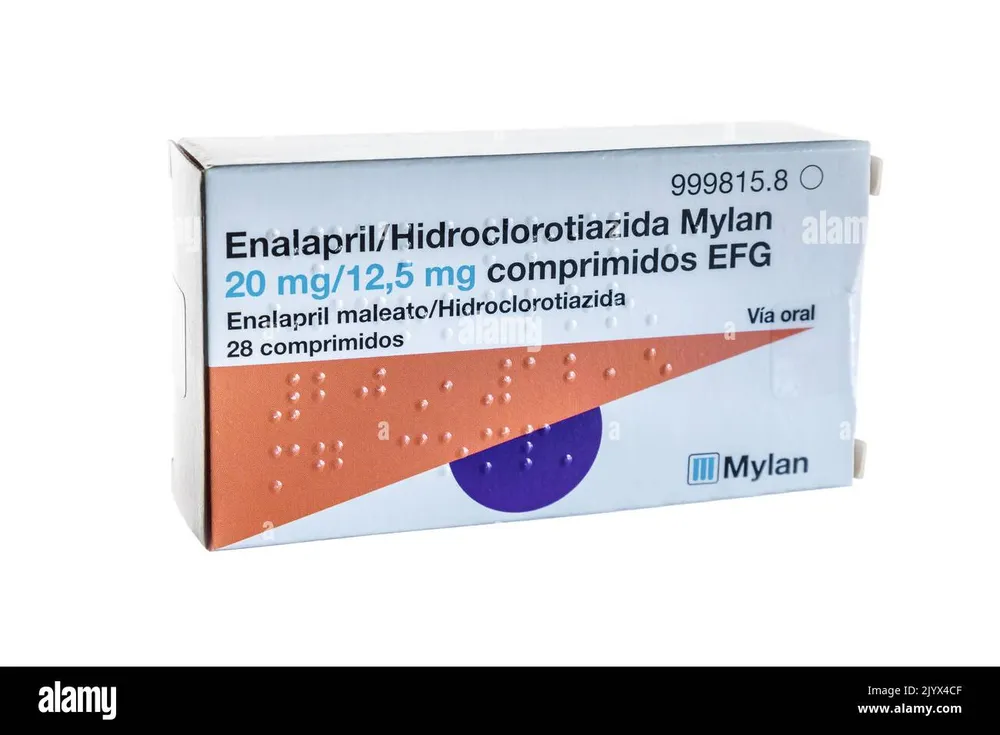
Table of Contents
- PACKAGE LEAFLET: INFORMATION FOR THE PATIENT
- Enalapril and Hydrochlorothiazide Mylan 20 mg/12.5 mg tablets
- 1. What Enalapril and Hydrochlorothiazide Mylan is and what it is used for
- 2. What you need to know before taking Enalapril and Hydrochlorothiazide Mylan
- 3. How to take Enalapril and Hydrochlorothiazide Mylan
- 4. Possible side effects
- 5. How to store Enalapril and Hydrochlorothiazide Mylan
- 6. Pack contents and other information
PACKAGE LEAFLET: INFORMATION FOR THE PATIENT
Enalapril and Hydrochlorothiazide Mylan 20 mg/12.5 mg tablets
Enalapril maleate/Hydrochlorothiazide
Generic Medicine
Please read this leaflet carefully before taking this medicine, as it contains
important information for you.
- Keep this leaflet. You may need to read it again.
- If you have any questions, ask your doctor or pharmacist.
- This medicine has been prescribed for you only. Do not give it to others, even if their symptoms are the same as yours, as it may be harmful.
- If you experience any side effect, including those not listed in this leaflet, please contact your doctor or pharmacist. See section 4.
Contents of this leaflet:
- What Enalapril and Hydrochlorothiazide Mylan is and what it is used for
- What you need to know before taking Enalapril and Hydrochlorothiazide Mylan
- How to take Enalapril and Hydrochlorothiazide Mylan
- Possible side effects
- How to store Enalapril and Hydrochlorothiazide Mylan
- Contents of the pack and other information
1. What Enalapril and Hydrochlorothiazide Mylan is and what it is used for
Enalapril and Hydrochlorothiazide Mylan is a combination of enalapril maleate and hydrochlorothiazide.
- Enalapril belongs to a group of medicines called angiotensin-converting enzyme (ACE) inhibitors, which lower blood pressure by dilating blood vessels.
- Hydrochlorothiazide belongs to a group of medicines called diuretics ("water tablets"), which reduce blood pressure by increasing the amount of urine produced.
Enalapril and Hydrochlorothiazide Mylan is used when treatment with enalapril alone has proven insufficient.
Your doctor may also prescribe Enalapril and Hydrochlorothiazide Mylan instead of separate tablets containing the same doses of enalapril and hydrochlorothiazide.
This fixed-dose combination is not suitable for initial therapy.
2. What you need to know before taking Enalapril and Hydrochlorothiazide Mylan
Do not take Enalapril and Hydrochlorothiazide Mylan
- if you are allergic to enalapril, hydrochlorothiazide, or any of the other ingredients of this medicine (listed in section 6)
- if you have severe kidney problems
- if you are unable to urinate
- if you have previously experienced swelling of the extremities, face, lips, throat, mouth, or tongue (angioedema) during treatment with other ACE inhibitors, such as ramipril, or under any other circumstances
- if anyone in your family has previously experienced swelling of the extremities, face, lips, throat, mouth, or tongue (angioedemа)
- if you are allergic to medicines called "sulfonamides"
- if you are more than three months pregnant (It is also advisable to avoid taking Enalapril and Hydrochlorothiazide Mylan in early pregnancy - see section Pregnancy)
- if you have severe liver problems
- if you have diabetes or impaired kidney function and are being treated with a blood pressure-lowering medicine containing aliskiren.
Do not take Enalapril and Hydrochlorothiazide Mylan if any of these conditions apply to you. If you are unsure, consult your doctor or pharmacist before taking Enalapril and Hydrochlorothiazide Mylan.
Warnings and precautions
Talk to your doctor or pharmacist before taking Enalapril and Hydrochlorothiazide Mylan:
- if you have kidney problems, such as "renal artery stenosis" (reduced blood flow to the kidney), have recently had a kidney transplant, are on dialysis, or are taking tablets that promote diuresis (diuretics)
- if you have blood disorders or liver problems
- if you have low blood pressure, are on a low-salt diet, or have recently experienced severe vomiting or diarrhoea
- if you have a heart condition called "ischaemic heart disease" which reduces blood flow to the heart muscle
- if you have a heart condition called "aortic stenosis", "hypertrophic cardiomyopathy", or "outflow obstruction"
- if you have a disease affecting blood flow to the brain (cerebrovascular disease)
- if you have heart failure
- if you have a vascular collagen disease such as systemic lupus erythematosus (SLE) or scleroderma, which may be associated with skin rashes, joint pain, and fever
- if you are undergoing immunosuppressive therapy (used in the treatment of autoimmune diseases such as rheumatoid arthritis or following organ transplants)
- if you are taking any of the following medicines, the risk of angioedema (rapid subcutaneous swelling, for example in the throat) is increased:
- sirolimus, everolimus, and other medicines belonging to the class of mTOR inhibitors (used to prevent rejection of transplanted organs)
- if you suffer from gout or are taking allopurinol (used in the treatment of gout), or procainamide (used to treat heart rhythm abnormalities)
- if you have ever had "angioedema" while taking other medicines. Signs may have included itching, hives, shortness of breath, or swelling of the hands, throat, mouth, or eyelids (see section 4)
- if you have diabetes and are taking antidiabetic medicines, including insulin to control diabetes (you should have blood tests to monitor for low blood glucose levels, especially during the first month of treatment)
- if you are taking potassium supplements or potassium-containing salt substitutes
- if you are taking other medicines that may affect potassium levels in the blood, such as heparin (an anticoagulant)
- if you have high levels of potassium in your blood
- if you are taking lithium, used to treat certain psychiatric conditions
- if you have abnormal levels of water and minerals in your body (fluid/electrolyte imbalance)
- if you are undergoing tests to monitor parathyroid function
- if you have allergies or asthma
- if you are taking any of the following medicines used to treat high blood pressure:
- an "angiotensin II receptor antagonist" (AIIRA) (also known as sartans, for example valsartan, telmisartan, irbesartan), particularly if you have kidney problems related to diabetes.
- aliskiren.
- if you have previously had skin cancer or are developing an unexpected skin lesion during treatment. Treatment with hydrochlorothiazide, particularly long-term use at high doses, may increase the risk of certain types of non-melanoma skin and lip cancer. Protect your skin from exposure to sunlight and UV rays while taking Enalapril and Hydrochlorothiazide Mylan.
- if you experience decreased vision or eye pain. These could be symptoms of fluid accumulation in the vascular layer of the eye (choroidal effusion) or increased pressure within the eye and may occur from a few hours to several weeks after taking Enalapril and Hydrochlorothiazide Mylan. This may lead to permanent vision loss if untreated. If you have previously had an allergy to penicillin or sulfonamides, you may be at higher risk of developing this condition.
Your doctor may check your kidney function, blood pressure, and levels of electrolytes (e.g. potassium) in your blood at regular intervals.
See also information under "Do not take Enalapril and Hydrochlorothiazide Mylan".
You must inform your doctor if you think you are (or might become) pregnant. Enalapril and Hydrochlorothiazide Mylan is not recommended in early pregnancy and must not be taken if you are more than three months pregnant, as it may cause serious harm to the baby if taken during this period (see section Pregnancy).
You should be aware that this medicine may be less effective in lowering blood pressure in black patients compared to non-black patients.
If you are about to undergo any of the following procedures, you must inform your doctor that you are
taking Enalapril and Hydrochlorothiazide Mylan
- any surgical procedure or if you need anaesthetics (including in dentistry)
- a treatment called LDL apheresis, to remove cholesterol from the blood using machines
- a desensitisation treatment to reduce the effect of an allergy to bee or wasp stings.
Routine tests
When starting Enalapril and Hydrochlorothiazide Mylan, your doctor will frequently monitor your blood pressure to ensure you are taking the correct dose. In addition, for some patients, your doctor may decide to prescribe blood tests to measure levels of potassium, sodium, magnesium, creatinine, and liver enzymes.
For athletes: using this medicine without therapeutic need constitutes doping and may result in a positive anti-doping test.
Children
Enalapril and Hydrochlorothiazide Mylan is not recommended for children.
Other medicines and Enalapril and Hydrochlorothiazide Mylan
Tell your doctor or pharmacist if you are taking, have recently taken, or might take any other medicines, including over-the-counter medicines, as some medicines may interact with each other. Other medicines may also affect the action of Enalapril and Hydrochlorothiazide Mylan. This is particularly important if you are also taking:
- medicines usually used to prevent rejection of transplanted organs (sirolimus, everolimus, and other medicines belonging to the class of mTOR inhibitors). See section "Warnings and precautions".
- potassium-sparing diuretics (diuretics), such as spironolactone, eplerenone, triamterene, or amiloride, potassium supplements, or potassium-containing salt substitutes. Enalapril and Hydrochlorothiazide Mylan may increase potassium levels in the blood, leading to hyperkalaemia. This causes few symptoms and is usually detected by a blood test.
- diuretics (diuretics - such as thiazides, furosemide, bumetanide), particularly potassium-sparing diuretics, and other medicines that may increase potassium levels in the body (including heparin and co-trimoxazole, also known as trimethoprim/sulfamethoxazole).
- other medicines that lower blood pressure, such as nitroglycerin, nitrates, vasodilators, methyldopa, and angiotensin II receptor antagonists (e.g. candesartan, irbesartan, and losartan)
- lithium, used to treat certain psychiatric conditions. Enalapril and Hydrochlorothiazide Mylan should not be taken with this medicine.
- barbiturates (sedatives used for insomnia or epilepsy)
- tricyclic antidepressants such as amitriptyline, used for depression, and antipsychotics such as phenothiazines, used for severe anxiety
- painkillers such as morphine or anaesthetics, as they may cause excessive lowering of blood pressure
- cholestyramine or colestipol (used to control cholesterol levels)
- medicines used to treat stiffness and inflammation associated with painful conditions, particularly those affecting muscles, bones, and joints, including:
- gold therapy (sodium aurothiomalate), which may cause facial flushing, nausea, vomiting, and low blood pressure when taken with Enalapril and Hydrochlorothiazide Mylan, and
- non-steroidal anti-inflammatory drugs (NSAIDs), e.g. diflunisal or diclofenac. They may prevent good blood pressure control and increase potassium levels in the blood
- medicines such as ephedrine, used in some cough and cold remedies, or noradrenaline and adrenaline used for low blood pressure, shock, heart failure, asthma, or allergies. When used with Enalapril and Hydrochlorothiazide Mylan, these medicines may maintain high blood pressure
- corticotropin (ACTH), used to check whether adrenal glands are functioning properly
- corticosteroids (used to treat certain conditions such as rheumatism, arthritis, allergies, asthma, or certain blood disorders)
- probenecid, sulfinpyrazone, and allopurinol (used for the treatment of gout)
- cyclosporine (an immunosuppressant used for autoimmune conditions)
- cancer treatment medicines such as cyclophosphamide or methotrexate
- antacids (used to treat indigestion)
- procainamide, amiodarone, sotalol, quinidine, hydroquinidine, disopyramide, dofetilide, or ibutilide (used to treat heart rhythm abnormalities)
- digitalis (used to treat heart rhythm problems)
- carbenoxolone (used to treat stomach ulcers)
- excessive use of laxatives
- antidiabetic medicines such as insulin and metformin. Enalapril and Hydrochlorothiazide Mylan may cause a decrease in blood sugar levels when taken with antidiabetics
- painkillers and anti-inflammatory medicines such as acetylsalicylic acid (more than 300 mg/day)
- muscle relaxants, e.g. tubocurarine chloride, used to relax muscles during surgery
- calcium salts and vitamin D
- carbamazepine, used to treat epilepsy and bipolar disorder
- amphotericin B, used to treat fungal infections
- iodinated contrast agents used in X-ray examinations
- medicines such as atropine or biperiden.
Your doctor may consider it necessary to adjust your dose and/or take other precautions:
- if you are taking an angiotensin II receptor antagonist (AIIRA) or aliskiren (see also information in section "Do not take Enalapril and Hydrochlorothiazide Mylan" and "Warnings and precautions").
If you are unsure whether any of these conditions apply to you, discuss them with your doctor or pharmacist before taking Enalapril and Hydrochlorothiazide Mylan.
Enalapril and Hydrochlorothiazide Mylan with alcohol
If you drink alcohol while taking Enalapril and Hydrochlorothiazide Mylan, you may experience excessive drop in blood pressure and may feel dizzy, lightheaded, or faint. It is recommended to minimise alcohol consumption.
Pregnancy and breastfeeding
Pregnancy
Inform your doctor if you suspect (or are planning) pregnancy. Your doctor will usually advise you to stop taking Enalapril and Hydrochlorothiazide Mylan before becoming pregnant or as soon as you know you are pregnant, and will recommend an alternative medicine. Enalapril and Hydrochlorothiazide Mylan is not recommended during pregnancy, and must not be taken after the third month of pregnancy, as it may cause serious harm to the baby if taken after the third month of pregnancy.
Breastfeeding
Inform your doctor if you are breastfeeding or planning to breastfeed. Enalapril and Hydrochlorothiazide Mylan is not recommended for women who are breastfeeding.
Driving and using machines
Some adverse effects such as dizziness and fatigue have been reported with Enalapril and Hydrochlorothiazide Mylan, which may affect the ability of some patients to drive or use machines. If you experience any of these effects, do not drive or operate machinery (see also section 4).
Enalapril and Hydrochlorothiazide Mylan contains lactose
If your doctor has diagnosed you with an intolerance to certain sugars, contact him before taking this medicine.
3. How to take Enalapril and Hydrochlorothiazide Mylan
Take this medicine exactly as directed by your doctor or pharmacist.
If you have any doubts, consult your doctor or pharmacist.
The recommended dose is one tablet once daily.
Elderly
Your doctor will appropriately adjust the dose of enalapril and hydrochlorothiazide.
Renal problems
Your doctor will appropriately adjust the dose of enalapril and hydrochlorothiazide.
Use in children
The use of Enalapril and Hydrochlorothiazide Mylan is not recommended in children.
Method of administration
Enalapril and Hydrochlorothiazide Mylan can be taken with or without food.
The tablets should be swallowed with a glass of water.
The tablets may be divided into equal doses.
If you take more Enalapril and Hydrochlorothiazide Mylan than you should
If you (or someone else) have taken several tablets at once, or if you suspect that a child has
ingested any tablets, contact a doctor immediately. Overdose may cause low blood pressure,
abnormally fast or slow heartbeat, palpitations (sensation of rapid or irregular heartbeat), shock,
labored breathing, cough, feeling unwell, muscle cramps, dizziness, drowsiness and confusion or anxiety,
excessive urination or inability to urinate.
Take this leaflet, any remaining tablets, and their container with you to the hospital or doctor so they
know which tablets have been taken.
If you forget to take Enalapril and Hydrochlorothiazide Mylan
Do not take a double dose to make up for the forgotten tablet; take the next dose at the scheduled time.
If you have any questions about the use of this product, ask your doctor or pharmacist.
If you stop taking Enalapril and Hydrochlorothiazide Mylan
Treatment of high blood pressure is long-term; you must consult your doctor before stopping treatment.
Stopping or interrupting treatment may cause an increase in blood pressure.
If you have any doubts about using this medicine, consult your doctor or pharmacist.
4. Possible side effects
Like all medicines, this medicine can cause side effects, although not everyone gets them.
If you think you are experiencing any of the following side effects, stop taking Enalapril and
Hydrochlorothiazide Mylan and contact your doctor immediately or go to the nearest hospital
emergency department:
Common: may affect up to 1 in 10 people
- a severe allergic reaction with symptoms such as rash, itching, shortness of breath or wheezing, swelling of the hands, face, eyes, lips, tongue, mouth or throat, which may cause difficulty in swallowing (called angioedema). You should know that
Black patients have a higher risk of experiencing this type of reaction with ACE inhibitors.
- pain accompanied by a feeling of tightness, pressure or heaviness in the chest (angina)
- severe dizziness, lightheadedness, especially at the beginning of treatment or when standing up.
Uncommon: may affect up to 1 in 100 people
- inflammation of the pancreas causing severe pain in the abdomen and back (pancreatitis)
- heart attack or stroke (in patients at high risk)
- persistent constipation accompanied by discomfort and bloating, possibly with feelings or general malaise. These may be signs of intestinal blockage.
- burning, sharp stomach pain accompanied by a feeling of emptiness and hunger, particularly on an empty stomach. These may be signs of an ulcer.
- difficulty or pain during urination, presence of blood in the urine or changes in the colour or amount of urine produced. Pain in the lower back, feeling or state of malaise, general feeling of illness. These may be symptoms of serious kidney problems.
- changes in the number of certain blood cells, which may make you feel more tired than usual, weak, short of breath or have pale skin (reduction in red blood cells), increased frequency of infections with fever, chills, sore throat caused by mouth ulcers (reduction in white blood cells), or increased tendency to bleed or bruise more easily or for longer than usual (reduction in platelets).
Rare: may affect up to 1 in 1,000 people
- skin rash causing blisters and resembling small targets – a dark central spot surrounded by a lighter area, with a dark ring around the edge (erythema multiforme)
- formation of blisters on the skin, mouth, eyes and genitals (Stevens-Johnson syndrome)
- skin appears burned with peeling (toxic epidermal necrolysis)
- a disorder causing the formation of blisters and lesions that usually start in the mouth (pemphigus), urticaria, hair loss and itching. Sometimes skin problems may be accompanied by fever, severe inflammation, blood vessel inflammation, muscle and/or joint pain, changes in blood composition and increased erythrocyte sedimentation rate (a blood test used to detect inflammation)
- severe breathing difficulties, even at rest, general feeling of malaise with increased chills, fever, sweating, cough or shortness of breath
- feeling unwell (nausea) or feeling generally unwell (vomiting), loss of appetite, general malaise, fever, itching, yellowing of the skin and whites of the eyes (jaundice), pale stools and dark urine, which may be signs of serious liver problems or hepatitis.
Not known: frequency cannot be estimated from available data
- swollen and painful salivary glands
- low sodium levels in the blood, which may make you feel weak and confused with muscle pain. This may be due to inadequate secretion of antidiuretic hormone (ADH), a hormone that causes the body to retain water and dilute the blood, thereby reducing sodium levels
- cancer of the skin and lips (non-melanoma skin cancer)
- decreased vision or eye pain (possible signs of fluid accumulation in the vascular layer of the eye (choroidal effusion) or acute angle-closure glaucoma.
Other possible side effects
A dry cough, which may persist for a long time, has been reported very commonly (may affect more than 1 in 10 people) with enalapril/hydrochlorothiazide and other ACE inhibitors, but it may also be a symptom of another upper respiratory tract condition. You are advised to contact your doctor if you experience this symptom.
Very common: may affect more than 1 in 10 people
- blurred vision
- dizziness
- feeling unwell (nausea)
- weakness.
Common: may affect up to 1 in 10 people
- headache, depression, fainting
- low blood pressure (which may cause dizziness when standing up)
- chest pain
- changes in heart rhythm, rapid heartbeat
- shortness of breath
- diarrhoea, abdominal pain, changes in taste sensation, feeling of fatigue
- skin rash
- increased blood potassium levels, increased serum creatinine (both usually detected by laboratory tests)
- low blood potassium levels, which may cause muscle weakness, cramps or abnormal heart rhythm, increased cholesterol, triglycerides, or uric acid levels in the blood
- muscle cramps.
Uncommon: may affect up to 1 in 100 people
- a feeling of greater awareness or lightheadedness (caused by low blood sugar levels)
- confusion, drowsiness, sleep disturbances, nervousness, tingling or numbness, dizziness (vertigo)
- hot flushes, increased or irregular heartbeat
- runny nose, sore throat and hoarseness, breathing difficulties or wheezing
- feeling unwell (vomiting), indigestion, constipation, loss of appetite, stomach irritation, dry mouth, flatulence
- excessive sweating, itching, hives (urticaria), hair loss
- kidney problems, protein in the urine (usually detected by blood test)
- impotence, decreased libido
- high temperature, weakness (malaise)
- ringing in the ears
- increased blood urea and reduced blood sodium levels (usually detected by blood test)
- low blood magnesium levels (hypomagnesemia)
- joint pain, illness with painful and swollen joints caused by uric acid crystals (gout).
Rare: may affect up to 1 in 1,000 people
- unusual dreams, sleep disturbances, weakness causing loss of movement
- swollen lymph glands in the neck, armpits or groin
- reduced blood flow to fingers of hands and feet causing redness and pain (Raynaud's phenomenon)
- runny or painful nose
- pain, swelling or ulcers in the mouth, infection or pain and swelling of the tongue
- reduced amount of urine produced
- swollen nasal mucosa
- breathing difficulty and distress
- peeling or shedding of the skin, excessive redness of the skin, blisters, purplish or reddish-brown spots visible through the skin
- breast enlargement in men
- increased liver enzymes or liver waste products (usually detected by blood test)
- increased blood sugar levels or decreased haemoglobin levels in the blood (usually detected by blood test)
- inflammation of the gallbladder.
Very rare: may affect up to 1 in 10,000 people
- swelling in the intestine. Signs may include stomach pain, feeling unwell (nausea) and feeling unwell (vomiting)
- high calcium levels in the blood causing abdominal pain, feeling unwell, constipation, loss of appetite, excessive thirst, excessive urination, fatigue, weakness and weight loss.
Not known: frequency cannot be estimated from available data
- sugar (glucose) in the urine
- feeling of emptiness in the head.
In some patients, a group of side effects occurring simultaneously has been observed. This group includes fever, problems caused by inflammation or changes in blood cells (some of which may require urgent medical attention – see the beginning of this section), joint pain or inflammation, and skin problems, which may include unusual sensitivity to sunlight.
Reporting of side effects
If you experience any side effect, including those not listed in this leaflet, talk to your doctor or pharmacist. You can also report side effects directly via the national reporting system at www.aifa.gov.it/content/segnalazioni-reazioni-avverse. By reporting side effects, you can help provide more information on the safety of this medicine.
5. How to store Enalapril and Hydrochlorothiazide Mylan
Keep this medicine out of the sight and reach of children.
Do not use this medicine after the expiry date which is stated on the carton, bottle, and blister after EXP. The expiry date refers to the last day of that month.
This medicine does not require any special storage temperature. Store in the original packaging.
Do not dispose of any medicine via wastewater or household waste. Ask your pharmacist how to dispose of medicines you no longer use. This will help protect the environment.
6. Pack contents and other information
What Enalapril and Hydrochlorothiazide Mylan contains
- The active substances are enalapril maleate and hydrochlorothiazide. Each tablet contains 20 mg of enalapril maleate and 12.5 mg of hydrochlorothiazide.
- The other components are microcrystalline cellulose, pregelatinized starch, lactose, anhydrous colloidal silicon dioxide, magnesium stearate, sodium lauryl sulfate, malic acid, yellow iron oxide (E172).
Description of the appearance of Enalapril and Hydrochlorothiazide Mylan and pack contents
Enalapril and Hydrochlorothiazide Mylan 20 mg/12.5 mg tablets are yellow, capsule-shaped, biconvex tablets, with "E" marked on one side of the score line and "H" on the other side on one face of the tablet, and "M" on the opposite face.
Enalapril and Hydrochlorothiazide Mylan 20 mg/12.5 mg tablets are available in blister packs containing 10, 14, 20, 28, 30, 60, 90 and 100 tablets, calendar packs containing 28 tablets, and single-dose perforated blisters containing 30 x 1 tablets.
Enalapril and Hydrochlorothiazide Mylan 20 mg/12.5 mg tablets are also available in bottles of 500 tablets. The bottle contains a desiccant container.
Not all pack sizes may be marketed.
Marketing Authorization Holder and Manufacturer
Mylan S.p.A., Via Vittor Pisani 20, 20124 Milan, Italy
Manufacturers
Generics [UK] Ltd, Station Close, Potters Bar, Hertfordshire, EN6 1TL, United Kingdom
McDermott Laboratories Limited trading as Gerard Laboratories, 35/36 Baldoyle Industrial Estate, Grange Road, Dublin 13, Ireland
Mylan Hungary Kft., H-2900 Komarom, Mylan utca 1, Hungary
Mylan UK Healthcare Limited, Building 20 Station Close, Potters Bar, EN6 1TL, United Kingdom
This medicinal product is authorized in the European Economic Area countries under the following names:
Denmark Enalapril/Hydrochlorothiazide Mylan
France ENALAPRIL/HYDROCHLOROTHIAZIDE MYLAN PHARMA 20 mg/12.5 mg, scored tablet
Italy Enalapril e Idroclorotiazide Mylan
Portugal Enalapril + Hidroclorotiazida Mylan
Netherlands Enalaprilmaleaat/Hydrochloorthiazide Mylan 20/12,5 mg, tabletten
Spain Enalapril/Hidroclorotiazida Mylan Pharmaceuticals 20 mg/12.5 mg tablets EFG
Sweden Enalapril/Hydrochlorothiazide Mylan
United Kingdom Enalapril Maleate and Hydrochlorothiazide 20 mg/12.5 mg Tablets
This leaflet was last updated on: