Emtriva
Italy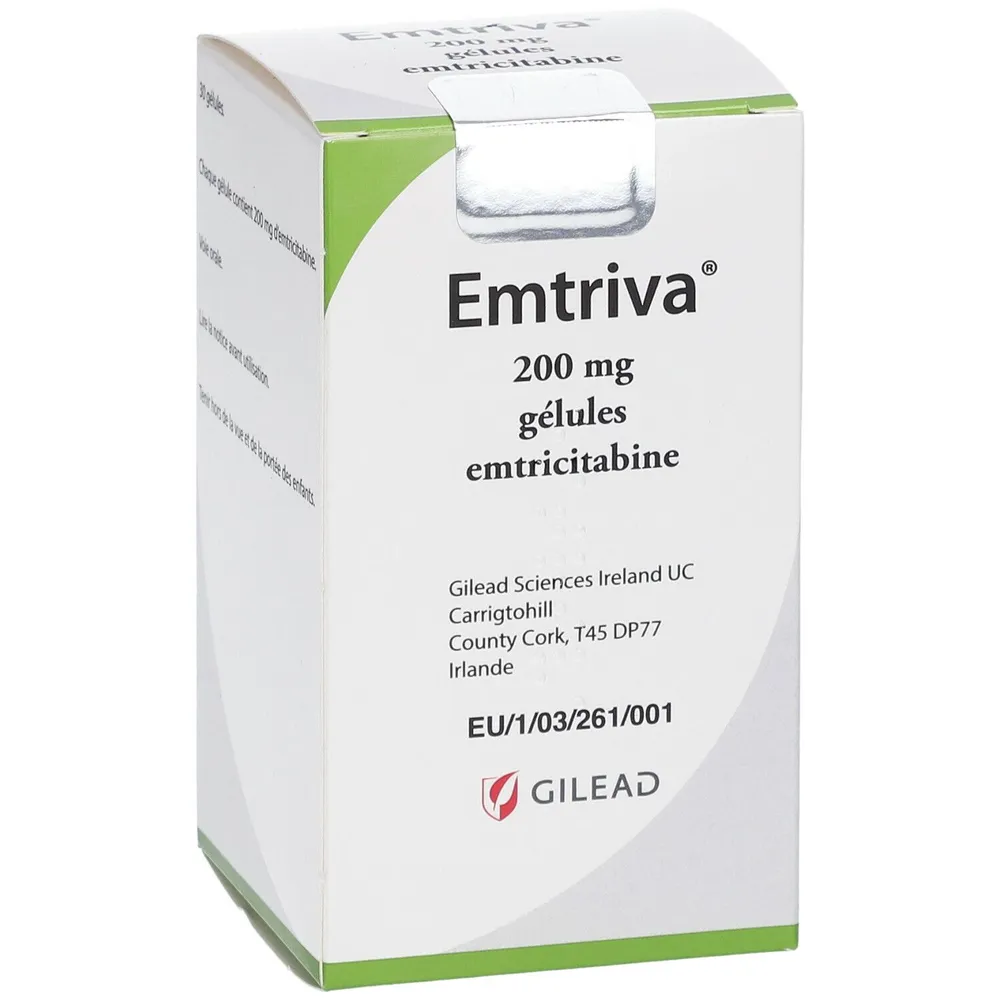
Table of Contents
- Patient Information Leaflet: Information for the User
- Emtriva 200 mg hard capsules
- 1. What Emtriva is and what it is used for
- 2. What you need to know before taking Emtriva
- 3. How to take Emtriva
- 4. Possible side effects
- 5. How to store Emtriva
- 6. Package contents and other information
- Patient Information Leaflet: Information for the User
- Emtriva 10 mg/mL oral solution
- 1. What Emtriva is and what it is used for
- 2. What you need to know before taking Emtriva
- 3. How to take Emtriva
- 4. Possible side effects
- 5. How to store Emtriva
- 6. Package contents and other information
Patient Information Leaflet: Information for the User
Emtriva 200 mg hard capsules
emtricitabine
Please read all of this leaflet carefully before you start taking this medicine because it contains important information for you.
- Keep this leaflet. You may need to read it again.
- If you have any questions, ask your doctor or pharmacist.
- This medicine has been prescribed for you only. Do not give it to others, even if their symptoms are the same as yours, as it may be harmful.
- If you experience any side effects, including those not listed in this leaflet, talk to your doctor or pharmacist. See section 4.
Contents of this leaflet
- What Emtriva is and what it is used for
- What you need to know before taking Emtriva
- How to take Emtriva
- Possible side effects
- How to store Emtriva
- Contents of the pack and other information
1. What Emtriva is and what it is used for
Emtriva is a treatment for Human Immunodeficiency Virus (HIV) infection in adults, children, and infants aged 4 months and older. Emtriva 200 mg hard capsules are only suitable for patients weighing at least 33 kg. Emtriva oral solution is available for individuals who have difficulty swallowing Emtriva hard capsules.
Emtriva contains the active substance emtricitabine. This active substance is an antiretroviral medicine used to treat HIV infection. Emtricitabine is a nucleoside reverse transcriptase inhibitor (NRTI) that works by interfering with the normal activity of an enzyme (reverse transcriptase), which is essential for HIV to replicate. Emtriva can reduce the amount of HIV in the blood (viral load). It may also help increase the number of T cells known as CD4 cells. Emtriva must always be used in combination with other medicines for the treatment of HIV infection.
This medicine is not a cure for HIV infection. While taking Emtriva, you may still develop infections or other illnesses associated with HIV infection.
2. What you need to know before taking Emtriva
Do not take Emtriva
- If you are allergic to emtricitabine or to any of the other ingredients of this medicine (listed in section 6). If this condition applies to you, inform your doctor immediately.
Warnings and precautions
-
Tell your doctor if you have had kidney disease, or if blood tests have shown kidney problems. Before starting treatment, your doctor may prescribe blood tests to assess proper kidney function and may advise you to take the capsules less frequently
or prescribe Emtriva oral solution instead. Your doctor may also prescribe regular blood tests during treatment to monitor kidney function. -
Tell your doctor if you are over 65 years of age. Emtriva has not been studied in patients over 65 years of age. If you are over this age and have been prescribed Emtriva, your doctor will monitor you closely.
-
Tell your doctor if you have previously had liver problems, including hepatitis. Patients with liver disease, including chronic hepatitis B or C, who are treated with antiretrovirals have a higher risk of serious and potentially fatal liver complications. If you have hepatitis B, your doctor will carefully evaluate the most appropriate treatment regimen for you. If you have had liver disease or chronic hepatitis B, your doctor may request blood tests to closely monitor your liver function.
-
Be cautious about infections. If you have advanced HIV disease (AIDS) and have another infection, you may develop inflammation or worsening of infection symptoms when starting treatment with Emtriva. These symptoms may indicate that your body's immune system is fighting the infection. If you notice signs of inflammation or infection after starting Emtriva, contact your doctor immediately.
In addition to opportunistic infections, autoimmune disorders (a
condition in which the immune system attacks healthy body tissue) may also occur after you
start taking medicines for the treatment of HIV infection. Autoimmune disorders
may occur several months after starting treatment. If you notice any signs of infection or
other symptoms such as muscle weakness, initial weakness in hands and
feet spreading upwards towards the trunk, palpitations, tremors, or hyperactivity,
contact your doctor immediately to receive necessary treatment.
- Bone problems. Some patients receiving combination antiretroviral therapy may develop a bone disease called osteonecrosis (death of bone tissue due to reduced blood supply to the bone). Duration of combination antiretroviral therapy, use of corticosteroids, alcohol consumption, severe immunosuppression, higher body mass index, among others, may be some of the many risk factors for developing this condition. Signs of osteonecrosis include joint stiffness, discomfort, and pain (particularly in the hips, knees, and shoulders) and difficulty moving. Consult your doctor if you notice the onset of any of these symptoms.
Children and adolescents
Do not give Emtriva to children under 4 months of age.
Other medicines and Emtriva
Do not take Emtriva if you are already taking other medicines containing emtricitabine or
lamivudina, which are also used in the treatment of HIV infection, unless otherwise directed by your
doctor.
Tell your doctor or pharmacist if you are taking, have recently taken, or might take any other medicine.
Do not stop treatment without contacting your doctor.
Pregnancy and breastfeeding
If you are pregnant, suspect you may be pregnant, planning to become pregnant, or are breastfeeding,
consult your doctor or pharmacist before taking this medicine.
If you have taken Emtriva during pregnancy, your doctor may request regular blood tests and other diagnostic examinations to monitor the child's development. In children whose mothers took NRTIs during pregnancy, the benefit of protection against HIV has outweighed the risk of side effects.
Do not breastfeed while taking Emtriva. This is because the active substance of this medicine is
excreted in human breast milk.
Breastfeeding is not recommended for HIV-positive women, as HIV infection can be transmitted to the infant through breast milk.
If you are breastfeeding or considering breastfeeding, you must discuss this with your doctor as soon as possible.
Driving and using machines
Emtriva may cause dizziness. If dizziness occurs while taking Emtriva, do not drive and
do not operate tools or machinery.
3. How to take Emtriva
- Always take this medicine exactly as your doctor has instructed you. If you are unsure, consult your doctor or pharmacist.
Recommended dose:
- Adults: One 200 mg hard capsule once daily, with or without food. Swallow the hard capsule with a glass of water.
- Children and adolescents up to 18 years of age who weigh at least 33 kg and are able to swallow hard capsules: one 200 mg capsule once daily, with or without food.
For infants from 4 months of age, children, patients unable to swallow hard capsules, and patients
with kidney problems, Emtriva is available in liquid form (as an oral solution). Inform your doctor
if you have difficulty swallowing capsules.
- Always take the dose prescribed by your doctor. This is important to ensure that your treatment remains fully effective and to reduce the risk of developing resistance to therapy. Do not change the dose unless your doctor tells you to do so.
- If you have kidney problems, your doctor may prescribe Emtriva to be taken less frequently.
- Your doctor will prescribe Emtriva together with other antiretroviral medicines. Refer to the package leaflet of the other antiretrovirals for guidance on how to take them.
If you take more Emtriva than you should
If you accidentally take too many Emtriva hard capsules, contact your doctor or the nearest emergency department immediately. Take the container with you so you can clearly describe what has been taken.
If you forget to take Emtriva
It is important not to miss any doses of Emtriva.
If you miss a dose of Emtriva within 12 hours of your usual dosing time, take it as soon as possible, then take the next dose at the scheduled time.
If it is almost time for your next dose (less than 12 hours away), do not take the missed dose. Wait and take the next dose at the regular time. Do not take a double dose to make up for a forgotten hard capsule.
If you vomit
Take another capsule if less than one hour has passed since taking Emtriva. You do not need to take another capsule if you vomited more than one hour after taking Emtriva.
If you stop taking Emtriva
- Do not stop treatment with Emtriva without first consulting your doctor. Stopping Emtriva may reduce the effectiveness of your prescribed anti-HIV therapy. Talk to your doctor before stopping treatment, especially if you have experienced a side effect or have another illness. Contact your doctor again before restarting Emtriva capsules.
- If you have both HIV and hepatitis B infection, it is particularly important not to stop Emtriva without first talking to your doctor. Some patients have experienced worsening of hepatitis, as shown by symptoms or blood tests, after stopping Emtriva. Blood tests may need to be repeated for several months after stopping treatment. In some patients with advanced liver disease or cirrhosis, stopping treatment is not recommended, as it may lead to a worsening of hepatitis.
Immediately inform your doctor of any new or unusual symptoms occurring after
stopping treatment, especially symptoms typically associated with
hepatitis B infection.
If you have any questions about the use of this medicine, ask your doctor or pharmacist.
4. Possible side effects
During HIV therapy, an increase in weight and in blood levels of lipids and glucose may occur.
This is partly related to the recovery of health status and lifestyle, and, in the case of blood lipids, sometimes also to the HIV medications themselves. Your doctor will monitor these changes.
Like all medicines, this medicine can cause side effects, although not everyone experiences them.
Contact your doctor if you experience any of the following side effects:
More frequent side effects
The following side effects are very common (occur in at least 10 out of 100 patients):
- headache, diarrhoea, stomach ache ( nausea )
- muscle pain and weakness (if creatine kinase levels in the blood are elevated)
Other possible side effects
The following side effects are common (occur in up to 10 out of 100 patients):
- dizziness, weakness, difficulty sleeping, nightmares
- feeling sick ( vomiting ), digestive problems leading to gastrointestinal discomfort after meals, stomach ache
- rash (including red spots or pustules, sometimes with blisters and skin swelling), which may be an allergic reaction, burning sensation, change in skin colour with dark patches on the skin
- pain
Blood tests may also show:
- decrease in white blood cell count (this may make you more susceptible to infection)
- increased levels of triglycerides (fatty acids), bile, or glucose in the blood
- problems affecting the liver and pancreas
The following side effects are uncommon (occur in up to 1 out of 100 patients):
- anaemia (low red blood cell count)
- swelling of the face, lips, tongue, or throat
Other possible side effects
In children treated with emtricitabine, skin pigmentation changes, including dark patches, have occurred very commonly, and anaemia (low red blood cell count) has occurred commonly.
If there is reduced production of red blood cells, a child may experience symptoms such as fatigue or shortness of breath.
Reporting of side effects
If you experience any side effects, including those not listed in this leaflet, please inform your doctor or pharmacist. You can also report side effects directly via the national reporting system listed in Annex V. By reporting side effects, you can help provide more information on the safety of this medicine.
5. How to store Emtriva
Keep this medicine out of the sight and reach of children.
Do not use this medicine after the expiry date stated on the bottle, blister pack, and carton after "Exp.". The expiry date refers to the last day of the month.
This medicine does not require any special storage conditions.
Do not dispose of medicines via wastewater or household waste. Ask your pharmacist how to dispose of medicines you no longer use. This will help protect the environment.
6. Package contents and other information
What Emtriva contains
- The active substance is emtricitabine. Each Emtriva hard capsule contains 200 mg of emtricitabine.
- The other components are:
Capsule contents: microcrystalline cellulose (E460), crospovidone, magnesium stearate (E572), povidone (E1201)
Capsule shell: gelatin, indigo carmine (E132), titanium dioxide (E171)
Printing ink containing: iron oxide black (E172), shellac gum (E904)
Description of the appearance of Emtriva and contents of the pack
Emtriva hard capsules have an opaque white body and an opaque blue cap. Each capsule is printed with "200 mg" on the cap and "GILEAD" and the [Gilead logo] on the body in black ink.
Emtriva is supplied in bottles or blisters containing 30 capsules.
Emtriva is also available as an oral solution for use in children and infants aged 4 months and older, patients who have difficulty swallowing, and patients with renal impairment. A separate patient information leaflet is available for the Emtriva 10 mg/mL oral solution.
Marketing Authorisation Holder
Gilead Sciences Ireland UC
Carrigtohill
County Cork, T45 DP77
Ireland
Manufacturer
Gilead Sciences Ireland UC
IDA Business & Technology Park
Carrigtohill
County Cork
Ireland
For further information about this medicine, please contact the local representative of the marketing authorisation holder:
België/Belgique/Belgien Lietuva
Gilead Sciences Belgium SRL-BV Gilead Sciences Ireland UC
Tél/Tel: + 32 (0) 24 01 35 50 Tel: + 353 (0) 1 686 1888
България Luxembourg/Luxemburg
Gilead Sciences Ireland UC Gilead Sciences Belgium SRL-BV
Тел.: + 353 (0) 1 686 1888 Tél/Tel: + 32 (0) 24 01 35 50
Česká republika Magyarország
Gilead Sciences s.r.o. Gilead Sciences Ireland UC
Tel: + 420 910 871 986 Tel.: + 353 (0) 1 686 1888
Danmark Malta
Gilead Sciences Sweden AB Gilead Sciences Ireland UC
Tlf: + 46 (0) 8 5057 1849 Tel: + 353 (0) 1 686 1888
Deutschland Nederland
Gilead Sciences GmbH Gilead Sciences Netherlands B.V.
Tel: + 49 (0) 89 899890-0 Tel: + 31 (0) 20 718 36 98
Eesti Norge
Gilead Sciences Ireland UC Gilead Sciences Sweden AB
Tel: + 353 (0) 1 686 1888 Tlf: + 46 (0) 8 5057 1849
Ελλάδα Österreich
Gilead Sciences Ελλάς Μ.ΕΠΕ. Gilead Sciences GesmbH
Τηλ: + 30 210 8930 100 Tel: + 43 1 260 830
España Polska
Gilead Sciences, S.L. Gilead Sciences Poland Sp. z o.o.
Tel: + 34 91 378 98 30 Tel.: + 48 22 262 8702
France Portugal
Gilead Sciences Gilead Sciences, Lda.
Tél: + 33 (0) 1 46 09 41 00 Tel: + 351 21 7928790
Hrvatska România
Gilead Sciences Ireland UC Gilead Sciences (GSR) S.R.L.
Tel: + 353 (0) 1 686 1888 Tel: + 40 31 631 18 00
Ireland Slovenija
Gilead Sciences Ireland UC Gilead Sciences Ireland UC
Tel: + 353 (0) 214 825 999 Tel: + 353 (0) 1 686 1888
Ísland Slovenská republika
Gilead Sciences Sweden AB Gilead Sciences Slovakia, s.r.o.
Sími: + 46 (0) 8 5057 1849 Tel: + 421 232 121 210
Italia Suomi/Finland
Gilead Sciences S.r.l. Gilead Sciences Sweden AB
Tel: + 39 02 439201 Puh/Tel: + 46 (0) 8 5057 1849
Κύπρος Sverige
Gilead Sciences Ελλάς Μ.ΕΠΕ. Gilead Sciences Sweden AB
Τηλ: + 30 210 8930 100 Tel: + 46 (0) 8 5057 1849
Latvija United Kingdom (Northern Ireland)
Gilead Sciences Ireland UC Gilead Sciences Ireland UC
Tel: + 353 (0) 1 686 1888 Tel: + 44 (0) 8000 113 700
More detailed information on this medicine is available on the website of the European Medicines Agency: http://www.ema.europa.eu.
Patient Information Leaflet: Information for the User
Emtriva 10 mg/mL oral solution
emtricitabine
Please read this leaflet carefully before taking this medicine because it contains
important information for you.
- Keep this leaflet. You may need to read it again.
- If you have any questions, ask your doctor or pharmacist.
- This medicine has been prescribed for you only. Do not give it to other people, even if their symptoms are the same as yours, as it could be harmful.
- If you experience any side effects, including those not listed in this leaflet, contact your doctor or pharmacist. See section 4.
Contents of this leaflet
- What Emtriva is and what it is used for
- What you need to know before taking Emtriva
- How to take Emtriva
- Possible side effects
- How to store Emtriva
- Contents of the pack and other information
1. What Emtriva is and what it is used for
Emtriva is a treatment for Human Immunodeficiency Virus (HIV) infection in adults, children, and infants aged 4 months and older. Emtriva oral solution is particularly indicated for people who have difficulty swallowing Emtriva capsules.
Emtriva contains the active substance, emtricitabine. This active substance is an antiretroviral medicine used to treat HIV infection. Emtricitabine is a nucleoside reverse transcriptase inhibitor (NRTI) that works by interfering with the normal activity of an enzyme (reverse transcriptase) essential for HIV replication. Emtriva can reduce the amount of HIV in the blood (viral load). It may also help increase the number of T cells known as CD4 cells. Emtriva must always be used in combination with other medicines for the treatment of HIV infection.
This medicine is not a cure for HIV infection. While taking Emtriva, you may still develop infections or other illnesses associated with HIV infection.
2. What you need to know before taking Emtriva
Do not take Emtriva
- If you are allergic to emtricitabine or to any of the other ingredients of this medicine (listed in section 6). If this condition applies to you, inform your doctor immediately.
Warnings and precautions
-
Inform your doctor if you have had kidney disease, or if blood tests have shown kidney problems. Before starting treatment, your doctor may prescribe blood tests to assess proper kidney function and may advise you to take a reduced dose of the oral solution or prescribe Emtriva hard capsules. Your doctor may also prescribe blood tests during treatment to monitor kidney function.
-
Inform your doctor if you are over 65 years old. Emtriva has not been studied in patients over 65 years of age. If you are over this age and have been prescribed Emtriva, your doctor will monitor you closely.
-
Inform your doctor if you have previously had liver problems, including hepatitis. Patients with liver problems, including chronic hepatitis B or C, treated with antiretrovirals, have an increased risk of serious and potentially fatal liver complications. If you have hepatitis B, your doctor will carefully evaluate the most appropriate treatment regimen for you. If you have had liver disease or chronic hepatitis B, your doctor may request blood tests to closely monitor your liver function.
-
Be cautious about infections. If you have advanced HIV disease (AIDS) and have another infection, you may develop inflammation or worsening of infection symptoms when you start treatment with Emtriva. These symptoms may indicate that your body's immune system is fighting the infection. If you notice signs of inflammation or infection after starting Emtriva, inform your doctor immediately.
In addition to opportunistic infections, autoimmune disorders (a condition occurring when the immune system attacks healthy body tissue) may also occur after you start taking medicines for the treatment of HIV infection. Autoimmune disorders may occur several months after starting treatment. If you notice any symptoms of infection or other symptoms such as muscle weakness, initial weakness in hands and feet spreading upwards towards the trunk, palpitations, tremor, or hyperactivity, inform your doctor immediately to receive necessary treatment.
- Bone problems. Some patients receiving combination antiretroviral therapy may develop a bone disease called osteonecrosis (death of bone tissue due to reduced blood supply to the bone). Duration of combination antiretroviral therapy, use of corticosteroids, alcohol consumption, severe immunosuppression, higher body mass index, among others, may be some of the many risk factors for developing this condition. Signs of osteonecrosis include joint stiffness, discomfort, and pain (especially in hips, knees, and shoulders) and difficulty moving. Consult your doctor if you develop any of these symptoms.
Children and adolescents
Do not give Emtriva to children under 4 months of age.
Other medicines and Emtriva
Do not take Emtriva if you are already taking other medicines containing emtricitabine or lamivudine, also used in the treatment of HIV infection, unless otherwise directed by your doctor.
Inform your doctor or pharmacist if you are taking, have recently taken, or might take any other medicines.
Do not stop treatment without contacting your doctor.
Pregnancy and breastfeeding
If you are pregnant, suspect you may be pregnant, planning to become pregnant, or breastfeeding, ask your doctor or pharmacist for advice before taking this medicine.
If you have taken Emtriva during pregnancy, your doctor may regularly request blood tests and other diagnostic examinations to monitor the baby's development. In children whose mothers took NRTIs during pregnancy, the benefit of protection against HIV has outweighed the risk of side effects.
Do not breastfeed while taking Emtriva. The active substance of this medicine is excreted in human breast milk.
Breastfeeding is not recommended for HIV-positive women because HIV infection can be transmitted to the infant through breast milk.
If you are breastfeeding or considering breastfeeding, you must discuss this with your doctor as soon as possible.
Driving and using machines
Emtriva may cause dizziness. If dizziness occurs while taking Emtriva, do not drive and do not use tools or machinery.
Emtriva oral solution contains:
Orange yellow (E110) may cause allergic reactions. Methyl para-hydroxybenzoate (E218) and propyl para-hydroxybenzoate (E216) may cause allergic reactions (possibly delayed).
This medicine contains 38 mg of sodium (a major component of table salt) per 24 mL. This corresponds to 1.8% of the maximum daily recommended dietary intake for an adult.
This medicine also contains 480 mg of propylene glycol per 24 mL (maximum single dose), equivalent to a maximum of 12 mg/kg per day.
3. How to take Emtriva
- Take this medicine exactly as your doctor has told you. If you are unsure, consult your doctor or pharmacist.
Recommended dose:
- Adults: Your doctor will tell you the correct amount of Emtriva oral solution to take. Emtriva oral solution can be taken with or without food.
- Neonates, children and adolescents weighing 40 kg or less: The dose of Emtriva 10 mg/mL oral solution is calculated based on body weight. Examples of body weight and the corresponding doses and volumes of oral solution to be taken each day are described in the following table:
| Per Day | ||
| Weight (kg) | Emtricitabine dose (mg) | Oral solution 10 mg/mL quantity to take (mL) |
| 5 kg | 30 mg | 3 mL |
| 10 kg | 60 mg | 6 mL |
| 15 kg | 90 mg | 9 mL |
| 20 kg | 120 mg | 12 mL |
| 25 kg | 150 mg | 15 mL |
| 30 kg | 180 mg | 18 mL |
| 35 kg | 210 mg | 21 mL |
| 40 kg | 240 mg | 24 mL |
You must be sure you understand how to measure and administer the correct amount of oral solution according to the weight of the person being treated. Use the dosing cup provided in the package to measure the correct dose. The cup has markings indicating each mL of solution.
If you are unsure about how much Emtriva you should take, ask your doctor or pharmacist.
- Always take the dose prescribed by your doctor. This is important to ensure that your medication is fully effective and to reduce the risk of developing resistance to treatment. Do not change the dose unless your doctor tells you to do so.
- If you have kidney problems, your doctor may prescribe Emtriva to be taken less frequently.
- Your doctor will prescribe Emtriva together with other antiretroviral medicines. Please refer to the package leaflet of the other antiretrovirals for guidance on how to take them.
Emtriva is also available as hard capsules. These are only suitable for patients weighing at least 33 kg who are able to swallow hard capsules. The blood levels achieved after taking a 200 mg Emtriva hard capsule are similar to those obtained after taking 24 mL of the oral solution.
Inform your doctor if you wish to switch from Emtriva oral solution to Emtriva hard capsules.
If you take more Emtriva than you should
If you accidentally take too much Emtriva oral solution, contact your doctor or the nearest emergency department immediately. Take the bottle of oral solution with you so you can easily describe what you have taken.
If you forget to take Emtriva
It is important not to miss any doses of Emtriva.
- If you miss a dose of Emtriva within 12 hours of your usual dosing time, take it as soon as possible, then take your next dose at the regular time.
- If it is almost time for your next dose (less than 12 hours away), do not take the missed dose. Wait and take your next dose at the regular time. Do not take a double dose to make up for the missed dose.
If you vomit
Take another dose only if vomiting occurs within one hour of taking Emtriva. Do not take another dose if you vomit more than one hour after taking Emtriva.
If you stop taking Emtriva
- Do not stop taking Emtriva without first consulting your doctor. Stopping Emtriva may reduce the effectiveness of your prescribed anti-HIV therapy. Talk to your doctor before stopping treatment, especially if you have experienced a side effect or have another illness. Contact your doctor again before restarting Emtriva oral solution.
- If you have both HIV and hepatitis B infection, it is especially important not to stop Emtriva without first contacting your doctor. Some patients have experienced worsening of hepatitis, as shown by symptoms or blood tests, after stopping Emtriva. Blood tests may need to be repeated for several months after stopping treatment. In some patients with advanced liver disease or cirrhosis, stopping treatment is not recommended, as it may lead to worsening of hepatitis.
Inform your doctor immediately of any new or unusual symptoms you experience after stopping treatment, particularly symptoms typically associated with hepatitis B infection.
If you have any doubts about how to use this medicine, consult your doctor or pharmacist.
4. Possible side effects
During HIV therapy, weight gain and increased levels of lipids and glucose in the blood may occur. This is partly related to the recovery of health status and lifestyle, and in the case of blood lipids, sometimes also to the HIV medicines themselves. Your doctor will monitor these changes.
Like all medicines, this medicine can cause side effects, although not everyone experiences them.
Contact your doctor if you experience any of the following side effects:
More common side effects
The following side effects are very common (occur in at least 10 out of 100 patients):
- headache, diarrhoea, stomach ache ( nausea )
- muscle pain and weakness (if creatine kinase levels in the blood are elevated)
Other possible side effects
The following side effects are common (occur in up to 10 out of 100 patients):
- dizziness, weakness, difficulty sleeping, nightmares
- feeling of nausea ( vomiting ), digestive problems leading to gastrointestinal discomfort after meals, stomach ache
- rash (including red spots or pustules, sometimes with blisters and skin swelling), which may be an allergic reaction, burning sensation, change in skin colour with dark patches of skin
- pain
Blood tests may also show:
- decrease in white blood cell count (this may make you more susceptible to infection)
- increased triglycerides (fatty acids), bile, or glucose in the blood
- problems with the liver and pancreas
The following side effects are uncommon (occur in up to 1 out of 100 patients):
- anaemia (low red blood cell count)
- swelling of the face, lips, tongue, or throat
Other possible side effects
In children treated with emtricitabine, skin pigmentation changes, including dark patches, have very commonly occurred, and anaemia (low red blood cell count) has commonly occurred. In case of reduced red blood cell production, a child may experience symptoms such as fatigue or shortness of breath.
Reporting of side effects
If you experience any side effect, including those not listed in this leaflet, talk to your doctor or pharmacist. You can also report side effects directly through the national reporting system listed in Annex V. By reporting side effects, you can help provide more information on the safety of this medicine.
5. How to store Emtriva
Keep this medicine out of the sight and reach of children.
Do not use this medicine after the expiry date which is stated on the bottle and the carton after
"Exp.". The expiry date refers to the last day of the month.
Store in a refrigerator (2 °C – 8 °C) until first use.
After opening the bottle, do not store above 25 °C. The contents of the bottle must be used within 45 days of opening. It is recommended to record the date the bottle was removed from the refrigerator on the packaging.
If any solution remains in the bottle after 45 days, it must be disposed of in accordance with local regulations or returned to a pharmacy.
Do not dispose of any medicine via wastewater or household waste. Ask your pharmacist how to dispose of medicines no longer required. This will help protect the environment.
6. Package contents and other information
What Emtriva contains
- The active substance is emtricitabine. Each mL of Emtriva oral solution contains 10 mg of emtricitabine (10 mg/mL).
- The other ingredients are: cotton candy flavour, disodium edetate, hydrochloric acid, methyl 4-hydroxybenzoate (E218), propylene glycol, propyl 4-hydroxybenzoate (E216), sodium hydroxide, monobasic sodium phosphate hydrate, orange yellow (E110), purified water, xylitol (E967).
Description of the appearance of Emtriva and package contents
Emtriva oral solution is a clear orange to dark orange-coloured solution supplied in bottles containing 170 mL with a dosing cup.
Emtriva is also available as hard capsules. These are suitable only for patients weighing at least 33 kg who can swallow hard capsules. A separate Patient Information Leaflet is available for Emtriva 200 mg hard capsules.
Marketing Authorisation Holder
Gilead Sciences Ireland UC
Carrigtohill
County Cork, T45 DP77
Ireland
Manufacturer
Gilead Sciences Ireland UC
IDA Business & Technology Park
Carrigtohill
County Cork
Ireland
For further information about this medicinal product, please contact the local representative of the Marketing Authorisation Holder:
België/Belgique/Belgien Lietuva
Gilead Sciences Belgium SRL-BV Gilead Sciences Ireland UC
Tél/Tel: + 32 (0) 24 01 35 50 Tel: + 353 (0) 1 686 1888
България Luxembourg/Luxemburg
Gilead Sciences Ireland UC Gilead Sciences Belgium SRL-BV
Тел.: + 353 (0) 1 686 1888 Tél/Tel: + 32 (0) 24 01 35 50
Česká republika Magyarország
Gilead Sciences s.r.o. Gilead Sciences Ireland UC
Tel: + 420 910 871 986 Tel.: + 353 (0) 1 686 1888
Danmark Malta
Gilead Sciences Sweden AB Gilead Sciences Ireland UC
Tlf: + 46 (0) 8 5057 1849 Tel: + 353 (0) 1 686 1888
Deutschland Nederland
Gilead Sciences GmbH Gilead Sciences Netherlands B.V.
Tel: + 49 (0) 89 899890-0 Tel: + 31 (0) 20 718 36 98
Eesti Norge
Gilead Sciences Ireland UC Gilead Sciences Sweden AB
Tel: + 353 (0) 1 686 1888 Tlf: + 46 (0) 8 5057 1849
Ελλάδα Österreich
Gilead Sciences Ελλάς Μ.ΕΠΕ. Gilead Sciences GesmbH
Τηλ: + 30 210 8930 100 Tel: + 43 1 260 830
España Polska
Gilead Sciences, S.L. Gilead Sciences Poland Sp. z o.o.
Tel: + 34 91 378 98 30 Tel.: + 48 22 262 8702
France Portugal
Gilead Sciences Gilead Sciences, Lda.
Tél: + 33 (0) 1 46 09 41 00 Tel: + 351 21 7928790
Hrvatska România
Gilead Sciences Ireland UC Gilead Sciences (GSR) S.R.L.
Tel: + 353 (0) 1 686 1888 Tel: + 40 31 631 18 00
Ireland Slovenija
Gilead Sciences Ireland UC Gilead Sciences Ireland UC
Tel: + 353 (0) 214 825 999 Tel: + 353 (0) 1 686 1888
Ísland Slovenská republika
Gilead Sciences Sweden AB Gilead Sciences Slovakia, s.r.o.
Sími: + 46 (0) 8 5057 1849 Tel: + 421 232 121 210
Italia Suomi/Finland
Gilead Sciences S.r.l. Gilead Sciences Sweden AB
Tel: + 39 02 439201 Puh/Tel: + 46 (0) 8 5057 1849
Κύπρος Sverige
Gilead Sciences Ελλάς Μ.ΕΠΕ. Gilead Sciences Sweden AB
Τηλ: + 30 210 8930 100 Tel: + 46 (0) 8 5057 1849
Latvija United Kingdom (Northern Ireland)
Gilead Sciences Ireland UC Gilead Sciences Ireland UC
Tel: + 353 (0) 1 686 1888 Tel: + 44 (0) 8000 113 700
More detailed information on this medicinal product is available on the website of the European Medicines Agency: http://www.ema.europa.eu.