Emadine
Italy
Table of Contents
- Patient Information Leaflet
- EMADINE 0.5 mg/mL eye drops, solution
- 1. What EMADINE is and what it is used for
- 2. What you should know before using EMADINE
- 3. How to use EMADINE
- 4. Possible side effects
- 5. How to store EMADINE
- 6. Package contents and other information
- Patient Information Leaflet
- EMADINE 0.5 mg/mL eye drops, solution, single-dose container
- 1. What EMADINE is and what it is used for
- 2. What you need to know before using EMADINE
- 3. How to use EMADINE
- 3. How to use EMADINE (continued)
- 4. Possible side effects
- 5. How to store EMADINE
- 6. Package contents and other information
Patient Information Leaflet
EMADINE 0.5 mg/mL eye drops, solution
emedastine
Please read this leaflet carefully before using this medicine because it contains important information for you.
- Keep this leaflet. You may need to read it again.
- If you have any questions, ask your doctor or pharmacist.
- This medicine has been prescribed for you only. Do not give it to others, even if their symptoms are the same as yours, as it may be harmful.
- If you experience any adverse reactions, including those not listed in this leaflet, contact your doctor or pharmacist. See section 4.
Contents of this leaflet
- What EMADINE is and what it is used for
- What you need to know before using EMADINE
- How to use EMADINE
- Possible side effects
- How to store EMADINE
- Contents of the pack and other information
1. What EMADINE is and what it is used for
EMADINE is a medicine for the treatment of seasonal allergic conjunctivitis of the eye
(an allergic condition of the eye). It works by reducing the intensity of the allergic reaction.
Allergic conjunctivitis. Certain substances (allergens) such as pollen, house dust, or animal fur
can trigger allergic reactions causing itching, redness, and swelling of the eye surface.
Consult your doctor if you do not feel better or if you feel worse.
2. What you should know before using EMADINE
Do not use EMADINE
- if you are allergic to emedastine or to any of the other ingredients of this medicine (listed in section 6).
Consult your doctor.
Warnings and precautions
- Do not use EMADINE in children under 3 years of age.
- If you wear contact lenses, refer to the section 'EMADINE contains benzalkonium chloride'.
- The use of EMADINE is not recommended in patients over 65 years of age, as it has not been studied in patients of this age group in clinical trials.
- The use of EMADINE is not recommended in patients with renal or hepatic impairment.
Talk to your doctor or pharmacist before using EMADINE.
Other medicines and EMADINE
Inform your doctor or pharmacist if you are taking, have recently taken, or might take any other
medicines.
If you are using other eye drops at the same time as Emadine, follow the instructions at the end of section
3 "How to use EMADINE".
Pregnancy, breastfeeding and fertility
If you are pregnant, think you might be pregnant, are planning a pregnancy, or are breastfeeding, please consult your doctor or pharmacist before taking this medicine.
Driving or operating machinery
If you experience blurred vision after using EMADINE, do not drive or operate machinery until your vision is clear again.
EMADINE contains benzalkonium chloride
This medicine contains 0.5 mg of benzalkonium chloride per 5 mL, equivalent to 0.1 mg/mL.
The preservative contained in EMADINE, benzalkonium chloride, may be absorbed by soft contact lenses and may cause a change in their colour. Remove your contact lenses before using this medicine and wait 15 minutes before reinserting them. Benzalkonium chloride may also cause eye irritation, particularly if you have dry eye or corneal disorders (the transparent outer layer of the eye). If you experience any unusual sensation, burning, or pain in the eye after using this medicine, speak with your doctor.
3. How to use EMADINE
Use this medicine exactly as directed by your doctor. If you have any doubts, consult your
doctor or pharmacist.
The recommended dose for adults and children over three years of age is one drop in the eye, twice
daily.
Always use this medicine exactly as described in this leaflet or as instructed by your doctor. If you have any doubts, consult your doctor or pharmacist.
Use the eye drops only for instillation into your eyes.
1 2
- Take the EMADINE bottle and a mirror.
- Wash your hands.
- Take the bottle and unscrew the cap.
- After removing the cap, if the safety ring has loosened, remove it before using the product.
- Hold the bottle upside down between your thumb and index finger.
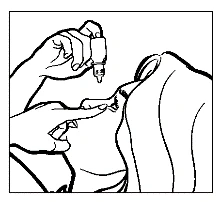
- Tilt your head backward. Pull down the lower eyelid with a clean finger to create a "pocket" between the eyelid and the eye. The drop should be placed here (figure 1).
- Bring the tip of the bottle close to your eye. Use the mirror if it helps.
- Do not touch the eye, eyelid, surrounding areas, or any other surfaces with the dropper tip. This could contaminate the eye drops in the bottle.
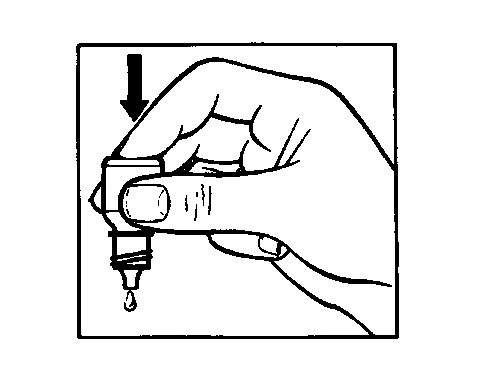
- Gently squeeze the base of the bottle to release one drop of EMADINE at a time.
- Do not squeeze the bottle forcefully, as it is designed to work with light pressure (figure 2).
- If you are using the eye drops in both eyes, repeat the same procedure for the other eye.
- Immediately tighten the cap firmly after use.
If you accidentally swallow EMADINE or inject it, contact your doctor immediately.
It may alter your heart rhythm.
If a drop misses the eye, try again.
If you use more EMADINE than you should, rinse your eyes, preferably with sterile saline solution or,
if unavailable, with lukewarm water. Do not instill additional drops before the next scheduled dose.
If you forget to use EMADINE, instill one drop as soon as you remember, then continue your
regular dosing schedule. Do not use a double dose to make up for a missed dose.
If you are using other eye drops, wait at least 10 minutes between applying EMADINE and the
other drops. Ophthalmic ointments should be used last.
If you have any questions about how to use this medicine, ask your doctor or pharmacist.
4. Possible side effects
Like all medicines, this medicine can cause side effects, although not everybody gets them.
You may continue using the drops unless the side effects you experience are severe. If you are
concerned, consult your doctor or pharmacist.
Common side effects (may affect up to 1 in 10 people)
- Eye-related effects: eye pain, itching, eye redness.
Uncommon side effects (may affect up to 1 in 100 people)
- Eye-related effects: corneal disorders, abnormal sensation in the eyes, increased tear production, tired eyes, eye irritation, blurred vision, corneal spots, dry eyes.
- General side effects: headache, insomnia, sinus headache, taste disturbance, skin rash.
Not known (frequency cannot be estimated from the available data)
- General side effects: increased heart rate
Reporting of side effects
If you experience any side effect, including those not listed in this leaflet, talk to your doctor or pharmacist. You can also report side effects directly through the national reporting system referred to in Annex V. By reporting side effects, you can help provide more information on the safety of this medicine.
5. How to store EMADINE
Keep this medicine out of the sight and reach of children.
Do not use this medicine after the expiry date which is stated on the bottle and carton after
"EXP". The expiry date refers to the last day of that month.
Do not store above 25°C.
The bottle must be discarded four weeks after first opening to prevent infection.
Write the opening date of each bottle in the space below and in the space on the carton.
Opened:
Do not dispose of medicines via wastewater or household waste. Ask your pharmacist how to
dispose of medicines you no longer use. This will help protect the environment.
6. Package contents and other information
What EMADINE contains
- The active substance is emedastine 0.5 mg/mL as difumarate.
- The other components are: benzalkonium chloride; trometamol; sodium chloride; hypromellose; purified water. Small amounts of hydrochloric acid or sodium hydroxide may occasionally be added to maintain normal acidity levels (pH levels).
Description of the appearance of EMADINE and contents of the pack
EMADINE is a liquid (a solution) supplied in a pack containing one 5 mL plastic bottle with a screw cap.
Marketing Authorization Holder
Immedica Pharma AB
SE-113 63 Stockholm
Sweden
Manufacturer
S.A. Alcon Couvreur N.V.,
Rijksweg 14,
B 2870 Puurs,
Belgium
Manufacturer
Siegfried El Masnou, S.A.,
Camil Fabra 58,
08320 El Masnou,
Barcelona
Spain
Manufacturer
Immedica Pharma AB
SE-113 63 Stockholm
Sweden
Other sources of information
More detailed information on this medicinal product is available on the website of the European Medicines Agency: http://www.ema.europa.eu .
Patient Information Leaflet
EMADINE 0.5 mg/mL eye drops, solution, single-dose container
emedastine
Please read this leaflet carefully before using this medicine because it contains important information for you.
- Keep this leaflet. You may need to read it again.
- If you have any questions, ask your doctor or pharmacist.
- This medicine has been prescribed for you only. Do not give it to other people, even if their symptoms are the same as yours, as it may be harmful.
- If you experience any side effects, including those not listed in this leaflet, consult your doctor or pharmacist. See section 4.
Contents of this leaflet
- What EMADINE is and what it is used for
- What you need to know before using EMADINE
- How to use EMADINE
- Possible side effects
- How to store EMADINE
- Contents of the pack and other information
1. What EMADINE is and what it is used for
EMADINE is a medicine used to treat seasonal allergic conjunctivitis of the eye
(an allergic eye condition). It works by reducing the intensity of the allergic reaction.
Allergic conjunctivitis. Certain substances (allergens), such as pollen, house dust, or animal fur,
can trigger allergic reactions causing itching, redness, and swelling of the eye's surface.
Consult your doctor if you do not feel better or if you feel worse.
2. What you need to know before using EMADINE
Do not use EMADINE
- if you are allergic to emedastine or to any of the other ingredients of this medicine (listed in section 6).
Consult your doctor.
Warnings and precautions
- Do not use EMADINE in children under 3 years of age.
- The use of EMADINE is not recommended in patients over 65 years of age, as it has not been studied in patients of this age group in clinical trials.
- The use of EMADINE is not recommended in patients with renal or hepatic impairment.
Talk to your doctor or pharmacist before using EMADINE.
Other medicines and EMADINE
Inform your doctor or pharmacist if you are currently using, have recently used, or might use any other
medicines.
If you are using other eye drops at the same time as EMADINE, follow the instructions at the end of
section 3.
Pregnancy, breastfeeding and fertility
If you are pregnant, think you may be pregnant, are planning to become pregnant, or are breastfeeding,
consult your doctor or pharmacist before taking this medicine.
Driving and using machines
If you experience blurred vision after using EMADINE, do not drive or operate machinery until your vision is clear.
3. How to use EMADINE
Use this medicine exactly as directed by your doctor. If you have any doubts, consult your
doctor or pharmacist.
The recommended dose for adults and children over 3 years of age is one drop in the eye twice
daily.
Always use this medicine exactly as described in this leaflet or as instructed by your doctor. If you have any doubts, consult your doctor or pharmacist.
Use the eye drops only for instillation into your eyes.
Turn the page for more information
Now turn the page
3. How to use EMADINE (continued)
1 2 3
For the recommended dose, see the previous page
Do not use a container that has already been opened. Do not use any sealed container from an
aluminum foil pouch that has been open for more than one week.
- Tear open the aluminum foil pouch and remove the strip of five connected containers.
- Do not use the solution if it is cloudy or contains particles.
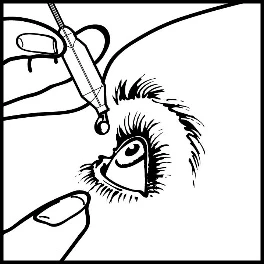
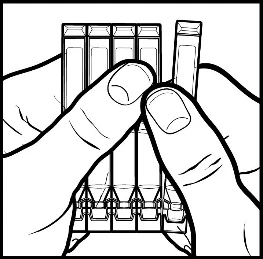
- Hold the strip of five containers with the long flat end facing upwards and separate one by pulling it towards you while holding the others firmly. Detach it at the point where it is connected to the others (figure 1).
- Remove only one container. Store the remaining containers back in the aluminum foil pouch.
- Make sure you have a mirror nearby and wash your hands.
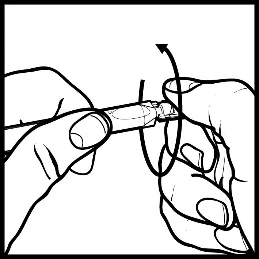
- Hold the body of the container (on the side of the flat end) between your thumb and index finger, and unscrew the other end with the other hand (figure 2).
- Tilt your head back. Gently pull down the lower eyelid with a clean finger until a "pocket" forms between the eyelid and the eye. The drop should be instilled here.
- Hold the container between your thumb and other fingers, with the open end pointing downwards.
- Bring the tip of the container close to the eye. Use a mirror if necessary.
- Do not touch the eye, eyelid, surrounding areas, or any other surface with the tip of the container. The eye drops could become contaminated.
- Gently squeeze the container so that one drop at a time falls into the "pocket" between the eyelid and the eye (figure 3).
- If your doctor has instructed you to instill the drops in both eyes, repeat the procedure for the other eye using the same container.
- Immediately discard the container and any remaining solution.
- Discard any unused containers one week after opening the aluminum foil pouch, even if the containers are still sealed.
If you accidentally swallow EMADINE or inject it, contact your doctor immediately.
It may alter your heart rhythm.
If a drop does not enter the eye, try again.
If you use more EMADINE than you should, rinse your eyes, preferably with sterile saline solution, or, if unavailable, with lukewarm water. Do not instill further drops before the next scheduled dose.
If you forget to use EMADINE, instill one drop as soon as you remember, then continue your regular dosing schedule. Do not use a double dose to make up for a forgotten dose.
If you are using other eye drops, wait at least 10 minutes between instilling EMADINE and the other drops. Ocular ointments should be used last.
If you have any doubts about how to use this medicine, consult your doctor or pharmacist.
4. Possible side effects
Like all medicines, this medicine can cause side effects, although not everyone experiences them.
You may continue using the drops unless the side effects you experience are severe. If you are concerned, consult your doctor or pharmacist.
Common side effects (may affect up to 1 in 10 people)
- Eye-related effects: eye pain, itching, eye redness.
Uncommon side effects (may affect up to 1 in 100 people)
- Eye-related effects: corneal disorders, abnormal sensation in the eye, increased tear production, tired eyes, eye irritation, blurred vision, corneal spots, dry eye.
- General side effects: headache, insomnia, sinus headache, taste disturbance, skin rash.
Not known (frequency cannot be estimated from the available data)
- General side effects: increased heart rate.
Reporting of side effects
If you experience any side effect, including those not listed in this leaflet, please consult your doctor or pharmacist. You can also report side effects directly through the national reporting system indicated in Annex V. By reporting side effects, you can help provide more information on the safety of this medicine.
5. How to store EMADINE
Keep this medicine out of the sight and reach of children.
Do not use this medicine after the expiry date which is stated on the bottle and carton after
"EXP". The expiry date refers to the last day of that month.
Do not store above 30°C.
The container must be discarded immediately after use. One week after opening the aluminium wrapper,
all unused containers must be thrown away.
Do not dispose of medicines via wastewater or household waste. Ask your pharmacist how to
dispose of medicines no longer required. This will help protect the environment.
6. Package contents and other information
What EMADINE contains
- The active substance is emedastine (0.5 mg/mL) as difumarate.
- The other components are: trometamol; sodium chloride; hypromellose; purified water. Small amounts of hydrochloric acid or sodium hydroxide may occasionally be added to maintain normal acidity levels (pH levels).
Description of the appearance of EMADINE and package contents
EMADINE is a liquid (a solution) supplied in single-dose plastic containers containing 0.35 mL. Each pouch contains five single-dose containers. EMADINE is available in pack sizes containing 30 or 60 units. Not all pack sizes may be marketed.
Marketing Authorisation Holder
Immedica Pharma AB
SE-113 63 Stockholm
Sweden
Manufacturer
S.A. Alcon-Couvreur N.V.,
Rijksweg 14,
B-2870 Puurs,
Belgium
Manufacturer
Kaysersberg Pharmaceuticals
23 Avenue Georges Ferrenbach
Kaysersberg 68240
France
Manufacturer
Immedica Pharma AB
SE-113 63 Stockholm
Sweden
Further information
More detailed information on this medicinal product is available on the website of the European Medicines Agency: http://www.ema.europa.eu.