Elontril
Italy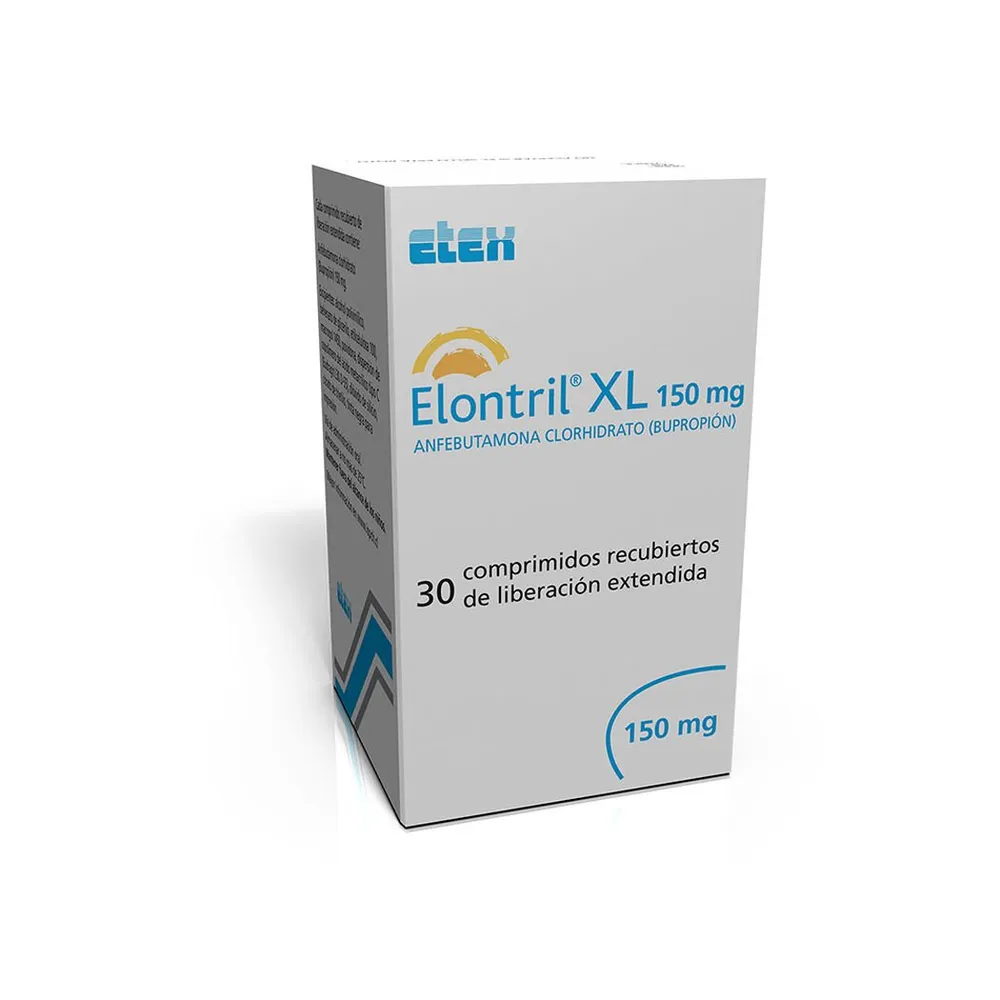
Table of Contents
- PATIENT LEAFLET: INFORMATION FOR THE USER
- ELONTRIL 150 mg prolonged-release tablets, 300 mg prolonged-release tablets
- 1. What Elontril is and what it is used for
- 2. What you need to know before taking Elontril
- 3. How to take Elontril
- 4. Possible side effects
- 5. How to store Elontril
- 6. Package contents and other information
PATIENT LEAFLET: INFORMATION FOR THE USER
ELONTRIL 150 mg prolonged-release tablets, 300 mg prolonged-release tablets
bupropion hydrochloride
Please read all of this leaflet carefully before taking this medicine because it contains important
information for you.
- Keep this leaflet. You may need to read it again.
- If you have any questions, ask your doctor or pharmacist.
- This medicine has been prescribed for you only. Do not give it to other people, even if their symptoms are the same as yours, as it may be harmful.
- If you experience any side effect, including those not listed in this leaflet, talk to your doctor or pharmacist. See section 4.
Contents of this leaflet:
- What Elontril is and what it is used for
- What you need to know before taking Elontril
- How to take Elontril
- Possible side effects
- How to store Elontril
- Contents of the pack and other information
1. What Elontril is and what it is used for
Elontril is a medicine prescribed by a doctor to treat depression. It is believed to interact with certain chemical substances in the brain called noradrenaline and dopamine.
2. What you need to know before taking Elontril
Do not take Elontril:
- If you are allergic to bupropion or to any of the other ingredients of this medicine (listed in section 6)
- If you are taking any other medicine containing bupropion
- If you have been diagnosed with epilepsy or have had seizures in the past
- If you have, or have had, eating disorders (for example, bulimia or anorexia nervosa)
- If you have a brain tumour
- If you are a heavy, regular drinker who has recently stopped or is about to stop drinking
- If you have severe liver problems
- If you have recently stopped taking sedatives, or if you are about to discontinue them while taking Elontril
- If you are taking or have taken other medicines for depression called monoamine oxidase inhibitors (MAOIs) within the last 14 days. If any of the above apply to you, speak to your doctor immediately, without taking Elontril.
Warnings and precautions
Talk to your doctor or pharmacist before taking Elontril.
Children and adolescents
Elontril is not recommended for the treatment of patients under 18 years of age.
There is an increased risk of suicidal thoughts and behaviours in patients under 18 years of age treated with antidepressants.
Adults
Before you take Elontril, your doctor needs to know:
- If you regularly drink large amounts of alcohol
- If you have diabetes for which you use insulin or tablets
- If you have previously had a serious head injury or cranial trauma
Elontril has been shown to cause seizures in about 1 in 1,000 people. This side effect is more likely to occur in individuals described above. If you have a seizure while on treatment, you must stop taking Elontril. Stop taking it immediately and contact your doctor. - If you have bipolar disorder (extreme mood changes), as Elontril may trigger an episode of this condition
- If you are taking other medicines for depression, using these medicines together with Elontril may lead to serotonin syndrome, a potentially life-threatening condition (see “Other medicines and Elontril” in this section)
- If you have liver or kidney problems, you may be more likely to experience side effects. If any of the above apply to you, discuss this again with your doctor before taking Elontril. Your doctor may wish to monitor your treatment closely or recommend an alternative therapy.
Suicidal thoughts and worsening of depression
If you are depressed, you may sometimes have thoughts of harming yourself or of suicide. These thoughts may be more common when you first start taking antidepressants, as all these medicines take time to work—usually about two weeks, but sometimes longer.
You may be more likely to have such thoughts:
- If you have previously had thoughts of suicide or of harming yourself
- If you are a young adult. Clinical study data have shown an increased risk of suicidal behaviour in adults under 25 years of age with psychiatric disorders who were treated with an antidepressant.
If at any time you have thoughts of harming yourself or of suicide, contact your doctor or go immediately to hospital.
You may find it helpful to tell a family member or friend that you suffer from depression, and ask them to read this leaflet. You may ask them whether they think your depression is getting worse, or whether they are concerned about changes in your behaviour.
Other medicines and Elontril
If you are taking or have taken other antidepressants called monoamine oxidase inhibitors (MAOIs) within the last 14 days, inform your doctor without taking Elontril (see also “Do not take Elontril” in section 2).
Inform your doctor or pharmacist if you are taking, have recently taken, or might take any other medicine, herbal products or vitamins, even those without a prescription. Your doctor may need to adjust your dose of Elontril, or recommend a change in your other medicines.
Some medicines must not be taken together with Elontril. Some may increase the risk of seizures or convulsions. Other medicines may increase the risk of other side effects. Some examples are listed below, but the list is not complete.
There may be a higher than usual risk of seizures…
- If you are taking other medicines for depression or for other mental illnesses
- If you are taking theophylline for asthma or lung diseases
- If you are taking tramadol, a strong painkiller
- If you have taken sedatives, or if you are about to discontinue them while taking Elontril (see also “Do not take Elontril” in section 2)
- If you are taking medicines for malaria (such as mefloquine or chloroquine)
- If you are taking stimulants or other medicines to control weight or appetite
- If you are taking steroids (by mouth or injection)
- If you are taking antibiotics called quinolones
- If you are taking certain types of antihistamines that may cause drowsiness
- If you are taking medicines for diabetes.
If any of the above apply to you, speak to your doctor immediately before taking Elontril. Your doctor will assess the benefits and risks of taking Elontril.
There may be a higher than usual risk of other side effects…
- If you are taking other medicines for depression (such as amitriptyline, fluoxetine, paroxetine, citalopram, escitalopram, venlafaxine, dosulepin, desipramine or imipramine) or for other mental illnesses (such as clozapine, risperidone, thioridazine or olanzapine). Elontril may interact with some medicines used to treat depression, and you may experience changes in mental state (e.g. agitation, hallucinations, coma) and other effects such as body temperature above 38°C, increased heart rate, unstable blood pressure, exaggerated reflexes, muscle rigidity, lack of coordination and/or gastrointestinal symptoms (e.g. nausea, vomiting, diarrhoea).
- If you are taking medicines for Parkinson’s disease (levodopa, amantadine or orphenadrine)
- If you are taking medicines that affect your body’s ability to eliminate Elontril (carbamazepine, phenytoin, valproate)
- If you are taking certain medicines used to treat tumours (such as cyclophosphamide, ifosfamide)
- If you are taking ticlopidine or clopidogrel, mainly used to prevent stroke
- If you are taking certain beta-blockers (such as metoprolol)
- If you are taking certain medicines for irregular heart rhythm (propafenone or flecainide)
- If you are using nicotine patches to help you stop smoking.
If any of the above apply to you, speak to your doctor immediately before taking Elontril.
Elontril may be less effective
- If you are taking ritonavir or efavirenz, medicines used to treat HIV infection. If this applies to you, speak to your doctor. Your doctor will check how Elontril is working for you. It may be necessary to increase the dose or switch to another treatment for depression. Do not increase the dose of Elontril without medical advice, as this may increase the risk of side effects, including seizures.
Elontril may make other medicines less effective
- If you are taking tamoxifen, used to treat breast cancer. If this applies to you, inform your doctor. It may be necessary to use another treatment for depression.
- If you are taking digoxin for heart problems. If this applies to you, inform your doctor. Your doctor may consider adjusting the dose of digoxin.
Elontril and alcohol
Alcohol may alter the way Elontril works, and when used together may rarely affect your nerves and mental state. Some people find they are more sensitive to alcohol when taking Elontril. Your doctor may advise you not to drink alcohol (beer, wine or spirits) while taking Elontril, or to drink only in minimal amounts. However, if you currently drink heavily, do not stop suddenly: this may put you at risk of seizures.
Talk to your doctor about alcohol consumption before starting Elontril.
Effects on urine tests
Elontril may interfere with certain urine tests used to detect other drugs. If you are required to have a urine test, inform your doctor or hospital that you are taking Elontril.
Pregnancy and breastfeeding
Do not take Elontril if you are pregnant, think you may be pregnant, or are planning a pregnancy, unless your doctor recommends it. Ask your doctor or pharmacist for advice before taking this medicine. Some, but not all, studies have reported an increased risk of birth defects, particularly heart defects, in children whose mothers took Elontril during pregnancy. It is not known whether these are due to the use of Elontril.
The ingredients of Elontril pass into breast milk. You should ask your doctor or pharmacist for advice before taking Elontril.
Driving and using machines
If Elontril causes you dizziness or a feeling of drowsiness, do not drive or operate any tools or machinery.
3. How to take Elontril
Take this medicine exactly as your doctor or pharmacist has told you. These are the usual doses, but your doctor's instructions are specifically for you. If you are unsure, ask your doctor or pharmacist.
It may take some time before you start feeling better. It takes time for the medicine to have full effect, sometimes weeks or months. When you start to feel better, your doctor may advise you to continue taking Elontril to prevent depression from returning.
How much to take
The recommended dose is usually one 150 mg tablet per day, for adults only.
Your doctor may increase your dose to 300 mg per day if your depression does not improve after several weeks.
Take your dose of Elontril tablets in the morning. Do not take Elontril more than once a day.
The tablet has a coating that slowly releases the medicine into the body. You may notice something in your stools that looks like a tablet. This is the empty coating being eliminated from the body.
Swallow the tablets whole. Do not chew, crush, or divide them – if you do, there is a risk of

overdose, as the medicine would be released into your body too quickly. This would make side effects more likely, including seizures.
Some people continue taking one 150 mg tablet per day throughout their entire treatment. Your doctor may have prescribed this dose if you have liver or kidney problems.
How long to take it
Only you and your doctor can decide how long to take Elontril. It may take weeks or months of treatment before improvement is seen. Discuss your symptoms regularly with your doctor to determine how long you should continue treatment. When you start to feel better, your doctor may recommend continuing Elontril to prevent depression from returning.
If you take more Elontril than you should
If you take too many tablets, your risk of seizures or convulsions may increase. Do not delay. Contact your doctor or go immediately to the nearest hospital emergency department.
If you forget to take Elontril
If you miss a dose, wait and take the next tablet at your usual time. Do not take a double dose to make up for the missed tablet.
If you stop taking Elontril
Do not stop taking Elontril or reduce the dose without first talking to your doctor.
If you have any doubts about how to use this medicine, consult your doctor or pharmacist.
4. Possible side effects
Like all medicines, this medicine can cause side effects, although not everyone gets them.
Serious side effects
Seizures or epileptic fits
Approximately 1 in 1,000 people taking Elontril are at risk of seizures (epileptic fits or convulsive attacks). The likelihood of this happening is higher if you take too much, if you are taking certain other medicines, or if you are already at increased risk of seizures. If you are concerned, talk to your doctor.
If you have a seizure, inform your doctor as soon as you feel better. Do not take any more tablets.
Allergic reactions
Some people may experience allergic reactions to Elontril. These include:
- Reddened skin or skin rash (similar to hives), itchy blisters or pustules (urticaria) on the skin. Some skin rashes may require hospital treatment, especially if you have mouth or eye irritation
- Unusual wheezing or difficulty breathing
- Swelling of the eyelids, lips or tongue
- Muscle or joint pain
- Collapse or loss of consciousness
If you experience any signs of an allergic reaction, contact a doctor immediately. Do not take any more tablets.
Allergic reactions can last a long time. If your doctor prescribes medication to relieve allergy symptoms, make sure you complete the full course of treatment.
Drug-induced lupus or worsening of lupus symptoms
Not known – frequency cannot be estimated from available data in people taking Elontril.
Lupus is an immune system disorder that affects the skin and other organs.
If you experience lupus flare-ups, skin rashes or lesions (especially in sun-exposed areas) while taking Elontril, contact your doctor immediately, as treatment may need to be discontinued.
Acute Generalized Exanthematous Pustulosis (AGEP)
Not known – frequency cannot be estimated from available data in people taking Elontril.
Symptoms of AGEP include skin rashes with pus-filled pimples/vesicles.
If you develop a skin rash with pus-filled pimples/vesicles, contact your doctor immediately, as treatment may need to be discontinued.
Other side effects
Very common side effects
These may affect more than 1 in 10 people:
- Difficulty sleeping. Make sure you take Elontril in the morning
- Headache
- Dry mouth
- Nausea, vomiting
Common side effects
These may affect up to 1 in 10 people:
- Fever, dizziness, itching, sweating, and skin rash (sometimes due to an allergic reaction)
- Twitching, tremors, weakness, fatigue, chest pain
- Feelings of anxiety or restlessness
- Stomach ache or other gastrointestinal disturbances (constipation), changes in taste, loss of appetite (anorexia)
- Sometimes severe increase in blood pressure, hot flushes (sudden reddening of the face)
- Ringing in the ears, vision disturbances
Uncommon side effects
These may affect up to 1 in 100 people:
- Feelings of depression (see also “Suicidal thoughts and worsening of depression” in “Warnings and precautions” in Section 2)
- Confusion
- Difficulty concentrating
- Increased heart rate
- Weight loss
Rare side effects
These may affect up to 1 in 1,000 people:
- Seizures
Very rare side effects
These may affect up to 1 in 10,000 people:
- Palpitations, fainting
- Muscle contractions, muscle stiffness, uncontrolled movements, problems walking or with coordination
- Feelings of agitation, irritability, hostility, aggression, strange dreams, tingling or numbness, memory loss
- Yellowing of the skin or whites of the eyes ( jaundice ), which may be caused by increased liver enzymes, hepatitis
- Severe allergic reactions; rash associated with muscle and joint pain
- Changes in blood sugar levels
- Urinating more or less than usual
- Urinary incontinence (involuntary urination, urine leakage)
- Severe skin rashes that may affect the mouth or other parts of the body and may be life-threatening
- Worsening of psoriasis (thickened, red skin patches)
- Feelings of unreality or detachment ( depersonalization ); seeing or hearing things that are not there ( hallucinations ); having beliefs or thoughts about things that are not real ( delusions ); severe suspiciousness ( paranoia )
Frequency not known
Other side effects have occurred in a small number of people, but their exact frequency is unknown:
- Thoughts of self-harm or suicide during treatment with Elontril or immediately after stopping treatment (see Section 2, “What you need to know before taking Elontril”). If you have these thoughts, contact your doctor or go directly to hospital
- Loss of touch with reality and inability to think or judge clearly ( psychosis ); other symptoms may include hallucinations and/or delusions
- Stuttering
- Decreased number of red blood cells ( anaemia ), decreased number of white blood cells ( leucopenia ), and decreased number of platelets ( thrombocytopenia )
- Decreased sodium levels in the blood ( hyponatraemia )
- Changes in mental state (e.g. agitation, hallucinations, coma) and other effects such as body temperature above 38°C, increased heart rate, unstable blood pressure, exaggerated reflexes, muscle rigidity, lack of coordination and/or gastrointestinal symptoms (e.g. nausea, vomiting, diarrhoea), while taking Elontril together with medicines used to treat depression (such as paroxetine, citalopram, escitalopram, fluoxetine and venlafaxine).
Reporting of side effects
If you experience any side effect, including those not listed in this leaflet, talk to your doctor or pharmacist. You can also report side effects directly via the national reporting system at www.aifa.gov.it/content/segnalazioni-reazioni-avverse.
By reporting side effects, you can help provide more information on the safety of this medicine.
5. How to store Elontril
Keep this medicine out of the sight and reach of children.
Do not use this medicine after the expiry date stated on the pack. The expiry date refers to the last day of that month.
Store in the original packaging to protect the medicine from moisture and light. The bottle contains a small sealed container with charcoal and silica gel to keep the tablets dry. Leave this container in the bottle. Do not swallow it.
Do not dispose of any medicine via wastewater or household waste. Ask your pharmacist how to dispose of medicines you no longer use. This will help protect the environment.
6. Package contents and other information
What Elontril contains
The active substance is bupropion hydrochloride. Each tablet contains 150 mg or 300 mg of bupropion
hydrochloride.
The other components are:
tablet core: polyvinyl alcohol, glyceryl dibehenate
tablet coating: ethylcellulose, povidone K-90, macrogol 1450, methacrylic acid-ethyl acrylate copolymer dispersion, silicon dioxide, triethyl citrate.
Ink: shellac glaze, black iron oxide (E172) and ammonium hydroxide.
Description of the appearance of Elontril and contents of the pack
Elontril 150 mg tablets are round, white-cream to light yellow in colour, printed in black ink on one side with “GS 5FV 150” and unmarked on the other side. They are available in white polyethylene bottles containing 7, 30 or 90 (3x30) tablets.
Elontril 300 mg tablets are round, white-cream to light yellow in colour, printed in black ink on one side with “GS 5YZ 300” and unmarked on the other side. They are available in white polyethylene bottles containing 7, 30 or 90 (3x30) tablets.
Marketing Authorisation Holder and Manufacturer
The Marketing Authorisation Holder for Elontril is:
GlaxoSmithKline S.p.A. - Viale dell’Agricoltura 7 - 37135 Verona - Italy
Sales Licensee:
Alfasigma S.p.A. – Via Ragazzi del ’99, n. 5 - 40133 Bologna - Italy
The manufacturer of Elontril is: Aspen Bad Oldesloe GmbH - Industriestrasse 32-36, 23843 Bad Oldesloe,
Germany or Glaxo Wellcome S.A. Avenida de Extremadura, 3 - 09400 Aranda de Duero, Burgos, Spain
This medicinal product is authorised in the European Economic Area Member States under the following
names:
Wellbutrin XR: Austria, Belgium, Cyprus, Greece, Luxembourg, Malta, Poland, Portugal, Slovenia, Netherlands.
Wellbutrin: Italy
Elontril: Czech Republic, Estonia, Germany, Hungary, Italy, Lithuania, Portugal, Romania, Slovakia, Spain, Netherlands
Wellbutrin Retard: Iceland, Norway
Voxra: Finland, Sweden