Efmody
Italy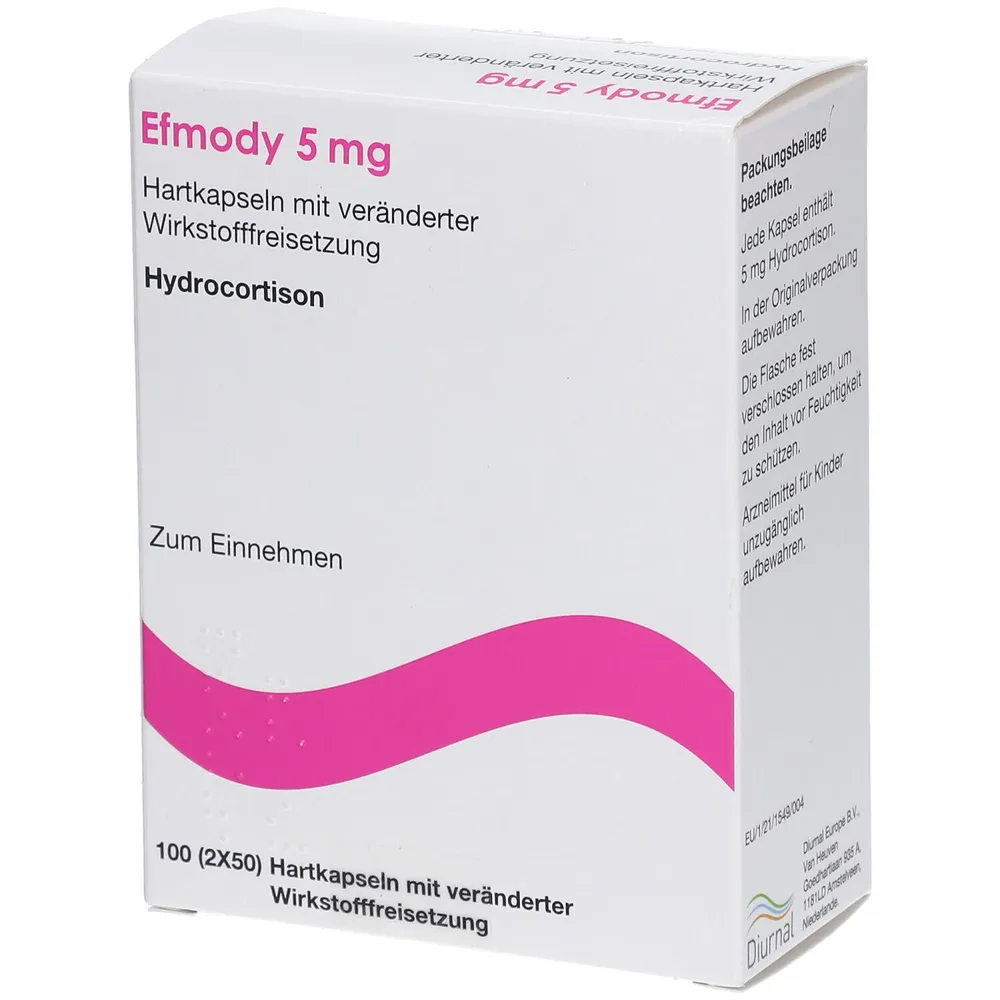
Table of Contents
- Patient Information Leaflet: Information for the User
- Efmody 5 mg modified-release hard capsules, 10 mg modified-release hard capsules
- 1. What Efmody is and what it is used for
- 2. What you should know before taking Efmody
- 3. How to take Efmody
- 4. Possible side effects
- 5. How to store Efmody
- 6. Package contents and other information
Patient Information Leaflet: Information for the User
Efmody 5 mg modified-release hard capsules, 10 mg modified-release hard capsules
hydrocortisone
Please read all of this leaflet carefully before you start taking this medicine because it contains important information for you.
- Keep this leaflet. You may need to read it again.
- If you have any questions, ask your doctor or pharmacist.
- This medicine has been prescribed for you only. Do not give it to other people, even if they have the same symptoms as you, because it could be harmful.
- If you experience any side effects, including those not listed in this leaflet, contact your doctor or pharmacist. See section 4.
Contents of this leaflet
- What Efmody is and what it is used for
- What you need to know before taking Efmody
- How to take Efmody
- Possible side effects
- How to store Efmody
- Contents of the pack and other information
1. What Efmody is and what it is used for
The medicine contains the active substance hydrocortisone, which belongs to a group of medicines known as corticosteroids.
Hydrocortisone is the synthetic version of the hormone cortisol, which is produced by the adrenal glands in the body. Efmody is used when the adrenal glands do not produce enough cortisol due to a hereditary condition called congenital adrenal hyperplasia or a disorder known as adrenal insufficiency. It is used in adults and adolescents aged 12 years and older.
2. What you should know before taking Efmody
Do not take Efmody
- if you are allergic to hydrocortisone or to any of the other ingredients of this medicine (listed in section 6).
Warnings and precautions
Talk to your doctor or pharmacist before taking Efmody if any of the following apply:
Adrenal crisis
- you have an adrenal crisis. If you vomit or feel very unwell, you may need an injection of hydrocortisone. Your doctor will teach you how to do this in an emergency.
Infections
- you have an infection or do not feel well. Your doctor may need to prescribe temporarily additional hydrocortisone.
Immunisation
- you need to have a vaccination. Usually, taking Efmody should not prevent you from receiving a vaccination.
Fertility
- if you have reduced fertility due to a condition known as congenital adrenal hyperplasia, your fertility may be restored, sometimes shortly after starting treatment with Efmody. This can occur in both men and women. Talk to your doctor about your possible need for contraception before starting treatment with Efmody.
Other
- you are due to have surgery. Inform the surgeon or anaesthetist that you are taking Efmody before the operation.
- you have a long-term digestive system condition (such as chronic diarrhoea) that affects how your intestine absorbs food. Your doctor may prescribe another medicine or monitor you more closely to ensure you are receiving the correct dose.
Do not stop taking Efmody without consulting your doctor, as this could rapidly make you seriously unwell.
Since Efmody replaces the normal hormone missing in your body, side effects are less likely. However:
- excessive amounts of Efmody may affect the bones, so your doctor will monitor the dose carefully;
- some patients taking hydrocortisone have experienced anxiety, depression or confusion. Inform your doctor if you display unusual behaviour or have suicidal thoughts after starting treatment (see section 4);
- allergic reactions to hydrocortisone may occur rarely. People who are already allergic to other medicines may be more likely to develop an allergy to hydrocortisone. Inform your doctor immediately if you experience any reaction such as swelling or difficulty breathing after taking Efmody (see section 4);
- high doses of hydrocortisone may increase the risk of heart disease and circulatory problems by causing increased blood pressure, salt and water retention, obesity and diabetes. If you have symptoms of excessive thirst or excessive urination, inform your doctor immediately;
- treatment with steroids may lead to low potassium levels in the blood (hypokalaemia). See section 4. Your doctor will monitor your potassium levels to check for any changes;
- hydrocortisone may reduce growth in children. Your doctor will monitor growth during treatment with Efmody;
- children with congenital adrenal hyperplasia taking hydrocortisone may show signs of early sexual development or puberty. Your doctor will monitor development during treatment with Efmody;
- contact your doctor if blurred vision or other visual disturbances occur.
Other medicines and Efmody
Inform your doctor or pharmacist if you are taking, have recently taken, or might take any other medicines.
Some medicines may affect the action of Efmody, which may require your doctor to adjust the dose of Efmody.
Your doctor may need to increase the dose of Efmody if you are taking certain medicines, including:
- medicines used to treat epilepsy: phenytoin, carbamazepine, oxcarbazepine;
- barbiturate medicines, such as phenobarbital and primidone;
- medicines used to treat infections (antibiotics) - rifampicin and rifabutin;
- medicines used to treat human immunodeficiency virus (HIV) infection and AIDS: efavirenz and nevirapine;
- herbal medicines, such as St. John’s wort.
Your doctor may need to decrease the dose of Efmody if you are taking certain medicines, including:
- medicines used to treat fungal diseases - itraconazole, posaconazole and voriconazole;
- medicines used to treat infections (antibiotics) - erythromycin and clarithromycin;
- a medicine used to treat human immunodeficiency virus (HIV) infection and AIDS - ritonavir.
If you take medicines that can lower potassium levels, the risk of developing hypokalaemia (low potassium levels) will be higher than when taking Efmody alone, and you will be monitored by your doctor. These medicines include:
- medicines used to control sodium (salt) levels - mineralocorticoids, such as fludrocortisone;
- medicines used to reduce body fluid content - diuretics;
- medicines used to increase intestinal transit - stimulant laxatives;
- medicines used to test the adrenal gland - tetracosactide.
Efmody with food and drink
Some foods and drinks may affect the action of Efmody, which may require your doctor to reduce the dose. These include:
- grapefruit juice,
- liquorice. (This may also lower potassium levels.)
Pregnancy, breast-feeding and fertility
It is known that hydrocortisone crosses the placenta during pregnancy and is present in breast milk; however, there is no evidence that this causes harm to newborns/breastfed infants. If you are pregnant, think you might be pregnant, are planning to become pregnant, or are breast-feeding, ask your doctor for advice before taking this medicine.
If you are a woman with congenital adrenal hyperplasia who has not yet reached menopause, your periods may return or become more regular. Restored fertility could lead to an unexpected pregnancy, even before your periods return. See also section “Warnings and precautions” regarding fertility in men and women with congenital adrenal hyperplasia.
Driving and using machines
Efmody has a minor influence on the ability to drive and use machines. Untreated adrenal insufficiency may affect the ability to drive and use machines. Inform your doctor immediately if you feel tired or dizzy while taking Efmody (see section 4 “Possible side effects”).
3. How to take Efmody
Take this medicine exactly as instructed by your doctor, nurse, or pharmacist. If you have any doubts, consult your doctor, pharmacist, or nurse.
Your doctor will determine the appropriate starting dose of Efmody and will then adjust the dose as needed, depending on the severity of your condition, your response to Efmody, and any changes in your health status. Blood tests will be used to monitor the effect on your adrenal gland and to check your sodium and potassium levels. In case of illness, during the preoperative period, or during periods of severe stress, your doctor may instruct you to take another corticosteroid medicine instead of Efmody or in addition to it.
The daily dose may be divided into two doses, with two-thirds or three-quarters of the daily dose taken in the evening at bedtime and the remainder taken in the morning.
The morning dose of Efmody should be taken upon waking, and the evening dose should be taken at bedtime.
Use in children
There is no information available on the safety and efficacy of Efmody in children under 12 years of age.
Other hydrocortisone-containing medicines are available for children under 12 years of age.
How to take the medicine
Swallow the capsules with water.
Do not chew the capsules, as this could alter the release of the medicine.
If you take more Efmody than you should
If you take more Efmody than prescribed, contact your doctor or pharmacist as soon as possible for further advice.
If you forget to take Efmody
If you forget to take a dose, take it as soon as possible.
If you stop taking Efmody
Do not stop taking Efmody without consulting your doctor. Stopping treatment suddenly may rapidly lead to an adrenal crisis.
If you do not feel well
Inform your doctor or pharmacist if you become ill, experience severe stress, suffer an injury, or are about to undergo surgery, because your doctor may recommend taking another corticosteroid medicine instead of Efmody or in addition to it (see section 2).
If you take too much Efmody
Poisoning or death is rare with excessive amounts of Efmody, but you must inform your doctor immediately.
If you have any questions about the use of this medicine, consult your doctor or pharmacist.
4. Possible side effects
Like all medicines, this medicine can cause side effects, although not everybody gets them.
Tell your doctor as soon as possible if you experience any of the following side effects:
Serious side effects
- If you experience a reaction such as swelling or difficulty breathing after taking Efmody, seek immediate medical advice and speak to your doctor as soon as possible, since these signs could indicate a severe allergic reaction (anaphylactoid reactions) (see section 2).
- Adrenal crisis and symptoms of adrenal insufficiency have been frequently reported (may affect up to 1 in 10 people). If you take less hydrocortisone than you need, you may feel very unwell. If you feel unwell and especially if you start vomiting, you must inform your doctor immediately, as you may require additional hydrocortisone or a hydrocortisone injection.
Other side effects
Very common (may affect more than 1 in 10 people)
- Tiredness (fatigue)
Common (may affect up to 1 in 10 people)
- Abdominal pain (in the upper part of the abdomen)
- Feeling unwell (nausea)
- Diarrhoea
- Loss of energy or weakness (asthenia)
- Increase in fatty tissue
- Changes in blood tests relating to potassium (hypokalaemia or low potassium levels)
- Changes in blood tests relating to testosterone (increased or decreased testosterone in the blood)
- Changes in blood tests relating to low-density lipoproteins (increased LDL cholesterol)
- Changes in blood tests relating to kidneys (increased renin)
- Weight gain (weight gain including abnormal weight gain)
- Decreased appetite
- Increased appetite
- Changes in blood tests relating to glucose, increased fasting levels (impaired fasting glycaemia)
- Joint pain (arthralgia)
- Tired or weak muscles (muscle fatigue or weakness)
- Muscle pain and leg pain (myalgia, limb pain)
- Pain, numbness, tingling or altered sensation in the thumb or fingers due to swelling at the wrist (carpal tunnel syndrome with hypoesthesia or paresthesia)
- Dizziness
- Headache
- Abnormal dreams
- Depressed mood
- Inability to sleep or sleep disturbances (insomnia or sleep disorder)
- Feeling nervous, irritable or stressed (irritability, stress)
- Acne
- Excessive growth of hair (hirsutism)
Uncommon (may affect up to 1 in 100 people)
- Tendency to develop bruising (increased tendency to bruise)
- Physical characteristics associated with Cushing's syndrome (cushingoid features)
- Swelling of hands, legs or feet (peripheral oedema)
- Swelling of the face or body (oedema)
- Feeling thirsty
- Infection of the fingernails or toenails, including the skin at the edge of the nail (paronychia)
- Thinning of bones (decreased bone density)
- Changes in blood tests relating to glucose (increased blood glucose at any time)
- Changes in blood tests relating to bone formation (decreased osteocalcin)
- Changes in blood tests relating to kidneys (decreased renin)
- Reduced urination (reduced urine output)
- Fluid retention (fluid retention)
- Increased insulin levels in the body (hyperinsulinaemia)
- Feeling drowsy or excessively sleepy (somnolence)
- Heavy menstrual cycle
- Irregular menstrual cycle
- Excessive sweating (hyperhidrosis)
- Stretch marks (striae cutis)
- Increased blood pressure
Not known (frequency cannot be estimated from the available data)
- Insufficient cortisol in the blood, including adrenal crises (adrenal insufficiency including acute adrenocortical insufficiency)
Long-term treatment with hydrocortisone may reduce bone density. Your doctor will monitor your bones (see section 2).
People who require steroid treatment may have an increased risk of heart disease. Your doctor will monitor you for this.
Long-term treatment with hydrocortisone may affect growth in children and adolescents. Your doctor will monitor growth in young people. Some children with congenital adrenal hyperplasia treated with hydrocortisone may experience earlier onset of puberty than expected. Your doctor will monitor development (see section 2).
In addition, the following side effects have been reported with other hydrocortisone-containing medicines used for indications other than replacement therapy for adrenal insufficiency at higher doses (frequency not known).
Immune system disorders
Activation of pre-existing infections (tuberculosis, fungal and viral infections including herpes).
Endocrine disorders
Diabetes mellitus
Psychiatric disorders
Euphoria (excitement) and psychosis (loss of contact with reality, hallucinations).
Eye disorders
Increased intraocular pressure (ocular hypertension) and cataract.
Gastrointestinal disorders
Dyspepsia (indigestion) and worsening of existing gastric ulcer (stomach).
Skin and subcutaneous tissue disorders
Impaired (slow) wound healing.
Musculoskeletal and connective tissue disorders
Osteoporosis (thinning of bones) with spontaneous fractures.
Reporting of side effects
If you experience any side effect, including those not listed in this leaflet, talk to your doctor or pharmacist.
You can also report side effects directly via the national reporting system listed in Annex V. Reporting side effects can help provide more information on the safety of this medicine.
5. How to store Efmody
Keep this medicine out of the sight and reach of children.
Do not use this medicine after the expiry date which is stated on the bottle and the outer carton after
Exp.
The expiry date refers to the last day of that month.
This medicine does not require any special storage temperature.
Store in the original packaging.
Keep the bottle tightly closed to protect the medicine from moisture.
Do not dispose of any medicine via wastewater or household waste. Ask your pharmacist how to
dispose of medicines you no longer use. This will help protect the environment.
6. Package contents and other information
What Efmody contains
- The active substance is hydrocortisone.
- Efmody 5 mg modified-release hard capsules: each modified-release capsule contains 5 mg of hydrocortisone.
- Efmody 10 mg modified-release hard capsules: each modified-release capsule contains 10 mg of hydrocortisone.
- The other ingredients are:
Granules
- microcrystalline cellulose, povidone, methacrylic acid - methyl methacrylate copolymer, talc, and dibutyl sebacate.
Capsule
Gelatin.
Efmody 5 mg modified-release hard capsules (white/blue)
Titanium dioxide (E_171) and indigo carmine (E_132).
Efmody 10 mg modified-release hard capsules (white/green)
Titanium dioxide (E_171), indigo carmine (E_132), and yellow iron oxide (E_172).
Printing ink
The printing ink on the capsules contains shellac, black iron oxide (E_172), propylene glycol, and potassium hydroxide.
Description of the appearance of Efmody and contents of the pack
- Efmody 5 mg modified-release hard capsules: Capsule (approximately 19 mm long) with an opaque blue cap and an opaque white body, printed with «CHC 5 mg», containing white to almost white granules.
- Efmody 10 mg modified-release hard capsules: Capsule (approximately 19 mm long) with an opaque green cap and an opaque white body, printed with «CHC 10 mg», containing white to almost white granules.
Efmody is packaged in high-density polyethylene plastic bottles with a child-resistant and tamper-proof polypropylene screw cap, including an integrated desiccant. Each bottle contains 50 modified-release hard capsules.
Pack sizes:
Carton containing 1 bottle of 50 modified-release hard capsules.
Carton containing 2 bottles of 50 modified-release hard capsules (100 capsules).
Not all pack sizes may be marketed.
Marketing Authorisation Holder
Neurocrine Netherlands B.V.
Van Heuven Goedhartlaan 935 A
1181LD Amstelveen
The Netherlands
Manufacturer
Skyepharma Production S.A.S
Zone Industrielle Chesnes Ouest
55 Rue du Montmurier
Saint-Quentin-Fallavier, 38070
France
Other sources of information
More detailed information on this medicinal product is available on the website of the European Medicines Agency: https://www.ema.europa.eu.