Efferalgan for influenza and cold
Italy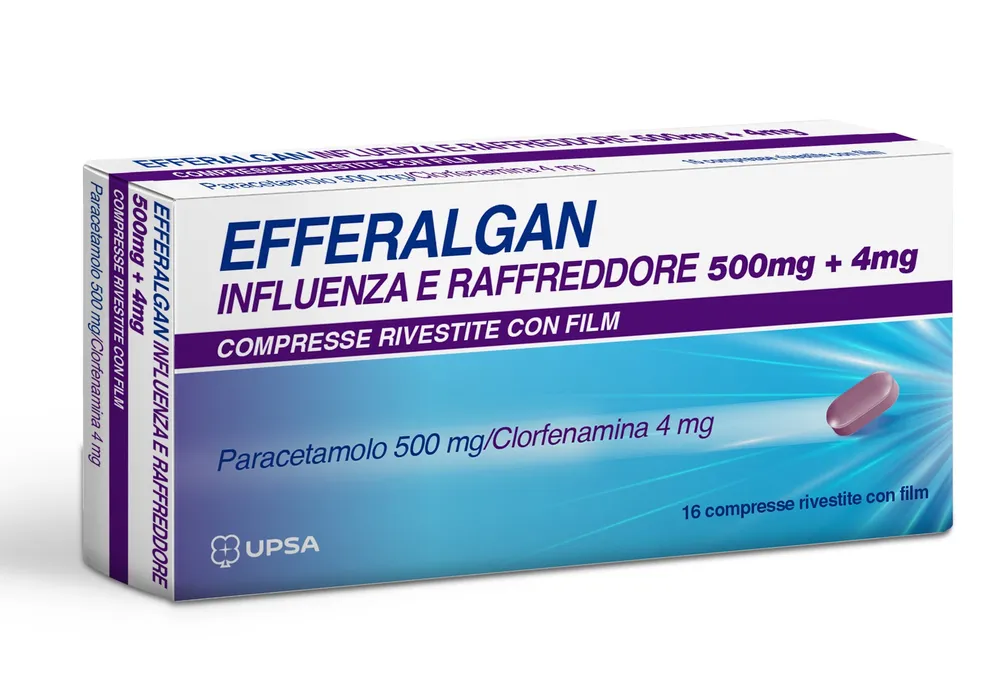
Table of Contents
- PACKAGE LEAFLET
- Package leaflet: Information for the patient
- EFFERALGAN INFLUENZA E RAFFREDDORE 500 mg + 4 mg film-coated tablets
- 1. What EFFERALGAN COLD AND FLU IS AND WHAT IT IS USED FOR
- 2. What you should know before taking EFFERALGAN INFLUENZA E RAFFREDDORE
- 4. Possible side effects
- 5. How to store EFFERALGAN COLD AND FLU
- 6. Package contents and other information
PACKAGE LEAFLET
Package leaflet: Information for the patient
EFFERALGAN INFLUENZA E RAFFREDDORE 500 mg + 4 mg film-coated tablets
Paracetamol 500 mg/Chlorpheniramine 4 mg
Please read this entire leaflet carefully before taking this medicine, as it contains
important information for you.
Always take this medicine exactly as described in this leaflet or as your doctor,
pharmacist or nurse has instructed you to do.
- Keep this leaflet. You may need to read it again.
- If you need more information or advice, consult your pharmacist.
- If you experience any adverse reactions, including those not listed in this leaflet, consult your doctor, pharmacist or nurse. See section 4.
- Consult your doctor if you do not notice any improvement or if your symptoms worsen after 5 days.
Contents of this leaflet
- What EFFERALGAN INFLUENZA E RAFFREDDORE is and what it is used for
- What you need to know before taking EFFERALGAN INFLUENZA E RAFFREDDORE
- How to take EFFERALGAN INFLUENZA E RAFFREDDORE
- Possible side effects
- How to store EFFERALGAN INFLUENZA E RAFFREDDORE
- Contents of the pack and other information
1. What EFFERALGAN COLD AND FLU IS AND WHAT IT IS USED FOR
Pharmacotherapeutic category: ANTIPYRETIC ANALGESIC ANTIHISTAMINE H1 RECEPTOR ANTAGONISTS, ATC code: R05X
This medicinal product contains two active substances:
- Paracetamol, which relieves pain and reduces fever,
- Maleate of chlorpheniramine, which reduces nasal discharge, eye watering, and sneezing.
This medicine is indicated, during colds, rhinitis, rhinopharyngitis and influenza-like conditions in adults and adolescents over 15 years of age, for the treatment of:
- Clear nasal discharge and eye watering,
- Sneezing,
- Headache and/or fever.
For children under 15 years of age, other medicines are available: please consult your doctor or pharmacist.
Consult your doctor if you do not feel better or feel worse after 5 days.
2. What you should know before taking EFFERALGAN INFLUENZA E RAFFREDDORE
COLD AND FLU
Do not take EFFERALGAN INFLUENZA E RAFFREDDORE:
- if you are allergic to the active substances or to any of the other components of this medicine (listed in section 6),
- if you are under 15 years of age,
- if you have severe liver disease,
- if you are at risk of glaucoma (increased pressure inside the eye),
- if you have difficulty urinating due to prostate problems or other causes.
Warnings and precautions
Talk to your doctor, pharmacist, or nurse before taking EFFERALGAN INFLUENZA E RAFFREDDORE. In case of overdose or accidental ingestion of an excessive dose, consult your doctor immediately.
This medicine contains paracetamol and maleate chlorpheniramine. Other medicines also contain these substances. Check that you are not taking other medicines containing paracetamol and/or maleate chlorpheniramine, including those obtained without a prescription. Do not combine these medicines to avoid exceeding the recommended daily dose. If you need to take other medicines containing these substances, consult your doctor or pharmacist first. (See section 3 "How to take EFFERALGAN INFLUENZA E RAFFREDDORE".)
If you have purulent nasal discharge, fever, or pain lasting more than 3 days, or if symptoms do not improve after 5 days of treatment, consult your doctor.
The dosage, 5-day treatment duration, and contraindications must be strictly observed.
Regarding the presence of paracetamol:
Before taking this medicine, you must inform your doctor or pharmacist if you:
- weigh less than 50 kg,
- have mild to moderate hepatocellular insufficiency (liver disease),
- have renal impairment (kidney disease),
- have glucose-6-phosphate dehydrogenase deficiency,
- are a chronic alcoholic,
- have anorexia, bulimia, cachexia (severe physical weakness), or chronic malnutrition (low hepatic glutathione reserves),
- are dehydrated or hypovolemic (reduced total blood volume).
Alcohol consumption during treatment is not recommended.
Paracetamol may cause serious skin reactions. If you develop a skin rash or other signs of allergy, stop treatment immediately and contact your doctor immediately.
Regarding the presence of maleate chlorpheniramine:
You must stop treatment and contact your doctor or pharmacist immediately if you experience one (or more) of the following adverse effects:
- diarrhea, vomiting, tachycardia, high body temperature (sweating, tremors, muscle rigidity, confusion, agitation).
These adverse reactions may occur, especially if you are already taking antidepressant medicines and/or a product containing dextromethorphan.
Use with caution in patients (especially elderly) with prostate problems, severe hepatic and/or renal impairment, predisposition to chronic constipation, orthostatic hypotension, dizziness, or drowsiness.
Children and adolescents
Not applicable.
Other medicines and EFFERALGAN INFLUENZA E RAFFREDDORE
Inform your doctor or pharmacist if you are taking, have recently taken, or might take any other medicines.
Regarding the presence of paracetamol:
Consult your doctor if you are taking an oral anticoagulant, a medicine that slows blood clotting (vitamin K antagonist). At high doses, EFFERALGAN INFLUENZA E RAFFREDDORE may enhance the effect of the anticoagulant. If necessary, your doctor will adjust the anticoagulant dosage.
Consult your doctor if you are taking flucloxacillin (an antibiotic from the penicillin class), due to an increased risk of metabolic acidosis, especially if you have a risk factor for glutathione deficiency, such as severe renal failure, sepsis (severe systemic infection), malnutrition, or chronic alcoholism.
If your doctor has prescribed monitoring of uric acid or blood sugar levels for you or your child, inform them that you or your child is taking this medicine.
Regarding the presence of maleate chlorpheniramine:
Avoid taking sodium oxybate, alcoholic beverages, or medicines containing alcohol during treatment.
Inform your doctor if you are taking antidepressant medicines and/or a product containing dextromethorphan.
EFFERALGAN INFLUENZA E RAFFREDDORE with food, drinks, and alcohol
This medicine may increase drowsiness caused by alcohol:
- it is preferable to start treatment in the evening,
- and avoid consuming alcoholic beverages or medicines containing alcohol during treatment.
Pregnancy, breastfeeding, and fertility
If you are pregnant, think you may be pregnant, planning to become pregnant, or breastfeeding, consult your doctor or pharmacist before taking this medicine.
Pregnancy
If necessary, EFFERALGAN INFLUENZA E RAFFREDDORE may be used during pregnancy. It is advisable to use the lowest possible dose that relieves your symptoms and to take it for the shortest possible duration. Contact your doctor if symptoms do not improve.
However, excessive use of this medicine in the final stages of pregnancy may cause neurological effects in newborns. Therefore, always consult your doctor before taking this medicine and never exceed the recommended dose.
Breastfeeding
This medicine is very likely excreted in breast milk. Due to its sedative properties, which may affect the newborn (lethargy, reduced muscle tone), or conversely, its stimulant properties (insomnia), this medicine is not recommended during breastfeeding.
Fertility
Paracetamol may possibly impair female fertility, which is reversible upon discontinuation of treatment.
Driving and using machines
Exercise great caution when driving or operating machinery, as this medicine may cause drowsiness, especially at the beginning of treatment. If you have further questions, consult your doctor or pharmacist.
This effect is enhanced by consuming alcoholic beverages, medicines containing alcohol, or sedatives. It is preferable to start treatment in the evening.
EFFERALGAN INFLUENZA E RAFFREDDORE contains carmoisine (azorubine) (E122) and croscarmellose sodium.
This medicine contains azorubine (a coating agent) (E122), which may cause allergic reactions.
This medicine contains less than 1 mmol (23 mg) of sodium per tablet, i.e., it is essentially "sodium-free".
How to take EFFERALGAN INFLUENZA E RAFFREDDORE
Take this medicine exactly as directed by your doctor, pharmacist, or nurse. If you have any doubts, consult your doctor, pharmacist, or nurse.
This formulation is intended for adults and adolescents aged over 15 years.
Weight (age) | Dose per administration | Administration interval | Maximum daily dose (tablets)
---|---|---|---
Adults and adolescents >50 kg (>15 years) | 1 tablet (500 mg paracetamol, 4 mg maleate chlorpheniramine) | 4 hours | 4 tablets (2,000 mg paracetamol, 16 mg maleate chlorpheniramine)
The maximum daily dose of maleate chlorpheniramine must not exceed 16 mg per day, i.e., 4 tablets per day.
Check that you are not taking other medicines containing paracetamol and/or maleate chlorpheniramine, including those obtained without a prescription.
Do not combine these medicines to avoid exceeding the recommended daily dose. If you need to take other medicines containing these substances, consult your doctor or pharmacist first.
DO NOT TAKE MORE THAN 4 GRAMS OF PARACETAMOL PER DAY (considering all other medicines containing paracetamol in their composition).
Method of administration
Oral use.
Tablets should be swallowed whole with a drink (e.g., water, milk, fruit juice).
It is preferable to start treatment in the evening due to the sedative effect of this medicine.
Frequency of administration
1 tablet, repeated as needed after a minimum interval of 4 hours, without exceeding 4 tablets per day.
Duration of treatment
If fever or pain persists for more than 3 days, or if symptoms do not improve after 5 days of treatment, treatment management should be reassessed.
Renal impairment
In case of renal impairment (kidney disease), consult your doctor, who will adjust the doses and administration intervals. The minimum interval between doses should be modified according to creatinine clearance (a parameter defining the severity of renal insufficiency):
Creatinine clearance (cl) | Administration interval
---|---
cl ≥50 ml/min | 4 hours
cl 10–50 ml/min | 6 hours
cl <10 ml/min | 8 hours
If you take more EFFERALGAN INFLUENZA E RAFFREDDORE than you should
Stop treatment immediately and consult your doctor immediately or go to the nearest Emergency Department as soon as possible.
An overdose can be fatal.
In the first 24 hours, the main symptoms of poisoning are: nausea, vomiting, anorexia, pallor, malaise, sweating, and abdominal pain.
Paracetamol overdose can cause liver damage, brain damage, coma, and even death, particularly in vulnerable populations such as young children, elderly individuals, and in certain conditions (liver or kidney disease, chronic alcoholism, chronic malnutrition, fasting, recent weight loss, Gilbert's syndrome, and in patients receiving concomitant treatment with certain drugs). Rare cases of pancreas damage have also been reported.
Maleate chlorpheniramine overdose can cause seizures (especially in children), loss of consciousness, and coma.
If you forget to take EFFERALGAN INFLUENZA E RAFFREDDORE
Do not take a double dose to make up for the missed tablet.
If you stop taking EFFERALGAN INFLUENZA E RAFFREDDORE
Not applicable.
If you have any doubts about using this medicine, consult your doctor, pharmacist, or nurse.
4. Possible side effects
Like all medicines, this medicine can cause side effects, although not everyone experiences them.
RELATED TO PARACETAMOL
Rare side effects: may affect up to 1 in 1,000 people
- flushing or allergic reactions with sudden swelling of the face and neck, or sudden malaise with a drop in blood pressure. Treatment must be stopped immediately, the doctor must be informed, and you must never take medicines containing paracetamol again.
- skin redness, skin rashes, urticaria. Treatment must be stopped immediately, the doctor must be informed, and you must never take medicines containing paracetamol again.
- blood spots on the skin. Treatment must be stopped immediately; consult your doctor before taking any medicine containing paracetamol.
Very rare side effects: may affect up to 1 in 10,000 people
- biological changes requiring a blood test: liver function disorders, abnormally low levels of certain white blood cells or of certain blood components such as platelets, which may cause nosebleeds or bleeding gums. In such cases, consult a doctor.
- severe skin reactions. Treatment must be stopped immediately, the doctor must be informed, and you must never take medicines containing paracetamol again.
Frequency not known: frequency cannot be estimated from the available data
- diarrhoea, abdominal pain.
- increased liver enzymes.
RELATED TO CHLORPHENAMINE MALEATE
- Abnormally low levels of certain white or red blood cells or of certain blood components such as platelets.
- Swelling, more rarely allergic reactions with sudden swelling of the face and neck or sudden malaise with drop in blood pressure. Treatment must be stopped immediately, the doctor must be informed, and you must never take medicines containing chlorphenamine maleate again.
- Skin redness, skin rashes, urticaria. Treatment must be stopped immediately, the doctor must be informed, and you must never take medicines containing chlorphenamine maleate again.
- Blood spots on the skin. Treatment must be stopped immediately; consult your doctor before taking any medicine containing chlorphenamine maleate.
Other side effects may also occur:
- drowsiness, altered state of alertness, more pronounced at the beginning of treatment,
- reduced blood pressure when standing, which may be accompanied by dizziness,
- dry mouth, visual disturbances, urinary retention, constipation, palpitations,
- memory or concentration problems (more common in elderly patients), confusion, balance disorders, dizziness, hallucinations,
- difficulty in coordinating movements, tremors.
- Less frequently, excitatory effects: restlessness, nervousness and insomnia.
Reporting of side effects
If you experience any side effect, including those not listed in this leaflet, talk to your doctor, pharmacist or nurse. You can also report side effects directly via the national reporting system at the following address: https://www.aifa.gov.it/content/segnalazioni-reazioni-avverse
By reporting side effects, you can help provide more information on the safety of this medicine.
5. How to store EFFERALGAN COLD AND FLU
Keep this medicine out of the sight and reach of children.
Do not use this medicine after the expiry date stated on the packaging. The expiry date refers to the last day of that month.
This medicine does not require any special storage conditions.
Do not dispose of medicines via wastewater or household waste. Ask your pharmacist how to dispose of medicines you no longer use. This will help protect the environment.
6. Package contents and other information
What EFFERALGAN INFLUENZA E RAFFREDDORE contains
-
The active substances are: Paracetamol...................................................................................................................500.00 mg
Chlorphenamine maleate........................................................................................................4.00 mgper film-coated tablet
-
The other components are: Croscarmellose sodium, hypromellose, microcrystalline cellulose, povidone K90, glycerol behenate, magnesium stearate, coating agent*, polishing agent**
*Coating agent:
Hypromellose (E464), propylene glycol (E1520), titanium dioxide (E171), carmoisine (azorubine) (E122), indigo carmine (E132)
**Polishing agent:
Purified water, white beeswax (E901), carnauba wax (E903), polysorbate 20 (E432), sorbic acid (E200)
Description of the appearance of EFFERALGAN INFLUENZA E RAFFREDDORE and contents of the pack
This medicine is in the form of film-coated tablets, oblong-shaped and purple in colour.
Pack sizes of 4, 8, 12, 16, 20, 24, 28, or 32 tablets.
Not all pack sizes may be marketed.
Marketing Authorization Holder
UPSA SAS, 3, rue Joseph Monier, Rueil Malmaison, France
represented in Italy by
UPSA ITALY S.R.L., Viale Luca Gaurico 9/11 – Roma
Manufacturer
UPSA SAS
304, avenue du docteur Jean Bru - 47000 Agen - France
979, avenue des pyrenees - 47520 Le Passage - France
This medicinal product is authorized in the Member States of the European Economic Area under the following names:
Bulgaria: Фервекс настинка и грип 500 mg/ 4 mg филмирани таблетки
Greece: Depon Cold & Flu, coated tablet (film-coated tablet), (500 + 4) mg/TAB
France: FERVEX RHUME, comprimé pelliculé
Italy: EFFERALGAN INFLUENZA E RAFFREDDORE
Poland: Fervex ExtraTabs, tabletki powlekane; Paracetamol 500 mg + maleinian chlorfenaminy 4 mg
Romania: Fervex raceala si gripa 500 mg / 4 mg comprimate filmate
Further information
More detailed information on this medicinal product is available on the website of the Italian Medicines Agency (AIFA) at http://www.aifa.gov.it/
Health education notes
WHAT TO DO IN CASE OF NASAL CONGESTION OR RHINORRHEA
This medicine is used for the treatment of nasal congestion, headache and/or fever associated with colds in adults and adolescents over 15 years of age.
The common cold is a very common, mild acute infection affecting the nasal mucosa (the inner lining of the nose). This mucosa secretes a fluid that continuously humidifies inhaled air and helps fight infectious agents. When the mucosa becomes irritated, it swells and increases normal fluid secretion, resulting in a "runny nose".
To help prevent symptoms, observe the following hygiene measures as much as possible:
- Wash your hands regularly, especially before meals or while preparing food;
- Cover your mouth when coughing or sneezing;
- Blow your nose regularly using disposable paper tissues (to avoid re-infection), dispose of them immediately after use, and wash your hands;
- If using a nasal solution, avoid sharing the same nozzle among all family members;
- Avoid visiting women who have recently given birth and their newborns, elderly individuals, or people taking immunosuppressants (corticosteroids, medications for blood disorders, cancer, etc.). In such cases, the use of a face mask is recommended.
For your well-being:
- Drink enough fluids;
- Moisten the nasal mucosa with appropriate nasal wash solutions (physiological saline, thermal or seawater spray). Avoid sharing the same nozzle among family members.
- Avoid active and passive smoking;
- Sleep with your head elevated to improve airflow through blocked nostrils, and ensure adequate rest;
- If necessary, protect the skin of the upper lip and nostrils with a cream, as repeated nose-blowing may irritate the skin;
- Avoid air conditioners that dehumidify the air and dry out the nasal mucosa; the ideal room temperature is about 18–20°C;
- Ensure regular ventilation of rooms.
WHAT TO DO IN CASE OF FEVER
Normal body temperature varies from person to person and ranges between 36.5°C and 37.5°C. A temperature above 38°C may be considered fever.
If the effects of fever become too uncomfortable, you may take this medicine containing paracetamol, following the recommended dosage.
Remember to drink frequently to prevent the risk of dehydration.
With this medicine, fever should decrease rapidly. However:
- if unusual symptoms appear,
- if fever persists for more than 3 days or worsens,
- if headache worsens or if vomiting occurs,
CONSULT A DOCTOR IMMEDIATELY.
WHAT TO DO IN CASE OF PAIN
Pain perception intensity and tolerance vary from person to person.
- If there is no improvement after 5 days of treatment,
- if the pain is severe, unexpected, and occurs suddenly (especially significant chest pain) and/or, conversely, occurs regularly,
- if pain is accompanied by other signs such as general malaise, fever, unusual swelling in the painful area, or reduced strength in a limb,
- if pain wakes you up during the night,
CONSULT A DOCTOR IMMEDIATELY.