Edurant
Italy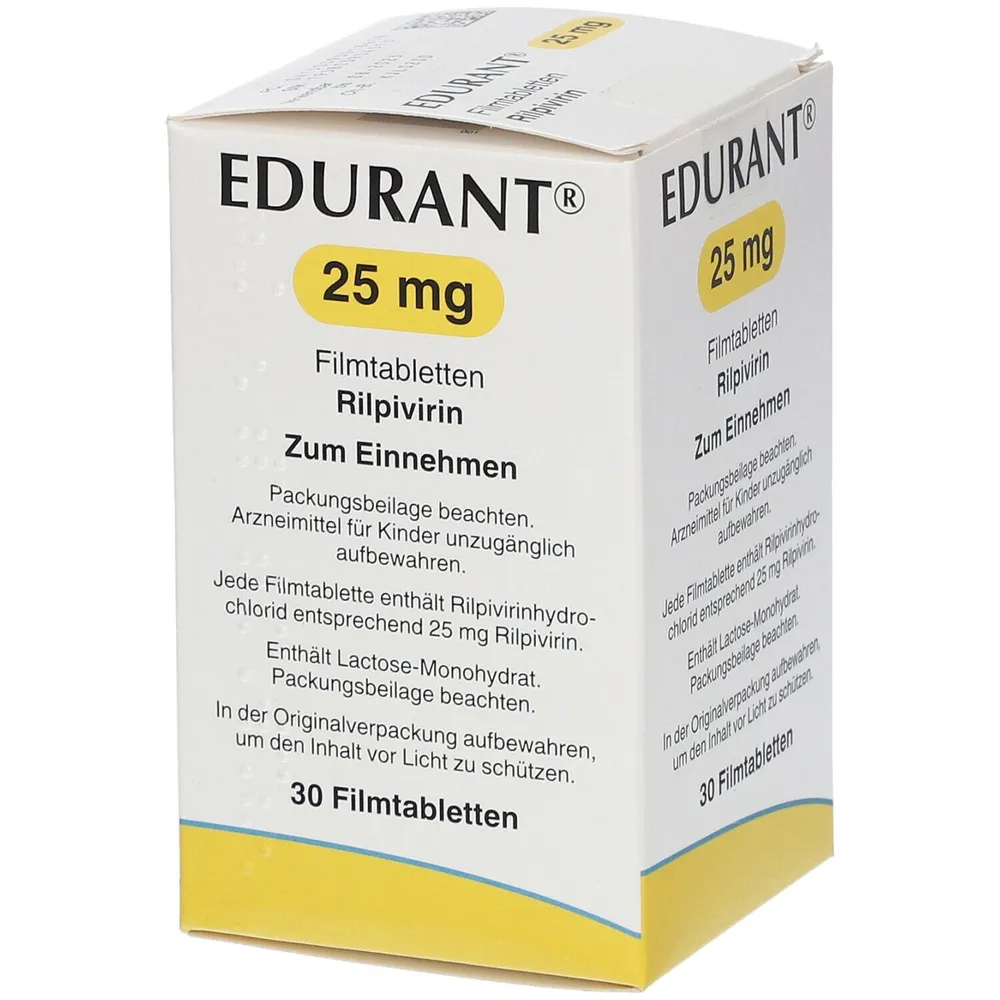
Table of Contents
- Patient Information Leaflet
- EDURANT 25 mg film-coated tablets
- 1. What EDURANT is and what it is used for
- 2. What you should know before taking EDURANT
- 3. How to take EDURANT
- 4. Possible side effects
- 5. How to store EDURANT
- 6. Package contents and other information
- Package leaflet: Information for the user
- EDURANT 2.5 mg dispersible tablets
- 1. What EDURANT is and what it is used for
- 2. What you should know before taking EDURANT
- 3. How to take EDURANT
- 4. Possible side effects
- 5. How to store EDURANT
- 6. Package contents and other information
Patient Information Leaflet
EDURANT 25 mg film-coated tablets
rilpivirine
Please read all of this leaflet carefully before you start taking this medicine, as it contains important information for you.
- Keep this leaflet. You may need to read it again.
- If you have any questions, ask your doctor or pharmacist.
- This medicine has been prescribed for you only. Do not pass it on to others. It may be harmful to others, even if their symptoms are the same as yours.
- If you experience any side effects, including any not listed in this leaflet, tell your doctor or pharmacist. See section 4.
Contents of this leaflet:
- What EDURANT is and what it is used for
- What you need to know before taking EDURANT
- How to take EDURANT
- Possible side effects
- How to store EDURANT
- Contents of the pack and other information
1. What EDURANT is and what it is used for
EDURANT contains rilpivirine, which is used for the treatment of human immunodeficiency virus (Human Immunodeficiency Virus, HIV) infection. It belongs to a group of medicines against HIV infection called non-nucleoside reverse transcriptase inhibitors (Non-Nucleoside Reverse Transcriptase Inhibitors, NNRTIs). EDURANT works by reducing the amount of HIV present in the body.
- EDURANT is used in combination with other antiretroviral medicines for the treatment of HIV infection in adults, adolescents, and children weighing at least 25 kg.
Your doctor will discuss with you which combination of medicines is best suited for you.
2. What you should know before taking EDURANT
Do not take EDURANT if you are allergic to rilpivirine or to any of the other excipients of this
medicinal product (listed in section 6).
Do not take EDURANT in combination with any of the following medicines, as they may
affect the action of EDURANT or of other medicines:
- carbamazepine, oxcarbazepine, phenobarbital, phenytoin (medicines used to treat epilepsy and prevent seizures)
- rifampicin and rifapentine (medicines used to treat certain bacterial infections, such as tuberculosis)
- omeprazole, esomeprazole, lansoprazole, pantoprazole, rabeprazole (proton pump inhibitors, medicines used to prevent and treat gastric ulcers, heartburn or acid reflux disease)
- dexamethasone (a corticosteroid used in various clinical conditions such as inflammation and allergic reactions); if taken orally or by injection, except as a single dose
- products containing St. John’s wort (Hypericum perforatum) (a herbal product used to treat depression).
If you are taking any of these medicines, consult your doctor for alternatives.
Warnings and precautions
Talk to your doctor or pharmacist before taking EDURANT.
EDURANT is not a cure for HIV infection. It is part of a treatment regimen that reduces the amount of
virus present in the blood.
EDURANT has only been administered to a limited number of patients aged 65 years or older. If you belong to this age group, discuss the use of EDURANT with your doctor.
Inform your doctor about your condition
Make sure to review the following points and inform your doctor if any of them apply to you.
- Inform your doctor if you have or have had liver problems, including hepatitis B and/or C, and/or kidney problems. Your doctor may assess the severity of your liver or kidney disease before deciding whether to administer EDURANT to you.
- Inform your doctor immediately if you notice any signs of infection (for example, fever, chills, sweating). In some patients with advanced HIV infection and a history of opportunistic infections, inflammatory signs and symptoms of previous infections may occur soon after starting anti-HIV treatment. These symptoms are believed to result from improved immune response, enabling the body to fight infections that may have been present without clear symptoms.
- In addition to opportunistic infections, autoimmune disorders (a condition occurring when the immune system attacks the body's healthy tissues) may also occur after starting medicines for HIV infection. Autoimmune disorders may occur several months after starting treatment. If you notice any signs of infection or other symptoms such as muscle weakness, initial weakness in hands and feet spreading towards the trunk, palpitations, tremor or hyperactivity, inform your doctor immediately to receive necessary treatment.
- Inform your doctor if you are taking medicines that may cause a life-threatening irregular heartbeat (Torsade de Pointes).
Children
EDURANT is not indicated for the treatment of children under 2 years of age or weighing less than
14 kg, as it has not been evaluated in these patients.
Other medicines and EDURANT
You may take EDURANT together with other medicines for HIV infection. Your doctor will advise you
which anti-HIV medicines can be combined with EDURANT, and together you will decide which combination best suits your needs. Follow your doctor's instructions carefully.
Some medicines may affect the levels of EDURANT in the blood when taken simultaneously.
Inform your doctor or pharmacist if you are taking, have recently taken, or might take any other medicine.
It is not recommended to combine EDURANT with other non-nucleoside reverse transcriptase inhibitors (NNRTIs) such as delavirdine, efavirenz, etravirine and nevirapine.
The effect of EDURANT or of other medicines may be affected if you take EDURANT
together with the following medicines. Inform your doctor if you are taking:
- rifabutin (a medicine used to treat certain bacterial infections). If you are taking this medicine while on EDURANT, read carefully how to take EDURANT in section 3 “Instructions for proper use in adults and adolescents (12 to 18 years of age)”.
- clarithromycin, erythromycin (antibiotics)
- cimetidine, famotidine, nizatidine, ranitidine (histamine H2-receptor antagonists used to treat gastric or intestinal ulcers or to relieve heartburn due to gastric acid reflux). If you are taking other medicines, read carefully how to take them in section 3 “Instructions for proper use in adults and adolescents (12 to 18 years of age)”.
- antacids (used to treat conditions related to gastric acid in the stomach; for example, aluminium/magnesium hydroxide, calcium carbonate). If you are taking other medicines, read carefully how to take them in section 3 “Instructions for proper use in adults and adolescents (12 to 18 years of age)”.
- methadone (used for narcotic withdrawal treatment and addictions)
- dabigatran etexilate (an anticoagulant). Inform your doctor if you are taking any of the medicines listed above.
Pregnancy and breastfeeding
Inform your doctor immediately if you are pregnant or planning a pregnancy: pregnant women should
discuss the use of EDURANT with their doctor.
Breastfeeding is not recommended for women with HIV because HIV infection can be transmitted to the infant through breast milk.
If you are breastfeeding or considering doing so, you should discuss this with your doctor as soon as possible.
Ask your doctor or pharmacist for advice before taking any medicine.
Driving and using machines
Some patients may experience fatigue, dizziness or drowsiness during treatment with
EDURANT. Do not drive or operate machinery if you feel tired, dizzy or drowsy while taking EDURANT.
EDURANT contains lactose
If your doctor has informed you that you have an intolerance to certain sugars, consult your doctor before taking
this medicine.
EDURANT contains sodium
This medicine contains less than 1 mmol of sodium (23 mg) per tablet, i.e. it is essentially “sodium-free”.
3. How to take EDURANT
Take EDURANT exactly as directed by your doctor or pharmacist. If you have any doubts, consult your doctor or pharmacist.
Instructions for correct use in adults, adolescents, and children (weighing at least 25 kg)
EDURANT is also available as dispersible tablets for pediatric patients aged 2 to less than 18 years with body weight of at least 14 kg and less than 25 kg (see separate instructions for use). Film-coated tablets and dispersible tablets are not equivalent. Do not substitute one 25 mg film-coated tablet with ten 2.5 mg dispersible tablets.
The recommended dose of EDURANT is one tablet once daily.
EDURANT must be taken with a meal. A meal is essential to ensure adequate levels of the active substance in the body. A nutritional drink alone (e.g. high in protein) does not replace a meal.
There are four situations requiring special attention:
- If you are taking rifabutin (a medicine used to treat certain bacterial infections), take two EDURANT tablets once daily. When you stop taking rifabutin, take one EDURANT tablet once daily. Consult your doctor or pharmacist if you are unsure.
- If you are taking an antacid (a medicine used to treat conditions related to gastric acid in the stomach, such as aluminium/magnesium hydroxide, calcium carbonate): take the antacid at least 2 hours before or 4 hours after taking EDURANT (see section 2, "Other medicines and EDURANT").
- If you are taking an H-_2 receptor antagonist (medicines used to treat gastric or intestinal ulcers or heartburn due to acid reflux, such as cimetidine, famotidine, nizatidine or ranitidine): take the H-_2 receptor antagonist at least 12 hours before or 4 hours after taking EDURANT (see section 2, "Other medicines and EDURANT"). H-_2 receptor antagonists should not be taken according to a regimen that includes twice-daily administration. Consult your doctor for an alternative regimen.
- If you are taking didanosine (a medicine for the treatment of HIV infection), no dose adjustment is necessary. Didanosine must be taken on an empty stomach, at least two hours before or at least four hours after EDURANT (which must be taken with a meal).
Child-resistant cap removal
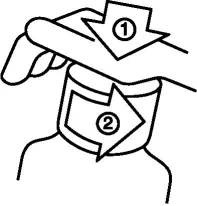
The bottle has a child-resistant cap. To open, press down on the cap while turning it counterclockwise.
If you take more EDURANT than you should
Contact your doctor or pharmacist immediately. In case of overdose, you may experience headache, nausea, dizziness, and/or abnormal dreams.
If you forget to take EDURANT
If you remember within 12 hours of your usual EDURANT dosing time, take the missed tablet as soon as possible. The EDURANT tablet must be taken with a meal. Then take your next dose at the usual time. If you remember after 12 hours, do not take the missed dose; take the next dose at the usual time. Do not take a double dose to make up for a forgotten tablet.
If you vomit within 4 hours after taking EDURANT, take another tablet with a meal. If you vomit more than 4 hours after taking EDURANT, you do not need to take another tablet until your next scheduled dose.
Contact your doctor if you are unsure what to do when you miss a dose or vomit.
Do not stop treatment with EDURANT
HIV treatment does not cure HIV infection! Do not stop treatment with EDURANT without first consulting your doctor. Even if you feel better, do not stop taking EDURANT or other anti-HIV medicines. Otherwise, you may increase the risk that the virus develops resistance. Discuss this with your doctor first.
If you have any questions about the use of this medicine, consult your doctor or pharmacist.
4. Possible side effects
Like all medicines, this medicine can cause side effects, although not everybody will experience them.
Very common (may affect more than 1 in 10 people) :
- headache
- nausea
- difficulty sleeping (insomnia)
- dizziness
- changes in one of the routine liver function tests (transaminases)
- increased cholesterol and/or pancreatic amylase in the blood
Common (may affect up to 1 in 10 people) :
- abnormal dreams
- skin rash
- stomach pain
- depression
- feeling very tired
- vomiting
- feeling sleepy
- loss of appetite
- sleep disorders
- stomach discomfort
- feeling depressed
- dry mouth
- low white blood cell count and/or platelets, decreased haemoglobin levels in the blood, increased levels of triglycerides, lipase and/or bilirubin in the blood
Uncommon (may affect up to 1 in 100 people) :
- signs or symptoms of inflammation or infection, for example fever, chills, sweating (immune reconstitution inflammatory syndrome).
Reporting of side effects
If you experience any side effect, including those not listed in this leaflet, talk to your doctor or pharmacist.
You can also report side effects directly via the national reporting system detailed in Annex V.
By reporting side effects, you can help provide more information on the safety of this medicine.
5. How to store EDURANT
Keep this medicine out of the sight and reach of children.
Do not use this medicine after the expiry date which is stated on the outer packaging and on the
bottle after the word "Exp". The expiry date refers to the last day of the month indicated.
Store in the original bottle to protect the medicine from light. This medicine does not require any special storage temperature.
Do not dispose of medicines via wastewater or household waste. Ask your pharmacist how to dispose of medicines you no longer use. This will help protect the environment.
6. Package contents and other information
What EDURANT contains
- The active substance is rilpivirine in the form of rilpivirine hydrochloride. Each EDURANT tablet contains rilpivirine hydrochloride equivalent to 25 mg of rilpivirine.
- The other components of the film-coated tablet core are monohydrate lactose, croscarmellose sodium (E468), povidone K30 (E1201), polysorbate 20, silicified microcrystalline cellulose (E460), and magnesium stearate (E470b). The film coating contains monohydrate lactose, hypromellose 2910 6 mPa.s (E464), titanium dioxide (E171), macrogol 3000, and triacetin (E1518).
Description of the appearance of EDURANT and pack contents
White to off-white, round, biconvex, film-coated tablet, marked with “TMC” on one side and “25” on the other.
Bottle with child-resistant closure containing 30 film-coated tablets.
Marketing Authorization Holder
Janssen-Cilag International NV
Turnhoutseweg 30
B-2340 Beerse
Belgium
Manufacturer
Janssen-Cilag SpA.
Via C. Janssen
Borgo San Michele
04100 Latina
Italy
For further information about this medicine, please contact the local representative of the Marketing Authorization Holder:
België/Belgique/Belgien Lietuva
Janssen-Cilag NV UAB “JOHNSON & JOHNSON”
Tel/Tél: +32 14 64 94 11 Tel: +370 5 278 68 88
[email protected] [email protected]
България Luxembourg/Luxemburg
„Джонсън & Джонсън България” ЕООД Janssen-Cilag NV
Тел.: +359 2 489 94 00 Tél/Tel: +32 14 64 94 11
[email protected] [email protected]
Česká republika Magyarország
Janssen-Cilag s.r.o. Janssen-Cilag Kft.
Tel: +420 227 012 227 Tel.: +36 1 884 2858
[email protected]
Danmark Malta
Janssen-Cilag A/S AM MANGION LTD.
Tlf.: +45 4594 8282 Tel: +356 2397 6000
[email protected]
Deutschland Nederland
Janssen-Cilag GmbH Janssen-Cilag B.V.
Tel: 0800 086 9247 / +49 2137 955 6955 Tel: +31 76 711 1111
[email protected] [email protected]
Eesti Norge
UAB “JOHNSON & JOHNSON” Eesti filiaal Janssen-Cilag AS
Tel: +372 617 7410 Tlf: +47 24 12 65 00
[email protected] [email protected]
Ελλάδα Österreich
Janssen-Cilag Φαρμακευτική Μονοπρόσωπη Janssen-Cilag Pharma GmbH
Α.Ε.Β.Ε. Tel: +43 1 610 300
Tηλ: +30 210 80 90 000
España Polska
Janssen-Cilag, S.A. Janssen-Cilag Polska Sp. z o.o.
Tel: +34 91 722 81 00 Tel.: +48 22 237 60 00
[email protected]
France Portugal
Janssen-Cilag Janssen-Cilag Farmacêutica, Lda.
Tél: 0 800 25 50 75 / +33 1 55 00 40 03 Tel: +351 214 368 600
[email protected]
Hrvatska România
Johnson & Johnson S.E. d.o.o. Johnson & Johnson România SRL
Tel: +385 1 6610 700 Tel: +40 21 207 1800
[email protected]
Ireland Slovenija
Janssen Sciences Ireland UC Johnson & Johnson d.o.o.
Tel: 1 800 709 122 Tel: +386 1 401 18 00
[email protected] [email protected]
Ísland Slovenská republika
Janssen-Cilag AB Johnson & Johnson, s.r.o.
c/o Vistor hf. Tel: +421 232 408 400
Sími: +354 535 7000
[email protected]
Italia Suomi/Finland
Janssen-Cilag SpA Janssen-Cilag Oy
Tel: 800.688.777 / +39 02 2510 1 Puh/Tel: +358 207 531 300
[email protected] [email protected]
Κύπρος Sverige
Βαρνάβας Χατζηπαναγής Λτδ, Janssen-Cilag AB
Τηλ: +357 22 207 700 Tfn: +46 8 626 50 00
[email protected]
Latvija United Kingdom (Northern Ireland)
UAB "JOHNSON & JOHNSON" filiāle Latvijā Janssen Sciences Ireland UC
Tel: +371 678 93561 Tel: +44 1 494 567 444
[email protected] [email protected]
Other sources of information
More detailed information on this medicine is available on the European Medicines Agency website: https://www.ema.europa.eu.
Package leaflet: Information for the user
EDURANT 2.5 mg dispersible tablets
rilpivirine
Please read this leaflet carefully before taking this medicine (or giving it to your child) as it contains important information for you.
- Keep this leaflet. You may need to read it again.
- If you have any questions, ask your doctor or pharmacist.
- This medicine has been prescribed for you (or your child) only. Do not give it to others, even if their symptoms are the same as yours (or your child's), as it may be harmful.
- If you experience any side effects, including those not listed in this leaflet, consult your doctor or pharmacist. See section 4.
- The information in this patient leaflet is intended for you and your child, but throughout this leaflet we refer simply to "you".
Contents of this leaflet:
- What EDURANT is and what it is used for
- What you need to know before taking EDURANT
- How to take EDURANT
- Possible side effects
- How to store EDURANT
- Contents of the pack and other information
1. What EDURANT is and what it is used for
EDURANT contains "rilpivirine", which is used to treat infection with the human immunodeficiency virus (HIV). It belongs to a group of medicines for HIV infection called non-nucleoside reverse transcriptase inhibitors (NNRTIs). EDURANT works by reducing the amount of HIV in the body.
EDURANT is used in combination with other medicines for HIV infection to treat children and adolescents aged between 2 and less than 18 years who weigh at least 14 kg but less than 25 kg and have HIV infection.
Your doctor will explain which combination of medicines is best for you.
2. What you should know before taking EDURANT
Do not take EDURANT if you are allergic to rilpivirine or to any of the other excipients of this
medicine (listed in section 6).
Do not take EDURANT in combination with any of the following medicines, because they may
affect the action of EDURANT or of other medicines:
- carbamazepine, oxcarbazepine, phenobarbital, phenytoin (medicines used to treat epilepsy and prevent seizures)
- rifampicin and rifapentine (medicines used to treat certain bacterial infections, such as tuberculosis)
- omeprazole, esomeprazole, lansoprazole, pantoprazole, rabeprazole (proton pump inhibitors, medicines used to prevent and treat gastric ulcers, heartburn, or acid reflux disease)
- dexamethasone (a corticosteroid used in various clinical conditions such as inflammation and allergic reactions); if taken orally or by injection, except for a single dose
- products containing St. John’s wort (a herbal product used to treat depression).
Do not take EDURANT if you are taking any of these medicines. If you are unsure, consult your doctor or
pharmacist before taking EDURANT. Ask your doctor about possible alternatives to the medicines
listed above.
Warnings and precautions
Talk to your doctor or pharmacist before starting EDURANT.
EDURANT is not a cure for HIV infection. It is part of a treatment regimen that reduces the amount of
virus in the blood.
Inform your doctor about your condition
Make sure to review the following points and inform your doctor if any of them apply to you.
- Inform your doctor if you have or have had liver problems, including hepatitis B and/or C, and/or kidney problems. Your doctor may assess the severity of your liver or kidney disease before deciding whether to prescribe EDURANT.
- Inform your doctor immediately if you notice any symptoms of infection (for example, fever, chills, sweating). In some patients with advanced HIV infection and a history of opportunistic infections, inflammatory signs and symptoms of previous infections may occur shortly after initiating antiretroviral therapy. These symptoms are believed to result from an improved immune response, enabling the body to fight infections that may have been present without clear symptoms.
- In addition to opportunistic infections, autoimmune disorders (a condition in which the immune system attacks the body's healthy tissues) may also occur after starting medicines for HIV infection. Autoimmune disorders may occur several months after starting treatment. If you notice any symptoms of infection or other symptoms such as muscle weakness, initial weakness in hands and feet progressing toward the trunk, palpitations, tremor, or hyperactivity, inform your doctor immediately to receive necessary treatment.
- Inform your doctor if you are taking medicines that may cause a life-threatening irregular heartbeat (Torsade de Pointes).
Children
Do not use EDURANT to treat children under 2 years of age or weighing less than 14 kg, as it has not been evaluated in these patients.
Other medicines and EDURANT
You may take EDURANT together with other medicines for HIV infection. Your doctor will advise you
which HIV medicines can be taken with EDURANT, and together you will decide which combination is best suited to your needs. You must follow your doctor’s instructions carefully.
Some medicines may affect EDURANT levels in the blood when taken at the same time.
Inform your doctor or pharmacist if you are taking, have recently taken, or might take any other medicine.
It is not recommended to combine EDURANT with other non-nucleoside reverse transcriptase inhibitors (NNRTIs) such as delavirdine, efavirenz, etravirine, and nevirapine.
The effect of EDURANT or other medicines may be affected if you take EDURANT together with the following medicines. Inform your doctor if you are taking:
- antibiotics such as clarithromycin, erythromycin
- cimetidine, famotidine, nizatidine, ranitidine (histamine H2-receptor antagonists used to treat gastric or intestinal ulcers or to reduce heartburn due to gastric acid reflux). If you are taking other medicines, read carefully how to take them in section 3
- antacids (used to treat conditions related to gastric acid in the stomach; for example, aluminium/magnesium hydroxide, calcium carbonate). If you are taking other medicines, read carefully how to take them in section 3
- methadone (used in narcotic withdrawal treatment and for addiction)
- dabigatran etexilate (an anticoagulant). Inform your doctor if you are taking any of the medicines listed above.
Pregnancy and breastfeeding
Inform your doctor immediately if you are pregnant or planning to become pregnant: pregnant women should discuss the use of EDURANT with their doctor.
Breastfeeding is not recommended for women with HIV because HIV infection can be transmitted to the infant through breast milk.
If you are breastfeeding or considering it, you should discuss this with your doctor as soon as possible.
Ask your doctor or pharmacist for advice before taking any medicine.
Driving vehicles or bicycles and use of tools or machinery
Some patients may experience fatigue, dizziness, or drowsiness during treatment with EDURANT. Do not drive any vehicle or operate tools or machinery if you feel tired, dizzy, or drowsy while taking EDURANT.
EDURANT contains lactose and sodium
This medicine contains lactose. If your doctor has informed you that you have an intolerance to certain sugars, consult your doctor before taking this medicine.
This medicine contains less than 1 mmol of sodium (23 mg) per tablet, i.e., essentially “sodium-free”.
3. How to take EDURANT
Take EDURANT exactly as directed by your doctor or pharmacist. If you have
any doubts, consult your doctor or pharmacist. Your doctor or pharmacist will tell you how many
dispersible tablets of EDURANT you should take. EDURANT dispersible tablets must be dispersed in
water and taken with a meal.
- EDURANT is also available as film-coated tablets for pediatric and adult patients with a body weight of at least 25 kg (see separate patient instructions). The film-coated tablets and the dispersible tablets are not equivalent. Do not substitute a 25 mg film-coated tablet with ten 2.5 mg dispersible tablets.
Instructions for use
EDURANT dispersible tablets must be taken with a meal. The meal is important to ensure adequate levels of the medicine in the body. A nutritional drink alone (e.g., a protein shake) or a yogurt does not replace a meal.
Prepare and take EDURANT dispersible tablets every day exactly as directed by your doctor. Read these instructions carefully before taking EDURANT dispersible tablets. Your doctor will tell you how many EDURANT dispersible tablets to take based on your weight. EDURANT dispersible tablets must be dispersed in water. Do not chew the tablets or swallow them whole.
Step 1: Prepare the medicine
- Count the number of tablets needed and carefully peel each unit from the blister pack along the dotted line.
- Do not push the tablets out of the aluminum foil as they may break.
- For each unit, gently peel back the aluminum foil in the direction of the arrow.
Step 2: Place the tablets in a cup
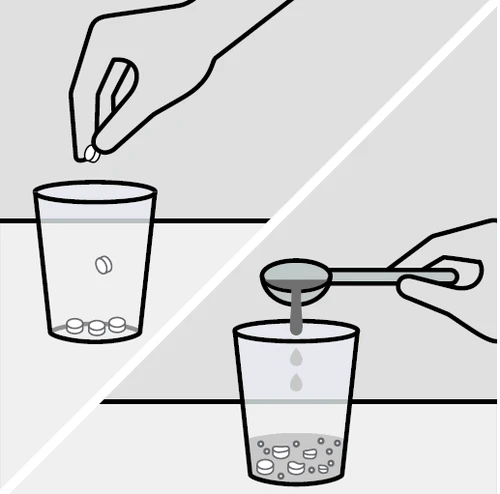
- Gently place the tablets in a cup. Do not crush the tablets.
- Add 5 mL (1 teaspoon) of room temperature water to the cup.
- Stir carefully to disperse the tablets. The mixture will begin to appear cloudy.
If you spill any of the medicine, clean up the spill immediately. Discard
any remaining prepared medicine and prepare a new dose.
You must take the dose of medicine immediately. If you do not take the medicine immediately, discard the mixture and prepare a new dose.
Step 3: Take the medicine
- Take the prepared medicine immediately, or add another 5 mL (1 teaspoon) of room temperature water or one of the following liquids to aid administration: milk, orange juice, or apple puree.
- Stir and take the medicine immediately. If needed, you may use a spoon.
- Make sure you have taken the entire dose and that no medicine remains in the cup. If necessary, add another 5 mL (1 teaspoon) of water or the same beverage (milk, orange juice) or apple puree; stir and drink immediately.
There are three situations that require special attention. If you are taking:
- An antacid (a medicine used to treat conditions related to stomach acid, such as aluminum/magnesium hydroxide, calcium carbonate). Take the antacid:
- at least 2 hours before or
- at least 4 hours after taking EDURANT (see section 2, “Other medicines and EDURANT”).
- An H\textsubscript{2}-receptor antagonist (medicines used to treat gastric or intestinal ulcers or to relieve heartburn due to acid reflux, such as cimetidine, famotidine, nizatidine, or ranitidine). Take the H\textsubscript{2}-receptor antagonist
- at least 12 hours before or
- at least 4 hours after taking EDURANT (see section 2, “Other medicines and EDURANT”). H\textsubscript{2}-receptor antagonists must not be taken on a dosing schedule that includes twice-daily administration. Consult your doctor for an alternative regimen.
- Didanosine (a medicine for the treatment of HIV infection), no dose adjustment is necessary. Didanosine must be taken on an empty stomach
- at least 2 hours before or
- at least 4 hours after EDURANT (which must be taken with a meal).
If you take more EDURANT than you should
Contact your doctor or pharmacist immediately. In case of overdose, you may experience headache, nausea, dizziness, and/or abnormal dreams.
If you forget to take EDURANT
If you realize within 12 hours of your usual EDURANT dosing time, take the missed dose as soon as possible. EDURANT tablets must be taken with a meal. Then take your next dose at the usual time. If you realize after 12 hours, do not take the missed dose; take your next dose at the usual time. Do not take a double dose to make up for a missed dose.
Contact your doctor if you are unsure what to do when you have missed a dose.
If you vomit after taking EDURANT
If you vomit within 4 hours after taking EDURANT, take another dose with a meal. If you vomit more than 4 hours after taking EDURANT, you do not need to take another dose until your next scheduled dose.
Contact your doctor if you are unsure what to do when you vomit after taking this medicine.
Do not stop treatment with EDURANT
HIV treatment does not cure HIV infection! Do not stop treatment with EDURANT without first talking to your doctor. Even if you feel better, do not stop taking EDURANT or other anti-HIV medicines. Otherwise, you may increase the risk that the virus develops resistance. Talk to your doctor before stopping this medicine.
If you have any questions about how to use this medicine, consult your doctor or pharmacist.
4. Possible side effects
Like all medicines, this medicine can cause side effects, although not everybody gets them.
Very common (may affect more than 1 in 10 people):
- headache
- nausea
- difficulty sleeping (insomnia)
- dizziness
- changes in one of the routine liver function tests (transaminases)
- increased cholesterol and/or pancreatic amylase in the blood
Common (may affect up to 1 in 10 people):
- abnormal dreams
- skin rash
- stomach pain
- depression
- feeling very tired
- vomiting
- feeling sleepy
- loss of appetite
- sleep disorders
- stomach discomfort
- feeling depressed
- dry mouth
- low white blood cell count and/or low platelet count, decreased haemoglobin levels in the blood, increased levels of triglycerides, lipase and/or bilirubin in the blood
Uncommon (may affect up to 1 in 100 people):
- signs or symptoms of inflammation or infection, for example fever, chills, sweating (immune reconstitution syndrome).
Reporting of side effects
If you experience any side effects, including those not listed in this leaflet, talk to your doctor or pharmacist.
You can also report side effects directly via the national reporting system listed in Annex V.
By reporting side effects, you can help provide more information on the safety of this medicine.
5. How to store EDURANT
Keep this medicine out of the sight and reach of children.
Do not use this medicine after the expiry date stated on the outer packaging and on the blister after the word "Exp". The expiry date refers to the last day of the month indicated.
Store in the original packaging to protect the medicine from light and moisture.
This medicine does not require any special storage temperature.
Do not dispose of any medicine via wastewater or household waste. Ask your pharmacist how to dispose of medicines no longer required. This will help protect the environment.
6. Package contents and other information
What EDURANT contains
- The active substance is "rilpivirine" in the form of "rilpivirine hydrochloride". Each EDURANT dispersible tablet contains rilpivirine hydrochloride equivalent to 2.5 mg of rilpivirine.
- The other components of the dispersible tablet core are croscarmellose sodium (E468), lactose monohydrate, mannitol (E421), microcrystalline cellulose (E460), polysorbate 20, povidone K30 (E1201), sodium lauryl sulfate (E487), and sodium stearyl fumarate.
Description of the appearance of EDURANT and contents of the pack
Round, white to almost white tablet, 6.5 mm in diameter, engraved with “TMC” on one side and “PED” on the other.
EDURANT 2.5 mg dispersible tablets are available in unit-dose perforated Alu-Alu blisters with integrated desiccant and an aluminum peel-off lid.
Each child-resistant blister contains 10 x 1 dispersible tablets. Each carton contains 90 x 1 dispersible tablets.
Marketing Authorization Holder
Janssen-Cilag International NV
Turnhoutseweg 30
B-2340 Beerse
Belgium
Manufacturer
Janssen-Cilag SpA.
Via C. Janssen
Borgo San Michele
04100 Latina
Italy
For further information on this medicinal product, please contact the local representative of the Marketing Authorization Holder:
België/Belgique/Belgien Lietuva
Janssen-Cilag NV UAB “JOHNSON & JOHNSON”
Tel/Tél: +32 14 64 94 11 Tel: +370 5 278 68 88
[email protected] [email protected]
България Luxembourg/Luxemburg
„Джонсън & Джонсън България” ЕООД Janssen-Cilag NV
Тел.: +359 2 489 94 00 Tél/Tel: +32 14 64 94 11
[email protected] [email protected]
Česká republika Magyarország
Janssen-Cilag s.r.o. Janssen-Cilag Kft.
Tel: +420 227 012 227 Tel.: +36 1 884 2858
[email protected]
Danmark Malta
Janssen-Cilag A/S AM MANGION LTD.
Tlf.: +45 4594 8282 Tel: +356 2397 6000
[email protected]
Deutschland Nederland
Janssen-Cilag GmbH Janssen-Cilag B.V.
Tel: 0800 086 9247 / +49 2137 955 6955 Tel: +31 76 711 1111
[email protected] [email protected]
Eesti Norge
UAB “JOHNSON & JOHNSON” Eesti filiaal Janssen-Cilag AS
Tel: +372 617 7410 Tlf: +47 24 12 65 00
[email protected] [email protected]
Ελλάδα Österreich
Janssen-Cilag Φαρμακευτική Μονοπρόσωπη Janssen-Cilag Pharma GmbH
Α.Ε.Β.Ε. Tel: +43 1 610 300
Tηλ: +30 210 80 90 000
España Polska
Janssen-Cilag, S.A. Janssen-Cilag Polska Sp. z o.o.
Tel: +34 91 722 81 00 Tel.: +48 22 237 60 00
[email protected]
France Portugal
Janssen-Cilag Janssen-Cilag Farmacêutica, Lda.
Tél: 0 800 25 50 75 / +33 1 55 00 40 03 Tel: +351 214 368 600
[email protected]
Hrvatska România
Johnson & Johnson S.E. d.o.o. Johnson & Johnson România SRL
Tel: +385 1 6610 700 Tel: +40 21 207 1800
[email protected]
Ireland Slovenija
Janssen Sciences Ireland UC Johnson & Johnson d.o.o.
Tel: 1 800 709 122 Tel: +386 1 401 18 00
[email protected] [email protected]
Ísland Slovenská republika
Janssen-Cilag AB Johnson & Johnson, s.r.o.
c/o Vistor hf. Tel: +421 232 408 400
Sími: +354 535 7000
[email protected]
Italia Suomi/Finland
Janssen-Cilag SpA Janssen-Cilag Oy
Tel: 800.688.777 / +39 02 2510 1 Puh/Tel: +358 207 531 300
[email protected] [email protected]
Κύπρος Sverige
Βαρνάβας Χατζηπαναγής Λτδ, Janssen-Cilag AB
Τηλ: +357 22 207 700 Tfn: +46 8 626 50 00
[email protected]
Latvija United Kingdom (Northern Ireland)
UAB "JOHNSON & JOHNSON" filiāle Latvijā Janssen Sciences Ireland UC
Tel: +371 678 93561 Tel: +44 1 494 567 444
[email protected] [email protected]
Other sources of information
More detailed information on this medicinal product is available on the website of the European Medicines Agency: https://www.ema.europa.eu.