Edarbi
Italy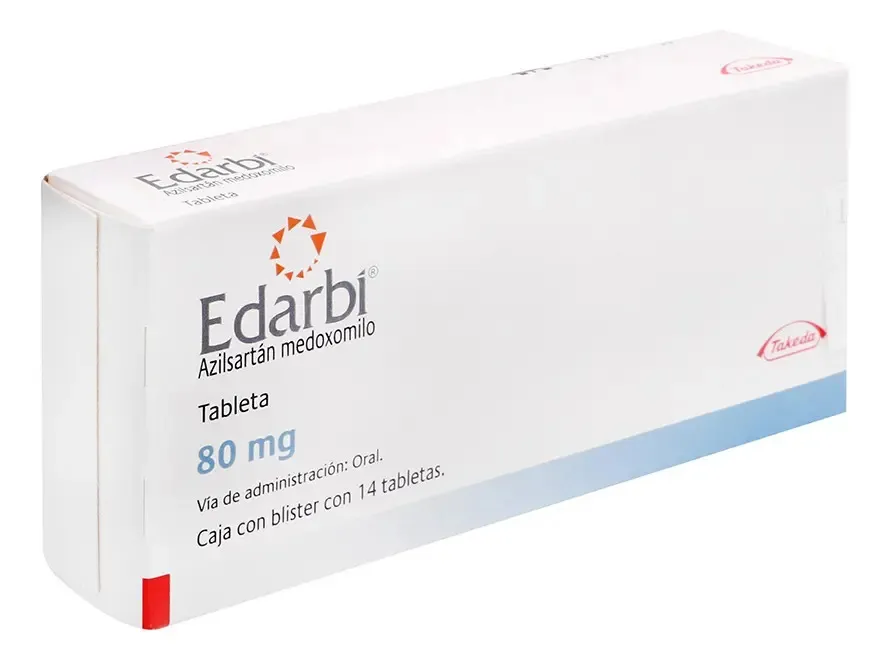
Table of Contents
Package leaflet: Information for the user
Edarbi 20 mg tablets, 40 mg tablets, 80 mg tablets
azilsartan medoxomil
Read all of this leaflet carefully before you start taking this medicine because it contains
important information for you.
- Keep this leaflet. You may need to read it again.
- If you have any questions, ask your doctor or pharmacist.
- This medicine has been prescribed for you only. Do not give it to other people, even if they have the same symptoms as you, because it may be harmful.
- If you experience any side effect, including those not listed in this leaflet, contact your doctor or pharmacist. See section 4.
Contents of this leaflet
- What Edarbi is and what it is used for
- What you need to know before taking Edarbi
- How to take Edarbi
- Possible side effects
- How to store Edarbi
- Contents of the pack and other information
1. What Edarbi is and what it is used for
Edarbi contains an active substance called azilsartan medoxomil and belongs to a class of
medicines known as angiotensin II receptor antagonists (AIIRAs). Angiotensin II is a
substance naturally present in the body that causes blood vessels to narrow, thereby increasing
blood pressure. Edarbi blocks this effect, resulting in relaxation of the blood vessels, which helps to lower blood pressure.
This medicine is used to treat high blood pressure (essential hypertension) in adult patients (over 18 years of age).
A reduction in blood pressure can be observed within 2 weeks of starting treatment, and the full effect is achieved within 4 weeks.
2. What you should know before taking Edarbi
Do NOT take Edarbi
- if you are allergic to azilsartan medoxomil or to any of the other ingredients of this medicine (listed in section 6).
- if you are more than 3 months pregnant. (It is best to avoid taking this medicine even in the early stages of pregnancy – see section on pregnancy.)
- if you have diabetes or impaired kidney function and are being treated with a blood pressure-lowering medicine containing aliskiren.
Warnings and precautions
Talk to your doctor before taking Edarbi, especially
- if you have kidney problems.
- if you are on dialysis or have recently had a kidney transplant.
- if you have serious liver problems.
- if you have heart problems (including heart failure, recent heart attack).
- if you have had a stroke.
- if you have low blood pressure or experience dizziness or lightheadedness.
- if you are vomiting or have recently suffered from severe vomiting or diarrhoea.
- if you have high levels of potassium in your blood (shown by blood tests).
- if you have a disorder of the adrenal gland called primary hyperaldosteronism.
- if you have been diagnosed with narrowing of heart valves (called “aortic or mitral valve stenosis”) or abnormal thickening of the heart muscle (called “obstructive hypertrophic cardiomyopathy”).
- if you are taking any of the following medicines used to treat high blood pressure: an “ACE inhibitor” (for example enalapril, lisinopril, ramipril), particularly if you have kidney problems related to diabetes, or aliskiren.
Talk to your doctor if, after taking Edarbi, you experience abdominal pain, nausea, vomiting or diarrhoea.
Your doctor will decide whether treatment should continue. Do not stop taking Edarbi on your own.
Your doctor may check your kidney function, blood pressure, and levels of electrolytes (for example potassium) in your blood at regular intervals.
See also the section “Do NOT take Edarbi”.
You must inform your doctor if you think you are pregnant (or if there is a possibility of becoming pregnant). Edarbi is not recommended during early pregnancy and MUST NOT be taken if you are more than 3 months pregnant, as it may cause serious harm to the unborn baby if taken during this period (see section “Pregnancy and breastfeeding”). Edarbi may be less effective in lowering blood pressure in black patients.
Children and adolescents
Data on the use of Edarbi in children or adolescents under 18 years of age are limited.
Therefore, this medicine should not be given to children or adolescents.
Other medicines and Edarbi
Tell your doctor or pharmacist if you are taking, have recently taken, or might take any other medicines.
Edarbi may affect how other medicines work, and other medicines may affect Edarbi.
In particular, inform your doctor if you are taking any of the following medicines:
- Lithium (a medicine for mental health conditions)
- Non-steroidal anti-inflammatory drugs (NSAIDs), such as ibuprofen, diclofenac or celecoxib (painkillers and anti-inflammatory medicines)
- Acetylsalicylic acid if taken at doses above 3 g per day (a painkiller and anti-inflammatory medicine)
- Medicines that increase potassium levels in the blood; these include potassium supplements, potassium-sparing medicines (some diuretics), or potassium-containing salt substitutes
- Heparin (a medicine to thin the blood)
- Diuretics
- Aliskiren or other medicines that lower blood pressure (angiotensin-converting enzyme inhibitors or angiotensin II receptor blockers, such as enalapril, lisinopril, ramipril or valsartan, telmisartan).
Your doctor may consider it necessary to adjust the dose and/or take other precautions:
If you are taking an ACE inhibitor or aliskiren (see also the sections “Do NOT take Edarbi” and “Warnings and precautions”).
Pregnancy and breastfeeding
Pregnancy
You must inform your doctor if you think you are pregnant (or if there is a possibility of becoming pregnant). Your doctor will usually advise you to stop taking this medicine before becoming pregnant or as soon as you know you are pregnant, and will recommend another medicine instead of Edarbi.
Edarbi is not recommended during early pregnancy, and MUST NOT be taken if you are more than 3 months pregnant, as it may cause serious harm to the unborn baby if taken after the third month of pregnancy.
Breastfeeding
Inform your doctor if you are breastfeeding. Edarbi is not recommended for women who are breastfeeding, and your doctor may choose another treatment for you if you wish to breastfeed, especially if the baby is a newborn or was born prematurely.
Driving and using machines
It is unlikely that Edarbi will affect your ability to drive or use machines. However, some people may feel tired or dizzy while taking this medicine, and if this occurs, you should avoid driving or using machines.
Edarbi contains sodium
This medicine contains less than 1 mmol (23 mg) of sodium per tablet, i.e. essentially ‘sodium-free’.
3. How to take Edarbi
Take this medicine exactly as your doctor has told you. If you are unsure, consult your doctor or pharmacist. It is important to take Edarbi every day at the same time.
Edarbi is for oral use. Swallow the tablet with a glass of water.
You may take this medicine with or without food.
- The usual starting dose is 40 mg once daily. Your doctor may increase this dose up to a maximum of 80 mg once daily, depending on your blood pressure response.
- For older patients (75 years of age and over), your doctor may recommend a lower starting dose of 20 mg once daily.
- If you have mild to moderate liver impairment, your doctor may recommend a lower starting dose of 20 mg once daily.
- For patients who have recently experienced fluid loss (e.g. due to vomiting, diarrhoea, or diuretic therapy), your doctor may recommend a lower starting dose of 20 mg once daily.
- If you have other concomitant conditions, such as severe renal disease or heart failure, your doctor will decide the appropriate starting dose.
If you take more Edarbi than you should
If you accidentally take too many tablets, or if someone else takes your medicine, contact your doctor immediately. If you take more tablets than prescribed, you may experience dizziness or feel faint.
If you forget to take Edarbi
Do not take a double dose to make up for the missed tablet. Simply continue with your next scheduled dose.
If you stop taking Edarbi
If you stop taking Edarbi, your blood pressure may rise again. Therefore, it is recommended not to discontinue Edarbi treatment without first discussing an alternative treatment plan with your doctor.
If you have any questions about the use of this medicine, consult your doctor or pharmacist.
4. Possible side effects
Like all medicines, this medicine can cause side effects, although not everyone will experience them.
Stop taking Edarbi and contact your doctor immediately if you experience any of the following
allergic reactions, which are rare (may affect up to 1 in 1,000 users):
- Difficulty breathing or swallowing, or swelling of the face, lips, tongue, and/or throat (angioedema)
- Itchy skin rash.
Other possible side effects include:
Common (may affect up to 1 in 10 users):
- Dizziness
- Diarrhoea
- Increased blood creatine phosphokinase (a marker of muscle damage).
Uncommon (may affect up to 1 in 100 users):
- Low blood pressure, which may cause dizziness or feeling faint
- Feeling of fatigue
- Swelling of hands, ankles or feet (peripheral oedema)
- Skin rash and itching
- Nausea
- Muscle spasms
- Increased blood creatinine (a marker of kidney function)
- Increased blood uric acid.
Rare side effects (may affect up to 1 in 1,000 users):
- Changes in blood test results, including a reduction in levels of a protein in red blood cells (haemoglobin).
Frequency not known (cannot be estimated from the available data):
- Joint pain
- Intestinal angioedema: following use of similar products, swelling in the intestine has been reported, presenting with symptoms such as abdominal pain, nausea, vomiting and diarrhoea.
If Edarbi is taken with chlorthalidone (a diuretic), increased levels of certain chemicals in the blood (such as creatinine), indicating kidney function, and low blood pressure have been commonly observed (in less than 1 in 10 users).
Swelling of hands, ankles or feet is more common (affects less than 1 in 10 users) when Edarbi is taken with amlodipine (a calcium channel blocker used to treat high blood pressure) compared to Edarbi taken alone (less than 1 in 100 users). The frequency of this effect is higher when amlodipine is taken alone.
Reporting of side effects
If you experience any side effect, including those not listed in this leaflet, talk to your doctor or pharmacist. You can also report side effects directly via the national reporting system listed in Annex V. Reporting side effects can help provide more information on the safety of this medicine.
5. How to store Edarbi
Keep this medicine out of the sight and reach of children.
Do not use this medicine after the expiry date stated on the pack after EXP. The expiry date refers to the last day of that month.
Store Edarbi in the original packaging to protect the medicine from light and moisture.
This medicine does not require any special storage temperature.
Do not dispose of medicines via wastewater or household waste. Ask your pharmacist how to dispose of medicines you no longer use. This will help protect the environment.
6. Package contents and other information
What Edarbi contains
- The active substance is azilsartan medoxomil (as potassium). Edarbi 20 mg: each tablet contains 20 mg of azilsartan medoxomil (as potassium). Edarbi 40 mg: each tablet contains 40 mg of azilsartan medoxomil (as potassium). Edarbi 80 mg: each tablet contains 80 mg of azilsartan medoxomil (as potassium).
- The other components are mannitol, fumaric acid, sodium hydroxide, hydroxypropyl cellulose, sodium croscarmellose, microcrystalline cellulose, and magnesium stearate.
Description of the appearance of Edarbi and contents of the pack
The tablets are white, round, with “ASL” engraved on one side and “20”, “40” or “80” on the other.
Edarbi is supplied in blisters of 14 or 15 tablets each, in cardboard cartons containing
14, 28, 56 or 98 tablets, and in blisters with desiccant containing 14 or 15 tablets each, in
cardboard cartons containing 14, 28, 30, 56, 90 or 98 tablets.
Not all pack sizes may be marketed.
Marketing Authorisation Holder
Takeda Pharma A/S
Delta Park 45
2665 Vallensbaek Strand
Denmark
Manufacturer
Takeda Ireland Limited
Bray Business Park
Kilruddery
Co. Wicklow
Ireland
For further information on this medicinal product, please contact the local representative of the Marketing Authorisation Holder:
België/Belgique/Belgien Lietuva
Takeda Belgium NV Takeda, UAB
Tél/Tel: +32 2 464 06 11 Tel: +370 521 09 070
[email protected] [email protected]
България Luxembourg/Luxemburg
Такеда България ЕООД Takeda Belgium NV
Тел.: +359 2 958 27 36 Tél/Tel: +32 2 464 06 11
[email protected] [email protected]
Česká republika Magyarország
Takeda Pharmaceuticals Czech Republic s.r.o. Takeda Pharma Kft.
Tel: +420 234 722 722 Tel.: +36 1 270 7030
[email protected] [email protected]
Danmark Malta
Takeda Pharma A/S Τakeda Pharma A/S
Tlf.: +45 46 77 10 10 Τηλ: +45 46 77 10 10
[email protected] [email protected]
Deutschland Nederland
Takeda GmbH Takeda Nederland B.V.
Tel: +49 (0)800 825 3325 Tel: +31 20 203 5492
[email protected] [email protected]
Eesti Norge
Takeda Pharma OÜ Takeda AS
Tel: +372 6177 669 Tlf: +47 800 800 30
[email protected] [email protected]
Ελλάδα Österreich
ΒΙΑΝΕΞ Α.Ε. Takeda Pharma Ges.m.b.H.
Τηλ: +30 210 80 09 111 Tel: +43 (0) 800-20 80 50
[email protected]
España Polska
Takeda Farmacéutica España, S.A. Takeda Pharma Sp. z o.o.
Tel: +34 917 90 42 22 Tel.: +48223062447
[email protected] [email protected]
France Portugal
Takeda France SAS Tecnimede ‑ Sociedade Técnico‑Medicinal, S.A.
Tél: + 33 1 40 67 33 00 Tel: +351 21 041 41 00
[email protected] [email protected]
Hrvatska România
Takeda Pharmaceuticals Croatia d.o.o. Takeda Pharmaceuticals SRL
Tel: +385 1 377 88 96 Tel: +40 21 335 03 91
[email protected] [email protected]
Ireland Slovenija
Takeda Products Ireland Ltd Takeda Pharmaceuticals farmacevtska družba
Tel: 1800 937 970 d.o.o.
[email protected] Tel: + 386 (0) 59 082 480
[email protected]
Ísland Slovenská republika
Vistor hf. Takeda Pharmaceuticals Slovakia s.r.o.
Sími: +354 535 7000 Tel: +421 (2) 20 602 600
[email protected] [email protected]
Italia Suomi/Finland
Takeda Italia S.p.A. Takeda Oy
Tel: +39 06 502601 Puh/Tel: 0800 774 051
[email protected] [email protected]
Κύπρος Sverige
Τakeda Pharma A/S Takeda Pharma AB
Τηλ: +45 46 77 10 10 Tel: 020 795 079
[email protected] [email protected]
Latvija United Kingdom (Northern Ireland)
Takeda Latvia SIA Takeda UK Ltd
Tel: +371 67840082 Tel: +44 (0) 3333 000 181
[email protected] [email protected]
Other sources of information
More detailed information on this medicinal product is available on the website of the European Medicines Agency, https://www.ema.europa.eu/ .