Ecoval
Italy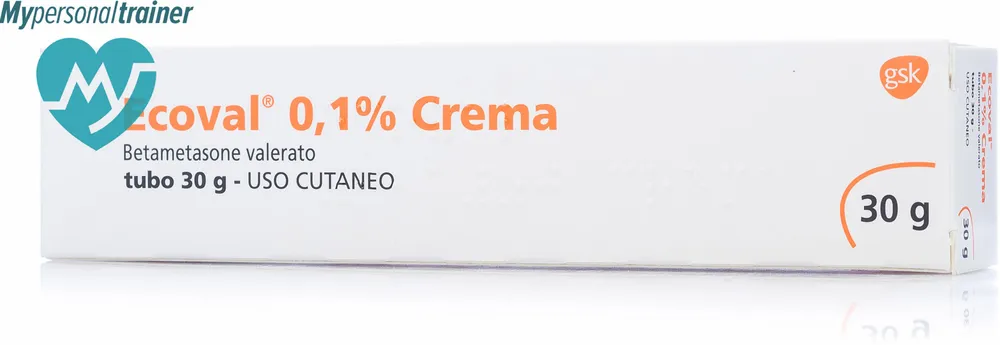
Table of Contents
- Package leaflet: Information for the user
- ECOVAL 1 mg/g cream, 1 mg/g ointment
- 1. What Ecoval is and what it is used for
- 2. What you need to know before using Ecoval
- 3. How to use Ecoval
- 4. Possible side effects
- 5. How to store Ecoval
- 6. Package contents and other information
- Package leaflet: Information for the user
- ECOVAL 1 mg/g cutaneous emulsion
- 2. What Ecoval is and what it is used for
- 4. What you need to know before using Ecoval
- 5. How to use Ecoval
- 4. Possible side effects
- 5. How to store Ecoval
- 6. Package contents and other information
- Package leaflet: Information for the user
- ECOVAL 0.5 mg/g Cutaneous Solution
- 3. What Ecoval is and what it is used for
- 6. What you need to know before taking Ecoval
- 7. How to use Ecoval
- 4. Possible side effects
- 5. How to store Ecoval
- 6. Package contents and other information
Package leaflet: Information for the user
ECOVAL 1 mg/g cream, 1 mg/g ointment
betamethasone valerate
Please read this leaflet carefully before using this medicine because it contains important information for you.
- Keep this leaflet. You may need to read it again.
- If you have any questions, ask your doctor or pharmacist.
- This medicine has been prescribed for you only. Do not give it to other people, even if their symptoms are the same as yours, as it may be harmful.
- If you experience any side effect, including those not listed in this leaflet, tell your doctor or pharmacist. See section 4. Contents of this leaflet:
- What Ecoval is and what it is used for
- What you need to know before using Ecoval
- How to use Ecoval
- Possible side effects
- How to store Ecoval
- Contents of the pack and other information
1. What Ecoval is and what it is used for
Ecoval contains a medicine called betametasone valerate. Betametasone valerate belongs to a group of medicines called corticosteroids, which help reduce swelling and irritation caused by skin conditions such as:
- eczema (atopic dermatitis)
- seborrheic dermatitis (itching that develops on the face, scalp, chest and back with red, scaly patches)
- allergic contact or irritant dermatitis
- lichen (a skin disorder characterized by dry, crusty and scaly skin lesions)
- psoriasis (thickened patches of inflamed red skin, often covered with silvery scales)
- neurodermatitis (a skin condition characterized by chronic itching or scaling)
- treatment of pruritus (itching)
2. What you need to know before using Ecoval
Do not use Ecoval cream and ointment:
- if you are allergic (hypersensitive) to betamethasone valerate or to any of the other ingredients of Ecoval (listed in section 6)
- in children under one year of age
- to treat any of the following skin conditions:
- untreated skin infections
- viral skin infections (herpes simplex, chickenpox)
- tuberculous infections (caused by fungi or bacteria)
- acne
- severe redness of the skin, particularly in the central area of the face (rosacea)
- red spots and skin rash around the mouth (perioral dermatitis)
- itching in the anal and genital area
- skin itching without inflammation
- skin lesions (cutaneous ulcers)
Do not use this medicine if any of the above applies to you. If you are unsure, speak with your doctor or
pharmacist before using Ecoval.
Warnings and precautions
Talk to your doctor or pharmacist before using this medicine if:
- you have previously had an allergic reaction to other corticosteroids;
- you are applying the cream or ointment under an occlusive dressing (in children, diapers may act as an occlusive dressing). Occlusive dressings can enhance the passage of the active ingredient through the skin, thereby increasing the risk of accidentally using too much medicine;
- you have psoriasis; your doctor may wish to monitor you more frequently;
- you are applying the cream or ointment to a chronic leg ulcer. In this case, the risk of local allergic reactions or infections may increase;
- you intend to apply the cream or ointment over a large skin surface;
- you are applying the cream or ointment to damaged skin or skin folds;
- you are applying the cream or ointment near the eyes or eyelids; repeated exposure of the cream or ointment to the eyes may cause cataracts and glaucoma;
- you are applying the cream or ointment to thin skin areas such as the face, or on children whose skin is thinner than that of adults and therefore may absorb higher amounts of the drug;
- you are elderly and/or suffer from impaired renal or hepatic function. In such cases, it is advisable to use the smallest amount of medicine for the shortest time necessary to achieve the desired clinical benefit. Do not use dressings or bandages on children's faces after applying the cream or ointment; use on children or the face should be limited to 5 days.
Contact your doctor if you experience blurred vision or other visual disturbances.
If you are unsure whether any of the conditions described above apply to you or your child, speak with your doctor
or pharmacist before using this medicine.
Other medicines and Ecoval
Inform your doctor or pharmacist if you are taking, have recently taken, or might take any other medicines.
In particular, take care if you are taking ritonavir or itraconazole, as these medicines may increase the effect of Ecoval.
Pregnancy and breastfeeding
If you are pregnant, think you might be pregnant, are planning to become pregnant, or are breastfeeding, consult
your doctor or pharmacist before using this medicine.
Pregnancy
The use of betamethasone valerate during pregnancy should only be considered when clearly needed and under direct medical supervision.
Use the smallest amount of medicine for the shortest possible duration.
Breastfeeding
Topical use of betamethasone valerate during breastfeeding should only be considered when clearly necessary.
If you use betamethasone valerate while breastfeeding, avoid applying it to the breasts to prevent the infant from ingesting it.
Driving and operating machinery
No adverse effects on these activities are known.
Ecoval cream contains chlorocresol and cetostearyl alcohol and liquid paraffin
Ecoval cream contains chlorocresol, which may cause allergic reactions, and cetostearyl alcohol, which may
cause local skin reactions (e.g. contact dermatitis).
ECOVAL cream and ointment contain paraffin. During use, avoid smoking or being near open flames due to the risk of severe burns. Fabrics (clothing, bed linen, dressings, etc.) that have been in contact with this product burn more easily and pose a serious fire hazard.
Washing clothes and bed linen may reduce product buildup but will not completely remove it.
3. How to use Ecoval
Always use Ecoval exactly as directed by your doctor. If you have any doubts, consult your doctor or pharmacist.
Cream – Application of the cream is indicated for lesions at any site and is preferred for treating delicate and moist skin areas.
Ointment – Dry-type skin irritations benefit more from application of the ointment.
- Gently apply a small amount of cream or ointment to the affected area 2–3 times daily. Once you notice a clear improvement, reduce the frequency of applications gradually until treatment can be discontinued.
If your condition worsens or does not improve within four weeks, consult your doctor, who will reassess your treatment and diagnosis.
Topical corticosteroid therapy should be gradually discontinued once the disease is under control, and treatment should continue with an emollient cream as maintenance therapy.
Following abrupt discontinuation of topical corticosteroids, especially potent ones, a relapse of pre-existing dermatoses may occur.
Use in children
In children, do not use this treatment for more than 5 days without medical supervision and do not use occlusive dressings.
Application to the face
Apply Ecoval to the face only if advised by your doctor. Prolonged use on the face should be avoided, as facial skin may easily become thin. Do not apply the cream or ointment to the eyes.
If you use more Ecoval than you should
If, by mistake, you use more Ecoval than recommended on some occasions, do not be alarmed. However, if you accidentally ingest the medicine, you may feel unwell. In this case, contact your doctor or go to hospital as soon as possible.
If you forget to use Ecoval
- If you forget to apply Ecoval, apply it as soon as you remember, then continue as before.
- Do not apply a double dose to make up for a missed application.
If you stop using Ecoval
If you have been using Ecoval regularly, make sure to talk to your doctor before stopping treatment.
If you have any questions about the use of this medicine, consult your doctor or pharmacist.
4. Possible side effects
Like all medicines, this medicine can cause side effects, although not everyone experiences them.
Stop using Ecoval and contact your doctor immediately if :
- your skin condition worsens, you develop a widespread rash, or your skin swells during treatment. You may be allergic to Ecoval, have an infection, or require other treatments.
- you have pustular psoriasis (psoriasis with pus under the skin). This may very rarely occur during or after treatment and is known as pustular psoriasis.
Other side effects you may experience when using Ecoval:
Common (may affect up to 1 in 10 people)
- burning sensation, pain, irritation, or itching when applying the product
Very rare (may affect up to 1 in 10,000 people)
- increased risk of infection
- allergic skin reactions at the application site (local hypersensitivity)
- skin rash, irregular skin itching, or skin redness
- thinning and drying of the skin which may lead to easier development of wrinkles
- striae (stretch marks)
- thinning of the skin which may make underlying veins more visible
- increased or decreased hair growth, hair loss, or changes in skin pigmentation
- weight gain, rounded face ("moon face")
- delayed weight gain or slowed growth in children
- thinning of the bones which may become weaker and more prone to fractures
- cataract or increased intraocular pressure (glaucoma)
- increased blood and urine sugar levels
- increased blood pressure
- irritation at the application site and pain
Not known (frequency cannot be estimated from available data)
- blurred vision
The following local side effects may also occur:
redness, swelling, skin peeling, acne-like eruptions, dilation of small blood vessels in the skin (capillaries), especially on the face, increased fragility of blood vessels, purpura, pustular dermatitis.
Prolonged use and/or high doses may lead to arterial hypertension, fatigue and weakness, cardiac rhythm disturbances, decreased potassium levels in the blood, metabolic alkalosis.
Reporting of side effects
If you experience any side effects, including those not listed in this leaflet, talk to your doctor or pharmacist. You can also report side effects directly via the national reporting system at: https://www.aifa.gov.it/content/segnalazioni-reazioni-avverse . By reporting side effects, you can help provide more information on the safety of this medicine.
By reporting side effects, you can help provide more information on the safety of this medicine.
5. How to store Ecoval
Keep this medicine out of the sight and reach of children.
Do not use this medicine after the expiry date stated on the packaging after Exp. The expiry date refers to the last day of that month.
Cream: Do not store above 30°C.
Ointment: No special storage conditions apply.
Do not dispose of any medicine via wastewater or household waste. Ask your pharmacist how to dispose of medicines you no longer use. This will help protect the environment.
6. Package contents and other information
What Ecoval contains
The active substance is betamethasone valerate.
Cream
- 1 g contains 1.22 mg of betamethasone valerate equivalent to 1 mg of betamethasone (0.1% w/w). The other components are: Chlorocresol, Cetomacrogol, Cetyl stearyl alcohol, White soft paraffin, Liquid paraffin, Monosodium phosphate, Phosphoric acid or Sodium hydroxide, Purified water.
Ointment
- 1 g contains 1.22 mg of betamethasone valerate equivalent to 1 mg of betamethasone (0.1% w/w). The other components are: Liquid paraffin, White soft paraffin.
Description of the appearance of Ecoval and contents of the pack
Cream in a 30 g tube.
Ointment in a 30 g tube.
Marketing Authorisation Holder and Manufacturer
Marketing Authorisation Holder
GlaxoSmithKline S.p.A. - Via A. Fleming, 2 – Verona
Manufacturer
Cream
Glaxo Operations UK Limited (trading as Glaxo Wellcome Operations)
Harmire Road - Barnard Castle - County Durham - DL12 8DT – United Kingdom
GlaxoSmithKline Pharmaceuticals S.A., ul. Grunwaldzka 189 60-322 Poznan Poland
Ointment
Glaxo Operations UK Limited (trading as Glaxo Wellcome Operations)
Harmire Road - Barnard Castle - County Durham - DL12 8DT – United Kingdom
Aspen Bad Oldesloe GmbH - Industriestrasse 32-36 - 23843 Bad Oldesloe - Germany
Other sources of information
More detailed information on this medicinal product is available on the AIFA website.
Package leaflet: Information for the user
ECOVAL 1 mg/g cutaneous emulsion
betamethasone valerate
Please read this leaflet carefully before using this medicine because it contains important information for you.
- Keep this leaflet. You may need to read it again.
- If you have any questions, ask your doctor or pharmacist.
- This medicine has been prescribed for you only. Do not give it to others, even if their symptoms are the same as yours, as it could be harmful.
- If you experience any adverse reaction, including those not listed in this leaflet, contact your doctor or pharmacist. See section 4.
Contents of this leaflet:
- What Ecoval is and what it is used for
- What you need to know before using Ecoval
- How to use Ecoval
- Possible side effects
- How to store Ecoval
- Package contents and other information
2. What Ecoval is and what it is used for
Ecoval contains a medicine called betamethasone valerate. Betamethasone valerate belongs to a group of medicines called corticosteroids, which help reduce swelling and irritation caused by skin conditions such as:
- eczema (atopic dermatitis)
- seborrhoeic dermatitis (itching that develops on the face, scalp, chest and back with red, scaly patches)
- allergic contact dermatitis or irritant dermatitis
- lichen (a skin disorder characterized by dry, crusty, scaly skin lesions)
- psoriasis (thickened patches of inflamed red skin, often covered with silvery scales)
- neurodermatitis (a skin condition characterized by chronic itching or scaling)
- treatment of pruritus
4. What you need to know before using Ecoval
Do not use Ecoval cutaneous emulsion:
- if you are allergic (hypersensitive) to betamethasone valerate or to any of the other ingredients of Ecoval (listed in section 6)
- in children under one year of age
- to treat any of the following skin conditions:
- untreated skin infections
- viral skin infections (herpes simplex, chickenpox)
- tuberculous infections (caused by fungi or bacteria)
- acne
- severe skin redness, especially in the central area of the face (rosacea)
- red patches and skin rash around the mouth (perioral dermatitis)
- itching in the anal and genital area
- skin itching without inflammation
- skin lesions (cutaneous ulcers)
Do not use this medicine if any of the above apply to you. If you are unsure, speak with your doctor or
pharmacist before using Ecoval.
Warnings and precautions
Talk to your doctor or pharmacist before using this medicine if:
- you have previously had an allergic reaction to other steroids;
- you are applying the emulsion under an occlusive dressing (in children, diapers may act as an occlusive dressing). Occlusive dressings may enhance the passage of the active ingredient through the skin, increasing the risk of accidentally using too much medicine;
- you have psoriasis, as your doctor may want to monitor you more frequently;
- you are applying the emulsion to a chronic leg ulcer. In this case, the risk of local allergic reactions or infections may increase;
- you intend to apply it over a large surface area;
- you are applying the emulsion to damaged skin or skin folds;
- you are applying the emulsion near the eyes or eyelids; repeated entry of the emulsion into the eyes may cause cataracts and glaucoma;
- you are elderly and/or have impaired renal or hepatic function. In such cases, it is advisable to use the smallest amount of medicine for the shortest time necessary to achieve the desired clinical benefit. Do not use dressings or bandages on children's faces after applying the emulsion; use on children or on the face should be limited to 5 days.
Contact your doctor if you experience blurred vision or other visual disturbances.
If you are unsure whether any of the conditions described above apply to you or your child, speak with your doctor
or pharmacist before using this medicine.
- Due to the flammable nature of Ecoval cutaneous emulsion, avoid smoking or being near open flames when applying the product and immediately after use.
Other medicines and Ecoval
Inform your doctor or pharmacist if you are taking, have recently taken, or might take any other medicines.
Pay particular attention if you are taking ritonavir or itraconazole, as these medicines increase the effect of this drug.
Pregnancy and breastfeeding
If you are pregnant, suspect you may be pregnant, planning a pregnancy, or breastfeeding, consult your doctor or
pharmacist before using this medicine.
Pregnancy
The use of betamethasone valerate during pregnancy should only be considered when strictly necessary and under direct medical supervision.
Use the smallest amount of medicine for the shortest possible time.
Breastfeeding
Topical use of betamethasone valerate during breastfeeding should only be considered when strictly necessary.
If you use betamethasone valerate while breastfeeding, avoid applying it to the breast to prevent the infant from ingesting it.
Driving and operating machinery
No adverse effects on these activities are known.
Ecoval 1mg/g Cutaneous emulsion contains E218 methylhydroxybenzoate and cetostearyl alcohol and liquid paraffin.
Ecoval 1mg/g Cutaneous emulsion contains E218 methylhydroxybenzoate, which may cause allergic reactions (including delayed reactions).
Ecoval 1mg/g Cutaneous emulsion contains cetostearyl alcohol, which may cause localized skin reactions (e.g. contact dermatitis).
ECOVAL lotion contains paraffin. During use, avoid smoking or approaching open flames due to the risk of severe burns. Fabric (clothing, bed linen, dressings, etc.) that has been in contact with this product burns more easily and poses a serious fire hazard. Washing clothes and bed linen may reduce product buildup but will not completely remove it.
5. How to use Ecoval
Always use Ecoval exactly as your doctor has instructed. If you have any doubts, consult your doctor or pharmacist.
The emulsion formulation is indicated when small amounts of product need to be applied over large skin areas or for application in hard-to-reach areas, such as hairy regions. Exercise caution during application due to the flammable nature of the product.
Gently apply a small amount of the emulsion to the affected area 2–3 times daily.
Once you notice a clear improvement, reduce the frequency of applications gradually until treatment can be discontinued.
If your condition worsens or does not improve within four weeks, consult your doctor, who will reassess the treatment and diagnosis.
Topical corticosteroid therapy should be gradually discontinued once the disease is under control, and treatment should continue with an emollient cream as maintenance therapy.
After abrupt discontinuation of topical corticosteroids, especially potent ones, a relapse of pre-existing dermatoses may occur.
Use in children
In children, do not use the treatment for longer than 5 days without medical supervision and do not use occlusive bandaging.
Application to the face
Apply Ecoval to the face only if recommended by your doctor. Prolonged use on the face should be avoided, as facial skin is prone to thinning. Do not apply the emulsion to the eyes.
If you use more Ecoval than you should
If, by mistake, you use more Ecoval than recommended on some occasions, do not worry. However, if you accidentally ingest the medicine, you may feel unwell. Contact your doctor or go to hospital as soon as possible.
If you forget to use Ecoval
- If you forget to use Ecoval, apply it as soon as you remember, then continue as before.
- Do not apply an additional dose to make up for the missed one.
If you stop using Ecoval
If you have been using Ecoval regularly, make sure to speak with your doctor before stopping treatment.
If you have any questions about the use of this medicine, consult your doctor or pharmacist.
4. Possible side effects
Like all medicines, this medicine can cause side effects, although not everyone experiences them.
Stop using Ecoval and contact your doctor immediately if :
- your skin condition worsens, you develop a generalized rash, or your skin swells during treatment. You may be allergic to Ecoval, have an infection, or require other treatments.
- you have psoriasis with pus under the skin. This may occur very rarely during or after treatment and is known as pustular psoriasis.
Other side effects you may experience when using Ecoval:
Common (may affect up to 1 in 10 people)
- burning sensation, pain, irritation, or itching when applying the product
Very rare (may affect up to 1 in 10,000 people)
- increased risk of infection
- allergic skin reactions at the application site (local hypersensitivity)
- skin rash, irregular itching, or skin redness
- thinning and drying of the skin, which may make wrinkles appear more easily
- striae (stretch marks)
- thinning of the skin that may make underlying veins more visible
- increased or decreased hair growth, hair loss, or changes in skin color
- weight gain, rounded face (moon face)
- delayed weight gain or slowed growth in children
- bone thinning, which may make bones weaker and more prone to fractures
- cataract or increased intraocular pressure (glaucoma)
- increased blood and urine sugar levels
- increased blood pressure
- application site irritation and pain
Not known (frequency cannot be determined from the available data)
- blurred vision
The following local side effects may also occur:
redness, swelling, skin peeling, acne-like eruptions, dilation of small blood vessels in the skin (capillaries), especially on the face, increased fragility of blood vessels, purpura, pustular dermatitis.
Prolonged use and/or high doses may lead to high blood pressure, fatigue and weakness, heart rhythm disturbances, low potassium levels in the blood, and metabolic alkalosis.
Reporting of side effects
If you experience any side effect, including those not listed in this leaflet, talk to your doctor or pharmacist. You can also report side effects directly via the national reporting system at: https://www.aifa.gov.it/content/segnalazioni-reazioni-avverse . Reporting side effects helps provide more information on the safety of this medicine.
5. How to store Ecoval
- Keep this medicine out of the sight and reach of children.
- Do not use this medicine after the expiry date stated on the packaging after Exp. The expiry date refers to the last day of that month.
- Do not store above 25°C.
- Keep the container tightly closed when not in use. Contents are flammable. Keep away from fire, flames or heat. Do not leave the emulsion in direct sunlight.
- Do not dispose of any medicine via wastewater or household waste. Ask your pharmacist how to dispose of medicines no longer in use. This will help protect the environment.
6. Package contents and other information
What Ecoval contains
- The active substance is betamethasone valerate: 1 g of cutaneous emulsion contains 1.22 mg of betamethasone valerate, equivalent to 1 mg of betamethasone (0.1% w/w).
- The other components are: E218 methylparaben, xanthan gum, cetostearyl alcohol, liquid paraffin, isopropyl alcohol, glycerol, polyoxyethylene cetostearyl ether, monohydrate citric acid, sodium citrate, purified water.
Description of the appearance of Ecoval and contents of the pack
Cutaneous emulsion in a 30 g bottle.
Marketing Authorisation Holder and Manufacturer
Marketing Authorisation Holder
GlaxoSmithKline S.p.A. - Via A. Fleming, 2 – Verona
Manufacturer
Aspen Bad Oldesloe GmbH - Industriestrasse, 32-36 – 23843 Bad Oldesloe - Germany
Other sources of information
More detailed information on this medicinal product is available on the AIFA website
Package leaflet: Information for the user
ECOVAL 0.5 mg/g Cutaneous Solution
betamethasone valerate
Please read this leaflet carefully before using this medicine because it contains important information for you.
- Keep this leaflet. You may need to read it again.
- If you have any questions, ask your doctor or pharmacist.
- This medicine has been prescribed for you only. Do not give it to others, even if their symptoms are the same as yours, as it may be harmful. If you experience any side effect, including those not listed in this leaflet, contact your doctor or pharmacist. See section 4.
Contents of this leaflet:
- What Ecoval is and what it is used for
- What you need to know before using Ecoval
- How to use Ecoval
- Possible side effects
- How to store Ecoval
- Package contents and other information
3. What Ecoval is and what it is used for
Ecoval 0.5 mg/g Cutaneous Solution (called Ecoval in this leaflet) contains a medicine called betamethasone valerate. It belongs to a group of medicines called corticosteroids, which help reduce swelling and irritation.
Ecoval is used to reduce redness and itching caused by certain scalp conditions, such as:
- eczematous dermatitis (allergic inflammation);
- seborrheic eczema (skin inflammation affecting areas rich in sebaceous glands, such as the scalp);
- psoriasis (thickened patches of inflamed, red skin, often covered with silvery scales), except widespread plaque psoriasis;
- alopecia areata (patchy hair loss);
- dry pityriasis (the scalp is covered with small, very fine, easily detachable scales);
- dandruff (the scalp is covered with larger, greasy, yellowish scales).
6. What you need to know before taking Ecoval
Do not use Ecoval:
- if you are allergic (hypersensitive) to betamethasone valerate or to any of the other ingredients of Ecoval (listed in section 6)
- if you have a scalp infection
- in children under one year of age
- if you have viral infections (herpes simplex)
- if you have skin infections caused by bacteria or fungi (cutaneous tuberculosis)
If any of these cases apply to you, do not use Ecoval. If you are unsure, speak with your doctor or pharmacist before using Ecoval.
Warnings and precautions
Talk to your doctor or pharmacist before using this medicine if:
- you have previously had an allergic reaction to other steroids
- you are applying the product under an occlusive dressing. Occlusive dressings may enhance the absorption of the active ingredient through the skin, thereby increasing the risk of inadvertently using too much medication.
- you have psoriasis; your doctor may want to monitor you more frequently
- you are applying the liquid to damaged skin or in skin folds
- you intend to apply it over a large surface area
- you are applying the liquid to broken skin or in skin folds
- you are applying the liquid to thin skin such as the face, or on children whose skin is thinner than that of adults and may therefore absorb higher amounts of the drug
- you are elderly and/or suffer from impaired renal or hepatic function. In such cases, it is advisable to use the smallest amount of medication for the shortest time needed to achieve the desired clinical benefit.
Do not use occlusive dressings or bandages in children treated with this product. Use in children should be limited to 5 days.
Contact your doctor if you experience blurred vision or other visual disturbances.
Other medicines and Ecoval
Inform your doctor or pharmacist if you are taking, have recently taken, or might take any other medicines.
In particular, take care if you are taking ritonavir or itraconazole, as these medicines may increase the effect of Ecoval.
Pregnancy and breastfeeding
If you are pregnant, think you may be pregnant, planning a pregnancy, or are breastfeeding, ask your doctor or pharmacist for advice before taking this medicine.
Pregnancy
The use of betamethasone valerate during pregnancy should only be considered if clearly needed and under direct medical supervision.
Use the smallest amount of medication for the shortest possible time.
Breastfeeding
Topical use of betamethasone valerate during breastfeeding should only be considered if clearly needed.
If you use betamethasone valerate while breastfeeding, avoid applying it to the breast area to prevent the infant from ingesting it.
Driving and using machines
No adverse effects on driving or operating machinery are known.
7. How to use Ecoval
Always use Ecoval exactly as your doctor has instructed. If you have any doubts, consult your doctor or pharmacist.
Apply a small amount of ECOVAL 0.5 mg/g Cutaneous Solution 2–3 times daily to the affected area, gently massaging it in, until visible improvement occurs. To maintain and complete the effect, once-daily application or application at longer intervals will be sufficient.
For the treatment of dandruff, the product may be applied immediately after washing the hair.
Ecoval cutaneous solution is non-greasy and leaves no residue on the hair.
If you use more Ecoval than you should
Overuse or ingestion of the product may harm you. Contact your doctor or go to hospital as soon as possible.
If you forget to use Ecoval
- If you forget to apply Ecoval, apply it as soon as you remember, then continue as before
- Do not apply a double dose to make up for a forgotten application
If you stop using Ecoval
If you are using Ecoval regularly, make sure to speak with your doctor before stopping treatment.
If you have any questions about the use of this medicine, consult your doctor or pharmacist.
4. Possible side effects
Like all medicines, this medicine can cause side effects, although not everyone experiences them.
Stop taking Ecoval and contact your doctor immediately if :
- your skin condition worsens, you develop a generalized rash, or your skin swells during treatment. You may be allergic to Ecoval, have an infection, or require other treatments.
- you develop pus-filled blisters under the skin. This may very rarely occur during or after treatment and is known as pustular psoriasis.
Other side effects you may experience when using Ecoval:
Common (may affect up to 1 in 10 people)
- burning sensation, pain, irritation, or itching when applying the product
Very rare (may affect up to 1 in 10,000 people)
- increased risk of infection
- allergic skin reactions at the application site (local hypersensitivity)
- skin rash, irregular itching, or skin redness
- thinning and drying of the skin, which may lead to premature wrinkles
- striae (stretch marks)
- skin thinning that may make underlying veins more visible
- increased or decreased hair growth, hair loss, or changes in skin color
- weight gain, rounded face (moon face)
- delayed weight gain or slowed growth in children
- bone thinning, which may make bones weaker and more prone to fractures
- cataract or increased intraocular pressure (glaucoma)
- increased blood and urine sugar levels
- increased blood pressure
- irritation at the application site and pain
Not known (frequency cannot be determined from the available data)
- blurred vision
The following local side effects may also occur:
redness, swelling, skin peeling, acne-like eruptions, dilation of small blood vessels in the skin (capillaries), especially on the face, increased fragility of blood vessels, purpura, pustular dermatitis.
Prolonged use and/or high doses may lead to high blood pressure, feeling tired and weak, heart rhythm disturbances, low potassium levels in the blood, and metabolic alkalosis.
Reporting of side effects
If you experience any side effect, including those not listed in this leaflet, contact your doctor or pharmacist. You may also report side effects directly via the national reporting system at www.aifa.gov.it/content/segnalazioni-reazioni-avverse.
By reporting side effects, you can help provide more information on the safety of this medicine.
5. How to store Ecoval
- Keep this medicine out of the sight and reach of children.
- Do not use this medicine after the expiry date stated on the pack after (exp). The expiry date refers to the last day of that month.
- Do not store above 25°C.
- Do not dispose of any medicine via wastewater or household waste. Ask your pharmacist how to dispose of medicines you no longer use. This will help protect the environment.
- Keep the container tightly closed when not in use.
- Keep away from fire, flames, or heat sources.
- Do not expose the solution to direct sunlight.
6. Package contents and other information
What Ecoval contains
The active substance is betamethasone valerate.
100 g of solution contain 0.061 g of betamethasone valerate, equivalent to 0.05 g of betamethasone.
The other components are: carbopol 980, isopropyl alcohol, sodium hydroxide, purified water.
Description of the appearance of Ecoval and package contents
Cutaneous solution – 30 g bottle
Marketing Authorization Holder
GlaxoSmithKline S.p.A. - Via A. Fleming, 2 – Verona
Manufacturer
Aspen Bad Oldesloe GmbH – Industriestrasse, 32-36 – 23843 Bad Oldesloe – Germany
Other sources of information
More detailed information on this medicinal product is available on the AIFA website