Ebixa
Italy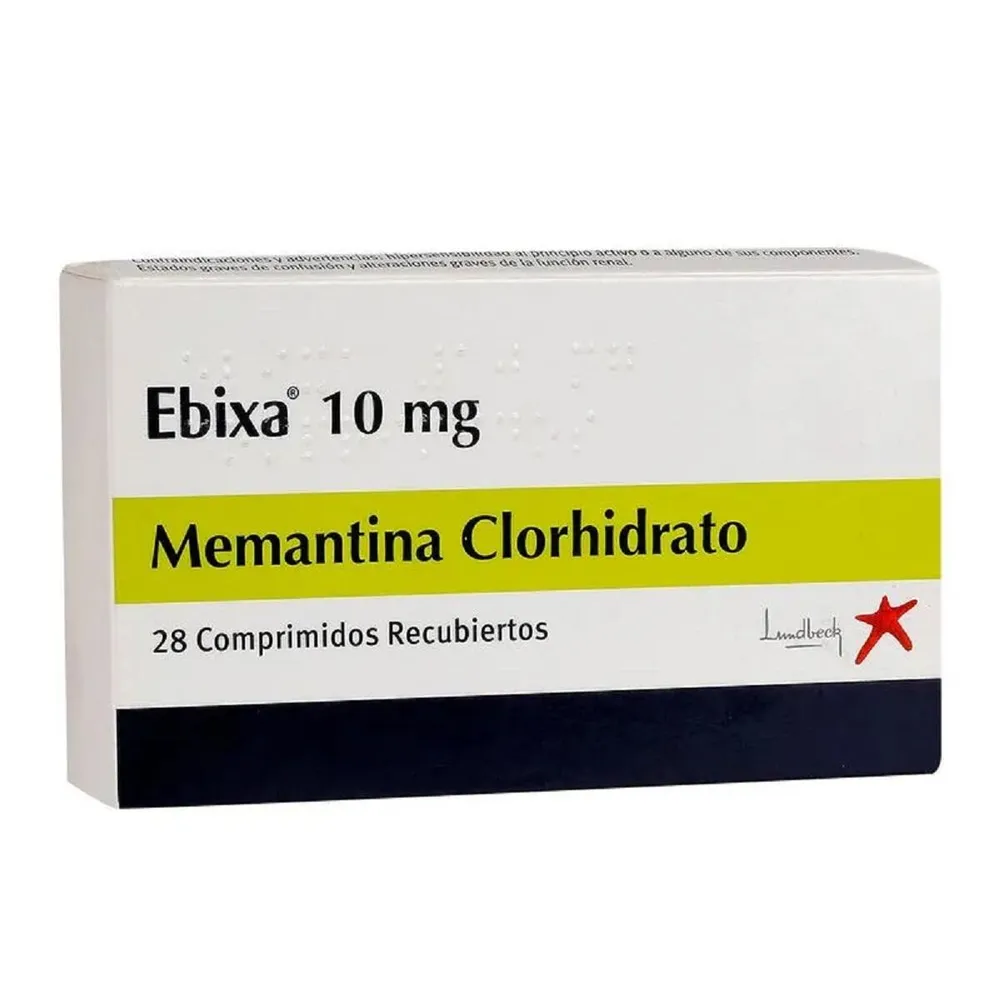
Table of Contents
- Package leaflet: Information for the user
- Ebixa 10 mg film-coated tablets
- 1. What Ebixa is and what it is used for
- 2. What you need to know before taking Ebixa
- 3. How to take Ebixa
- 4. Possible side effects
- 5. How to store Ebixa
- 6. Package contents and other information
- Package leaflet: Information for the user
- Ebixa 5 mg/dose, oral solution
- 1. What Ebixa is and what it is used for
- 2. What you need to know before taking Ebixa
- 3. How to take Ebixa
- Package leaflet.
- 4. Possible side effects
- 5. How to store Ebixa
- 6. Package contents and other information
- Package leaflet: Information for the user
- Ebixa 5 mg film-coated tablets, 10 mg film-coated tablets, 15 mg film-coated tablets, 20 mg film-coated tablets
- 1. What Ebixa is and what it is used for
- 2. What you need to know before taking Ebixa
- 3. How to take Ebixa
- 4. Possible side effects
- 5. How to store Ebixa
- 6. Package Contents and Other Information
- Package leaflet: Information for the user
- Ebixa 20 mg film-coated tablets
- 1. What Ebixa is and what it is used for
- 2. Before taking Ebixa
- 3. How to take Ebixa
- 4. Possible side effects
- 5. How to store Ebixa
- 6. Package contents and other information
Package leaflet: Information for the user
Ebixa 10 mg film-coated tablets
Memantine hydrochloride
Please read all of this leaflet carefully before you start taking this medicine because it contains important information for you.
- Keep this leaflet. You may need to read it again.
- If you have any questions, ask your doctor or pharmacist.
- This medicine has been prescribed for you only. Do not give it to other people, even if their symptoms are the same as yours, as it may be harmful.
- If you experience any side effects, including those not listed in this leaflet, tell your doctor or pharmacist. See section 4.
Contents of this leaflet
- What Ebixa is and what it is used for
- What you need to know before taking Ebixa
- How to take Ebixa
- Possible side effects
- How to store Ebixa
- Contents of the pack and other information
1. What Ebixa is and what it is used for
Ebixa contains the active substance memantine hydrochloride. It belongs to a group of medicines known
as anti-dementia drugs.
Memory loss in Alzheimer's disease is due to a disturbance in the transmission of messages in the
brain. The brain contains so-called N-methyl-D-aspartate (NMDA) receptors involved in the transmission of nerve signals important for learning and memory.
Ebixa belongs to a group of medicines called NMDA receptor antagonists. Ebixa acts on these NMDA receptors, improving the transmission of nerve signals and memory.
Ebixa is used for the treatment of patients with moderate to severe Alzheimer's disease.
2. What you need to know before taking Ebixa
Do not take Ebixa
- if you are allergic to memantine or to any of the other ingredients of this medicine (listed in section 6).
Warnings and precautions
Talk to your doctor or pharmacist before taking Ebixa
- if you have a history of epileptic seizures;
- if you have recently had a myocardial infarction (heart attack) or if you suffer from congestive heart failure or uncontrolled high blood pressure.
In these situations, treatment must be carefully monitored and the clinical benefits of Ebixa reassessed regularly by your physician.
If you have renal impairment (kidney problems), your doctor must carefully monitor your kidney function and, if necessary, adjust the dosage of memantine accordingly.
If you suffer from renal tubular acidosis (RTA, an excess of acid-forming substances in the blood due to kidney dysfunction (insufficient kidney function)) or severe urinary tract infections (the system that transports urine), your doctor may need to adjust the dosage of the medicine accordingly.
Avoid concomitant use of medicinal products such as amantadine (used to treat Parkinson's disease), ketamine (a substance generally used as an anaesthetic), destromethorphan (commonly used to treat cough), and other NMDA antagonists.
Children and adolescents
Ebixa is not recommended for children and adolescents under 18 years of age.
Other medicines and Ebixa
Tell your doctor or pharmacist if you are taking, have recently taken, or might take any other medicines.
In particular, the effects of the following medicines may be altered by Ebixa, and dose adjustment may be necessary:
amantadine, ketamine, destromethorphan
dantrolene, baclofen
cimetidine, ranitidine, procainamide, quinidine, quinine, nicotine
hydrochlorothiazide (or combinations containing hydrochlorothiazide)
anticholinergics (substances generally used to treat movement disorders or intestinal cramps)
anticonvulsants (substances used to prevent and treat epileptic seizures)
barbiturates (substances generally used to induce sleep)
dopaminergic agonists (substances such as L-dopa, bromocriptine)
neuroleptics (substances used in the treatment of mental disorders)
oral anticoagulants.
If you are admitted to hospital, inform medical staff that you are taking Ebixa.
Ebixa with food and drink
Talk to your doctor if you have recently changed or plan to substantially change your diet (e.g. from a normal diet to a strictly vegetarian diet), as your doctor may need to adjust the dosage of the medicine accordingly.
Pregnancy and breastfeeding
If you are pregnant, think you might be pregnant, planning a pregnancy, or breastfeeding, consult your doctor or pharmacist before taking this medicine.
Pregnancy
The use of memantine during pregnancy is not recommended.
Breastfeeding
Women taking Ebixa must not breastfeed.
Driving and using machines
Your doctor will advise you on whether it is safe for you to drive or operate machinery given your condition.
In addition, Ebixa may affect your reaction speed, making it advisable not to drive vehicles or operate machinery.
Ebixa contains sodium
This medicine contains less than 1 mmol (23 mg) of sodium per tablet, i.e. it is essentially "sodium-free".
3. How to take Ebixa
Always take Ebixa exactly as instructed by your doctor. If you have any doubts, consult your doctor or pharmacist.
The recommended dose of Ebixa for adult and elderly patients is 20 mg once daily. To reduce the risk of undesirable effects, reach this dose gradually according to the following daily dosing schedule:
| Week 1 | Half a tablet of 10 mg |
| Week 2 | One tablet of 10 mg |
| Week 3 | One and a half tablets of 10 mg |
| Week 4 and onwards | Two tablets of 10 mg once daily |
The usual starting dose is half a tablet once daily (1 x 5 mg) for the first week. The dose is increased to one tablet once daily (1 x 10 mg) during the second week, and to one and a half tablets once daily during the third week. From the fourth week onwards, the usual dose is two tablets once daily (1 x 20 mg).
Dosage in patients with reduced renal function
If you have reduced renal function, your doctor may decide on a dosage regimen suitable for your condition. In such cases, regular monitoring of renal function must be requested by the doctor.
Administration
Ebixa should be administered orally once daily. To obtain benefit, you must take the medicine regularly every day at the same time. Swallow the tablets with some water. The tablets may be taken with or without food.
Duration of treatment
Continue taking Ebixa for as long as you benefit from it. Your doctor will evaluate the treatment at regular intervals.
If you take more Ebixa than you should
- In general, overdose of Ebixa is not harmful. A greater number of symptoms described in section 4 "Possible side effects" may occur.
- In case of a significant overdose of Ebixa, contact your doctor, as medical intervention may be required.
If you forget to take Ebixa
- If you forget to take a dose, take the next dose at the usual time.
- Do not take a double dose to make up for the forgotten dose.
If you have any doubts about how to use this medicine, consult your doctor or pharmacist.
4. Possible side effects
Like all medicines, this medicine can cause side effects, although not everybody will experience them.
In general, the side effects observed are mild to moderate.
Common (affects 1 to 10 people in 100):
- Headache, drowsiness, constipation, elevated liver function tests, dizziness, balance disorders, shortness of breath, hypertension and drug hypersensitivity.
Uncommon (affects 1 to 10 people in 1,000):
- Fatigue, fungal infections, confusion, hallucinations, vomiting, gait disorders, heart failure and venous blood coagulation (thrombosis/thromboembolism).
Very rare (affects less than 1 person in 10,000):
- Seizures.
Not known (frequency cannot be estimated from available data):
- Inflammation of the pancreas, inflammation of the liver (hepatitis), psychotic reactions.
Alzheimer's disease has been associated with depression, suicidal ideation and suicide. During post-marketing experience, these events have been reported in patients treated with Ebixa.
Reporting of side effects
If you experience any side effect, including those not listed in this leaflet, talk to your doctor or pharmacist. You can also report side effects directly via the national reporting system listed in Annex V. By reporting side effects, you can help provide more information on the safety of this medicine.
5. How to store Ebixa
Keep this medicine out of the sight and reach of children.
Do not use this medicine after the expiry date stated on the packaging and blister after
EXP. The expiry date refers to the last day of the month.
This medicine does not require any special storage conditions.
Do not dispose of any medicine via wastewater or household waste. Ask your pharmacist how to
dispose of medicines you no longer use. This will help protect the environment.
6. Package contents and other information
What Ebixa contains
- The active substance is memantine hydrochloride. Each film-coated tablet contains 10 mg of memantine hydrochloride, equivalent to 8.31 mg of memantine.
- The excipients are microcrystalline cellulose, sodium croscarmellose, anhydrous colloidal silicic acid and magnesium stearate in the tablet core; and, in the tablet coating, hypromellose, macrogol 400, titanium dioxide (E 171) and yellow iron oxide (E 172).
What Ebixa looks like and contents of the pack
Ebixa tablets are film-coated, pale yellow to yellow, oval-shaped tablets with a break line, marked “1 0” on one side and “M M” on the other. The tablets can be divided into equal doses.
Ebixa tablets are available in blister packs containing 14, 28, 30, 42, 49 x 1, 50, 56, 56 x 1, 70, 84, 98, 98 x 1, 100, 100 x 1, 112, 980 (10 x 98), or 1000 (20 x 50) tablets. The 49 x 1, 56 x 1, 98 x 1 and 100 x 1 film-coated tablet packs are unit-dose blisters.
Not all pack sizes may be marketed.
Marketing Authorization Holder and Manufacturer
H. Lundbeck A/S,
Ottiliavej 9
2500 Valby, Denmark.
For further information on Ebixa, please contact the local representative of the Marketing Authorization Holder.
Belgique/België/Belgien Lietuva
Lundbeck S.A./N.V. H. Lundbeck A/S, Danija
Tél/Tel: +32 2535 7979 Tel: + 45 36301311
България Luxembourg/Luxemburg
Lundbeck Export A/S Representative Office Lundbeck S.A.
Tel: +359 2 962 4696 Tél: +32 2 535 7979
Česká republika Magyarország
Lundbeck Česká republika s.r.o. Lundbeck Hungaria Kft.
Tel: +420 225 275 600 Tel: +36 1 4369980
Danmark Malta
Lundbeck Pharma A/S H. Lundbeck A/S, Denmark
Tlf: +45 4371 4270 Tel: + 45 36301311
Deutschland Nederland
Lundbeck GmbH Lundbeck B.V.
Tel: +49 40 23649 0 Tel: +31 20 697 1901
Eesti Norge
H. Lundbeck AS
Tlf: +47 91 300 800
Lundbeck Eesti AS
Tel: + 372 605 9350
Ελλάδα Österreich
Lundbeck Hellas S.A. Lundbeck Austria GmbH
Τηλ: +30 210 610 5036 Tel: +43 1 253 621 6033
España Polska
Lundbeck España S.A. Lundbeck Poland Sp. z o. o.
Tel: +34 93 494 9620 Tel.: + 48 22 626 93 00
France Portugal
Lundbeck SAS Lundbeck Portugal Lda
Tél: + 33 1 79 41 29 00 Tel: +351 21 00 45 900
Hrvatska România
Lundbeck Croatia d.o.o. Lundbeck Romania SRL
Tel.: + 385 1 6448263 Tel: +40 21319 88 26
Ireland Slovenija
Lundbeck (Ireland) Limited Lundbeck Pharma d.o.o.
Tel: +353 468 9800 Tel.: +386 2 229 4500
Ísland Slovenská republika
Vistor hf. Lundbeck Slovensko s.r.o.
Tel: +354 535 7000 Tel: +421 2 5341 42 18
Italia Suomi/Finland
Lundbeck Italia S.p.A. Oy H. Lundbeck Ab
Tel: +39 02 677 4171 Puh/Tel: +358 2 276 5000
Κύπρος Sverige
Lundbeck Hellas A.E H. Lundbeck AB
Τηλ.: +357 22490305 Tel: +46 4069 98200
Latvija United Kingdom (Northern Ireland)
H. Lundbeck A/S, Danija Lundbeck (Ireland) Limited
Tel: + 45 36301311 Tel: +353 1 468 9800
This leaflet was last approved MM/YYYY
Other sources of information
More detailed information on this medicinal product is available on the European Medicines Agency website: http://www.ema.europa.eu
Package leaflet: Information for the user
Ebixa 5 mg/dose, oral solution
Memantine hydrochloride
Please read this leaflet carefully before taking this medicine because it contains important information for you.
- Keep this leaflet. You may need to read it again.
- If you have any questions, consult your doctor or pharmacist.
- This medicine has been prescribed for you only. Do not give it to others, even if their symptoms are the same as yours, as it could be harmful.
- If you experience any side effect, including those not listed in this leaflet, contact your doctor or pharmacist. See section 4.
Contents of this leaflet
- What Ebixa is and what it is used for
- What you need to know before taking Ebixa
- How to take Ebixa
- Possible side effects
- How to store Ebixa
- Contents of the pack and other information
1. What Ebixa is and what it is used for
Ebixa contains the active substance memantine hydrochloride. It belongs to a group of medicines known as anti-dementia drugs.
The memory loss in Alzheimer's disease is due to a disturbance in the transmission of messages in the brain. The brain contains so-called N-methyl-D-aspartate (NMDA) receptors, which are involved in the transmission of nerve signals important for learning and memory.
Ebixa belongs to a group of medicines called NMDA receptor antagonists. Ebixa acts on these NMDA receptors, improving the transmission of nerve signals and memory.
Ebixa is used for the treatment of patients with moderate to severe Alzheimer's disease.
2. What you need to know before taking Ebixa
Do not take Ebixa
- if you are allergic to memantine or to any of the other ingredients of this medicine (listed in section 6).
Warnings and precautions
Talk to your doctor or pharmacist before taking Ebixa
- if you have a history of epileptic seizures;
- if you have recently had a myocardial infarction (heart attack) or if you suffer from congestive heart failure or uncontrolled high blood pressure.
In these situations, treatment should be closely monitored and the clinical benefits of Ebixa reassessed regularly by your doctor.
If you have renal impairment (kidney problems), your doctor must carefully monitor kidney function and, if necessary, adjust the memantine dosage accordingly.
If you suffer from renal tubular acidosis (RTA, an excess of acid-forming substances in the blood due to kidney dysfunction (insufficient kidney function)) or severe urinary tract infections (the structure that carries urine), your doctor may need to adjust the drug dosage accordingly.
Avoid concomitant use of medicinal products such as amantadine (used to treat Parkinson's disease), ketamine (a substance generally used as an anesthetic), destromethorphan (commonly used to treat cough), and other NMDA antagonists.
Children and adolescents
Ebixa is not recommended in children and adolescents under 18 years of age.
Other medicines and Ebixa
Tell your doctor or pharmacist if you are taking, have recently taken, or might take any other medicines.
In particular, the effects of the following medicines may be altered by Ebixa, and dose adjustment may be necessary:
- amantadine, ketamine, destromethorphan
- dantrolene, baclofen
- cimetidine, ranitidine, procainamide, quinidine, quinine, nicotine
- hydrochlorothiazide (or combinations containing hydrochlorothiazide)
- anticholinergics (substances generally used to treat movement disorders or intestinal cramps)
- anticonvulsants (substances used to prevent and treat epileptic seizures)
- barbiturates (substances generally used to induce sleep)
- dopaminergic agonists (substances such as L-dopa, bromocriptine)
- neuroleptics (substances used in the treatment of mental disorders)
- oral anticoagulants.
If you are admitted to hospital, inform medical staff that you are taking Ebixa.
Ebixa with food and drink
Talk to your doctor if you have recently changed or plan to substantially change your diet (for example, from a normal diet to a strictly vegetarian diet), as your doctor may need to adjust the dosage of the medicine accordingly.
Pregnancy and breastfeeding
If you are pregnant, suspect you may be pregnant, planning to become pregnant, or are breastfeeding, consult your doctor or pharmacist before taking this medicine.
Pregnancy
The use of memantine during pregnancy is not recommended.
Breastfeeding
Women taking Ebixa must not breastfeed.
Driving and using machines
Your doctor will advise you on whether it is safe for you to drive or operate machinery given your medical condition.
In addition, Ebixa may affect your reaction time, making it advisable to avoid driving vehicles or operating machinery.
Ebixa contains sorbitol and potassium
This medicine contains 100 mg of sorbitol per gram, equivalent to 200 mg/4 pump actuations. Sorbitol is a source of fructose. If your doctor has told you that you have an intolerance to certain sugars, or if you have been diagnosed with hereditary fructose intolerance (HFI), a rare genetic disorder in which patients cannot break down fructose, speak with your doctor before taking this medicine. Your doctor will advise you accordingly.
In addition, this medicine contains potassium, less than 1 mmol (39 mg) per dose, therefore essentially potassium-free.
3. How to take Ebixa
Always take Ebixa exactly as instructed by your doctor. If in doubt, consult your doctor or
pharmacist.
Each downward press of the pump delivers 5 mg of memantine hydrochloride.
The recommended dose of Ebixa for adult and elderly patients is four pump actuations,
equivalent to 20 mg once daily. To reduce the risk of undesirable effects, reach this dose gradually according to the following daily dosing schedule:
| Week 1 | 1 pump actuation |
| Week 2 | 2 pump actuations |
| Week 3 | 3 pump actuations |
| Week 4 and onwards | 4 pump actuations |
The usual starting dose is 1 pump actuation once daily (1x 5 mg) for the first week. The dosage is increased to 2 pump actuations once daily (1x 10 mg) in the second week, and to 3 pump actuations once daily in the third week. From the fourth week onwards, the recommended dose is 4 pump actuations once daily (1x 20 mg).
Dosage in patients with reduced renal function
In case of reduced renal function, the treating physician may decide on a dosage regimen suitable for your condition. In such cases, regular monitoring of renal function must be requested by the physician.
Administration
Ebixa should be administered orally once daily. To obtain benefit, you must take the medicine regularly every day at the same time. Take the solution with a little water. The solution may be taken with or without food.
For detailed instructions on the preparation and handling of the product, see at the end of this
Package leaflet.
Duration of treatment
Continue taking Ebixa for as long as you benefit from it. Your doctor will review your treatment at regular intervals.
If you take more Ebixa than you should
- In general, overdose with Ebixa is not harmful. You may experience a greater number of symptoms described in section 4 “Possible side effects”.
- In case of a significant overdose of Ebixa, contact your doctor, as medical intervention may be required.
If you forget to take Ebixa
- If you forget to take a dose, take the next dose at the usual time.
- Do not take a double dose to make up for the missed dose.
If you have any questions about the use of this medicine, ask your doctor or pharmacist.
4. Possible side effects
Like all medicines, this medicine can cause side effects, although not everybody gets them.
In general, the side effects observed are mild to moderate.
Common (affects 1 to 10 people in 100):
- Headache, drowsiness, constipation, increased liver function tests, dizziness, balance disorders, shortness of breath, hypertension and drug hypersensitivity.
Uncommon (affects 1 to 10 people in 1,000):
- Fatigue, fungal infections, confusion, hallucinations, vomiting, gait disturbances, heart failure and venous blood clotting (thrombosis/thromboembolism).
Very rare (affects less than 1 person in 10,000):
- Seizures.
Not known (frequency cannot be estimated from the available data):
- Inflammation of the pancreas, inflammation of the liver (hepatitis), psychotic reactions.
Alzheimer's disease has been associated with depression, suicidal ideation and suicide. During post-marketing experience, these events have been reported in patients treated with Ebixa.
Reporting of side effects
If you experience any side effect, including those not listed in this leaflet, talk to your doctor or pharmacist. You can also report side effects directly via the national reporting system detailed in Annex V. By reporting side effects, you can help provide more information on the safety of this medicine.
5. How to store Ebixa
Keep this medicine out of the sight and reach of children.
Do not use this medicine after the expiry date which is stated on the packaging and on the label of the
bottle after EXP. The expiry date refers to the last day of the month.
Store below 30°C.
After opening, use the contents of the bottle within 3 months.
The bottle with the dosing pump screwed on must be stored and transported in an upright position only.
Do not dispose of any medicine via wastewater or household waste. Ask your pharmacist how to dispose of medicines you no longer use. This will help protect the environment.
6. Package contents and other information
What Ebixa contains
- The active substance is memantine hydrochloride. Each pump actuation delivers 0.5 ml of solution containing 5 mg of memantine hydrochloride, equivalent to 4.16 mg of memantine.
- The excipients are potassium sorbate, sorbitol E420, purified water.
What Ebixa looks like and contents of the pack
Ebixa oral solution is a clear, colourless to slightly yellowish solution.
Ebixa oral solution is available in 50 ml, 100 ml or 10 x 50 ml bottles.
Not all pack sizes may be marketed.
Marketing Authorisation Holder and Manufacturer
H. Lundbeck A/S
Ottiliavej 9
2500 Valby, Denmark
For further information about Ebixa, please contact the local representative of the Marketing Authorisation Holder.
Belgique/België/Belgien Lietuva
Lundbeck S.A./N.V. H. Lundbeck A/S, Danija
Tél/Tel: +32 2 535 7979 Tel: + 45 36301311
България Luxembourg/Luxemburg
Lundbeck Export A/S Representative Office Lundbeck S.A.
Tel: +359 2 962 4696 Tél: +32 2 535 7979
Česká republika Magyarország
Lundbeck Česká republika s.r.o. Lundbeck Hungaria Kft.
Tel: +420 225 275 600 Tel: +36 1 4369980
Danmark Malta
Lundbeck Pharma A/S H. Lundbeck A/S, Denmark
Tlf: +45 4371 4270 Tel: + 45 36301311
Deutschland Nederland
Lundbeck GmbH Lundbeck B.V.
Tel: +49 40 23649 0 Tel: +31 20 697 1901
Eesti Norge
Lundbeck Eesti AS H. Lundbeck AS
Tel: + 372 605 9350 Tlf: +47 91 300 800
Ελλάδα Österreich
Lundbeck Hellas S.A. Lundbeck Austria GmbH
Τηλ: +30 210 610 5036 Tel: +43 1 253 621 6033
España Polska
Lundbeck España S.A. Lundbeck Poland Sp. z o.o.
Tel: +34 93 494 9620 Tel.: + 48 22 626 93 00
France Portugal
Lundbeck SAS Lundbeck Portugal Lda
Tél: + 33 1 79 41 29 00 Tel: +351 21 00 45 900
Hrvatska România
Lundbeck Croatia d.o.o. Lundbeck Romania SRL
Tel.: + 385 1 6448263 Tel: +40 21319 88 26
Ireland Slovenija
Lundbeck (Ireland) Limited Lundbeck Pharma d.o.o.
Tel: +353 468 9800 Tel.: +386 2 229 4500
Ísland Slovenská republika
Vistor hf. Lundbeck Slovensko s.r.o.
Tel: +354 535 7000 Tel: +421 2 5341 42 18
Italia Suomi/Finland
Lundbeck Italia S.p.A. Oy H. Lundbeck Ab
Tel: +39 02 677 4171 Puh/Tel: +358 2 276 5000
Κύπρος Sverige
Lundbeck Hellas A.E H. Lundbeck AB
Τηλ.: +357 22490305 Tel: +46 4069 98200
Latvija United Kingdom (Northern Ireland)
H. Lundbeck A/S, Danija Lundbeck (Ireland) Limited
Tel: + 45 36301311 Tel: +353 1 468 9800
This leaflet was last approved on
Other sources of information
More detailed information on this medicinal product is available on the European Medicines Agency (EMA) website: http://www.ema.europa.eu
Instructions for correct use of the pump
The solution must not be poured or pumped directly into the mouth from the bottle or pump.
Measure the dose into a spoon or a glass of water using the pump.
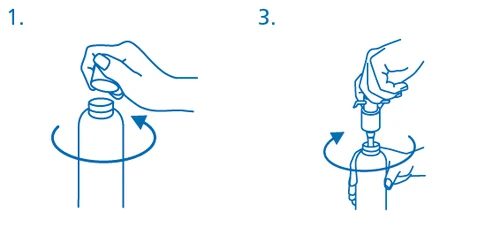
Remove the screw cap from the bottle:
Turn the cap anticlockwise, unscrew it completely and remove it (fig. 1).
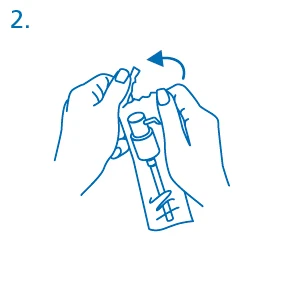
Assembling the dosing pump onto the bottle:
Remove the dosing pump from the plastic pouch (fig. 2) and place it on top of the bottle. Carefully slide the plastic dip tube into the bottle. Hold the dosing pump over the bottle neck and screw it on clockwise until it locks securely (fig. 3). The dosing pump should be screwed on only once when first used and must never be unscrewed.
How the dosing pump works:
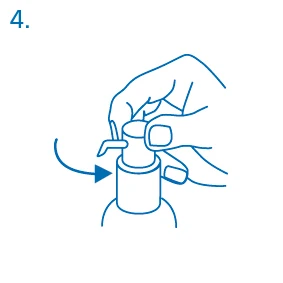
The pump head has two positions and is easy to turn:
anticlockwise to the unlocked position and
clockwise to the locked position.
The pump head must not be pressed down when in the locked position. The solution can only be dispensed in the unlocked position. To unlock, turn the pump head in the direction of the arrow until it stops (approximately one-eighth of a turn, fig. 4). The dosing pump is now ready for use.
Preparing the dosing pump:
When used for the first time, the dosing pump does not deliver the correct amount of oral solution. Therefore, the pump must be primed by pressing the pump head fully down five times in succession (fig. 5).
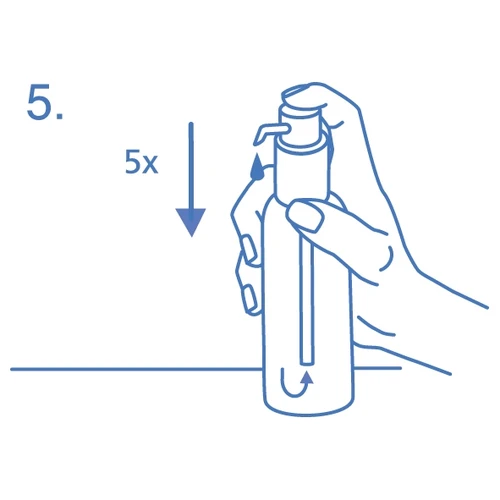
The solution dispensed during priming must be discarded. Each subsequent full downward press of the dosing pump head (equivalent to one pump actuation) will deliver the correct dose (fig. 6).
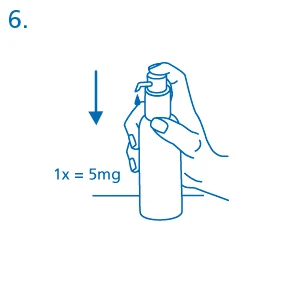
Correct use of the dosing pump:
Place the bottle on a flat, horizontal surface, such as a table, and use it only in an upright position. Hold a glass containing a small amount of water or a spoon under the nozzle. Press the pump head down firmly, steadily and evenly – not too slowly (fig. 7, fig. 8).
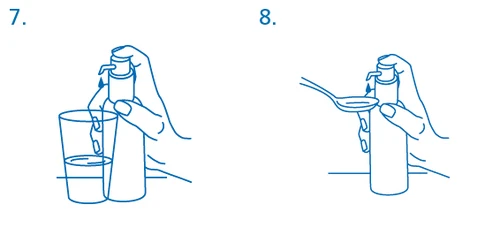
The pump head can then be released and is ready for the next actuation.
The dosing pump must be used exclusively with Ebixa solution in the provided bottle, and not with any other substances or containers. If the pump does not function properly, consult your doctor or pharmacist. Lock the dosing pump after using Ebixa.
Package leaflet: Information for the user
Ebixa 5 mg film-coated tablets, 10 mg film-coated tablets, 15 mg film-coated tablets, 20 mg film-coated tablets
Memantine hydrochloride
Please read this leaflet carefully before taking this medicine because it contains
important information for you.
- Keep this leaflet. You may need to read it again.
- If you have any questions, ask your doctor or pharmacist.
- This medicine has been prescribed for you only. Do not give it to other people, even if they have the same symptoms as you, because it could be harmful.
- If you experience any side effect, including those not listed in this leaflet, contact your doctor or pharmacist. See section 4.
Contents of this leaflet
- What Ebixa is and what it is used for
- What you need to know before taking Ebixa
- How to take Ebixa
- Possible side effects
- How to store Ebixa
- Contents of the pack and other information
1. What Ebixa is and what it is used for
How Ebixa works
Ebixa contains the active substance memantine hydrochloride. It belongs to a group of medicines known
as anti-dementia drugs.
Memory loss in Alzheimer's disease is due to impaired transmission of messages in the brain. The brain contains so-called N-methyl-D-aspartate (NMDA) receptors, which are involved in the transmission of nerve signals important for learning and memory.
Ebixa belongs to a group of medicines called NMDA receptor antagonists. Ebixa acts on these NMDA receptors, improving the transmission of nerve signals and memory.
Ebixa is used for the treatment of patients with moderate to severe Alzheimer's disease.
2. What you need to know before taking Ebixa
Do not take Ebixa
- if you are allergic to memantine or to any of the other ingredients of this medicine (listed in section 6).
Warnings and precautions
Talk to your doctor or pharmacist before taking Ebixa
- if you have a history of epileptic seizures;
- if you have recently had a myocardial infarction (heart attack) or if you suffer from congestive heart failure or uncontrolled high blood pressure.
In these situations, treatment must be carefully monitored and the clinical benefits of Ebixa reassessed regularly by your doctor.
If you have renal impairment (kidney problems), your doctor must carefully monitor your kidney function and, if necessary, adjust the dosage of memantine accordingly.
If you suffer from renal tubular acidosis (RTA, an excess of acid-forming substances in the blood due to kidney dysfunction (insufficient kidney function)) or severe urinary tract infections (the structure that transports urine), your doctor may need to adjust the dosage of the medicine accordingly.
Avoid concomitant use of medicinal products such as amantadine (used to treat Parkinson's disease), ketamine (a substance generally used as an anaesthetic), destromethorphan (commonly used to treat cough), and other NMDA antagonists.
Children and adolescents
Ebixa is not recommended for children and adolescents under 18 years of age.
Other medicines and Ebixa
Tell your doctor or pharmacist if you are taking, have recently taken, or might take any other medicines.
In particular, the effects of the following medicines may be altered by Ebixa, and dose adjustment may be necessary:
amantadine, ketamine, destromethorphan
dantrolene, baclofen
cimetidine, ranitidine, procainamide, quinidine, quinine, nicotine
hydrochlorothiazide (or combinations containing hydrochlorothiazide)
anticholinergics (substances generally used to treat movement disorders or intestinal cramps)
anticonvulsants (substances used to prevent and treat epileptic seizures)
barbiturates (substances generally used to induce sleep)
dopaminergic agonists (substances such as L-dopa, bromocriptine)
neuroleptics (substances used in the treatment of mental disorders)
oral anticoagulants.
If you are admitted to hospital, inform medical staff that you are taking Ebixa.
Ebixa with food and drink
Talk to your doctor if you have recently changed or plan to substantially change your diet (for example, from a normal diet to a strictly vegetarian diet), as your doctor may need to adjust the dosage of the medicine accordingly.
Pregnancy and breastfeeding
If you are pregnant, think you may be pregnant, are planning to become pregnant, or are breastfeeding, consult your doctor or pharmacist before taking this medicine.
Pregnancy
The use of memantine during pregnancy is not recommended.
Breastfeeding
Women taking Ebixa must not breastfeed.
Driving and using machines
Your doctor will advise you on whether it is safe for you to drive or operate machinery given your condition.
Additionally, Ebixa may affect your reaction time, making it advisable not to drive or operate machinery.
Ebixa contains sodium
This medicine contains less than 1 mmol (23 mg) of sodium per tablet, i.e. it is essentially "sodium-free".
3. How to take Ebixa
The starter pack of Ebixa must be used only at the beginning of Ebixa treatment. Always take Ebixa exactly as your doctor has instructed. If you are unsure, consult your doctor or pharmacist.
The recommended dose of Ebixa is 20 mg daily, which is reached by a gradual increase in the dose of Ebixa during the first 3 weeks of treatment. The dosing schedule is also indicated on the starter pack. Take one tablet once daily.
First week (day 1-7):
Take one 5 mg film-coated tablet once daily (white to off-white, oval-shaped) for 7 days.
Second week (day 8-14):
Take one 10 mg film-coated tablet once daily (pale yellow to yellow, oval-shaped) for 7 days.
Third week (day 15-21):
Take one 15 mg film-coated tablet once daily (grey-orange, oval-shaped) for 7 days.
Fourth week (day 22-28):
Take one 20 mg film-coated tablet once daily (grey-red, oval-shaped) for 7 days.
| Week 1 | 5 mg tablet |
| Week 2 | 10 mg tablet |
| Week 3 | 15 mg tablet |
| Week 4 and onwards | 20 mg tablets once daily |
Maintenance dose
The recommended maintenance dose is 20 mg daily.
For continuation of therapy, please consult your doctor.
Dosage in patients with reduced renal function
In case of reduced renal function, your treating physician may decide on a dosage regimen suitable for your condition. In such cases, regular monitoring of renal function must be requested by the physician.
Administration
Ebixa should be administered orally once daily. To obtain benefit, you must take the medicine regularly every day at the same time. Swallow the tablets with some water. The tablets may be taken with or without food.
Duration of treatment
Continue taking Ebixa for as long as you benefit from it. Your doctor will evaluate the treatment at regular intervals.
If you take more Ebixa than you should
- In general, overdose of Ebixa is not harmful. A higher number of symptoms described in section 4 “Possible side effects” may occur.
- In case of a significant overdose of Ebixa, contact your doctor, as medical intervention may be required.
If you forget to take Ebixa
- If you forget to take a dose, take the next dose at the usual time.
- Do not take a double dose to make up for the missed dose.
If you have any doubts about the use of this medicine, consult your doctor or pharmacist.
4. Possible side effects
Like all medicines, this medicine can cause side effects, although not everyone experiences them.
In general, the side effects observed are mild to moderate.
Common (affects 1 to 10 people in 100):
- Headache, drowsiness, constipation, increased liver function tests, dizziness, balance disorders, shortness of breath, hypertension and drug hypersensitivity.
Uncommon (affects 1 to 10 people in 1000):
- Fatigue, fungal infections, confusion, hallucinations, vomiting, gait disturbances, heart failure and venous blood coagulation (thrombosis/thromboembolism).
Very rare (affects less than 1 person in 10,000):
- Seizures
Not known (frequency cannot be estimated from available data):
- Inflammation of the pancreas, inflammation of the liver (hepatitis), psychotic reactions.
Alzheimer's disease has been associated with depression, suicidal ideation and suicide. During
post-marketing experience, these events have been reported in patients treated with Ebixa.
Reporting of side effects
If you experience any side effect, including those not listed in this leaflet, talk to your doctor or pharmacist. You can also report side effects directly via the national reporting system listed in Annex V. By reporting side effects, you can help provide more information on the safety of this medicine.
5. How to store Ebixa
Keep this medicine out of the sight and reach of children.
Do not use this medicine after the expiry date which is stated on the pack and on the blisters after
EXP. The expiry date refers to the last day of the month.
This medicine requires no special storage conditions.
Do not dispose of any medicine via wastewater or household waste. Ask your pharmacist how to
dispose of medicines you no longer use. This will help protect the environment.
6. Package Contents and Other Information
What Ebixa Contains
- The active substance is memantine hydrochloride. Each tablet contains 5/10/15/20 mg of memantine hydrochloride, equivalent to 4.15/8.31/12.46/16.62 mg of memantine.
- The excipients in Ebixa 5/10/15 and 20 mg film-coated tablets are microcrystalline cellulose, sodium croscarmellose, anhydrous colloidal silicic acid, and magnesium stearate in the tablet core; and, in the tablet coating, hypromellose, macrogol 400, titanium dioxide (E 171), and the additional excipient yellow iron oxide (E 172) for Ebixa 10 mg film-coated tablets, and the additional excipients yellow and red iron oxides (E 172) for Ebixa 15 mg and Ebixa 20 mg film-coated tablets.
How Ebixa is Supplied and Package Contents
Ebixa 5 mg film-coated tablets are white, tending to off-white, oval-oblong in shape, with "5" engraved on one side and "MEM" on the other side.
Ebixa 10 mg film-coated tablets are pale yellow, tending to yellow, oval in shape, with a score line, and "1 0" engraved on one side and "M M" on the other side. The tablet can be divided into two equal doses.
Ebixa 15 mg film-coated tablets are orange, tending to greyish-orange, oval-oblong in shape, with "15" engraved on one side and "MEM" on the other side.
Ebixa 20 mg film-coated tablets are light red, tending to greyish-red, oval-oblong in shape, with "20" engraved on one side and "MEM" on the other side.
The starter pack contains 28 tablets in 4 blisters: 7 tablets of Ebixa 5 mg, 7 tablets of Ebixa 10 mg, 7 tablets of Ebixa 15 mg, and 7 tablets of Ebixa 20 mg.
Marketing Authorization Holder and Manufacturer
H. Lundbeck A/S
Ottiliavej 9
2500 Valby
Denmark
For further information on Ebixa, please contact the local representative of the Marketing Authorization Holder.
Belgique/België/Belgien Lietuva
Lundbeck S.A./N.V. H. Lundbeck A/S, Danija
Tél/Tel: +32 2 535 7979 Tel: +45 36301311
България Luxembourg/Luxemburg
Lundbeck Export A/S Representative Office Lundbeck S.A.
Tel: +359 2 962 4696 Tél: +32 2 535 7979
Česká republika Magyarország
Lundbeck Česká republika s.r.o. Lundbeck Hungaria Kft.
Tel: +420 225 275 600 Tel: +36 1 4369980
Danmark Malta
Lundbeck Pharma A/S H. Lundbeck A/S, Denmark
Tlf: +45 4371 4270 Tel: +45 36301311
Deutschland Nederland
Lundbeck GmbH Lundbeck B.V.
Tel: +49 40 23649 0 Tel: +31 20 697 1901
Eesti Norge
Lundbeck Eesti AS H. Lundbeck AS
Tel: +372 605 9350 Tlf: +47 91 300 800
Ελλάδα Österreich
Lundbeck Hellas S.A. Lundbeck Austria GmbH
Τηλ: +30 210 610 5036 Tel: +43 1 253 621 6033
España Polska
Lundbeck España S.A. Lundbeck Poland Sp. z o.o.
Tel: +34 93 494 9620 Tel.: +48 22 626 93 00
France Portugal
Lundbeck SAS Lundbeck Portugal Lda
Tél: +33 1 79 41 29 00 Tel: +351 21 00 45 900
Hrvatska România
Lundbeck Croatia d.o.o. Lundbeck Romania SRL
Tel.: +385 1 6448263 Tel: +40 21319 88 26
Ireland Slovenija
Lundbeck (Ireland) Limited Lundbeck Pharma d.o.o.
Tel: +353 468 9800 Tel.: +386 2 229 4500
Ísland Slovenská republika
Vistor hf. Lundbeck Slovensko s.r.o.
Tel: +354 535 7000 Tel: +421 2 5341 42 18
Italia Suomi/Finland
Lundbeck Italia S.p.A. Oy H. Lundbeck Ab
Tel: +39 02 677 4171 Puh/Tel: +358 2 276 5000
Κύπρος Sverige
Lundbeck Hellas A.E. H. Lundbeck AB
Τηλ.: +357 22490305 Tel: +46 4069 98200
Latvija United Kingdom (Northern Ireland)
H. Lundbeck A/S, Danija Lundbeck (Ireland) Limited
Tel: +45 36301311 Tel: +353 1 468 9800
This leaflet was last approved on MM/YYYY
Additional Sources of Information
More detailed information on this medicinal product is available on the European Medicines Agency website: http://www.ema.europa.eu
Package leaflet: Information for the user
Ebixa 20 mg film-coated tablets
Memantine hydrochloride
Please read this leaflet carefully before taking this medicine because it contains
important information for you.
- Keep this leaflet. You may need to read it again.
- If you have any questions, ask your doctor or pharmacist.
- This medicine has been prescribed for you only. Do not give it to other people, even if their symptoms are the same as yours, as it may be harmful.
- If you experience any side effects, including those not listed in this leaflet, consult your doctor or pharmacist. See section 4.
Contents of this leaflet
- What Ebixa is and what it is used for
- What you need to know before taking Ebixa
- How to take Ebixa
- Possible side effects
- How to store Ebixa
- Contents of the pack and other information
1. What Ebixa is and what it is used for
Ebixa contains the active substance memantine hydrochloride. It belongs to a group of medicines known
as anti-dementia drugs.
Memory loss in Alzheimer's disease is due to impaired transmission of messages in the brain. The brain contains so-called N-methyl-D-aspartate (NMDA) receptors, which are involved in the transmission of nerve signals important for learning and memory.
Ebixa belongs to a group of medicines called NMDA receptor antagonists. Ebixa acts on these NMDA receptors, improving the transmission of nerve signals and memory.
Ebixa is used for the treatment of patients with moderate to severe Alzheimer's disease.
2. Before taking Ebixa
Do not take Ebixa
- if you are allergic to memantine or to any of the other ingredients of this medicine (listed in section 6).
Warnings and precautions
Talk to your doctor or pharmacist before taking Ebixa
- if you have a history of epileptic seizures;
- if you have recently had a myocardial infarction (heart attack) or if you suffer from congestive heart failure or uncontrolled high blood pressure.
In these situations, treatment must be carefully monitored and the clinical benefits of Ebixa reassessed regularly by your physician.
If you have renal impairment (kidney problems), your physician must carefully monitor kidney function and, if necessary, adjust the memantine dosage accordingly.
If you suffer from renal tubular acidosis (RTA, an excess of acid-forming substances in the blood due to kidney dysfunction (insufficient kidney function)) or severe urinary tract infections (the structure that transports urine), your doctor may need to adjust the drug dosage accordingly.
Avoid concomitant use of medicinal products such as amantadine (used to treat Parkinson's disease), ketamine (a substance generally used as an anaesthetic), dextromethorphan (commonly used to treat cough), and other NMDA antagonists.
Children and adolescents
Ebixa is not recommended for children and adolescents under 18 years of age.
Other medicines and Ebixa
Inform your doctor or pharmacist if you are taking, have recently taken, or might take any other medicines.
In particular, the effects of the following medicines may be altered by Ebixa, and dose adjustment may be necessary:
amantadine, ketamine, dextromethorphan
dantrolene, baclofen
cimetidine, ranitidine, procainamide, quinidine, quinine, nicotine
hydrochlorothiazide (or combinations containing hydrochlorothiazide)
anticholinergics (substances generally used to treat movement disorders or intestinal cramps)
anticonvulsants (substances used to prevent and treat epileptic seizures)
barbiturates (substances generally used to induce sleep)
dopaminergic agonists (substances such as L-dopa, bromocriptine)
neuroleptics (substances used in the treatment of mental disorders)
oral anticoagulants.
If you are admitted to hospital, inform medical staff that you are taking Ebixa.
Ebixa with food and drink
Talk to your doctor if you have recently changed or plan to substantially change your diet (e.g. from a normal diet to a strictly vegetarian diet), as your doctor may need to adjust the dosage of the medicine accordingly.
Pregnancy and breastfeeding
If you are pregnant, think you may be pregnant, are planning a pregnancy, or are breastfeeding, consult your doctor or pharmacist before taking this medicine.
Pregnancy
The use of memantine during pregnancy is not recommended.
Breastfeeding
Women taking Ebixa must not breastfeed.
Driving and using machines
Your doctor will advise you on whether it is safe for you to drive or operate machinery given your condition.
In addition, Ebixa may affect your reaction time, making it advisable to avoid driving vehicles or operating machinery.
Ebixa contains sodium
This medicine contains less than 1 mmol (23 mg) of sodium per tablet, i.e. it is essentially “sodium-free”.
3. How to take Ebixa
Always take Ebixa exactly as prescribed by your doctor. Consult your doctor or pharmacist if you have any doubts.
The recommended dose of Ebixa for adult and elderly patients is 20 mg once daily.
To reduce the risk of undesirable effects, this dose should be reached gradually, following the daily dosing schedule outlined below. For dose titration, tablets with different strengths are available.
At the beginning of treatment, you will start with Ebixa 5 mg film-coated tablets once daily. This dose will be increased by 5 mg weekly until the recommended maintenance dose is reached. The recommended maintenance dose is 20 mg once daily, which is achieved at the beginning of the fourth week.
Dosage in patients with reduced renal function
If you have reduced kidney function, your doctor may decide on a dosing regimen suitable for your condition. In such cases, your doctor should regularly monitor your kidney function.
Administration
Ebixa should be administered orally once daily. To obtain benefit, you must take the medicine regularly every day at the same time. Swallow the tablets with a glass of water. The tablets may be taken with or without food.
Duration of treatment
Continue taking Ebixa for as long as you benefit from it. Your doctor will review your treatment at regular intervals.
If you take more Ebixa than you should
- In general, overdose with Ebixa is not harmful. However, a higher number of symptoms described in section 4 “Possible side effects” may occur.
- In case of a significant overdose of Ebixa, contact your doctor, as medical intervention may be required.
If you forget to take Ebixa
- If you forget to take a dose, take the next dose at the usual time.
- Do not take a double dose to make up for the forgotten dose.
If you have any doubts about the use of this medicine, consult your doctor or pharmacist.
4. Possible side effects
Like all medicines, this medicine can cause side effects, although not everybody gets them.
In general, the side effects observed are mild to moderate.
Common (affects 1 to 10 people in 100):
- Headache, drowsiness, constipation, elevated liver function tests, dizziness, balance disorders, shortness of breath, hypertension and drug hypersensitivity.
Uncommon (affects 1 to 10 people in 1,000):
- Fatigue, fungal infections, confusion, hallucinations, vomiting, gait disorders, heart failure and venous blood clotting (thrombosis/thromboembolism).
Very rare (affects less than 1 person in 10,000):
- Seizures
Not known (frequency cannot be estimated from the available data):
- Inflammation of the pancreas, inflammation of the liver (hepatitis), psychotic reactions.
Alzheimer's disease has been associated with depression, suicidal ideation and suicide. During post-
Reporting of side effects
If you experience any side effect, including those not listed in this leaflet, talk to your doctor or pharmacist. You can also report side effects directly via the national reporting system detailed in Annex V. By reporting side effects, you can help provide more information on the safety of this medicine.
If any of the side effects worsens, or if you notice any side effect not listed in this leaflet, inform your doctor or pharmacist.
5. How to store Ebixa
Keep this medicine out of the sight and reach of children.
Do not use this medicine after the expiry date stated on the pack and blister after
EXP. The expiry date refers to the last day of the month.
This medicine does not require any special storage conditions.
Do not dispose of any medicine via wastewater or household waste. Ask your pharmacist how to dispose of medicines you no longer use. This will help protect the environment.
6. Package contents and other information
What Ebixa contains
- The active substance is memantine hydrochloride. Each film-coated tablet contains 20 mg of memantine hydrochloride, equivalent to 16.62 mg of memantine.
- The excipients are microcrystalline cellulose, sodium croscarmellose, anhydrous colloidal silicon dioxide, magnesium stearate, in the tablet core; and hydroxypropyl-methylcellulose, macrogol 400, titanium dioxide (E 171), red and yellow iron oxide (E 172), in the tablet coating.
What Ebixa looks like and contents of the pack
Ebixa 20 mg film-coated tablets are light red, slightly tending towards reddish-grey, oval-
oblong tablets, with "20" engraved on one side and "MEM" on the other side.
Ebixa tablets are available in blister packs containing 14, 28, 42, 49 x 1, 56, 56 x 1, 70, 84, 98,
98 x 1, 100 x 1, 112 or 840 (20 x 42) tablets. The packs containing 49 x 1, 56 x 1, 98 x 1 and 100 x 1
film-coated tablets are unit-dose blisters.
Not all pack sizes may be marketed.
Marketing Authorisation Holder and Manufacturer
H. Lundbeck A/S
Ottiliavej 9
2500 Valby
Denmark
For further information on Ebixa, please contact the local representative of the Marketing Authorisation Holder.
Belgique/België/Belgien Lietuva
Lundbeck S.A./N.V. H. Lundbeck A/S, Danija
Tél/Tel: +32 2 535 7979 Tel: + 45 36301311
България Luxembourg/Luxemburg
Lundbeck Export A/S Representative Office Lundbeck S.A.
Tel: +359 2 962 4696 Tél: +32 2 535 7979
Česká republika Magyarország
Lundbeck Česká republika s.r.o. Lundbeck Hungaria Kft.
Tel: +420 225 275 600 Tel: +36 1 4369980
Danmark Malta
Lundbeck Pharma A/S H. Lundbeck A/S, Denmark
Tlf: +45 4371 4270 Tel: + 45 36301311
Deutschland Nederland
Lundbeck GmbH Lundbeck B.V.
Tel: +49 40 23649 0 Tel: +31 20 697 1901
Eesti Norge
Lundbeck Eesti AS H. Lundbeck AS
Tel: + 372 605 9350 Tlf: +47 91 300 800
Ελλάδα Österreich
Lundbeck Hellas S.A. Lundbeck Austria GmbH
Τηλ: +30 210 610 5036 Tel: +43 1 253 621 6033
España Polska
Lundbeck España S.A. Lundbeck Poland Sp. z o.o.
Tel: +34 93 494 9620 Tel.: + 48 22 626 93 00
France Portugal
Lundbeck SAS Lundbeck Portugal Lda
Tél: + 33 1 79 41 29 00 Tel: +351 21 00 45 900
Hrvatska România
Lundbeck Croatia d.o.o. Lundbeck Romania SRL
Tel.: + 385 1 6448263 Tel: +40 21319 88 26
Ireland Slovenija
Lundbeck (Ireland) Limited Lundbeck Pharma d.o.o.
Tel: +353 468 9800 Tel.: +386 2 229 4500
Ísland Slovenská republika
Vistor hf. Lundbeck Slovensko s.r.o.
Tel: +354 535 7000 Tel: +421 2 5341 42 18
Italia Suomi/Finland
Lundbeck Italia S.p.A. Oy H. Lundbeck Ab
Tel: +39 02 677 4171 Puh/Tel: +358 2 276 5000
Κύπρος Sverige
Lundbeck Hellas A.E H. Lundbeck AB
Τηλ.: +357 22490305 Tel: +46 4069 98200
Latvija United Kingdom (Northern Ireland)
H. Lundbeck A/S, Danija Lundbeck (Ireland) Limited
Tel: + 45 36301311 Tel: +353 1 468 9800
This leaflet was last approved MM/YYYY
Other sources of information
More detailed information on this medicinal product is available on the European Medicines Agency website: http://www.ema.europa.eu