Dysport
Italy
Table of Contents
- Patient Information Leaflet
- Dysport 500 U powder for injectable solution for intramuscular and subcutaneous use
- 1. What Dysport is and what it is used for
- 2. What you need to know before using Dysport
- 3. How to use Dysport
- 4. Possible side effects
- 5. How to store Dysport
- 6. Package contents and other information
Patient Information Leaflet
Dysport 500 U powder for injectable solution for intramuscular and subcutaneous use
Botulinum toxin Type A from Clostridium botulinum complex - haemagglutinin
Please read this leaflet carefully before using this medicine because it contains
important information for you.
- Keep this leaflet. You may need to read it again.
- If you have any questions, ask your doctor or pharmacist.
- This medicine has been prescribed for you only. Do not give it to other people, even if they have the same symptoms as yours, because it could be harmful.
- If you experience any side effects, including those not listed in this leaflet, tell your doctor or pharmacist. See section 4.
Contents of this leaflet:
- What Dysport is and what it is used for
- What you need to know before using Dysport
- How to use Dysport
- Possible side effects
- How to store Dysport
- Contents of the pack and other information
1. What Dysport is and what it is used for
Dysport is a botulinic toxin belonging to the pharmaceutical category of peripherally-acting muscle relaxants. These medicines are used in the treatment of muscle spasms (excessive involuntary contractions).
Botulinum toxin is a locally-acting medicine: once injected into overactive muscles, it induces a dose-dependent selective reduction in muscle contractility. The aim of treatment with botulinum toxin is to induce sufficient muscle "weakness" to reduce spasms, without causing complete paralysis.
In adults, Dysport is used to control:
- persistent muscle spasms of the eyelids (blepharospasm) and face (hemifacial spasm);
- persistent muscle spasms of the neck (spasmodic torticollis);
- persistent muscle spasms of the arms;
- persistent muscle spasms of the legs in patients who have had a stroke.
In children aged 2 years and older affected by cerebral palsy, Dysport is used for the symptomatic treatment of lower limb spasticity associated with dynamic equinus foot deformity.
Page 1 of 21
2. What you need to know before using Dysport
Do not use Dysport
- if you are allergic to botulinum toxin type A or to any of the other ingredients of this medicine (listed in section 6);
- to treat muscle spasms in patients who have developed fixed contractures;
- in children under 2 years of age;
- if you are breastfeeding (see section “Pregnancy and breastfeeding”).
Warnings and precautions
Talk to your doctor or pharmacist before using Dysport.
Pay special attention if you have:
- swallowing difficulties;
- respiratory problems;
- neuromuscular transmission disorders (e.g. myasthenia gravis);
- prolonged bleeding time;
- active inflammation at the injection site;
- if muscles at the proposed injection site show signs of atrophy (reduction in volume).
In these cases, your doctor will prescribe this medicine only after careful assessment of the risk/benefit ratio.
When Dysport is used in muscles around the eyes, you may experience dry eye (see section 4), which can cause damage to the ocular surface. To prevent this, you may require treatment with protective eye drops, ointments, or protective eyelid covers. Your doctor will advise you if this is necessary.
If, after receiving Dysport, you develop respiratory problems and/or difficulty swallowing and/or speaking, contact your doctor or go to an emergency room immediately.
Page 2 of 21
Treatment with Dysport must be prescribed and administered by physicians specifically trained and with documented experience in the treatment and use of required equipment.
Children
For the treatment of leg muscle spasms associated with dynamic equinus deformity, Dysport should only be used in children aged 2 years and older. The safety and efficacy of Dysport have not been established in children for the treatment of blepharospasm and hemifacial spasm (persistent muscle spasms of the eyelids and face), cervical dystonia (torticollis with neck muscle spasms), or upper and lower limb spasticity following stroke.
Elderly
For the treatment of persistent neck muscle spasms in elderly patients with reduced muscle mass, a lower dose may be required. Caution should be exercised when treating adult patients, particularly the elderly, with focal spasticity affecting the lower limbs, as they may be at increased risk of falls.
Pregnancy, breastfeeding and fertility
If you are pregnant, think you may be pregnant, planning to become pregnant, or are breastfeeding, consult your doctor or pharmacist before using this medicine.
There are limited data on the use of botulinum toxin type A in pregnant women.
This medicine should be used during pregnancy only if the potential benefit justifies any potential risk to the fetus.
The use of botulinum toxin type A is not recommended during breastfeeding.
Other medicines and Dysport
Inform your doctor or pharmacist if you are taking, have recently taken, or might take any other medicines.
Combination with other muscle relaxants (medicines that relax muscles), analgesics (medicines for pain treatment), and antibiotics (medicines for treating infections) requires particular attention and monitoring by your doctor to avoid unexpected adverse interactions.
Driving and using machines
There is a potential risk of muscle weakness or visual disturbances, which, if they occur, could temporarily impair your ability to drive or operate machinery.
Dysport contains human albumin
Page 3 of 21
The risk of transmission of viral infections cannot be completely excluded when using human blood or plasma-derived products.
Antibody formation
Your body may develop antibodies after injection of botulinum toxin-containing preparations.
If you notice that the effect of Dysport appears to decrease and/or your doctor needs to significantly increase the dose, your body may have started producing antibodies that neutralize the botulinum toxin.
3. How to use Dysport
The units referred to are specific to Dysport and are not interchangeable with those used in other botulinum toxin preparations.
Contact your doctor urgently if you develop an allergic reaction (difficulty breathing or swelling of the face, lips, tongue or throat, skin redness or itchy rash (urticaria)).
- For the treatment of persistent muscle spasms in the eyelids and face
The usual initial dose of Dysport is 40 units per eye. Dysport is injected just beneath the skin at several sites around the eye.
Your doctor will determine the interval between injections based on the duration of effect and your individual needs.
Injections must not be given more frequently than once every 12 weeks.
In subsequent Dysport treatments, the dose may be increased up to a maximum of 120 units per eye.
The incidence of local adverse effects, particularly ptosis (drooping of the eyelid), is dose-related.
Improvement of symptoms usually occurs within two to four days, with maximum effect achieved within two weeks.
The recommended doses may be used in adults of all ages, including the elderly.
- For the treatment of persistent muscle spasms in the neck
The usual initial dose of Dysport is 500 units. Your doctor may divide these units among the 2 or 3 neck muscles most affected by the condition.
Page 4 of 21
Your muscle spasms should improve within 1 week.
In subsequent Dysport treatments, doses may be adjusted based on the duration of effect and the occurrence of any adverse effects.
The recommended dose ranges from 250 to 1000 units; however, higher doses may be associated with a greater frequency of adverse effects, particularly dysphagia (difficulty swallowing).
The maximum dose must not exceed 1000 units.
Dose reduction is necessary if the patient is markedly underweight or in elderly patients with reduced muscle mass.
Injections (250–1000 units) may be administered approximately every 16 weeks, depending on the duration of effect or as needed to maintain response, but not more frequently than every 12 weeks.
- For the treatment of persistent muscle spasms in the arms
Your doctor will determine the initial dose based on several factors, such as the degree of weakness in the affected muscles, the size of the muscles to be treated, and the need to administer multiple injections into different muscles of the limbs.
The maximum dose must not exceed 1500 units.
In a clinical study conducted in patients with upper limb spasticity following stroke or traumatic brain injury, the Dysport dose was increased up to 1500 units, including injections into shoulder muscles. The maximum total volume for administration must not exceed 7.5 mL. No more than 1 mL should be administered at any single injection site.
Symptom improvement may occur as early as the first week after administration.
Injections may be administered approximately every 12–16 weeks, depending on the duration of effect (in some cases up to 20 weeks) or as needed to maintain response, but not more frequently than every 12 weeks.
- For the treatment of persistent muscle spasms in the legs in patients who have had a stroke
Your doctor will determine the initial dose based on several factors, such as the degree of weakness in the affected muscles, the size of the muscles to be treated, the need to administer multiple injections into different muscles of the limbs, and the response to any previous administration.
The maximum dose must not exceed 1500 units.
Spasms generally improve within 2 weeks.
Page 5 of 21
Injections may be administered approximately every 16 weeks, depending on the duration of effect or as needed to maintain response, but not more frequently than every 12 weeks.
- For the treatment of persistent muscle spasms in the legs associated with dynamic equinus foot deformity in children aged 2 years and older with cerebral palsy
Children aged 2 years and older: the dose will be determined by your doctor. Dysport must be injected into the leg muscles affected by muscle spasms. The dose must not exceed 1000 total units or 30 U/kg, whichever is lower, per treatment session. The total dose administered should be distributed among the muscles affected by spasticity in the lower limb(s).
Whenever possible, the dose should be divided into more than one injection site within each individual muscle.
No more than 0.5 mL of Dysport should be administered at any single injection site.
Your doctor will repeat treatment when the effect of the previous injection has diminished, approximately every 16 weeks, to maintain clinical response. Injections must not be given more frequently than once every 12 weeks.
If you take more Dysport than you should
Symptoms of Dysport overdose may not appear immediately after injection.
If you have ingested Dysport or it has been accidentally injected, you should go immediately to the nearest hospital or contact your doctor urgently, who may monitor you for several weeks for symptoms of excessive muscle weakness or muscle paralysis.
If Dysport has been administered in excessive doses and/or into incorrect muscles, you may experience some of the following symptoms:
- difficulty breathing
- difficulty swallowing
- difficulty speaking
In such cases, you must contact your doctor immediately and/or go to the nearest hospital or poison control center.
If excessive doses cause breathing difficulties (paralysis of respiratory muscles), respiratory support may be required.
If necessary, symptomatic treatments should be administered.
Page 6 of 21
If you have any doubts, consult your doctor or pharmacist.
4. Possible side effects
Like all medicines, this medicine can cause side effects, although not everybody gets them.
General
Adverse events related to the distant spread of the toxin from the site of administration have been reported, such as dry mouth, excessive muscle weakness, dysphagia, constipation, blurred vision, drooping eyelid (ptosis), diplopia, dysphonia, aspiration/aspiration pneumonia, with fatal outcome in very rare cases. These events occur more frequently with higher doses of the drug. In post-marketing experience, hypersensitivity reactions have also been reported.
Side effects are classified into the following categories according to their frequency of occurrence:
| Very common | may affect more than 1 in 10 people |
| Common | may affect up to 1 in 10 people |
| Uncommon | may affect up to 1 in 100 people |
| Rare | may affect up to 1 in 1,000 people |
| Very rare | may affect up to 1 in 10,000 people |
| Not known | Frequency cannot be estimated from the available data |
Common (may affect up to 1 in 10 people):
- asthenia (generalized fatigue)
- fatigue
- influenza-like syndrome (flu-like symptoms)
- redness, swelling, pain/bruising at the injection site
Uncommon (may affect up to 1 in 100 people):
- pruritus (itching)
Rare (may affect up to 1 in 1,000 patients):
- neuralgic amyotrophy (a disease characterized by acute pain in the upper limbs)
- skin rash
Very rare (may affect up to 1 in 10,000 people):
- excessive muscle weakness
- dysphagia (difficulty swallowing)
- aspiration pneumonia (lung inflammation caused by inhaling foreign material) which may be fatal
Not known (frequency cannot be estimated from the available data):
- numbness
- muscle atrophy (reduction in muscle volume)
The following adverse effects have been reported for individual indications:
- Blepharospasm (persistent, involuntary eyelid closure) and hemifacial spasm (spasm affecting half of the face)
Very common (may affect more than 1 in 10 people):
- ptosis (drooping of the eyelid)
Common (may affect up to 1 in 10 people):
- weakness of facial muscles
- diplopia (double vision)
- dry eyes
- increased lacrimation
- eyelid edema (swelling of the eyelid)
Uncommon (may affect up to 1 in 100 people):
- facial paralysis
Rare (may affect up to 1 in 1,000 people):
- ophthalmoplegia (paralysis of eye muscles)
- entropion (inward turning of the eyelid)
Deep or incorrect injections may temporarily cause paralysis of adjacent muscles.
- Cervical dystonia (spasmodic torticollis)
Very common (may affect more than 1 in 10 people):
Page 8 of 21
- dysphagia (difficulty swallowing)
- dry mouth
- muscle weakness
Common (may affect up to 1 in 10 people):
- headache
- dizziness
- facial paresis
- blurred vision
- reduced visual acuity
- dysphonia (voice disorder)
- dyspnea (difficulty breathing)
- neck pain
- musculoskeletal pain
- myalgia (muscle pain)
- pain in extremities
- muscular rigidity
Uncommon (may affect up to 1 in 100 people):
- diplopia (double vision)
- ptosis (involuntary drooping of the eyelid)
- muscle atrophy (decreased muscle tone)
- jaw disorders
- nausea
Rare (may affect up to 1 in 1,000 people):
- aspiration (entry of food into the trachea)
The occurrence of dysphagia (difficulty swallowing) appears to be dose-related and occurs more frequently after injections into the sternocleidomastoid muscle. A soft diet may be necessary until symptoms resolve.
- Symptomatic treatment of lower limb spasticity associated with dynamic equinus foot deformity in children aged 2 years and older with cerebral palsy
Common (may affect up to 1 in 10 people):
- muscle pain
- muscle weakness
- urinary incontinence
- influenza-like syndrome
Page 9 of 21
- pain, redness, bruising at the injection site
- gait abnormalities
- fatigue
- accidental injuries due to falls
Uncommon (may affect up to 1 in 100 people):
-
lack of strength, weakness
- Focal lower limb spasticity due to stroke in adults
Common (may affect up to 1 in 10 people):
-
dysphagia (difficulty swallowing)
-
muscle weakness
-
muscle pain (myalgia)
-
asthenia (generalized fatigue)
-
fatigue
-
influenza-like syndrome
-
pain, redness, bruising at the injection site
-
falls
- Focal upper limb spasticity in adults
Common (may affect up to 1 in 10 people):
- erythema
- swelling
- pain at the injection site
- weakness of muscles adjacent to the injection site
- musculoskeletal pain
- asthenia (generalized fatigue)
- fatigue
- pain in limb extremities
- influenza-like syndrome
- accidental injury/fall*
* Incidence of falls: 2.0% in patients treated with Dysport, 2.2% in patients treated with placebo
Other adverse effects observed during clinical studies:
- gait disturbances
- bruising and hemorrhage at the injection site
- musculoskeletal pain, limb pain
- hypertonia
Page 10 of 21
- dysphagia (difficulty swallowing)
Adverse effects such as temporary paralysis of nearby muscle groups may occur after Dysport injections administered too deeply or in inappropriate sites.
Following the instructions provided in the package leaflet reduces the risk of adverse effects.
Reporting of adverse effects
If you experience any adverse effect, including those not listed in this leaflet, talk to your doctor or pharmacist. You can also report adverse effects directly via the national reporting system at the following website:
https://www.aifa.gov.it/content/segnalazioni-reazioni-avverse. By reporting adverse effects, you can help provide more information on the safety of this medicine.
5. How to store Dysport
Keep this medicine out of the sight and reach of children.
Do not use this medicine after the expiry date stated on the carton after "Exp.". The expiry date refers to the last day of that month. The expiry date applies to the medicine stored in its original, unopened packaging and correctly stored.
Store in a refrigerator (2°C - 8°C).
Unopened vials of Dysport may be kept at temperatures up to 25°C for a maximum of 72 hours following a single exposure; thereafter, the unopened vial must be stored in the refrigerator (2°C - 8°C) for the duration of its shelf life.
The medicine should be administered immediately after reconstitution, as it does not contain antimicrobial preservatives.
The reconstituted product may be stored in the refrigerator (at a temperature between 2°C and 8°C) for up to 8 hours prior to use, provided that reconstitution was carried out under controlled and aseptic conditions.
Do not freeze.
Dysport must be used to treat a single patient during a single treatment session.
Immediately after patient treatment, any residual medicine remaining in the vial or syringe must be inactivated with diluted sodium hypochlorite solution (1% available chlorine).
All procedures must be carried out according to standard hospital practice.
Any spillage of the medicine should be decontaminated using an absorbent cloth soaked in diluted hypochlorite solution.
Page 11 of 21
Do not dispose of medicines via wastewater or household waste. Ask your pharmacist how to dispose of medicines you no longer use. This will help protect the environment.
6. Package contents and other information
What Dysport contains
- The active substance is botulinum toxin type A from Clostridium botulinum, complex - haemagglutinin. Each vial contains 500 units of active substance.
- The other components are human albumin, lactose.
Description of the appearance of Dysport and contents of the pack
- Powder for solution for injection for intramuscular and subcutaneous use.
- Carton pack containing 2 vials of 500 units of active substance.
Marketing Authorization Holder and Manufacturer
Marketing Authorization Holder
IPSEN S.p.A.
Via Vittor Pisani n. 22
20124 Milan
Manufacturer
Ipsen Manufacturing Ireland Limited
Blanchardstown Industrial Park, Blanchardstown, Dublin 15 - Ireland
The following information is intended exclusively for physicians or healthcare professionals:
Dysport therapy must be prescribed and administered by physicians specifically identified and with documented experience in treatment and use of the required equipment.
The units referred to are specific to Dysport and are not interchangeable with those used in other botulinum toxin preparations.
Traceability
In order to improve the traceability of biological medicinal products, the name and batch number of the administered medicine must be clearly recorded.
Page 12 of 21
Instructions for reconstitution are provided in the following table:
| Dose to be obtained (Units per mL U) | Amount of solvent (mL) to add* to the 500 U vial to obtain the required dose |
| 500 U | 1 mL |
| 200 U | 2.5 mL |
| 100 U | 5 mL |
*Sodium chloride solution for injectable use (0.9% w/v)
In the treatment of lower limb spasticity in pediatric patients, where dosage is determined based on units per body weight, further dilution may be necessary to achieve the final injection volume.
Clean the central area of the rubber stopper with alcohol immediately before piercing the septum.
Use a sterile 23 or 25 gauge needle.
Blepharospasm and hemifacial spasm
Dosage
In a clinical study determining the dose range for Dysport in the treatment of benign essential blepharospasm, a dose of 40 units per eye was found to be significantly effective. A dose of 80 units per eye resulted in a longer-lasting effect. The incidence of local adverse events, particularly ptosis, was found to be dose-related.
In the treatment of blepharospasm and hemifacial spasm, the maximum dose used must not exceed 120 total units per eye.
A dose of 10 units (0.05 mL) should be injected medially and 10 units (0.05 mL) laterally at the junction between the preseptal and orbital regions of the orbicularis oculi muscle in the upper (3 and 4) and lower (5 and 6) eyelids of each eye.
To reduce the risk of ptosis, injections near the eyelid elevator muscle should be avoided.
Page 13 of 21
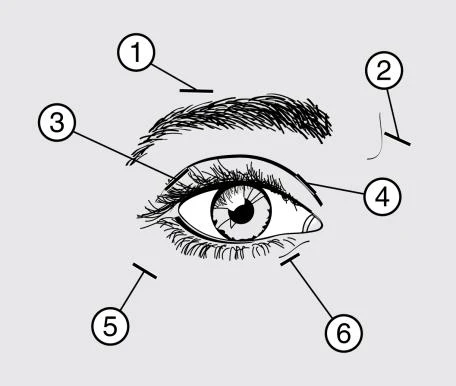
For injections into the upper eyelid, the needle should be directed away from the center to avoid the elevator muscle. A diagram is provided to assist in injection site placement. Symptom relief typically occurs within two to four days, with maximum effect achieved within two weeks.
Injections should be repeated approximately every twelve weeks or as needed to prevent symptom recurrence, but no more frequently than one administration every 12 weeks. In subsequent treatments, if the response to the initial treatment is considered insufficient, the dose per eye should be increased to: 60 units: 10 units (0.05 mL) medially and 20 units (0.1 mL) laterally in the upper and lower eyelids of each eye; or to 80 units: 20 units (0.1 mL) medially and 20 units (0.1 mL) laterally; or to 120 units: 20 units (0.1 mL) medially and 40 units (0.2 mL) laterally in the upper and lower eyelids of each eye, using the previously described method.
Additional injections may also be performed at extra sites in the frontalis muscle above the eyebrow (1 and 2) if localized contractions interfere with vision.
In unilateral blepharospasm, injections should be limited to the affected eye.
Patients with hemifacial spasm should be treated similarly to those with unilateral blepharospasm.
The recommended doses are suitable for adults of all ages, including the elderly.
Children:
The safety and efficacy of Dysport in the treatment of blepharospasm and hemifacial spasm in children have not been established.
Method of administration
For the treatment of blepharospasm and hemifacial spasm in adults, one vial of Dysport 500 U must be reconstituted with 2.5 mL of sodium chloride solution for injectable use (0.9% w/v) to obtain a clear solution containing 200 units/mL of Dysport.
Page 14 of 21
Dysport must be administered by subcutaneous injection medially and laterally into the upper and lower eyelids of each eye at the junction between the preseptal and orbital regions of the orbicularis oculi muscle.
Cervical dystonia (spasmodic torticollis)
Dosage
The following dosages are recommended for adult patients of any age, normal weight, and without reduced neck muscle mass.
Dosage reduction is necessary in underweight patients or in elderly patients with reduced neck muscle mass.
The recommended initial dose for the treatment of cervical dystonia is 500 units per patient, divided among the two or three most active neck muscles.
In subsequent administrations, dosages may be adjusted based on the clinical response and any observed adverse events. The recommended dosage ranges from 250 to 1000 units, although higher doses may be associated with a higher frequency of adverse events, particularly dysphagia.
The maximum dose must not exceed 1000 units.
Resolution of dystonic symptoms typically occurs within one week after injection.
Treatments may be repeated approximately every 16 weeks (as needed) or as required to maintain response, but no more frequently than every 12 weeks.
In rotational torticollis, the 500 units should be divided into 350 units injected into the splenius capitis ipsilateral to the direction of head rotation and 150 units into the sternocleidomastoid muscle contralateral to the rotation.
In laterocollis, the 500 units should be divided into 350 units injected into the ipsilateral splenius capitis and 150 units into the ipsilateral sternocleidomastoid. If shoulder elevation is present, infiltration of the ipsilateral trapezius or levator scapulae may be necessary, based on evident hypertrophy or findings from electromyographic (EMG) monitoring. If infiltration of three muscles is required, the 500 units should be divided into 300 units in the splenius capitis, 100 in the sternocleidomastoid, and 100 in the third muscle.
In retrocollis, the 500 units should be divided into 250 units injected into each of the two splenius capitis muscles. After six weeks, if the response is unsatisfactory, bilateral infiltration of the trapezius (up to 250 units per muscle) may be performed. Bilateral injection of the splenii may increase the risk of neck muscle weakness. Other forms of cervical dystonia require a specialist approach using EMG techniques to identify and treat the affected muscles.
Page 15 of 21
EMG should be used as a diagnostic method for all more complex forms of dystonia, for correct interpretation of treatment failure in non-complex forms, and as guidance for infiltration of deep muscles or in obese patients where palpation-based identification techniques are particularly difficult.
Children:
The safety and efficacy of Dysport in the treatment of cervical dystonia in children have not been established.
Method of administration
For the treatment of cervical dystonia, one vial of Dysport 500 U must be reconstituted with 1 mL of sodium chloride solution for injectable use (0.9% w/v) to obtain a clear solution containing 500 U/mL of Dysport. Dysport must be administered by intramuscular injection as described above.
Symptomatic treatment of lower limb spasticity associated with dynamic equinus deformity in children aged 2 years and older with cerebral palsy
Dosage
Dosage in initial and subsequent treatment sessions must be individually adjusted based on the patient's size, number and location of involved muscles, severity of spasticity, presence of local muscle weakness, response to previous treatment, and/or history of adverse events with botulinum toxins.
The maximum total dose of Dysport administered per treatment session must not exceed 15 U/kg when injections are limited to one or both lower limbs, or 30 U/kg for injections in both limbs.
Furthermore, the total dose of Dysport per treatment session must not exceed 1000 total units or 30 U/kg, whichever is lower. The total administered dose should be divided among the muscles affected by spasticity in the lower limb(s). When possible, the dose should be divided into more than one injection site within each individual muscle. No more than 0.5 mL of Dysport should be administered at any single injection site.
Refer to the table below for permitted dosing.
The following table shows the muscles identified as primary targets in clinical studies and the corresponding doses administered:
| Muscle | Recommended dose range per muscle for lower limb (U/kg body weight) | Number of injection sites per muscle |
Page 16 of 21
| Distal | ||
| Gastrocnemius | From 5 to 15 U/kg | Up to 4 |
| Soleus | From 4 to 6 U/kg | Up to 2 |
The following table shows the other muscles into which injection was permitted in clinical studies,
up to the maximum dose of 15 U/kg per lower limb (30 U/kg in case of bilateral treatment), and the corresponding administered doses:
| Injected muscles | Recommended dose range per muscle for lower limb (U/kg body weight) | Number of injection sites per muscle |
| Posterior tibial | 3 to 5 U/kg | Up to 2 |
| Posterior thigh muscles | 5 to 6 U/kg | Up to 2 |
| Hip adductors | 3 to 10 U/kg | Up to 2 |
These tables are for guidance only, as the choice of muscles to be treated and the corresponding doses must be individualized according to the patient's specific condition and at the discretion of the treating physician.
Although injection sites may be localized by palpation, the use of guided injection techniques—such as electromyography (EMG), electrostimulation, or ultrasound—is recommended to identify appropriate injection sites. Subsequent Dysport treatments should be administered when the effect of the previous injection has diminished, approximately every 16 weeks, to maintain clinical response. A frequency of injections more often than every 12 weeks must not be exceeded.
The degree and pattern of muscle spasticity at the time of re-injection may require adjustments in the Dysport dose and in the selection of muscles to be injected.
Method of administration
In the treatment of spasticity in the lower limbs of children, Dysport is reconstituted with 1 mL of sodium chloride solution for injection (0.9% w/v) to obtain a clear solution containing 500 U/mL, and is administered via intramuscular injection as described above.
Focal spasticity of the lower limbs due to stroke in adults
Posology
Page 17 of 21
The exact dosage for initial and subsequent treatments must be tailored to the individual patient based on the size, number of muscles involved, and severity of spasticity, and should also take into account the presence of local muscle weakness and the patient's response to prior treatment. However, the total dose administered in a single treatment session must not exceed 1500 U. No more than 1 mL should be administered at any single injection site.
The dosages reported in the table below are indicative and were used in a randomized, multicenter, double-blind, placebo-controlled study involving 381 subjects. In this study, investigators were required to treat the target gastrocnemius-soleus muscle complex with defined doses, and at least one additional distal or proximal muscle of the lower limb with the remaining dose, based on clinical needs. Minimum doses were determined based on the relative muscle mass of each individual muscle, while maximum doses correspond to the highest doses used per muscle during the study.
| Muscles | Recommended Dysport dose (U) | Number of injection sites per muscle |
| Distal | ||
| Soleus | 300 – 550 U | 2 - 4 |
| Gastrocnemius | ||
| Medial Head | 100 – 450 U | 1 - 3 |
| Lateral Head | 100 – 450 U | 1 - 3 |
| Posterior tibialis | 100 – 250 U | 1 - 3 |
| Flexor digitorum longus | 50 – 200 U | 1 - 2 |
| Flexor digitorum brevis | 50 – 200 U | 1 - 2 |
| Flexor hallucis longus | 50 – 200 U | 1 - 2 |
| Flexor hallucis brevis | 50 – 100 U | 1 - 2 |
| Proximal | ||
| Rectus femoris | 100 – 400 U | 1 - 3 |
| Hamstrings (biceps femoris, semimembranosus, semitendinosus) | 100 – 400 U | 1 - 3 |
| Great adductor | 100 – 300 U | 1 - 3 |
| Gracilis | 100 – 200 U | 1 - 3 |
| Gluteus maximus | 100 – 400 U | 1 - 2 |
Page 18 of 21
This table is for guidance only, as the choice of muscles to be treated and the corresponding doses
must be individualized according to the individual patient's condition, at the discretion of the
treating physician, without exceeding the total dose of 1500 U per treatment session.
The degree and pattern of muscle spasticity at the time of re-injection may require adjustment of the
Dysport dose and the selection of muscles to be injected.
Although the actual localization of injection sites may be determined by palpation, the use of
injection guidance techniques such as electromyography, electrical stimulation, or ultrasound is
recommended to help accurately identify injection sites.
Symptom regression usually occurs within two weeks after injection. Injections may be repeated
every 16 weeks or more frequently if required to maintain the clinical response, but the frequency
must not exceed one treatment every 12 weeks.
Focal upper limb spasticity in adults
Posology
The dosage during initial and subsequent treatment sessions must be adjusted for each individual
based on muscle size, number, location of involved muscles, severity of spasticity, presence of
local muscle weakness, patient response to any prior treatment, and/or history of adverse events
with Dysport.
The total dose to be administered, ranging from 500 U to 1500 U, should be divided among the
selected muscles as indicated in the following table at each treatment cycle.
No more than 1 mL should be administered at any single injection site.
The maximum dose must not exceed 1500 U, and the maximum total volume for administration must
not exceed 7.5 mL.
In an open-label clinical safety study in patients with post-stroke or post-brain injury upper limb
spasticity, doses of 500 units, 1000 units, and 1500 units were distributed among selected muscles
within a given treatment cycle, as illustrated below.
Doses higher than 1000 U up to 1500 U may be administered when shoulder muscles are also
injected. Doses exceeding 1500 U of Dysport have not been studied for the treatment of upper limb
spasticity in adults.
The following table indicates, for guidance purposes, the muscles identified as primary targets in
another double-blind study and the corresponding administered doses:
| Infiltrated Muscles | Recommended Dysport Dose (U) |
| Flexor carpi radialis (FCR) | 100-200 U |
| Flexor carpi ulnaris (FCU) | 100-200 U |
| Deep finger flexor (FDP) | 100-200 U |
| Superficial finger flexor (FDS) | 100-200 U |
Page 19 of 21
| Brachialis | 200-400 U |
| Brachioradialis | 100-200 U |
| Brachial biceps (BB) | 200-400 U |
Below are the other muscles treated in the double-blind clinical study, with the remaining dose up to the maximum allowed quantity of 7.5 mL. This table is purely indicative, as the choice of muscles to be treated and the corresponding doses must be individualized according to the individual patient's condition at the discretion of the treating physician.
| Targeted Muscles | Dysport Recommended Dose (U) |
| Flexor pollicis longus | 100–200 U |
| Adductor pollicis | 25–50 U |
| Pronator teres | 100–200 U |
| Triceps brachii | 150–300 U |
| Pectoralis major | 150–300 U |
| Subscapularis | 150–300 U |
| Latissimus dorsi | 150–300 U |
It is recommended to use a guided technique, such as electromyography, electrical stimulation, or ultrasound imaging, to identify injection sites.
Subsequent treatment with Dysport should be administered when the effect of the previous injection has diminished, approximately every 16 weeks (some patients have had a longer duration of response, up to 20 weeks), or more frequently if needed to maintain the clinical response. Injection frequency should not exceed once every 12 weeks.
The degree and pattern of muscle spasticity at the time of re-injection may require adjustments in the Dysport dose and in the muscles to be injected. Clinical improvement can be expected approximately one week after Dysport administration.
Children:
The safety and efficacy of Dysport in the treatment of upper limb muscle spasticity in children have not been established.
Elderly patients (≥ 65 years):
Based on the clinical study conducted, no differences in response between elderly and adult patients have been identified. In general, elderly patients should be closely monitored to evaluate tolerability of botulinum toxin type A-haemagglutinin complex, due to the higher frequency of concomitant medical conditions and use of other medications.
Upper and lower limb spasticity in adults
Page 20 of 21
If treatment of both upper and lower limbs is required during the same treatment session, the Dysport dose injected into each limb should be individually adjusted, without exceeding a total dose of 1500 U.
Method of administration
During symptomatic treatment of focal spasticity affecting upper and lower limbs in adults, Dysport should be reconstituted with sodium chloride solution for injectable preparations (0.9% w/v) to obtain a solution containing 100 units per mL, 200 units per mL, or 500 units per mL of Dysport.
Dysport is administered by intramuscular injection into the muscles as described above.
Instructions for use
The powders must be reconstituted with sodium chloride solution for injectable preparations (0.9% w/v), depending on the desired U/mL concentration. The central area of the rubber stopper should be cleaned with alcohol immediately before piercing the septum with a sterile 23 or 25 gauge needle.
The reconstituted solution is injected locally by intramuscular route, according to the indication.
Page 21 of 21