Durlevatec
ItalyTable of Contents
- Package leaflet: Information for the user
- Durlevatec 35 micrograms/hour transdermal patch, 52.5 micrograms/hour transdermal patch, 70 micrograms/hour transdermal patch
- 1. What Durlevatec is and what it is used for
- 2. What you need to know before using Durlevatec
- 3. How to use Durlevatec
- 4. Possible side effects
- 5. How to store Durlevatec
- 6. Package contents and other information
Package leaflet: Information for the user
Durlevatec 35 micrograms/hour transdermal patch, 52.5 micrograms/hour transdermal patch, 70 micrograms/hour transdermal patch
buprenorphine
Generic medicine
Please read this leaflet carefully before using this medicine because it contains
important information for you.
- Keep this leaflet. You may need to read it again.
- If you have any questions, ask your doctor or pharmacist.
- This medicine has been prescribed for you only. Do not give it to others, even if their symptoms are the same as yours, as it could be harmful.
- If you experience any side effects, including those not listed in this leaflet, contact your doctor or pharmacist. See section 4.
Contents of this leaflet:
- What Durlevatec is and what it is used for
- What you need to know before using Durlevatec
- How to use Durlevatec
- Possible side effects
- How to store Durlevatec
- Contents of the pack and other information
1. What Durlevatec is and what it is used for
Durlevatec contains the active substance buprenorphine, a potent analgesic belonging to a group of medicines called opioids. It acts on specific nerve cells in the spinal cord and brain.
Durlevatec is used to treat
- moderate to severe cancer pain and severe pain that has not responded to other types of painkillers.
This medicine is not indicated for the treatment of short-term pain.
2. What you need to know before using Durlevatec
Do not use Durlevatec if:
- you are allergic to buprenorphine or to any of the other ingredients of this medicine (listed in section 6).
- you are opioid-dependent. Durlevatec must not be used to treat withdrawal symptoms in patients dependent on opioids.
- you suffer from severe respiratory diseases.
- you suffer from myasthenia gravis (a serious form of muscle weakness).
- you suffer from delirium tremens (confusion and tremors caused by alcohol withdrawal, following excessive and habitual alcohol use or occasional excessive alcohol consumption).
Warnings and precautions
Talk to your doctor or pharmacist before using Durlevatec:
- if you have recently consumed large amounts of alcohol;
- if you suffer from seizures (epilepsy);
- if you have experienced unexplained loss of consciousness;
- if you are in shock (cold sweating may be a sign);
- if you have increased intracranial pressure, e.g., following head injuries;
- if you have breathing problems;
- if you are taking medicines that reduce your breathing, as listed under "Other medicines and Durlevatec";
- if you have depression or other conditions treated with antidepressants. Using these medicines together with Durlevatec may lead to serotonin syndrome, a condition that can be fatal (see "Other medicines and Durlevatec");
- if your liver does not function properly; Patients with reduced liver function require careful monitoring by the doctor during treatment.
- if you have a fever or are exposed to external sources of heat. Fever and external heat increase skin permeability, which may lead to increased levels of buprenorphine in the blood. Therefore, if you have a fever, consult your doctor. External heat sources—such as saunas, infrared lamps, electric blankets, hot water bottles—may prevent the transdermal patch from adhering properly. Do not expose yourself to external heat sources.
- if you tend to abuse drugs or narcotics; see "Do not use Durlevatec".
- If you are an athlete: This medicine may cause a positive result in anti-doping tests.
Sleep-related breathing disorders
Durlevatec may cause sleep-related breathing disorders such as nocturnal apnea (breathing pauses during sleep) and sleep-related hypoxemia (low blood oxygen levels). Symptoms may include breathing pauses during sleep, nighttime awakenings due to shortness of breath, difficulty maintaining sleep, or excessive daytime sleepiness. If you or someone else notices these symptoms, contact your doctor. Your doctor may consider reducing the dose.
In some individuals, dependence on strong painkillers such as Durlevatec may develop when used over long periods. In such cases, withdrawal symptoms may occur upon stopping treatment. See section 3 "If you stop using Durlevatec".
For athletes: Using this medicine without therapeutic need constitutes doping and may result in a positive anti-doping test.
Children and adolescents
Durlevatec must not be used in children and adolescents under 18 years of age, as there is currently no experience with the use of this medicine in this age group.
Other medicines and Durlevatec
Tell your doctor or pharmacist if you are taking, have recently taken, or might take any other medicines.
The effect of the following medicines may be altered by Durlevatec, or may alter the effect of Durlevatec:
- certain medicines used to treat depression or Parkinson’s disease, known as monoamine oxidase inhibitors (MAO inhibitors);
- antidepressants such as moclobemide, tranylcypromine, citalopram, escitalopram, fluoxetine, fluvoxamine, paroxetine, sertraline, duloxetine, venlafaxine, amitriptyline, doxepin, or trimipramine. These medicines may interact with Durlevatec and cause symptoms such as involuntary rhythmic muscle contractions, including muscles controlling eye movements, agitation, hallucinations, coma, excessive sweating, tremor, exaggerated reflexes, increased muscle contraction, fever above 38°C. Contact your doctor if you experience such symptoms;
- other medicines for depression;
- sedatives and/or medicines that induce sleep. The concomitant use of Durlevatec and sedative medicines such as benzodiazepines or related drugs increases the risk of drowsiness, breathing difficulties (respiratory depression), coma, and may be life-threatening. Therefore, concomitant use should only be considered when no other treatment options are available. However, if your doctor prescribes Durlevatec together with sedative medicines, the dose and duration of concomitant treatment must be limited by your doctor. Inform your doctor about all sedative medicines you are taking and follow your doctor’s dosage recommendations carefully. It may be helpful to inform friends or family members to watch for the symptoms listed above. Contact your doctor if such symptoms occur;
- gabapentin or pregabalin, used to treat epilepsy or nerve-related pain (neuropathic pain);
- anaesthetics;
- muscle relaxants;
- medicines used to treat allergies, motion sickness, or nausea (antihistamines or antiemetics);
- medicines for mental disorders or anxiety (antipsychotics or neuroleptics) with sedative effects;
- other strong opioid painkillers;
- certain medicines used to treat bacterial infections, such as erythromycin;
- certain medicines used to treat fungal infections, such as ketoconazole;
- certain medicines used to treat HIV infections (Human Immunodeficiency Virus), such as ritonavir, indinavir, saquinavir;
- dexamethasone, a medicine used to treat various conditions, including inflammation;
- certain medicines used to treat epilepsy or certain pain conditions, such as carbamazepine or phenytoin;
- rifampicin, a medicine used to treat tuberculosis or certain other infections.
Durlevatec with food, beverages, and alcohol
Avoid drinking alcohol and consuming grapefruit-containing products while using Durlevatec, as they may intensify the effects of buprenorphine.
Pregnancy and breastfeeding
If you are pregnant, suspect you may be pregnant, planning to become pregnant, or breastfeeding, consult your doctor or pharmacist before taking this medicine.
- Pregnancy: There is insufficient experience regarding the use of Durlevatec during pregnancy. Therefore, do not use Durlevatec transdermal patches if you are pregnant or if you may become pregnant during treatment.
- Breastfeeding: Buprenorphine, the active substance in the transdermal patch, inhibits milk production and passes into breast milk. Therefore, you must not use Durlevatec if you are breastfeeding.
Driving and using machines
Durlevatec may affect your ability to drive or operate machinery, particularly:
- at the beginning of treatment;
- when switching from another treatment;
- when changing the dose;
- if you are also taking other medicines that act on the brain;
- if you drink alcohol;
- at the end of treatment.
Do not drive or operate machinery:
- if you experience dizziness, drowsiness, double or blurred vision, or other effects affecting your reaction ability;
- for at least 24 hours after removing the transdermal patch.
Consult your doctor or pharmacist if you have any doubts.
3. How to use Durlevatec
Use this medicine exactly as prescribed by your doctor or pharmacist. If you have
any doubts, consult your doctor or pharmacist.
Your doctor will determine the appropriate Durlevatec dose for you and will adjust it if
necessary. You will be prescribed the lowest possible dose that provides adequate pain
relief.
The recommended dose is:
- one transdermal patch every 3 or 4 days (maximum 96 hours)
For convenience, you may replace the transdermal patch twice a week – always on the
same days – for example, every Monday morning and Thursday evening. To help you
remember when to change the patch, note the replacement days on the outer packaging.
If your doctor has advised you to take additional painkillers along with the transdermal patch,
follow their instructions carefully; otherwise, you may not receive the full benefit of
Durlevatec treatment.
This dose applies to all adults, regardless of age, including patients with kidney disease.
Patients with liver disease require careful monitoring by the doctor.
Contact your doctor or pharmacist if you think the effect of Durlevatec is too weak or too
strong.
Method of administration
Transdermal use.
After application, the active substance passes through the skin into the bloodstream.
Before applying a transdermal patch
- Choose a flat, clean, hair-free area of skin on the upper body. Preferably use the chest area below the clavicle or the upper back. See illustrations 1a) and 1b). Seek assistance if you are unable to apply the transdermal patch by yourself.
1 a) 1 b)
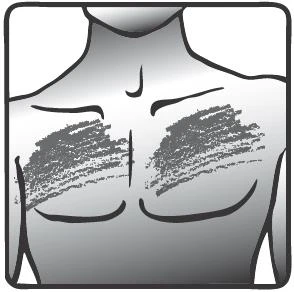
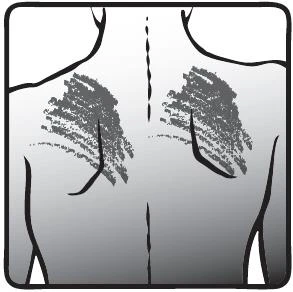
Chest Back
- If the chosen area is not hair-free, trim any hair with scissors. Do not shave the area.
- Avoid areas of reddened, irritated skin or skin with other abnormalities, such as extensive scarring.
- The selected skin area must be dry and clean. If necessary, wash the area with cold or lukewarm water. Do not use soaps or other detergents. After a hot bath or shower, wait until the skin is completely dry and cool. Do not apply lotions, creams, or ointments to the chosen area: these may interfere with proper adhesion of the transdermal patch.
Applying the transdermal patch
- Each patch is labeled Buprenorphinum 35 µg/h, Buprenorphinum 52.5 µg/h, or
Buprenorphinum 70 µg/h. - Just before use, open the pouch by tearing it at the indicated spot, as shown in the figure.
Remove the transdermal patch.
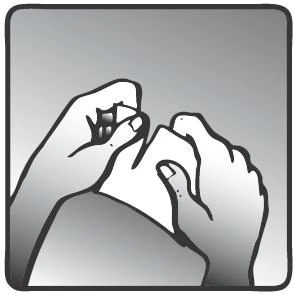
- The adhesive side of the transdermal patch is protected by a transparent film. Carefully
remove half of the film. Avoid touching the adhesive surface of the patch.
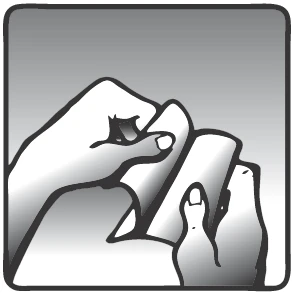
- Apply the patch to the skin area selected in step 1 and remove the remaining film.
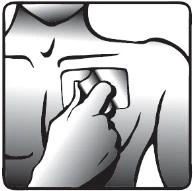
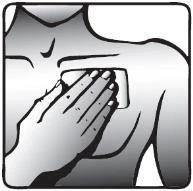
- Press the transdermal patch onto the skin with the palm of your hand. Ensure the patch is
fully in contact with the skin, especially at the edges.
Wearing the transdermal patch
When properly applied, the risk of the patch detaching is minimal. You may take showers,
baths, or swim while wearing the transdermal patch.
Do not expose the patch to extreme temperatures, such as saunas, infrared lamps, electric
blankets, or hot water bottles.
If the patch accidentally detaches before it is time to replace it, do not reuse the same patch.
Immediately apply a new one.
Replacing the transdermal patch
Remove the old transdermal patch and fold it in half with the adhesive side inward. Dispose
of the used patch safely.
Apply a new patch always on a different skin area, following steps 1 to 5
described above. Wait at least one week before reusing the same skin area.
Duration of treatment
Will be determined by your doctor. See also “If you stop using Durlevatec”.
If you use more Durlevatec than you should
Remove any excess patches and contact your doctor immediately.
Signs of overdose include:
- drowsiness
- nausea, vomiting
- pinpoint pupils
- breathing difficulties
- cardiovascular collapse
If you forget to use Durlevatec
Apply a new transdermal patch as soon as you remember and note the date. In this case,
you will need to adjust your application schedule.
For example, if you usually replace the patch on Monday and Thursday but forget and do not
change it until Wednesday: from this point onward, you should change it on Wednesday and
Saturday.
If you change the patch with a significant delay, your pain may return. In this case, contact your doctor.
Do not apply extra patches to make up for a missed application.
If you stop using Durlevatec
If you stop or discontinue treatment too early, pain may return and you may feel unwell.
Contact your doctor, who will advise on the necessary steps if you wish to discontinue treatment.
The risk of side effects after stopping treatment with Durlevatec transdermal patches is very
low. Consult your doctor if you feel agitated, anxious, nervous, restless, hyperactive, have
difficulty sleeping, or experience digestive problems.
If you have any questions about the use of this medicine, consult your doctor or pharmacist.
4. Possible side effects
Like all medicines, this medicine can cause side effects, although not everybody gets them.
Severe allergic reactions (very rare, may occur in up to 1 in 10,000 people)
Remove the transdermal patch and contact your doctor immediately if you develop any
symptoms of an allergic reaction such as:
- swelling of the face, lips, mouth, neck, eyes and throat
- shortness of breath, wheezing or difficulty swallowing or breathing
- rash, redness or itching affecting most of the body
- yellowing of the skin and eyes
- collapse, feeling faint
In some cases, delayed allergic reactions may occur with signs of inflammation. In such cases,
remove the transdermal patch and contact your doctor.
Other side effects may occur with the following frequencies:
Very common – may affect more than 1 in 10 people
- nausea
- skin redness, itching
Common – may affect up to 1 in 10 people
- dizziness
- headache
- shortness of breath
- vomiting, constipation
- skin changes
- sweating
- tissue swelling caused by excess fluid
- fatigue
Uncommon – may affect up to 1 in 100 people
- confusion
- sleep disorders, restlessness
- sedation, drowsiness
- circulatory disturbances, such as low blood pressure and, rarely, fainting
- dry mouth
- rash
- difficulty urinating, urinary retention
- tiredness
Rare – may affect up to 1 in 1,000 people
- loss of appetite
- hallucinations, anxiety, nightmares
- reduced sexual desire
- decreased ability to concentrate
- speech or balance disorders
- drowsiness
- unusual skin sensations such as numbness, tingling, prickling or burning
- visual disturbances such as blurred vision
- eyelid swelling
- hot flushes
- breathing difficulties
- heartburn
- hives
- reduced or decreased erection
- withdrawal symptoms
- reactions at the application site
Very rare – may affect up to 1 in 10,000 people
- medicine dependence
- mood swings
- muscle twitching
- altered or changed taste
- pinpoint pupils
- ear or chest pain
- breathing faster than normal
- hiccups, retching
Not known – frequency cannot be estimated from the available data
- contact dermatitis (skin rash with inflammation which may include a burning sensation)
- change in skin colour
Reporting of side effects
If you experience any side effect, including those not listed in this leaflet, talk to your doctor, pharmacist or nurse. You can also report side effects directly via the national reporting system at
www.aifa.gov.it/content/segnalazioni-reazioni-avverse.
By reporting side effects, you can help provide more information on the safety of this medicine.
5. How to store Durlevatec
Keep this medicine out of the sight and reach of children.
Do not use this medicine after the expiry date stated on the carton and sachet, following "Exp". The expiry date refers to the last day of that month.
This medicine does not require any special storage conditions.
Do not dispose of medicines via wastewater or household waste. Used transdermal patches should be folded in half with the adhesive layer facing inwards. Ask your pharmacist how to dispose of medicines you no longer use. This will help protect the environment.
6. Package contents and other information
What Durlevatec contains
The active substance is buprenorphine.
Durlevatec 35 micrograms/hour transdermal patch:
Each transdermal patch contains 20 mg of buprenorphine over a surface area of 25 cm², delivering 35 micrograms of buprenorphine per hour.
Durlevatec 52.5 micrograms/hour transdermal patch:
Each transdermal patch contains 30 mg of buprenorphine over a surface area of 37.5 cm², delivering 52.5 micrograms of buprenorphine per hour.
Durlevatec 70 micrograms/hour transdermal patch:
Each transdermal patch contains 40 mg of buprenorphine over a surface area of 50 cm², delivering 70 micrograms of buprenorphine per hour.
The other components are:
Protective film (to be removed before applying the patch): silicone-coated poly(ethylene terephthalate) sheet
Adhesive matrix (containing buprenorphine): levulinic acid, oleyl oleate, povidone K90, poly[acrylic acid–co–butyl acrylate–co–(2-ethylhexyl)acrylate–co–vinyl acetate] (5:15:75:5)
Separating film (between adhesive matrices with and without buprenorphine): poly(ethylene terephthalate) sheet
Adhesive matrix (without buprenorphine): acrylic adhesive
Backing layer (printed): polyurethane backing film, printing ink
Description of the appearance of Durlevatec and package contents
Durlevatec is a light yellow/brown, rectangular transdermal patch with rounded edges, printed with the following labels:
Buprenorphinum 35 µg/h
Buprenorphinum 52.5 µg/h
Buprenorphinum 70 µg/h
Each transdermal patch is individually packaged in a child-resistant pouch.
Cartons containing 3, 4, 5, 8, 10, 16, or 20 transdermal patches.
Not all pack sizes may be marketed.
Marketing Authorization Holder
Sandoz S.p.A.
Viale Luigi Sturzo 43
20154 Milan
Italy
Manufacturer
Hexal AG, Industriestraße 25, 83607 Holzkirchen, Germany
This medicinal product is authorized in the European Economic Area (EEA) Member States under the following names:
Austria: Buprenocan 35 micrograms/h transdermal patch
Buprenocan 52.5 micrograms/h transdermal patch
Buprenocan 70 micrograms/h transdermal patch
Italy: Durlevatec
Germany: Bupre-HEXAL 35 micrograms/hour transdermal patch
Bupre-HEXAL 52.5 micrograms/hour transdermal patch
Bupre-HEXAL 70 micrograms/hour transdermal patch