Doxynor
Italy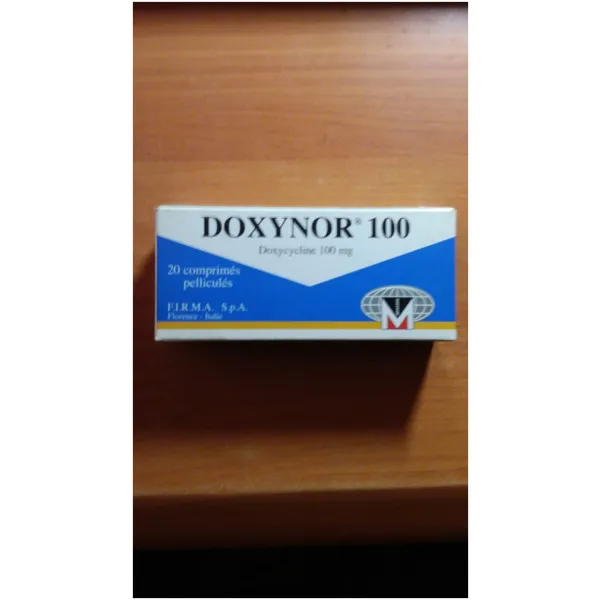
Table of Contents
Package leaflet: Information for the user
DOXYNOR 100 mg film-coated tablets
Doxycycline monohydrate
Please read this leaflet carefully before using this medicine because it contains important information for you.
- Keep this leaflet. You may need to read it again.
- If you have any questions, ask your doctor or pharmacist.
- This medicine has been prescribed for you only. Do not give it to others, even if they have the same symptoms as yours, because it could be harmful.
- If you experience any side effect, including those not listed in this leaflet, talk to your doctor or pharmacist. See section 4.
Contents of this leaflet:
- What DOXYNOR is and what it is used for
- What you need to know before taking DOXYNOR
- How to take DOXYNOR
- Possible side effects
- How to store DOXYNOR
- Contents of the pack and other information
1. WHAT DOXYNOR IS AND WHAT IT IS USED FOR
DOXYNOR contains the active substance doxycycline, a systemic antibiotic belonging to the class of tetracyclines.
This medicinal product is indicated in adults and children over 12 years of age for the treatment of infections caused by Gram-positive and Gram-negative microorganisms sensitive to tetracyclines (i.e. responsive to tetracycline therapy), such as:
- Respiratory tract infections.
- Genitourinary tract infections.
- Gastro-enteric infections (of the stomach and intestine).
- Otorhinolaryngological infections (of the nose, larynx and ears).
- Dermatological and soft tissue infections.
- Obstetric and gynaecological infections.
Consult your doctor if you do not feel better or if you feel worse after 3-4 days.
2. WHAT YOU SHOULD KNOW BEFORE TAKING DOXYNOR
Do not take DOXYNOR
- If you are allergic to the active substance doxycycline monohydrate or to any of the other ingredients of this medicine (listed in section 6).
- If you have obstructive esophageal disorders, such as strictures or achalasia (a condition characterized by absence of esophageal movements and incomplete opening of the valve connecting the esophagus and stomach during swallowing).
- If you are pregnant or suspect you may be pregnant (see section 2 “Children” and “Pregnancy and breastfeeding”).
- If you are breastfeeding (see section 2 “Children” and “Pregnancy and breastfeeding”).
Doxynor must not be used during tooth development (pregnancy, neonatal period, and childhood up to 8 years of age), as it may cause permanent discoloration of the teeth (yellow-gray-brown) or affect proper tooth growth.
Warnings and precautions
Talk to your doctor or pharmacist before taking DOXYNOR.
When taking DOXYNOR, you should:
- Avoid direct exposure to sunlight or artificial UV rays during treatment, and discontinue therapy if photosensitivity reactions occur (abnormal and exaggerated skin reactions to sunlight and UV rays).
- Take doxycycline with plenty of water and remain in an upright position for at least one hour after taking the medicine to reduce the risk of esophageal irritation and ulcers (erosions of the esophageal lining) (see section 3 “How to take DOXYNOR”).
Be aware that treatment with doxycycline may increase the incidence of vaginal candidiasis (fungal infection).
Hepatic impairment (reduced liver function)
Administration of doxycycline at high doses and for periods longer than two weeks may lead to disturbances in liver function, which should therefore be monitored.
If you experience any symptoms during treatment with doxycycline or your blood tests show abnormalities in liver function (elevated bilirubin and transaminase levels), consult your doctor, who will assess whether treatment with the medicine should be discontinued.
Renal impairment (reduced kidney function)
If you have kidney problems, even normal doses of tetracyclines may lead to accumulation of the medicine in the bloodstream, potentially causing liver damage. In such cases, dosage must be adjusted according to renal function, with monitoring of blood levels of the medicine (which should never exceed 15 micrograms/ml) and liver function.
Also note that tetracyclines exert an anti-anabolic effect (blocking the synthesis of complex biomolecules from simpler ones or nutrients), which may worsen existing renal insufficiency.
Esophagitis (inflammation of the esophageal mucosa)
Cases of esophagitis and esophageal ulcers, sometimes severe, have been reported.
Take the medicine with plenty of water, even during meals, and remain upright for at least one hour after administration; do not take the medicine immediately before lying down (see section 3 “How to take DOXYNOR”).
Immediately discontinue the medicine and consult your doctor about the need for instrumental investigations if symptoms such as difficulty swallowing or retrosternal pain occur during treatment.
If you have confirmed gastroesophageal reflux (acid backflow into the esophagus), alternative therapeutic options should be considered.
Gonococcal infections (sexually transmitted diseases affecting the urethra in men and genitourinary tract in women)
When treating gonococcal infections, be aware of the risk of masking symptoms of coexisting syphilis (another sexually transmitted infectious disease). In such cases, serological tests (blood tests) should be performed for at least 4 months.
Long-term treatment cycles require periodic monitoring of blood counts (hematological profile) and kidney and liver function.
Myasthenia gravis (a disease characterized by muscle weakness)
Take DOXYNOR with caution if you suffer from myasthenia gravis.
Superinfections (infections occurring on top of existing infections)
As with other antibiotics, treatment with tetracyclines may lead to superinfections caused by resistant bacteria or fungi. Be aware of the possibility of staphylococcal (bacterial) enterocolitis (inflammatory bowel disease). Continuous patient monitoring is essential. If resistant bacteria appear, treatment with DOXYNOR must be discontinued and appropriate therapy initiated.
Clostridium difficile-associated diarrhea (CDAD)
Cases of Clostridium difficile-associated diarrhea (CDAD), ranging from mild diarrhea to fatal colitis, have been reported with the use of nearly all antibiotics, including doxycycline. Antibiotic treatment alters the normal bacterial flora of the colon (part of the intestine), leading to overgrowth of Clostridium difficile (bacterium).
Clostridium difficile produces toxins A and B, which contribute to the development of diarrhea. Strains producing excessive toxins are associated with increased morbidity (number of disease cases recorded during a given period relative to the total population studied) and mortality, as these infections are often refractory to antibacterial therapy and frequently require colectomy (surgical removal of the colon).
Consider the possibility of CDAD if you develop diarrhea following antibiotic treatment. A careful medical history is also necessary, as cases of Clostridium difficile-associated diarrhea have been reported more than two months after antibiotic administration.
Cases of bulging fontanelles (membranes covering the unfused skull bones in infants, where bulging indicates high intracranial pressure or hypervitaminosis) in newborns and benign intracranial hypertension (increased pressure within the skull) in adults have been reported with full-dose administration of the medicine. These effects resolve rapidly upon discontinuation of treatment.
Intracranial hypertension may present with headache, vomiting, and visual disturbances including blurred vision, appearance of a blind spot (partial or complete within the visual field), double vision, or permanent vision loss. If headache or visual disturbances occur during treatment, discontinue DOXYNOR immediately and consult your doctor.
Doxycycline may cause false elevations in urinary catecholamine levels (urine test to determine the presence of catecholamines produced by the adrenal medulla: adrenaline, noradrenaline, and dopamine) due to interference with fluorescence testing.
Children and adolescents
Doxycycline must not be administered during tooth development (second half of pregnancy, neonatal period, and childhood up to 8 years of age). Use of tetracyclines during tooth formation may cause permanent dental discoloration (yellow-brown); this is particularly observed after prolonged use of these antibiotics, but has also been reported after short but repeated treatment courses. Enamel hypoplasia (defect in the superficial enamel layer) has also been reported.
In certain circumstances (e.g., severe or life-threatening conditions), especially when no therapeutic alternatives exist and benefits outweigh risks, your doctor may decide to prescribe DOXYNOR to children under 8 years of age.
Doxycycline, like other tetracyclines, forms a stable calcium complex in developing bone tissue. A reduced fibula growth rate (a bone also known as the fibula, which together with the tibia forms the skeleton of the lower leg) has been observed in premature infants treated orally with tetracycline at a dose of 25 mg/kg every six hours. This effect was reversible upon discontinuation of treatment.
Cases of bulging fontanelles in newborns have been reported with full-dose administration. These effects resolve rapidly upon discontinuation of treatment (see “Warnings and precautions”).
Other medicines and DOXYNOR
Inform your doctor or pharmacist if you are taking, have recently taken, or might take any other medicines.
Oral absorption of tetracyclines is reduced by:
- Antacid preparations containing aluminum, calcium, or magnesium.
- Milk or dairy products.
- Products containing iron salts and oral preparations containing zinc or bismuth.
Therefore, avoid taking these substances at the same time as DOXYNOR, and separate administration of these products from tetracyclines by at least 2 hours, if possible.
Do not take DOXYNOR in combination with:
- Systemic retinoids (substances involved in vision, regulation of cell differentiation and proliferation, bone growth, immune function, and activation of tumor suppressor genes); concomitant administration with tetracyclines increases the risk of benign intracranial hypertension (reversible increase in intracranial pressure).
- Methoxyflurane (an inhaled anesthetic); concomitant use with tetracyclines has been associated with fatal cases of nephrotoxicity (kidney toxicity).
Use caution when taking DOXYNOR with:
- Lithium (a mood-stabilizing medicine used in the treatment of depression and bipolar disorder), methotrexate (an antineoplastic and antirheumatic medicine used for conditions such as leukemias, lymphomas, rheumatoid arthritis, lupus, and psoriasis), digoxin (a medicine that enhances heart function), and ergot derivatives (used to treat acute migraine attacks); rare cases of increased blood concentrations of these medicines have been reported with concomitant tetracycline administration.
- Oral anticoagulants such as warfarin (medicines that inhibit blood clotting); prolonged prothrombin time (a laboratory test to assess blood coagulation) has been reported in patients taking doxycycline with these medicines. Since tetracyclines may reduce prothrombin activity, a reduction in the dose of concomitantly administered anticoagulants may be necessary.
- Penicillins (antibiotics); avoid combining tetracyclines, including doxycycline, with penicillins due to the potential for interference between their antibacterial activities.
- Anticonvulsants such as barbiturates (phenobarbital, primidone), carbamazepine, and phenytoin; these medicines reduce the blood half-life of doxycycline.
- Oral contraceptives; taking tetracyclines may reduce the effectiveness of oral contraceptive treatments. Some cases of pregnancy or intermenstrual bleeding have been attributed to concomitant use of tetracyclines and oral contraceptives.
- Cyclosporine (an immunosuppressant); doxycycline may increase cyclosporine blood concentrations. Therefore, any co-administration should be closely monitored.
DOXYNOR with food and drink
Oral absorption of tetracyclines is reduced by milk or dairy products.
Therefore, avoid taking these substances at the same time as DOXYNOR, and separate administration of these products from tetracyclines by at least 2 hours, if possible.
DOXYNOR and alcohol
The blood half-life of doxycycline may be reduced by concomitant consumption of alcoholic beverages.
Pregnancy and breastfeeding
If you are pregnant, think you may be pregnant, plan to become pregnant, or are breastfeeding, consult your doctor or pharmacist before using this medicine.
Pregnancy
Do not take DOXYNOR if you are pregnant (see “Do not take DOXYNOR”).
Breastfeeding
Do not take DOXYNOR while breastfeeding, as doxycycline is excreted in breast milk, like other tetracyclines (see “Do not take DOXYNOR”).
Driving and using machines
There is no evidence indicating effects of doxycycline on the ability to drive or operate machinery.
DOXYNOR 100 mg film-coated tablets contain lactose. If your doctor has diagnosed you with an intolerance to certain sugars, contact him/her before taking this medicine.
This medicine contains less than 1 mmol (23 mg) of sodium per tablet, i.e., essentially “sodium-free”.
3. HOW TO TAKE DOXYNOR
Take this medicine exactly as directed by your doctor or pharmacist. If you have
any doubts, consult your doctor or pharmacist.
The dose depends on the infection being treated, as determined by your doctor.
The recommended doses are:
Adults and children aged 12 to under 18 years
The recommended dose is 200 mg (2 tablets taken together or separately) on the first day. On subsequent
days, the dose is 100 mg (1 tablet) daily, as directed by the doctor. The duration of treatment
depends on the infection being treated.
Children aged 8 to under 12 years
Doxycycline for the treatment of acute infections in children aged 8 to 12 years should
be used only in situations where other medicines are not available or may be ineffective.
In such cases, the recommended dose is:
- For children weighing more than 45 kg: The adult dose should be used; the recommended dose is 200 mg (2 tablets together or separately) on the first day. On subsequent days, the dose is 100 mg (1 tablet) daily, as directed by the doctor. The duration of treatment depends on the infection being treated. In cases of severe infections, strictly follow the doctor's instructions.
Take each dose during meals with a glass of water and remain in an upright position; do not lie down for
at least one hour after taking the medicine (see "Warnings and precautions").
Do not take the medicine with milk or dairy products, and separate the intake of these products from that of tetracyclines by at least 2 hours, if possible.
The duration of treatment varies depending on the nature and severity of the condition.
If you take more DOXYNOR than you should
If you take too much of this medicine, contact your doctor immediately or go to the nearest hospital.
In case of overdose, gastric lavage (stomach emptying and washing) may be performed.
Haemodialysis (a physical therapy replacing kidney function) is not recommended in cases of overdose, as it does not alter the duration of the medicine in the bloodstream.
If you forget to take DOXYNOR
Do not take a double dose to make up for a missed dose.
If you have any doubts about how to use this medicine, consult your doctor or pharmacist.
4. POSSIBLE ADVERSE REACTIONS
Like all medicines, this medicine can cause adverse reactions, although not everyone experiences them.
If you experience any of the adverse reactions listed below, contact your doctor as soon as possible:
Very common adverse reactions (may affect more than 1 in 10 people)
Skin reactions of photosensitization (abnormal and exaggerated skin reaction to sunlight and UV rays – see "Warnings and precautions").
Common adverse reactions (may affect up to 1 in 10 people)
- Anaphylactic reactions (severe, rapidly occurring allergic reactions), including hypersensitivity (allergy), Schönlein-Henoch purpura (inflammation of capillaries), low blood pressure, pericarditis (inflammation of a region of the heart), angioedema (sudden swelling of the skin and mucous membranes), exacerbation of systemic lupus erythematosus (chronic autoimmune disease), dyspnea (difficulty breathing), serum sickness reaction (immune system reaction to certain medicines), peripheral edema (fluid accumulation), tachycardia (increased heart rate), and urticaria (hives).
- Headache.
- Nausea and vomiting.
- Erythematous or maculopapular skin eruptions (skin changes).
Uncommon adverse reactions (may affect up to 1 in 100 people)
Dyspepsia (pain and/or discomfort in the upper abdomen).
Rare adverse reactions (may affect up to 1 in 1,000 people)
- Thrombocytopenia (decreased number of platelets in the blood), hemolytic anemia (reduced hemoglobin levels due to destruction of red blood cells), neutropenia (decreased neutrophil white blood cells in the blood), eosinophilia (elevated levels of eosinophil white blood cells in the blood).
- Drug rash with eosinophilia and systemic symptoms (DRESS syndrome, a severe adverse drug reaction).
- Microscopic brown pigmentation of the thyroid gland.
- Anorexia (loss of appetite), porphyria (congenital disorder of hemoglobin formation).
- Bulging fontanelles, benign intracranial hypertension in adults (see "Warnings and precautions").
- Tinnitus (ringing in the ears).
- Flushing.
- Pseudomembranous colitis (inflammation of the colon caused by antibiotics), Clostridium difficile diarrhea, esophageal ulcers (erosion of the esophageal lining), esophagitis (inflammation of the esophagus), enterocolitis (inflammation of the intestine), inflammatory lesions (with candidiasis) in the anogenital area, abdominal pain, diarrhea, dysphagia (difficulty swallowing), glossitis (inflammation of the tongue) (see "Warnings and precautions").
- Hepatotoxicity (liver toxicity), hepatitis (liver inflammation), changes in liver function, jaundice (yellowing of the skin), pancreatitis (inflammation of the pancreas).
- Toxic epidermal necrolysis, Stevens-Johnson syndrome, erythema multiforme, exfoliative dermatitis (skin diseases induced by an allergic reaction to certain drugs), photo-onycholysis (separation of the nail from the nail bed).
- Arthralgia (joint pain), myalgia (muscle pain), worsening of symptoms of myasthenia gravis.
- Increased blood urea nitrogen (BUN), i.e., elevated nitrogen concentration in the blood.
Adverse reactions with unknown frequency (frequency cannot be estimated from the available data)
- Jarisch-Herxheimer reaction, which causes fever, chills, headache, muscle pain, and skin rash; this reaction is usually self-limiting and occurs shortly after starting doxycycline treatment for spirochete infections such as Lyme disease.
- Changes in tooth color and/or impaired tooth development.
Reporting of adverse reactions
If you experience any adverse reaction, including those not listed in this leaflet, talk to your doctor or pharmacist. You can also report adverse reactions directly via the national reporting system at https://www.aifa.gov.it/content/segnalazioni-reazioni-avverse.
By reporting adverse reactions, you can help provide more information on the safety of this medicine.
5. HOW TO STORE DOXYNOR
Keep this medicine out of the sight and reach of children.
Do not use this medicine after the expiry date stated on the packaging. The expiry date refers to the last day of that month and to the product in its original, undamaged packaging, properly stored.
No special storage precautions are required.
Do not dispose of any medicine via wastewater or household waste. Ask your pharmacist how to dispose of medicines no longer used. This will help protect the environment.
6. CONTENTS OF THE PACKAGE AND OTHER INFORMATION
What DOXYNOR contains
Each tablet contains:
Active substance: doxycycline monohydrate 104 mg (equivalent to doxycycline 100 mg).
Other components:
Core: microcrystalline cellulose, lactose monohydrate, sodium carboxymethylcellulose, sodium lauryl sulfate,
anhydrous colloidal silica, magnesium stearate.
Coating: hypromellose, hydroxypropylcellulose, macrogol 400, titanium dioxide (E171), red iron oxide (E172), yellow iron oxide (E172), macrogol 6000.
Description of the appearance of DOXYNOR and pack contents
Round, biconvex, pink, film-coated tablets.
Blister packs of 5, 8 and 20 tablets of 100 mg.
Marketing Authorization Holder
F.I.R.M.A. S.p.A. - Via di Scandicci 37, Florence.
Manufacturer
Special Products’s Line S.p.A., Via Fratta Rotonda Vado Largo 1, Anagni - Italy