Doxazosin ratiopharm
Italy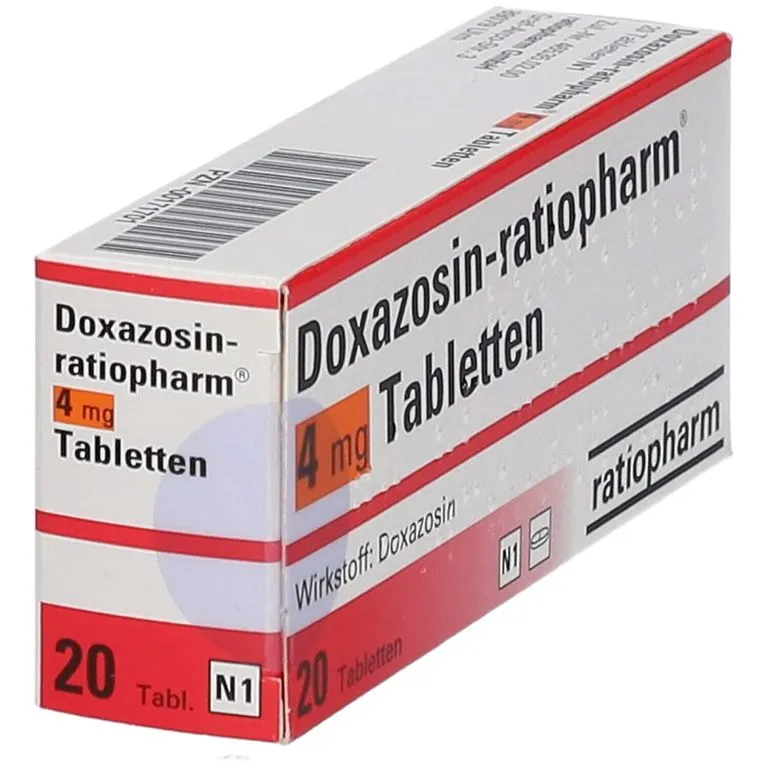
Table of Contents
- Patient Information Leaflet
- Doxazosin ratiopharm 2 mg tablets, 4 mg tablets
- 1. What Doxazosin ratiopharm is and what it is used for
- 2. What you need to know before taking Doxazosin ratiopharm
- 3. How to take Doxazosin ratiopharm
- 4. Possible side effects
- 5. How to store Doxazosin ratiopharm
- 6. Contents of the Pack and Other Information
Patient Information Leaflet
Doxazosin ratiopharm 2 mg tablets, 4 mg tablets
Equivalent medicine
Please read all of this leaflet carefully before you start taking this medicine, because it contains important information for you.
- Keep this leaflet. You may need to read it again.
- If you have any questions, ask your doctor or pharmacist.
- This medicine has been prescribed for you only. Do not give it to other people, even if their symptoms are the same as yours, as it may be harmful.
- If you experience any side effect, including those not listed in this leaflet, please tell your doctor or pharmacist. See section 4.
Contents of this leaflet:
- What Doxazosin ratiopharm is and what it is used for
- What you need to know before taking Doxazosin ratiopharm
- How to take Doxazosin ratiopharm
- Possible side effects
- How to store Doxazosin ratiopharm
- Contents of the pack and other information
1. What Doxazosin ratiopharm is and what it is used for
Doxazosin ratiopharm belongs to a class of medicines (alpha receptor blockers) that lower blood pressure.
Doxazosin ratiopharm is used for the treatment of high blood pressure (essential hypertension).
2. What you need to know before taking Doxazosin ratiopharm
Do not take Doxazosin ratiopharm
- if you are allergic to doxazosin, to other quinazoline derivatives (e.g. prazosin, terazosin) or to any of the other ingredients of this medicine (listed in section 6);
- if you have a history of orthostatic hypotension. Orthostatic hypotension is a drop in blood pressure that may occur when standing up suddenly from a sitting or lying position, a condition that may be accompanied by dizziness;
- if, in addition to benign prostatic hyperplasia, you have a urinary tract infection or obstruction or bladder stones;
- if you suffer from continuous urine leakage (overflow incontinence), do not produce urine (anuria), or have renal failure (for patients taking doxazosin as monotherapy only).
Warnings and precautions
Talk to your doctor or pharmacist before taking Doxazosin ratiopharm:
- if you have liver problems;
- if you have acute heart disease such as pulmonary edema or heart failure;
- if you suffer from severe circulatory disorders affecting the coronary arteries (angina pectoris);
- if you are taking a medicine for the treatment of erectile dysfunction (see also section “Other medicines and Doxazosin ratiopharm”);
- if you are starting to take Doxazosin ratiopharm. At the beginning of treatment, you should therefore avoid situations in which injury could result from dizziness or weakness, or rarely, loss of consciousness.
Inform your ophthalmologist about current or previous treatment with Doxazosin ratiopharm before undergoing cataract surgery (clouding of the lens). Doxazosin ratiopharm may cause complications during surgery, which can be managed if the specialist has been informed in advance.
Children and adolescents
Doxazosin ratiopharm is not recommended for use in children or adolescents under 18 years of age, as safety and efficacy have not yet been established.
Other medicines and Doxazosin ratiopharm
Inform your doctor or pharmacist if you are taking, have recently taken, or might take any other medicines.
Some medicines may interact with Doxazosin ratiopharm. These include:
- other medicines used to treat high blood pressure;
- medicines used for the treatment of erectile dysfunction (e.g. sildenafil [Viagra], tadalafil [Cialis], vardenafil [Levitra]) – see section “Warnings and precautions”. Some patients taking alpha-blockers for high blood pressure or for prostate enlargement may experience symptoms such as dizziness or lightheadedness caused by low blood pressure when sitting down or standing up suddenly. Some patients have reported such symptoms when taking medicines for erectile dysfunction (impotence) together with alpha-blockers. To reduce the occurrence of such symptoms, a regular daily dose of alpha-blockers should be maintained before starting erectile dysfunction medicines.
- medicines for the treatment of bacterial or fungal infections, e.g. clarithromycin, itraconazole, ketoconazole, telithromycin, voriconazole;
- medicines used in the treatment of HIV, e.g. indinavir, nelfinavir, ritonavir, saquinavir;
- nefazodone, a medicine used to treat depression.
Doxazosin ratiopharm with food and drink
Doxazosin ratiopharm can be taken regardless of food or drink.
Pregnancy and breastfeeding
If you are pregnant, think you may be pregnant, planning to become pregnant, or are breastfeeding, consult your doctor or pharmacist before taking this medicine.
Take Doxazosin ratiopharm during pregnancy only if prescribed by your doctor after careful assessment of the benefit-risk balance.
Small amounts of doxazosin, the active substance in Doxazosin ratiopharm, may pass into breast milk. You should not use Doxazosin ratiopharm while breastfeeding unless your doctor advises you to do so.
Driving and using machines
Be careful if you drive or operate machinery. Pay particular attention at the beginning of treatment. You may feel weak or dizzy. If this happens, do not drive or operate machinery.
Doxazosin ratiopharm contains lactose
If your doctor has diagnosed you with an intolerance to certain sugars, contact him or her before taking Doxazosin ratiopharm.
Doxazosin ratiopharm contains sodium
This medicine contains less than 1 mmol (23 mg) of sodium per tablet, i.e. essentially “sodium-free”.
3. How to take Doxazosin ratiopharm
Take this medicine exactly as directed by your doctor. If you have any doubts, consult your
doctor or pharmacist.
The recommended dose is
Doxazosin ratiopharm 2 mg tablets
- The starting dose is ½ tablet (1 mg of doxazosin) once daily. Depending on individual response, after 1 - 2 weeks your doctor may decide to increase the dose to 1 tablet (2 mg of doxazosin) once daily, and subsequently to 2 tablets (4 mg of doxazosin) once daily. If necessary, your doctor may further increase the dose up to 4 tablets (8 mg of doxazosin) once daily.
- For long-term treatment, a daily dose of 1 to 2 tablets (2 mg - 4 mg of doxazosin) is recommended. The maximum daily dose is 16 mg of doxazosin.
Doxazosin ratiopharm 4 mg tablets
- The starting dose is 1 mg of doxazosin once daily (for this purpose, pharmaceutical forms with a lower active substance content are available). Depending on individual response, after 1 - 2 weeks your doctor may decide to increase the dose to ½ tablet (2 mg of doxazosin) once daily, and subsequently to 1 tablet (4 mg of doxazosin) once daily. If necessary, your doctor may further increase the dose up to 2 tablets (8 mg of doxazosin) once daily.
- For long-term treatment, a daily dose of ½ to 1 tablet (2 mg - 4 mg of doxazosin) is recommended. The maximum daily dose is 4 tablets (16 mg of doxazosin).
Method of administration
- Doxazosin ratiopharm is available as tablets for oral use.
- Take the tablets in the morning, with plenty of fluid (for example, a glass of water), regardless of food.
- Always take the full dose as a single administration.
Duration of treatment
Take the medicine for the period indicated by your doctor.
The tablet may be divided into equal doses.
If you take more Doxazosin ratiopharm than you should
If you take too many tablets, the most likely symptoms are dizziness or lightheadedness due to a drop in blood pressure. Lie down on your back with your feet positioned higher than your head. Contact the nearest emergency department or call your doctor or pharmacist immediately. Bring this patient information leaflet and the remaining tablets with you so the doctor knows what you have taken.
If you forget to take Doxazosin ratiopharm
Try to take the tablets daily as prescribed. However, if you forget a dose, take it as soon as you remember. Do not take a double dose at the same time.
If you stop taking Doxazosin ratiopharm
Do not stop taking the medicine without first talking to your doctor.
If you have any questions about the use of this medicine, consult your doctor or pharmacist.
4. Possible side effects
Like all medicines, this medicine can cause side effects, although not everyone will experience them.
If you experience any of the following side effects, stop taking the medicine and contact your doctor immediately or go to the nearest hospital emergency department:
- Allergic reactions such as dyspnea, shortness of breath, severe dizziness or collapse, swelling of the face or throat, or severe skin rash with red spots and blisters.
- Chest pain, rapid or irregular heartbeat, heart attack, or stroke.
- Yellowing of the skin or whites of the eyes caused by liver problems.
- Unusual bruising or bleeding due to low platelet count in the blood.
At the beginning of treatment, you may experience dizziness or a feeling of lightheadedness. This usually occurs when moving from a lying down to an upright position. Therefore, your doctor may closely monitor this condition at the start of treatment.
Common side effects (may affect up to 1 in 10 people):
- Respiratory tract infection, urinary tract infection
- Tingling in hands or feet
- Drowsiness, dizziness, headache
- A sensation of dizziness or "spinning"
- Awareness of heartbeat, increased heart rate
- Low blood pressure, a drop in blood pressure upon standing that may cause dizziness (postural hypotension), lightheadedness, or fainting
- Bronchitis, cough, shortness of breath, rhinorrhea, nasal congestion
- Abdominal pain, acid indigestion, dry mouth, malaise
- Itching
- Back pain, muscle pain
- Bladder inflammation, inability to control urination
- Feeling of weakness, chest pain, flu-like symptoms, peripheral edema (swelling of ankles, feet, or fingers)
Uncommon side effects (may affect up to 1 in 100 people):
- Allergic reaction to the medicine
- Joint inflammation (gout), increased appetite, loss of appetite
- Restlessness, depression, anxiety, difficulty sleeping, nervousness
- Stroke, reduced touch or sensitivity, fainting, tremor
- Ringing in the ears
- Chest pain, heart attack
- Nosebleeds
- Constipation, flatulence, vomiting, gastroenteritis, diarrhea
- Abnormal liver function tests
- Skin rash
- Joint pain
- Difficulty or pain during urination, frequent urge to urinate, presence of red blood cells in urine
- Inability to achieve an erection (impotence), prolonged painful erection
- Pain, (facial edema) swelling of the face
- Weight gain
Rare side effects (may affect up to 1 in 1,000 people):
- Muscle cramps, muscle weakness
- Increased volume of urine
Very rare side effects (may affect up to 1 in 10,000 people):
- Decrease in white blood cell count, decrease in platelet count, which may lead to easy bruising or bleeding
- Dizziness, especially when changing from a sitting or lying position (postural dizziness)
- Blurred vision
- Slower heartbeat, irregular beats
- Breathing difficulties
- Hot flushes
- Bile does not reach or does not sufficiently reach the intestine, (hepatitis) inflammation of the liver, (jaundice) yellow color of the skin or whites of the eyes caused by liver or blood problems
- Skin redness with itching, hair loss, (skin bruising)
- Increased need to urinate, urinary disorders, increased nighttime urination
- Breast enlargement in men
- Prolonged painful erection of the penis. Seek medical advice immediately
- Fatigue, malaise
Side effects with unknown frequency (frequency cannot be estimated from available data):
- Intraoperative floppy iris syndrome, an eye disorder that may occur during cataract surgery (see section 2. "Warnings and precautions")
- Taste disturbances
- Retrograde ejaculation
Reporting of side effects
If you experience any side effect, including those not listed in this leaflet, talk to your doctor or pharmacist. You may also report side effects directly via the national reporting system at www.aifa.gov.it/content/segnalazioni-reazioni-avverse.
By reporting side effects, you can help provide more information on the safety of this medicine.
5. How to store Doxazosin ratiopharm
Keep this medicine out of the sight and reach of children.
Do not use this medicine after the expiry date stated on the label and packaging. The expiry date refers to the last day of that month.
Do not store above 30°C.
6. Contents of the Pack and Other Information
What Doxazosin ratiopharm Contains
Doxazosin ratiopharm 2 mg Tablets
- The active substance is doxazosin. Each tablet contains 2 mg of doxazosin as doxazosin mesylate.
Doxazosin ratiopharm 4 mg Tablets
- The active substance is doxazosin. Each tablet contains 4 mg of doxazosin as doxazosin mesylate.
- The other excipients are: microcrystalline cellulose, anhydrous lactose, sodium starch glycolate Type A, silica (anhydrous colloidal), sodium lauryl sulfate, magnesium stearate.
Description of the Appearance of Doxazosin ratiopharm and Contents of the Pack
White, oval-shaped tablets with a break line.
Doxazosin ratiopharm 2 mg tablets
Pack sizes of 10, 20, 28, 30, 50, 60, 90, 98, 100 and 500 tablets
Doxazosin ratiopharm 4 mg tablets
Pack sizes of 20, 28, 30, 50, 60, 90, 98, 100 and 500 tablets
Not all pack sizes may be marketed.
Marketing Authorization Holder
ratiopharm GmbH, Graf-Arco-Strasse, 3 – 89079 Ulm (Germany)
Manufacturer
Merckle GmbH, Ludwig-Merckle-Strasse 3, 89143 Blaubeuren (Germany)
This medicinal product is authorized in the European Economic Area countries under the following names:
Austria: Doxazosin “ratiopharm” 2 mg - Tabletten
Doxazosin “ratiopharm” 4 mg - Tabletten
Germany: Doxazosin AbZ 2 mg Tabletten
Doxazosin AbZ 4 mg Tabletten
Italy: Doxazosin ratiopharm 2 mg compresse
Doxazosin ratiopharm 4 mg compresse