Doxazosin PensA
Italy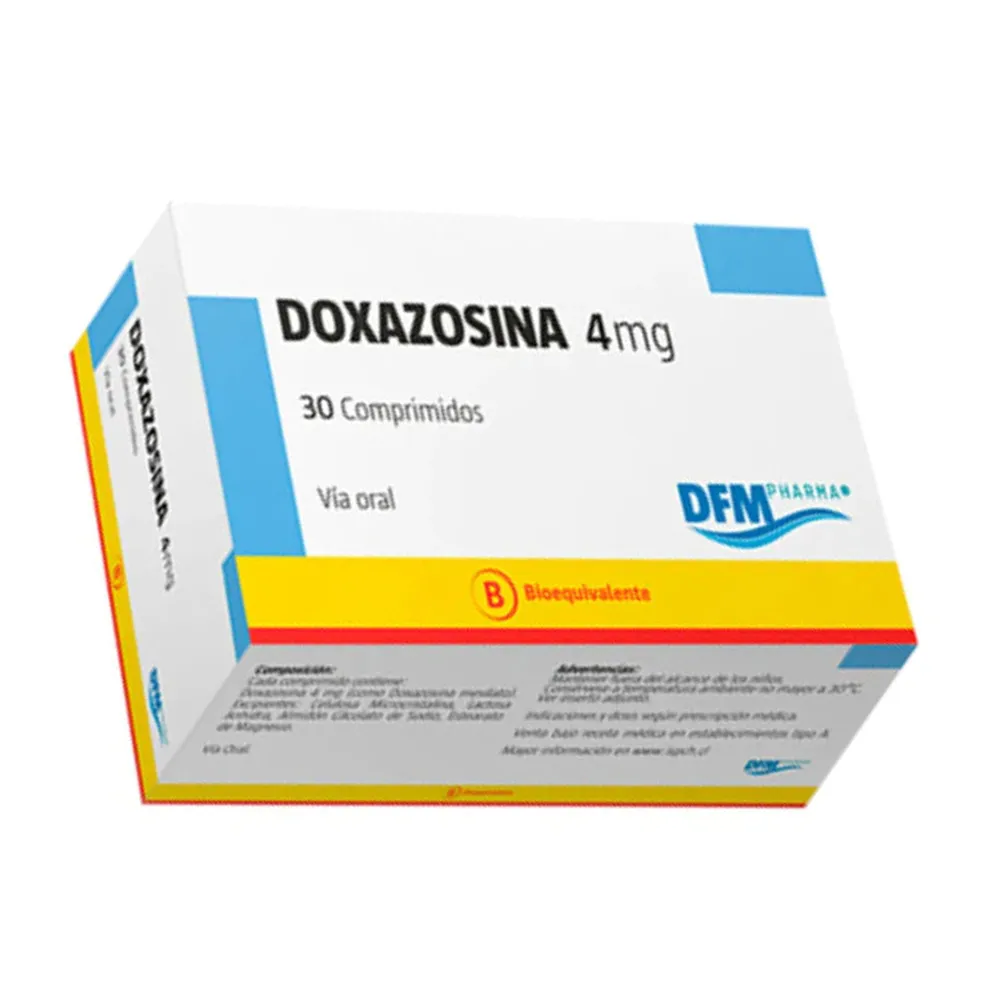
Table of Contents
- PACKAGE LEAFLET: INFORMATION FOR THE USER
- Doxazosina Pensa 2 mg tablets, 4 mg tablets
- 1. What Doxazosina Pensa is and what it is used for
- 2. What you should know before taking Doxazosina Pensa
- 3. How to take Doxazosina Pensa
- 4. Possible side effects
- 5. How to store Doxazosina Pensa
- 6. Further information
PACKAGE LEAFLET: INFORMATION FOR THE USER
Doxazosina Pensa 2 mg tablets, 4 mg tablets
Equivalent medicine
Active substance: doxazosin mesilate
Read this leaflet carefully before you start taking this medicine.
- Keep this leaflet. You may need to read it again.
- If you have any questions, ask your doctor or pharmacist.
- This medicine has been prescribed for you. Do not give it to other people, even if their symptoms are the same as yours, as it could be harmful.
- If any of the side effects worsens, or if you notice any side effects not listed in this leaflet, inform your doctor or pharmacist.
Contents of this leaflet:
- What Doxazosina Pensa is and what it is used for
- Before you take Doxazosina Pensa
- How to take Doxazosina Pensa
- Possible side effects
- How to store Doxazosina Pensa
- Further information
1. What Doxazosina Pensa is and what it is used for
Doxazosina Pensa belongs to a group of medicines called vasodilators. These medicines
dilate the blood vessels, resulting in a lowering of blood pressure. Doxazosina Pensa may also
reduce muscle tension in the prostate and urinary tract.
Doxazosina Pensa is used in the treatment of:
- high blood pressure.
- benign enlargement of the prostate.
2. What you should know before taking Doxazosina Pensa
Do not take Doxazosina Pensa
if you are allergic (hypersensitive) to doxazosin, or to any other medicine belonging to
the same group (so-called quinazolines such as prazosin and terazosin), or to any of the excipients of Doxazosina Pensa (see section 2. “Important information on certain excipients of Doxazosina Pensa” and section 6 “What Doxazosina Pensa contains”).
- if your blood pressure is too low (applies only if you are taking doxazosin for benign prostatic enlargement).
- If you have a history of orthostatic hypotension. Orthostatic hypotension is the drop in blood pressure that occurs when standing up, causing dizziness, lightheadedness, or fainting.
- if, in addition to benign prostatic enlargement, you suffer from congestion or obstruction in the upper urinary tract, chronic recurrent urinary tract infection, or bladder stones.
- if you suffer from continuous urinary leakage (overflow incontinence), absence of urine production (anuria), or have worsening kidney disease. In these cases, you must not use Doxazosina Pensa alone as monotherapy.
- if you are breastfeeding (applies only if you are taking doxazosin for high blood pressure).
Take special care with Doxazosina Pensa
- at the beginning of treatment. Especially if you are elderly or have kidney or liver disease, if you regularly follow a low-sodium diet, or if you are taking diuretics. In these cases, you may be more sensitive to the effect of Doxazosina Pensa at the start of treatment. This sensitivity may manifest as an increased occurrence of dizziness or weakness (possible side effects of Doxazosina Pensa). During the initial phase of treatment, avoid situations where dizziness or weakness could lead to personal injury, such as driving or operating machinery. If you feel faint or experience dizziness, sit or lie down until you feel better. Contact your doctor if dizziness or weakness worsens.
- if you have an acute heart condition. In the presence of acute heart disease, symptoms may worsen due to excessive or sudden lowering of blood pressure. Consult your doctor before using the medicine.
- if you are taking Doxazosina Pensa in combination with a medicine that alters hepatic metabolism (e.g., the antacid cimetidine). Inform your doctor about all medicines you are taking.
- if you are diabetic and also suffer from nerve fiber degeneration (diabetic autonomic neuropathy). Consult your doctor before using the medicine.
- if you have impaired liver function. In this case, the use of Doxazosina Pensa is not recommended.
- If you are scheduled for cataract surgery (clouding of the lens). Before surgery, inform the surgeon that you are currently taking or have recently taken doxazosin. Doxazosin may cause complications during surgery, which can be better managed if the surgeon is informed.
- if you are taking Doxazosina Pensa in combination with a medicine for erectile dysfunction (e.g., sildenafil, tadalafil, and vardenafil), since both medicines have vasodilating effects, which could cause symptomatic hypotension in some patients. At the start of treatment, the lowest possible dose of erectile dysfunction medicines should be used, waiting at least 6 hours after taking doxazosin.
Since the safety and efficacy of doxazosin in children have not been established, the use of
doxazosin in children is not recommended.
Taking Doxazosina Pensa with other medicines
Doxazosina Pensa may alter the effectiveness of other medicines. Conversely, other medicines may
alter the effectiveness of Doxazosina Pensa.
Doxazosina Pensa may affect the blood pressure-lowering effect of other medicines used to
reduce blood pressure.
The antihypertensive effect of doxazosin may be enhanced when combined with vasodilators and medicines (nitrates) used to treat painful chest tightness (angina pectoris).
The blood pressure-lowering effect may be reduced when used concomitantly with certain painkillers used to treat rheumatism (non-steroidal anti-inflammatory drugs).
Medicines that stimulate a specific part of the nervous system (sympathomimetics) may reduce the blood pressure-lowering effect. Examples of such medicines include natural substances such as dopamine, ephedrine, and epinephrine, the antihypotensive drug metaraminol, and eye drops used to dilate the pupils (phenylephrine).
Some patients being treated with alpha-blockers for high blood pressure or prostate enlargement may experience dizziness or confusion, which could be due to low blood pressure upon sitting or standing up quickly. Some patients have experienced these symptoms when taking erectile dysfunction medicines (impotence medicines) together with alpha-blockers.
To reduce the likelihood of these symptoms, you should already be on a regular daily dose of an alpha-blocker before starting treatment with erectile dysfunction medicines.
Inform your doctor or pharmacist if you are taking or have recently taken any of the medicines listed above or any other medicine, including those without a prescription.
Taking Doxazosina Pensa with food and drinks
The effect of Doxazosina Pensa is not altered by food or drinks.
Pregnancy and breastfeeding
This section is not relevant if you are taking doxazosin for benign prostatic enlargement.
Doxazosina Pensa may be used during pregnancy only if, in the opinion of the doctor, the
benefits of treatment with doxazosin outweigh the possible risks.
If you are planning a pregnancy or suspect you are pregnant, contact your doctor immediately.
The safety of Doxazosina Pensa during breastfeeding has not been established. Animal studies have shown that doxazosin is excreted in breast milk. During breastfeeding, you must not take doxazosin. If necessary, you should temporarily discontinue taking doxazosin, in agreement with your doctor.
Ask your doctor or pharmacist for advice before taking any medicine.
Driving and using machines
If you experience side effects such as dizziness and weakness, do not drive or operate machinery. If you do not experience such side effects, you may drive and/or use machines. The medicine may negatively affect your ability to drive or use machines, especially at the beginning of treatment with doxazosin.
Important information on certain excipients of Doxazosina Pensa
Doxazosina Pensa tablets contain lactose monohydrate, a sugar found in milk. If your doctor has diagnosed you with an intolerance to certain sugars, contact him before taking this medicine.
3. How to take Doxazosina Pensa
Always take Doxazosina Pensa exactly as your doctor has instructed you.
If you are unsure, consult your doctor or pharmacist.
Doxazosina Pensa should be taken once daily with water. It is advisable to take it at the same time each day.
It is recommended to take the first dose at bedtime to reduce the risk of possible side effects at the beginning of treatment (dizziness and weakness).
The usual dose is:
High blood pressure
The recommended starting dose is 1 mg once daily. Your doctor will usually increase the dose at intervals of 1 or 2 weeks until the desired blood pressure-lowering effect is achieved. The usual dose ranges between 1 and 8 mg daily. The maximum dose is 16 mg daily.
Benign prostatic hyperplasia
The recommended starting dose is 1 mg once daily. Your doctor will usually increase the dose at intervals of 1 or 2 weeks. The usual dose ranges between 2 and 4 mg daily. The maximum dose is 8 mg daily.
Use in children
The use of Doxazosina Pensa is not recommended in children under 12 years of age.
Duration of treatment
Your doctor can provide further information. Depending on your blood pressure, your doctor will decide whether or not to reduce the dose. It is not advisable to stop treatment with Doxazosina Pensa without first consulting your doctor.
If you take more Doxazosina Pensa than you should
If you realize you have taken more than the prescribed amount, contact your doctor immediately. You should lie down immediately in a supine position with your head low. Show the doctor this patient information leaflet and any remaining tablets.
If you forget to take Doxazosina Pensa
If you forget to take a dose of Doxazosina Pensa, do not take it later. Simply skip the missed dose and take the next one at your usual time. Never take a double dose to make up for a forgotten dose.
If you stop taking Doxazosina Pensa
It is not advisable to stop treatment with Doxazosina Pensa without consulting your doctor. If your doctor decides that treatment with doxazosin can be discontinued, the dose should be gradually reduced. Stopping treatment with doxazosin abruptly may cause high blood pressure.
If you have any doubts about how to use Doxazosina Pensa, consult your doctor or pharmacist.
4. Possible side effects
Like all medicines, Doxazosina Pensa may cause side effects, although not everyone experiences them. If any of the side effects worsen, or if you notice any side effects not listed in this leaflet, please inform your doctor or pharmacist.
Common (occurs in 1 - 10 patients out of 100)
General: fatigue, weakness, chest pain, flu-like symptoms, feeling unwell, fluid accumulation in tissues (oedema).
Infections and infestations: respiratory tract infections, urinary tract infections.
Cardiac disorders: increased heart rate (tachycardia), palpitations.
Vascular disorders: drop in blood pressure, especially when rising quickly from a sitting or lying position, possibly accompanied by dizziness (postural hypotension).
Central nervous system disorders: headache, dizziness, drowsiness.
Gastrointestinal disorders: abdominal pain, nausea, heartburn (dyspepsia), dry mouth, diarrhoea.
Skin disorders: itching (pruritus).
Respiratory disorders: shortness of breath, nasal congestion, bronchitis, swelling and irritation of the nose (rhinitis), cough.
Musculoskeletal disorders: back pain, muscle pain.
Psychiatric disorders: lack of interest (apathy).
Renal and urinary disorders: bladder infections, urinary incontinence.
Eye disorders: vision disturbances (accommodation disorders).
Ear disorders: sensation of spinning (vertigo).
Uncommon (occurs in 1 - 10 patients out of 1,000):
General: fluid accumulation in the face (facial oedema), fever, chills, pallor, pain.
Immune system disorders: allergic reaction (hypersensitivity) to the medicine.
Cardiac disorders: heart attack, irregular heartbeat (arrhythmia), poor circulation in arms and legs (peripheral ischaemia), painful tightness in the chest (angina pectoris).
Vascular disorders: facial flushing.
Central nervous system disorders: tremors, muscle stiffness, reduced sense of touch, stroke, fainting.
Gastrointestinal disorders: flatulence, inflammation of the gastrointestinal tract, vomiting, constipation.
Liver disorders: abnormalities in liver function tests.
Respiratory disorders: nosebleeds, laryngitis.
Metabolic disorders: low potassium levels in the blood, which in severe cases may present as muscle cramps, muscle weakness and fatigue (hypokalaemia), thirst, joint inflammation (gout), increased appetite, loss of appetite.
Musculoskeletal disorders: joint swelling/pain.
Psychiatric disorders: nightmares, memory loss, emotional instability, depression, restlessness, anxiety, difficulty falling asleep, nervousness.
Reproductive system disorders: impotence.
Renal and urinary disorders: difficulty or pain when urinating (dysuria), frequent urgent need to urinate, blood in urine.
Eye disorders: excessive tearing, sensitivity to bright light (photophobia).
Ear disorders: ringing in the ears (tinnitus).
Investigations: increase in body weight.
Rare (occurs in 1 - 10 patients out of 10,000):
Systemic disorders: hypothermia (in elderly patients).
Vascular disorders: disorders affecting blood vessels in the brain (cerebrovascular disorders).
Respiratory disorders: shortness of breath due to fluid accumulation in the larynx.
Musculoskeletal disorders: muscle weakness, muscle cramps.
Renal and urinary disorders: increased urine production.
Skin disorders: sweating.
Liver disorders: increased liver enzymes.
Metabolic disorders: low blood sugar levels accompanied by hunger, sweating, dizziness, palpitations (hypoglycaemia).
Eye disorders: inflammation of the conjunctiva (conjunctivitis).
Very rare (occurs in less than 1 patient out of 10,000):
Cardiovascular disorders: slow heartbeat, irregular heartbeat (arrhythmia).
Blood and lymphatic system disorders: blood abnormalities: reduced number of white blood cells, associated with increased susceptibility to infections, unexpected bleeding or bruising (reduction in leukocytes and platelets).
Respiratory disorders: breathing difficulty caused by contraction of respiratory muscles (bronchospasm).
Vascular disorders: facial flushing.
Central nervous system disorders: dizziness when rising quickly from a sitting or lying position, itching or tingling sensation without apparent cause (paraesthesia).
Skin disorders: hives (urticaria), hair loss (alopecia), skin redness.
Liver disorders: blockage of bile flow, liver inflammation (hepatitis), jaundice.
Reproductive system disorders: prolonged penile erection without sexual desire (priapism), breast enlargement in men (gynaecomastia).
Renal and urinary disorders: increased urine production, urinary disturbances, need to urinate during the night.
Eye disorders: blurred vision.
General: fatigue, feeling unwell.
Not known (frequency cannot be estimated from the available data)
Gastrointestinal disorders: altered taste.
Eye disorders: a condition of the eye occurring during eye surgery (intraoperative floppy iris syndrome).
Reproductive system disorders: abnormal ejaculation in which semen enters the bladder (retrograde ejaculation).
At the beginning of treatment, a drop in blood pressure may occur when rising quickly from a sitting or lying position; this may be accompanied by dizziness (orthostatic hypotension), and in rare cases even by sudden loss of consciousness lasting from a few seconds up to several hours (syncope), particularly at higher doses.
If any of the side effects worsen or if you notice any side effects not listed in this leaflet, inform your doctor or pharmacist.
5. How to store Doxazosina Pensa
- Keep out of the reach and sight of children.
- Store in the original packaging.
- Keep the container tightly closed.
Doxazosina Pensa tablets do not require any special temperature storage conditions.
Do not use Doxazosina Pensa after the expiry date stated on the packaging after 'EXP'. The first two digits indicate the month and the last four digits indicate the year. The expiry date refers to the last day of the month.
Medicines should not be disposed of via wastewater or household waste. Ask your pharmacist how to dispose of medicines you no longer use. This will help protect the environment.
6. Further information
What Doxazosina Pensa contains
- The active substance is doxazosin mesilate. One tablet of Doxazosina Pensa 2 mg contains 2.43 mg of doxazosin mesilate, equivalent to 2 mg of doxazosin. One tablet of Doxazosina Pensa 4 mg contains 4.85 mg of doxazosin mesilate, equivalent to 4 mg of doxazosin.
- The excipients are microcrystalline cellulose, sodium lauryl sulfate, monohydrate lactose, sodium starch glycolate, anhydrous colloidal silica, magnesium stearate and sunset yellow FCF (E110). (See section 2, Important information about some excipients of Doxazosina Pensa).
Description of the appearance of Doxazosina Pensa and the contents of the pack
Doxazosina Pensa 2 mg: the Doxazosina Pensa 2 mg tablet is a light pink-orange tablet, with a score line on both sides and the inscription “DZS 2” engraved on one side only.
Doxazosina Pensa 4 mg: the Doxazosina Pensa 4 mg tablet is a light pink-orange tablet, with a score line on both sides and the inscription “DZS 4” engraved on one side only.
Doxazosina Pensa 2 mg: available in boxes of 30 tablets in blister packs or in boxes of 50 tablets in hospital packaging (EAV packaging).
Doxazosina Pensa is also available in containers containing 30, 100 or 500 tablets, with child-resistant closure.
Doxazosina Pensa 4 mg: available in boxes of 20 or 30 tablets in blister packs or in boxes of 50 tablets in hospital packaging (EAV packaging).
Doxazosina Pensa is also available in containers containing 30, 100 or 500 tablets, with child-resistant closure.
Not all pack sizes may be marketed.
Marketing Authorization Holder
Pensa Pharma S.p.A.
Via Ippolito Rosellini, 12
20124 Milan
Italy
Manufacturers responsible for batch release
Synthon BV
Microweg 22
6545 CM Nijmegen
The Netherlands
Synthon Hispania, S.L.
Castelló 1, Polígono Las Salinas
08830 Sant Boi de Llobregat
Spain
This medicinal product is authorized in the EEA Member States under the following names:
Netherlands Doxazosine 2 mg
Doxazosine 4 mg
Italy Doxazosina Pensa 2 mg
Doxazosina Pensa 4 mg
This patient information leaflet was last approved on