Dovato
Italy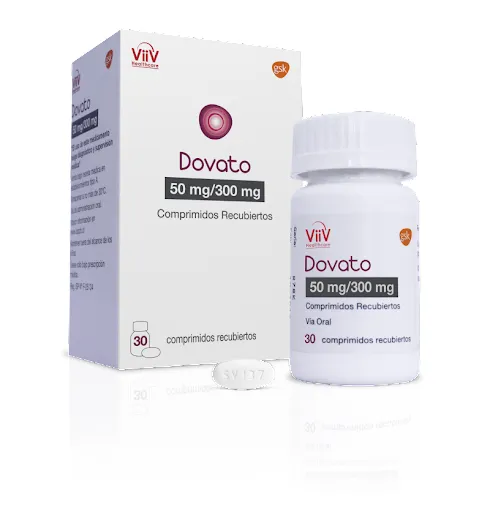
Table of Contents
Patient Information Leaflet
Dovato 50 mg/300 mg film-coated tablets
dolutegravir/lamivudine
Please read this leaflet carefully before taking this medicine because it contains important information for you.
- Keep this leaflet. You may need to read it again.
- If you have any questions, ask your doctor or pharmacist.
- This medicine has been prescribed for you only. Do not give it to others, even if their symptoms are the same as yours, as it may be harmful.
- If you experience any side effects, including those not listed in this leaflet, contact your doctor or pharmacist. See section 4.
Contents of this leaflet:
- What Dovato is and what it is used for
- What you need to know before taking Dovato
- How to take Dovato
- Possible side effects
- How to store Dovato
- Contents of the pack and other information
1. What Dovato is and what it is used for
Dovato is a medicine that contains two active substances used for the treatment of human immunodeficiency virus (HIV) infection: dolutegravir and lamivudine. Dolutegravir belongs to a group of antiretroviral medicines called integrase inhibitors (INI), and lamivudine belongs to a group of antiretroviral medicines known as nucleoside reverse transcriptase inhibitors (NRTI).
Dovato is used to treat HIV in adults and adolescents above 12 years of age, weighing at least 40 kg.
Dovato does not cure HIV infection; it keeps the amount of virus in the body at low levels, which helps maintain the number of CD4+ cells in the blood. CD4+ cells are a type of white blood cell that play an important role in helping the body fight infection.
Not everyone responds to treatment with Dovato in the same way. Your doctor will monitor how well the treatment is working.
2. What you need to know before taking Dovato
Do not take Dovato
- if you are allergic ( hypersensitive ) to dolutegravir or lamivudine or to any of the other ingredients of this medicine (listed in section 6).
- if you are taking a medicine called fampridine (also known as dalfampridine, used for multiple sclerosis). → Talk to your doctor if you think either of these conditions applies to you.
Warnings and precautions
Some people taking Dovato or other combination therapies for HIV are at higher risk of serious side effects than others. You should be aware of these additional risks:
- if you have moderate or severe liver disease
- if you have had liver disease, including hepatitis B or C (if you have hepatitis B infection, do not stop taking Dovato without consulting your doctor, as hepatitis may worsen)
- if you have kidney problems. → Before using Dovato, tell your doctor if any of these situations apply to you. While taking the medicine, you may need additional monitoring, including blood tests. See section 4 for further information.
Allergic reactions
Dovato contains dolutegravir. Dolutegravir can cause a serious allergic reaction known as hypersensitivity reaction. You need to be aware of these important signs and symptoms so that you can recognize them while taking Dovato.
→ Read the information in 'Allergic reactions' in section 4 of this leaflet.
Be alert to important symptoms
Some people taking medicines for HIV infection develop other conditions which may be serious. These include:
- symptoms of infections and inflammation
- joint pain, stiffness, and bone problems. You need to be aware of these important signs and symptoms so that you can recognize them while taking Dovato. → Read the information in 'Other possible side effects' in section 4 of this leaflet.
Children and adolescents
This medicine is not indicated for use in children under 12 years of age and in adolescents weighing less than 40 kg, as it has not been studied in these patients.
Other medicines and Dovato
Tell your doctor if you are taking, have recently taken, or might take any other medicines.
Do not take Dovato with the following medicine:
- fampridine (also known as dalfampridine), used for multiple sclerosis.
Some medicines can affect the activity of Dovato or make it more likely that you will experience side effects. Dovato may also affect the activity of other medicines.
Tell your doctor if you are taking any of the following medicines:
- metformin for the treatment of diabetes
- medicines called antacids for the treatment of indigestion and heartburn. Do not take an antacid within 6 hours before or 2 hours after taking Dovato (see also section 3 'How to take Dovato')
- supplements or multivitamins containing calcium, iron, or magnesium. If you take Dovato with food, you may take supplements or multivitamins containing calcium, iron, or magnesium at the same time as Dovato. If you do not take Dovato with food, do not take a supplement or multivitamin containing calcium, iron, or magnesium within 6 hours before or 2 hours after taking Dovato (see also section 3 'How to take Dovato')
- emtricitabine, etravirine, efavirenz, nevirapine, or tipranavir/ritonavir for the treatment of HIV infection
- medicines (usually liquids) containing sorbitol and other sweeteners (such as xylitol, mannitol, lactitol, or maltitol), if taken regularly
- cladribine for the treatment of leukemia or multiple sclerosis
- rifampicin for the treatment of tuberculosis (TB) and other bacterial infections
- phenytoin and phenobarbital for the treatment of epilepsy
- oxcarbazepine and carbamazepine for the treatment of epilepsy and bipolar disorder
- St. John’s wort ( Hypericum perforatum ), a herbal remedy, for the treatment of depression. → Tell your doctor or pharmacist if you are taking any of these medicines. Your doctor may decide to adjust your dose or carry out additional monitoring.
Pregnancy
If you are pregnant, think you may be pregnant, or are planning to have a baby:
→ Talk to your doctor about the risks and benefits of taking Dovato.
Inform your doctor immediately if you become pregnant or are planning a pregnancy. Your doctor will review your treatment. Do not stop taking Dovato without consulting your doctor, as this could harm you and your unborn baby.
Breast-feeding
Breast-feeding is not recommended for HIV-positive women because HIV infection can be passed to the baby through breast milk.
A small amount of the components in Dovato may also pass into breast milk.
If you are breast-feeding or considering breast-feeding, you must talk to your doctor as soon as possible.
Driving and using machines
Dovato may cause dizziness and other side effects that may reduce alertness.
→ Do not drive or operate machinery unless you are certain that your ability to remain alert is not impaired.
Dovato contains sodium
This medicine contains less than 1 mmol of sodium (23 mg) per tablet, i.e. essentially 'sodium-free'.
3. How to take Dovato
Take this medicine exactly as prescribed by your doctor. If you have any doubts, consult your
doctor or pharmacist.
- The recommended dose of Dovato is one tablet once daily. Swallow the tablet with liquid. Dovato can be taken with or without food. The 30-day blister pack of Dovato contains four blister strips of 7 tablets and one blister strip of 2 tablets. To help track medication intake over 30 days, the 7-tablet blister strips include printed days of the week, and the 2-tablet blister strip includes two blank boxes where you can write the corresponding day.
Use in adolescents
Adolescents aged 12 to 17 years and weighing at least 40 kg may take the adult dose of one tablet once daily.
Antacid medicines
Antacids used to treat indigestion and heartburn may interfere with the absorption of Dovato in your body and reduce its effectiveness.
Do not take an antacid within 6 hours before taking Dovato or for at least 2 hours after taking it. You may take other medicines that reduce stomach acid, such as ranitidine and omeprazole, at the same time as Dovato.
→ Speak with your doctor for further advice on taking acid-reducing medicines with Dovato.
Calcium, iron, or magnesium supplements or multivitamins
Supplements or multivitamins containing calcium, iron, or magnesium may interfere with the absorption of Dovato in your body and reduce its effectiveness.
If you take Dovato with food, you may take supplements or multivitamins containing calcium, iron, or magnesium at the same time as Dovato. If you do not take Dovato with food, do not take supplements or multivitamins containing calcium, iron, or magnesium within 6 hours before taking Dovato or for at least 2 hours after taking it.
→ Speak with your doctor for further advice on taking supplements or multivitamins containing calcium, iron, or magnesium with Dovato.
If you take more Dovato than you should
If you take too many Dovato tablets, contact your doctor or pharmacist for advice. If possible, show them the Dovato packaging.
If you forget to take Dovato
If you miss a dose, take it as soon as you remember. However, if the next dose is due within 4 hours of the usual scheduled time, skip the missed dose and take the next dose at the usual time. Then continue your treatment as before.
→ Do not take a double dose to make up for a forgotten dose.
Do not stop taking Dovato without your doctor’s advice
Take Dovato for the entire duration prescribed by your doctor. Do not stop treatment unless your doctor tells you to. Stopping Dovato may affect your health and the future effectiveness of treatment.
If you have any questions about using this medicine, consult your doctor or pharmacist.
4 Possible side effects
Like all medicines, this medicine can cause side effects, although not everyone will experience them. Therefore, it is very important to inform your doctor of any changes in your health.
Allergic reactions
Dovato contains dolutegravir. Dolutegravir can cause a serious allergic reaction known as hypersensitivity reaction. This is an uncommon reaction (may occur in up to 1 in 100 people) in people taking dolutegravir. If you experience any of the following symptoms:
- skin rash
- high temperature (fever)
- lack of energy (fatigue)
- swelling, sometimes of the face or mouth (angioedema), causing difficulty breathing
- muscle or joint pain → Contact your doctor immediately. Your doctor may decide to perform tests to monitor your liver, kidneys, or blood and may instruct you to stop taking Dovato.
Very common side effects
These may occur in more than 1 in 10 people:
- headache
- diarrhoea
- feeling unwell (nausea)
Common side effects
These may occur in up to 1 in 10 people:
- depression (feeling deeply sad and worthless)
- skin rash
- itching sensation (pruritus)
- vomiting
- stomach or abdominal pain or discomfort (abdominal)
- weight gain
- flatulence
- dizziness
- drowsiness
- difficulty sleeping (insomnia)
- abnormal dreams
- lack of energy (fatigue)
- hair loss
- anxiety
- joint pain
- muscle pain
Common side effects that may be detected by blood tests include:
- increased liver enzyme levels (aminotransferases)
- increased levels of enzymes produced in muscles (creatine phosphokinase)
Uncommon side effects
These may occur in up to 1 in 100 people:
- inflammation of the liver (hepatitis)
- suicide attempt (particularly in patients who previously had depression or mental health problems)
- suicidal thoughts (particularly in patients who previously had depression or mental health problems)
- panic attack
Uncommon side effects that may be detected by blood tests include:
- reduced number of cells involved in blood clotting (thrombocytopenia)
- low number of red blood cells (anemia) or low number of white blood cells (neutropenia)
Rare side effects
These may occur in up to 1 in 1,000 people:
- liver failure (signs may include yellowing of the skin and whites of the eyes or unusually dark urine)
- swelling, sometimes of the face or mouth (angioedema), causing difficulty breathing
- inflammation of the pancreas (pancreatitis)
- muscle tissue breakdown
- suicide (particularly in patients who previously had depression or mental health problems) → Contact your doctor immediately if you experience any mental health problems (see also other mental health problems listed above).
Rare side effects that may be detected by blood tests include:
- increased bilirubin (a marker of liver function)
- increased levels of an enzyme called amylase
Very rare side effects
These may occur in up to 1 in 10,000 people:
- lactic acidosis (excess lactic acid in the blood)
- numbness, tingling sensation in the skin (pins and needles)
- feeling of weakness in the limbs
A very rare side effect that may be detected by blood tests is:
- failure of the bone marrow to produce new red blood cells (pure red cell aplasia).
Other possible side effects
People taking combination therapy for HIV may experience other side effects.
Symptoms of infection and inflammation
People with advanced HIV infection or AIDS have a weakened immune system and are more likely to develop serious infections (opportunistic infections). These infections may be "silent" and not detected by the weakened immune system before starting treatment.
After starting treatment, the immune system becomes stronger and may react against these infections, causing symptoms of infection or inflammation. Symptoms usually include fever together with:
- headache
- stomach pain
- difficulty breathing
In rare cases, as the immune system strengthens, it may also attack the body's healthy tissues (autoimmune disorders). Symptoms of autoimmune disorders may develop many months after starting the medicine for HIV infection. Symptoms may include:
- palpitations (fast or irregular heartbeat) or tremor
- hyperactivity (restlessness and excessive movement)
- weakness starting in the hands and feet and spreading towards the trunk.
If you experience any symptoms of infection or inflammation or notice any of the symptoms listed above:
→ Contact your doctor immediately. Do not take any other medicines for infection without medical advice.
Joint pain, stiffness, and bone problems
Some people taking combination therapy for HIV infection develop a condition called osteonecrosis. In this condition, parts of the bone tissue are permanently damaged due to reduced blood supply to the bone. People may be more likely to develop this condition if they:
- have been on combination therapy for a long time
- are also taking anti-inflammatory medicines called corticosteroids
- consume alcohol
- have a very weak immune system
- are overweight.
Signs of osteonecrosis include:
- joint stiffness
- pain and discomfort in the joints (especially the hip, knee, or shoulder)
- difficulty moving
If you notice any of these symptoms:
→ Contact your doctor.
Effects on weight, lipids, and blood glucose
During HIV treatment, an increase in weight and in levels of lipids and glucose in the blood may occur. This is partly related to improved health status, lifestyle, and sometimes to the HIV medicines themselves. Your doctor will monitor these changes.
Reporting of side effects
If you experience any side effects, including those not listed in this leaflet, consult your doctor or pharmacist. You may also report side effects directly via the national reporting system listed in Annex V. Reporting side effects can help provide more information on the safety of this medicine.
5 How to store Dovato
Keep this medicine out of the sight and reach of children.
Do not use this medicine after the expiry date stated on the carton, bottle, or blister strips after "Exp.". The expiry date refers to the last day of that month.
This medicine does not require any special storage conditions.
Do not dispose of medicines via wastewater or household waste. Ask your pharmacist how to dispose of medicines no longer in use. This will help protect the environment.
6 Contents of the pack and other information
What Dovato contains
- The active substances are dolutegravir and lamivudine. Each tablet contains dolutegravir sodium equivalent to 50 mg of dolutegravir and 300 mg of lamivudine.
- The other components are microcrystalline cellulose, sodium starch glycolate, magnesium stearate, mannitol (E421), povidone (K29/32), sodium stearyl fumarate, hypromellose (E464), macrogol, titanium dioxide (E171).
Description of the appearance of Dovato and contents of the pack
Dovato film-coated tablets are white, oval, biconvex, with the code 'SV 137' engraved on one side.
The film-coated tablets are supplied in bottles with child-resistant closures or in child-resistant blister strips.
Bottle pack
Each bottle contains 30 film-coated tablets.
Multiple packs containing 90 film-coated tablets (3 bottles of 30 film-coated tablets) are also available.
Blister pack
Each blister pack contains 30 film-coated tablets, consisting of 4 blister strips of 7 film-coated tablets and 1 blister strip of 2 film-coated tablets.
For the 2-tablet blister strip only, one empty cavity is intentionally included in each half of the blister strip.
Multiple packs containing 90 film-coated tablets (3 blister packs of 30 film-coated tablets) are also available.
Not all pack sizes may be marketed.
Marketing Authorisation Holder
ViiV Healthcare BV
Van Asch van Wijckstraat 55H
3811 LP Amersfoort
The Netherlands
Manufacturer
Glaxo Wellcome, S.A.
Avda. Extremadura, 3
09400 Aranda De Duero
Burgos
Spain
For further information about this medicine, contact the local representative of the Marketing Authorisation Holder:
België/Belgique/Belgien Lietuva
ViiV Healthcare srl/bv ViiV Healthcare BV
Tél/Tel: + 32 (0) 10 85 65 00 Tel: + 370 80000334
България Luxembourg/Luxemburg
ViiV Healthcare BV ViiV Healthcare srl/bv
Teл.: + 359 80018205 Belgique/Belgien
Tél/Tel: + 32 (0) 10 85 65 00
Česká republika Magyarország
GlaxoSmithKline, s.r.o. ViiV Healthcare BV
Tel: + 420 222 001 111 Tel.: + 36 80088309
[email protected]
Danmark Malta
GlaxoSmithKline Pharma A/S ViiV Healthcare BV
Tlf.: + 45 36 35 91 00 Tel: + 356 80065004
[email protected]
Deutschland Nederland
ViiV Healthcare GmbH ViiV Healthcare BV
Tel.: + 49 (0)89 203 0038-10 Tel: + 31 (0) 33 2081199
[email protected]
Eesti Norge
ViiV Healthcare BV GlaxoSmithKline AS
Tel: + 372 8002640 Tlf: + 47 22 70 20 00
Ελλάδα Österreich
GlaxoSmithKline Μονοπρόσωπη A.E.B.E. GlaxoSmithKline Pharma GmbH
Τηλ: + 30 210 68 82 100 Tel: + 43 (0)1 97075 0
[email protected]
España Polska
Laboratorios ViiV Healthcare, S.L. GSK Services Sp. z o.o.
Tel: + 34 900 923 501 Tel.: + 48 (0)22 576 9000
[email protected]
France Portugal
ViiV Healthcare SAS VIIVHIV HEALTHCARE, UNIPESSOAL, LDA
Tél.: + 33 (0)1 39 17 69 69 Tel: + 351 21 094 08 01
[email protected] [email protected]
Hrvatska România
ViiV Healthcare BV ViiV Healthcare BV
Tel: + 385 800787089 Tel: + 40800672524
Ireland Slovenija
GlaxoSmithKline (Ireland) Limited ViiV Healthcare BV
Tel: + 353 (0)1 4955000 Tel: + 386 80688869
Ísland Slovenská republika
Vistor hf. ViiV Healthcare BV
Sími: +354 535 7000 Tel: + 421 800500589
Italia Suomi/Finland
ViiV Healthcare S.r.l GlaxoSmithKline Oy
Tel: + 39 (0)45 7741600 Puh/Tel: + 358 (0)10 30 30 30
Κύπρος Sverige
ViiV Healthcare BV GlaxoSmithKline AB
Τηλ: + 357 80070017 Tel: + 46 (0)8 638 93 00
[email protected]
Latvija United Kingdom (Northern Ireland)
ViiV Healthcare BV ViiV Healthcare BV
Tel: + 371 80205045 Tel: + 44 (0)800 221441
[email protected]
Other sources of information
More detailed information on this medicine is available on the European Medicines Agency website: https://www.ema.europa.eu.