Dorzolamide and timolol EG
Italy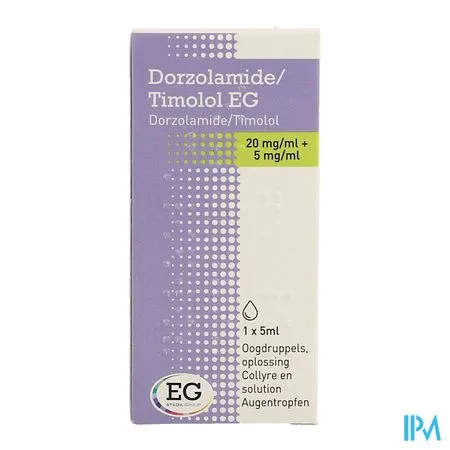
Table of Contents
- Patient Information Leaflet: Information for the User
- Dorzolamide and Timolol EG 20 mg/ml + 5 mg/ml eye drops, solution
- 1. What Dorzolamide and Timolol EG is and what it is used for
- 2. What you need to know before using Dorzolamide and Timololo EG
- 3. How to use Dorzolamide and Timololo EG
- 4. Possible side effects
- 5. How to store Dorzolamide and Timololo EG
- 6. Package contents and other information
Patient Information Leaflet: Information for the User
Dorzolamide and Timolol EG 20 mg/ml + 5 mg/ml eye drops, solution
Read this entire leaflet carefully before using this medicine, as it contains important information for you.
- Keep this leaflet. You may need to read it again.
- If you have any questions, consult your doctor or pharmacist.
- This medicine has been prescribed for you only. Do not give it to others, even if they have the same symptoms as yours, because it could be harmful.
- If you experience any side effects, including those not listed in this leaflet, consult your doctor or pharmacist. See section 4.
Contents of this leaflet:
- What Dorzolamide and Timolol EG is and what it is used for
- What you need to know before using Dorzolamide and Timololo EG
- How to use Dorzolamide and Timololo EG
- Possible side effects
- How to store Dorzolamide and Timololo EG
- Package contents and other information
1. What Dorzolamide and Timolol EG is and what it is used for
Dorzolamide and Timololo EG is a combination of two active substances: dorzolamide and timolol.
- Dorzolamide belongs to a group of medicines called "carbonic anhydrase inhibitors".
- Timolol belongs to a group of medicines called "beta-blockers".
Dorzolamide and Timololo EG is prescribed to reduce intraocular pressure in the treatment of glaucoma when beta-blocker eye drops used alone are not sufficient.
2. What you need to know before using Dorzolamide and Timololo EG
Do not use Dorzolamide and Timololo EG eye drops, solution
- if you are allergic to dorzolamide or timolol, to beta-blockers, or to any of the other ingredients of this medicine (listed in section 6);
- if you have or have previously had respiratory problems such as asthma, severe chronic obstructive bronchitis (a serious lung condition that may cause shortness of breath, difficulty breathing, and/or long-lasting cough);
- if you have severe kidney problems or a history of kidney stones;
- if you have a blood pH disorder (acid-base imbalance);
- if you have certain heart conditions, including some heart rhythm disorders causing abnormally slow heart rate, or severe heart failure.
If you think any of these conditions apply to you, use Dorzolamide and Timololo EG only after consulting your doctor.
Warnings and precautions
Talk to your doctor or pharmacist before using Dorzolamide and Timololo EG, especially if you currently have or have previously had
- coronary heart disease (symptoms may include chest pain [even at rest] or tightness, shortness of breath, or suffocation), heart failure, low blood pressure;
- breathing problems, asthma, or chronic obstructive pulmonary disease;
- poor blood circulation (such as Raynaud's disease or syndrome);
- diabetes, as timolol may mask the signs and symptoms of hypoglycaemia;
- overactive thyroid gland, as timolol may mask its signs and symptoms;
- any allergies to medicines you have taken.
Before undergoing surgery, inform your doctor that you are using Dorzolamide and Timololo EG, as dorzolamide/timololo may alter the effect of certain medicines used during anaesthesia. A sudden drop in blood pressure associated with the anaesthetic may occur.
Inform your doctor if you have or have had liver problems, if you suffer from muscle weakness, or if you have been diagnosed with myasthenia gravis.
If conjunctivitis (redness and irritation of the eyes), swelling of the eye or eyelids, or skin rash or itching inside or around the eye occurs, contact your doctor immediately. These symptoms may be caused by an allergic reaction or may be an adverse effect of Dorzolamide and Timololo EG (see section 4 "Possible side effects").
If you think this medicine is causing you an allergic reaction or hypersensitivity (for example, skin rash, serious skin reactions, or redness and itching of the eye), stop using it and contact your doctor immediately.
Inform your doctor if you develop an eye infection, suffer an eye injury, have undergone eye surgery, develop other reactions, or if your symptoms worsen.
If you wear soft contact lenses, it is important that you remove the lenses before using the eye drops and wait at least 15 minutes after instillation before reinserting them into the eye. This is because the preservative benzalkonium chloride contained in the product may discolour them.
Children
Experience with Dorzolamide and Timololo EG in neonates and children is limited.
Elderly
In clinical studies with dorzolamide/timololo eye drops, solution, the effects of dorzolamide/timololo eye drops, solution were similar in both elderly and younger patients.
If you engage in sports: using this medicine without therapeutic need constitutes doping and may lead to a positive result in anti-doping tests.
Other medicines and Dorzolamide and Timololo EG
Dorzolamide and Timololo EG may affect or be affected by other medicines you are using, including other eye drops for the treatment of glaucoma. Inform your doctor if you are using or intend to use medicines to lower blood pressure, medicines for the heart, or medicines for the treatment of diabetes.
Inform your doctor or pharmacist if you are taking, have recently taken, or might take any other medicines. This is especially important:
- if you are taking antihypertensive medicines used to lower high blood pressure or medicines for heart conditions such as calcium channel blockers and beta-blockers, or digoxin;
- if you are taking medicines for the treatment of heart rhythm disorders or irregularities such as quinidine (used to treat certain types of malaria) or digoxin;
- if you are using another eye drop containing a beta-blocker;
- if you are taking another carbonic anhydrase inhibitor, for example acetazolamide. This type of medicine may be taken orally, as eye drops, or by other routes;
- if you are taking monoamine oxidase inhibitors (MAO inhibitors) or selective serotonin reuptake inhibitors (SSRIs, e.g. fluoxetine and paroxetine), both used to treat depression or other conditions;
- if you are taking a parasympathomimetic medicine, which may have been prescribed to help you urinate. Parasympathomimetics are a particular type of medicine sometimes used to restore normal intestinal movements;
- if you are taking narcotic medicines such as morphine, used to treat moderate to severe pain, or if you are taking high doses of acetylsalicylic acid. Although there is no evidence of interaction between dorzolamide hydrochloride and acetylsalicylic acid, some other medicines related to dorzolamide hydrochloride taken orally are known to interact with acetylsalicylic acid;
- if you are taking medicines for the treatment of diabetes or hyperglycaemia;
- if you are taking epinephrine (adrenaline).
Pregnancy and breastfeeding
If you are pregnant, think you may be pregnant, are planning to become pregnant, or are breastfeeding, consult your doctor or pharmacist before taking this medicine.
Do not use Dorzolamide and Timololo EG if you are pregnant unless your doctor considers it necessary.
Inform your doctor if you are pregnant or planning a pregnancy.
Do not use Dorzolamide and Timololo EG if you are breastfeeding. Timolol passes into breast milk.
Inform your doctor if you are breastfeeding or intend to breastfeed your baby.
Driving and using machines
In some patients, Dorzolamide and Timololo EG may cause adverse effects such as blurred vision. Do not drive or operate any tools or machinery until symptoms have resolved.
Dorzolamide and Timololo EG contains benzalkonium chloride.
This medicine contains 0.075 mg of benzalkonium chloride per 1 ml.
Benzalkonium chloride may be absorbed by soft contact lenses and may cause a change in their colour. Remove contact lenses before using this medicine and wait 15 minutes before reinserting them.
Benzalkonium chloride may also cause eye irritation, especially if you have dry eye or corneal disorders (the outermost transparent layer of the eye). If you experience an unusual sensation in the eye, such as burning or pain after using this medicine, speak with your doctor.
3. How to use Dorzolamide and Timololo EG
Use this medicine exactly as directed by your doctor. If you have any doubts, consult your doctor or pharmacist.
Your doctor will determine the appropriate dosage and duration of treatment.
Adults
The usual dose is one drop in the affected eye(s), twice daily, for example in the morning and evening.
If you are using Dorzolamide and Timololo EG together with another eye drop, wait at least 10 minutes between the administration of Dorzolamide and Timololo EG and the other medicine.
Do not change the dosage without first consulting your doctor. If you need to stop treatment, contact your doctor immediately.
Avoid letting the tip of the bottle touch the eye or surrounding area. Contamination with bacteria may occur, which could lead to eye infections and potentially result in damage to the eye, including loss of vision. To prevent any kind of contamination, ensure that the tip of the container does not come into contact with any surface.
To ensure correct dosing, the dropper tip must not be widened.
Instructions for use:
Wash your hands before instilling the eye drops.
You may find it easier to perform the procedure in front of a mirror.
- Before first use, check that the security seal on the neck of the bottle is intact. A gap between the bottle and the cap is normal for an unopened bottle.
- Unscrew the cap of the bottle.
- Tilt your head backwards and gently pull down your lower eyelid to form a small pocket between the eyelid and the eye.
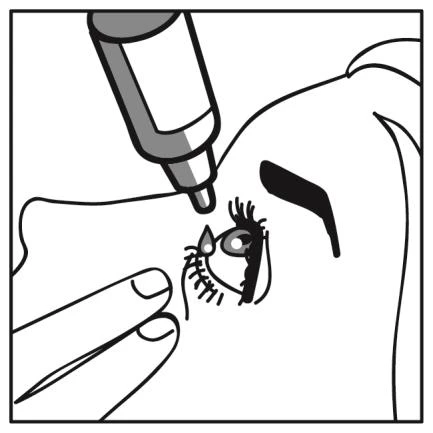
- Turn the bottle upside down and gently squeeze until a single drop is released into the eye, as instructed by your doctor. DO NOT TOUCH THE TIP OF THE DROPPER TO THE EYE OR EYELID.
- After using Dorzolamide and Timololo EG, close your eye and press gently with your finger on the inner corner of the eye for about 2 minutes. This helps prevent the medicine from passing into the rest of the body.
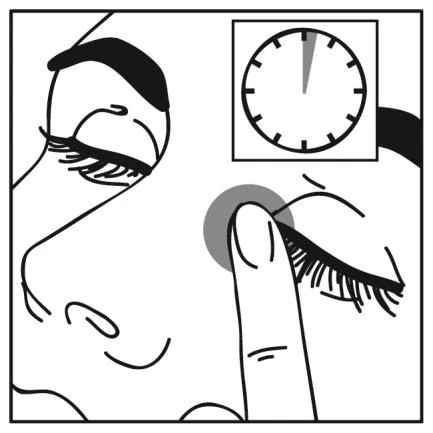
- Repeat steps 3 to 5 for the other eye if your doctor has instructed you to do so.
- Replace the cap and close the bottle tightly immediately after use.
If you use more Dorzolamide and Timololo EG than you should
It is important to follow your doctor’s prescribed dose. If you apply too many drops or swallow the contents of the bottle, you may feel unwell, for example experiencing dizziness, difficulty breathing, or a slow heartbeat. If any of these symptoms occur, contact your doctor immediately.
If you forget to use Dorzolamide and Timololo EG
It is important that you use Dorzolamide and Timololo EG as prescribed by your doctor.
If you miss a dose, apply it as soon as you remember. However, if it is almost time for your next dose, skip the missed dose and continue with your regular dosing schedule.
Do not apply a double dose to make up for the missed dose.
If you stop using Dorzolamide and Timololo EG
Do not stop using this medicine without first consulting your doctor.
If you have any questions about how to use this medicine, ask your doctor or pharmacist.
4. Possible side effects
Like all medicines, this medicine can cause side effects, although not everybody will get them.
Serious side effects
If you experience any of the following side effects, stop using this medicine and consult a doctor immediately, as these may be signs of an allergic reaction to the medicine:
Rare (may affect up to 1 in 1,000 people):
- hives, swelling of the face, lips, tongue, and/or throat, possibly causing difficulty breathing or swallowing;
- severe skin reactions with blistering of the skin which may affect the mouth, eyes, and genitals.
Other side effects
You can usually continue using the drops unless the side effects are severe. If you have any doubts, consult a doctor or pharmacist. Do not stop using Dorzolamide and Timololo EG without first consulting your doctor.
Very common (may affect more than 1 in 10 people):
Burning and eye irritation, altered taste.
Common (may affect up to 1 in 10 people):
Redness inside and around the eye(s), tearing or itching of the eye(s), and effects on the surface of the eye(s), swelling and/or irritation inside and around the eye(s), sensation of a foreign body in the eye (corneal erosion), reduced corneal sensitivity (inability to notice something in the eye or to feel pain), eye pain, dry eyes, blurred vision, headache, sinusitis (feeling of pressure or fullness in the nose), malaise, nausea-like symptoms and fatigue.
Uncommon (may affect up to 1 in 100 people):
Dizziness, depression, inflammation of the iris, blurred vision (in some cases due to discontinuation of medications used to treat excessive pupil constriction), slow heart rate, fainting, indigestion, and kidney stones (often signaled by sudden onset of severe cramping pain in the lower and/or lateral back, groin, or abdomen).
Rare (may affect up to 1 in 1,000 people):
Systemic lupus erythematosus (an autoimmune disease that may cause inflammation of internal organs), tingling or numbness in the hands or feet, sleep disorders, nightmares, memory loss, muscle weakness, decreased sexual desire, stroke, temporary myopia (which may resolve upon discontinuation of treatment), development of fluid under the retina (choroidal detachment following filtering surgery), drooping of the eyelids, double vision, crusting of the eyelids, corneal edema (with symptoms of visual disturbances), low eye pressure, ringing in the ears, low blood pressure, irregular heartbeat, chest pain, strong heartbeat that may be rapid or irregular (palpitations), heart attack, congestive heart failure (heart disease causing shortness of breath and swelling of feet and legs due to fluid accumulation), edema (fluid accumulation), reduced blood flow to the brain, swelling or coldness of hands and feet and reduced circulation in arms and legs, poor blood circulation causing numbness and color changes in fingers and toes (Raynaud's phenomenon), leg cramps and/or leg pain when walking (claudication), shortness of breath, difficulty breathing, stuffy or runny nose, nosebleeds, difficulty breathing, cough, sore throat, dry mouth, diarrhea, contact dermatitis, hair loss, psoriasis or worsening of psoriasis, Peyronie's disease (which may cause penile curvature), weakness/fatigue, generalized allergic-type reactions including subcutaneous swelling that may occur in areas such as the face (swelling of lips, eyes, and mouth) and limbs, and may obstruct airways causing difficulty swallowing or breathing, wheezing.
Hives or itchy skin rash, localized and generalized skin rash, itching, severe sudden life-threatening allergic reaction.
As with other ophthalmic medicines, timolol may also be absorbed into the bloodstream. This may cause effects similar to those observed with intravenous and/or oral systemic beta-blockers. Fewer side effects occur after topical ocular application compared to when medicines are taken orally or by injection. The side effects listed include reactions observed within the class of beta-blockers when used to treat ocular conditions:
Not known (frequency cannot be estimated from the available data):
- Low blood sugar levels.
- Heart failure.
- Increased heart rate.
- Increased blood pressure.
- Abdominal pain, vomiting.
- Muscle pain not due to physical exercise.
- Sexual dysfunction.
- Labored breathing.
- Sensation of a foreign body in the eye (feeling that something is in the eye).
- Hallucinations.
- Abnormal sensitivity of the eyes to light.
Reporting of side effects
If you experience any side effects, including those not listed in this leaflet, talk to your doctor or pharmacist. You can also report side effects directly via the national reporting system at https://www.aifa.gov.it/content/segnalazioni-reazioni-avverse. By reporting side effects, you can help provide more information on the safety of this medicine.
5. How to store Dorzolamide and Timololo EG
Keep this medicine out of the sight and reach of children.
Do not use this medicine after the expiry date stated on the bottle label and on the packaging after the words EXP. The expiry date refers to the last day of that month.
This medicine does not require any special storage conditions regarding temperature.
Dorzolamide and Timololo EG must be used within 28 days of first opening the bottle. For this reason, the bottle must be discarded 4 weeks after opening, even if the product has not been completely used. To help you remember, write the date the bottle was opened in the designated space on the packaging.
Do not dispose of any medicine via wastewater or household waste. Ask your pharmacist how to dispose of medicines no longer in use. This will help protect the environment.
6. Package contents and other information
What Dorzolamide and Timololo EG contains
- The active substances are dorzolamide and timolol. Each ml contains 20 mg of dorzolamide (equivalent to 22.26 mg of dorzolamide hydrochloride) and 5 mg of timolol (equivalent to 6.83 mg of timolol maleate).
- The other components are: mannitol (E421), hydroxyethylcellulose, benzalkonium chloride (as preservative), sodium citrate (E331), sodium hydroxide (E524) for pH adjustment, and water for injections.
Description of the appearance of Dorzolamide and Timololo EG and package contents
The medicine is available as a sterile, clear, slightly viscous, colourless ophthalmic solution.
Dorzolamide and Timololo EG is supplied in opaque white MDPE bottles with LDPE dropper and sealed HDPE cap with tamper-evident seal, containing 5 ml of ophthalmic solution.
Pack sizes: 1, 3, 6 bottles of 5 ml each.
Not all pack sizes may be marketed.
Marketing Authorisation Holder
EG S.p.A., Via Pavia, 6 – 20136 Milan, Italy
Manufacturer
Pharmathen S.A., 6 Dervenakion str., 15351 Pallini, Attiki (Greece)
Famar S.A., Plant A, 63 Agiou Dimitriou Street, 17456 Alimos (Greece)
STADA Arzneimittel AG, Stadastrasse 2-18, 61118 Bad Vilbel (Germany)
STADA Arzneimittel GmbH, Muthgasse 36, 1190 Wien (Austria)
Eurogenerics N.V., Heizel Esplanade B22, 1020 Brussels (Belgium)
This medicinal product is authorised in the European Economic Area countries under the following names:
Austria Cosostad 20 + 5 mg/ml eye drops solution
Belgium Dorzolamide/timolol EG 20/5 mg/ml oogdruppels, oplossing
Luxembourg Dorzolamide/timolol EG 20/5 mg/ml collyre en solution
Germany Dorzo plus T STADA 20 mg/ml + 5 mg/ml Augentropfen
Denmark Costad
Spain Dorzolamida/Timolol 20 mg/ml + 5 mg/ml colirio en solución EFG
Finland Glaukostad comp
France Dorzolamide/Timolol EG 20 mg/ml + 5 mg/ml, collyre en solution
Italy DORZOLAMIDE E TIMOLOLO EG 20 mg/ml + 5 mg/ml eye drops, solution
Norway Doticol (20+5) mg/ml eye drops, solution
Netherlands Dorzolamide/Timolol CF 20+5 mg/ml, oogdruppels, oplossing