Dolgit
Italy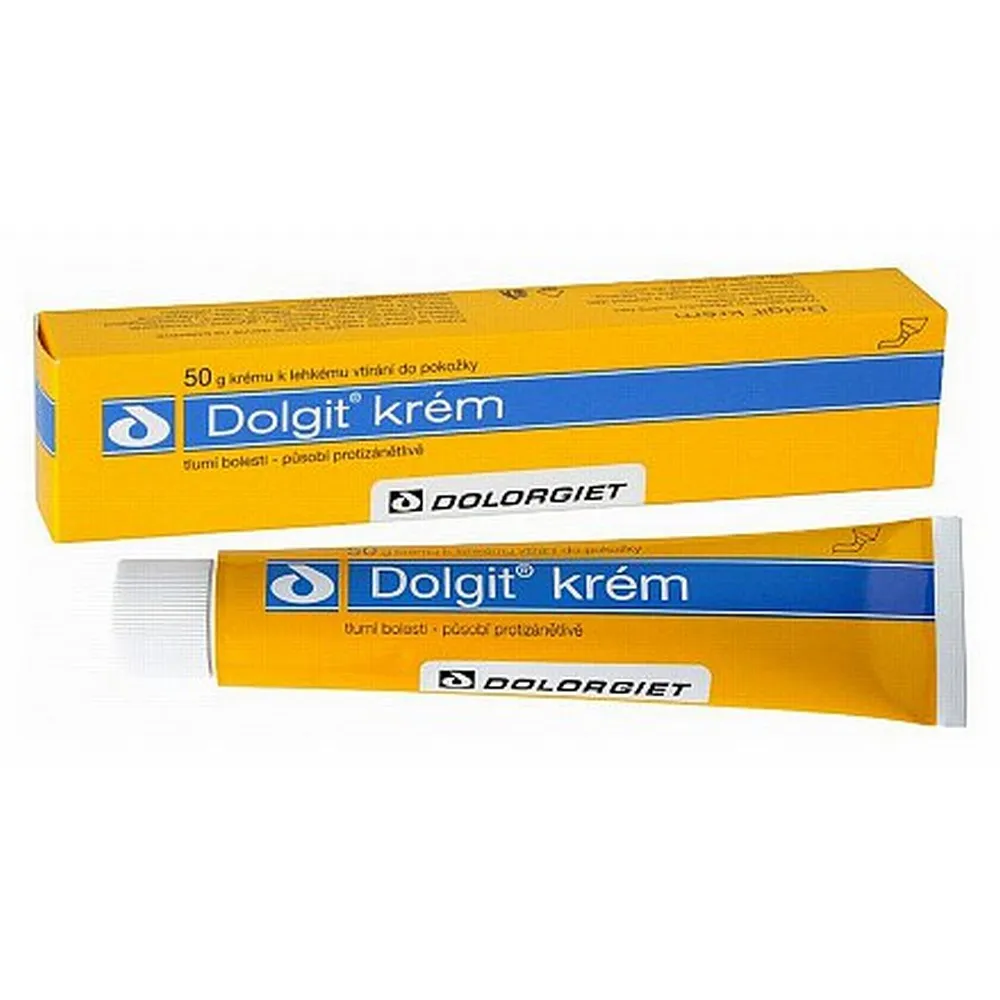
Table of Contents
PACKAGE LEAFLET
Package leaflet: information for the user
Dolgit 50 mg/g cream
For adults and adolescents aged 14 years and older
Ibuprofen
Please read this leaflet carefully before using this medicine because it contains important information for you.
Always use this medicine exactly as described in this leaflet or as your doctor or pharmacist has instructed you.
- Keep this leaflet. You may need to read it again.
- If you need more information or advice, consult your pharmacist.
- If you experience any side effects, including those not listed in this leaflet, consult your doctor or pharmacist. See section 4.
- Consult your doctor if you do not notice improvement or if your symptoms worsen after 3 days.
Contents of this leaflet:
- What Dolgit is and what it is used for
- What you need to know before using Dolgit
- How to use Dolgit
- Possible side effects
- How to store Dolgit
- Contents of the pack and other information
1. What Dolgit is and what it is used for
The active substance is ibuprofen. Ibuprofen is a pain reliever and anti-inflammatory agent (non-steroidal anti-inflammatory drug, NSAID).
Dolgit is used for local treatment only or as supportive therapy in cases of:
- painful degenerative joint diseases (osteoarthritis), diagnosed by a physician
- swelling and inflammation of soft tissues near the joints (e.g. bursae, tendons, tendon sheaths, ligaments and joint capsules)
- stiff shoulder, low back pain, lumbago
- sports injuries and trauma such as bruises, sprains, strains.
Dolgit is indicated in adults and adolescents aged 14 years and older.
Consult your doctor if you do not notice improvement or if you experience worsening of symptoms after 3 days.
2. What you need to know before using Dolgit
Do not use Dolgit
- if you are allergic to ibuprofen, to other analgesics or anti-rheumatic drugs, or to any of the other ingredients of this medicine (listed in section 6);
- on open wounds, skin inflammations or infections, eczema, or on mucous membranes;
- if you are in the last 3 months of pregnancy.
Warnings and precautions
Talk to your doctor or pharmacist before using Dolgit.
Undesirable effects can be minimized by using the lowest effective dose for the shortest duration necessary to control symptoms.
In patients who currently suffer or have previously suffered from bronchial asthma or allergies and who use ibuprofen, bronchospasm may occur.
During treatment with Dolgit, patients with asthma, hay fever, nasal mucosa swelling (nasal polyps), chronic obstructive bronchopulmonary disease, or chronic respiratory tract infections (especially if associated with symptoms similar to hay fever) are more likely than others to experience asthma attacks (analgesic-intolerance asthma), local skin and mucous membrane swelling (Quincke's edema), or hives.
In such patients, Dolgit should only be used with appropriate precautions and under direct medical supervision. The same applies to patients who are allergic to other substances, for example, those experiencing skin reactions, itching, or hives.
Take appropriate precautions to prevent children from touching skin areas treated with the medicine.
If a skin rash develops, treatment with Dolgit must be discontinued.
Do not expose the treated area to intense natural and/or artificial light (e.g. sunbeds) during treatment and on the day following the end of treatment, to reduce the risk of photosensitivity.
Even when used locally, systemic effects of ibuprofen cannot be completely ruled out, and the concomitant use of ibuprofen in cream form with other NSAIDs may increase the risk of adverse reactions.
Serious skin reactions have been reported with ibuprofen use, including exfoliative dermatitis, erythema multiforme, Stevens-Johnson syndrome, toxic epidermal necrolysis, drug reaction with eosinophilia and systemic symptoms (DRESS), and generalized pustular eruption (acute generalized exanthematous pustulosis, AGEP). Discontinue use of Dolgit and contact your doctor immediately if you notice any of the symptoms related to these serious skin reactions described in section 4.
Children and adolescents
Dolgit must not be used in children and adolescents under 14 years of age, as data on efficacy and safety in this age group are insufficient.
Other medicines and Dolgit
Tell your doctor or pharmacist if you are taking, have recently taken, or might take any other medicines.
When used according to instructions, no interactions with Dolgit have been reported; therefore, interactions reported with oral ibuprofen are unlikely.
Pregnancy, breastfeeding, and fertility
If you are pregnant, suspect you may be pregnant, planning to become pregnant, or breastfeeding, consult your doctor or pharmacist before taking this medicine.
Do not use Dolgit if you are in the last 3 months of pregnancy. You should not use Dolgit during the first 6 months of pregnancy unless strictly necessary and on medical advice. If treatment is required during this period, the lowest possible dose for the shortest possible time should be used.
Oral forms (e.g. tablets) of Dolgit may cause adverse effects in the fetus.
It is not known whether the same risk applies when Dolgit is used on the skin.
No harmful effects from using this medicine during breastfeeding are known. However, as a precautionary measure, the cream should not be applied directly to the breast during breastfeeding.
Ibuprofen belongs to a group of medicines (NSAIDs) that may impair female fertility. This effect is reversible after discontinuation of treatment.
Driving and using machines
Dolgit does not impair the ability to drive or operate machinery when used occasionally or for short periods.
This medicine contains sodium methyl para-hydroxybenzoate (E 219), propylene glycol (E 1520), and fragrances containing allergens.
Sodium methyl para-hydroxybenzoate may cause allergic reactions (including delayed reactions).
This medicine contains 50 mg of propylene glycol per gram. Propylene glycol may cause skin irritation.
This medicine contains fragrances containing benzyl alcohol, benzyl benzoate, citral, citronellol, coumarin, eugenol, farnesol, geraniol, limonene/d-limonene, and linalool, which may cause allergic reactions.
3. How to use Dolgit
Use this medicine exactly as described in this leaflet, or as directed by your doctor or pharmacist. If you are unsure, consult your doctor or pharmacist.
The recommended dose is:
Adults and adolescents aged 14 years and older:
Apply Dolgit 3–4 times daily. Depending on the size of the painful area to be treated, a strip of cream 4–10 cm long will be required, corresponding to 2–5 g of cream (100–250 mg of ibuprofen). The maximum daily dose is 20 g of cream, equivalent to 1,000 mg of ibuprofen.
Consult a doctor if symptoms worsen or do not improve within 3 days.
Method of administration
For external use only.
Apply Dolgit to the skin with gentle massage. In cases of severe bruising and sprains, it may be helpful to apply an occlusive dressing at the beginning of treatment. Skin penetration of the active ingredient may be enhanced by iontophoresis (a specific form of electrotherapy). Apply Dolgit under the cathode (negative pole). The current should be 0.1–0.5 mA per 5 cm² of electrode surface area, with treatment duration up to approximately 10 minutes.
After applying the cream to the skin, wash your hands after cleaning them with a paper towel, unless the hands are the area being treated. Dispose of the paper towel as non-recyclable waste. Before taking a shower or bath, wait until the active ingredient has been absorbed.
For short-term use only.
The duration of use depends on the symptoms and underlying condition. Do not use Dolgit for longer than 2–3 weeks. The therapeutic benefit of longer-term use has not been demonstrated.
If you use more Dolgit than you should
If you apply more cream than the recommended dose, remove the excess (e.g. with a paper towel) and wash the area thoroughly with water. Consult a doctor if a large excess has been applied or if Dolgit has been accidentally ingested.
There is no specific antidote.
If you forget to use Dolgit
Do not apply a double dose to make up for the missed dose.
If you have any doubts about how to use this medicine, consult your doctor or pharmacist.
4. Possible side effects
Like all medicines, this medicine can cause side effects, although not everyone gets them.
Common (may affect up to 1 in 10 people): local skin reactions such as erythema, itching, burning, rash (including with pustules) or urticaria
Uncommon (may affect up to 1 in 100 people): hypersensitivity reactions, e.g. local allergic reactions (contact dermatitis)
Very rare (may affect up to 1 in 10,000 people): angioedema, narrowing of the airways (bronchospasm)
Not known (frequency cannot be estimated from the available data): skin sensitivity to light
If Dolgit is applied over large skin areas and for prolonged periods, adverse effects affecting specific organ systems or the entire organism cannot be excluded, such as those occurring after systemic use of medicines containing ibuprofen.
Stop treatment with ibuprofen and consult your doctor immediately if you notice any of the following symptoms:
- Flat, red patches on the trunk, sometimes target-shaped or circular, often with central blisters, skin peeling, mouth, throat, nose, genital or eye ulcers. These serious skin eruptions may be preceded by fever and flu-like symptoms [exfoliative dermatitis, erythema multiforme, Stevens-Johnson syndrome, toxic epidermal necrolysis].
- Widespread rash, high body temperature and swollen lymph nodes (DRESS syndrome).
- Widespread, red, scaly rash, with lumps under the skin and blisters, accompanied by fever. Symptoms usually appear at the beginning of treatment (generalized pustular eruption, acute generalized exanthematous pustulosis).
Reporting of side effects
If you experience any side effect, including those not listed in this leaflet, talk to your doctor or pharmacist. You can also report side effects directly via the national reporting system at the following website:
https://www.aifa.gov.it/content/segnalazioni-reazioni-avverse
By reporting side effects, you can help provide more information on the safety of this medicine.
5. How to store Dolgit
Keep this medicine out of the sight and reach of children.
Do not use this medicine after the expiry date stated on the carton and tube after "Exp." The expiry date refers to the last day of that month.
Do not store above 25 °C.
The shelf life after first opening of Dolgit is 1 year.
Do not dispose of any medicine via wastewater. Ask your pharmacist how to dispose of medicines no longer required. This will help protect the environment.
6. Package contents and other information
What Dolgit contains:
- The active substance is ibuprofen. 1 g of cream contains 50 mg of ibuprofen.
- The other components are: Medium-chain triglycerides, Glycerol monostearate 40-55, Macrogol stearate 1 500, Macrogol stearate 5 000, Propylene glycol (E 1520), Methyl 4-hydroxybenzoate sodium (E 219), Xanthan gum, Lavender oil (contains benzyl alcohol, benzyl benzoate, citral, citronellol, coumarin, eugenol, farnesol, geraniol, limonene, linalool), Neroli oil (contains citral, geraniol, citronellol, farnesol, limonene/d-limonene, linalool), Purified water.
Description of the appearance of Dolgit and pack contents:
Soft, smooth cream, white or cream-coloured.
Dolgit is available in tubes containing 20 g, 40 g, 50 g, 60 g, 100 g, 120 g and 150 g of cream.
Not all pack sizes may be marketed.
Marketing Authorisation Holder and Manufacturer:
Dolorgiet GmbH & Co. KG
Otto-von-Guericke Strasse 1
53757 Sankt Augustin
Germany
This medicinal product is authorised in the European Economic Area countries under the following names:
Germany: Dolgit Creme 50 mg/g
Croatia: Dolgit 50 mg/g krema
Italy: Dolgit, 50 mg/g crema
Lithuania: Ibutop 50 mg/g kremas
Latvia: Ibutop 50 mg/g krēms
Romania: Ibutop 50 mg/g cremă
Slovenia: Dolgit 50 mg/g krema