Docetaxel Accord
Italy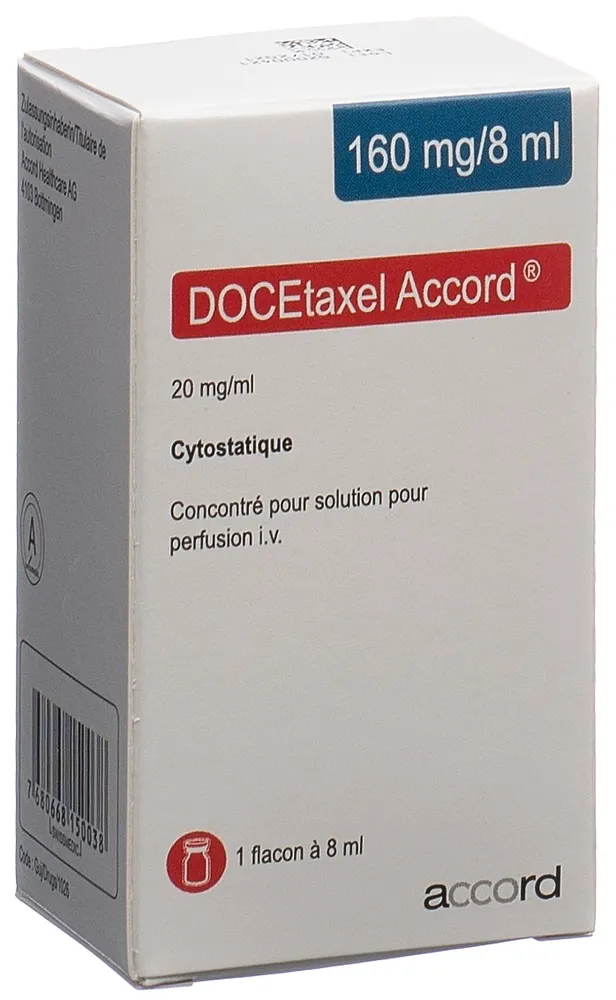
Table of Contents
- Patient Information Leaflet
- Docetaxel Accord 20 mg/1 ml concentrate for solution for infusion, 80 mg/4 ml concentrate for solution for infusion, 160 mg/8 ml concentrate for solution for infusion
- 1. What Docetaxel Accord is and what it is used for
- 2. What you should know before using Docetaxel Accord
- 3. How to use Docetaxel Accord
- 4. Possible side effects
- 5. How to store Docetaxel Accord
- 6. Package contents and other information
Patient Information Leaflet
Docetaxel Accord 20 mg/1 ml concentrate for solution for infusion, 80 mg/4 ml concentrate for solution for infusion, 160 mg/8 ml concentrate for solution for infusion
docetaxel
Please read all of this leaflet carefully before you are given this medicine because it contains important information for you.
- Keep this leaflet. You may need to read it again.
- If you have any further questions, ask your doctor, hospital pharmacist, or nurse.
- If you get any side effects, including those not listed in this leaflet, tell your doctor, hospital pharmacist, or nurse. (See section 4.)
Contents of this leaflet:
- What Docetaxel Accord is and what it is used for
- What you need to know before using Docetaxel Accord
- How to use Docetaxel Accord
- Possible side effects
- How to store Docetaxel Accord
- Contents of the pack and other information
1. What Docetaxel Accord is and what it is used for
The name of this medicine is Docetaxel Accord. The active substance is docetaxel.
Docetaxel is a substance derived from the needle-like leaves of the yew tree and belongs to a group of anticancer agents called taxanes.
Docetaxel Accord has been prescribed by your doctor for the treatment of breast cancer, certain forms of lung cancer (non-small cell lung cancer), prostate cancer, stomach adenocarcinoma, or head and neck cancer:
- for the treatment of advanced breast cancer, docetaxel may be given alone or in combination with doxorubicin, trastuzumab, or capecitabine.
- for the treatment of early-stage breast cancer with or without lymph node involvement, docetaxel may be given in combination with doxorubicin and cyclophosphamide.
- for the treatment of lung cancer, docetaxel may be given alone or in combination with cisplatin.
- for the treatment of prostate cancer, docetaxel is given in combination with prednisone or prednisolone.
- for the treatment of metastatic stomach adenocarcinoma, docetaxel is given in combination with cisplatin and 5-fluorouracil.
- for the treatment of head and neck cancer, docetaxel is given in combination with cisplatin and 5-fluorouracil.
2. What you should know before using Docetaxel Accord
Do not take Docetaxel Accord:
- if you are allergic (hypersensitive) to docetaxel or to any of the other ingredients of Docetaxel Accord (listed in section 6);
- if your white blood cell count is too low;
- if you have severe liver problems.
Warnings and precautions
Before each treatment with Docetaxel Accord, blood tests must be performed to determine whether blood cell counts are sufficient and whether liver function is adequate for receiving Docetaxel Accord. If white blood cell counts are abnormal, you may experience fever or infections.
Immediately inform your doctor, hospital pharmacist, or nurse if you have abdominal pain or tenderness, diarrhoea, rectal bleeding, blood in the stools, or fever. These symptoms may be the first signs of severe gastrointestinal toxicity, which can be fatal. Your doctor will address this immediately.
Inform your doctor, hospital pharmacist, or nurse if you have vision problems. If you experience vision problems, especially blurred vision, you must have your eyes and vision checked immediately.
Inform your doctor, hospital pharmacist, or nurse if you have had an allergic reaction to a previous treatment with paclitaxel.
Inform your doctor, hospital pharmacist, or nurse if you have heart problems.
If you develop acute lung problems or if your existing symptoms worsen (fever, shortness of breath, or cough), inform your doctor, hospital pharmacist, or nurse immediately. Your doctor may immediately discontinue treatment.
You will be asked to take preventive treatment with oral corticosteroids such as dexamethasone one day before administration of Docetaxel Accord and to continue for one or two days afterwards in order to reduce certain side effects that may occur following infusion of Docetaxel Accord, particularly allergic reactions and fluid retention (swelling of the hands, feet, legs, or weight gain).
During treatment, you may need medication to maintain blood cell counts.
Serious skin reactions such as Stevens-Johnson Syndrome (SJS), Toxic Epidermal Necrolysis (TEN), and Acute Generalized Exanthematous Pustulosis (AGEP) have been reported with Docetaxel Accord.
- Symptoms of SJS/TEN may include blisters, peeling or bleeding of the skin (including lips, eyes, mouth, nose, genitals, hands or feet), with or without redness. You may also simultaneously experience flu-like symptoms such as fever, chills, or muscle pain.
- Symptoms of AGEP may include a widespread scaly and red rash with swollen bumps under the skin (including skin folds, trunk, and upper extremities) and blisters accompanied by fever. If you develop severe skin reactions or any of the reactions listed above, contact your doctor or a healthcare professional immediately.
Before starting treatment with Docetaxel Accord, inform your doctor, hospital pharmacist, or nurse if you have kidney problems or high levels of uric acid in your blood.
Docetaxel Accord contains alcohol. Inform your doctor if you have alcohol dependence, epilepsy, or liver insufficiency. See also the section “Docetaxel Accord contains ethanol (alcohol)” below.
Other medicines and Docetaxel Accord
Inform your doctor or hospital pharmacist if you are taking, have recently taken, or might take any other medicines, including those not requiring a prescription. This is because Docetaxel Accord or other medicines may not work as expected, and you may be more likely to experience side effects.
The amount of alcohol in this medicine may alter the effects of other medicines.
Pregnancy, breast-feeding and fertility
Ask your doctor for advice before taking any medicine.
Docetaxel Accord must NOT be administered during pregnancy unless clearly indicated by your doctor.
You must not become pregnant during treatment and for 2 months after the end of treatment with this medicine. You must use adequate contraception during treatment and for 2 months after the end of treatment, as docetaxel may harm the unborn child. If you become pregnant during treatment, inform your doctor immediately.
You must not breast-feed during treatment with docetaxel.
If you are a man receiving treatment with docetaxel, you must not father a child and must use adequate contraception during treatment and for 4 months after the end of treatment with this medicine. It is recommended that you seek information about sperm preservation before treatment, as docetaxel may impair male fertility.
Driving and using machines
The amount of alcohol in this medicine may affect your ability to drive and use machinery. You may experience side effects from this medicine that could impair your ability to drive, use equipment, or operate machinery (see section 4 Possible side effects). If this occurs, do not drive or use any equipment or machinery until you have discussed it with your doctor, nurse, or hospital pharmacist.
Docetaxel Accord contains ethanol (alcohol)
Docetaxel Accord 20 mg/1 ml contains
50 vol% of anhydrous ethanol (alcohol), i.e. up to 395 mg of anhydrous ethanol per vial,
equivalent to 10 ml of beer or 4 ml of wine.
Docetaxel Accord 80 mg/4 ml contains
50 vol% of anhydrous ethanol (alcohol), i.e. up to 1.58 g of anhydrous ethanol per vial, equivalent to
40 ml of beer or 16 ml of wine.
Docetaxel Accord 160 mg/8 ml contains
50 vol% of anhydrous ethanol (alcohol), i.e. up to 3.16 g of anhydrous ethanol per vial, equivalent
to 79 ml of beer or 32 ml of wine.
Harmful for individuals suffering from alcoholism.
The presence of ethanol should also be considered during pregnancy or breast-feeding, in the treatment of children, and in high-risk populations such as patients with liver disease or epilepsy.
The amount of alcohol present in this medicine may have effects on the central nervous system (the part of the nervous system that includes the brain and spinal cord).
3. How to use Docetaxel Accord
Docetaxel Accord will be administered to you by a healthcare professional.
Recommended dose
The dose will depend on your body weight and general health condition. Your doctor will calculate your body surface area in square meters (m²) and determine the dose you should receive.
Method and route of administration
Docetaxel Accord will be given by intravenous infusion (intravenous use). The infusion will last approximately 1 hour and will be administered in a hospital setting.
Frequency of administration
The infusion is normally given once every 3 weeks.
Your doctor may adjust the dose and frequency based on blood test results, your general condition, and your response to Docetaxel Accord. In particular, inform your doctor if you experience diarrhoea, mouth inflammation, numbness, tingling, fever, and provide your blood test results. This information will allow your doctor to decide whether a dose reduction is necessary. If you have any doubts about how to use this medicine, consult your doctor or hospital pharmacist.
4. Possible side effects
Like all medicines, this medicine can cause side effects, although not everyone gets them.
Your doctor will discuss this with you and explain the potential risks and benefits of the treatment.
The most commonly reported adverse reactions with docetaxel alone are: decrease in the number of red or white blood cells, hair loss, nausea, vomiting, mouth inflammation, diarrhoea, and fatigue.
If you are given docetaxel in combination with other chemotherapy medicines, the severity of side effects may increase.
During the hospital infusion, the following allergic reactions may occur (may affect more than 1 in 10 people):
- hot flushes, skin reactions, itching
- feeling of tightness in the chest, difficulty breathing
- fever or chills
- back pain
- low blood pressure
More severe reactions may occur. If you have previously had a hypersensitivity reaction to paclitaxel, you may also develop a hypersensitivity reaction to docetaxel, which could be more severe.
During treatment, your condition will be closely monitored by hospital staff.
Inform hospital staff immediately if you notice any of these effects.
Between docetaxel infusions, the following side effects may occur, and their frequency may vary depending on the concomitant medications you are taking:
Very common (may affect more than 1 in 10 people):
- infections, decreased number of red blood cells (anaemia) or white blood cells (the latter are important in fighting infections), and platelets
- fever: in this case, you must inform your doctor immediately
- allergic reactions as described above
- loss of appetite (anorexia)
- insomnia
- sensation of numbness, tingling, or pain in joints or muscles
- headache
- altered sense of taste
- eye inflammation or increased eye tearing
- swelling due to insufficient lymphatic drainage
- difficulty breathing
- nasal mucus discharge; throat and nose inflammation; cough
- nosebleeds
- mouth inflammation
- stomach disorders including nausea, vomiting, diarrhoea, constipation
- abdominal pain
- indigestion
- hair loss: in most cases, hair regrows normally. Some cases (frequency not known) of permanent alopecia have been reported.
- redness and swelling of the palms of the hands or soles of the feet, which may cause skin peeling (this may also occur on arms, face, or body)
- changes in nail colour, which may lead to nail loss
- muscle pain; back pain or bone pain
- changes or absence of menstrual periods
- swelling of hands, feet, legs
- tiredness or flu-like symptoms
- weight gain or weight loss
- upper respiratory tract infection
Common (may affect up to 1 in 10 people):
- oral candidiasis
- dehydration
- dizziness
- hearing disturbances
- low blood pressure; irregular or rapid heartbeat
- heart failure
- oesophagitis
- dry mouth
- difficulty or pain when swallowing
- bleeding
- increased liver enzymes (requiring regular blood tests)
- increased blood sugar levels (diabetes)
- reduced potassium, calcium, and/or phosphate levels in the blood
Uncommon (may affect up to 1 in 100 people):
- fainting
- injection site reactions such as skin reactions, phlebitis (vein inflammation), or swelling
- blood clot formation
- acute myeloid leukaemia and myelodysplastic syndrome (types of blood cancer) may occur in patients treated with docetaxel, together with other anticancer treatments
Rare (may affect up to 1 in 1,000 people):
- inflammation of the colon or small intestine, which may be fatal (frequency not known); intestinal perforation
Frequency not known (cannot be estimated from the available data):
- interstitial lung disease (lung inflammation that may cause cough and difficulty breathing. Lung inflammation may also develop when docetaxel treatment is administered concurrently with radiotherapy)
- pneumonia (lung infections)
- pulmonary fibrosis (scarring and thickening in the lungs causing shortness of breath)
- blurred vision due to swelling of the retina inside the eye (cystoid macular oedema)
- reduced sodium and/or magnesium levels in the blood (electrolyte imbalance)
- ventricular arrhythmia or ventricular tachycardia (manifested as rapid or irregular heartbeats, severe shortness of breath, dizziness and/or fainting). Some of these symptoms may be serious. If this occurs, you must inform a doctor immediately
- injection site reactions at the site of a previous reaction
- • non-Hodgkin's lymphoma (a cancer affecting the immune system) and other tumours may occur in patients treated with docetaxel, together with other anticancer treatments
- Stevens-Johnson Syndrome (SJS) and Toxic Epidermal Necrolysis (TEN) (blisters, peeling or bleeding of the skin (including lips, eyes, mouth, nose, genitals, hands or feet), with or without redness. You may also have flu-like symptoms such as fever, chills or muscle pain)
- Acute Generalized Exanthematous Pustulosis (AGEP) (widespread scaly and red rash with swollen bumps under the skin (including skin folds, trunk, and upper extremities) and blisters accompanied by fever)
- Tumour lysis syndrome is a serious condition revealed by changes in blood tests such as increased levels of uric acid, potassium, and phosphorus, and decreased calcium levels; it causes symptoms such as seizures, kidney failure (reduced urine output or dark urine), and heart rhythm disturbances. In such cases, it is necessary to inform the doctor immediately
- Myositis (muscle inflammation – warmth, redness, and swelling – causing muscle pain and weakness)
Reporting of side effects
If you experience any side effect, including those not listed in this leaflet, talk to your doctor, hospital pharmacist, or nurse. You may also report side effects directly via the national reporting system listed in Annex V*.
Reporting side effects can help provide more information on the safety of this medicine.
5. How to store Docetaxel Accord
Keep this medicine out of the sight and reach of children.
Do not use this medicine after the expiry date stated on the pack and on the label of the
vial after Exp. The expiry date refers to the last day of that month.
Do not store above 25°C. Store the medicine in the original packaging
to protect it from light.
Use the vial immediately after opening. If not used
immediately, the in-use storage times and conditions are the responsibility
of the user.
From a microbiological standpoint, dilution must be carried out under controlled and aseptic conditions.
Use the medicine immediately after it has been added to the infusion bag. If not used
immediately, the in-use storage times and conditions are the responsibility
of the user and it should normally not be kept for longer than 6 hours at temperatures below 25°C, including
a one-hour infusion period.
The physical and chemical in-use stability of the infusion solution prepared as recommended has been demonstrated in non-PVC bags for up to 48 hours when stored between +2°C and 8°C.
Prepare the infusion solution as recommended. Do not leave the infusion solution connected to the
infusion set for more than 6 hours when stored at 25°C.
Docetaxel infusion solution is supersaturated and may therefore crystallize over time. If crystals appear, the solution must no longer be used and must be discarded.
Do not dispose of any medicine via wastewater or household waste. Ask your pharmacist how to dispose of medicines you no longer use. This will help protect the environment.
6. Package contents and other information
What Docetaxel Accord contains
- The active substance is docetaxel. Each ml of concentrate for solution for infusion contains 20 mg of docetaxel. A 1 ml vial of concentrate contains 20 mg of docetaxel. A 4 ml vial of concentrate contains 80 mg of docetaxel. An 8 ml vial of concentrate contains 160 mg of docetaxel.
- The other components are polysorbate 80, anhydrous ethanol (see section 2), and anhydrous citric acid.
Description of the appearance of Docetaxel Accord and contents of the pack:
Docetaxel Accord concentrate for solution for infusion is a clear solution ranging in colour from pale yellow to yellowish-brown.
Docetaxel Accord 20 mg/1 ml is supplied in a 5 ml clear glass vial with a fluorotec plus rubber stopper, aluminium cap, and orange flip-off cap.
Docetaxel Accord 80 mg/4 ml is supplied in a 5 ml clear glass vial with a fluorotec plus rubber stopper, aluminium cap, and red flip-off cap.
Docetaxel Accord 160 mg/8 ml is supplied in a 10 ml clear glass vial with a fluorotec plus rubber stopper, aluminium cap, and red flip-off cap.
Pack sizes:
Each pack contains one 1 ml vial of concentrate.
Each pack contains one 4 ml vial of concentrate.
Each pack contains one 8 ml vial of concentrate.
Marketing Authorisation Holder and Manufacturer:
Marketing Authorisation Holder
Accord Healthcare S.L.U.
World Trade Center, Moll de Barcelona, s/n,
Edifici Est 6ª planta,
08039 Barcelona,
Spain
Manufacturer
Accord Healthcare Polska Sp.z o.o.,
ul. Lutomierska 50, 95-200 Pabianice, Poland
Other sources of information
More detailed information on this medicinal product is available on the website of the European Medicines Agency: http://www.ema.europa.eu
The following information is intended exclusively for healthcare professionals:
GUIDE FOR THE PREPARATION OF DOCETAXEL ACCORD CONCENTRATE FOR
INFUSION SOLUTION
It is important that you read the entire content of this guide before preparing the infusion solution of Docetaxel Accord.
Recommendations for safe handling
Docetaxel is an antineoplastic agent and, as with other potentially toxic products, care must be taken when handling and preparing its solutions. The use of gloves is recommended.
If concentrated Docetaxel Accord or infusion solution comes into contact with the skin, wash immediately and thoroughly with soap and water. If contact occurs with mucous membranes, rinse immediately and thoroughly with water.
Preparation for intravenous administration:
Preparation of the infusion solution
DO NOT use other docetaxel-containing medicinal products consisting of 2 vials (concentrate and solvent) with this medicinal product (Docetaxel Accord 20 mg/1 ml concentrate for infusion solution, which contains only 1 vial).
DO NOT use other docetaxel-containing medicinal products consisting of 2 vials (concentrate and solvent) with this medicinal product (Docetaxel Accord 80 mg/4 ml concentrate for infusion solution, which contains only 1 vial).
DO NOT use other docetaxel-containing medicinal products consisting of 2 vials (concentrate and solvent) with this medicinal product (Docetaxel Accord 160 mg/8 ml concentrate for infusion solution, which contains only 1 vial).
Docetaxel Accord concentrate for infusion solution does NOT require dilution with a solvent prior to use and is ready to be added directly to the infusion solution.
- Each vial is for single use only and should be used immediately after opening. If not used immediately, the in-use storage times and conditions are the responsibility of the user. More than one vial of concentrate for infusion solution may be required to achieve the required patient dose. For example, a 140 mg dose of docetaxel requires 7 ml of docetaxel concentrate for infusion.
- Aseptically withdraw the required amount of concentrate for infusion using a graduated syringe with a 21 G needle.
In Docetaxel Accord, the concentration of docetaxel is 20 mg/ml.
- Inject in a single injection into an infusion bag or vial containing 250 ml of 5% glucose solution or 9 mg/ml (0.9%) sodium chloride solution for infusion. If a dose exceeding 190 mg of docetaxel is required, use a larger volume of diluent to ensure that the final concentration of docetaxel does not exceed 0.74 mg/ml.
- Mix the infusion bag manually using a rotational motion.
- From a microbiological standpoint, dilution must be performed under controlled, aseptic conditions and the infusion solution should be used immediately. If not used immediately, the in-use storage times and conditions are the responsibility of the user. Once added as recommended to the infusion bag, the docetaxel infusion solution is stable for 6 hours when stored at temperatures below 25°C. It must be used within 6 hours (including the approximately 1 hour required for intravenous infusion). Furthermore, physical and chemical stability in use has been demonstrated for infusion solutions prepared as recommended in non-PVC bags for up to 48 hours when stored between +2°C and 8°C.
The docetaxel infusion solution is supersaturated and may therefore crystallize over time. If crystals appear, the solution must no longer be used and must be discarded.
- As with all parenteral products, the infusion solution should be inspected visually before use; solutions containing precipitates should be discarded.
Disposal
All materials used for dilution and administration must be disposed of according to standard procedures. Do not dispose of any medicinal product via wastewater or household waste. Ask your pharmacist how to dispose of medicines no longer required. This will help protect the environment.