Dobutamine Bioindustria Lim
Italy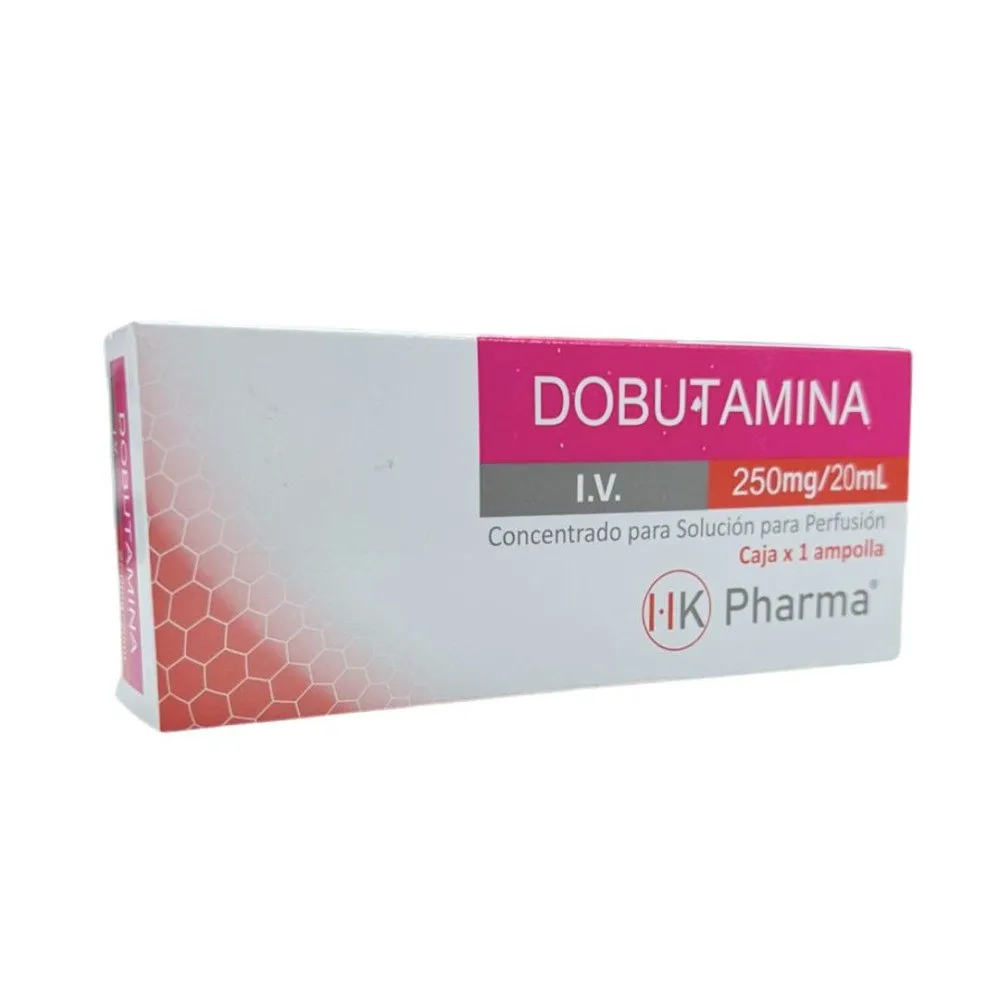
Table of Contents
- Package leaflet: Information for the patient
- DOBUTAMINA Bioindustria LIM 250 mg/20 ml concentrate for solution for infusion
- 1. What DOBUTAMINA Bioindustria LIM is and what it is used for
- 2. What you need to know before using DOBUTAMINA Bioindustria LIM
- 3. How to use DOBUTAMINA Bioindustria LIM
- 4. Possible side effects
- 5. How to store DOBUTAMINA Bioindustria LIM
- 6. Package contents and other information
- DOBUTAMINE Bioindustria LIM 250 mg/20 ml concentrate for solution for infusion
Package leaflet: Information for the patient
DOBUTAMINA Bioindustria LIM 250 mg/20 ml concentrate for solution for infusion
dobutamine hydrochloride
Generic medicine
Please read all of this leaflet carefully before you are given this medicine because it contains important information for you.
- Keep this leaflet. You may need to read it again.
- If you have any questions, ask your doctor or nurse.
- If you get any side effects, including those not listed in this leaflet, tell your doctor or nurse. See section 4.
Contents of this leaflet:
- What DOBUTAMINA Bioindustria LIM is and what it is used for
- What you need to know before using DOBUTAMINA Bioindustria LIM
- How to use DOBUTAMINA Bioindustria LIM
- Possible side effects
- How to store DOBUTAMINA Bioindustria LIM
- Contents of the pack and other information
1. What DOBUTAMINA Bioindustria LIM is and what it is used for
DOBUTAMINA Bioindustria LIM contains the active substance dobutamine, which belongs to a group of medicines called catecholamines that act by stimulating heart activity, improving blood flow throughout the body.
DOBUTAMINA Bioindustria LIM is used in emergency situations to improve heart function when this is impaired (heart failure), following organ damage (organic heart disease) or surgical procedures.
In patients with an abnormal heart rhythm (atrial fibrillation), a digitalis medicine must be administered to treat arrhythmias prior to the administration of dobutamine.
2. What you need to know before using DOBUTAMINA Bioindustria LIM
Do not use DOBUTAMINA Bioindustria LIM
- if you are allergic to dobutamine hydrochloride, to other similar substances, or to any of the other ingredients of this medicine (listed in section 6);
- if you have heart or blood vessel problems of the obstructive type (cardiac tamponade, valvular aortic stenosis, or idiopathic hypertrophic obstructive cardiomyopathy/idiopathic hypertrophic subaortic stenosis);
- if you have low circulating blood volume (hypovolemia);
- if you suffer from chronic heart function problems (chronic heart failure);
- if you have phaeochromocytoma;
- if the patient is a child.
Warnings and precautions
Talk to your doctor or nurse before you are given DOBUTAMINA Bioindustria LIM.
This medicine must be administered with great care and under close medical supervision in the following cases:
- if you have high blood pressure, as it may increase further;
- if you have an abnormal heart rhythm (atrial fibrillation, atrial flutter); in this case, a digitalis medicine must be administered before dobutamine;
- if you have very low blood pressure following collapse (mean pressure below 70 mmHg);
- if you are being treated with beta-blockers, used to lower blood pressure;
- if you have low potassium levels in the blood, as they may decrease further.
The use of this medicine after a heart attack must be carried out with extreme caution, as it could worsen heart damage.
At the beginning of treatment with DOBUTAMINA Bioindustria LIM, your doctor will perform an electrocardiogram and ensure that any intravascular volume deficits have been corrected.
During administration of Dobutamina Bioindustria LIM, cardiac parameters must be continuously monitored (heart rate and rhythm, infusion rate, ECG, blood pressure, pulmonary capillary pressure, and cardiac output).
Your doctor may decide to reduce the dose or temporarily interrupt administration if you develop heart rhythm or blood pressure disturbances.
Adequate support from DOBUTAMINA Bioindustria LIM may not be achieved in the presence of mechanical obstruction to heart function.
A sudden drop in blood pressure may occur. Reducing the dose or stopping the infusion usually results in a rapid return of blood pressure to baseline levels.
Your doctor will periodically check your blood potassium levels.
For athletes: using this medicine without therapeutic need constitutes doping and may lead to a positive anti-doping test.
Hypersensitivity reactions
Reactions consistent with hypersensitivity have been reported, occasionally associated with dobutamine administration, including skin rash, fever, eosinophilia, bronchospasm, and eosinophilic endomyocarditis.
Severe or less severe hypersensitivity to sodium metabisulfite may also occur, and is more common among asthmatics than non-asthmatics.
Other medicines and DOBUTAMINA Bioindustria LIM
Inform your doctor or nurse if you are taking, have recently taken, or might take any other medicines.
In particular, inform your doctor if you are taking the following medicines:
- beta-blockers for high blood pressure, such as propranolol and metoprolol,
since they act antagonistically and may reduce the effectiveness of Dobutamina Bioindustria LIM; - alpha-blockers or beta-adrenergic agents;
- medicines used for heart problems, such as sodium nitroprusside and nitroglycerin;
- dopamine, which is used to increase heart rate and blood pressure;
- medicines used during anesthesia, such as cyclopropane and halothane;
- sodium bicarbonate or other alkaline solutions, as they may inactivate dobutamine.
Pregnancy and breastfeeding
If you are pregnant, think you may be pregnant, planning a pregnancy, or are breastfeeding, consult your doctor or nurse before this medicine is administered.
This medicine should not be administered during pregnancy unless absolutely necessary, i.e., when the potential benefits outweigh the potential risks to the fetus.
It is not known whether dobutamine passes into breast milk. Therefore, caution is required when Dobutamina Bioindustria LIM is administered to breastfeeding women. If you are breastfeeding and need to receive Dobutamina Bioindustria LIM, you must stop breastfeeding during treatment.
There is no evidence suggesting that this medicine affects fertility.
Driving and using machines
There are no data available to determine the effect of this medicine on the ability to drive or operate machinery.
DOBUTAMINA Bioindustria LIM contains sodium metabisulfite
This medicine contains sodium metabisulfite, which may rarely cause severe hypersensitivity reactions and bronchospasm.
3. How to use DOBUTAMINA Bioindustria LIM
This medicine will be administered to you in hospital by specialized medical staff. If you have any doubts, consult your doctor or nurse.
This medicine is given by intravenous infusion (into a vein) after appropriate dilution.
The initial dose is 2.5–10 micrograms per kg of body weight per minute, administered as a continuous intravenous infusion. The infusion rate and dose will be adjusted according to your response to therapy.
The infusion rate and duration of treatment will be adjusted based on the patient's haemodynamic response (heart rate and rhythm, blood pressure, urine output, and other parameters).
If you use more DOBUTAMINA Bioindustria LIM than you should
Since this medicine will be administered by specialized staff, it is unlikely that you will receive an excessive dose.
Symptoms of overdose may include loss of appetite (anorexia), nausea, vomiting, tremor, anxiety, headache (cephalalgia), difficulty in breathing (dyspnoea), and heart and circulatory problems (palpitations, anginal or non-specific chest pain, hypertension, arrhythmias, cardiac ischemia).
If you experience any of these symptoms or think that you have been given too much of this medicine, contact your doctor or nurse immediately.
If you have any doubts about how to use this medicine, consult your doctor or nurse.
4. Possible side effects
Like all medicines, this medicine can cause side effects, although not everyone will experience them.
General disorders
The following side effects have been reported rarely (in 1%-3% of patients): nausea, headache, angina pectoris, non-specific chest pain, palpitations and shortness of breath.
Long-term infusion safety
Side effects during prolonged treatment (up to 72 hours) were not different from those observed with short-term treatment.
The following adverse reactions may occur:
- increase in blood pressure (hypertension);
- changes in heart rhythm (ventricular arrhythmias, tachycardia, arrhythmia and ventricular fibrillation);
- decrease in blood pressure (hypotension). Reducing the dose or stopping the infusion typically results in a rapid return of blood pressure to pre-treatment levels. In rare cases, hypotension may not resolve immediately and may require pharmacological intervention;
- nausea, vomiting;
- headache, fever, difficulty breathing (dyspnea);
- non-specific chest pain or chest pain due to heart problems (angina), palpitations;
- tingling sensation, altered sensitivity (paresthesia), leg cramps;
- low platelet count in the blood (thrombocytopenia);
- inflammation of the veins at the injection site (phlebitis) and tissue damage at the injection site if the medicine leaks out of the vein (extravasation) during infusion. Cases of skin necrosis have been reported very rarely;
- allergic reactions manifesting as skin irritations, scalp itching, fever, difficulty breathing (bronchospasm), increased white blood cells (eosinophilia), hot flushes. Hypersensitivity reactions have been reported, including rash and eosinophilic endomyocarditis. Anaphylactic reactions may be due to sensitivity to sulfite;
- low potassium levels in the blood (hypokalemia);
- heart muscle problems (stress cardiomyopathy, also known as Takotsubo syndrome), presenting with chest pain, shortness of breath, dizziness, fainting, irregular heartbeat when dobutamine is used for stress echocardiography (frequency not known: frequency cannot be estimated based on available data).
Reporting of adverse reactions
If you experience any adverse reaction, including those not listed in this leaflet, talk to your doctor or pharmacist. You can also report adverse reactions directly via the national reporting system at: https://www.aifa.gov.it/content/segnalazioni-reazioni-avverse
By reporting adverse reactions, you can help provide more information on the safety of this medicine.
5. How to store DOBUTAMINA Bioindustria LIM
Medical and nursing staff are aware of the storage conditions for this medicine.
Keep this medicine out of the sight and reach of children.
Do not use this medicine after the expiry date stated on the carton after "Expiry".
The expiry date refers to the last day of that month.
Store below 30°C. The solution may turn pink over time; however, this colour change does not imply a loss of potency of the medicine.
After dilution of the vial, prepared solutions must be used within 24 hours.
Do not dispose of any medicine via wastewater or household waste. Ask your pharmacist how to dispose of medicines no longer required. This will help protect the environment.
6. Package contents and other information
What DOBUTAMINA Bioindustria LIM contains
- The active substance is dobutamine. Each vial contains 280.2 mg of dobutamine hydrochloride, equivalent to 250 mg of dobutamine.
- The other components (excipients) are: sodium metabisulfite, water for injections.
Description of the appearance of DOBUTAMINA Bioindustria LIM and contents of the pack
Pack containing 1 vial of 20 ml concentrate for solution for infusion.
Marketing Authorization Holder and Manufacturer
Bioindustria Laboratorio Italiano Medicinali S.p.A.
(Bioindustria L.I.M. S.p.A.)
Via De Ambrosiis 2, 15067 Novi Ligure (AL) – Italy

Package leaflet: information for the physician
DOBUTAMINE Bioindustria LIM 250 mg/20 ml concentrate for solution for infusion
dobutamine hydrochloride
Generic medicine
The following information is intended exclusively for physicians or healthcare professionals
CLINICAL INFORMATION
Dosage
The infusion rate required to increase cardiac output typically ranges from 2.5 to 10 µg/kg/min.
Tolerance may develop with continuous infusions lasting 72 hours or more; therefore, higher doses may be required to achieve the same effect (in rare cases, doses up to 40 µg/kg/min have been administered to obtain the desired effect).
The following table shows infusion rates (ml/kg/min) for concentrations of 250, 500, and 1000 mg/l.
Administration rate Infusion rate
250 µg/ml 500 µg/ml 1000 µg/ml
(µg/kg/min) (ml/kg/min) (ml/kg/min) (ml/kg/min)
2.5 0.01 0.005 0.0025
5.0 0.02 0.010 0.0050
7.5 0.03 0.015 0.0075
10.0 0.04 0.020 0.0100
12.5 0.05 0.025 0.0125
15.0 0.06 0.030 0.0150
Method of administration
Dobutamine must always be administered by continuous intravenous infusion, preferably using an infusion pump to ensure stable and consistent drug delivery.
The infusion rate and duration of treatment should be adjusted according to the patient's response, assessed by heart rate, presence of ectopic activity, blood pressure, urine output, and, when possible, central or pulmonary venous pressure and cardiac output.
Concentrations up to 5000 mcg/ml (250 mg/50 ml) have been administered in humans.
The total volume of fluids administered should be determined based on the patient’s hydroelectrolytic requirements.
Gradual discontinuation of therapy is recommended.
If blood pressure drops rapidly, reducing the dose or stopping the infusion usually results in return to baseline blood pressure values. Occasionally, intervention may be required and reversal may not be immediate.
If blood pressure remains low or progressively decreases during dobutamine administration, despite adequate ventricular filling pressure and cardiac output, consider using peripheral vasoconstrictive agents such as noradrenaline or dopamine.
Before initiating dobutamine treatment, any hypovolemic state should be corrected with an appropriate amount of plasma expander (see section 4.3 “Contraindications” of the SmPC).
Reconstitution of the medicinal product
At the time of administration, Dobutamine Bioindustria LIM must be further diluted in an intravenous container to a final volume of at least 50 ml with one of the following IV solutions:
5% Dextrose. 5% Dextrose in Lactated Ringer’s.
5% Dextrose and 0.45% Sodium Chloride. 20% Osmitrol in water.
5% Dextrose and 0.9% Sodium Chloride. 0.9% Sodium Chloride for Injection.
10% Dextrose. Sodium Lactate.
Isolyte-M with 5% Dextrose. Normosol-M in D5-W.
Lactated Ringer’s.
Overdose
Cases of overdose with Dobutamine Bioindustria LIM have been rarely reported.
If the product is ingested orally, absorption from oral and gastrointestinal mucosa is unpredictable.
Treatment of overdose
In managing overdose, consider the possibility of multiple drug overdoses, drug interactions, and unusual pharmacokinetics in the individual patient.
Actions to be taken in case of dobutamine hydrochloride overdose include discontinuation of the infusion until the patient’s condition stabilizes, protection of the airway, and assurance of oxygenation and ventilation. The patient should be monitored and resuscitation measures promptly initiated as needed.
Severe ventricular tachyarrhythmias may be successfully treated with propranolol or lidocaine. Hypertension generally responds to dose reduction or discontinuation of therapy.
The patient’s airway must be protected, and respiration and perfusion supported.
If necessary, carefully monitor and maintain within acceptable limits vital signs, blood gases, serum electrolytes, etc.
In case of oral ingestion, consider administration of activated charcoal (often more effective), either in addition to or instead of gastric lavage. Repeated administration of activated charcoal may accelerate elimination of certain previously ingested drugs.
When performing gastric emptying or administering activated charcoal, ensure airway integrity.
Forced diuresis, peritoneal dialysis, hemodialysis, and charcoal hemoperfusion have not been shown to provide benefit in cases of dobutamine overdose.
Incompatibilities
Dobutamine is incompatible with alkaline solutions and must not be mixed with 5% sodium bicarbonate solutions.
Due to potential physical incompatibility, Dobutamine Bioindustria LIM should not be mixed with other drugs in the same solution.
Dobutamine should not be used in combination with other drugs or diluents containing sodium metabisulfite and ethanol.
For further information, refer to the Summary of Product Characteristics.